Massive Protests in Guangzhou against the inhumane ZeroCovid Restrictions  

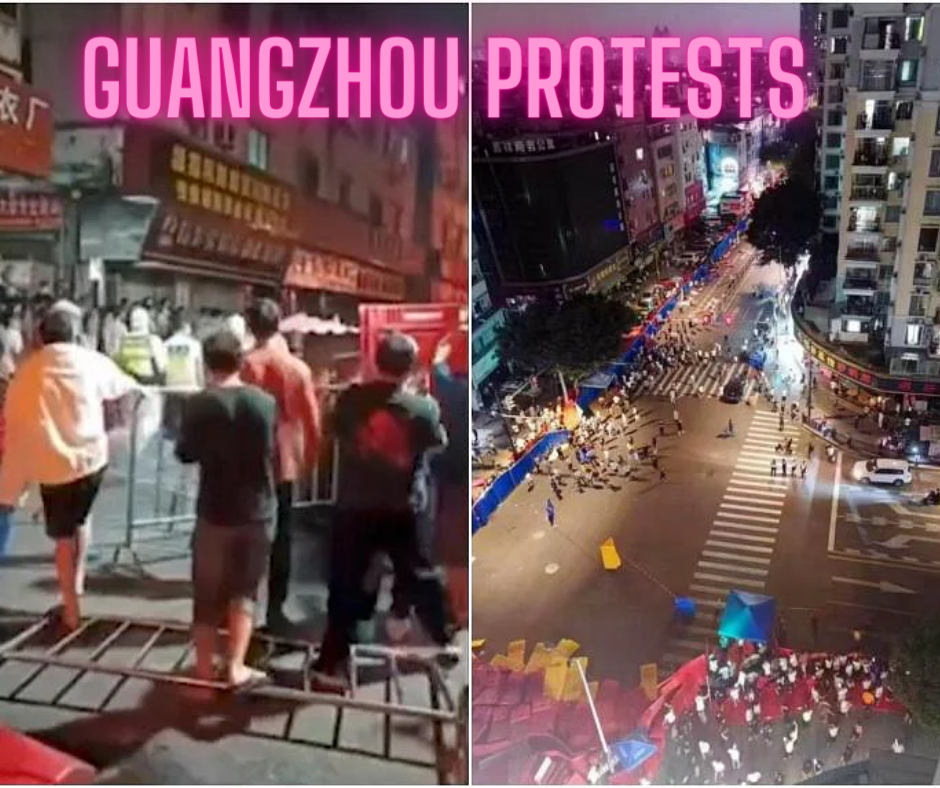
Situated on the Pearl River, Guangzhou in South East China has a maritime heritage stretching back over 2,000 years and its vast port is China’s main transport and trading hub. It was also one of the starting points of the old Silk Road, a trading route that stretched across Asia. But presently, a severe livelihood crisis has been unfolding in Guangzhou. Due to a strict lockdown and imposition of the Zero Covid policy, the life of the residents has become miserable. Reeling from the livelihood crisis people started peaceful protests in the city. Due to restrictions not getting relaxed people in the city are starving and facing the burnt of lack of basic amenities. Therefore they started massive violent protests all around the city. Crowds in Guangzhou have crashed through lockdown barriers and marched onto the streets in a rare outburst of public anger. Videos posted on social media showed people overturning a police vehicle in the Haizhu district late on Monday. “People were driving crazy, they were hungry, they were desperate for a normal life.. Please give back our lives”. A Guangzhou resident under anonymity told Ij-Reportika The authorities are trying to curb the protests with the use of force and outright violation of human rights. Around 15 people are reported missing after the Monday protests and several have been killed across the metropolis. Furthermore, In Haizhu District, Guangzhou, where the protests occurred, the 74th Group Army’s chemical defense regiment has been called upon to handle the protesting people. Guangzhou, home to nearly 19 million people, has been the center of Covid outbreaks in China, with the number of cases surging in recent days. Daily infections of Covid-19 in the city have topped 5,000 for the first time, leading to speculation that localized lockdowns could widen and the number of such violent protests and their intensity may escalate in the coming days. Several posts on China’s social media platform Weibo blamed the protesters, who were mainly migrant workers from Hubei province, for the “rioting”, but many users noted that the arbitrary lockdowns of residences and the barring of migrant workers from returning home in the protracted Covid restrictions over almost three years were “driving people mad” and said some workers had killed themselves. Many Weibo users and overseas Chinese on social media are sharing panic posts and the number of suicides in the region is on the rise. The Communist party’s mouthpiece People’s Daily on Tuesday reiterated that the “dynamic zero Covid” policy was to be “unswervingly implemented”, saying the “enhancement” announced last Friday was to fine-tune measures to fight against the pandemic, and not an indication of relaxation.

Read More
crackdown on religion in China

China never misses an opportunity to crack down on Religion

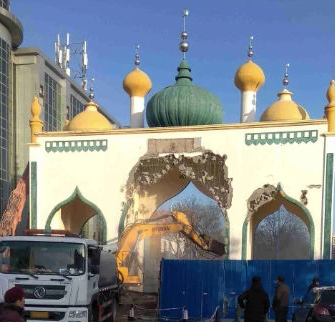
Religious freedom in China is in a state of peril. The primary reason is that Chinese authorities never miss any opportunity to crack down on religion. Over the past year alone, China has detained Muslim for showing their faith, forced Buddhists to pledge allegiance to the ruling Communist Party, and coerced Christian churches to take down their crosses or shut down.

Read More
Protests in China against the Bank Run

Protests in China against the Bank Run

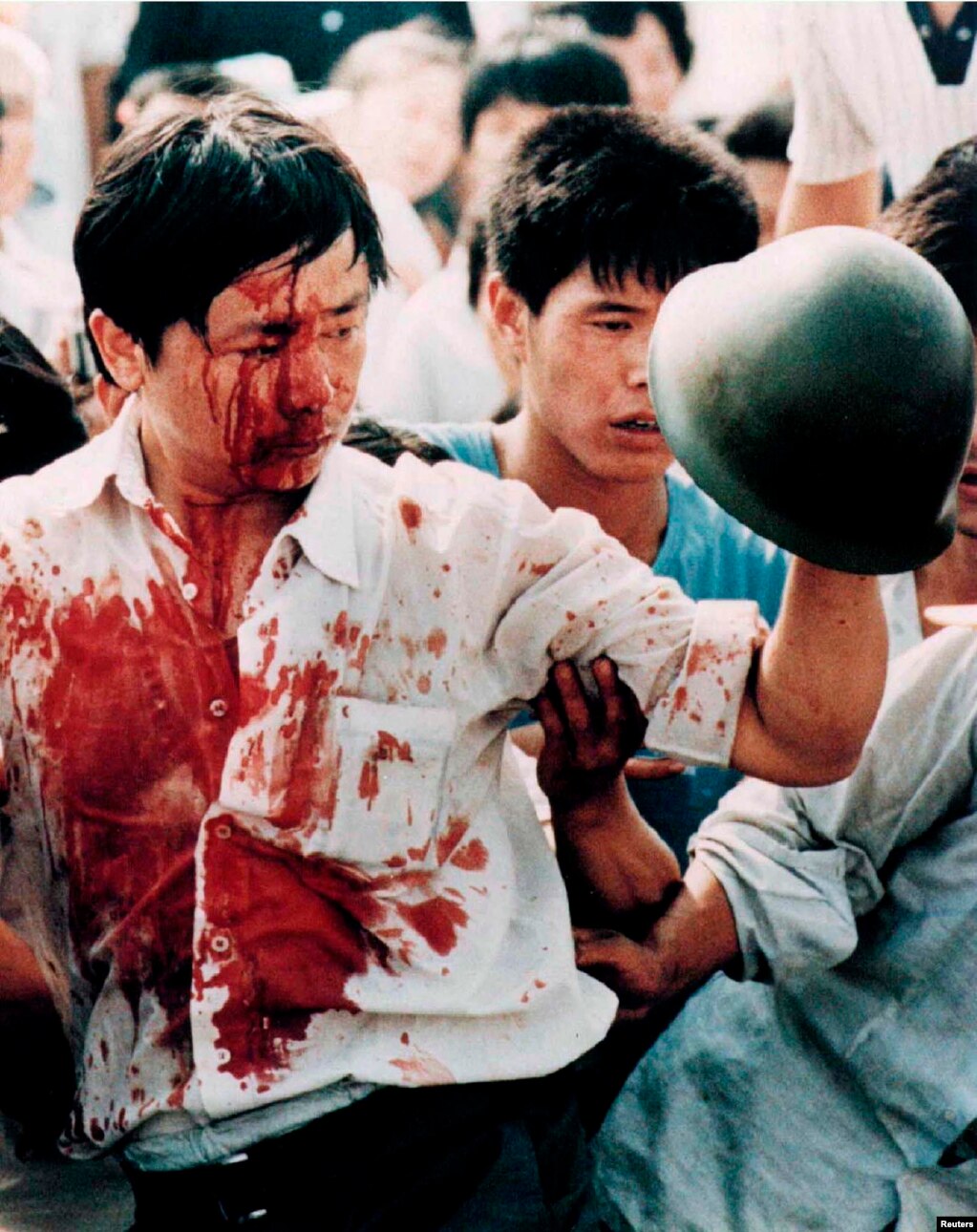
Chinese customers opened accounts at six rural banks in Henan and neighboring Anhui province that offered higher interest rates in large numbers. They later found they could not withdraw their funds after media reports that the head of the banks’ parent company was on the run and wanted for financial crimes. “We came today and wanted to get our savings back, because I have elderly people and children at home, and the inability to withdraw savings has seriously affected my life,” said a woman from Shandong province, who only gave her last name. local resident Zhang China heavily misused the COVID-19 tracking app. Many who set out for Zhengzhou to demand action from regulators found that their health status on the application had turned red, preventing them from traveling. Some reported being questioned by police after checking into their hotel about why they had come to the city. Five Zhengzhou officials were later punished. The protesters assembled before dawn on Sunday in front of the People’s Bank of China building in Zhengzhou. Police closed off the street and by 8 a.m. had started massing on the other side. The events were similar to the events that took place during the Tiananmen Square Massacre. The police then announced to the protesters from a vehicle with a megaphone that they were an illegal assembly and would be detained and fined if they didn’t leave. Around 10 a.m., the men in T-shirts rushed the crowd and dispersed them. The witnesses said they saw women dragged down the stairs of the bank entrance. Police was brutal in its ways to crush the protests. A protestor Yang said he was hit by two security officers including one who had fallen off the stairs and mistakenly thought in the chaos that Yang had hit or pushed him. “Although repeated protests and demonstrations don’t necessarily have a big impact, I think it is still helpful if more people get to know about us, and understand or sympathize with us,” Yang said. “Each time you do it, you might make a difference. Although you will get hit, they can’t really do anything to you, right?” The protesters were bused to various sites where they were forced to sign a letter guaranteeing they would not gather anymore. They were beaten and thrashed mercilessly. Ironically, since Chinese media are banned from conducting independent reports about the Henan bank crisis, Chinese netizens are flooding the comment section of the US embassy’s Weibo account, asking American media to cover the case. Several videos of the protests are going on the social media of the protests in China. The horrific state of affairs is similar to those happened in the Tiananmen Square. Image/Videos Credit: Byron Wan

Read More
A Buddhist shrine at Mes Aynak. (creadits : nationalgeographic.com)

Mes Aynak Threatened By Chinese Copper Mines

Mes Aynak Threatened By Chinese Copper Mines Mes Aynak (meaning “little source of copper“), also called Mis Ainak or Mis-e-Ainak, was a major Buddhist settlement 40 km (25 mi) southeast of Kabul, Afghanistan, located in a region of Logar Province. The site is also the location of Afghanistan’s largest copper deposit. Located at the confluence of Hellenistic and Indian cultures, Mes Aynak near Kabul was once a vast city organised around the extraction and trade of copper. The site of Mes Aynak possesses a vast 40 ha (100 acres) complex of Buddhist monasteries, homes, over 400 Buddha statues, stupas and market areas. The site contains artifacts recovered from the Bronze Age, and some of the artifacts recovered have dated back over 3000 years. As its name suggests, the presence of copper at Mes Aynak has been known about for some time, while the site’s archaeological wealth had been discovered by Russian and Afghan geologists in 1973–74. Mes Aynak was at the peak of its prosperity between the 5th and 7th centuries AD. A period of slow decline began in the 8th Century, and the settlement was finally abandoned 200 years later. Archaeologists believe that Mes Aynak is a major historical heritage site. But the need for the Taliban, who returned to power in August last year, to find new revenue streams after international aid was frozen has made mining the project a priority, and could put an end to further archaeological work. In November 2007, a 30-year lease was granted for the copper mine to the China Metallurgical Group (MCC) for US$3 billion. Fifteen years later, the mine still does not exist — insecurity and disagreements between Beijing and Kabul over financial terms of the contract have caused delays. The project is once again a priority for both parties. All of this historical material is in imminent danger of destruction by the mining endeavor. Many experts are comparing the Chinese mining company to those who destroyed the Buddhas of Bamiyan. Despite the imminent danger, negotiations between Afghanistan’s new Taliban government and China’s state-owned MCC and its publicly listed subsidiary Metallurgical Corp. of China are underway over the resumption of mining activity at the Mes Aynak Logar copper project. The discussions are about “80% finished“, says the Taliban spokesman, with only technical points remaining to be settled, which should be done soon. The Taliban are demanding that the contract, which includes the construction of a power station to supply the mine and Kabul, and a railroad to Pakistan, be respected. They also insist that the copper be processed locally with an Afghan workforce. China, whose economy is in dire need of copper, is reluctant to meet these demands. MCC, which did not respond to AFP, also continues to demand a reduction in royalties due. When it was last in power the Taliban shocked the world by dynamiting the giant Buddhas of Bamiyan in March 2001, but today they say they are determined to preserve the findings of Mes Aynak. “It is the duty of the Ministry of Information and Culture to protect them,” Esmatullah Burhan, the spokesman for the Ministry of Mines and Petroleum, told AFP. But while the rhetoric seems sincere, many of the remains are simply too bulky or fragile to be moved and seem destined to disappear. The Chinese favors open-pit rather than underground mining. If this goes ahead, it would open up the copper mountain and bury all the fragments of the past. The Taliban hope to earn more than $300 million a year from Mes Aynak. This is about 60% of the full state budget for 2022. Therefore, it wants to speed up the process undermining the environmental consequences and cultural values attached with the place. Mes Aynak would qualify as a World Heritage site if the government of Afghanistan were to apply for that status. This is an outstanding and complex archaeological landscape, with astounding quality of preservation. archaeologist and UNESCO advisor Tim Williams in 2017 So instead of destroying a potential UNESCO World Heritage Site with emotional and cultural connect of the Buddhist World, it should be preserved as a Buddhist Civilizational Wonder of the world.

Read More

Countering the lies about the Tiananmen Square massacre

Our East China expert Jenny Kin Jacobs on the occasion of the anniversary of the brutal Tiananmen massacre presented a report loaded with facts about the brutal chain of events that unfolded in China in 1989. After that report came out several Twitter handles and websites tried to whitewash it by calling it TIAN’ANMEN SQUARE MASSACRE: THE WEST’S MOST PERVASIVE LIE. Let us debunk these lies and present the counter argument with FACTS and only FACTS.

Read More