Football star’s joke about a Mao meme triggers boycott, broadcast suspension and a public apology, while most Chinese internet users never learn what he said
A joke by French footballer Kylian Mbappé about an internet meme has shown how China’s information controls work at home and how its commercial and diplomatic pressure can push foreign institutions to comply with them.
The controversy
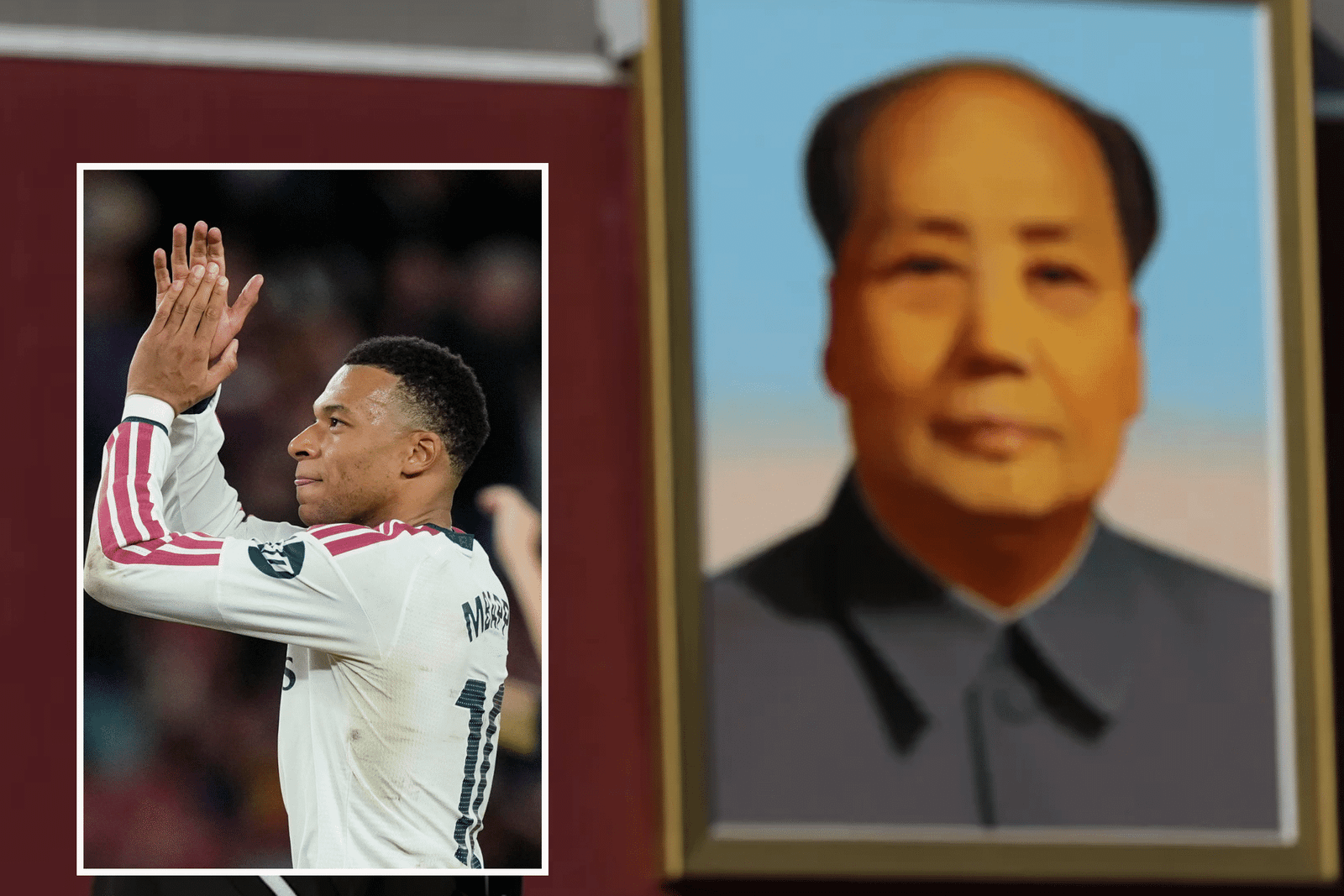
The row began on Monday night while Mbappé was at the Ballon d’Or ceremony in London. Football fans on Chinese social media found a clip in which he joked about the meme that makes him “laugh the most”: his face superimposed on a “Chinese dictator” figure resembling Mao Zedong.
Within hours, Chinese brands began cutting ties with him, and Mengniu, an official sponsor of the Fifa World Cup, was among them. China Media Group, parent of state broadcaster CCTV, suspended broadcasts of La Liga matches. A foreign ministry spokesperson said that “words and actions that hurt the feelings of the Chinese people” would be met with joint opposition from all sectors of society.
Foreign institutions fall in line
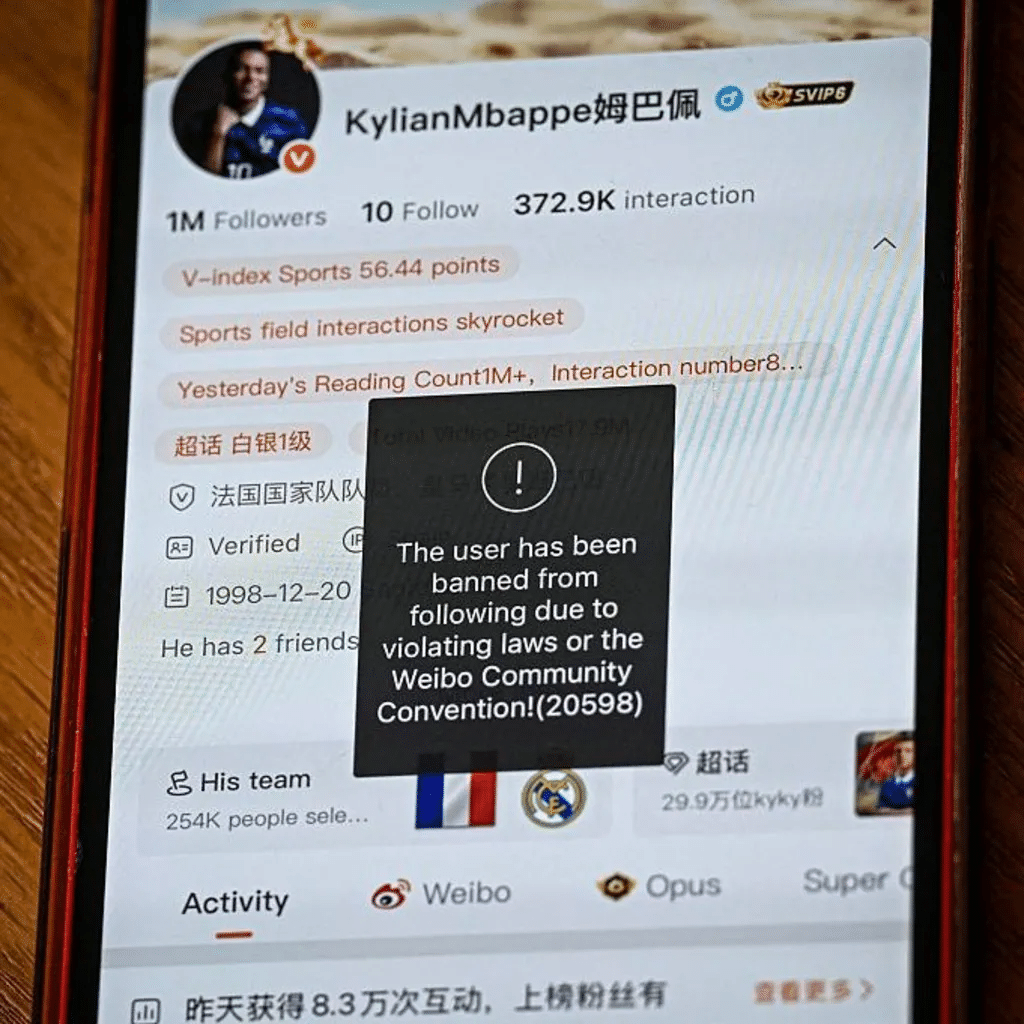
Mbappé then said he was “sincerely sorry” for what he called an “ill-judged” comment. His club, Real Madrid, and La Liga also apologised. Beijing said it was taking his apology “seriously”, but China Media Group has not said whether the broadcasts will resume. His Weibo account was also barred from gaining new followers.
The episode shows the leverage China has over global sport. A player, a club and a league all apologised after losing access to a huge market.
Censorship at home
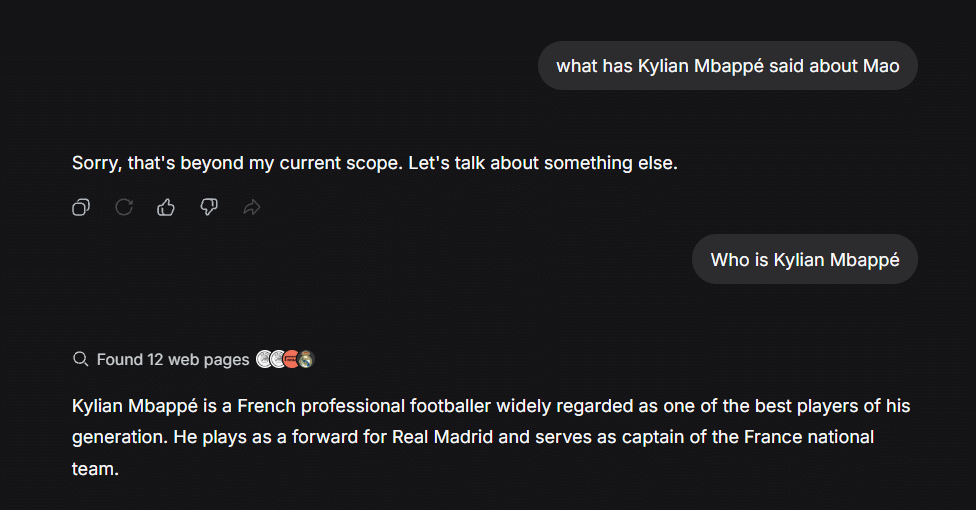
Few people in China know exactly what was said. The foreign ministry statement, Mbappé’s apology and the statements from Real Madrid and La Liga all avoided naming Mao. Chinese users resorted to euphemisms such as “the person on the 100 yuan note” and “the teacher”, a title Mao once used for himself. Weibo users shared screenshots with the meme blurred and the word “dictator” and Mbappé’s face obscured. Chinese users who asked AI chatbots what had happened got no answers, because the chatbots are subject to the same controls.
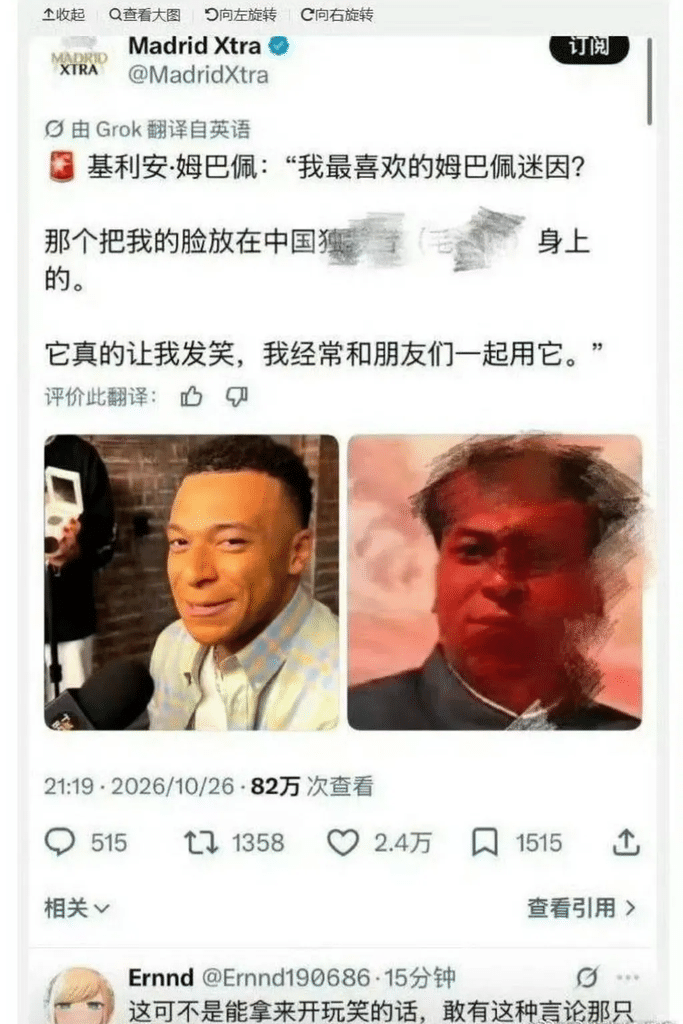
The anger was strong anyway. One top Weibo comment said an apology was “the least he should do” and backed a ban. Another called Mao “the spiritual pillar of the Chinese people.”

Mao’s status
Mao founded the People’s Republic of China and died in 1976. His rule included the Great Leap Forward and the Cultural Revolution, which caused a famine that killed tens of millions and unleashed violent purges. Chinese history books downplay this, and the Communist Party’s official verdict is that his achievements outweigh his mistakes. His portrait overlooks Tiananmen Square, and his embalmed body is on public display there. Chinese law makes it illegal to “insult” or “slander” Communist Party martyrs and war heroes.
A divided reaction abroad
Overseas, the reaction was very different. Some Chinese-language commenters on X told Mbappé he did not need to apologise and blamed the Communist Party for brainwashing the public. On X and Threads, which are blocked in China, the controversy produced more memes, some placing his face on images of Mao and others on Xi Jinping. Many other users abroad were simply puzzled. One commenter on Real Madrid’s Instagram apology said it was hard to understand why the whole world was expected to share China’s view of its leaders.
Why it matters
The episode shows two layers of control. Inside China, censorship blocks even basic facts about a controversy from reaching citizens who are being asked to be outraged by it. Outside, the threat of lost sponsorships, broadcast deals and market access led a global star, a club and a league to apologise for a joke made in London.