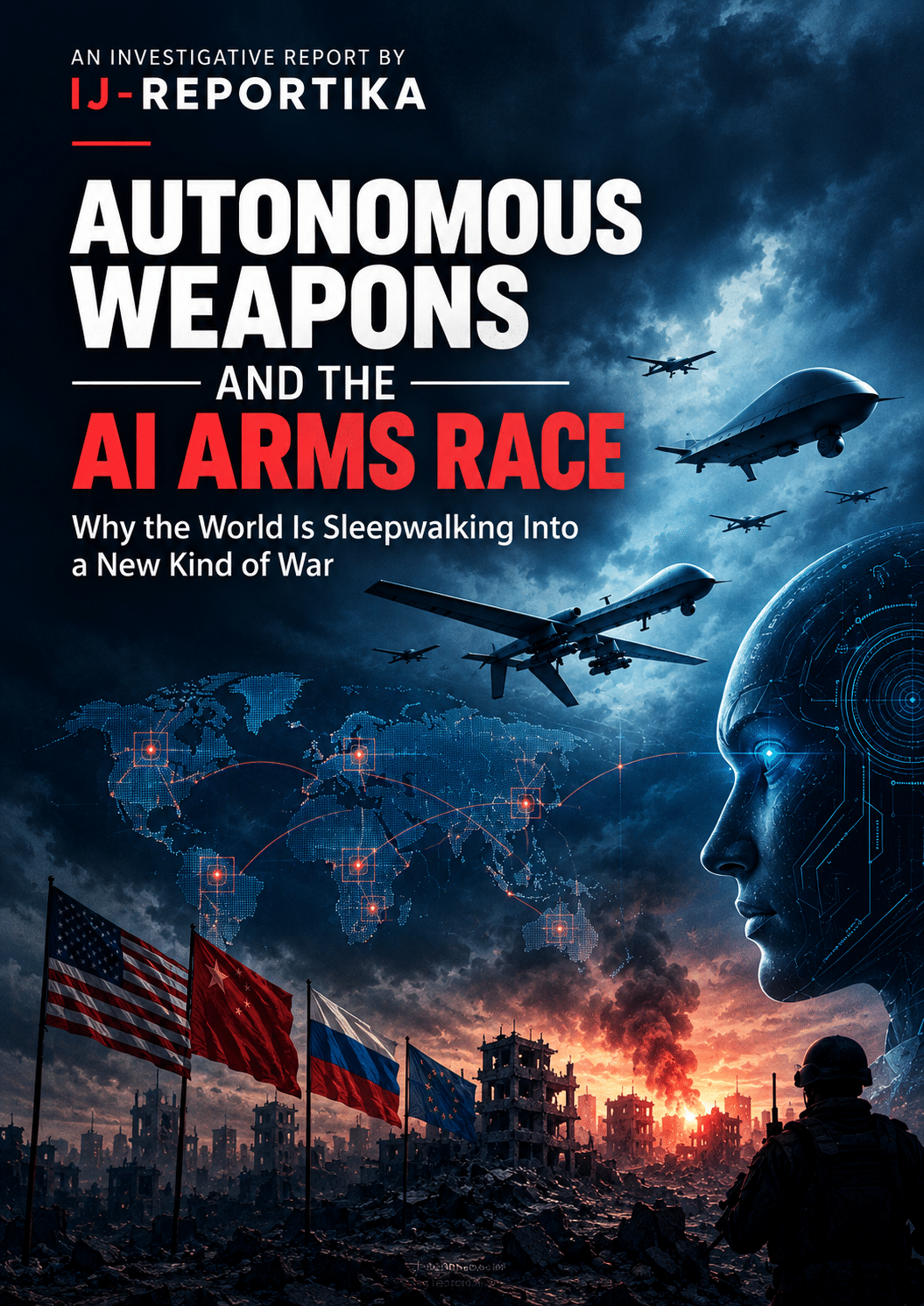
From China’s intelligentised warfare ambitions and Russia’s autonomous weapons programmes to America’s $54.6 billion military AI expansion, the global race to develop machines capable of selecting and engaging targets is accelerating. But who will be responsible when algorithms make decisions about human life?
Investigative Journalism Reportika
Artificial intelligence is transforming the character of modern warfare. What was once confined to military research laboratories and science-fiction scenarios is increasingly becoming part of real-world defence planning, battlefield operations and national security strategies.
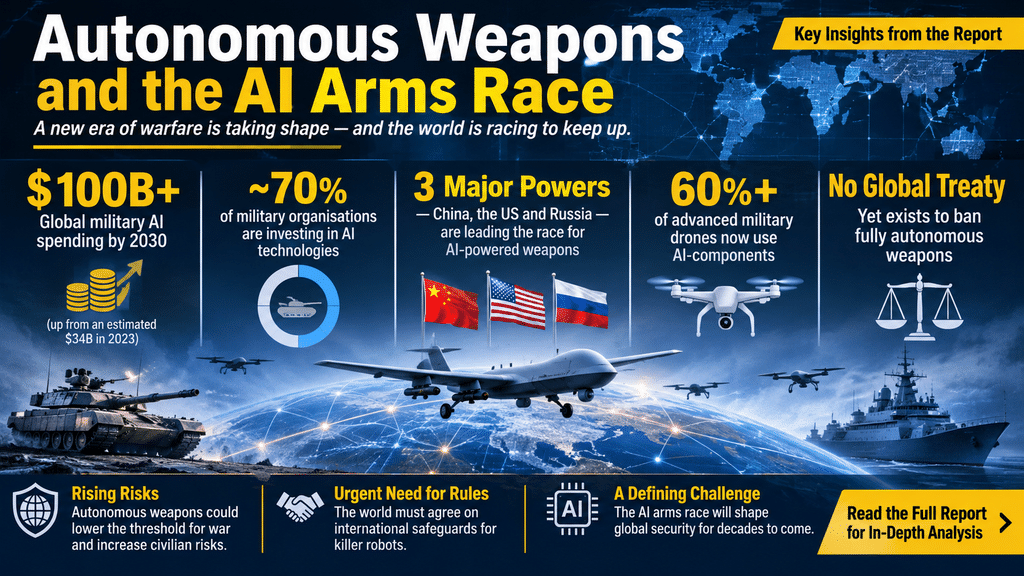
Drones, autonomous navigation, AI-assisted targeting, machine vision and coordinated unmanned systems are changing how militaries conduct surveillance, identify threats and engage adversaries. The next stage of this technological transformation could be even more consequential: weapons capable of independently identifying, selecting and engaging targets without requiring a human to make every individual engagement decision.
The competition is no longer limited to developing faster aircraft, more powerful missiles or sophisticated defence systems. It increasingly involves developing algorithms capable of processing battlefield information and operating military platforms at speeds that human decision-makers cannot match.
China, the United States and Russia are at the centre of this emerging competition. Their military establishments are investing in autonomous platforms, artificial intelligence, robotics, advanced computing and increasingly integrated battlefield networks. Other countries, including Israel, Türkiye, Iran, India, South Korea, France and the United Kingdom, are also expanding their military AI capabilities.
However, the development of these technologies raises a fundamental question: what happens when the decision to use lethal force becomes increasingly automated?
Investigative Journalism Reportika’s comprehensive investigative report, Autonomous Weapons and the AI Arms Race: Why the World Is Sleepwalking Into a New Kind of War, examines the military, technological, geopolitical, economic and ethical dimensions of this transformation.
Its findings point towards an emerging security environment in which technological competition is advancing faster than international regulation.
The Autonomous Weapons Industry Is Becoming a Multi-Billion-Dollar Market
The development of autonomous weapons is no longer a niche military research activity. It is becoming an increasingly important part of global defence procurement.
According to market estimates cited in the IJ-Reportika investigation, the global autonomous weapons market was valued at approximately $14.4 billion in 2025 and is projected to reach $33.5 billion by 2032.
The expansion is taking place alongside an unprecedented increase in global military expenditure.
According to the Stockholm International Peace Research Institute (SIPRI), global military spending reached approximately $2.72 trillion in 2024, representing a 9.4% increase compared with 2023.
Several technological developments are driving this transformation:
- Computer vision: AI systems increasingly identify and track objects through visual and sensor-based information.
- Edge AI: Advanced computing capabilities can operate directly on smaller devices rather than depending entirely on remote computing infrastructure.
- Swarm intelligence: Multiple unmanned platforms can coordinate activities with varying levels of human supervision.
- Autonomous navigation: Uncrewed systems can perform designated movements and missions with reduced operator intervention.
- Machine-assisted targeting: Algorithms can analyse intelligence and generate target recommendations.
The convergence of these technologies is reducing the technical and financial barriers associated with developing sophisticated unmanned military platforms.
One particularly important distinction must be understood: not every drone equipped with artificial intelligence is an autonomous weapon. Automated navigation, surveillance and target identification are different capabilities. The defining issue is whether a system can independently select and engage targets without meaningful human intervention.
This distinction is central to the international debate surrounding Lethal Autonomous Weapons Systems (LAWS).
From Libya to Ukraine: Autonomous Warfare Is No Longer Science Fiction
One of the most significant early developments examined in the report occurred in Libya in March 2020.
A Turkish-manufactured STM Kargu-2 drone was reportedly involved in operations against retreating forces during the Libyan civil war.
The UN Panel of Experts on Libya subsequently documented the system’s reported autonomous engagement capability. The incident became an important reference point in discussions about weapons capable of engaging targets without continuous communication with a human operator.
It raised an unprecedented question about the future of military accountability: if a machine independently selects a target and engages it, where does responsibility lie?
Since then, unmanned warfare has expanded across multiple conflict zones.
Major drone warfare developments examined in the investigation
1. Operation Spiderweb, Ukraine, June 2025
Ukraine launched Operation Spiderweb on 1 June 2025, using 117 remotely operated FPV drones launched from locations inside Russia against several Russian airbases.
Ukraine’s Security Service claimed that 41 aircraft were destroyed or damaged, although the precise extent of the damage remains contested.
The operation demonstrated how relatively inexpensive unmanned platforms could threaten strategically important military assets far from conventional front lines.
2. Russia’s mass drone attacks against Ukraine
On 8–9 July 2025, Russia reportedly launched 728 Shahed-type drones and decoys.
Another major attack on 7 September 2025 involved approximately 810 drones alongside missiles, with damage reported to the Cabinet of Ministers building in Kyiv.
These operations demonstrated the growing importance of drone saturation attacks and the difficulties of defending large areas against repeated unmanned aerial assaults.
3. India-Pakistan military confrontation, May 2025
The military confrontation between India and Pakistan from 7–10 May 2025 highlighted the growing importance of unmanned systems in South Asian security.
Reports examined in the investigation describe the involvement of Israeli-origin Harop loitering munitions in India’s operations and Turkish- or Chinese-origin systems in Pakistan’s operations.
The confrontation demonstrated how drone technology and military equipment sourced from different countries are becoming part of regional military competition.
4. Sudan’s expanding drone conflict
Sudan provides another important example of the changing nature of warfare.
Drone-related incidents were reported in Port Sudan, El-Fasher, Dilling, North Kordofan and Kosti during 2025 and 2026.
The investigation documents attacks involving military installations, markets, displacement centres, vehicles and other locations. These incidents highlight the particular vulnerability of civilian populations in conflicts where protective infrastructure and independent verification remain limited.
5. Drone attacks beyond conventional battlefields
The geographical expansion of drone warfare is equally significant.
The report examines reported Russian drone incursions into Polish airspace in September 2025, attacks affecting maritime commerce in the Black Sea, and a reported explosive-laden drone incident at Leipzig/Halle Airport in Germany in August 2026.
The wider lesson is that unmanned systems are no longer confined to conventional battlefield operations. Their proliferation creates challenges for airports, maritime transportation, military installations and civilian infrastructure.
The report includes a chronological incident database covering selected drone-related attacks between February 2025 and October 2026, with information on locations, conflict settings, reported weapon types and manufacturers where identified.
Importantly, these incidents should not all be classified as autonomous weapon engagements. Remotely piloted drones, automated systems and fully autonomous weapons are technically distinct categories.
China: The Ambition to Build an Intelligentised Military by 2030
China is one of the most important actors in the emerging military AI competition.
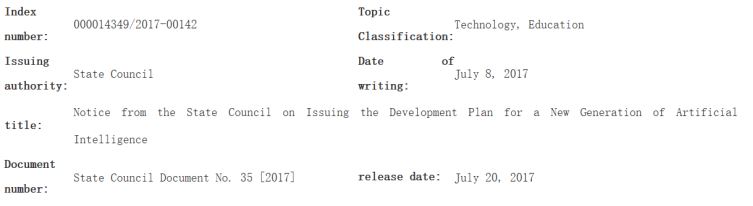
Beijing’s ambitions are reflected in its 2017 New Generation Artificial Intelligence Development Plan, which established the objective of becoming a global leader in artificial intelligence by 2030.
At the Chinese Communist Party’s 20th National Congress in October 2022, President Xi Jinping called for accelerating the development of unmanned and intelligent combat capabilities.
The People’s Liberation Army (PLA) increasingly views artificial intelligence as an important component of future military modernisation.
China’s defence spending and military AI ambitions
China announced an official defence budget of approximately $249 billion for 2025, representing a 7.2% increase.
Independent estimates of Chinese military expenditure are considerably higher. SIPRI estimated Chinese military spending at approximately $313.7 billion in 2024, while other assessments, including those cited in the investigation, place it at higher levels.
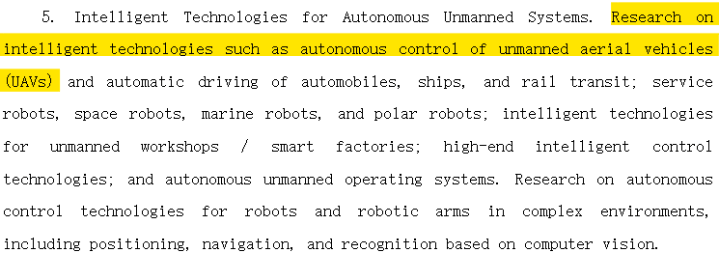
The difference between official expenditure and independent estimates is important when assessing the scale of China’s military modernisation.
At the Communist Party’s 20th National Congress in October 2022, President Xi Jinping called on the PLA to “speed up the development of unmanned, intelligent combat capabilities.”
President Xi Jinping
The Seven Sons of National Defence
One of the most important findings examined in the report concerns China’s military-industrial research ecosystem.
The investigation examines the role of the so-called Seven Sons of National Defence: seven universities with significant links to China’s defence-industrial and military research sectors.
These institutions are:
- Harbin Institute of Technology.
- Nanjing University of Science and Technology.
- Northwestern Polytechnical University.
- Beijing Institute of Technology.
- Harbin Engineering University.
- Beihang University.
- Nanjing University of Aeronautics and Astronautics.
Their research activities span aerospace engineering, robotics, machine vision, autonomous navigation, artificial intelligence, underwater systems and advanced military technologies.
The report examines 2019 graduate employment data showing that six of these institutions accounted for approximately 72% of the graduates hired by major Chinese defence state-owned enterprises within the dataset, despite representing only 16% of employed graduates in that dataset.
The figures illustrate the importance of specialised university recruitment networks in China’s defence-industrial ecosystem.
The investigation also examines the relationships between these universities and major defence companies, including AVIC, CASC, CASIC, NORINCO, AECC and CSIC.
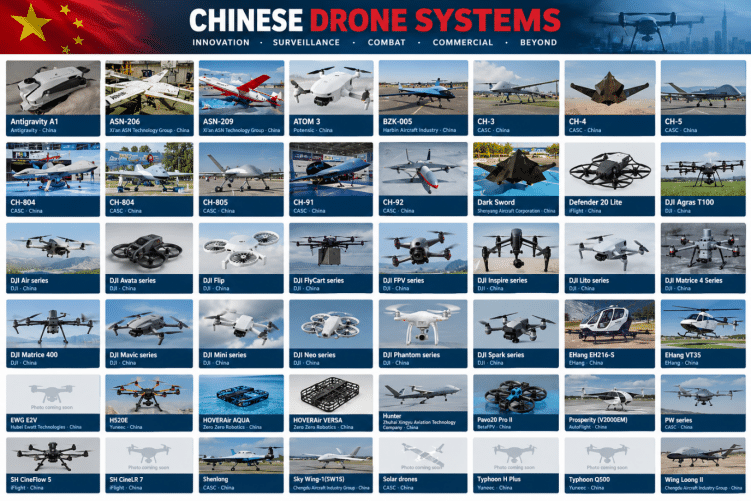
Zhuhai 2024: China’s autonomous weapons showcase
The November 2024 Zhuhai Airshow provided another indication of China’s ambitions.
The report examines several systems and concepts presented or highlighted during the event, including:
- Intelligent Precision Strike System.
- AI-enabled synthetic brigade concepts.
- Smart Digital Command and Control systems.
- AI-powered military robot dogs.
- Coordinated unmanned platforms and loitering munitions.
These developments point towards a military modernisation strategy in which autonomous platforms, sensors, robotics and AI-supported command systems increasingly operate as interconnected capabilities.
The report also examines China’s reported Atlas drone swarm demonstration, which Chinese state media described as involving a single operator controlling 96 drones.

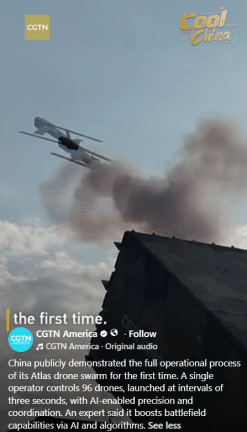
Such demonstrations deserve scrutiny, although collaborative drone coordination should not automatically be interpreted as proof that each individual drone can independently select and engage human targets.
The Taiwan question
China’s autonomous warfare ambitions have particularly important implications for Taiwan.
The investigation examines research concerning autonomous decision-making in urban combat environments and the potential application of coordinated unmanned systems in densely populated areas.
Taiwan’s cities, infrastructure and complex urban environments would create particularly difficult challenges for military targeting and civilian protection.
If autonomous targeting technologies become increasingly integrated into urban military operations, the risks of misidentification and unintended civilian harm could become significantly more serious.
This is one of the reasons the Taiwan Strait deserves attention in the wider debate over autonomous weapons.
Russia: From Battlefield Drone Innovation to Nuclear Autonomy
Russia’s military AI development has been shaped by its war in Ukraine, sanctions-related technological constraints and the need to adapt its military capabilities rapidly.
The conflict has become an important testing environment for unmanned platforms, electronic warfare, loitering munitions and AI-assisted targeting.
The Lancet-3 and the evolution of loitering munitions
Russia’s Lancet-3, developed by ZALA Aero, has become one of the most prominent examples of its loitering munition capabilities.
The system has evolved through battlefield experience, with reported improvements in guidance and target-recognition capabilities.
The report also highlights the rapid expansion of Russian Shahed-type drone operations.
Between January 2024 and August 2025, monthly launches reportedly increased from 334 to more than 4,000.
This expansion illustrates the growing importance of mass drone production and the pressure such operations place on air defence and military oversight.
Poseidon: The nuclear dimension of autonomous warfare
Perhaps the most strategically consequential Russian programme examined in the investigation is Poseidon, also known as Status-6.
On 29 October 2025, Russian President Vladimir Putin announced that Russia had successfully tested the nuclear-powered unmanned underwater vehicle.
The programme has been presented by Moscow as a nuclear-capable strategic weapon.
Its development raises serious questions about autonomous navigation, nuclear deterrence and the potential consequences of reducing human involvement in strategic weapons systems.
The report examines the publicly reported technical claims surrounding Poseidon, including its nuclear propulsion, underwater operating capabilities and intended strategic role.
These specifications and operational claims should be distinguished from independently verified performance. Nevertheless, the programme illustrates the extent to which autonomous technology is becoming part of strategic weapons discussions.
The danger is not limited to the possibility of an autonomous platform delivering a weapon. It also concerns the growing integration of AI into intelligence assessment, military command and nuclear decision-support systems.
The United States: From Replicator to a $54.6 Billion Autonomous Warfare Ambition
Washington has long maintained a policy framework emphasising appropriate human judgement and oversight in the use of autonomous weapons.
US Department of Defense Directive 3000.09 establishes requirements for autonomous and semi-autonomous weapon systems.
However, American military planning increasingly reflects the perceived need to compete with China’s expanding unmanned capabilities.
The Replicator programme: Ambition meets reality
Announced in August 2023, the Replicator initiative sought to field thousands of relatively inexpensive autonomous systems across multiple military domains by August 2025.
The objective was to counter China’s numerical advantage through large-scale deployment of unmanned platforms.
However, a Congressional Research Service report published in August 2025 found that only hundreds of systems had been delivered, rather than the thousands initially envisaged.
Software problems, hardware reliability, manufacturing limitations and difficulties integrating systems from multiple manufacturers affected implementation.
The initiative was subsequently absorbed into the emerging Defence Autonomous Warfare Group (DAWG) structure, according to the investigation.
DAWG and the extraordinary budget increase
The FY2026 allocation cited for DAWG was approximately $225.9 million.
The FY2027 budget request examined in the report allocated approximately $54.6 billion.
That represents a dramatic proposed increase and illustrates the scale of the United States’ intended expansion of autonomous warfare capabilities.
The investigation also examines the integration of Shield AI’s Hivemind software with the Low-Cost Uncrewed Combat Attack System (LUCAS).
The broader strategic direction is clear: the United States wants military AI capabilities that can be integrated across relatively inexpensive unmanned platforms.
This creates a major policy dilemma.
Washington continues to emphasise meaningful human control, while simultaneously seeking the ability to deploy autonomous systems on a much larger scale.
The challenge is whether oversight mechanisms can develop quickly enough to keep pace with procurement and deployment.
Ukraine: The World’s Most Important Real-World AI Drone Laboratory
The war in Ukraine provides some of the clearest evidence of how rapidly unmanned warfare is evolving.
The scale of drone production and battlefield deployment is particularly striking.
- Ukraine produced approximately 2 million drones in 2024.
- Approximately 96% of those drones were domestically manufactured.
- Drone attacks recorded in conflict settings globally increased from 4,525 in 2023 to 19,704 in 2024, according to CIVIC data cited in the investigation.
- Drone strikes have been attributed approximately 70% of Russian battlefield losses.
The report also examines Ukraine’s creation of a dedicated Unmanned Systems Forces structure in 2024.
The AI guidance revolution: From less than 0.5% to a 50% target
One of the most significant technological developments highlighted in the investigation concerns AI-assisted terminal guidance.
A CSIS analysis published in March 2025 examined Ukraine’s growing adoption of AI-assisted drone systems.
Of approximately two million drones procured in 2024, around 10,000 reportedly used AI guidance during the terminal attack phase.
That represented less than 0.5% of the total.
However, the reported strike success rates were substantially higher for AI-assisted systems operating against electronic warfare interference.
The report cites estimates of 70–80% success for AI-assisted systems compared with approximately 10–20% for human-guided drones under jamming conditions.
Ukraine’s stated ambition for 2025 was to have at least 50% of its drone purchases equipped with AI guidance.
This shift illustrates a major military problem: electronic warfare can disrupt communication between a drone and its operator, creating incentives for systems that can continue designated functions independently.
The resulting competition between electronic warfare and autonomous guidance is likely to become an increasingly important feature of future conflicts.
Gaza: When Artificial Intelligence Enters the Targeting Process
While Ukraine demonstrates the operational evolution of unmanned warfare, Gaza has become central to the international debate about AI-assisted target identification.
The IJ-Reportika investigation examines the controversial Lavender system, which was described in an investigation by +972 Magazine and Local Call based on interviews with Israeli intelligence personnel.
According to those accounts, Lavender was used to generate lists of individuals assessed as suspected Hamas operatives through analysis of multiple forms of data.
The investigation reported the following figures:
| Indicator | Reported figure |
|---|---|
| Individuals on the Lavender list at its peak | 37,000 |
| Reported average human review time | 20 seconds |
| Reported error rate | 10% |
| Potential incorrectly identified individuals at that rate | Approximately 3,700 |
These figures are based on reported accounts and should not be interpreted as independently established measurements of every operational decision.
Nevertheless, the allegations raise serious questions about the relationship between automated intelligence assessments and human accountability.
The investigation also examines a system known as Where’s Daddy?, which was reportedly used to track identified individuals and alert operators when they entered their residences.
The central issue is whether human approval remains meaningful when an operator is expected to assess large volumes of machine-generated recommendations within extremely short periods.
A human being may technically remain part of the decision-making process, but that does not necessarily mean that independent human judgement is being exercised.
This is the problem of automation bias: the tendency to place excessive trust in computer-generated recommendations, particularly under time pressure.
The consequences are especially serious when algorithms influence decisions involving lethal force and civilian environments.
The UN Governance Vacuum: 166 Countries Supported Action, But No Binding Treaty Exists
Perhaps the most important finding of the investigation is the gap between the rapid development of autonomous weapons and the international community’s ability to regulate them.
Since 2014, the United Nations Convention on Certain Conventional Weapons (CCW) has provided the principal forum for discussions on lethal autonomous weapons.
Yet more than a decade of discussions has not produced a comprehensive, binding international treaty specifically regulating LAWS.
A significant diplomatic development occurred on 2 December 2024, when the UN General Assembly adopted Resolution A/RES/79/62.
The voting result was:
- 166 countries voted in favour.
- 3 countries voted against: Belarus, North Korea and Russia.
- 15 countries abstained.
Despite this overwhelming majority, the resolution did not create an enforceable international prohibition.
The problem is partly structural.
The United States, China and Russia are among the most important military AI developers. They are also permanent members of the UN Security Council, with veto power over Security Council enforcement measures.
Their strategic interests do not necessarily align with the demands of countries seeking stronger restrictions.
The United States supports responsible military AI principles while expanding its autonomous warfare programmes. China advocates regulatory approaches but resists restrictions that could constrain its military modernisation. Russia has also opposed certain proposals for binding limitations.
The result is an international governance environment in which the countries most capable of accelerating the technology also have considerable influence over the mechanisms intended to regulate it.
The report further examines the September 2026 consensus on elements for a possible international instrument, while emphasising that this does not constitute a final binding legal settlement.
Five Major Risks of an Unregulated Autonomous Weapons Race
The report identifies several dangers that extend beyond the technical performance of individual weapons.
1. Flash wars: When algorithms escalate faster than diplomacy
Military crises traditionally involve communication between commanders, governments and diplomatic institutions.
Autonomous systems could compress decision-making timelines dramatically.
If one country’s automated defence system interprets another country’s military activity as an imminent attack, a rapid response could trigger further automated reactions.
The result could be an escalation before political leaders have sufficient time to understand what has happened.
2. The accountability problem
International humanitarian law depends on establishing responsibility for actions.
But autonomous weapons introduce difficult questions.
Who is responsible when an algorithm incorrectly identifies a civilian as a combatant?
Is responsibility held by the military commander, the operator, the software developer, the manufacturer or the government deploying the system?
Without clear legal standards, accountability could become increasingly difficult.
3. Automation bias
Human involvement does not automatically guarantee meaningful oversight.
The Lavender allegations, including reported 20-second review periods, demonstrate the danger of treating human approval as a procedural formality.
A human operator who simply accepts machine-generated recommendations may not provide the independent judgement that international safeguards require.
4. Nuclear command and control
The integration of AI into nuclear-related military systems introduces particularly serious risks.
False intelligence assessments, technical failures or misunderstood military signals could influence decisions involving nuclear-armed states.
Even if the final launch decision remains with a human, AI-supported threat assessment and recommendation systems could influence the information available to decision-makers.
5. Proliferation beyond major powers
Autonomous weapons are not exclusively a superpower concern.
Commercial drones, affordable computing components, sensors and dual-use software are making some military technologies increasingly accessible.
The report examines how the proliferation of commercial components and relatively inexpensive unmanned platforms could expand the capabilities of smaller states and non-state armed groups.
This creates a security challenge that cannot be addressed solely through agreements between Washington, Beijing and Moscow.
Beyond China, the United States and Russia: Who Else Is Developing Autonomous Weapons?
The global autonomous weapons competition is considerably wider than the three largest military powers.
The investigation examines the military AI programmes and systems associated with:
- Türkiye: Bayraktar platforms and the Kargu-2 loitering munition.
- Israel: AI-assisted targeting systems, Harop and Harpy autonomous platforms.
- Iran: Shahed-series unmanned systems.
- South Korea: AI-enabled surveillance and sentry systems.
- United Arab Emirates: Autonomous systems developed through defence companies such as EDGE.
- India, France and the United Kingdom: Expanding military AI research and autonomous-system development.
The report highlights an important distinction between developing AI-enabled military systems and demonstrating fully autonomous lethal engagement capabilities.
A country may possess sophisticated drones without necessarily having weapons capable of independently selecting and engaging human targets.
This distinction is essential when comparing military capabilities and assessing the actual state of the global arms race.
The Commercial Drone Industry: A New Proliferation Challenge
The investigation also examines the relationship between civilian drone technology and military applications.
Chinese manufacturer DJI is estimated to command approximately 70% of the global commercial drone market.
Commercial platforms have become widely used in photography, mapping, agriculture, infrastructure inspection and other civilian activities.
However, the same broad technological ecosystem of sensors, cameras, navigation systems and computing components can have military applications.
The report examines how commercial components have appeared in military drone wreckage recovered in Ukraine, including reported Nvidia AI inference chipsets, thermal-vision modules and communication hardware.
This demonstrates the growing importance of dual-use technology.
The challenge for governments is not simply regulating conventional weapons manufacturers. It is also determining how to manage the military applications of technologies developed for civilian markets.
From Military AI to AGI: Could Artificial General Intelligence Change the Arms Race?
The investigation goes beyond existing autonomous weapons and examines the possible implications of Artificial General Intelligence (AGI).
AGI generally refers to a hypothetical AI system capable of performing a broad range of intellectual tasks at a level comparable to human intelligence.
There is currently no universally accepted definition or independently verified test establishing that AGI has been achieved.
Nevertheless, advances in AI reasoning, coding, scientific research and autonomous agents have intensified debate about its potential strategic consequences.
The report examines how more capable AI systems could influence:
- Military research and development.
- Intelligence processing and analysis.
- Strategic planning and decision support.
- Coordination of unmanned platforms.
- Cybersecurity and military infrastructure.
- The speed of military decision-making.
It also examines the role of computing infrastructure in national AI competitiveness.
According to the Epoch AI data cited in the investigation, China had 85 tracked public or public-private AI supercomputers in 2025, compared with 44 in Europe and Central Asia and 41 in North America.
However, infrastructure counts alone do not establish which country possesses the greatest computing power or military AI advantage.
Access to advanced semiconductors, energy, private computing infrastructure, research talent and the ability to translate technology into reliable military capabilities are equally important.
The central question is therefore not simply which country develops the most powerful AI system first. It is whether governments can prevent technological competition from undermining strategic stability and meaningful human oversight.
What Must the International Community Do?
The IJ-Reportika investigation proposes six essential requirements for an international framework governing lethal autonomous weapons.
1. A clear international definition of LAWS
Governments must agree on which systems qualify as lethal autonomous weapons and establish clear thresholds for prohibition or regulation.
2. Meaningful human control
Weapons involving AI-enabled lethal decision-making must remain subject to meaningful human judgement, supported by independent verification.
3. A prohibition on fully autonomous nuclear delivery systems
The international community should establish clear restrictions on autonomous strategic nuclear delivery systems.
4. Stronger export controls
Controls should address AI targeting technologies and commercial components demonstrably incorporated into weapons applications.
5. Mandatory incident reporting and investigation
Deployments and incidents involving autonomous weapons should be subject to reporting, investigation and independent oversight.
6. International certification standards
AI-enabled weapons should undergo rigorous testing under realistic conditions to demonstrate compliance with international humanitarian law before deployment.
These proposals would not eliminate every danger associated with military AI. However, they would establish an important foundation for preventing technological competition from completely outpacing international security arrangements.
The Central Question: Who Controls the Future of Warfare?
The autonomous weapons race is not simply a competition between military technologies.
It is a competition involving national power, industrial capacity, artificial intelligence, computing infrastructure, military doctrine and international influence.
China is investing in intelligentised warfare and the integration of civilian technological capabilities into military modernisation. Russia is adapting its unmanned systems through battlefield experience and expanding its strategic weapons ambitions. The United States is attempting to establish a large-scale autonomous warfare architecture while maintaining its stated commitment to human control.
Meanwhile, the conflict in Ukraine demonstrates the speed of drone innovation, while the controversy surrounding AI-assisted targeting in Gaza highlights the human consequences of algorithmic decision-making.
The danger is not that every autonomous system will inevitably malfunction or that every AI-enabled weapon will independently make unlawful decisions. The more immediate concern is that military institutions may increasingly rely on systems whose recommendations, limitations and errors are difficult to assess under the pressures of conflict.
The international community has already spent more than a decade discussing autonomous weapons without establishing a comprehensive binding treaty.
That delay matters.
Technological leadership should not be confused with strategic stability. A country may gain an advantage through faster algorithms, larger drone fleets or more sophisticated autonomous platforms, but those capabilities do not automatically produce a safer or more predictable international security environment.
The defining question of the coming era may not be which country builds the most advanced autonomous weapon. It may be whether humanity can establish meaningful rules before machines become too deeply embedded in decisions about human life.
Download the Complete Investigative Report
Autonomous Weapons and the AI Arms Race: Why the World Is Sleepwalking Into a New Kind of War
This comprehensive investigation by Investigative Journalism Reportika examines the emerging global competition over lethal autonomous weapons, military artificial intelligence and the future of warfare.
The complete report includes:
- The global autonomous weapons market and the expansion of drone warfare.
- A chronological database of selected drone-related attacks across multiple conflict zones (2025–2026).
- China’s military AI ambitions, the Seven Sons of National Defence and the military-industrial research ecosystem.
- Russia’s Lancet-3, Poseidon and other autonomous military platforms.
- The US Replicator programme and the $54.6 billion DAWG budget request.
- The use of AI-assisted military systems in Ukraine and Gaza.
- The Lavender targeting controversy and the accountability problem.
- The role of Türkiye, Israel, Iran and other emerging autonomous weapons developers.
- AGI, computing sovereignty and the future of the global AI arms race.
- The UN regulatory impasse and six proposed international safeguards.
Download the full investigative report: DOWNLOAD LINK