Ten years have passed since the Chinese government launched one of the most extensive campaigns of mass repression in the twenty-first century. At the beginning in 2016, millions of Uyghurs and other Turkic peoples in East Turkistan were arbitrarily detained in a vast network of internment camps. While some of these facilities have since been closed or rebranded, the policies that gave rise to them have not disappeared. Instead, they have evolved into a more sophisticated system of surveillance, forced labor, family separation, cultural destruction, and forced assimilation.
Despite the gravity of these crimes, the Uyghur genocide is gradually fading from the international spotlight. The world’s attention has shifted to Russia’s invasion of Ukraine, escalating conflicts across the Middle East. Although these crises rightfully demand urgent attention, the suffering of the Uyghur people has not ended simply because global headlines have moved elsewhere.
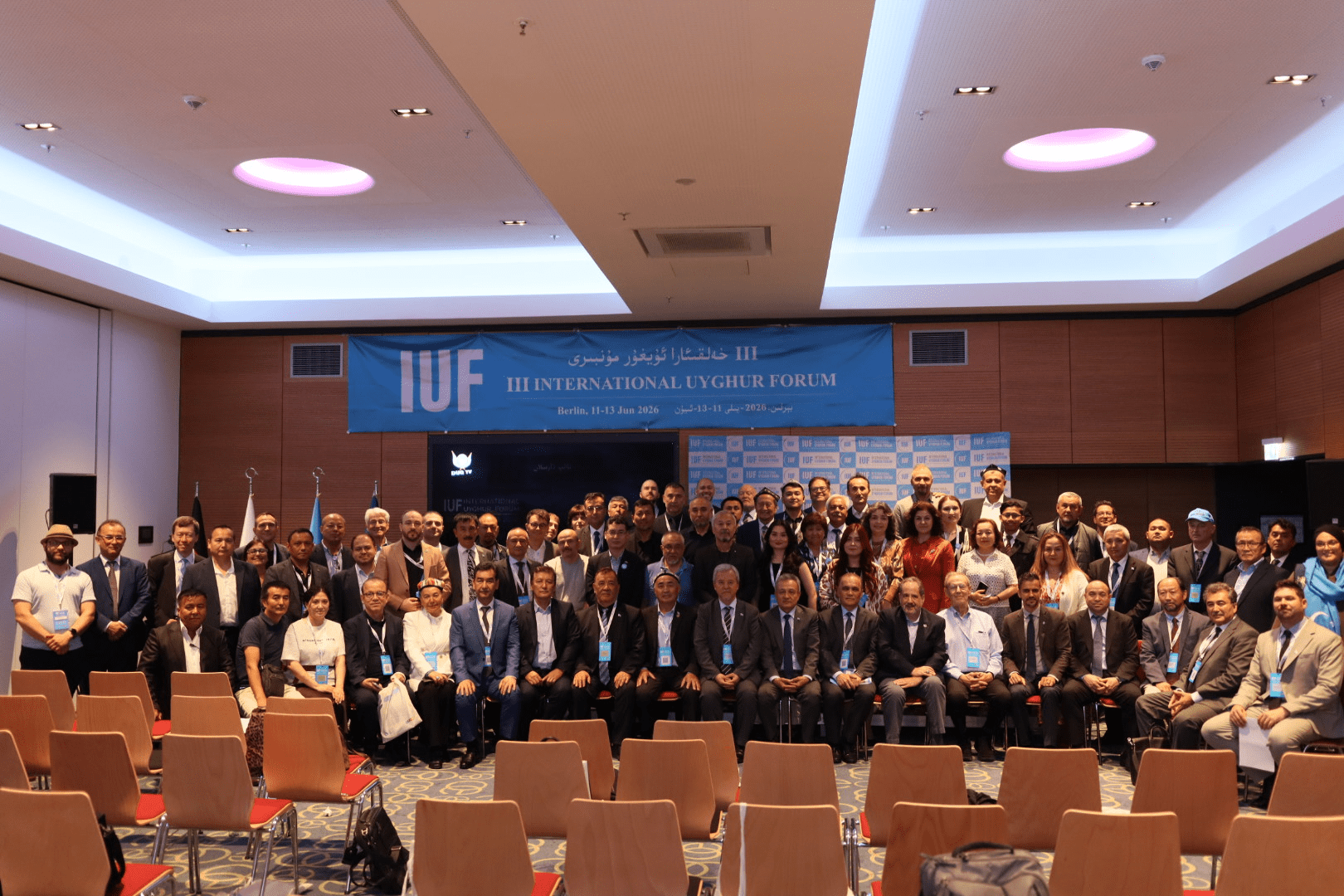
Against this backdrop, the 3rd International Uyghur Forum was convened in Berlin from June 11 to 13, 2026. More than just an international conference, the Forum represented a collective effort to ensure that the Uyghur genocide does not disappear from the global conscience. It brought together policymakers, scholars, human rights defenders, journalists, legal experts, and Uyghur community leaders to assess the past decade, examine current challenges, and chart a course for future international action.
This year’s Forum was organized under the theme: “Ten Years of the Camps: From Recognition to Responsibility – What Comes Next?” This title reflected an important reality. In recent years, the international community has made significant progress in recognizing the atrocities committed against the Uyghur people.
The United States and eleven parliaments and senates have formally recognized China’s actions as genocide. In August 2022, the Office of the United Nations High Commissioner for Human Rights(OHCHR) concluded that serious human rights violations had been committed in East Turkistan and that these abuses may constitute crimes against humanity. The independent Uyghur Tribunal in London, after an eighteen-month investigation involving witness testimony, expert evidence, and extensive documentation, concluded that the Chinese government bears responsibility for genocide and crimes against humanity under international law.
These developments marked significant milestones, shattering years of denial and establishing a growing international consensus about the nature and scale of the crimes committed against the Uyghur people. Recognition alone, however, has not changed realities on the ground. While the world’s understanding has evolved, China’s policies have continued. Large-scale arbitrary detention has been transformed rather than abandoned. Forced labor programs have expanded into global supply chains. Uyghur children continue to be separated from their families through state-run boarding schools. Mosques, shrines, cemeteries, and other expressions of Uyghur cultural identity remain under systematic attack. At the same time, sophisticated systems of digital surveillance and transnational repression have enabled the Chinese government to extend its control beyond its borders.
This is precisely why the Forum’s central question was not whether genocide had occurred—that debate has largely been settled—but rather what meaningful responsibility should follow recognition. If governments acknowledge genocide, what obligations do they have? How can international institutions move beyond statements of concern toward concrete accountability? What practical measures can states adopt to protect Uyghurs, prevent further atrocities, and ensure that those responsible are held accountable? These questions formed the foundation of discussions throughout the three-day Forum.
A Global Gathering for a Shared Cause
The Forum brought together more than 220 participants from 24 countries, including over 80 speakers representing a broad spectrum of expertise and experience. Participants included members of parliament, senators, diplomats, academics, lawyers, journalists, human rights defenders, civil society leaders, researchers, and representatives of Uyghur organizations from around the world.
Over three days, the program featured six expert panels, eight roundtable discussions, four parallel side events, and a photo exhibition documenting the realities of the Uyghur genocide. The discussions extended far beyond documenting human rights violations. Participants explored how rapidly changing geopolitical dynamics are shaping the international response to the Uyghur genocide. Sessions examined China’s evolving ethnic policies, transnational repression, forced labor, global supply chains, Europe–China relations, strategic competition between the United States and China, developments concerning Taiwan and Tibet, and the role of Muslim-majority countries in responding to ongoing atrocities.
Rather than serving solely as a platform for solidarity, the Forum functioned as a space for strategic thinking. Experts and policymakers exchanged ideas on practical advocacy strategies, legal mechanisms, and diplomatic initiatives capable of transforming recognition into meaningful international action. At a time when attention to the Uyghur crisis risks diminishing, the Forum demonstrated that sustained international engagement remains both possible and essential.
Organizing Under Pressure: When Holding a Conference Becomes an Act of Resistance
To an outside observer, organizing an international conference may appear to be a matter of logistics—booking a venue, inviting speakers, arranging travel, and coordinating a program. For the World Uyghur Congress (WUC) and its partners however, every major international gathering has involved something else entirely: resisting systematic efforts by the Chinese government to prevent it from taking place.
Since its establishment in 2004, the WUC has faced persistent attempts to disrupt its activities through diplomatic pressure, economic coercion, disinformation campaigns, and transnational repression. These tactics are designed not only to isolate the organization internationally but also to silence the voices of Uyghurs who seek to advocate peacefully for human rights and accountability.
The pressure begins long before a conference opens its doors. One of the earliest examples occurred in 2006 during the Second General Assembly of the World Uyghur Congress in Munich. Chinese diplomatic missions in Germany reportedly contacted German politicians individually, urging them not to attend the event. Despite these efforts, numerous members of the German Parliament chose to participate, sending a powerful message that democratic institutions would not allow foreign governments to dictate whom elected representatives could meet.
Over the years, these tactics have grown increasingly sophisticated. Hotels hosting WUC events have frequently received direct approaches from Chinese officials. Managers have been telephoned, visited in person, and urged to cancel reservations. In some cases, hotels were warned that accommodating Uyghur conferences would lead to the loss of Chinese tourism or the cancellation of existing bookings. There have even been instances where significantly higher financial offers were reportedly made to persuade venues to withdraw from agreements already concluded with the organizers.
Perhaps the most striking example occurred ahead of the WUC’s Eighth General Assembly in Sarajevo in 2024. Alongside diplomatic pressure, individuals posing as tourists reportedly checked into conference hotels and attempted to monitor activities, provoke incidents, and create security concerns. As a result, organizing such events has increasingly required not only close cooperation with local law enforcement but also the engagement of professional private security services.
The pressure is not limited to institutions. Uyghur delegates themselves often become targets. Many participants have reported receiving threats that their relatives in East Turkistan would face further harassment, arbitrary detention, or imprisonment should they attend WUC meetings. Others have been told that distancing themselves from the organization—or cooperating with Chinese authorities—could improve the situation of family members back home. This strategy seeks to weaponize family ties, forcing Uyghurs living safely abroad to choose between exercising their fundamental freedoms and protecting loved ones who remain under Chinese control. It is one of the clearest manifestations of China’s campaign of transnational repression.
At the same time, large-scale online disinformation campaigns have become a regular feature surrounding major WUC events. Networks of anonymous or coordinated social media accounts frequently target organizers and speakers with personal attacks, false allegations, and efforts to undermine the credibility of the organization. The objective is not merely reputational damage but to discourage participation, create confusion, and weaken international solidarity.
The 3rd International Uyghur Forum in Berlin was no exception. Before the Forum began, individuals visited the conference venue, photographed meeting facilities, and attempted to gather information about the event. Hotel management reportedly received messages suggesting that hosting the Forum could lead to boycotts by Chinese tourists and tour operators. Similar pressure has been documented in previous years, forming part of a broader pattern of attempts to interfere with events organized by Uyghur groups abroad.
Despite these efforts, the hotel stood by its commitment. The Forum proceeded exactly as planned. For many participants, this outcome carried significance far beyond the successful organization of a conference. It demonstrated that sustained pressure from an authoritarian government does not inevitably succeed when democratic institutions, private partners, and civil society choose to uphold fundamental freedoms.
The organizers also wish to acknowledge the professionalism and cooperation of the German police and relevant security authorities, whose support played an important role in ensuring that participants could meet peacefully and safely. Their commitment to protecting freedom of assembly and expression reflects values that remain indispensable to democratic societies.
In today’s increasingly contested international environment, safeguarding the space for civil society has become an essential part of protecting human rights. The story of the 3rd International Uyghur Forum is therefore not only about what happened inside the conference rooms. It is also about defending the very possibility of bringing people together to speak openly about genocide, accountability, and justice. Sometimes, ensuring that a conversation can take place is itself an act of resistance.
By Dolkun Isa, Chair of the IUF preparation Committee (IUF), President of the Uyghur Center for Democracy and Human Rights (UZDM), Co-Founder and Former President of the (WUC)