A Conflict With Winners, Losers, and Open Questions
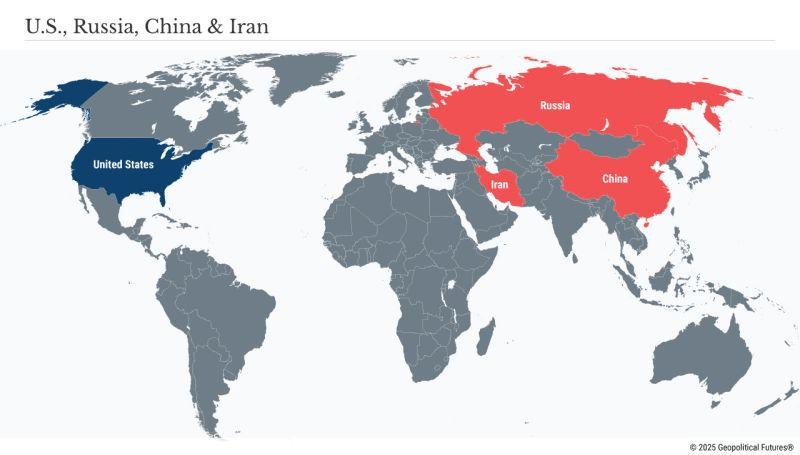
Four months into the war between the United States, Israel, and Iran, the conflict has done more than reorder the battlefield. It has scrambled assumptions about which powers are actually rising and which are losing ground. According to a recent assessment from The Soufan Center, the fallout could rearrange the geopolitical chessboard entirely, with some great powers losing influence while middle powers capitalize on new alliances, trade arrangements, and supply-chain shifts.
Iran, despite absorbing months of punishing strikes, may emerge from the war in a stronger regional position than expected. Tehran has demonstrated it can threaten to close the Strait of Hormuz at will, giving it outsized leverage over global shipping, and an incoming windfall of sanctions-relief cash could further embolden hardliners aligned with the Islamic Revolutionary Guard Corps. China, for its part, has played a strategically patient game, avoiding direct confrontation while quietly absorbing discounted Iranian oil and stepping in to backfill energy and fertilizer supplies for U.S.-aligned states like the Philippines. Russia has had a mixed war: higher energy prices have helped bankroll its own war effort in Ukraine, even as Gulf states’ growing interest in Ukrainian drone technology has elevated Kyiv’s diplomatic standing.
China’s Air Defense Credibility Crisis
One of the more consequential, and underreported, threads of the war is what it has revealed about Chinese-made weapons systems on the open battlefield. As IJ-Reportika detailed in its investigation, Air Defence Collapse: HQ-9B Exposed in Iran and Pakistan, China’s flagship long-range surface-to-air export, the HQ-9B, appears to have failed to perform as advertised in two separate theaters within roughly a year.
Iran had built a layered air defense shield combining the HQ-9B with Russian S-300PMU-2 batteries, the indigenous Bavar-373, and shorter-range systems like Tor-M2 and Pantsir-S1. On paper, that architecture should have significantly complicated any air campaign. In practice, coordinated US-Israeli strikes reportedly neutralized radar nodes and command infrastructure within hours, with the Israeli military claiming it had dismantled the majority of Iran’s air defenses across western and central provinces. Our investigative reports found out that the HQ-9B’s radar and command nodes were among the first systems degraded, with electronic warfare and stealth penetration cited as likely factors. Earlier reports out of Pakistan’s 2025 confrontation with India had already raised similar doubts about the system’s resilience under electronic-warfare conditions.
For Beijing, the strategic fallout extends well beyond Iran. The HQ-9B is deployed around sensitive zones including Beijing, Tibet, and the South China Sea. If two separate conflicts in two different regions reveal the same vulnerabilities, that pattern is difficult to dismiss as coincidence, and it raises hard questions for the dozens of countries that have purchased or considered purchasing Chinese air-defense hardware as a cheaper alternative to Western or Russian systems. As IJ-Reportika’s analysis put it, affordability without survivability isn’t deterrence, it’s illusion.
Will China Help Iran (and Russia) Build a Nuclear Arsenal?
A harder question hanging over the postwar landscape is whether China might extend Iran the kind of assistance that, decades ago, helped transform Pakistan into a nuclear weapons state. Beijing’s role in Pakistan’s nuclear program, including transfers of weapons-design know-how and material support through the 1980s and 1990s, is well documented and remains one of history’s clearest cases of state-sponsored proliferation between allied powers.
Whether China would replicate that playbook with Iran, potentially alongside Russian assistance, is speculative at this stage rather than confirmed policy. Several factors make it a live question worth watching rather than a settled outcome:
- Strategic incentive: An Iran emboldened by sanctions relief and a demonstrated ability to choke the Strait of Hormuz is, from Beijing’s perspective, a useful counterweight to U.S. influence in the Gulf, without China needing to commit its own forces.
- Existing dependency: China already relies on discounted Iranian oil for a meaningful share of its imports, and has a comprehensive strategic partnership agreement with Tehran, giving both governments reasons to deepen ties rather than distance themselves.
- Russia’s parallel interest: Moscow has already supplied Iran with intelligence, satellite imagery, and drone technology during the war, mirroring the assistance Tehran has given Russia’s own war effort via Shahed drones. A trilateral arrangement extending into more sensitive technology transfer isn’t implausible given that precedent.
- Counter-pressure: At the same time, China has historically been wary of overt nuclear proliferation that could trigger sanctions regimes or jeopardize its own diplomatic standing, caution that shaped (and limited) aspects of its assistance to Pakistan as well.
No public evidence currently confirms that China or Russia is helping Iran build nuclear weapons capability. But the strategic logic, a proven precedent in Pakistan, a battlefield-tested partner in Tehran, and a shared interest in counterbalancing the United States, is exactly the kind of alignment that has produced proliferation before. It’s a scenario analysts and intelligence services will be watching closely in the months ahead, not a foregone conclusion.
The Bigger Picture
Taken together, the war’s military and technological fallout point in a consistent direction: old assumptions about who holds power, and through what means, are being tested in real time. Iran has gained unexpected leverage. China’s defense-export credibility has taken a hit precisely when Beijing is trying to position itself as a global arms supplier. And the question of nuclear proliferation, quiet, patient, and historically proven through Beijing’s past dealings with Islamabad, is back on the table for Tehran, with Moscow potentially in the mix. How these threads resolve will shape Gulf security, Sino-American competition, and nonproliferation policy for years to come.
Related reading: Air Defence Collapse: HQ-9B Exposed in Iran and Pakistan, IJ-Reportika’s investigation into the battlefield performance of China’s flagship air-defense export.