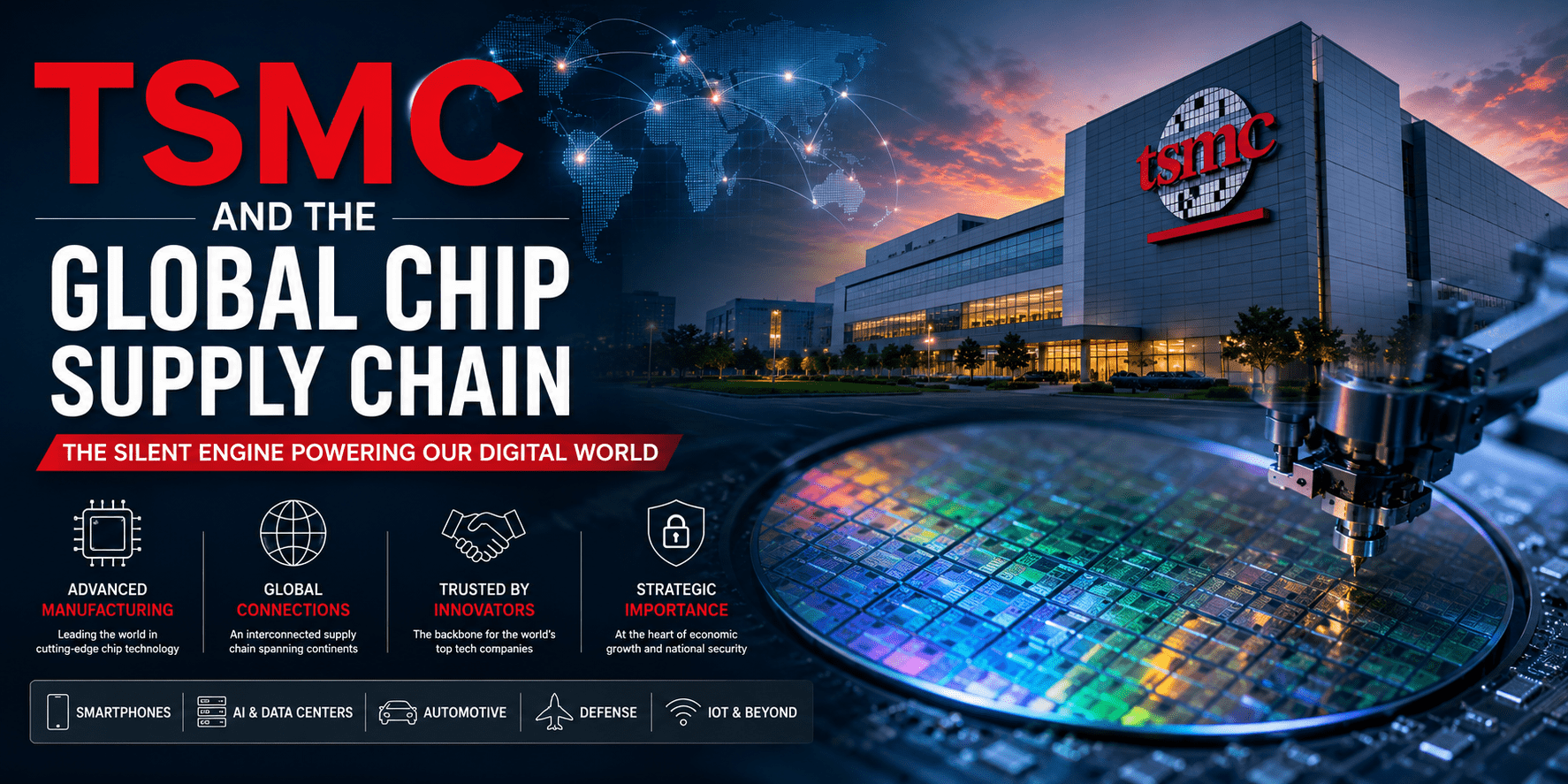
The modern digital economy runs on semiconductors, but few consumers realize how dependent it is on a single company. Taiwan Semiconductor Manufacturing Company (TSMC), headquartered in Hsinchu, Taiwan, has become the cornerstone of the global semiconductor industry. Its manufacturing facilities produce many of the world’s most advanced logic chips, powering everything from artificial intelligence systems and smartphones to fighter aircraft, cloud computing infrastructure, medical devices, and autonomous vehicles.
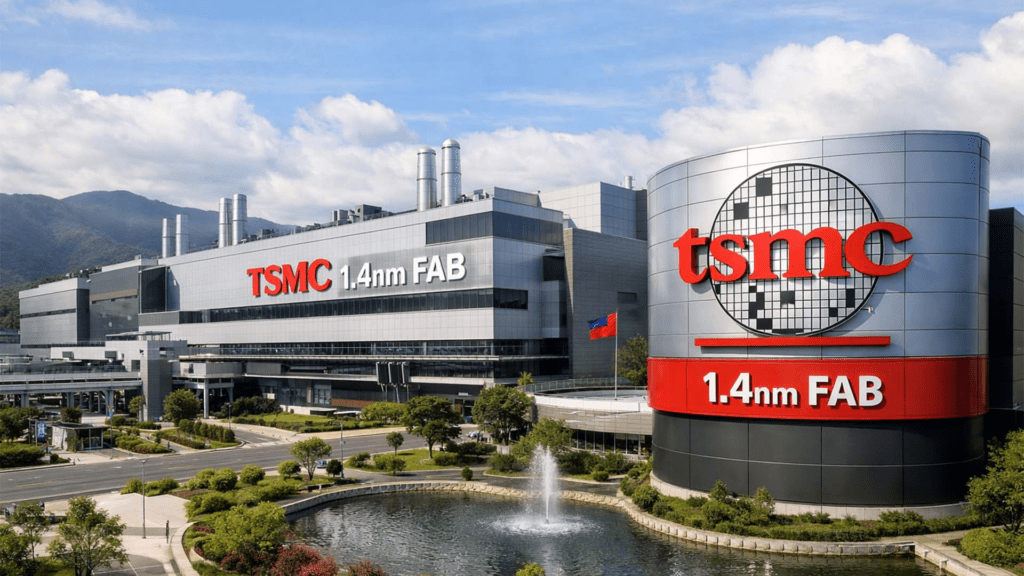
Unlike consumer technology companies whose products are visible to the public, TSMC operates largely behind the scenes. It does not sell smartphones, laptops, or graphics cards under its own brand. Instead, it manufactures chips designed by hundreds of customers around the world, making it the world’s largest dedicated semiconductor foundry. This business model has transformed the technology industry and elevated Taiwan into one of the most strategically significant economies in the world.
The Foundry Revolution
When Morris Chang founded TSMC in 1987, the semiconductor industry was dominated by integrated device manufacturers (IDMs), companies that both designed and manufactured their own chips. Firms such as Intel, Texas Instruments, and IBM controlled every stage of production, from research and design to fabrication and packaging.
Chang introduced a fundamentally different model. TSMC would focus exclusively on manufacturing chips designed by other companies, allowing customers to avoid the enormous capital costs associated with building fabrication facilities. This “pure-play foundry” model enabled a new generation of semiconductor companies to concentrate on innovation rather than manufacturing.
The approach reshaped the industry. Companies including Apple, NVIDIA, AMD, Qualcomm, Broadcom, MediaTek, and countless others could invest heavily in chip architecture and software while relying on TSMC’s increasingly sophisticated manufacturing capabilities.
Over time, this division of labor accelerated innovation across the semiconductor ecosystem. Design firms competed to develop more powerful processors, while TSMC continuously advanced fabrication technologies, increasing transistor density, reducing power consumption, and improving production yields.
Building the World’s Most Advanced Manufacturing Capability
Semiconductor manufacturing is one of the most complex industrial processes ever developed. Producing a modern processor requires hundreds of highly controlled manufacturing steps carried out in ultra-clean environments where even microscopic particles can ruin an entire silicon wafer.
A state-of-the-art fabrication plant, commonly known as a “fab,” can cost more than US$20 billion to construct and requires years of planning before production begins. The facilities contain some of the most sophisticated manufacturing equipment ever built, including extreme ultraviolet (EUV) lithography machines manufactured exclusively by the Dutch company ASML.
Modern semiconductor fabrication also depends on precision lasers, advanced photoresists, specialty chemicals, ultra-pure silicon wafers, industrial gases, robotic automation systems, and highly specialized engineering expertise. The technical complexity of this ecosystem creates substantial barriers to entry, making it difficult for new competitors to replicate TSMC’s capabilities.
As a result, TSMC has spent decades refining its manufacturing processes while investing tens of billions of dollars annually in research, development, and capacity expansion.
The Global Supply Chain Behind Every Chip
Although TSMC is often viewed as the center of the semiconductor industry, no country or company can produce advanced chips independently. Semiconductor manufacturing relies on an interconnected global supply chain in which different nations specialize in specific technologies.
The United States dominates semiconductor design and electronic design automation (EDA) software through companies such as NVIDIA, AMD, Qualcomm, Broadcom, Synopsys, and Cadence.
The Netherlands occupies a critical position through ASML, the world’s only producer of extreme ultraviolet lithography systems, without which the most advanced semiconductor nodes cannot be manufactured at commercial scale.
Japan supplies many of the industry’s essential materials and manufacturing equipment, including silicon wafers, specialty chemicals, photoresists, and precision manufacturing components. Companies such as Tokyo Electron, Shin-Etsu Chemical, SUMCO, and JSR remain indispensable suppliers to global semiconductor production.
South Korea contributes significantly through memory chip production, with Samsung Electronics and SK Hynix leading the global markets for DRAM and NAND flash memory.
Taiwan specializes in advanced logic manufacturing, semiconductor packaging, testing, and integrated circuit design, creating one of the world’s most comprehensive semiconductor ecosystems.
This international division of labor reflects decades of technological specialization rather than deliberate geopolitical planning. However, it has also created strategic vulnerabilities, as disruptions affecting any major supplier can reverberate throughout the entire industry.
TSMC’s Central Position
TSMC occupies a unique position because it manufactures chips for many of the world’s largest technology companies, many of whom compete fiercely in downstream markets.
Apple’s A-series and M-series processors, which power iPhones, iPads, and Mac computers, are manufactured by TSMC.
NVIDIA relies on TSMC to produce many of its advanced graphics processing units (GPUs), which have become essential for artificial intelligence training and high-performance computing.
AMD depends on TSMC for Ryzen processors, EPYC server chips, and Radeon graphics products.
Qualcomm’s Snapdragon processors, Broadcom’s networking chips, Amazon’s custom cloud processors, Google’s Tensor chips, and numerous automotive and industrial semiconductors are also manufactured using TSMC’s advanced fabrication technologies.
This customer base illustrates an unusual aspect of TSMC’s business model. Rather than competing with its clients, TSMC serves as a neutral manufacturing partner, enabling innovation across the broader semiconductor industry.
Semiconductor Manufacturing at the Leading Edge
The semiconductor industry advances through increasingly smaller manufacturing processes, commonly referred to as process nodes. Although node names such as 7 nanometer, 5 nanometer, or 3 nanometer no longer correspond directly to physical transistor dimensions, they remain useful indicators of technological progress.
Each successive generation enables manufacturers to place more transistors onto a silicon chip while improving performance and reducing power consumption.
Developing these manufacturing processes requires years of research and billions of dollars in investment. As process technologies become more sophisticated, the number of companies capable of producing leading-edge semiconductors has steadily declined.
Today, only a handful of manufacturers possess the technical capability to produce chips at the most advanced commercial nodes, and TSMC remains one of the industry’s leading innovators in this field.
Artificial Intelligence Has Increased Strategic Importance
The rapid expansion of artificial intelligence has significantly increased global demand for advanced semiconductors.
Training modern large language models and deploying AI services require massive numbers of high-performance graphics processing units and specialized AI accelerators. These processors rely on advanced manufacturing technologies that only a limited number of foundries can provide at commercial scale.
Cloud service providers including Amazon Web Services, Microsoft Azure, Google Cloud, and Meta continue to expand AI infrastructure, driving sustained demand for cutting-edge chips.
The AI boom has therefore reinforced TSMC’s importance, transforming semiconductor manufacturing from a commercial industry into a matter of national economic and technological competitiveness.
Geographic Concentration and Supply Chain Risk
Despite the industry’s global nature, advanced semiconductor manufacturing remains geographically concentrated.
Most of TSMC’s leading-edge fabrication capacity is located in Taiwan, creating concerns among governments and multinational corporations about supply chain resilience. The concentration of advanced manufacturing in a single location means that natural disasters, infrastructure disruptions, cyberattacks, or geopolitical instability could affect industries around the world.
The COVID-19 pandemic illustrated how fragile global supply chains can become during periods of disruption. Semiconductor shortages delayed automobile production, increased consumer electronics prices, and exposed the dependence of numerous industries on uninterrupted chip supplies.
These experiences prompted governments to reconsider industrial policy and encourage greater geographic diversification of semiconductor manufacturing.
Diversification Without Replacement
In response to growing concerns about supply chain resilience, TSMC has expanded manufacturing beyond Taiwan.
The company has established fabrication projects in Arizona in the United States and Kumamoto in Japan while exploring additional international investments. These projects support broader efforts by governments to strengthen domestic semiconductor capabilities and reduce geographic concentration.
However, diversification should not be interpreted as replacing Taiwan. The island continues to host TSMC’s most advanced research, engineering talent, supplier ecosystem, and manufacturing infrastructure. Reproducing this ecosystem elsewhere requires more than constructing fabrication plants. It involves developing skilled workforces, supporting industries, logistics networks, and long-term collaboration between government, academia, and private industry.
Industry analysts generally expect Taiwan to remain the center of TSMC’s most advanced manufacturing for the foreseeable future, even as overseas production expands.
The Future of the Global Semiconductor Ecosystem
The semiconductor industry is entering a period of unprecedented investment. Governments across the United States, Japan, the European Union, South Korea, and other economies are providing financial incentives to strengthen domestic manufacturing and reduce strategic vulnerabilities.
At the same time, demand for semiconductors continues to grow as artificial intelligence, electric vehicles, autonomous systems, advanced telecommunications, and cloud computing expand worldwide.
Rather than creating a fully self-sufficient semiconductor industry within any single country, these investments are likely to produce a more geographically diversified yet deeply interconnected global supply chain.
Within this evolving landscape, TSMC is expected to remain one of the industry’s most influential companies. Its technological leadership, manufacturing expertise, and extensive customer relationships continue to place it at the center of the global semiconductor ecosystem. As governments increasingly view advanced chip production through the lens of economic security and strategic competition, the company’s role extends well beyond commercial manufacturing. It has become a critical component of the infrastructure that underpins the modern digital economy.