1. You were one of the prominent student leaders during the 1989 Tiananmen Square movement. Looking back after more than three decades, how has that experience shaped your personal philosophy and commitment to defending human rights?
The Tiananmen Movement changed the course of my life. Like millions of Chinese students at the time, I believed China could become a freer and more just society through peaceful reform. We were not seeking chaos or revolution. We wanted dialogue, accountability, and dignity. For a brief moment in the spring of 1989, freedom seemed within reach.
The June 4 massacre shattered the hope for immediate change, but it also gave me a lifelong mission. After surviving prison and eventually rebuilding my life in the United States, I came to understand that freedom is never guaranteed. It survives only when ordinary people are willing to defend it, often at tremendous personal cost.
The courage of the Tiananmen protesters, the unknown Tank Man, the Tiananmen Mothers, the Hong Kong Alliance in Support of Patriotic Democratic Movements of China, and countless others has taught the world two enduring lessons. First, the Chinese people deeply value freedom, democracy, and human dignity, and many are willing to sacrifice everything to defend those ideals. Second, acts of conscience have a power that transcends both time and borders. The courage shown in Beijing in 1989 has inspired people across generations and continents, just as struggles for freedom elsewhere inspired us.
For me, human rights are not an abstract ideology. They begin with the belief that every person possesses inherent dignity and the right to speak, worship, organize, and think freely. That conviction has guided every stage of my life—from supporting political prisoners and their families to documenting abuses, defending historical memory, and helping a new generation of activists.
More than three decades later, I remain optimistic because I continue to work closely with courageous people inside China and around the world who refuse to give up despite relentless repression. Their determination reminds me every day that the desire for freedom cannot be extinguished. The Chinese Communist Party possesses enormous power, but history repeatedly shows that regimes cannot permanently suppress the human aspiration for liberty.
The China I believe in—the China that so many people continue to strive and sacrifice for—is still alive. It is this “different China” that gives me hope for the future.
2. Throughout years of activism, advocacy, and public life, what has kept you motivated despite the many personal and professional challenges you have faced?
The simplest answer is hope and duty.
Over the years, I have been inspired by extraordinary courage from ordinary people. I have worked with lawyers who defended clients they knew would bring them persecution rather than success. I have met Christians who continued to worship despite repeated arrests. I have seen citizen journalists risk years in prison simply to tell the truth, and young people inside and outside China who refuse to surrender their conscience despite enormous pressure. Working alongside these individuals constantly reminds me that this struggle is much larger than any one person. Every act of courage affirms my belief that the desire for freedom cannot be extinguished, no matter how powerful the dictatorship.
That hope is matched by an equally strong sense of duty. Many of my friends remain imprisoned, disappeared, or under constant surveillance. Compared to them, I consider myself a fortunate survivor. I have the privilege of living in a free country, raising my family in freedom, and speaking openly without fear of imprisonment. That freedom is not simply a gift—it is a responsibility. It obliges me to speak for those whose voices the Chinese Communist Party is trying to silence. In fact, that sense of duty has only grown stronger as the CCP has become more powerful and more ambitious in exporting its repression beyond China’s borders. History presents moments when someone must refuse to step aside. I often think of Gandalf standing before the Balrog in The Lord of the Rings. His words, “You cannot pass,” capture something important for me. We may not know whether we will ultimately prevail, but there are moments when our responsibility is simply to stand our ground, defend what is right, and refuse to yield to tyranny.
My Christian faith has become another source of strength. It reminds me that justice ultimately belongs to God, while our responsibility is to remain faithful—to pursue truth, defend the dignity of every person, and serve others regardless of the outcome. Faith gives me confidence that no dictatorship has the final word, even when the road ahead seems long.
3. As Executive Director of Human Rights in China and co-founder of Humanitarian China, what do you consider the most significant achievements of these organizations, and what challenges remain ahead?
Humanitarian China was founded with a simple conviction: those who risk everything for freedom should never stand alone. In the early years, I funded much of its work with my own savings while working in finance because I believed supporting courageous individuals was not charity—it was an investment in China’s democratic future. Over the past two decades, Humanitarian China has provided humanitarian assistance to thousands of political prisoners, families of prisoners of conscience, refugees, and victims of persecution. Every case reminds us that history is ultimately shaped by individuals who refuse to surrender their principles.
Human Rights in China has spent nearly four decades documenting abuses, preserving historical memory, and advocating internationally for universal human rights and democratic values in China. Since I became Executive Director, we have expanded our work into digital rights, internet freedom, citizen journalism, artificial intelligence and human rights, and transnational repression. As the CCP regime evolves, human rights organizations must evolve as well.
One achievement I am especially proud of is helping build stronger connections among courageous people inside China, the Chinese diaspora, researchers, journalists, technology experts, and democratic governments. No single organization can confront today’s challenges alone. By bringing these communities together, we are helping build an international coalition that supports those resisting the Chinese Communist Party’s repression and keeps alive the vision of a free and democratic China. My goal is for HRIC to be the leading international voice representing that different China—the China striving for freedom, the rule of law, and human dignity.
The challenges ahead are equally significant. Repression has become global and increasingly technology-driven. Artificial intelligence, digital surveillance, and transnational repression allow governments to monitor, intimidate, and silence critics far beyond their own borders. Defending human rights is therefore no longer only about exposing abuses inside China. It also requires protecting democratic societies from censorship, intimidation, surveillance, and foreign interference.
At the same time, I believe the future ultimately depends on the Chinese people themselves. One of our greatest challenges is encouraging a new generation—and particularly China’s educated middle class—to become active participants in shaping their country’s future. The COVID pandemic shattered many assumptions about the competence and legitimacy of Xi Jinping’s leadership. Disillusionment has grown, but widespread fear continues to discourage collective action. Helping transform that quiet dissatisfaction into peaceful civic engagement may be one of the defining challenges of the coming decade. I remain optimistic because, throughout China’s modern history, meaningful change has always begun with ordinary citizens finding the courage to act.
4. Your career spans activism, finance, philanthropy, and human rights leadership. How have these diverse experiences influenced your approach to promoting democracy and supporting persecuted individuals?
Every stage of my life has taught me a different lesson about how lasting change happens.
The student movement taught me idealism and the power of ordinary people. Prison taught me resilience and the importance of never surrendering one’s conscience. My years in finance taught me that ideals alone are not enough—institutions, resources, and professional management are equally essential for lasting impact.
When I founded Humanitarian China, there was no external funding. I relied largely on my own earnings from my finance career to launch and sustain the organization. That experience convinced me that financial independence is often what makes long-term human rights work possible.
Having lived as a student activist, political prisoner, finance professional, philanthropist, and nonprofit leader has also helped me connect naturally with people of different generations, professions, cultures, and countries. Whether I am speaking with former political prisoners, entrepreneurs, government officials, or young activists, I have learned that trust is built by listening first.
Today, I combine moral conviction with practical discipline. Effective advocacy requires credible research, strategic communication, sound management, and strong partnerships. Defending freedom is not only about exposing abuses—it is about building institutions and developing future leaders who can sustain democratic values for generations.
5. Human Rights in China has become an important source of research on censorship, digital rights, and transnational repression. What principles guide your organization in ensuring credibility and factual accuracy?
Credibility is our most valuable asset.
Governments thrive on disinformation, so organizations defending human rights must meet an even higher standard of evidence.
We are fully aware that ill-intentioned players sometimes feed us with sensational fabricated news in order to discredit us. We verify information through multiple independent sources whenever possible. We distinguish clearly between verified facts, informed assessments, and allegations. We also correct mistakes openly when new evidence emerges.
Our objective is advocacy through facts. The truth itself is powerful enough.
We also collaborate with academic institutions, journalists, technology researchers, and civil society organizations because independent verification strengthens everyone’s work.
6. HRIC has recently documented AI-powered surveillance and transnational repression. How do you see these developments shaping global human rights over the next decade?
Artificial intelligence is transforming repression just as rapidly as it is transforming innovation. The Chinese Communist Party is already using AI to strengthen censorship, surveillance, and social control, and these technologies are increasingly being exported beyond China’s borders.
The danger is not simply technological—it is political. If democracies fail to establish strong safeguards for privacy, free expression, and due process, models could gradually become normalized.
At the same time, AI can also empower human rights. It helps researchers analyze censorship, verify evidence, expose disinformation, and preserve historical memory.
I hope AI will empower individuals through open and decentralized models, rather than concentrate power in the hands of governments or a few dominant companies. I am especially concerned about the prospect of increasingly powerful centralized AI systems controlled by regimes like the CCP. That could become the most effective instrument of totalitarian control in history.
Technology itself is neutral. The real question is whether AI will empower individuals or strengthen power. Ultimately, the future of AI is not only a technological competition—it is a competition between values.
7. You have frequently spoken about preserving the memory of the 1989 Tiananmen movement. Why does historical memory remain one of the CCP’s greatest concerns?
Totalitarian governments fear memory because memory preserves alternative possibilities. As George Orwell wrote, “Who controls the past controls the future.” That is why the CCP devotes enormous resources to rewriting history.
The Tiananmen Movement demonstrated that millions of Chinese citizens openly demanded democracy, constitutional government, and freedom. It shattered the myth that the Chinese people neither desire nor are ready for democracy. The CCP also fears this memory because it committed one of the greatest crimes in modern Chinese history—sending fully armed PLA troops to kill peaceful civilians in Beijing before the eyes of the world.
More than three decades later, the Party still spends enormous resources censoring every mention of June Fourth because it understands that historical truth inspires future generations. Memory is dangerous to dictators because it reminds people that change is possible.
Remembering Tiananmen is not about dwelling on the past. It is about truth, justice, and preserving China’s democratic tradition. It reminds young people that another China has always existed—and still exists today: a China represented not by the CCP, but by citizens who continue to pursue freedom, democracy, and human dignity despite tremendous sacrifice.
8. Your recent reports highlight overseas influence operations and pressure on diaspora communities. How should democratic governments respond?
The CCP’s ultimate global ambition is to replace U.S. leadership and the democratic values it represents with a totalitarian model centered on the Chinese Communist Party. Transnational repression has expanded because, after the Tiananmen Massacre, the United States and many democratic countries chose to engage and integrate this regime instead of fundamentally confronting its nature. The CCP has used this opportunity to infiltrate democratic societies through a whole-of-society strategy, seeking to influence and control political institutions, businesses, universities, media, technology, and overseas Chinese communities.
We Chinese dissidents have been the first targets on the front lines. For decades, we have endured the CCP’s long arm of transnational repression—surveillance, intimidation, cyberattacks, threats against our families, and attempts to silence us. For too long, our warnings were ignored because many policymakers were more interested in the economic benefits of engagement with China.
Today, the United States has rightly begun to change course and recognize the threat posed by the CCP. But the response remains uneven. Stronger laws, more consistent enforcement, greater public awareness, and closer cooperation with civil society are still needed.
This is not only about protecting Chinese dissidents. It is about defending the sovereignty of democratic nations. No foreign regime should be allowed to intimidate people, manipulate public debate, or interfere with democratic institutions on American soil.
9. Which emerging trend concerns you most today?
The trend that concerns me most is the convergence of dictatorship and artificial intelligence. Never before have regimes possessed technologies capable of monitoring entire populations, manipulating information, and suppressing dissent on such a scale. Combined with transnational repression, AI could make dictatorship more powerful than at any time in human history.
Whether AI becomes a tool for human freedom or the ultimate instrument of totalitarian control will be one of the defining questions of the twenty-first century.
10. What role can investigative journalism play?
Independent investigative journalism is one of democracy’s strongest defenses.
Governments depend upon secrecy, fear, and manufactured narratives. Investigative journalists uncover evidence that allows citizens to make informed decisions.
They also preserve historical memory. Future generations will understand today’s human rights struggles because journalists documented them despite enormous risks. In an age of AI-generated misinformation, rigorous investigative journalism is becoming even more important.
Ultimately, defending truth is a shared responsibility. Human rights defenders, researchers, journalists, technologists, and ordinary citizens all play indispensable roles.
About Fengsuo Zhou
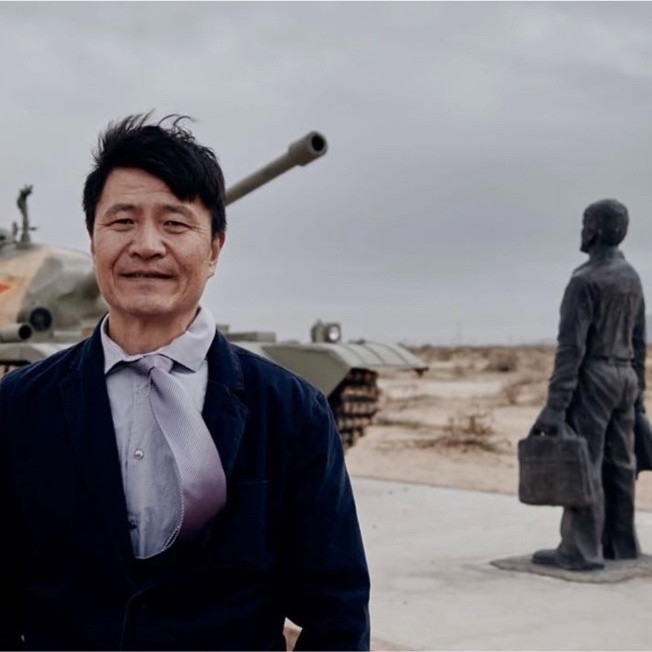
Fengsuo Zhou is a Chinese human rights advocate, former Tiananmen Square student leader, and Executive Director of Human Rights in China (HRIC). He also serves as President of Humanitarian China, an organization he co-founded to provide direct assistance to political prisoners, prisoners of conscience, and their families.
In the spring of 1989, Zhou was one of the prominent student leaders of the Tiananmen Square pro-democracy movement. Following the June 4th crackdown, he was imprisoned before eventually rebuilding his life in the United States, where he went on to build a career in finance while remaining deeply committed to human rights advocacy.
Zhou spent nearly two decades in the finance industry, including as a currency options trader at Bear Stearns in New York (1998–2001) and later as Director of Portfolio Oversight at AXA Rosenberg Investment Management in California (2001–2017). During this period, he co-founded Humanitarian China in 2007, initially funding its work with his own savings to support political prisoners, refugees, and victims of persecution in China.
Since March 2023, Zhou has served as Executive Director of Human Rights in China, a New York-based organization with nearly four decades of history documenting human rights abuses and advocating for democratic values in China. Under his leadership, HRIC has expanded its focus to include digital rights, internet freedom, citizen journalism, artificial intelligence and human rights, and transnational repression.