1. You began your journey studying music and film at Sarah Lawrence College, how did that shape your path into journalism?
Both involve storytelling, one with facts and one that’s more creative; and my music background helped with pacing. My college experience involved more than just the arts, as the academic classes required heavy research and writing. Those skills translate well into news, even if it’s different. Deadlines, for one, are a lot faster, but a lot of the skills are the same.
2. What personal experiences or influences have most shaped your perspective as a journalist today?
I didn’t grow up watching or reading the news, so that’s made me want to cover it in a way that my past self (as disinterested as she was) would also want to tune in and be informed. One of the main lessons I took away from my childhood was that by not watching the news myself, I ended up learning things from others, and it felt quite one-sided. That only increased during and after college.
When I joined our network I realized how crucial a fair and open press is. As Thomas Jefferson said: “An informed citizen is the only true repository of the public will.” These days when news often feels more hyper-partisan than ever, I’m hoping NTD can be a place people come to be informed and in-the-know.
3. As a broadcaster with NTD Television, how has your role evolved over the years, especially transitioning between anchoring and investigative reporting?
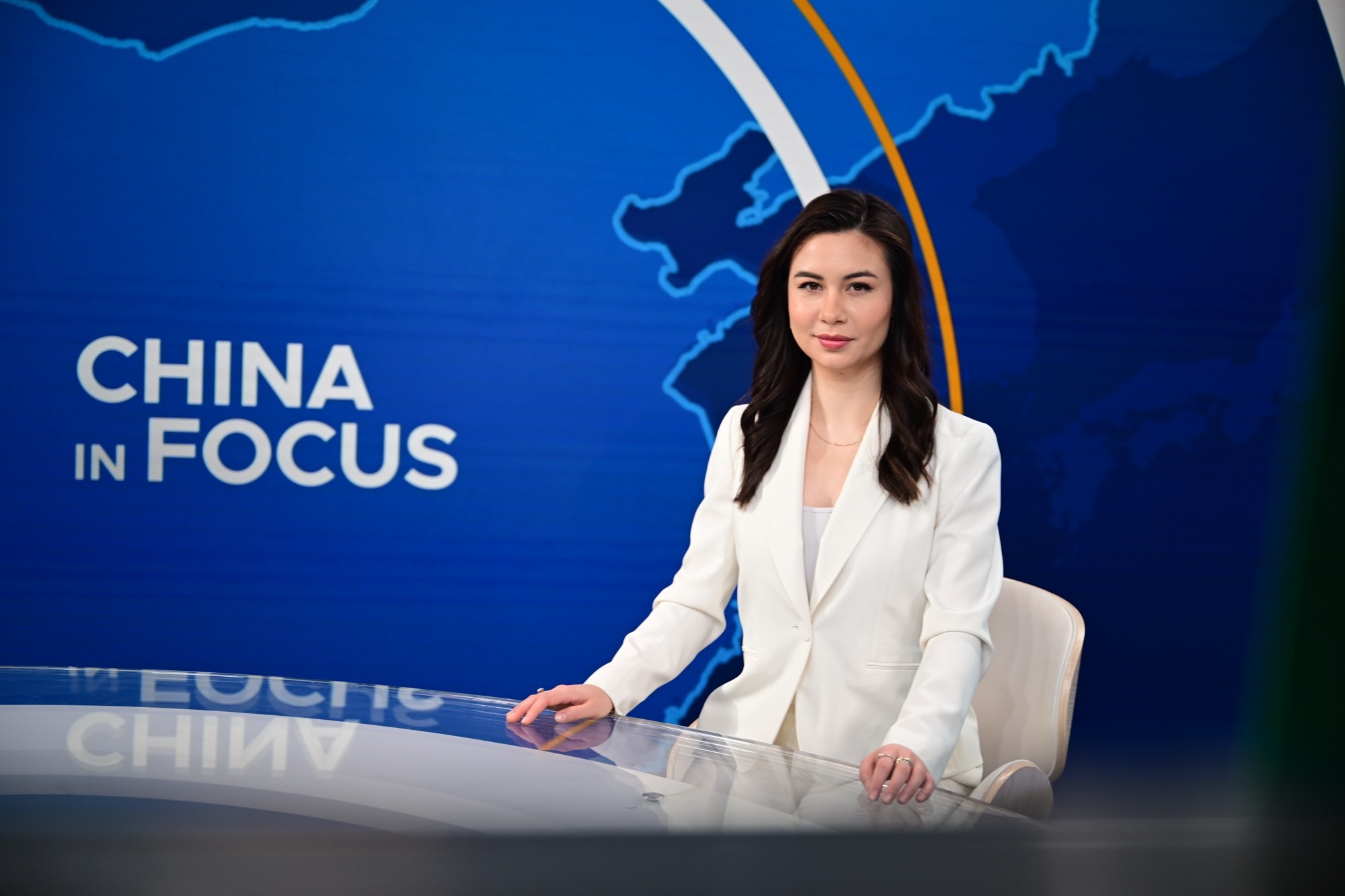
It’s definitely been a journey. Before the pandemic, there were a lot of in-person, on-location interviews. Then the pandemic hit and everything shifted to remote. That’s also when China in Focus launched. I stepped into the anchor role and never really left. I still wrote a lot, so transitioning to investigative reporting a few years later wasn’t that big of a shift. And a lot of those skills transferred over to our documentary Hollywood Takeover. And as the 2024 election season drew close, I was asked to anchor NTD’s evening news program in addition to China in Focus and learn about US politics and not just China news. It was definitely a challenge, but I think it was a good one. And now I get to bring all of those experiences together for my new prime time show Tiffany Meier Tonight.
4. You’ve worked across formats, from live news to documentaries, what are the biggest challenges in maintaining accuracy and depth across these mediums?
Each is unique. With live breaking news coverage, you’re often reporting and learning the facts in real time, sometimes just seconds ahead of the audience. I’d say it’s definitely more taxing mentally, as there’s a lot to juggle, but that’s really when your editorial training kicks in and helps direct the coverage as events unfold. With a longer format like a documentary, you have the luxury of a bit more time to flesh out the story and provide that depth and broader context. It should also be a big enough issue that’s relevant for years to come. And, of course, there’s also the opportunity to make it more creative and – hopefully – fun for the viewer.
5. With your upcoming new show, what gap in current media coverage are you aiming to address?
I’m really hoping that Tiffany Meier Tonight is a place people can feel both informed and entertained. One of our biggest goals is to reach younger viewers who have stepped away from traditional broadcast news and now only consume short-form content.
We’ll still cover the biggest stories of the day, with panels and expert interviews that span the political gamut and newsmakers – with the goal being respectful discussion that brings people together and not furthering the divide.
The main angle that’ll differentiate us from the others is a strong focus on national security; that’ll play to my background covering China news, and how big issues that seem far away around the world are already impacting us here, in America.
It’ll also have some fun segments – think level up skills in all aspects of life, tidbits from books or social media, and hearing from you, our viewers, about the topics that are important to you.
6. Your documentary Hollywood Takeover: China’s Control in the Film Industry examines foreign influence in entertainment, what key risks does this pose to global narratives?
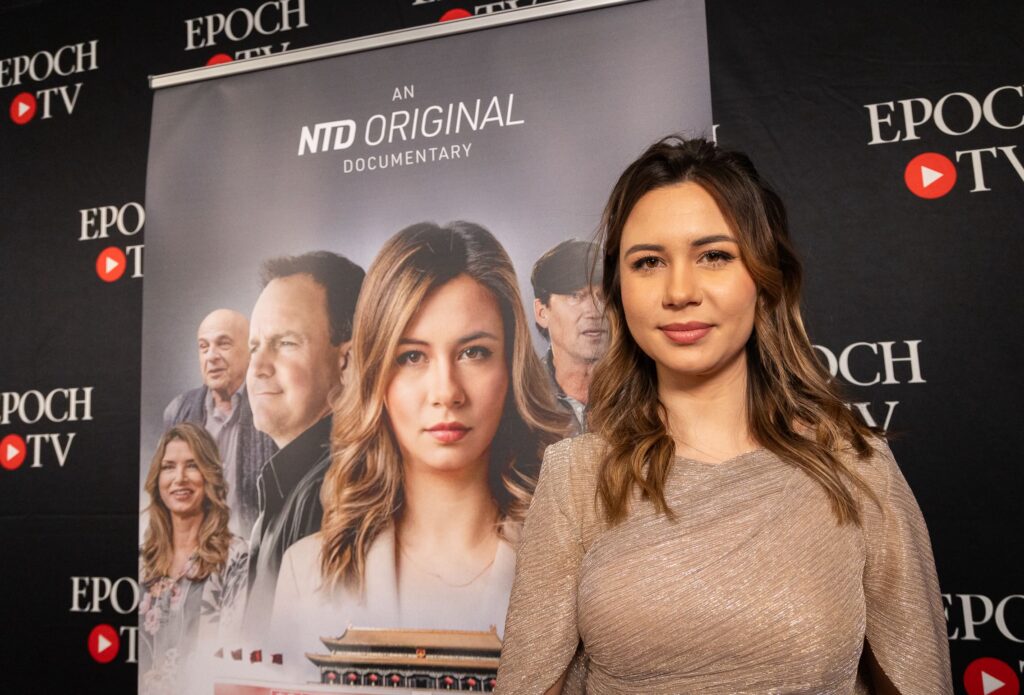
One of the biggest battlefields today is the human mind. If you can shape how people think, even the strongest military can become irrelevant.
Hollywood Takeover delves into the realm of soft power that’s not often spoken about, but that our adversaries, especially communist China, understands quite well. For example, when the movie Titanic first came out, Jiang Zeming was struck by how powerful it was with its emotional impact. He even required his Politburo members to watch it, to learn the power of emotion, and through that, suggestion.
Back then, Hollywood and film were the avenues for influence. Communist China also tapped into the education system with the Confucius Institutes, shaping what other nations’ youth learn and perceive about different governing systems.
Nowadays, it’s morphed over to the algorithmic arena, whether that’s TikTok or trends like CHINAMAXXING, where young people are influenced into only seeing the successful parts of China, and comparing that system to the west, without realizing the reality that most people in China have to live under.
Ultimately, it’s all about control, and eventually winning over a much bigger and better armed adversary, without firing a single shot.
I produced Hollywood Takeover with the hope that it would be an entertaining but eye-opening film about what freedom-loving countries are up against. And of course, it includes ways of countering that threat and ensuring our freedoms remain.
7. You’ve moderated discussions on critical minerals and supply chains, how do you assess the geopolitical implications of resource dominance today?
Critical minerals have been dominating headlines because of how reliant our modern life is on them. From smartphones to fighter jets, and especially batteries in electric vehicles, our AC units, etc., modern life runs on these minerals. But they’re often not profitable for companies to mine and refine on their own, so, over the years, China – through the use of state-subsidies – gobbled up a lot of mines around the world and has come to dominate the refining process to the point that most of the world is heavily reliant on them. There’s been growing awareness and concern over that, with the United States and allies trying to find ways of undoing years of shortsightedness.
This creates serious geopolitical risks. The concern is that if a war were to break out involving the United States and China sooner rather than later, the US might not have enough rare earths to keep modern life running, never mind military assets.
We’re starting to see progress – for example, new projects and partnerships in Brazil and Australia – but securing reliable supply chains for critical minerals remains one of the defining strategic challenges of our time.
8. In your reporting, how are global power dynamics shifting between state-driven and market-driven systems?
Currently, targeted sanctions against Iran’s elite are playing out. Some read the conflict in Iran and the Strait of Hormuz blockades as an example of the differing systems. On the US market-driven side, President Trump is highlighting that the US is not reliant on the strait. Rather, that’s China, and other state-driven nations that are feeling the squeeze. In some Asian nations, people are asked to stay home to conserve fuel.
However, the troubling trend here is the growing calls for socialism, big government, and the mentality of handouts and entitlement programs. NYC just elected a self-described Democratic Socialist, who promised all sorts of free things on the campaign trail and is already struggling on the financial front.
As Margaret Thatcher famously said: “The problem with socialism is that you eventually run out of other people’s money.”
Elements of those global power struggles are trickling down to the local level, where it goes back to cognitive influence and control. Through soft power and years of hand outs, more and more are voting for policies that will end up making life both harder and more expensive, and the government more powerful.
9. Based on your investigations, what are the most underreported geopolitical trends that deserve greater public attention?
Two areas come to mind. The protests that have been popping up inside China, whether that was the White Paper Movement led by students over the draconian Zero-COVID and censorship policies, the ones over failing housing developments and unpaid wages, or the ones involving the right to practice a faith not overseen by the party. What the Chinese Communist Party fears the most is the Chinese people realizing it’s an illegitimate governing force. Once lies and propaganda stop working, its grip on power begins to crumble.
There’s already more awareness on a global scale of the Chinese regime’s atrocities – whether that’s forced organ harvesting, or the targeting of prisoners of faith – from the Uyghurs in Xinjiang, to the House Christians, to the Tibetans, and the largest group inside China – the Falun Gong. More and more people, politicians, nations, are willing to speak out about those abuses. At some point, the Chinese regime won’t be able to silence them all.
Another area of growing awareness is transnational repression, where Beijing reaches beyond its borders to silence dissidents and critics in other nations. More and more states are implementing laws at the state level to push back and expose that, but that, coupled with the rising protests inside China, are trends to watch for going forward.
10. How can investigative journalism remain effective and credible amid rising information warfare and narrative control globally, and what role can platforms like IJ-Reportika play in upholding independent, fact-based reporting in this environment?
In a world of information overload and accessibility, investigative journalists are even more important as they can provide much-needed context. People need information they can trust.
And through years of credible reporting, and giving people the tools to sift through the noise and ever-growing mis- and disinformation, independent platforms like NTD, The Epoch Times, and of course IJ-Reportika, are places people can turn to for trusted, fact-based reporting.
You’re also seeing the rise of citizen journalism, so that points to the public’s need for a trusted source. The saturated information environment is actually a good opportunity for investigative journalism to thrive.
About Tiffany Meier
Tiffany Meier is an anchor, China news investigative reporter, and producer for NTD News based at the network’s global headquarters in New York City. Tiffany anchors NTD’s flagship shows “NTD Evening News” and “China in Focus” and co-moderates NTD’s special election coverage “The Nation Decides.” She produced the award-winning NTD Original documentary “Hollywood Takeover: China’s Control in the Film Industry.”