‘Hungry river’ phenomenon to blame for severe erosion of Mekong River banks in Laos

Upstream dams and sand mining have caused significant erosion along the Mekong River in western Laos, according to experts, devastating riparian communities in the impoverished Southeast Asian nation with high waters and powerful currents. But residents of those communities say they believe that other issues are to blame. Brian Eyler, director of the Southeast Asia Program and the Energy, Water, and Sustainability Program at the Stimson Center in Washington, D.C., said upstream activities had created a “hungry river” phenomenon responsible for the severe erosion. “There is a natural phenomenon called a ‘hungry river’ where a river which has been robbed of its sediments looks for new sediment to fill its course,” he said. “Sediment is taken out of a river system by upstream dams and sand mining, so when the river goes ‘hungry’ it pulls new sediment into it from river banks through erosion processes.” “Upstream dams in China have removed more than half of the sediment from the Mekong mainstream and now that Laos has built about 100 dams, the effects are being felt even more severely,” he said. If dams must be built, their designs should include sediment flushing mechanisms to allow sediment to pass through the structure, Eyler said. If they don’t include the flushing systems, the situation will “get worse and worse because the river will get hungrier and hungrier as time passes,” he added. Direct impact The dams are part of Laos’ ambitious plan to become the “battery of Southeast Asia” and boost the landlocked nation’s economy by selling the generated electricity to neighboring countries like Thailand. But the projects are controversial because of their environmental impact, displacement of villagers, and financial and power demand arrangements. Ian Baird, director of the Center for Southeast Asia Studies at the University of Wisconsin-Madison, said there are many factors responsible for the Mekong River erosion, including sand dredging and deforestation, though he agreed that the main cause is the “hungry water” phenomenon. “This phenomenon takes place because all the dams on the Mekong River collect all the sediment, [and] the water released from the dams has less sediment,” he said. “When the water gets hungrier, it causes erosion along the Mekong River bank in the region below the dams.” The erosion has a direct impact on riparian communities, causing the collapse of roads, and the washing away of land, forcing Laotians who live near the riverbank to relocate, Baird said. “The villagers who used to grow vegetables like tomatoes and chili peppers in the dry season on the riverbank can’t do that anymore,” he said. “If they still want to grow vegetables, they’ll have to grow them on higher ground, to which they’ll have to pump the water up. They’ll have to pay for electricity [to do that].” Growing vegetables on higher ground also means that the crops will not benefit from river sediment that acts as a natural fertilizer, so farmers will have to buy fertilizer as well, Baird said. Land subsidence from erosion has cracked this road near the bank of the Mekong River in Paksan, Bolikhamxay province, central Laos, July 16, 2022. Credit: RFA Many erosion ‘hotspots’ Lao officials point to other possible explanations for the erosion that wipes out houses and land in riparian communities. In Bokeo province in the northern part of the country, an entire village of 300 households was lost to the river over the past 24 years due to powerful waves caused by ship movement, an official from the province’s Natural Resources and Environment Department told RFA. “The culprit is the large and heavy ships weighing up to 100 tons running through the river,” he said. “The ships are the worst enemies of the riverbank. Their strong waves destroy the riverbank. Some waves are more than one meter (3.3 feet) high.” At least 73 kilometers (45 miles) of the 179 kilometers (111 miles) of Mekong River bank in central Laos’ Borikhamxay province is severely eroded, said Vixay Phoumy, director of the province’s Public Works and Transport Department at the agency’s annual meeting on July 7. Only 21 kilometers (13 miles) of the stretch is protected by retaining walls. “We have many hotspots in Thaphabath and Borikhan districts where the erosion is worse,” an official from the province’s Natural Resources and Environment Department told RFA.  “From our inspection, we know that the riverbank slides down the most in the rainy season,” he said. “Of course, some homes and farmland have been washed away too.” Farther downstream, strong currents in the Mekong have eroded about 90 kilometers, or nearly 50%, of riverbank, in Saravan province, an official of the province’s Natural Resources and Environment Department told RFA. A stretch of eroded riverbank along the Mekong River in Pakkading district, Bolikhamxay province, central Laos, July 2022. Credit: RFA ‘Our common problem’ The severe erosion is not confined to the Laos side of the Mekong River and affects banks on the Thai side as well, said Omboon Thipsuna, secretary-general of the Mekong Community Organizations Network Association, 7 Provinces, Northeastern Region (NCPO) in Thailand.  “The main cause is the upstream dams releasing and holding water,” she told RFA. “It’s obvious that the sediment has disappeared.” “The water goes up and down,” she said. “They [riparian residents] see it tumbling down every day.” Thipsuna called for bilateral talks between Laos and Thailand to find a solution to the erosion issue. “It’s our common problem,” she said. The Sanakham Dam, a proposed hydropower project on the Mekong mainstream between Xayaburi and Vientiane provinces in Laos will make the erosion worse, she said, adding that water levels currently can go up to four meters (13 meters) high daily. The cash-strapped Lao government can only afford to build erosion-prevention barriers in a few locations, leaving the residents of many other areas to deal with the issue on their own. “The Mekong River bank erosion has been occurring for years, causing a lot of concerns to our riparian residents,” said a villager in the town of Paksan, capital of…

Read More

Jokowi ends NE Asia tour aimed at bolstering support for G20 summit’s success

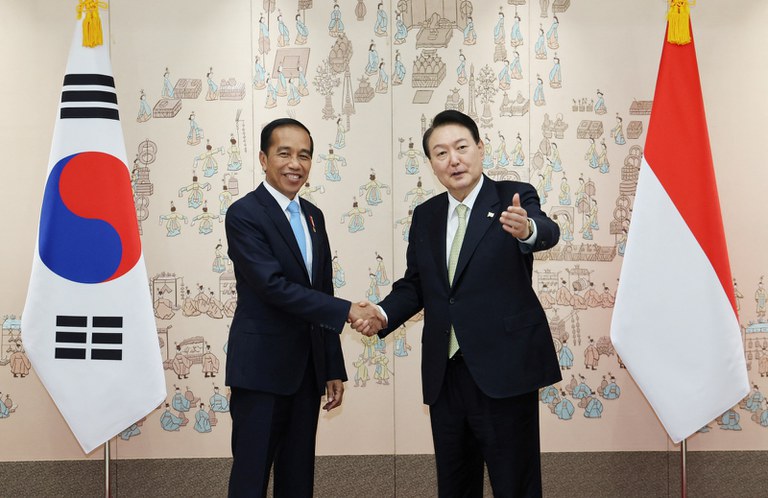
Joko “Jokowi” Widodo, the leader of G20 President Indonesia, undertook a carefully curated tour of Northeast Asia this week to ensure multilateral support for the group’s summit in November amid divisions over Russia’s war in Ukraine, analysts said. The Indonesian president visited China, Japan and South Korea – all countries with important trade and investment ties to Southeast Asia’s largest economy. Jokowi’s trip sent “a message of concrete cooperation and friendship amid a global situation steeped in rivalry and containment efforts,” Indonesian Foreign Minister told reporters in Seoul, the last leg of Jokowi’s five-day tour. “The leaders appreciated President Jokowi’s leadership in contributing to global peace,” she said. Indonesia has often strived to balance its relations between China and its rival superpower, the United States. But in his role as this year’s holder of the revolving G20 presidency, Jokowi has had to step up his diplomatic game by playing a mediatory role to blunt the wedge that Russia’s invasion of Ukraine created in the group, observers said. On one side, western countries in the Group of Twenty have condemned Russia for invading Ukraine. On the other, member-states including China, Indonesia and India, have refused to follow suit and still maintain ties with Moscow. Still, there is no doubt Jokowi wants the G20 summit, scheduled for November in Bali, to be a success, analysts said. “The trip was relevant to Indonesia’s chairmanship of the G20,” David Sumual, chief economist at Bank Central Asia, told BenarNews, an RFA-affiliated news service. “Indonesia wants to make sure the G20 summit is successful and attended by all members,” he said. According to Agus Haryanto, an analyst at Jenderal Soedirman University in Purwokerto, Indonesia is concerned about the prospect of no agreement at the Bali summit. “At the G20, Indonesia faces a major challenge on what the outcome of the G20 summit in November will be,” he said. “With good relations with the three countries [China, Japan and South Korea], Indonesia is looking for support to smoothen things out and reduce tensions.” Jokowi, whose term ends in 2024, wants to leave a legacy of being a peacemaker and reaffirm the country’s “independent and active” foreign policy, Agus said.  “During his first term, the president paid less attention to foreign affairs. Now in his second term, Jokowi has shown that domestic politics and foreign policy are equally important.” Tense meetings Under Indonesia’s presidency, G20 meetings have been fraught, as most have occurred after the invasion of Ukraine in late February. At the group’s foreign ministers’ meeting in Bali earlier in July, Russian Foreign Minister Sergey Lavrov walked out – at least once – during what he called the “frenzied castigation” of Moscow over Russia’s invasion of Ukraine. Before that, top U.S. British, Canadian and Ukrainian financial diplomats walked out as a Russian official addressed a G20 meeting in Washington on April 20. “The trip will also undoubtedly strengthen support for Indonesia’s G20 presidency, especially in preparation for the summit” in Bali, Foreign Minister Retno said on Thursday about her boss’s visits to Beijing, Tokyo and Seoul. Indonesian President Joko Widodo (left) shakes hands with South Korean President Yoon Suk-yeol at the Presidential Office in Seoul, July 28, 2022. Credit: Yonhap via Reuters ‘Respect international law’ Jokowi’s trip to Northeast Asia also showcased Indonesia’s non-aligned foreign policy, which helped him secure U.S. $13 billion in investment pledges in total from China, Japan and South Korea. At a meeting between Jokowi and Japan’s top executives on Wednesday, 10 Japanese companies pledged a total of U.S. $5.2 billion in investments in the next few years, Indonesian officials said. These include a pledge by carmaker Toyota Motor Corp to invest $1.8 billion to build its electric vehicles in Indonesia over the next five years. In Seoul, South Korean companies expressed intentions to invest $6.72 billion, including in the electric vehicle battery, steel and gas sectors.  In addition, China said it wanted to increase crude palm-oil imports from Indonesia by 1 million tons, worth $1.5 billion. While investment pledges are welcome, Ninasapti Triaswati, an economist at the University of Indonesia, cautioned about economic and defense deals with China in light of Beijing’s growing assertiveness in the South China Sea. “China’s aggressive actions in the area are causing regional tensions. Likewise, regional tensions between China and Taiwan and Japan will have a negative impact on the ASEAN region and East Asia.” In a meeting with Japanese Prime Minister Fumio Kishida, Jokowi stressed the importance of peace in the South China Sea, said Retno, Indonesia’s top diplomat. The only way to maintain stability and peace is to respect international law, especially UNCLOS 1982,” she said, referring to the United Nations Convention on the Law of the Sea. BenarNews is an RFA-affiliated news service.

Read More

China announces three exercises in S. China Sea as Taiwan issue raises tensions

In a regional show of strength China announced three almost-simultaneous military exercises in the South China Sea between July 27 and 31, just as reports emerged that the U.S. House of Representatives Speaker Nancy Pelosi may embark on her Asia-Pacific tour on July 29. The Guangdong Maritime Safety Administration (MSA) issued three navigation warnings GD70/22, GD71/22, GD73/22 advising ships against entering three designated areas in the South China Sea during time slots starting July 27 and finishing July 31. A navigation warning is a public advisory notice to mariners about changes to navigational aids and current marine activities or hazards including military exercises. Coordinates provided by the Guangdong MSA show three areas close to China’s mainland but one of them lies only some 240km from Pratas Island, claimed by both the People’s Republic of China and Taiwan but controlled by Taipei. Prior to these drills, the Chinese military held two exercises back to back from July 16-20 and July 20-22, also in the South China Sea. One of them covered an area of nearly 100,000 square kilometers (38,610 square miles). China often holds military exercises at short notice as a form of protest in response to U.S. naval activities and political developments that Beijing deems “hostile.” The unusually high frequency of drills this month shows China-U.S. tensions have been raised by Pelosi’s reported Taiwan visit and the presence of the Ronald Reagan Carrier Strike Group in the South China Sea. Six warnings China has responded strongly against the rumored trip which, if confirmed, would be the first visit by a U.S. House Speaker to Taiwan since 1997. In his telephone conversation with U.S. President Joe Biden on Thursday Chinese President Xi Jinping warned Washington against “playing with fire” over Taiwan. “Playing with fire will only get you burnt. I hope the U.S. is clear on this,” state news agency Xinhua quoted Xi as saying during the phone call. Before the Xi-Biden meeting, different Chinese government agencies had already issued at least six official warnings against the visit, with the Defense Ministry on Thursday threatening that “actions are the best answer.” Countries in the region are watching these latest developments closely, said Shahriman Lockman, Director of Malaysia’s Institute of Strategic and International Studies (ISIS). “The concern here is how China would seek to retaliate if Pelosi were to visit Taiwan,” Lockman said. “If that retaliation took place in the South China Sea, perhaps in the form of a deployment of combat aircraft to the Spratlys [a disputed island chain], it would underscore to other countries the growing risks of US-China rivalry,” he said. U.S. media reported that Nancy Pelosi, the third most senior figure in the American political system, would depart for an Asia-Pacific tour on Friday.  Both Bloomberg and NBC quoted anonymous sources as saying that the tour would take Pelosi to some U.S. allies in the region, including Japan and Singapore, but whether she would make a stop in Taiwan remained “unclear.” Some leading American China experts have called on the U.S. House Speaker to postpone any Taiwan visit. House Speaker Nancy Pelosi speaks at the Capitol in Washington on July 21, 2022. U.S. officials say they have little fear that China would attack Pelosi’s plane if she flies to Taiwan. CREDIT: AP Avoid confrontation Bonnie Glaser, Director of the Asia program at the German Marshall Fund of the United States and Zack Cooper, senior fellow at the American Enterprise Institute, wrote in the New York Times that the event would be seen by Beijing as “a serious provocation.” “Chinese leaders might be willing to risk an escalation such as challenging Ms. Pelosi’s plane or flying military aircraft directly over Taiwan for the first time,” they said. “Leaders on all sides must wake up and find off-ramps to avoid a dangerous confrontation that neither side wants,” the two analysts said, arguing that a crisis in the Taiwan Strait would put the island in a very difficult situation. Shahriman Lockman from Malaysia’s ISIS suggested that, should Pelosi decide to skip Taiwan, the Americans “could attempt to present this as a demonstration of restraint and maturity.” “I think there is a good middle ground here which is for Pelosi to telephone Tsai Ing-wen from Japan so she won’t need to visit Taiwan but at the same time, be able to show her support,” Lockman said. The U.S. does not have diplomatic relations with Taiwan, which Beijing considers a Chinese province, but it is obligated by law to provide the island with defense capabilities. During his conversation with the Chinese leader on Thursday Biden made clear that Washington “strongly opposes unilateral efforts to change the status quo or undermine peace and stability across the Taiwan Strait,” according to a White House press release. The office of Taiwanese President Tsai Ing-wen on Friday thanked Biden for his continuous support, the official Central News Agency reported. “The Presidential Palace expresses its gratitude … and looks forward to China’s shared responsibility” in maintaining peace and stability across the Taiwan Strait,” the report said. 

Read More

Academic under house arrest after writing about improving Vietnam’s Communist Party

The former director of the SENA (Southeast and North Asia) Institute of Technology Research and Development has been placed under house arrest and banned from leaving Vietnam amid a probe into allegations of ‘abusing democratic freedoms’ for submitting a series of recommendations on improving the ruling Communist Party of Vietnam. On Wednesday the Ministry of Public Security said the Investigation Security Agency had decided to probe Nguyen Son Lo, 74, under Article 331 of the Criminal Code. The ministry did not explain why the investigation had been launched, saying the Investigation Security Agency was “focusing on investigating, collecting documents, and consolidating evidence on the criminal acts of the accused and related individuals … according to the provisions of law.” Lo’s close friend Nguyen Khac Mai, director of the Hanoi-based Minh Triet Cultural Research Center, said his colleague was a highly-decorated war hero who turned to study and offered his insights on the situation of the country and ways to improve people’s lives. “Recently he founded a think-tank on cultural research and development,” said Mai. “He told us ‘the issue of culture has become a huge issue these days for the nation’ so he wanted to contribute to this field.” He said his friend had written a number of books to advise the country’s leaders, offering recommendations on Vietnam’s economy and culture. “The Central Inspection Commission [of the ruling Communist Party of Vietnam] came to SENA to work with him and confirmed they had not forbidden him from expressing his opinions or making recommendations. They just asked him not to spread them widely,” Mai said. Lo was advised not to send his books to provincial Party secretaries or National Assembly deputies. He was told to send them internally to bodies such as the Central Organizing Commission, the Central Inspection Commission, the Central Commission on Propaganda and Education, the Secretariat and the Politburo of the party’s Central Committee. According to Mai, Lo agreed to send his comments only to responsible officials but did not understand why he was being investigated. Last year, Bach Thong district police in Bac Kan province, published an article titled “Suggestions to build the Party or act against the Party.” The article referred to the SENA Institute and claimed it had written an open letter about the 13th National Congress of the Party expressing incorrect and distorted views on Party and State. Mai said his colleague was not acting against the party. “He only has a constructive mind. He wants to contribute, correct mistakes, improve, make this Party and government more civilized and cultured, more humane, more popular, and kinder.” “That’s his aspiration and I think 90 to 100 million people also want the same. No one wants to overthrow the regime, they just want it to be better.” “Less corruption, more humanity, less immoral behavior, no land grabbing but negotiation and proper compensation. That is his wish like mine and others,” said Mai. On July 4, the Vietnam Union of Science and Technology Associations issued a decision to suspend the operations of the institute and take steps to abolish it, saying its establishment and operations violated regulations. According to Mai, SENA is a civil society organization, legally registered with the state and its members are former high-ranking cadres such as Nguyen Manh Can, former deputy head of the Central Organizing Commission of the Communist Party of Vietnam.

Read More

UN Security Council joins condemnation of Myanmar junta’s execution of 4 activists

The U.N. Security Council condemned the Myanmar military’s execution of four democracy activists over the weekend but stopped short of calling for new sanctions against the junta as its forces continued attacks in the country’s Sagaing region. A statement issued on Wednesday by the 15 members of the council echoed one issued on Monday by the Association of Southeast Asian Nations (ASEAN) denouncing the killings of the activists despite numerous appeals that their death sentences be reconsidered.  The Myanmar military, which overthrew the elected government in a February 2021 coup, said on Monday that it had executed the activists for aiding acts of terror as part of the civilian opposition and resistance to the regime. The Security Council response “noted ASEAN’s call for utmost restraint, patience and efforts to avoid escalating the situation, and for all parties concerned to desist from taking actions that would only further aggravate the crisis.”  The statement also called for the full implementation of the five-point consensus agreed to in April 2021 to end to violence in post-coup Myanmar and put the country back on the path to democracy. And it called for the immediate release of deposed leaders President Win Myint and State Counsellor Aung San Suu Kyi. Security Council members also called for “an immediate halt to attacks on infrastructure, health and education facilities, for full respect for human rights and the rule of law, and for full, safe and unimpeded humanitarian access to all those in need.” But Justice for Myanmar, a group of activists campaigning for justice and accountability for the people of Myanmar, criticized the U.N. council’s response as insufficient.  “Yet, no sanctions, no referral to the Int’l Criminal Court + members #China, #India & #Russia continue to arm the Myanmar military. Time UN Security Council ends its shameful inaction!” the group tweeted. The Group of Seven (G7) foreign ministers of Canada, France, Germany, Italy, Japan, the United Kingdom, and the United States, and the High Representative of the European Union also condemned the executions. “These executions, the first in Myanmar in over thirty years, and the absence of fair trials show the junta’s contempt for the unwavering democratic aspirations of the people of Myanmar,” they said in a statement issued Thursday.   “We continue to condemn in the strongest terms the military coup in Myanmar and express deep concern about the political, economic, social, humanitarian and human rights situation in the country,” they said. Thousands flee homes in Sagaing The criticism by the U.N. and G7 came as at least 10 civilians, including two teenagers, were killed in Sagaing’s Khin-U township and more than 10,000 others from 17 villages fled their homes amid clearance operations by junta forces that began last week, local sources told RFA on Thursday. Northwestern Myanmar’s Sagaing region has the largest number of participants in the anti-junta Civil Disobedience Movement, a strike of professionals like doctors and teachers to resist military rule, and the strongest armed resistance to the junta.  Among the dead in Khin-U township are Khant Nyein, 13, from Myin Daung village; National League for Democracy township organizer Aung Naing Win, 35, from Shin Min Dway village; Aung Hman, 66, from In Daing Gyi village; Htay, 52, from Myin Daung village; Si, 89, and Ohn Thee, 35, from Letpanhla village; and Pho Khoo, 18 from Laung Shey village, the sources said.  RFA does not yet know the identities of the others killed. A township resident, who found the charred body of Aung Naing Win, said the army brutally killed ordinary civilians. “The military has been attacking villages in the area in four columns in the past 10 days,” he said, adding that soldiers burned about 50 houses and mostly slit the throats of those who were killed. The elderly woman named Si died on Wednesday when her house in Letpanhla village was set on fire, another local said. “The woman died in a fire that burned 11 houses,” said the local who declined to be identified for safety reasons. “They set fire to the house knowing that she was inside.” Another township resident said more than 10,000 people from 17 villages were forced to leave their homes and around 50 homes were destroyed by fire due to the military raids in the area. “There are about 12 villages in the surrounding area, and there must be about 12,000 to 13,000 people [who have fled their homes], the person said, adding that residents usually ran to nearby communities about two or three miles away. A resident of Moung Kyauk Taw village, who did not want to be named for safety reasons, said he saw the soldiers set fire to the village, destroying more than 20 houses. “It wasn’t an accidental fire. It was arson. We have witnesses,” the person said, adding that he and others watched soldiers enter the community and saw three or four of them set fire to the houses.  “We lost everything, and we have no place to live. We can’t buy any palm leaves [for roofing], and we don’t have money. We are now living under bullock carts,” he said. Locals said they did not know which battalion the soldiers who raided the villages were from. RFA could not reach military spokesman Maj. Gen. Zaw Min Tun or Sagaing military council spokesman Aye Hlaing for comment. Myo Aung, an official from the township’s Letpanhla village, said the actions of Myanmar’s junta were “cruel and inhumane.” Rural areas bear brunt The latest killings came despite claims by the shadow National Unity Government (NUG) that public administrations under its direction control around 80% of the region’s rural areas in 36 townships where the military has not been able to exert its influence. “People’s police forces have also started to be established to ensure the rule of law in areas where the public administrations have begun to operate,” said NUG spokesman Kyaw Zaw. Public administration officials said the NUG hands down its policy and agenda to public administration groups at the township level…

Read More

USS Ronald Reagan reenters South China Sea amid tension over Pelosi visit

The aircraft carrier USS Ronald Reagan and its strike group re-entered the South China Sea and is heading north as China threatens military action should U.S. House Speaker Nancy Pelosi make a visit to Taiwan. The carrier left Singapore after a five-day port call on July 26, according to a statement from the U.S. 7th Fleet.  The statement did not specify the USS Ronald Reagan’s current location but the U.S. Navy released a couple of photos of the carrier refueling-at-sea with the replenishment oiler USNS Tippecanoe in the South China Sea on Wednesday. Data provided by the ship-tracking website Marine Traffic show the USNS Tippecanoe was well inside the South China Sea at the time of the replenishment operation. The ship’s projection shows it is moving northwards. While this doesn’t necessarily mean the aircraft carrier would take the same route, some Taiwan watchers say it may sail near the island in the coming days. An analyst who wishes to stay anonymous due to the sensitivity of the issue told RFA they think the Ronald Reagan will “sail close to the east side of Taiwan in a show of power but will not engage in any confrontation with China’s People’s Liberation Army.” Chinese state-supported Global Times meanwhile quoted Song Shingling, a Chinese military expert, as saying that “if the U.S. carrier strike group attacks relevant islands in the South China Sea or clashes with Chinese warships and fighter jets, this may equal to creating a conflict.” USNS Tippecanoe’s past track from July 21 to July 28. CREDIT: Marine Traffic Pelosi briefed on Taiwan trip  The Indo-Pacific Command declined to confirm whether the Ronald Reagan, the U.S. Navy’s only forward-deployed aircraft carrier, will sail near Taiwan. “We have nothing further on this,” said Cmdr. Tiffani Walker, U.S. Indo-Pacific Command spokeswoman. The democratic island, that China considers one of its provinces, has come under the spotlight after press reports that the Speaker of U.S. House of Representatives Nancy Pelosi would visit Taiwan in early August. Neither the U.S. Government nor Pelosi’s office confirmed the news but President Joe Biden indicated that the military “did not think it was a good idea right now” for Pelosi to visit Taiwan. Defense Secretary Lloyd Austin said on Wednesday he had spoken with Pelosi and given her a security assessment of the situation but did not comment on Taiwan, Reuters reported. President Biden is expected to discuss the visit, among other issues, with his Chinese counterpart Xi Jinping in a telephone call on Thursday. It would be the fifth such conversation since Biden became U.S. president in January 2021. China has already responded strongly against the rumored trip, with a PLA spokesman threatening that should Pelosi insist on making the visit, “the Chinese military will never sit idly by, and will certainly take strong and resolute measures” to retaliate. The USS Ronald Reagan is a Nimitz-class nuclear-powered supercarrier, homeported in Yokosuka, Japan. It has been deployed to the U.S. 7th Fleet area of operations “in support of a free and open Indo-Pacific region,” said the U.S. Navy.  

Read More

Vietnam religious freedoms group hits out at sentences against Peng Lei members

The Vietnam Interfaith Council has lashed out at the harsh sentences given to six members of the Peng Lei Buddhist House. They were sentenced last week to a combined 23 years and six months in prison on charges of “abusing democratic freedoms” under Article 331 of the Criminal Code. Police suspended investigations into further allegations of incest and fraud but indicated that other charges may follow. The council, dedicated to fighting for religious freedom, has members representing five major religions in Vietnam: Buddhism, Catholicism, Protestantism, Cao Daism, and Hoa Hao Buddhism. In a statement, the organization expressed “strong opposition to the unjust and illegal case, which is contrary to the basic principles of international justice.” At the same time, the group denounced the Vietnamese government for “defying the Universal Declaration of Human Rights of the United Nations, depriving the Vietnamese people of basic freedoms, including freedom of religion and speech, freedom of association and the right to a fair trial.” Thich Khong Tanh, co-chair of the Interfaith Council, explained to RFA why the group released its statement. “The Interfaith Council has been present in Vietnam for ten years, and its stance has always been to advocate for freedom of religion, belief, and human rights in Vietnam,”. This [sentence] is a serious violation of the issue of freedom of religion and belief. It is also insulting the dignity of human beings, just as the human rights of the people in Vietnam are not respected.” During the trial, one of the issues raised by the judge was that the Peng Lei sect refused to register to join the Vietnamese Buddhist Church. Retreat head Le Tung Van said this was because he feels the Vietnamese Buddhist Church is “unworthy” to participate. Thich Khong Tanh said the Peng Lei sect has the right to practice Buddhism the way they want, not necessarily by joining the Vietnamese Buddhist church: “You naturally force people into your circle for you to manage, then how can that be called freedom of belief, freedom of thought, freedom of religion.” “Vietnamese Buddhism is very diverse, and the practice takes many forms. Because of the Buddha’s teachings, there are forty-eight thousand cultivation methods. So depending on the people, if we can access something taught by the Buddha and if we want to practice, we can all get it.” Since 2016 Thich Khong Tanh has held the role of Co-Deputy Director of the Executive Council of the Sangha of the Unified Buddhist Sangha of Vietnam, an organization separated from the church dating back to the Republic of Vietnam. Another member of the Vietnam Interfaith Council, Cao Dai clerk Hua Phi, also told RFA that the statement the organization made to affirm the religious freedom of its members and to denounce the repressive policy of the Vietnamese state was justified: “We fight for Vietnam to have freedom of religion. No one has the right to force us to follow a religion that we don’t like.” “Secondly, we find that for these unjust judgments, the online community as well as the activists need to speak up to let the world know that in Vietnam, rulers often impose their own versions of the law and use punishment to deter those who do not obey the will of the authorities.” He also said that the government initially falsely accused Le Tung Van of committing incest, but later used Article 331 to try to show the nature of this case is to abolish unregistered groups such as Peng Lei sect On July 26, the leader of Long An Provincial Police said there was not enough evidence to charge Le Tung Van with incest and said he would stop accepting allegations of this crime. The Interfaith Council also “requested the United Nations Human Rights Agency, international human rights organizations, and liberal and democratic countries around the world to pressure the communist government of Vietnam to respect human rights and comply with international judicial procedures and principles for the Vietnamese people.”

Read More

Unidentified men target the homes of executed Myanmar activists

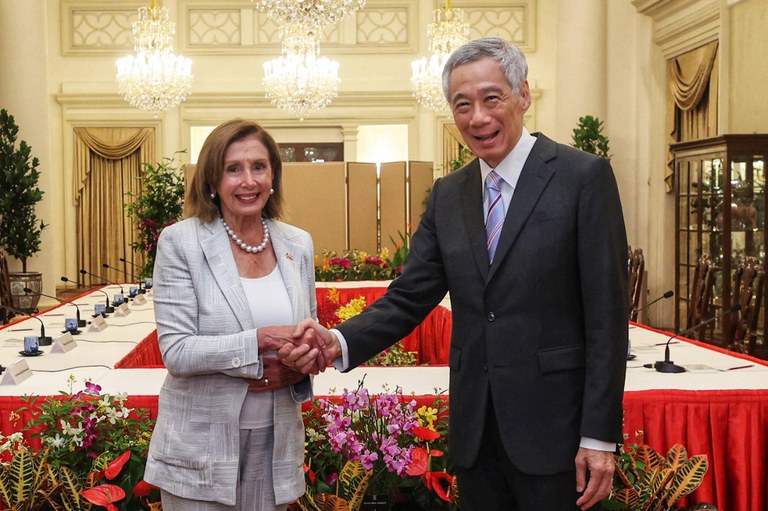
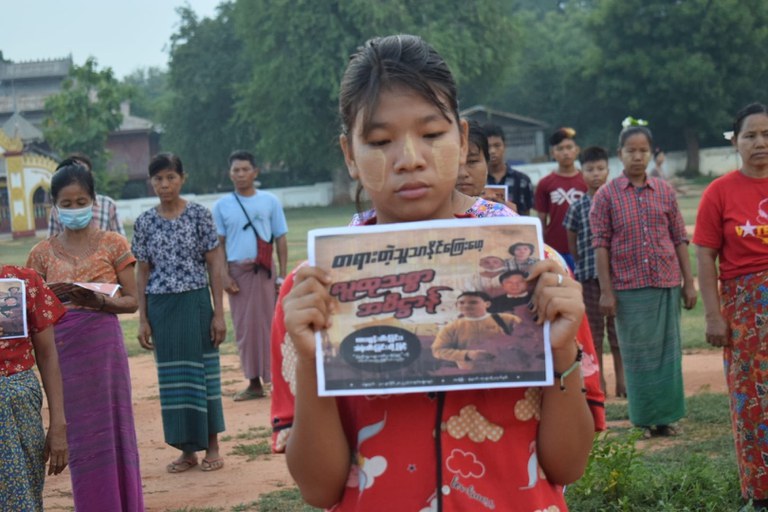
The homes of two democracy activists executed by Myanmar’s junta over the weekend were attacked by groups of unidentified men on Wednesday, according to residents who described the assailants as military supporters yelling obscenities and threatening the lives of the activists’ family members. A source in Myanmar’s commercial capital Yangon told RFA Burmese that around 40 men in seven trucks pulled up to the home of former National League for Democracy (NLD) lawmaker Phyo Zeya Thaw on Bo Aung Kyaw Street in Kyauktada township at around 12:30 p.m. and began hurling projectiles at the building. “They were throwing stones and tomatoes and attacking with slingshots, at the same time cursing and swearing,” said the source, who spoke on condition of anonymity, but identified themselves as a neighbor of the lawmaker whose party was deposed by the military in a coup last year. “They seemed to be mostly supporters of the military. They were very mean – even threatening the lives of the elderly.” Witnesses said that the men drove away when security forces arrived at the scene, but vowed to return. Phyo Zeya Thaw’s mother, Khin Win May, confirmed to The Irrawaddy online journal on Wednesday that the family home had been attacked. A video circulating on a pro-military channel of the social media platform Telegram appeared to show several men standing outside the entrance to the building, throwing rocks and admonishing Khin Win May for expressing how proud she is of her son, which she did in an interview with RFA on Monday after learning of his execution. A description posted along with the video read, “people who do not want terrorism gathered to protest in front of the house of Phyo Zeya Thaw’s parents, who said they are proud of their son – a terrorist leader involved in the violent killing of many people.” State media announced the execution of Phyo Zeya Thaw, former student leader Ko Jimmy, whose real name is Kyaw Min Yu, and activists Hla Myo Aung and Aung Thura Zaw, on Monday without reporting the date and method of killings. It is believed the men, who were convicted of “terrorism” against the military regime and the people of Myanmar, were hanged on Saturday in Yangon’s Insein Prison. The act drew widespread condemnation from Western governments, the Association of Southeast Asian Nations (ASEAN), international rights groups and Myanmar-based democracy activists, as well as the Southeast Asian nation’s shadow National Unity Government and the People’s Defense Force (PDF) paramilitaries that are fighting the junta on the NUG’s behalf. Ko Jimmy’s home targeted A group of unidentified men also attacked the home of Ko Jimmy’s parents in Yangon’s Insein township on Wednesday, according to a witness, who declined to be named citing security concerns. The witness said that more than two dozen men armed with sticks and swords arrived at the house at around 1 p.m. in two vans and five pickup trucks and began pelting it with stones. “Those who attacked Ko Jimmy’s house came with swords hidden in their umbrellas, about thirty people,” they said. “When residents came out [to investigate], they left the neighborhood.” Another video posted to the same pro-military channel on Telegram appeared to show a group of men standing outside of Ko Jimmy’s parents’ home, cursing the former student leader as a “traitor” and threatening the lives of his family members. RFA was unable to independently confirm which organizations the two groups of attackers are associated with or how they were able to obtain the home addresses of the late democracy activists and their family members. Despite the blowback over the weekend’s executions, junta Deputy Information Minister Maj. Gen. Zaw Min Tun told a press conference held in the capital Naypyidaw on Tuesday that the consequences of the punishments had “already been considered,” but the decision was taken to “mete out justice for those who died at their hands.” “The crimes they committed deserved several more death sentences than the ones committed by those on the death row,” he said at the time, adding that authorities decided to proceed with the punishment “for the sake of innocent people and their relatives.” According to Thai NGO Assistance Association for Political Prisoners, authorities have killed at least 2,131 civilians and arrested nearly 14,900 since the military seized power from Myanmar’s democratically elected government in a Feb. 1, 2021 coup, mostly during peaceful anti-junta protests. Translated by Khin Maung Nyane. Written in English by Joshua Lipes.
Read More

Vietnam court charges 7 people for their roles in road demolition protest

Authorities in Vietnam’s Nghe An province have officially charged seven people in connection with a clash with riot police over the demolition of a local road earlier this month, family members said Wednesday. Ha Thi Hien, Tran Thi Nien, and Bui Van Canh were charged on July 22 with “resisting against officers on official duty,” while Tran Thi Hoa, Bach Thi Hoa, Ha Thi Thoa, and Ha Van Hanh were accused of “disturbing public order,” relatives told RFA Vietnamese. Family members said they had only learned of the charges – each of which carries a maximum sentence of seven years in prison – after receiving a notice from the Nghi Loc District Police Department on Wednesday. “I am very worried about my wife. They [the police] said she would be held for two months before trial,”  Nguyen Van Duc, the husband of Ha Thi Hien, told RFA’s Vietnamese Service. “All of my neighbors feel sorry for her, saying that Hien had never said or done anything bad, and ask why she was taken away. Since her arrest, our two young kids have been crying and asking for Mom every night,” he said. Riot police guard a fence build to stop protestors preventing the demolition of a hundred-year-old road on July 13, 2022. Photo: Citizen Journalist On July 13, hundreds of riot police descended on Binh Thuan parish in Nghe An’s Nghi Thuan commune as a similar number of protesters attempted to remove a fence blocking a road that connects the parish to an area highway. The road, which had been in use for more than 100 years, is located on land the government granted to a private company for a planned industrial zone. Police tried to disperse the protesters with smoke grenades and explosives but they fought back. Ten people were arrested in the clash, during which officials said protesters had “used bricks, stones, bottles, sticks [and petrol bombs], attacked and detained a police officer and injured five other police officers,” according to a statement issued after the incident. Authorities released one woman the same night and two men three days later. However, the other seven had remained in custody for two weeks before their families were notified of the charges against them on Wednesday.  The seven are being held at a temporary detention facility during an investigation of their case, which is expected to last until Sept. 10, according to the notice from the Nghe An Police Department, which also claimed that all of the accused had “refused access to a defense lawyer, or did not request one.” Duc said his wife Hien is innocent and was “only watching the protest” when she was arrested. She did not act against the police, he said. Duc said he has had to take leave from work to care for his two kids, aged three and six, and his mother, who is more than 80 years old. Attempts by RFA to contact the Nghi Loc District Police and the lead investigator for the case, Hoang Doanh Toan, went unanswered Wednesday. Translated by Anna Vu. Written in English by Eugene Whong.

Read More

Beijing bites back over repeated rumors of Pelosi’s Taiwan visit

China ratcheted up its already strong response to U.S. House Speaker Nancy Pelosi’s plans to visit Taiwan, with the Ministry of Defense in Beijing threatening military action. Ministry spokesman, Sr. Col. Tan Kefei, told a media briefing on Tuesday that, should Pelosi insist on making the visit, “the Chinese military will never sit idly by, and will certainly take strong and resolute measures” to retaliate. The U.S. “must not arrange for Pelosi to visit the Taiwan region,” he said. China considers the self-governed democratic island a breakaway province and its reunification a matter of “national sovereignty and territorial integrity.” Britain’s Financial Times first reported on the planned visit last week, saying it would be part of a tour that will also include Japan, Singapore, Indonesia, and Malaysia. Pelosi and her entourage will also make a stopover in Hawaii to visit the headquarters of the U.S. Indo-Pacific Command, the paper said. It would be the first time since Newt Gingrich’s 1997 trip that a U.S. House speaker has visited the island. U.S. officials have not confirmed the news but President Joe Biden indicated that the military “did not think it was a good idea right now” for Pelosi to visit Taiwan.  The much talked about trip by the Speaker of the House of Representatives, the third most senior figure in the political system, has created a huge headache for U.S. policymakers. Biden is expected to discuss it, among other issues, with his Chinese counterpart Xi Jinping in a telephone call on Thursday. It would be the fifth such conversation since Biden became U.S. president in January 2021. ‘Fourth Taiwan crisis’ Before the defense ministry delivered its official response, the Chinese foreign ministry had already protested against the reported trip, saying the U.S. must be prepared to “assume full responsibility for any serious consequence arising.”  Analysts say with so much tension over the alleged visit, U.S.-China relations are entering a “perilous period.” Taylor Fravel, Director of the Security Studies Program at the Massachusetts Institute of Technology (MIT), wrote on Twitter that Pelosi’s visit seems likely “as other members of Congress cast her visit as a question of what China can or cannot ‘dictate’ to Congress.” This would “create even stronger incentives for a forceful response,” as Xi Jinping’s “policy, reputation and credibility will be seen to be at stake.” “We’re heading straight toward a Fourth Taiwan Strait crisis,” Fravel warned, referring to previous crises in the Taiwan Strait. The last one was in 1996 and ended after U.S. intervention. Some Taiwanese analysts disagree with the assessment, saying the possibility of a war is low. “This is not good timing for Xi to wage a fourth Taiwan crisis,” said Ming-Shih Shen, a senior expert at the Taiwan’s Institute for National Defense and Security Research (INDSR). There are only a few months left before the opening of China’s most important political event – the Chinese Communist Party’s Congress – where Xi is believed to be seeking an unprecedented third term. “The situation’s being exacerbated perhaps by those who oppose Xi’s leadership within the Party in order to create troubles [for him],” Shen said. To go or not to go? Despite China’s hawkish response, Pelosi should still make the visit, said the Taiwanese expert, adding that it would work for her domestically, too. Carl Schuster, a retired U.S. Navy captain and former director of operations at the U.S. Pacific Command’s Joint Intelligence Center, said that China’s coercion tactics “work only when countries allow them to do so” and the United States “should stand up to China.” “China’s economy is not in better shape than ours and China is not going to war over Pelosi’s visit,” he said. “Bowing down to Chinese bullying makes us look weak at a time when we need to appear strong. Weakness, like withdrawing our embassy and trainers, encouraged Putin to invade Ukraine. We can’t make that mistake twice,” Schuster added. “The current tensions over Speaker Pelosi’s putative visit to Taiwan puts the Biden Administration in a no-win situation,” said Carl Thayer, a veteran regional expert. “If Speaker Pelosi decides to visit Taiwan, Xi Jinping will have no recourse but to provoke a crisis to demonstrate China’s resolve. This will put further strain on U.S.-China relations and undermine efforts underway by Biden to find some common ground with China,” the Canberra-based analyst said. The Biden Administration, in his opinion, “has not yet had to respond to a major incident of Chinese bullying and also has not gone out of its way to provoke a confrontation with China.” “If Pelosi decides to go and China throws down the gauntlet, this will be the first test for President Biden to call China to account and push back against its bullying,” Thayer said.

Read More