
Category: East Asia
More than 2 dozen bodies of Uyghur inmates released in Kashgar prefecture
Authorities at a prison in the Xinjiang region released the bodies of at least 26 Uyghur inmates before the Eid al-Fitr holiday in late April, police in various towns have told us. We contacted 10 police stations in Kashgar prefecture’s Maralbeshi county to confirm that authorities at Tumshuq Prison had released the bodies. Five of the inmates were elderly and died of heart and lung diseases, while one other died of diabetes, sources said. A Maralbeshi resident said many of them died of starvation because the inmates fasted in secret during Ramadan and couldn’t eat during breakfast or after sunset because of jail rules. Officials contacted by us did not comment on the matter. In June, a source told us that authorities at the prison had released the bodies of dozens of individuals, including that of his brother, just before the Islamic holiday marking the end of the fasting month of Ramadan. To obtain more information, we followed up by contacting police in the 10 towns, including speaking to officials in Sériqbuya, Awat and Chongqurchaq. When we contacted the police station in Awat, a Maralbeshi market town, to inquire about the body distribution on the eve of Eid al-Fitr, one officer said he was aware of the distribution of 18 bodies of dead prisoners, but he declined to disclose any information regarding the identities or their respective family members. “We have knowledge of the events and circumstances surrounding their deaths as they were under our supervision, but I am unable to share further information,” he said. “I believe the overall count of deceased individuals amounts to 18,” he said. “However, I am unable to disclose their identities.” The police officer did not say whether prison authorities took the bodies directly to family members of the decedents, to the police station, or to a mortuary. We previously reported that other bodies were taken to a police station before being handed over to families. The process took place under the supervision of county, village, and people’s committee officials and police. Additionally, authorities monitored the families for several weeks. Tumshuq Prison housed locals arbitrarily arrested during the 2017 crackdown on prominent and ordinary Uyghurs alike, jailing them in “re-education” camps and prisons for alleged extremist behavior, such as previous trips or contacts abroad or religious activities. China has come under harsh international criticism for its severe rights abuses of the predominantly Muslim Uyghurs, including forced labor. The U.S. government and several Western parliaments have declared that the abuses amount to genocide or crimes against humanity. A police officer from Seriqbuya told us in April that prison authorities delivered five bodies to his police station, and that most of them had been in their 70s or 80s and had been ill. “It appears that most of them passed away due to ineffective medical treatments,” he said. The police officer also confirmed that one of the corpses was that of Abdugheni Qadir. A person familiar with the situation told us that Abdugheni Qadir from Seriqbuya was the son of Qadir Toxti, principal of Sériqbuya Primary School. Authorities arrested him in 2017 while he was doing business in Urumqi, capital of the Xinjiang Uyghur Autonomous Region. The other three dead prisoners were Memettursun Metniyaz, Haji’ahun and his wife Mehpiremhan. Metniyaz was a Uyghur motorcycle repairman jailed in early 2017 for completing the hajj, the Muslim pilgrimage to Mecca in Saudi Arabia, years before. He died of diabetes in jail and his body was delivered to his family, a local residential committee member who oversaw the return of his corpse told us in a May report. Haji’ahun, a hatmaker, and his spouse Mehpiremhan, residents of Maralbeshi county, were each sentenced to 10 years in Tumshuq Prison in 2019 for “illegal” religious activities, people with knowledge of the couple’s situation told us in a June report. Translated by us Uyghur. Edited by Roseanne Gerin and Matt Reed.

Vietnam’s communists are constrained domestically in choice between the US and China
It wasn’t the Communist Party that lifted the Vietnamese out of poverty; the people did it themselves. The country’s free-market revolution was the result of bottom-up pressure from the masses who broke the command-economy so much that the communist government had to accept a private sphere of business. Their pilfering from state-run companies and trading on the black market, and their ability to own more and more surplus produce after the state took its share, meant the government simply couldn’t handle the collectivized economy that had left Vietnam one of the world’s poorest countries in the 1980s. When the communist government gave an inch, the people demanded more. “The idea that economic success stems from a strategic shift in Party thinking [in 1986]… is actually a myth,” the economist Adam Fforde wrote. “Success instead drew upon systematic violations of Party ideology dating from the late 1970s, if not earlier.” The party’s economic reform package of 1986 (doi moi, or “renovation”) is common knowledge. Less so the promises of political renovation. Nguyen Van Linh, the incoming party general secretary that year, told writers and journalists that they should ‘stick to the truth’. One of those who took Linh at his word was Bao Ninh, a young novelist and war veteran from the North. “So much blood, so many lives were sacrificed for what?” he wrote in his 1990 book, The Sorrow of War. The poet and translator Duong Tuong called Bao’s work the “first truthful book about the war.” Truthful because it neither glorified victory against the Americans (“In war, no one wins or loses. There is only destruction”), nor regarded Communist Party leaders as the only heroes. Bao argued most Vietnamese were fighting for national peace, nor for Marxism. Naturally, the book was banned. Vietnam’s Prime Minister Pham Minh Chinh (R) gestures to U.S. Vice President Kamala Harris in the Government office in Hanoi on August 25, 2021. Credit: Manan Vatsyayana / Pool / AFP The point is that even in a one-party, communist state, ordinary people can exert power. Today, the government still severely represses its citizens. There is no free media. There are no genuine elections. But the Communist Party is genuinely worried about the thoughts of the common man. Those domestic pressures are difficult to assess and frequently in debates on policy, such as about Vietnam hedging between the United States and China, it’s far easier to focus on “externalities”. The position at one extreme of that foreign policy debate, for instance, argues the Vietnamese government is denied any agency whatsoever because of material conditions: China is Vietnam’s main trading partner and principal aggressor; the United States is Vietnam’s main export partner and security “guarantor.” So by more closely aligning with either, Vietnam risks war or economic ruin. The other extreme says the Communist Party has a good deal of agency, and what shapes foreign policy is a shared ideology that makes it friendly with China, factional struggles within the party, and the whims of certain government officials. But consider a speech given in 2021 by Nguyen Phu Trong, now three-term Communist Party general secretary. Any nation “has to deal with two basic issues, internal and external,” he stated. “These two issues have an organic, dialectical relationship…[they] support each other like two wings of a bird, create positions and forces for each other, connect and intertwine more and more closely with each other.” Foreign policy today, he added, is a “continuation of domestic policy”. He said a little later: “Foreign affairs must always best serve the domestic cause.” That domestic cause for Trong is the survival and virality of the Communist Party. Domestic concerns dictate The other importance of The Sorrow of War was as an early sign nationalism was tumbling out of the hands of the Communist Party, which had staked its legitimacy on having led victory over the French, then Americans and then Chinese. But it was starting to lose its grip in the early 1990s when it struck peace with Beijing. Further anger flowed from the public as Chinese capital began flowing into Vietnam. In 2006, national hero General Vo Nguyen Giap (the “Red Napoleon”) accused the regime of selling off Vietnamese land for exploitation by Chinese bauxite speculators. Years-long protests turned “the nationalist tables on the Party by accusing it of caving in to the Chinese at the very time the latter were expanding their territorial claims against Vietnam in the South China Sea”, wrote the historian Christopher Goscha. That process has only expanded over time. One could say that the Communist Party is now scared of nationalism. Chinese academics seem especially taken with the idea that all nationalist protests in Vietnam are directed by the Communist Party. That is rarely the case. The party follows events; it seldom leads them. Netizen anger drove the recent cases of the Hollywood film “Barbie” being banned in Vietnam over a crude map that some said showed China’s territorial claims in the South China Sea, and threats to boycott concerts by the South Korean K-Pop band BlackPink. During the Vanguard Bank standoff in 2019, when the Chinese military was once again harassing Vietnamese vessels in the South China Sea, officials in Hanoi reportedly discussed whether to allow some limited protests. “But, warned some other officials, demonstrations must be tightly controlled. If not, the protests might be taken over by individuals and groups in Vietnam, specifically democratization advocates”, wrote Ben Kerkvliet in Speaking Out in Vietnam, a study of political activism. That remains a concern. If the party takes a strong stance against China, that risks setting off nationwide nationalist protests that the party cannot control and which might quickly be whipped up into anti-communist agitation. Between June 9 and 11, 2018, more than 100,000 protesters demonstrated across Vietnam, arguably the largest nationwide protest seen in decades, as the National Assembly debated a bill to create three special economic zones (SEZs) along Vietnam’s coastline. The investment minister said publicly…

Yellen woos China with chopstick diplomacy, talks tough on business
U.S. Treasury Secretary Janet Yellen touched down in Beijing on Thursday and ate at a popular Yunnan restaurant with the U.S. ambassador before meeting with key officials on Friday. Yellen met with China’s central bank governor Yi Gang, former economy point-man Liu He and State Premier Li Qiang on Friday to discuss the global, U.S. and Chinese economies. In prepared remarks, Yellen told Li she hoped her visit would spur more regular channels of communication between the world’s two largest economies, adding that both countries had a duty to “show leadership” on global challenges such as climate change. She said Washington would “in certain circumstances, need to pursue targeted actions to protect its national security,” but disagreements over such moves should not jeopardize the broader relationship. “We seek healthy economic competition that is not winner-take-all but that, with a fair set of rules, can benefit both countries over time,” she said. Separately, speaking at the American Chamber of Commerce on Friday, Yellen noted concerns in the U.S. business community. “I am communicating the concerns that I’ve heard from the U.S. business community, including China’s use of non-market tools like expanded subsidies for its state-owned enterprises and domestic firms, as well as barriers to market access for foreign firms,” she said. Meanwhile, in a sign of a possible thaw in China-U.S. relations, the usually provocative nationalist state tabloid Global Times asked in a tweet, what’s Yellen’s “preferred choice of food while in China? “It seems that Yunnan cuisine takes the top spot, as a popular Yunnan restaurant in Beijing’s Sanlitun area recently shared a picture of Yellen using chopsticks to enjoy a meal shortly after her arrival in Beijing on Thursday.” Yellen is in Beijing amid a flurry of visits aimed at breaking the ice between Washington and Beijing after the U.S. military shot down a Chinese government balloon over the United States. Secretary of State Antony Blinken visited Beijing in late June and U.S. climate envoy John Kerry will visit Beijing later this month Bloomberg reported. Mediating influence Yellen has a near “mission impossible” – to convince China that its measures in the interests of state security, restricting technology exports to China, are not intended to harm China’s interests as a rising nation state. But Chinese state media showed signs that Beijing may be in the mood for compromise – at least when it comes to trade and investment. China’s Global Times, in an uncharacteristically positive turn, editorialized that even though U.S. officials are downplaying any expectations from Yellen’s visit, “Chinese experts believe that one major point of significance of Yellen’s trip is to keep high-level communication channels open, which may help bilateral relations walk out of their downward spiral.” U.S. Treasury Secretary Janet Yellen walks after arriving at Beijing Capital International Airport in Beijing, China, Thursday, July 6, 2023. Credit: Mark Schiefelbein/Pool via Reuters Ahead of Yellen’s visit, in a response to restrictions on China’s access to high-technology semiconductor chips, on Monday, China announced it was restricting exports of two critical components in the chips that modern life runs on. “This is just the beginning,” Wei Jianguo, a former Chinese vice-minister of commerce, told the China Daily. “China’s tool box has many more types of measures available.” The trade and investment entanglement of China and the U.S. makes what the U.S. is now referring to as “de-risking,” rather than decoupling, hugely complex due to the entangled nature of the two nations’ trade. Firm on security It’s likely Beijing may think that accepting Yellen’s visit and appearing to be more receptive, as opposed to the cooler reception Secretary of State Antony Blinken received, could give the U.S. pause for thought about its tech restrictions. But Yellen reiterated that her mission, like Blinken’s, was to open up lines of communication and avoid a catastrophic confrontation between the world’s two leading superpowers. “I am glad to be in Beijing to meet with Chinese officials and business leaders. We seek a healthy economic competition that benefits American workers and firms and to collaborate on global challenges,” Yellen said in a tweet. “We will take action to protect our national security when needed, and this trip presents an opportunity to communicate and avoid miscommunication or misunderstanding.” A possible thaw “Yellen is a more rational voice on China issues within the Biden administration,” Wu Xinbo, dean of the Institute of International Studies at Shanghai’s Fudan University told The Wall Street Journal. But her visit comes amid “unsafe” moves in the South China Sea, a war of words over Chinese fentanyl exports, revelations of a multibillion-dollar Chinese spy base in Cuba and daily military harassment of Taiwan. Wendy Cutler, a former diplomat and Vice President at the Asia Society Policy Institute, talking to Taiwan +, an English-language TV news service, said of Yellen’s visit, “No 1, she has to go through the list of U.S. grievances, including their recent announcement of [export restrictions on] two critical minerals, the way U.S. companies are being treated in China and recent legislation to create more uncertainty in the business climate.” Cutler added that, as Yellen has previously pointed out, the U.S. doesn’t seek to decouple the two superpower’s economies, but “there are sectors of national security concern [and] we’re not going to be shy about protecting that.” Back to business Yellen took a jab at China’s planned economy, saying that Beijing should return to the era of market reforms that former leader Deng Xiaoping ushered in and which led to decades of rocket-fueled economic growth. “A shift toward market reforms would be in China’s interests,” Yellen told U.S. business executives on Friday, according to reports. “A market-based approach helped spur rapid growth in China and helped lift hundreds of millions of people out of poverty. This is a remarkable economic success story,” Yellen added. U.S. Treasury Secretary Janet Yellen meets with representatives of the U.S. business community in China, in Beijing, July 7, 2023. Credit: Reuters/Thomas Peter Yellen said that China’s vast middle-class was a market for American…

Hong Kong warrants spark fears of widening ‘long-arm’ political enforcement by China
Concerns are growing that China could start using the Interpol “red notice” arrest warrant system to target anyone overseas, of any nationality, who says or does something the ruling Communist Party doesn’t like, using Hong Kong’s three-year-old national security law. Dozens of rights groups on Tuesday called on governments to suspend any remaining extradition treaties with China and Hong Kong after the city’s government issued arrest warrants and bounties for eight prominent figures in the overseas democracy movement on Monday, vowing to pursue them for the rest of their lives. “We urge governments to suspend the remaining extradition treaties that exist between democracies and the Hong Kong and Chinese governments and work towards coordinating an Interpol early warning system to protect Hong Kongers and other dissidents abroad,” an open letter dated July 4 and signed by more than 50 Hong Kong-linked civil society groups around the world said. “Hong Kong activists in exile must be protected in their peaceful fight for basic human rights, freedoms and democracy,” said the letter, which was signed by dozens of local Hong Kong exile groups from around the world, as well as by Human Rights in China and the World Uyghur Congress. Hong Kong’s national security law, according to its own Article 38, applies anywhere in the world, to people of all nationalities. The warrants came days after the Beijing-backed Ta Kung Pao newspaper said Interpol red notices could be used to pursue people “who do not have permanent resident status of the Hong Kong Special Administrative Region and commit crimes against Hong Kong outside Hong Kong.” “If the Hong Kong [government] wants to extradite foreign criminals back to Hong Kong for trial, [it] must formally notify the relevant countries and request that local law enforcement agencies arrest the fugitives and send them back to Hong Kong for trial,” the paper said. While Interpol’s red notice system isn’t designed for political arrests, China has built close ties and influence with the international body in recent years, with its former security minister Meng Hongwei rising to become president prior to his sudden arrest and prosecution in 2019, and another former top Chinese cop elected to the board in 2021. And there are signs that Hong Kong’s national security police are already starting to target overseas citizens carrying out activities seen as hostile to China on foreign soil. Hong Kong police in March wrote to the London-based rights group Hong Kong Watch ordering it to take down its website. And people of Chinese descent who are citizens of other countries have already been targeted by Beijing for “national security” related charges. Call to ignore To address a growing sense of insecurity among overseas rights advocates concerned with Hong Kong, the letter called on authorities in the United Kingdom, United States of America, Canada, Australia, New Zealand and Europe to reiterate that the Hong Kong National Security Law does not apply in their jurisdictions, and to reaffirm that the Hong Kong arrest warrants won’t be recognized. The New York-based Human Rights Watch said the “unlawful activities” the eight are accused of should all be protected under human rights guarantees in Hong Kong’s mini-constitution, the Basic Law. Hong Kong police on Monday, July 3, 2023, issued arrest warrants and offered bounties for eight activists and former lawmakers who have fled the city. They are [clockwise from top left] Kevin Yam, Elmer Yuen, Anna Kwok, Dennis Kwok, Nathan Law, Finn Lau, Mung Siu-tat and Ted Hui. Credit: Screenshot from Reuters video “In recent years, the Chinese government has expanded efforts to control information and intimidate activists around the world by manipulation of bodies such as Interpol,” it said in a statement, adding that more than 100,000 Hong Kongers have fled the city since the crackdown on dissent began. “The Hong Kong government’s charges and bounties against eight Hong Kong people in exile reflects the growing importance of the diaspora’s political activism,” Maya Wang, associate director in the group’s Asia division, said in a statement. “Foreign governments should not only publicly reject cooperating with National Security Law cases, but should take concrete actions to hold top Beijing and Hong Kong officials accountable,” she said. Hong Kong’s Chief Executive John Lee told reporters on Tuesday that the only way for the activists to “end their destiny of being an abscondee who will be pursued for life is to surrender” and urged them “to give themselves up as soon as possible”. The Communist Party-backed Wen Wei Po newspaper cited Yiu Chi Shing, who represents Hong Kong on the standing committee of the Chinese People’s Political Consultative Conference, as saying that those who have fled overseas will continue to oppose the government from wherever they are. “Anyone who crosses the red lines in the national security law will be punished, no matter how far away,” Yiu told the paper. The rights groups warned that Monday’s arrest warrants represent a significant escalation in “long-arm” law enforcement by authorities in Beijing and Hong Kong. Extradition While the U.S., U.K. and several other countries suspended their extradition agreements with Hong Kong after the national security law criminalized public dissent and criticism of the authorities from July 1, 2020, several countries still have extradition arrangements in force, including the Philippines, Portugal, Singapore, South Africa and Sri Lanka. South Korea, Malaysia, India and Indonesia could also still allow extradition to Hong Kong, according to a Wikipedia article on the topic. Meanwhile, several European countries have extradition agreements in place with China, including Belgium, Italy and France, while others have sent fugitives to China at the request of its police. However, a landmark ruling by the European Court of Human Rights in October 2022 could mean an end to extraditions to China among 46 signatories to the European Convention on Human Rights. “The eight [on the wanted list] should be safe for now, but if they were to travel overseas and arrive in a country that has an extradition agreement with either mainland China or Hong Kong, then…
Japan’s plan to discharge Fukushima radioactive water safe, atomic watchdog says
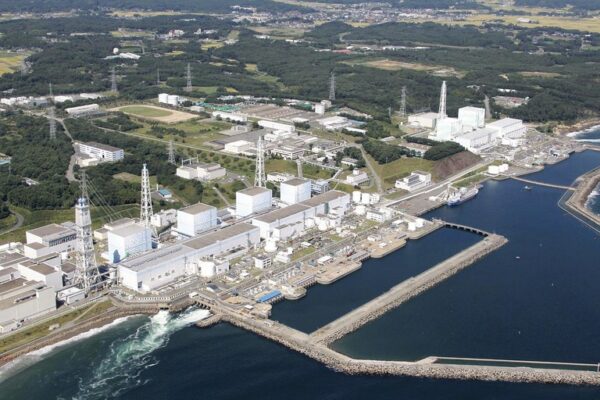
Japan’s plans to discharge treated nuclear wastewater stored at the Fukushima Daiichi power station into the Pacific Ocean are consistent with relevant international safety standards, the safety review by the U.N.’s atomic watchdog has concluded. The discharges of the treated water would have a negligible radiological impact on people and the environment, said the report formally presented by International Atomic Energy Agency (IAEA) Director General Rafael Mariano Grossi to Japanese Prime Minister Fumio Kishida in Tokyo on Tuesday. “Japan will continue to provide explanations to the Japanese people and to the international community in a sincere manner based on scientific evidence and with a high level of transparency,” Kishida said as he met with Grossi. TEPCO, the Tokyo Electric Power Company, which operates the Fukushima nuclear power plant located on Hakura Beach in Japan, is set to initiate the release of approximately 400,000 cubic meters of treated wastewater from the plant into the Pacific this summer. Over 1.3 million cubic meters of wastewater – enough to fill more than 500 Olympic-size swimming pools – is currently contained in numerous water storage tanks at the facility. It was used to cool the nuclear reactors damaged in a 2011 earthquake and tsunami. This Sept. 18, 2010 aerial photo shows the Fukushima Dai-ichi nuclear complex in Okumamachi, northern Japan the year before it was hit by a massive tsunami. Credit: Yomiuri Shimbun, via AP TEPCO says that the controlled discharge of the treated wastewater adheres to a meticulous nuclear purification process utilizing a pumping and filtration system called ALPS (Advanced Liquid Processing System), designed according to the safety standards prescribed by the IAEA. In the report’s foreword, Grossi said that the “controlled, gradual discharges of the treated water to the sea, as currently planned and assessed by TEPCO, would have a negligible radiological impact on people and the environment.” China strongly objects The plan, conceived in 2021, has been a source of concern about possible environmental and health risks for nearby countries such as South Korea, China and Pacific Island nations. Local Japanese fishing unions have also opposed it. The Chinese Embassy in Japan said Tuesday the IAEA’s report could not be a pass for the nuclear-contaminated water to be released. It called on Japan to immediately suspend the plan, seriously negotiate with the international community, and jointly explore scientific, safe, transparent and acceptable handling methods. In a press conference, Ambassador Wu Jianghao claimed that there was no precedent for discharging such water produced by nuclear accidents into the sea. He said it was different from other countries discharging wastewater because “what they are discharging is cooling water, not polluted water that has been in contact with the molten core of the accident.” Fukushima’s nuclear-polluted water contains more than 60 types of radionuclides, many of which have no effective treatment technology at this stage, Wu said, claiming the effectiveness and sustainability of the Japanese processing system lacks sufficient authoritative verification. However, IAEA and Japanese officials have said that ALPS will reduce 62 of the 63 radioactive substances currently in the wastewater to amounts that will have a negligible environmental impact. Wu said that Japan does not respect science because it announced in 2021 that it would start releasing the wastewater, “long before the IAEA completed its assessment and released its final report.” He also said IAEA is “not an appropriate agency to assess the long-term impact of nuclear-contaminated water on the marine environment and biological health.” IAEA will monitor the discharge The decision has also divided the scientific community. However, the IAEA’s report aligns with many international independent scientists who say the worries are based on misinformation. The wastewater release will take between 30 and 40 years to complete. The IAEA said it would continue its safety review during the discharge phase, with a continuous on-site presence and live online monitoring from the facility. The agency said the stored water has been treated through ALPS to remove almost all radioactivity, aside from tritium, which will be diluted with the water to bring it below regulatory standards before the release. A Buddhist monk protests against the Japanese government’s decision to release treated radioactive wastewater from the damaged Fukushima nuclear power plant, near a building which houses the Japanese Embassy in Seoul, July 4, 2023. Credit: AP “The IAEA will continue to provide transparency to the international community, making it possible for all stakeholders to rely on verified fact and science to inform their understanding of this matter throughout the process,” Grossi said. He plans to arrive at the Fukushima plant on Wednesday. The following day he heads to South Korea to explain the report’s findings. He is also expected to visit some Pacific Island countries to ease their concerns over the plan. The report represents the culmination of nearly two years of effort by a specialized task force comprising leading experts from the agency, guided by internationally acclaimed nuclear safety advisors from eleven nations. The experts assessed Japan’s proposals in light of the IAEA Safety Standards, which are recognized as the benchmark for safeguarding individuals and the environment and promoting a consistent and elevated level of safety globally. Edited by Mike Firn.

Banned by Beijing, Badiucao opens London show
In the brick-walled crypt of a church in central London hangs a painting of a many-armed, black-clad figure wearing an elastomeric mask and a yellow construction hat, evoking a figure that was once a familiar sight during the 2019 protest movement in Hong Kong. One of its many pairs of hands – protesters were referred to in Cantonese at the time as the “hands and feet” of the movement – is clasped in apparent prayer, with other pairs clutching water bottles and a retractable baton for fending off charging cops. In the goggles of the figure – a composite of the front-line protesters who used Molotov cocktails, bricks, bows and arrows and street barricades to engage in pitched street battles with riot police during the 2019 Hong Kong protests – is reflected the black bauhinia, symbol of the protest movement. Other works depict a shower-head washing an exposed brain, a reference to attempts by the ruling Chinese Communist Party to brainwash its citizen, and a portrait of jailed pro-democracy Joshua Wong behind bars formed of black umbrellas, bringing to mind the 2014 “umbrella movement,” when protesters used umbrellas to protect against pepper spray. Badiucao expresses solidarity with Hong Kong democracy activist Joshua Wong. Credit: Stone They are all works of art by Badiucao, whose latest exhibit showcases political and protest art that is deemed so incendiary by Beijing that it has made repeated attempts to have his exhibits shut down in other countries. Transnational repression Its theme is transnational repression. Overseas dissidents are increasingly finding that even if they leave China and settle in a democratic country, they are still targeted by agents and supporters of the Chinese state in their new home. Chinese Communist Party agents and supporters have carried out physical attacks and smear attempts on dissidents far beyond its borders, kidnapped them and forced them to return home to face punishment using threats against their loved ones, according to rights groups and personal stories shared with Radio Free Asia. Badiucao depicts jailed Hong Kong publisher Jimmy Lai in “Apple Man.” Credit: Stone Badiucao has remained undeterred by Beijing’s attempts to censor him overseas, however. The walls of the exhibit are packed with political punches – a portrait of jailed pro-democracy media mogul Jimmy Lai has pride of place, while another work shows students at the Chinese University of Hong Kong engulfed in flames while defending their campus against a determined assault by riot police, who fired thousands of rounds of tear gas during the attack. One image shows Chinese President Xi Jinping wearing a pair of TikTok logos for glasses, with the warning “Xi is Watching You,” highlighting privacy concerns around the Chinese-owned social media platform. Such images would quickly run afoul of a strict national security law in Hong Kong, where depictions of scenes “glorifying” the protests are banned from public display. Some have already been shown in Poland, where the organizers kept the exhibit open despite strong displeasure from Chinese officials. ‘Threats to my family and safety’ Many were inspired by the response of Hong Kong protesters, who used his artwork in response to the banning of his planned 2018 exhibit in the city, just a day before it opened. “The Chinese Communist Party doesn’t just come up with ways to get my exhibits canceled — it also threatens me with threats to my personal safety,” Badiucao told Radio Free Asia as the exhibit opened. “It also threatens the safety of the people I work with, and my family back in China,” he said. Also on display in the “Banned by Beijing” exhibition are works by Vawongsir, a former visual arts teacher in Hong Kong, such as this piece on the “Pillar of Shame.” Credit: Stone The Hong Kong theme of the exhibit is aimed at speaking out on behalf of people who haven’t been allowed to speak for themselves since Beijing imposed a draconian security law on the city three years ago, criminalizing public criticism of the government. Hong Kong artist Kacey Wong, who now lives in Taiwan, said he has faced similar attempts at censorship outside China, adding that the national security law has stifled freedom of expression both in his home city, and even far beyond China’s borders. “Don’t think you’ll be fine once you have left Hong Kong,” Wong warned. “Last year I took part in a small exhibition in the United Kingdom, and the Hong Kong party newspapers sent their people to carry out a smear campaign.” “This is long-arm control … you’re not safe in Europe, because they’re not very vigilant there about preventing censorship by the Chinese Communist Party,” he said. “However, it’s safer in Taiwan.” For Badiucao, a Hong Kong democracy movement that carries on in exile is still valid. “I don’t think it means that Hong Kong has fallen,” he said. “You can take your home with you anywhere.” “All of those Hong Kongers now in exile have taken the spirit, culture and identity of Hong Kong with them,” he said. “Wherever you have Hong Kongers still drawing breath, there is still hope,” he said. Translated by Luisetta Mudie. Edited by Malcolm Foster.

Hong Kong social activists brave threat of arrest to keep speaking out
Three years after Beijing imposed a law criminalized public dissent and peaceful political opposition in Hong Kong, a dwindling band of social activists say they’re not giving up just yet. Opposition party leader Chan Po-ying, who chairs the League of Social Democrats, was recently detained by police on a downtown shopping street carrying an electric candle and a yellow paper flower on the 34th anniversary of the 1989 Tiananmen massacre, commemoration of which is now banned in Hong Kong. Undeterred, she showed up a few days later outside the headquarters of HSBC Bank, protesting the closure of the party’s bank accounts — something that is increasingly happening to opposition parties and activists in the city since the crackdown on dissent began. Chan’s husband Leung Kwok-hung is one of 47 political activists and former lawmakers currently standing trial for “subversion” after they organized a democratic primary in the summer of 2020. Police also forced Chan and fellow women’s rights and labor activists to call off a march on International Women’s Day in March, in a move she told reporters was due to pressure from Hong Kong’s national security police. So why does she keep going, when so many have already left? “Why do I still want to stay in Hong Kong?,” she said. “It’s not to prove how brave we are, but because we still hope to speak out when we see political, economic, social or intellectual injustice in Hong Kong.” “Dissent must be voiced, regardless of how much room is allowed for it,” she said. “There are still some people willing to speak out, even in such a high-pressure situation.” “It also inspires other people.” Stalking street stalls Still, even a simple plan of action like handing out leaflets on the street is now fraught with difficulty. “Sometimes we set up a street stall with just four of us, and there are sometimes more than 10 plainclothes police standing right next to us,” Chan said. “They may try to charge us under laws they haven’t used before, such as illegal fundraising.” Police officers take away a member of the public on the eve 34th anniversary of China’s Tiananmen Square massacre in Hong Kong, June 3, 2023. Credit: Louise Delmotte/AP And it’s not just the national security law they need to watch out for. “The easiest way for them to prosecute us is under colonial-era sedition laws, because they can charge us for posting any opinion online that the authorities don’t like,” she said. “They are gradually starting to use a whole variety of laws to curb the freedoms granted to us in the Basic Law,” Chan said, referencing the promises in Hong Kong’s mini-constitution that the city would retain its freedoms of press, expression and association beyond the 1997 handover to Chinese rule. What’s more, the League is now having huge difficulties funding its activities in the face of bank account closures, and can only hope that its members will work voluntarily to further the party’s agenda. ‘Destroying a system’ Former pro-democracy District Council member Chiu Yan Loy has also decided to stay for the time being, to serve his local community. “District councilors spend 90% of their working hours on issues that have little to do with politics, but which serve important social service functions,” Chiu said. Until the authorities recently rewrote the electoral rulebook to ensure that there would be no repeat of the landslide victory seen in the 2019 district elections, which was seen as a huge show of public support for the 2019 protest movement and its goals, which included fully democratic elections. University students observe a minute of silence to mourn those killed in the 1989 Tiananmen crackdown, in front of the “Pillar of Shame” statue at the University of Hong Kong, June 4, 2021. Credit: Kin Cheung/AP “When you destroy a system, but don’t replace it with a new system, this will only create more social problems that will start occurring in Hong Kong,” he said, adding that he is putting his own money into community-based projects to try to address these issues. “These services don’t involve the sort of politics that the government often talks about, so there is still room to keep doing this work,” he said, despite being in a financially precarious situation. Current affairs commentator Johnny Lau said that while the risks have risen, Hong Kong’s activists have yet to be totally silenced. “Of course there are far more obstacles under the national security law than before,” he said. “The so-called red lines are constantly moving, and there are a lot of people watching and reporting people.” “It’s still OK to talk about issues affecting people’s livelihoods,” Lau said. Translated by Luisetta Mudie. Edited by Malcolm Foster.

Chinese authorities monitor Tibetans to prevent communication with outside world
Chinese authorities in Tibet have intensified monitoring of Tibetans, and continue to interrogate them in the regional capital Lhasa to prevent communication with people outside of Tibet, RFA has learned. The Chinese government has been intensifying its monitoring of Tibetans and maintained their interrogations of Tibetans living in Lhasa to determine if they have contacted people outside Tibet and stepped up surveillance measures to prevent such communication. Now the Chinese authorities are interrogating Tibetans in Lhasa specifically targeting and warning them to stop communication. In March, two major anniversaries prompted police to step up surveillance. The month marked the 15th anniversary of a 2008 riot, and the 64th anniversary of the 1959 uprising against Chinese troops that had invaded the region a decade earlier. But the heightened security from March has continued well into June, and police have continued closely monitoring residents in Lhasa and random searches of their cell phone and online communications to discover whether they had communicated abroad. A police officer searches a Tibetan woman’s cell phone on a street in Lhasa, capital of western China’s Tibet Autonomous Region, March 11, 2023. Chinese authorities in Tibet have intensified monitoring of Tibetans, and continue to interrogate them in the regional capital Lhasa to prevent communication with people outside of Tibet, RFA has learned. Credit: Chinese State Media The police were particularly concerned that the Lhasa residents might be in contact with journalists or researchers outside of Tibet, a Tibetan resident told RFA’s Tibetan Service. “Tibetans are warned not to contact people outside and those who have, have been summoned and interrogated,” the source said. “Their cell phones are confiscated and they are under constant scrutiny.” The source was among those who had contacted people outside of Tibet, and was summoned for interrogation along with some friends. “They gave us warning to not ever contact people on the outside, especially researchers on Tibet and journalists,” said the source. “I also know that so many other Tibetans who contacted people outside Tibet were interrogated by the Chinese authorities too.” Another resident said that people could be summoned even for casual conversations with outsiders. “I was summoned two times already this year for interrogation and one of my friends had to bribe the authorities to release me the second time around,” the second resident said. “My name is now listed amongst those interrogated, therefore I have to get permission from the local police if I need to travel outside Lhasa.” Translated by Tenzin Dickyi. Edited by Eugene Whong.

China to reach renewable power goal 5 years early, report says
The boom in renewable power projects in China will likely help the country reach its 2030 target five years early, boosting the effort to limit global carbon emissions far faster than expected, a new study said. China is on track to double its solar and wind power capacity and shatter Beijing’s ambitious 2030 target of 1,200 gigawatts (GW) five years ahead of schedule if all prospective projects are successfully built and commissioned, said the Global Energy Monitor (GEM) report, released on Thursday. Solar panel installations alone are growing at a pace that would increase global capacity by 85% and wind power by nearly 50% by 2025, said GEM, a San Francisco-based non-governmental organization that tracks energy projects worldwide. China has approximately 379 GW of large utility-scale solar and 371 GW of wind capacity projects that have been announced or are in the pre-construction and construction phases. They will likely be finished by 2025, adding roughly the same amount of currently installed operating capacity. The report projected that China would likely achieve the provincial targets of approximately 1,371 GW for wind and solar, which is higher than the 1,200 GW President Xi Jinping announced his government would install by 2030. A solar panel installation is seen in Ruicheng County in central China’s Shanxi Province, Nov. 27, 2019. Credit: AP “This new data provides unrivaled granularity about China’s jaw-dropping surge in solar and wind capacity,” said Dorothy Mei, project manager at Global Energy Monitor. “As we closely monitor the implementation of prospective projects, this detailed information becomes indispensable in navigating the country’s energy landscape.” Half global renewable capacity in China China has emerged as the frontrunner in global renewable energy, leveraging a blend of incentives and regulatory policies to host approximately 50% of the world’s operational wind and solar capacity. The report said the ambitious renewable push has been geographically widespread, with every province and most counties developing large-scale solar and wind power. China’s operating scale solar capacity has reached 228 GW, more than the rest of the world combined. This map shows prospective large utility-scale solar capacity in China. Credit: Global Energy Monitor. According to the report, China’s northern and northwest provinces have the largest number of solar projects. Shanxi, Xinjiang, and Hebei are the top three regions with the highest utility-scale solar capacity. Meanwhile, China’s combined onshore and offshore wind capacity has doubled since 2017, surpassing 310 GW, with the highest concentration of projects in the northern and northwestern regions, including Inner Mongolia, Hebei, and Xinjiang. China’s offshore wind capacity, which accounts for just 10% of its total wind capacity, is more than Europe’s offshore operating capacity. This map shows prospective wind farm capacity in China. Credit: Global Energy Monitor. On Sunday, China successfully commenced operations of the Tibetan plateau’s largest hybrid solar-hydro power plant, Kela, which can generate 2 billion kilowatt hours of electricity annually, equivalent to the energy consumption of over 700,000 households. Currently boasting a capacity of 20 GW, the plant is projected to expand and achieve approximately 50 GW capacity by 2030. In the past, China has said that its greenhouse gas emissions will peak in 2030 before slowing down to reach net zero by 2060. “Ramping up wind and solar capacity plays an essential role in China’s carbon emissions from the power sector,” Mei told Radio Free Asia. “When China reaches its emissions peak will essentially depend on how soon the growth of clean energy can start to outpace the increase in total energy demand, which could happen in the next few years given the current solar and wind boom.” China’s reliance on coal continues Among the top 10 power sector emitters, China led the world by three times more than the U.S., the second-biggest carbon dioxide emitter, with fossil fuel power plants generating two-thirds of China’s electricity in 2022. In April, another energy research organization Ember said in a report that China produced the most CO2 emissions of any power sector in the world in 2022, accounting for 38% of total global emissions from electricity generation. Mei said that while China had made significant progress in renewable energy deployment, it continued to heavily rely on coal for power generation “due to its reliability and consistent electricity supply.” “The power supply model being adopted at the renewables bases in the northwest deserts still largely relies on new coal power plants to provide a steady, reliable flow of electricity through the long-distance direct current transmission lines to end users,” Mei said. In 2022, China alone accounted for 53% of the world’s coal-fired electricity generation, showing a dramatic revival in appetite for new coal power projects. A View of the Wujing coal-electricity power station is seen across the Huangpu River in the Minhang district of Shanghai on August 22, 2022. Credit: Hector Retamal/AFP Recent record heatwaves and drought have also renewed focus on China’s energy security concerns, as factories had to be shut down due to power shortages, forcing authorities to increase reliance on coal. Last year, Beijing approved the highest new coal capacity in eight years. It continues this year, with environmental group Greenpeace saying in April that China had approved at least 20.45 GW of new coal capacity in the first three months of 2023, according to official approval documents. “As electricity demand during extreme weather events increases, China must resist turning to coal and should instead prioritize more optimal solutions to manage the variability of demand and clean power supply,” Mei said. Edited by Mike Firn.
Myanmar junta uses Telegram as ‘military intelligence’ to arrest online critics
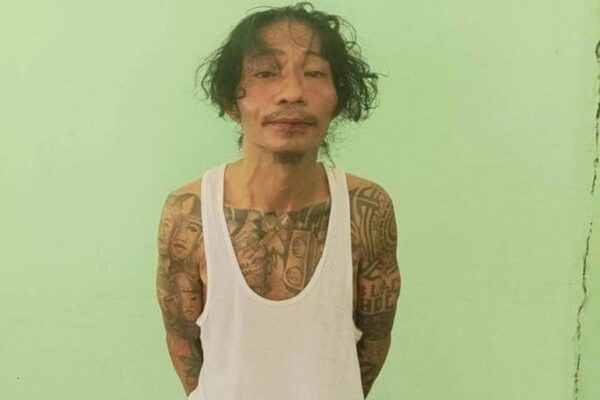
Telegram is becoming the messaging platform of choice for fans of Myanmar’s junta, who are using it to report on critics – some of whom have gotten arrested or even killed. For example, actress Poe Kyar Phyu Khin recently posted a video entitled “Daw Aung San Suu Kyi (Our True Leader)” to the TikTok social media platform ahead of the jailed former state counselor’s June 19 birthday, prompting several users to post photos of themselves bedecked in flowers and express their best wishes. Incensed by the post, supporters of the military junta – which took control of the country in a February 2021 coup – took toTelegram to demand that Phyu Khin and those who responded to her be arrested. On the night of Suu Kyi’s birthday, junta security personnel showed up at the door of Phyu Khin’s home in Yangon and took her into custody. Pro-junta media reported the arrest and said that some 50 people had been detained that week alone for “sedition and incitement.” This is the new reality in post-coup Myanmar, where backers of the military regime regularly scour the internet for any posts they deem critical of the junta before using Telegram to report them to the authorities, activists say. Telegram has become a “form of military intelligence,” said Yangon-based protest leader Nang Lin. “It may look like ordinary citizens are reporting people who oppose the military, but that’s not true,” he said. “It’s the work of their informers. It’s one of the junta’s intelligence mechanisms. In other words, it’s just one of many attempts designed to instill fear in the people.” ‘Online weapon’ In a similar incident, rapper Byu Har was arrested on May 24, just days after being featured on pro-military Telegram channels for a video he published on social media in which he complained about electricity shortages and said that life was better under the democratically elected government that the military toppled. Pro-junta Telegram channels published a photo of hip hop singer Byu Har in handcuffs after he was arrested and allegedly beaten by military authorities on May 25, 2023, Credit: Myanmar Hard Talk Telegram Additionally, authorities arrested journalist Kyaw Min Swe, actress May Pa Chi, and other well-known personalities after pro-junta Telegram channels posted information about them changing their Facebook profiles to black to mourn the more than 170 people – including women and children – killed in a military airstrike on Sagaing region’s Pazi Gyi village in April. “Military lobbyists and informers go through these comments and … report the owners of the accounts to Han Nyein Oo, who is a major pro-junta informer on Telegram,” said an activist in Yangon, who declined to be named out of fear of reprisal. “Then, because of a small comment, the poster and their families are in trouble.” London-based rights group Fortify Rights also recently reported on the junta’s use of Telegram as an “online weapon” against its critics. “We can say that they are increasingly using Telegram channels as an online weapon as one of various ways of instilling fear in the people so that they dare not speak out,” the group said in a statement. RFA sought comment from Telegram’s press team but was forwarded to an automated answering system, which said that the company “respects users’ personal information and freedom of speech, and protects human rights, such as the right to assembly.” The answering system noted that Telegram “plays an important role in democratic movements around the world,” including in Iran, Russia, Belarus, Hong Kong and Myanmar. The founder of the Telegram channel is Russian-born Pavel Durov. In 2014, he was forced to leave the country and move to Saint Kitts and Nevis, a small Caribbean island nation, because he refused to hand over the personal information of Ukrainian users to Russian security services during the Crimea crisis in Ukraine. Myanmar authorities arrested journalist Kyaw Min Swe [left] and actress May Pa Chi after pro-junta Telegram channels posted information about them changing their Facebook profiles to black to mourn Pazi Gyi victims in April. Credit: RFA and Facebook Telegram headquarters is located in Dubai, United Arab Emirates. Attempts by RFA to contact junta Deputy Information Minister Major Gen. Zaw Min Tun regarding the regime’s use of pro-military Telegram accounts to arrest people went unanswered Wednesday. Arrests violate constitution Thein Tun Oo, the executive director of the Thayninga Institute of Strategic Studies, which is made up of former military officers, told RFA that claims the junta uses Telegram to track down its critics are “delusional.” “If you feel insecure about Telegram, just don’t use it,” he said, adding that “such problems” are part of the risk of using the app. But a lawyer in Yangon, who spoke on condition of anonymity citing security concerns, told RFA that even if the junta isn’t gathering information about its opponents on Telegram, arresting and prosecuting someone for posting their opinions on social media is a blatant violation of the law in Myanmar. “It’s not a crime to post birthday wishes for someone on Facebook, whether it’s for Daw Aung San Suu Kyi or anyone else,” he said. “These arrests are in violation of provisions protecting citizens’ rights in the [military-drafted] 2008 constitution.” Pro-junta newspapers often state that action will be taken against anyone who knowingly or unknowingly promotes or supports Myanmar’s shadow National Unity Government, the Committee Representing the Pyidaungsu Hluttaw made up of deposed lawmakers, and any related organization under the country’s Counter-terrorism Act, Electronic Communications Law, and other legislation. According to a list compiled by RFA based on junta reports, at least 1,100 people have been arrested and prosecuted for voicing criticism of the junta on social media or sharing such posts by others since the military’s Feb. 1, 2021, coup d’etat. Translated by Myo Min Aung. Edited by Joshua Lipes and Malcolm Foster.
