
Category: East Asia

Shanghai residents take issue with ‘fake’ propaganda claims about reopening
Residents of Shanghai have been reporting their city government to a national fraud hotline after claims of fully stocked, open supermarkets and eateries were posted by a ruling Chinese Communist Party (CCP) newspaper. Shanghai officials say the city has been free from any new COVID-19 infections for four days straight, as some shops have been allowed to open and public transport will likely resume at the weekend. Residents of housing compounds are now being allowed out on a limited basis, one person at a time, and with ongoing restrictions on their movements in the local area. Some 790,000 people remain under total lockdown, while 2.71 million are still subject to strict controls on their movements and 19.8 million are now in “prevention” areas requiring a green health code to travel or access goods and services outside the home. Citywide testing and contract-tracing will continue, hoping to close in fast on any new infections to contain outbreaks before they can spread, municipal health commission spokesman Zhao Dandan told journalists on Wednesday. Infected people and close contacts will continue to be sent to isolation facilities, Zhao said. Since the city government claimed it had achieved zero-COVID on Monday, officials have ramped up local visits and inspections, with municipal party secretary Li Qiang visiting Fengxian district and mayor Gong Zheng visiting Songjiang district on Tuesday, to encourage ongoing testing and tracing efforts. CCP newspaper the People’s Daily also published a graphic based on the Shanghai government’s plans to reopen food and beverage businesses from May 16, describing breakfast and dim sum bars, fast food joints, hair salons, supermarkets and farmers’ markets as opening up gradually. A delivery worker is seen delivering orders to residents next to a checkpoint on a closed street during a Covid-19 coronavirus lockdown in the Jing’an district in Shanghai, May 17, 2022. Credit: AFP Fraud hotline report Social media users hit out at the graphic, with some people posting screenshots showing they had reported the municipal authorities to a national fraud hotline. “Sort this account out,” one comment read, referencing the Shanghai government’s official Weibo account, while another wrote: “Sort out the Shanghai government, stop them talking rubbish with their eyes open.” “Please sort out @shanghaifabu,” another tip-off says, referencing the same account. The People’s Daily account later removed the graphic. A Xuhui district resident surnamed Zhou said senior officials appear to be ramping up public appearances as part of their “celebration” of zero-COVID. “The leaders will be putting on a show, including appearing under the Oriental Pearl tower,” Zhou said. “They have already begun rehearsals, and they seem to be getting ready to celebrate.” Zhou said the compound he lives in remains locked down, and he can’t go out even to buy daily necessities. “A lot of stores are still closed right now, so there’s no point in going out anyway,” Zhou told RFA. “Even if the stores are open, they have nothing in stock, nothing to buy.” “If you want to buy stuff, you still have to rely on group buying,” he said. Fresh fruit highly sought after Zhou said one of the most sought-after items is fresh fruit, with even apples currently selling for prices 50 percent higher than before lockdown. In a video clip posted to social media, a member of a neighborhood committee in Xuhui accused local residents of breaking disease control regulations by buying in fruit, and stop them from collecting their order. “All we want is to eat some fruit,” a woman says in the video. “It was banned until May 15, but we’re still not allowed to order it on May 16.” “Now there are several people dragging me away,” she says. “This is such bullshit. Don’t ordinary people have a right to live as well?” Current affairs commentator Zhang Jianping said many people are angry over what they say is fake news stories being peddled by the authorities. “Of course they’re going to be angry, if they’re living through hell in Shanghai right now,” Zhang said. “We should take seriously these accusations of fake news coming from the people of Shanghai.” “They should take a good look at their content. The police lied and released false information, so this post was bound to cause offense to people,” he said. Meanwhile, police detained a man surnamed Lu on Tuesday at the China Resources Vanguard supermarket in Global Harbor on suspicion of “conjuring up rumors from thin air,” the Shanghai government said. Lu had allegedly claimed that the supermarket was being forced to operate by the government under chaotic management and in filthy conditions. Lu was jailed on an administrative punishment by police in Shanghai’s Putuo district for “disturbing public order with made-up allegations,” it said. Administrative sentences of up to 15 days can be handed down by police to perceived troublemakers without trial. Translated and edited by Luisetta Mudie.

North Korea prioritizes vaccines for border soldiers as COVID wave hits
North Korea’s border patrol soldiers have been among the first to receive shots of the Sinovac vaccine hastily procured from China as the isolated country struggles to contain a wave of COVID-19 infections, North Korean sources said. The Korean Central News Agency reported that more than 1.2 million had fallen ill with an unspecified “fever” believed to be the highly contagious respiratory virus from the end of April until May 15. The announcement came only two days after North Korea first admitted that some of its citizens had COVID-19. Of the people who fell ill, more than 50 later died, the country said. Ryu Yong Chol, an official of the National Emergency Quarantine Command Center, said on Korean Central TV that there were 42 confirmed cases of the virus in Pyongyang and a total of 168 confirmed cases in seven cities and provinces. Leader Kim Jong Un has mobilized military forces to distribute vaccines in the nation of nearly 26 million people, many of whom have weakened immune systems from chronic malnourishment and a lack medical supplies. “The National Emergency Quarantine Command started administering Chinese vaccines to soldiers of the 31st Border Security Bureau brigade,” a military official from North Pyongan province told RFA on Sunday. Though vaccinations also have been given to Border Security Bureau and armistice units stationed in North Pyongan and Chagang provinces, which border China, the vaccination rate remains less than 1%, said the source, who declined to be named for safety reasons. News of COVID-19 infections surfaced after soldiers who had participated in a military parade on April 25 reported high fevers and respiratory symptoms and later tested positive for the disease. As of the beginning of May, the coronavirus has been spreading among members of the Border Security Bureau and soldiers stationed along the entire border region, the source said. Because of this, a delegation of the National Emergency Quarantine Command was urgently dispatched to China to obtain doses of the COVID-19 vaccine, he said. “The delegation of the National Emergency Quarantine Command went to China, contacted the Chinese pharmaceutical company Sinovac with the cooperation of the trade representative in China, and requested support for the COVID-19 vaccine,” the source told RFA. Sinovac provided that vaccines for free, he said, adding that it was likely that Chinese authorities ordered the company to give the doses to North Korea. “The vaccines from China were immediately brought in by sea and the Border Security Bureau patrols and soldiers stationed on the border were vaccinated first,” the source said. “It’s a state secret how many people can be vaccinated with Chinese vaccines, which have just now come in for the first time.” ‘Death toll will increase’ A trader from North Pyongan province told RFA on Sunday that the National Emergency Quarantine Command initially announced that there were 296,180 of “fever” cases nationwide as of May 14. “In fact, the published figures show fever and respiratory symptoms are being reported at rates more than a few times greater than that,” he said. North Korean officials requested COVID-19 vaccines manufactured by Sinovac because they can be stored and transported at normal refrigeration temperatures of 2 to 8 degrees Celsius (36-46 degrees Fahrenheit), the trader said. “If sufficient amount of vaccines are imported in the future, Pyongyang citizens and all military personnel across the country will be vaccinated,” he said. North Korean citizens, however, are going untreated due to lack of access to medicines, including those to treat common cold symptoms, a medical source and a resident of North Pyongan province told RFA. As COVID-19 cases soar, hospitals are quickly becoming overrun, said the medical source, who declined to be named in order to speak freely. “It looks like that the death toll will increase because they will not receive any medicine to alleviate their symptoms,” she said on Sunday. Cold and fever medicines were not available after the Central Committee of the Workers’ Party of Korea, the country’s ruling party, began operating the emergency quarantine system at a maximum level, she said. The medical professional warned that people who are able to get their hand on cold medicines must be careful of fake product that could harm them. “Sometimes, pharmacists and drug dealers sell cold medicines, but most of them are fake,” she told RFA. “In fact, a patient with a high fever from Sunam district in Chongjin [North Hamgyong province] died of side effects after taking a cold medicine manufactured by the Pyongyang pharmaceutical factory.” But a resident in North Pyongan province told RFA that all cold medicines manufactured in neighboring China are gone, as are the counterfeit drugs made by state-owned pharmaceutical companies. “As the number of coronavirus patients rapidly increases these days, fever and cold medicines have become unavailable,” said the resident, who declined to be named for safety reasons. Meanwhile, the cost of herbal medicines unrelated to coronavirus treatment has skyrocketed, with the price of uhwang-cheongsimhwan, a pill made from about 30 herbs used to treat various symptoms such as numb limbs, apoplexy and epilepsy in traditional Korean medicine, more than doubling to 25,000 North Korean won (U.S. $4.16) from 10,000 won (U.S. $1.66). The price of uhwang-angunghwan, another herbal medicine, has risen to 35,000 won from 15,000 won, and the price of sochewan is up to 8,000 won, the source added. Neighborhood monitors have stepped in to try to prevent the number of infections from growing by instructing residents to perform basic hygiene. “The head of the neighborhood watch unit visits each household in the morning and evening, emphasizing that washing hands and gargling with salt water is an effective way to prevent coronavirus,” said the resident of North Pyongan province. Translated by Claire Lee and Leejin J. Chung. Written in English by Roseanne Gerin.
Uyghur university lecturer confirmed detained in China’s Xinjiang region
A Uyghur lecturer from a university in northwestern China’s Xinjiang region has been sentenced to prison for “disregarding the national language,” by failing to teach in Chinese, a Uyghur source in the town of Ghulja and local officials told RFA. Dilmurat Awut, 65, was a senior literature teacher at Ili Pedagogical University in Ghulja (in Chinese, Yining) and was deputy Chinese Communist Party secretary of the school’s Marxism Institute, said a source in the city who has knowledge of the situation. Awut is among a group of more than 20 educators at the university that an earlier RFA report said have been detained. Not all of the names of the educators have been publicly released. Awut held administrative positions in the school’s institutes of political education and philology until his abduction in 2017. He was well respected but at times clashed with the Chinese administrators at the school, said the source, who declined to be named for safety reasons. When government authorities banned of the usage of Uyghur language at the university, Awut sometimes continued to use his native tongue whenever his students had difficulty mastering the course material when presented in Mandarin Chinese, the official language. In 2017, Awut was investigated on allegations that he taught in the Uyghur language and was sentenced to prison for the transgression, local education officials said. When RFA called the university to inquire about the “crimes” of teachers there, including Awut, an official in the Education Department said he could not provide information because it was a “state secret.” A disciplinary officer at the university, however, confirmed that Awut was among the teachers who had been detained. The officer did not know the length of Awut’s sentence. “I heard that Dilmurat was abducted; that’s what I know,” he said. “The rest I don’t have the authority to know. I don’t know how many years [he was sentenced to]. I don’t know this information since I’m not a member of law enforcement.” Behtiyar Nasir, a student of Awut’s in the 1980s who now lives in the Netherlands, recalled his former teacher as being an outspoken, cheerful and active person. “Dilmurat taught us philology,” said Behtiyar Nasir, who is now the deputy inspector general of the World Uyghur Congress. “He was medium height and white faced. A friendly teacher.” A former Ghulja educator named Yasinjan, who now lives in Turkey, recalled that Awut had been questioned several times on suspicion of “opposing the national language.” “Dilmurat Awut was investigated a few times by the Chinese authorities for not speaking in Chinese in school,” he said. One of Awut’s former students who now lives overseas told RFA that the university lecturer has two children, and that his son, Dilyar, is living in the United States. RFA has been unable to locate the son. Before 2017, Chinese authorities sought to arrest Uyghurs in Xinjiang who were known to have anti-China sentiments, the source in Ghulja said. Since then, however, officials have abducted Uyghurs simply considered “likely to resist,” including the university teachers, because of their social influence and personal character even if they have not actively shown resistance to the China’s repressive policies, the source said. Some of the detainees ended up in prison, while others were interned in China’s vast network of “re-education” camps in Xinjiang, he said. Translated by RFA’s Uyghur Service. Written in English by Roseanne Gerin.
Tibetans forced to move to make way for Chinese power plant
Residents of a Tibetan village in northwestern China’s Qinghai province are being forced from their homes to make way for a government-ordered hydropower station, with monks living in a nearby monastery also told to leave, Tibetan sources say. Monks at the Atsok Gon Dechen Choekhor Ling monastery in Tsolho (in Chinese, Hainan) Tibetan Autonomous Prefecture have petitioned Chinese officials to rescind the order, a Tibetan resident of the area told RFA this week. “But the Chinese local supervisor and other authorities have been visiting the Tibetans and warning them to relocate regardless of the cost,” RFA’s source said, speaking on condition of anonymity for security reasons. “Monks from the monastery are also being summoned for meetings and ordered to agree to relocation,” the source added. Construction of the power plant was authorized by the Chinese government, with supervision of the work assigned to a company called Machu after an investigation into the project’s viability concluded in December 2021, RFA’s source said. Dechen Choekhor Ling monastery was founded in 1889 and is currently home to 157 monks, with monks under the age of 18 forbidden since 2021 by government order to live or study there, sources say. Frequent standoffs Chinese development projects in Tibetan areas have led to frequent standoffs with Tibetans who accuse Chinese firms and local officials of improperly seizing land and disrupting the lives of local people. Many projects result in violent suppression and the detention of project organizers, with intense pressure put on local populations to comply with government wishes. The Tibetan Centre for Human Rights and Democracy, an NGO based in Dharamsala, India, has reported that China’s development drives in Tibet have pulled the region closer to economic and cultural integration with Beijing. Projects have failed to benefit the Tibetans themselves, however, with rural Tibetans often moved from traditional grazing lands and into urban areas where the best jobs are held by Han Chinese. Translated by Tenzin Dickyi for RFA’s Tibetan Service. Written in English by Richard Finney.

California church shooter in Taiwan ‘peaceful reunification’ group linked to Beijing
California church killer David Chou has close ties to a Taiwan ‘peaceful reunification’ group linked to the ruling Chinese Communist Party’s United Front Work Department, a body that has been designated a representative of a foreign government by the U.S. government, according to a report on its founding ceremony. Chou, who opened fire on a Taiwanese lunch banquet at the Geneva Presbyterian Church in Irvine, CA on May 15, killing one person and injuring five others before being restrained, was pictured at the setting up of the Las Vegas Association for China’s Peaceful Unification on April 2, 2019, holding up a banner calling for the “eradication of pro-independence demons,” according to an April 3, 2019 report on the Chinese LVNews website. The group — whose president Gu Yawen warned the people of Taiwan that ‘peaceful unification is the only way to avoid war’ in his inaugural speech — is a local branch of the National Association for China’s Peaceful Unification (NACPU) under the Chinese Communist Party (CCP)’s United Front Work Department. “The United Front Work Department (UFWD) is the Chinese Communist Party (CCP) organ tasked with co-opting and neutralizing threats to the party’s rule and spreading its influence and propaganda overseas,” the State Department said in a statement in 2020. “The CCP regards this party apparatus as a ‘magic weapon’ to advance Beijing’s policies.” In the same statement, the State Department designated NACPU a foreign mission of China. “The UFWD … uses front organizations like the NACPU to advance [Beijing]’s propaganda and malign influence,” then Secretary of State Mike Pence said. Taiwan has never been ruled by the CCP, nor formed part of the People’s Republic of China, but its nationals are regarded as Chinese citizens under another administration by Beijing. The majority of Taiwan’s 23 million people say they have no wish to give up their country’s sovereignty or lose their democratic way of life under Chinese rule, but CCP leader Xi Jinping has said “unification” is inevitable, and has refused to rule out the use of military force to annex the democratic island. David Chou holds up a banner calling for the ‘eradication of pro-independence demons,’ at the Las Vegas Association for China’s Peaceful Unification, April 2, 2019. Credit: LVNews ‘Politically motivated hate’ Orange County police said Chou’s actions were fueled by “politically motivated hate.” Sheriff-Coroner Don Barnes said Chou — who reports said was born in Taiwan to parents from China — had left a note in his car showing he didn’t agree that “Taiwan is a country independent of China,” and had expressed dissatisfaction with political tensions across the Taiwan Strait. Chou, 68, of Las Vegas, has been arrested on suspicion of murder and attempted murder after he entered Geneva Presbyterian Church and fired multiple rounds, striking six victims, Orange County police said. “At the time of the shooting, members of the Irvine Taiwanese Presbyterian Church, which has had a space at the church since 2009, were having a lunch banquet to welcome a pastor who had recently returned from Taiwan,” it said. Five victims sustained gunshot wounds and were taken to local hospitals for treatment, while the deceased was identified as Dr. John Cheng, 52, pronounced dead at the scene after sustaining multiple gunshot wounds when he intervened and tackled the suspect, enabling others to rush in and hogtie Chou to prevent further carnage. “There is no doubt that Dr. Cheng’s actions that day saved the lives of many other church members. He is a hero and will be remembered by this community as such,” Barnes told journalists, adding that Chou appeared to have superglued the church doors shut and had deposited spare ammunition and Molotov cocktails around the building ahead of time. The five injured victims, four men and a woman aged 66-92, were taken to a local hospital, where they are being treated, police said. The banquet had been in honor of pastor Chang Hsuan-hsin, who had returned to the church after a two-year absence, local pastor Hwang Chun-sheng told RFA. “Our pastor and elder hadn’t been back to California for more than two years, so most of the older members of the church wanted to go to church for that day’s service,” Hwang said. “[Dr. Cheng] decided he would bring his mother to church [for the occasion]. ‘Violence is never the answer’ Chien Ta, a former member of a NACPU branch in the U.S., said more violence could occur over the status of Taiwan, which is a sovereign country formally ruled by the 1911 Republic of China founded by Sun Yat-sen whose government fled to the island after losing a civil war to Mao Zedong’s communists in China. “If we don’t deal with this kind of nationalistic hatred, we will definitely see more intense conflicts on the issue of unification or independence in future,” Chien warned. Taiwanese president Tsai Ing-wen, who has insisted that any dialogue must be on a government-to-government basis, expressed her condolences to Cheng’s family via social media. “I want to convey my sincere condolences on the death of Dr. John Cheng & my hopes for a prompt recovery for those injured in the shooting at the Irvine Taiwanese Presbyterian Church in California,” Tsai tweeted. “Violence is never the answer.” Taiwanese lawmaker for the ruling Democratic Progressive Party (DPP) Lin Ching-yee said via Facebook that the shooting was driven by a “genocidal” ideology, calling for greater awareness of the possibility of politically motivated killings of Taiwanese overseas, in addition to the threat of Chinese invasion. Presidential Office spokesman Xavier Chang said Tsai had asked Taiwan’s top representative to the U.S. Hsiao Bi-khim to visit California soon and support the victims’ families. Translated and edited by Luisetta Mudie.
Taiwan Navy ship grounded after a crew member tests positive for COVID-19
A Taiwanese warship has been grounded after a crew member tested positive for coronavirus, the second vessel to be hit by an outbreak of Covid-19 within just two days, Taiwan’s Navy has confirmed. The island is experiencing a new wave of infection, with over 60,000 new cases reported every day for almost a week and the daily tally is expected to exceed 100,000 later this week. Navy Spokesman Rear Adm. Feng Kuo-wei said in a statement that the Keelung-class destroyer of the 168th Fleet has just returned from a mission at sea when the crew member got sick. The whole crew is being isolated for PCR tests, and those who have Covid will be quarantined in accordance to the government’s regulations, Feng said, adding that the ship’s combat readiness is not affected. The Taiwanese Navy has four guided missile Keelung-class destroyers, bought from the U.S., each has a maximum capacity of 250 crew members. On Monday another ship, a Chi Yang-class frigate – the Fong Yang – was ordered to return to base after several crew members tested positive. The number of infected personnel has not been disclosed. Earlier this month, Defense Minister Chiu Kuo-cheng told a committee at the Taiwanese legislature that more than 1,000 officers and soldiers had tested positive for COVID-19, but fewer than 100 of them had been hospitalized. Most of the cases only have mild symptoms, Chiu said. More than 98 percent of Taiwanese military personnel have had two jabs and around 89 percent have been triple-vaccinated. Taiwan’s army has about 180,000 service members.
Protests at Peking University as China’s Xi moves to silence ruling party elders
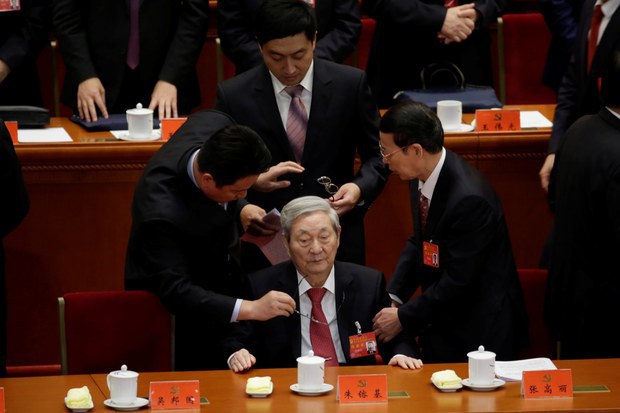
Hundreds of students protested at the weekend on the campus of Peking University (Beida) after a fence was put in place segregating them from the rest of the university, which continues to move around freely. The protest comes as ruling Chinese Communist Party (CCP) leader Xi Jinping seeks to eliminate public dissent, especially criticism his flagship zero-COVID policy, ahead of the 20th party congress later this year, when he will seek an unprecedented third term in office. In a video clip sent to RFA, Beida party secretary Chen Baojian appealed to the students to disperse, and photos shown by RFA showed part of the fence on the ground. It was unclear who had dismantled it. “Please go back to your dormitory in an orderly manner,” Chen tells the students by loudspeaker. “If anyone, any student has an opinion tonight, we can talk about it.” Shortly afterwards, the sound of something metallic falling to the ground is heard, and students applaud. Chen then appears to take issue with students filming the standoff on their phones. “Classmates … please put down your mobile phones to protect Peking University,” he said. The crowd of students replies: “Tear it down! Tear it down!” Former Chinese premier Zhu Rongji, 94, whose comments expressing unhappiness with Communist Party chief Xi Jinping’s bid for a third term in office, when leaders since Mao Zedong have been limited to two terms apiece, appears to triggered a call by party mouthpiece the People’s Daily for retired leaders “not to make arbitrary comments about key policies of the Central Committee.” File photo by Reuters. Faculty over students Political commentator Ji Feng said the thing that has angered students the most is that the restrictions only apply to them, and not to faculty or staff at the university. “They have sent me things which show that students and faculty used to come and go by the same door, and all mixed together, but now they want to segregate them,” Ji told RFA. “They can’t enforce restrictions on Beida faculty, because they live in the same blocks as the middle-ranking cadres and university leaders,” he said. “They’re not going to impose lockdown on themselves.” “So faculty are allowed in, but the students aren’t; they’re all being fenced off in their dormitories,” Ji said. “That’s why the students were protesting.” Chen Baojian was appointed to his position as deputy vice chancellor and party secretary in February, with responsibility for the student body, the CCP Youth League and health and security matters, sources told RFA. “He is worried that the students … will spread the virus, as if faculty wouldn’t,” Ji said. “There hasn’t been a large-scale student protest in Beijing for many years.” “If they don’t deal well with this, they could wind up starting one.” The protest at a university will be highly sensitive for China’s political elite. Sun Fugui, who was expelled from Shandong’s Ludong University for opposing zero-COVID measures there, said Beida has a reputation for political struggle. “Students at [these famous schools] have a broader perspective [and will be asking] if there is any scientific basis for these disease control and prevention measures,” Sun said. “If there are any violations of their personal rights and interests, they will fight back for them. They have a stronger sense of citizenship and rights protection than regular college students, that’s for sure,” he said. “Peking University students have this spirit, this tradition in their blood,” he said. “Other Chinese colleges and universities look to Beida, and look to Tsinghua [University].” An anonymous Beida student commented online: “With this … incident, we are witnessing the resurgence of the tradition of political struggle among Beida students.” Online comments also said staff had been calling on students to report each other to the authorities for attending the protest, and hand over their footage or photos as evidence. Snuffing out critics The protest came as the CCP called on retired party elders to keep quiet on topics where they disagree with Xi, possibly in response to reported criticisms made by a former premier. In a possible response to reported comments from former Chinese premier Zhu Rongji about Xi’s bid to serve a third term in office, party mouthpiece the People’s Daily called on retired leaders “not to make arbitrary comments about key policies of the Central Committee.” The article, titled “Opinion on strengthening party building among retired cadres in the new era,” said party committees at all levels should call retired members in for lectures, adding that overseas retirees should “strictly adhere to the relevant regulations.” Retired officials should also refrain from “disseminating politically negative remarks, and from taking part in illegal social organizations,” the article said, calling for additional study, counseling and training for retired officials. The Wall Street Journal reported in March that Zhu, 94, was unhappy with Xi’s bid for a third term in office, when leaders since Mao Zedong have been limited to two terms apiece. The paper said many in the CCP including former Premier Zhu Rongji have recently voiced their opposition to Xi Jinping’s move to break the established party system of leadership succession and plan to be re-elected this year. Citing CCP sources, the paper said that the left-leaning economic reforms spearheaded by Xi will also likely be postponed due to opposition within party ranks, amid an economic slowdown sparked by the zero-COVID policy. The new campaign targeting retired CCP cadres will require them to “stand firm in the face of major right and wrong, to be loyal to the party, to obey the party’s commands [and] to act responsibly with regard to the party,” the People’s Daily article said. Translated and edited by Luisetta Mudie.

Shanghai to ease lockdown if cases keep falling, but mass health checks to remain
Authorities in Shanghai on Monday announced the easing over the next six weeks of a grueling lockdown that has seen the city’s 26 million residents mostly confined to their homes, with many deprived of urgent medical care or essential supplies. Restrictions on movements around the city — which are tracked and regulated through a series of “grid management” checks and roadblocks using the Health Code app — will remain at least until next week, when the city will move towards “normalization,” should COVID-19 cases continue to fall, officials said on Monday. Full reopening may take place in June. On Monday, taxis and private cars were allowed back on the road in districts that have already attained zero-COVID status, including Jinshan and Fengxian, while airlines began operating a limited number of domestic flights, with some train services also scheduled to resume. Some supermarkets, convenience stores and pharmacies reopened on Monday, with some hair salons and fresh produce markets also allowed to open for business, while metro and bus services are slated to make a comeback from May 22. However, residents have been warned that more intense monitoring via the app will take the place of restrictions, along with more frequent PCR tests at thousands of testing stations across the city, as many venues will require a recent negative COVID-19 for entry. Jiading district resident surnamed Zheng said his residential compound remains under lockdown, despite the announcements. “We can’t leave the compound; we’re only allowed to move around inside it,” Zheng told RFA. “It will remain closed for another week or so.” “Restrictions and controls are particularly strict in Yangpu district, because they are still finding large numbers of positive results every time they do PCR testing,” he said. A photo of a 93-year-old woman in Shanghai who was given up for dead and sent to a funeral home from the city’s Zhoupu Hospital and sent back to the nursing home after being found alive, posted by the woman’s grandson. Credit: Zhuge (her grandson). Instant noodles Commenting on a viral video in which Qingpu district residents throw instant noodles at members of the local ruling Chinese Communist Party (CCP) neighborhood committee after discovering them in a secret cake-eating session, Zheng said he understood people’s frustration. “You can’t eat instant noodles every day for two months,” he said. “People who have come to Shanghai from elsewhere have had it particularly tough.” “The neighborhood committees keep a lot of the good stuff back for themselves … they distributed pork chops with maggots in them the other day … and we’ve not had a handout of fruit in two months,” Zheng said. Meanwhile, the relatives of a 93-year-old woman in Shanghai who was given up for dead and sent to a funeral home from Zhoupu Hospital said she had been sent back to the nursing home after being found alive. The woman’s grandson, who gave only the surname Zhuge, posted a photo of his grandmother from the nursing home after her return. Jiangsu-based current affairs commentator Zhang Jianping said the incident was “terrifying.” “This kind of large-scale lockdown, with makeshift hospitals, is a kind of humanitarian disaster,” Zhang said. “The disease and control prevention measures in Shanghai are a bit like the [political turmoil of the] Cultural Revolution, and seem more like disease prevention in the Middle Ages, treating people like livestock,” he said. Alive in a body bag Earlier this month, authorities in Shanghai announced punishments for five officials in the city’s Putuo district after an elderly man was found alive in a body bag en route between a care home and a morgue. Putuo civil affairs bureau chief Zhang Jiandong, section chief Liu Yinghua and social development director Wu Youcheng had been fired pending a ruling Chinese Communist Party (CCP) disciplinary case against them, while a doctor surnamed Tian was struck off for signing the man’s death certificate and placed under police investigation. Zhang said part of the problem is the suppression of any kind of criticism of government policy during the lockdown, which was the result of orders from the CCP Central Committee and leader Xi Jinping in Beijing. “Shanghai’s disease control measures were totally chaotic, but you can’t express your opinion,” he said. “If you do, officials will say that you are wavering on the zero-clearing policy.” Lu Jun, founder of the Beijing Yirenping Center, a non-profit health organization, said the zero-COVID policy has given rise to many human rights violations. “These actions have caused extremely serious consequences and had a huge impact, and violated the legitimate rights and interests of the people,” Lu told RFA. “But civil rights protection in China has never been an easy task, and the cost of doing it is very high,” he said. Lu said a number of rights lawyers had formed an advisory group to help people sue the government for violations of their rights as a result of COVID-19. The COVID-19 Claims Legal Advisory Group calls on families of victims to collect as much evidence as possible it send it to the group, which helps file compensation claims with the government. Translated and edited by Luisetta Mudie.
China, ASEAN to hold South China Sea code of conduct talks this month
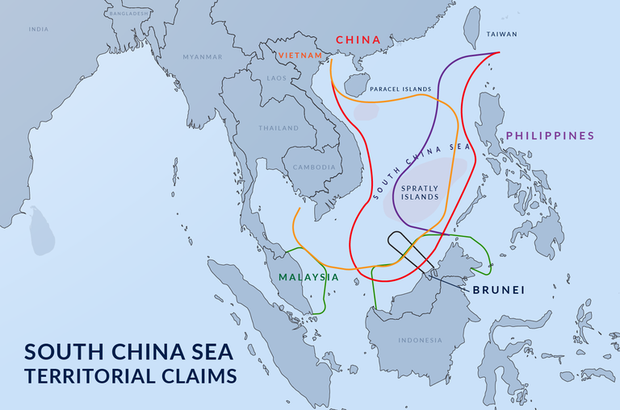
China and countries from the Association of Southeast Asian Nations (ASEAN) will conduct face-to-face consultations on a Code of Conduct (COC) in the disputed South China Sea later this month in Cambodia, the Chinese Foreign Ministry has said. Spokesperson Zhao Lijian told reporters in Beijing that the consultations will be done in person “in the latter half of this month… despite the impact of COVID-19.” For the last two years, most of the negotiations over the South China Sea, the thorniest issue between China and ASEAN, have been conducted online because of the pandemic. China and ASEAN agreed on a Declaration of Conduct of Parties (DOC) in the South China Sea in 2003, but progress on a COC has been slow going amid an increasing risk of conflict. China’s diplomats are believed to be making fresh efforts to speed up COC negotiations with ASEAN, especially as China’s close ally Cambodia is holding the bloc’s chairmanship this year. “Establishing a COC is clearly stipulated in the DOC, and represents the common aspiration and need of China and ASEAN countries,” said spokesman Zhao. He said that China “is fully confident in reaching a COC,” which would provide a “more solid guarantee of rules for lasting tranquility of the South China Sea.” Yet analysts say there are still major stumbling blocks to be addressed, such as China’s self-proclaimed historical rights over 90 percent of the South China Sea and the long-standing division within ASEAN over maritime disputes. China and five other parties including four ASEAN member states –Brunei, Malaysia, the Philippines and Vietnam – hold competing claims in the South China Sea but the Chinese claims are the most expansive and a 2016 international arbitration tribunal ruled that they had no legal basis. “If the idea is to produce a comprehensive COC that addresses all of the different concerns of the claimant countries, I do not think it is achievable,” Jay Batongbacal, director of the Institute for Maritime Affairs and Law of the Sea at the University of the Philippines, told RFA in an earlier interview. Credit: RFA U.S.-ASEAN Special Summit The South China Sea was high on the agenda at last week’s Special Summit between ASEAN countries and the United States. The Joint Vision Statement issued at the end of the summit said that parties “recognize the benefits of having the South China Sea as a sea of peace, stability, and prosperity.” “We emphasize the importance of practical measures that could reduce tensions and the risk of accidents, misunderstandings, and miscalculation,” the statement said. Without mentioning China, the signatories of the joint vision statement “emphasized the need to maintain and promote an environment conducive to the COC negotiations” and said they welcomed further progress “towards the early conclusion of an effective and substantive COC.” Some analysts, however, think that the U.S. involvement may not be beneficial to the COC negotiation process. “I don’t think it will help improve the South China Sea situation,” said Kimkong Heng, a senior research fellow at the Cambodia Development Center. “The U.S. has its own agendas that might exacerbate rather than facilitate the South China Sea negotiation,” he said. Cambodia is not a claimant in the South China Sea. From Phnom Penh’s standpoint, the U.S. will likely “continue to pressure Cambodia on the potential Chinese military base in the kingdom,” added Heng “This will serve as a barrier for any meaningful negotiations between the U.S. and Cambodia on national and regional issues,” Heng said. ASEAN comprises ten members: Brunei, Cambodia, Indonesia, Laos, Malaysia, Myanmar, the Philippines, Singapore, Thailand and Vietnam.

For two North Korean escapees, losing local elections in the UK feels like a victory
Timothy Cho and Jihyun Park are not typical British politicians. Their route to becoming candidates for the Conservative and Unionist Party in last week’s local elections began more than a decade ago when they escaped from North Korea. Both Cho and Park ended up settling in Greater Manchester in 2008, naturalized as Britons, and after acclimating to a democratic society that offered a stark contrast to life they fled, sought the opportunity to represent their respective communities in the northwestern English city. Although they were among a host of Conservatives to lose to Labour Party candidates in the May 5 election, both of the North Korean escapees told RFA’s Korean Service that they considered their campaigns to be a victory of sorts. “I lost the election, but I feel like I have won. I feel like I have reached out to the people in my constituency, and I feel like they accepted and embraced me,” said Cho, who ran for a contested councilor seat of the Denton South ward of Greater Manchester’s Tameside borough. In his race against Labour’s Claire Reid, Cho secured 35% of the vote, 9 percentage points higher than his first attempt last year to win a seat. “The process of escaping from North Korea and coming here was a series of challenges, and I think this latest challenge is a beautiful race. I am so grateful to even run for office because I have experienced the flower of democracy,” Cho said. “Since I was running for the same constituency, many of the voters recognized me. I could see that my opponent viewed me as a serious rival and was nervous from the start because there was a high chance that I would receive more votes than last year,” he said. Cho also said he appreciated that his opponent publicly recognized him as a conservative candidate rather than simply as a “North Korean refugee” or “defector.” He said he was especially proud to have been able to connect with the many low-income voters in his district through his own experiences growing up in extreme poverty in North Korea and the tough times he endured after settling in England in 2008. Timothy Cho (3rd from right) campaigning prior to the 2022 UK local elections. Photo: Timothy Cho When he arrived, Cho said he spoke no English, had few friends, and had to work his way through university. The freedom he was afforded in Britain, where his hard work translated into better opportunities, was a constant source of motivation, he said. “The more I did, the more I thought of the people who remain in North Korea,” Cho said. “It really breaks my heart to think of my siblings, who are still in the darkness of North Korea. But if they lived in a free society like I do, they could be living the life I am living, and more politicians and businessmen would have come out our family,” said Cho. “This is why I work harder.” Cho said he plans to run for office again at the first opportunity. Until then he said he will continue advocating for North Korean human rights. Timothy Cho and Jihyun Park, expressed their feelings about running in local elections in the UK after losing their respective races on May 5, 2022. Photo: Timothy Cho and Jihyun Park’s Twitter accounts A personal victory Jihyun Park didn’t win her race for one of three contested councilor seats in the Ramsbottom ward of Greater Manchester’s Bury borough — Labour candidates took all three slots — but Park felt good anyway because she said the election cemented her status as a Briton. “I challenged myself with the heart of being British, and not to place myself as an outsider or as a stranger. I think a lot of people voted for that challenge,” she told RFA. “I describe [my candidacy] as victory for humanity, because it gave a message to many people that the challenge was not a failure, but rather a personal victory,” she said. “I will continue to challenge myself.” Park also ran in elections last year, but this year’s election was different. Because of redistricting, she was now trying to represent an area she does not herself live in. She also was able to successfully become a candidate without the party nominating her, she introduced herself to the voters and was elected to represent the Conservatives on her own merits. “Unlike in last year’s election, I was interviewed in front of the residents and became a candidate chosen by them which was very important to me and made me feel proud. The candidates were interviewed one by one to see what they could do for the people. I was glad and impressed that they chose me,” Park said. Like Cho, Park said she chose to focus on the needs of the residents of Ramsbottom rather than her background. But her life as a North Korean refugee and rights activist did help, she said. She characterized her candidacy as bringing a message of hope to the people, and she hopes one day to share her experiences of living in a democratic political system with North Koreans. She also used her platform to draw attention to the challenges of living in the country she fled from. “I had conversations with election commission officials, and I said that in North Korea we never know where and how our votes are used and we do not have the right to vote,” she said. Though North Korea holds elections, usually there is only one party-selected candidate running for each office. All able-bodied people are required to show up and vote for that candidate. “I am so impressed by the system here in the United Kingdom, where everyone has the right to vote, and they can see how their votes are counted,” she said. Jihyun Park (right) campaigning ahead of the 2022 local UK elections . Photo: Jihyun Park Many of the voters, she said, were surprised to…
