INTERVIEW: ‘They threatened to arrest us both together’

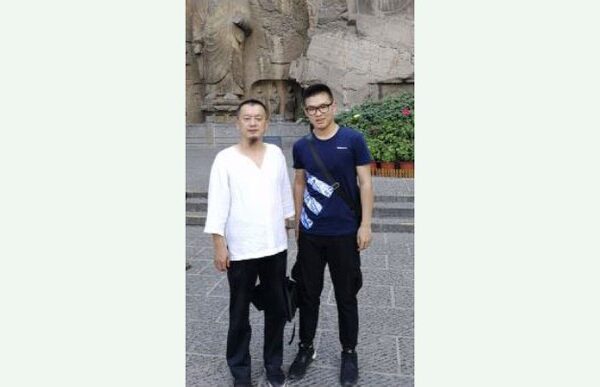
A Chinese rights activist who openly supported the “white paper” protest movement of November 2022 has applied for political asylum in the Netherlands after learning that he could be targeted as part of an ongoing case against his dissident father. Zhang Hongyuan, son of veteran Wuhan-based rights activist Zhang Yi, flew from Beijing to Amsterdam on April 13 after learning that he was being named as a co-defendant alongside his father, who is being targeted for giving interviews to overseas media organizations during the Wuhan lockdown of 2020. He spoke to RFA Mandarin about his current situation: RFA: Where are you right now? Zhang Hongyuan: I am now in a town in the Netherlands, about a 20-minute drive from The Hague. RFA: When did you leave the immigration detention center? Zhang Hongyuan: They eventually decided to put me in this open camp after I had been in the immigration detention center for 12 days. I had my first interview with the immigration bureau in the detention center. After I stayed in the immigration prison for twelve days, they finally decided to put me in this open camp. I completed [two interviews] with the immigration bureau in the immigration prison. RFA: You shot some video of the “white paper” protest that went viral. Was this the main reason for your political asylum application? #武汉 2022/11/27夜晚11点 中山大道(汉正街站) pic.twitter.com/dAykIJMyAs — 自由亚洲电台 (@RFA_Chinese) November 27, 2022 Zhang Hongyuan: It’s one of the reasons. I did get video from the [police] clearance of the demonstration on Hanzheng Street in Wuhan, although the people who were actually holding up blank sheets of paper weren’t on Hanzheng Street, but on Yiyuan Road. The real reason I am seeking political asylum is that we received news that they are planning to prosecute me alongside my father as a co-defendant because my father gave interviews to foreign media during the pandemic. RFA: How did you come by that information? Zhang Hongyuan: People linked to the case told us, but I can’t disclose the details. RFA: Does that mean someone in the government? Zhang Hongyuan: Yes. RFA: Lots of people spoke to foreign media during the lockdown, so what is so special about Zhang Yi’s case? Zhang Hongyuan: It’s because we were in Wuhan, and he was giving interviews to any foreign media that asked, all the way through lockdown. And because foreign journalists would let him know they wanted to interview him by calling his Chinese cell phone [without messaging first], the police would have known about it straight away, even though we never actually gave interviews on the phone. We found a safer way of giving the interview later.  In the end, the police told my father that he had been interviewed by more than 60 different media organizations around the world. My father didn’t even realize how many there were because he didn’t count them. RFA: What is your father’s situation now? Zhang Hongyuan: Right now he’s in Wuhan. First off, the [ruling Chinese Communist Party’s] political and legal affairs committee of Hubei province want to arrest him, and the central political and legal affairs committee [in Beijing] wanted to make it an open-and-shut case and asked the Hubei political and legal affairs committee to find a way. They wanted [me] as his son to be arrested alongside him and charged as a co-defendant. Then they found out I had left the country after you reported that I was seeking asylum, and now my father is under round-the-clock surveillance, with guards at his door. There is a car downstairs outside our apartment building with a team of three people following him 24/7. It seems they are getting ready to detain him at any time. I’ve been able to leave [China], but there’s no way he will be able to. RFA: Was there any other reason why the Hubei government has been keeping such a close eye on Zhang Yi? Zhang Hongyuan: Yes. Because he has been calling for the release of [disappeared pandemic journalist] Fang Bin for the past three years … in interviews with foreign media.  Wuhan-based activist Zhang Yi and his son Zhang Hongyuan. Credit: Provided by Zhang Hongyuan RFA: Why did the government take action against you, when it was your father who was giving the interviews? Zhang Hongyuan: Because I’m his weakness. They threaten him by threatening to arrest us both together, I think that’s [official] Chinese logic. Also, I assisted him with the interviews, because all of his encrypted chats required circumvention tools to get around the Great Firewall [of internet censorship]. When he was interviewed by the Voice of America, some of the communication was done via email like Gmail, and I also helped him use software like Skype and WhatsApp. RFA: So it was just technical assistance? Zhang Hongyuan: Yes, technical assistance. But after he was interviewed, when the police came to threaten him, I also shot a video of them that was broadcast by Japanese TV station NHK. RFA: During the “white paper” movement, you said that you witnessed protests on Hanzheng Street? Zhang Hongyuan: Yes. Hanzheng Street is a wholesale shopping mall in Wuhan, and it supports large numbers of people, but under the strict lockdown conditions, they had no way to work and no food to eat. Then came the white paper movement after the Urumqi incident, and the whole country marched together. Even in Wuhan, they began to hold demonstrations against the strict zero-COVID policy. RFA: Were there any political slogans shouted on Hanzheng Street, for example calling on Xi Jinping to step down? Zhang Hongyuan: By the time I got there on Nov. 27, 2022, it was night, and they were clearing the protesters away. I didn’t hear any slogans like that. RFA: How did your escape from China go? Zhang Hongyuan: The process was relatively smooth, although I was very apprehensive as I was leaving. One worry was that the airline would stop me from boarding, and the other was that the border…

Read More

Anti-junta militia members escape from prison in Myanmar’s Bago region

Myanmar police and troops are searching for nine People’s Defense Force members who were among 10 that escaped from a prison in Myanmar’s Bago region, the junta said Friday. Its information group said that nine men and one woman escaped from Taungoo Prison. One was shot dead by guards. The jailbreak took place Thursday afternoon after the prisoners were taken from their cells to go on trial, according to a People’s Defense Force member who declined to be named. “Ten prisoners were brought to court in the prison and they grabbed guns from the prison guard who came along with them and ran away,” he said.  “They breached the prison walls and fought [against their pursuers].” One prisoner was shot dead as the two sides exchanged fire, the PDF member confirmed. RFA asked to speak with the nine prisoners still at liberty but the defense force declined, citing the need to protect them. A prison guard was also believed to have been killed, according to Tun Kyi, a member of the Former Political Prisoners Society. “Some of the junta-affiliated Pyu Saw Htee were working together with the prison authorities to provide security, but we could say that this operation was successful,” he said. “A sergeant was reportedly killed. A revolver and a G3 rifle were taken.” Nearly 22,500 political activists have been arrested since the February 2021 coup according to the Assistance Association for Political Prisoners, another group of former political prisoners, operating from Thailand. More than 18,000 are still being held in prisons across Myanmar. Translated by RFA Burmese. Edited by Mike Firn.

Read More

Rohingya struggle in Myanmar camps devastated by cyclone

Rohingya living in camps in the Sittwe, Myanmar, area continued to struggle Thursday amid the widespread destruction caused by Cyclone Mocha over the weekend. “Urgent needs include shelter, clean water, food assistance and health care services,” the United Nations Office for the Coordination of Humanitarian Assistance said in a flash update Wednesday. “There are rising concerns in flooded areas about the spread of waterborne disease.” About 130,000 Rohingya have lived for more than a decade in camps for internally displaced persons in the area. During the storm, the sea level suddenly rose nearly 10 meters (30 feet) and almost all the huts in one camp were washed away, said Nay San Lwin, co-founder of the Free Rohingya Coalition. According to the Health Cluster, an arm of the World Health Organization, mobile clinics have begun operating in some of the affected Myanmar townships, and rapid response teams have been deployed to some of the camps, including Dar Paing.

Read More

Myanmar’s junta shuts down 3 Mandalay hospitals

The junta has revoked the business licenses of three private hospitals in Myanmar’s central Mandalay region, it announced this week. Palace, City and Kant Kaw hospitals had already been told to stop accepting patients because they were using staff belonging to the civil disobedience movement. An order signed Monday by Dr. Myat Wunna Soe, secretary of the junta-led Private Health Industry Central Group said the licenses were revoked because the hospitals failed to comply with the licensing rules in Section 19 (a) of the Law Relating to Private Health Care Services. This vague clause stipulates only that “a person who obtains a license for any private health care services shall … comply with the terms and conditions of the license.” The junta arrested urologist and kidney surgeon Dr. Win Khaing, on Dec. 25 last year while he was working at the Palace Hospital. The Mandalay University professor had been participating in the civil disobedience movement following the coup in February 2021. Dr. Win Khaing, a urologist and kidney surgeon who was arrested on Dec. 25, 2023, is seen in this file photograph. Credit: Citizen journalist The junta detained several more disobedience movement doctors in Mandalay in the days that followed his arrest. On Jan. 1, 2023, the junta ordered the temporary closure of five Mandalay hospitals, including the Palace, City and Kant Kaw. No announcement has been made about the other two hospitals. RFA’s calls to the junta spokesman for Mandalay region, Thein Htay, seeking comment on the decision to revoke the licenses, went unanswered. The junta has cracked down on doctors who voice opposition to the military, sacking 557 and revoking their medical licenses for one year. The Ministry of Health of the shadow National Unity Government announced on April 20 this year that 71 health workers had been killed and 836 arrested in the more than two years since the coup. It said the junta attacked and seized equipment from 188 clinics and hospitals, damaged 59 ambulances and seized 49 more. Translated by RFA Burmese. Edited by Mike Firn.

Read More

Vietnam denies UN inquiries about alleged repression of Khmer Krom minority

The Vietnamese government has denied allegations from United Nations experts that it represses the Khmer Krom minority living in the Mekong Delta region.  The nearly 1.3-million strong ethnic group live in a part of Vietnam that was once southeastern Cambodia, and face widespread discrimination in Vietnam and suspicion in Cambodia, where they are often perceived not as Cambodians but as Vietnamese. Scores of Khmer Krom asylum seekers reside in Thailand. Seven special U.N. rapporteurs operating under Human Rights Council mandates sent a 16-page letter to Hanoi on Oct. 18 about information it received concerning the country’s alleged failure to recognize the right to self-determination of the Khmer Krom as an indigenous people.  The experts said they had also received evidence of alleged violations of the group’s freedom of expression, association and religion as well as their cultural and linguistic rights and land use rights. Concerns were also raised about Khmer Krom men detained by police and questioned for their activism, namely Duong Khai, Thach Cuong, Danh Set, Tang Thuy and Thach Rine.  Of the five, authorities arrested and jailed Rine in October 2021 on charges of “abusing democratic freedoms” for wearing a T-shirt with the U.N.’s Sustainable Development Goals logo. He was released in April 2022 without having had a fair trial or access to his family and lawyer, the letter said. “While we do not wish to prejudge the accuracy of these allegations, we are expressing our serious concern at what may constitute arbitrary arrest and ill-treatment of Khmer Krom persons with the aim of suppressing their right to freedom of expression, as well as the Khmer Krom Indigenous Peoples’ cultural and linguistic rights,” the letter said. 60 days to respond The U.N. experts gave the Vietnamese government 60 days to respond to its concerns and explain measures and regulations that it has taken to ensure the protection and rights of the Khmer Krom as an indigenous people. Vietnam’s permanent mission to the U.N. office in Geneva refuted the accusations in a response dated May 10.  “The accusations stated in the Joint Communication distort the history and socioeconomic development situation with many false information about the State of Viet Nam’s policies and laws towards the ethnic minority communities in guaranteeing and promoting the rights as well as taking care of the lives of ethnic minorities, including the Khmer people,” the letter said. “In addition, the accusations about the individuals mentioned in the Joint Communication are also untrue, stem from unofficial sources, bear heavy arbitrariness and lack objectivity,” it said. The letter went on to say that the concept of “indigenous peoples” is not suitable with the characteristics, history of establishment and development of Vietnam’s ethnic groups. “In other words, in Viet Nam, there is no concept of indigenous peoples,” it said. Tran Mannrinth, a member of Khmer Kampuchea-Krom Federation, a human rights NGO, told Radio Free Asia that many young people from the ethnic group are discouraged from learning the Khmer language because books printed in Cambodia are not permitted in Vietnam, and  Khmer-language material printed in Vietnam is full of mistakes by the ethnic-majority Kinh authors.  “Vietnam finds ways to deny; however, if it does not know what indigenous people are, then how could it [endorse] the U.N. declaration?,” he asked, referring to Vietnam’s vote in favor of the adoption of the U.N.’s legally nonbinding Declaration on the Rights of Indigenous Peoples in 2007. Tran Mannrith, who lived in Lai Hoa village with other ethnic Khmer Krom before permanently resettling in the United States in 1985, lamented the group’s loss of agricultural land to collectivization when Vietnam was reunified in 1975 and resettlement efforts that followed “During the time of war between Vietnam and [Cambodia’s] Khmer Rouge, Khmer people living near the border in Chau Doc were forced to move to other places,” he said. “After the fall of Khmer Rouge, the displaced people were allowed home, but most of their land and property was lost to other people.”  Translated by Anna Vu. Edited by Roseanne Gerin and Malcolm Foster.

Read More

Cyclone Mocha destroys camp housing 700 in Myanmar’s Magway region

As news slowly emerges about the extent of damage caused by Sunday’s cyclone, residents of a township in Myanmar’s Magway region told RFA Wednesday that Mocha destroyed a displaced persons camp housing more than 700 people. The cyclone brought torrential rains, causing a local creek to burst its banks and flood the camp in Tilin township’s Htan Pin Kone village on Sunday, according to one resident, who wished to remain anonymous for security reasons. He said it destroyed all the 200 tents in the camp, set up on the banks of the creek. People were forced to move to the camp because junta troops repeatedly carried out maneuvers near Htan Pin Kone village, which has around 250 houses, the resident told RFA Wednesday. “The troop pass near Htan Pin Kone village whenever they conduct offensives on the western part of Tilin township, so the village is quite insecure. That’s why the whole village moved to a safer place, so there are a lot of displaced people,” he said. According to the latest report from the United Nations Children’s Fund (UNICEF) 2,462 people were relocated from their homes in two Magway townships before the cyclone hit. It said 3,676 houses in 98 villages in the region were damaged by heavy rains and flash floods. Cyclone Mocha hit Myanmar’s coast Sunday with winds reaching over 220 kilometers per hour (137 mph). Preliminary figures compiled exclusively by RFA confirmed at least 31 deaths due to the cyclone in Rakhine and Chin states, and Ayeyarwady, Magway and Sagaing regions. On Tuesday, the National Unity Government updated its estimated death toll to 435 across the country, with an unspecified number still missing. The United Nations said Tuesday that 16 million people were potentially exposed to Mocha, including more than 1.2 million who were already internally displaced.  Its Office for the Coordination of Humanitarian Affairs (UNOCHA) said early estimates indicated nearly 3.2 million people in Rakhine state and Myanmar’s northwest were the most vulnerable and considered likely to have humanitarian needs in the wake of the cyclone. The International Rescue Committee said Wednesday is deeply concerned about the communities, especially those living in displaced persons camps. It said it is responding to the needs of communities affected by Cyclone Mocha in Bangladesh and Myanmar and appealed for more funding for humanitarian work in Myanmar. Translated by RFA Burmese. Edited by Mike Firn.

Read More

Nearly 400 feared dead after Cyclone Mocha hit Myanmar’s Rakhine state

Nearly 400 Rohingya refugees in Myanmar’s Rakhine state were probably killed by Cyclone Mocha, the country’s parallel National Unity Government and local aid workers told RFA Tuesday.  The NUG said the figure was based on estimates of the damage, since search and rescue teams have not retrieved the bodies and many victims are still missing. The figure has not been independently verified by RFA. Volunteers from the Muslim Aid and Relief Society who are collecting field data said most of the dead were children, pregnant women and the elderly. They said they are still searching for bodies. Aung Kyaw Moe, a Rohingya advisor to the National Unity Government, told RFA Tuesday the majority of the victims were from Sittwe township. “Some are still missing. This is in Sittwe alone,” he said.  “Bodies were found on the streets and under trees. Search and rescue has not been done yet so we can’t pick up the bodies. All the refugee camps were badly damaged.” He said that the actual number of casualties could be much higher. ‘Refugee camps are open-roof prisons’. There are 21 Rohingya refugee camps in Rakhine state with 120,000 refugees staying in 13 camps in Sittwe township. Nay San Lwin, co-founder of the Free Rohingya Coalition, said the refugees were housed in makeshift tents which were mostly destroyed when the cyclone hit. “Most of the Rohingya refugee camps did not have time to evacuate [ahead of] the cyclone,” he said.  “Lives are lost when there are no shelters to evacuate the cyclone. The tents were destroyed. Refugee camps are open-roof prisons.” Residents of Sittwe township said that most of the camps were built close to the sea, leaving them vulnerable to heavy waves, coastal winds and torrential rainfall. Nearly 1 million Rohingya were forced to leave their homes in Rakhine state following a military crackdown against the Muslim-minory in 2017. About 740,000 fled to Bangladesh and live in Cox’s Bazar, also hit hard by Cyclone Mocha. Those who remained live in internally displaced persons camps, poorly funded by the junta and volunteer groups. Collecting information on cyclone victims has been hard because there are only a few volunteers from the Muslim community collecting data in the field, a member of the data collection team told RFA, speaking on condition of anonymity. It is also hard to collect data on the ground after Sittwe’s largest telecommunications tower collapsed when the cyclone hit it on May 14, cutting phone lines and internet access. RFA’s calls to the junta spokesman for Rakhine state, Hla Thein, went unanswered Tuesday. Cyclone Mocha hit Myanmar’s coast Sunday with sustained winds reaching over 220 kilometers per hour (137 mph). According to preliminary figures compiled exclusively by RFA, there have been at least 30 deaths due to the cyclone in Rakhine and Chin states, and Ayeyarwady, Magway and Sagaing regions . Rakhine state and Ayeyarwady region were hit hard by Cyclone Nargis in 2008, leaving nearly 140,000 people dead or missing. Translated by RFA Burmese. Edited by Mike Firn.

Read More

Cyclone Mocha inflicts heavy damage on Myanmar’s Rakhine state

Cyclone Mocha may have been less deadly than predicted, but it inflicted heavy damage on Myanmar’s Rakhine state, including the capital of Sittwe.  On Monday, a day after the storm slammed into the coast, images from the city and surrounding area showed flattened homes, roads blocked by fallen electricity pylons, splintered remains of trees and widespread flooding. Power was cut off to Sittwe, a city of about 150,000. “Ninety percent of Sittwe township … is damaged or under debris,” aid and relief groups told Radio Free Asia.  A precise death toll was hard to nail down. At least 30 people are believed dead, based on reports by local media and residents of the affected regions. Myanmar’s junta had said three people died, while the shadow National Unity Government – made up of opponents of the junta – put the figure at 18. Those figures are far lower than feared. Cyclone Nargis, which hit the same area in 2008, left nearly 140,000 dead or missing. The storm hit the coast on Sunday with sustained winds reaching over 220 kilometers per hour (137 mph). “Buildings have been badly damaged,” said a woman who lives in the Sittwe’s Lanmadaw (South) ward, asking not to be identified. “The monastery in front of my house is completely destroyed. Not one house is left undamaged.” The low-lying areas of Sittwe were inundated with flooding, she said, leaving residents to contend with brackish and, in some places, chest-deep water from the Bay of Bengal. “Piles of mud have been left inside the buildings,” she said. “Since there is no electricity, we haven’t been able to clean them … The roof of my house is almost gone and there is water downstairs. We don’t know what to do to clean them up.” Local residents stand on a broken bridge at the Khaung Dote Khar Rohingya refugee camp in Sittwe, Myanmar, Monday, May 15, 2023, after cyclone Mocha made a landfall. Credit: AFP A Sittwe firefighter told RFA that floodwaters in the city were “still as high as 1.5 meters (5 feet) in the low-lying areas” and that evacuated residents were waiting for word from the Rakhine state government to return to their homes. Impact in Bangladesh Meanwhile, in neighboring Bangladesh’s Cox’s Bazar to the west, some 1.2 million Rohingyas living in refugee camps after fleeing a military offensive in Rakhine state in 2017 remained largely unscathed by the cyclone, despite earlier fears that the mostly unprotected camps lay directly in the storm’s crosshairs. But while no casualties were reported in the aftermath of the cyclone, Rohingya refugees told RFA that thousands of homes were damaged in the sprawling camps due to strong winds, landslides, and flooding. “About 500 homes were damaged in our camp alone,” said Aung Myaing, a refugee at the Kutupalong camp in Cox’s Bazar. “About 10,000 homes in all refugee camps combined have been damaged. Some houses have been completely destroyed while others have been partially damaged.” He said camp residents are in need of bamboo and tarps to help shore up the damage. RFA-affiliated BenarNews reported that Mocha had destroyed more than 2,800 shelters, learning centers, health centers and other infrastructure in refugee camps in the neighboring sub-districts of Teknaf and Ukhia, citing Mohammed Mizanur Rahman, refugee relief and repatriation commissioner. He noted that landslides were also reported at 120 spots in the Rohingya camps. Rahman said there were no casualties because “we relocated them at an appropriate time.” ‘Trail of devastation’ In a flash update on Monday, the United Nations Office for the Coordination of Humanitarian Assistance called Mocha “one of the strongest cyclones ever to hit the country” and said the storm had left a “trail of devastation” in Rakhine state, which is also home to tens of thousands of people displaced by conflict in the aftermath of the military’s Feb. 1, 2021, coup d’etat. “Few houses have escaped damage in Sittwe and there is widespread destruction of flimsy bamboo longhouses in displacement camps,” UNOCHA said. “Health, relief items, shelter, and water, sanitation, and hygiene needs are already being reported. Explosive ordnance risks are high in conflict-affected rural areas where landmines may have been shifted during flooding and where people have been on the move to safer areas.” A downed tree lies on a building in Sittwe, Myanmar, Monday, May 15, 2023. Credit: Citizen journalist Damage to telecommunications towers has severely hampered the flow of information in Rakhine, while water and power services were disrupted throughout the day on Monday, forcing residents to rely on generators for electricity. Relief efforts underway UNOCHA said humanitarian partners are starting assessments to confirm the magnitude of the damage in Sittwe and the Rakhine townships of Pauktaw, Rathedaung, Maungdaw, Ponnagyun, and Kyauktaw. It called for “an urgent injection of funds” to respond to the impact of Mocha and subsequent flooding in the region. In a response to emailed questions from RFA, the World Food Program said it is “mobilizing emergency food and nutrition assistance to 800,000 people affected by the cyclone, many of them already displaced by conflict.” Before the cyclone, the U.N. had estimated 6 million people were “already in humanitarian need” in Rakhine state, and the regions of Chin, Magway and Sagaing. Collectively, the states host 1.2 million displaced people, prompting OCHA to warn of “a nightmare scenario.” However, Mocha had weakened by Sunday evening and moved toward Myanmar’s northwest, where it was downgraded to a depression on Monday over the country’s Sagaing region. RFA was able to document the deaths of at least a dozen people. They included a 30-year-old woman from Rakhine’s Ramree township, two men in their 20s in Ayeyarwady region’s Yegyi township and Rakhine’s Toungup township, and four men of unknown ages in Rakhine’s Kyauktaw township.  Others killed included a resident of Sittwe, a man in his 50s from Mandalay region’s Pyin Oo Lwin township, a young couple from the Shan state city of Tachileik, and a 70-year-old woman from Magway region’s Sinphyukyun township. Attempts by RFA to contact…

Read More

Rohingya must stay at camps despite approaching cyclone, Bangladesh govt says

Bangladeshi authorities evacuated hundreds of thousands of people Saturday from coastal areas near the projected path of a monster storm, but Rohingya refugees would be prevented from leaving their camps in Cox’s Bazar, the home minister said. As of late Saturday, Bangladeshi state media reported, the government had moved as many as 400,000 people into 1,030 cyclone shelters in Chittagong division, which covers Cox’s Bazar and other districts near Bangladesh’s southeastern border with Myanmar’s Rakhine state, where Cyclone Mocha is expected to make landfall on Sunday. During a public event in Dhaka on Saturday, Home Minister Asaduzzaman Khan Kamal said that agencies including the Armed Police Battalion in Cox’s Bazar were ordered to stop any of the 1 million or so Rohingya sheltering at camps there from leaving those confines and spreading across the country. “Law enforcers are on alert so that the Rohingya people cannot take advantage of the disaster to cross the barbed-wire fence. But if Cyclone Mocha hits the Bangladesh [areas] instead of Myanmar, the Rohingya people will be brought to a safe place,” Khan said in televised comments. World Vision, a humanitarian group, had warned on Friday that the storm threatened the safety of thousands of children at the world’s largest refugee camp, situated in Cox’s Bazar. “Cyclone Mocha is expected to bring heavy rain and flooding along the coasts of Cox’s Bazar in Bangladesh, posing severe threat to the safety of children and communities in danger zones along coastal and low-lying areas,” the NGO said in a statement. The cyclone is the most powerful and potentially dangerous sea-based storm seen in this corner of the Bay of Bengal in nearly two decades. On Saturday, India’s meteorological department said the weather system had intensified into an “extremely severe cyclonic storm.” This satellite image provided by the India Meteorological Department shows storm Mocha intensify into an extremely severe cyclonic storm, May 13, 2023. Credit: India Meteorological Department via AP As of 12 p.m. Saturday (local time), the center of the storm was over the sea close to Sittwe, the capital of Rakhine, and packing winds of up to 231 kilometers per hour (143.5 miles per hour) as Mocha churned toward the low-lying coastal border areas between Myanmar and Bangladesh, according to the United Nations Satellite Centre (UNOSAT). Rakhine is expected to take a direct hit from the storm. “According to the forecast by GDACS [Global Disaster Alert and Coordination System], tropical cyclone MOCHA can have a high humanitarian impact based on the maximum sustained wind speed, exposed population, and vulnerability,” UNOSAT said.   In a press release, the U.N. refugee agency UNHCR warned that Mocha could bring “significant rainfall with landslides and flooding of camps near the sea.” The U.N.’s Office for the Coordination of Humanitarian Affairs (OCHA) said in a separate bulletin on Saturday that the storm was forecast to generate wind speeds of up to 200 kilometers per hour (124.2 miles per hour) when it makes landfall on Sunday afternoon. “Heavy rain and strong winds associated with the cyclone are expected to cause flooding across Rakhine, where many townships and displacement sites are in low-lying areas and highly prone to flooding,” OCHA said. “Many communities are already moving to higher ground to designated evacuation centers or to safer areas staying with relatives,” the U.N. agency said. A girl looks out from a tuk tuk while evacuating in Sittwe, in Myanmar’s Rakhine state, ahead of the arrival of Cyclone Mocha, May 13, 2023. Credit: Sai Aung Main/AFP In the Bangladeshi capital, Prime Minister Sheikh Hasina said her government was preparing to safeguard the nation and its people from the storm, but that there might have to be shutoffs to the electricity and gas supply. “Cyclone ‘Mocha’ is coming. We’ve kept ready the cyclone centers and taken all types of preparations to tackle it,” the state-run news agency Bangladesh Sangbad Sangstha quoted Hasina as saying on Saturday. Her Awami League government faces a general election in late 2023 or early 2024. In Cox’s Bazar, Bangladesh’s meteorological agency raised the danger signal for the coming cyclone to 10, the most severe rating. Meanwhile, Mohammad Mizanur Rahman, the country’s refugee relief and repatriation commissioner, confirmed that law enforcement agencies would prevent Rohingya from leaving the camps. He said Rohingya would have to seek shelter at mosques, community centers and madrassas located within the sprawling refugee camps in the district. “We have prepared some buildings including mosques and community halls as temporary cyclone shelters. About 20,000 Rohingya people would likely need cyclone shelters if there will be a landslide,” he said. The Rohingya would face no risk from storm surges because their shelters are located in hilly areas, he added. “As there are 1.2 million Rohingya, we have no capacity to evacuate them to [cyclone] shelters,” according to a statement issued on Saturday by Md. Enamur Rahman, Bangladesh’s state minister for disaster management and relief. He did not give a reason and did not immediately respond to a follow-up phone call from BenarNews. Nearly three-quarters of a million people who live in the camps fled to the Bangladesh side of the frontier with Myanmar after the Burmese military launched a brutal offensive in Rakhine, the homeland of the stateless Rohingya, in August 2017. “Four and a half thousand volunteers are working under the leadership of the Refugee Relief and Repatriation Commissioner for the Rohingya people,” Enamur Rahman said. “There is no risk of floods on the hills but rainfall can cause landslides. Keeping this fear in mind, I have asked the volunteers to be prepared,” the state minister said. BenarNews is an RFA-affiliated news service.

Read More

Papua New Guinea foreign minister faces backlash over primitive animals comment

UPDATED AT 03:46 a.m. ET on 2023-05-12 Papua New Guinea’s foreign minister is facing an intense public backlash and calls to resign after he labeled critics of his daughter’s ostentatious TikTok video from a taxpayer funded trip to the U.K. monarch’s coronation as “primitive animals.” The furor over Australian-born Justin Tkatchenko’s comments, which were made to Australia’s state broadcaster ABC, is happening less than two weeks ahead of U.S. President Joe Biden’s stopover in Papua New Guinea to meet leaders of Pacific island countries. Tkatchenko’s adult daughter Savannah accompanied him to the coronation of King Charles III in London last week. She posted a TikTok video of their luxury travel, since deleted, which triggered criticism in Papua New Guinea where poverty is widespread. In an interview with the ABC on Wednesday about the social media onslaught, Tkatchenko said his daughter was “absolutely traumatized by these primitive animals.” He added, “And I call them primitive animals because they are.” The comments were perceived as racist in the Melanesian nation of more than nine million people, where there was also anger at a local newspaper’s estimate of the expense of sending a large delegation to the coronation. On Friday, Tkatchenko said he would step aside as foreign minister while any investigations take place. He repeated his apology from the day before when he had said his comments were a reaction to “horrible threats of a sexual and violent nature” by internet trolls against his daughter and not directed at Papua New Guineans. Prime Minister James Marape on Thursday said he had been offended by the primitive animals comment, but also urged the county to accept the apology and move on. Papua New Guinea Foreign Affairs Minister Justin Tkatchenko speaks at a press conference in Port Moresby on Jan. 10, 2023. Credit: Harlyne Joku/BenarNews Savannah Tkatchenko’s video showed her enjoying luxury travel, accommodation and high-end shops such as Hermes at Singapore Airport and doing her skincare routine on a flight to London. “I’ve actually packed my whole life into these two big suitcases, I’m so proud of myself because I have so much stuff,” she said as she strolled through an airport. “So I’m traveling with my Dad and our first stop is Singapore and we checked into the first class lounge where we had some cosmos and some yummy food,” she said. “Then we did some shopping around Singapore Airport at Hermes and Louis Vuitton. Those of you that don’t know, Singapore Airport shopping is honestly so elite.” Calls for the foreign minister’s resignation have come from senior politicians such as the opposition leader and organizations including the country’s Trade Union Congress. “Justin deserves no mercy or forgiveness. He must be kicked out of this country. PM James Marape must act immediately,” said PNG Trade Union Congress Acting General Secretary Anton Sekum. Biden visit aims to counter Chinese influence The rancor over a senior minister’s comments comes ahead of landmark visits to Papua New Guinea later this month by Biden and India’s Prime Minister Narendra Modi. Papua New Guinea, the most populous Pacific Island country, is increasingly a focus of China-U.S. rivalry in the region and a U.S. push to counter Beijing’s influence. Like some other Pacific island nations, Papua New Guinea is trying to balance increased Chinese trade and investment and its traditional security relationships with countries such as Australia and the United States. Tkatchenko earlier this month said he hopes a defense cooperation agreement with the United States will be signed during Biden’s visit. Papua New Guinea is also working on completing a broad security agreement with Australia. China’s influence in the Pacific has burgeoned over several decades through increased trade, infrastructure investment and aid as it seeks to isolate Taiwan diplomatically and gain allies in international institutions. The Solomon Islands and Kiribati switched their diplomatic recognition to China from Taiwan in 2019. Beijing signed a security pact with the Solomon Islands last year, alarming the U.S. and allies such as Australia who fear it could pave the way for a Chinese military presence in the region. Marape’s statement about Tkatchenko said Papua New Guinea’s “national character” was being tested at a time when it would be in the spotlight because of Biden and Modi’s visits. “We must show the world that we can forgive those who offend us,” he said. “This will be a momentous and historic occasion, which should rally our nation together, and we should not let this issue stand in the way.” BenarNews is an RFA-affiliated news service. Story updated to note that Tkatchenko is stepping aside to allow an investigation.

Read More