The Illusion of Deterrence: A Failure-Based Scrutiny of Global Arms Exports
In the global arms market, power is often projected through numbers: export volumes, technological claims, and battlefield narratives. China, now among the world’s top arms exporters, has leveraged this perception by positioning its weapons as cost-effective alternatives to Western systems. However, beneath this narrative lies a growing body of evidence that raises serious concerns about reliability, performance, and long-term operational viability.
This report shifts the focus from what is promised to what actually performs. It investigates a critical but underexamined dimension of modern warfare: failure rates of exported weapons systems. From malfunctioning fighter jets and grounded drone fleets to ineffective missile systems and “blind” radar networks, Chinese-origin military hardware has repeatedly demonstrated patterns of underperformance across multiple countries, including Pakistan, Bangladesh, and Iran.
Through verified data, incident records, and defence analyses, this study uncovers the scale and frequency of these failures, mapping how Chinese systems have performed in real-world conditions, often outside combat, during routine operations, training exercises, or live conflict scenarios. More importantly, it places these findings in a global context by comparing China’s performance with that of leading arms exporters such as the United States, France, and Russia.
The contrast is striking. While Western systems maintain relatively low failure rates supported by mature maintenance ecosystems, Chinese exports show significantly higher rates of technical faults, operational breakdowns, and sustainment challenges. This report quantifies those gaps, offering a comparative assessment of reliability across major exporting nations.
At its core, this investigation challenges the illusion of deterrence built on affordability. It reveals a harsher reality: in modern warfare, the true cost of a weapon is not its purchase price, but its ability to function when it matters most.
In an era of expanding militarization and record-breaking defence budgets, understanding how and why weapons fail is as important as knowing who sells them-and to whom.
Chinese Defence Exports
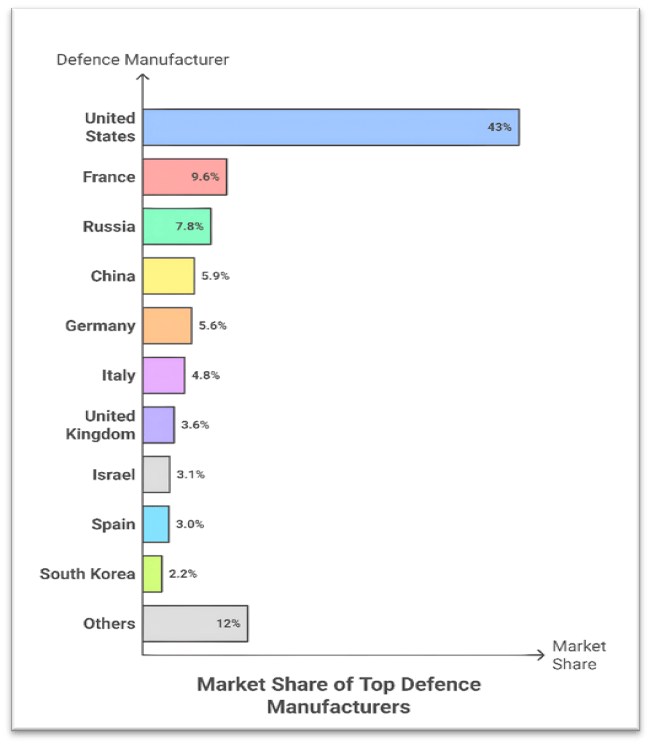
China accounted for 5.9% of global arms exports in 2020–2024, making it the fourth-largest arms exporter globally. Chinese arms exports focus primarily on combat aircraft, armed drones (UAVs), surface-to-air missile systems, naval vessels, armoured vehicles, artillery, and guided missiles. Unlike most Western suppliers, China has become a major exporter of armed unmanned aerial systems, often filling gaps where US or European suppliers impose restrictions.
China’s arms industry is dominated by large state-owned defence conglomerates, including Aviation Industry Corporation of China (AVIC) (combat aircraft and UAVs), China North Industries Group (NORINCO) (armoured vehicles, artillery, and missiles), China Aerospace Science and Industry Corporation (CASIC) and China Aerospace Science and Technology Corporation (CASC) (missiles and air defence systems), and China State Shipbuilding Corporation (CSSC) (major warships and submarines). These entities operate under close state control and align exports with China’s broader strategic and diplomatic objectives
China’s Top Defence Manufacturers
China’s arms industry is dominated by state-owned giants that rank among the world’s largest producers:
•AVIC – Top 10 globally; ~$25–30B defence revenue
•NORINCO – Top 10–15; ~$20B+ revenue
•CASC & CASIC – Leading missile/air defence firms; top 20 globally
•CSSC – World’s largest naval shipbuilder
Insight: These firms operate under direct state control, aligning arms exports with China’s strategic objectives.
Global Share and Export Trends
China’s share of global arms exports in 2020–2024 was slightly lower than in 2015–2019, despite Beijing’s stated ambition to expand its role in global arms markets. While China has invested heavily in modernizing its defence industry, many of the world’s largest arms importers continue to avoid Chinese major weapons systems, largely for political, interoperability, and trust-related reasons. Concerns over strategic dependence, sanctions exposure, technology reliability, and compatibility with NATO-standard systems have limited China’s penetration into high-end Western-aligned markets.
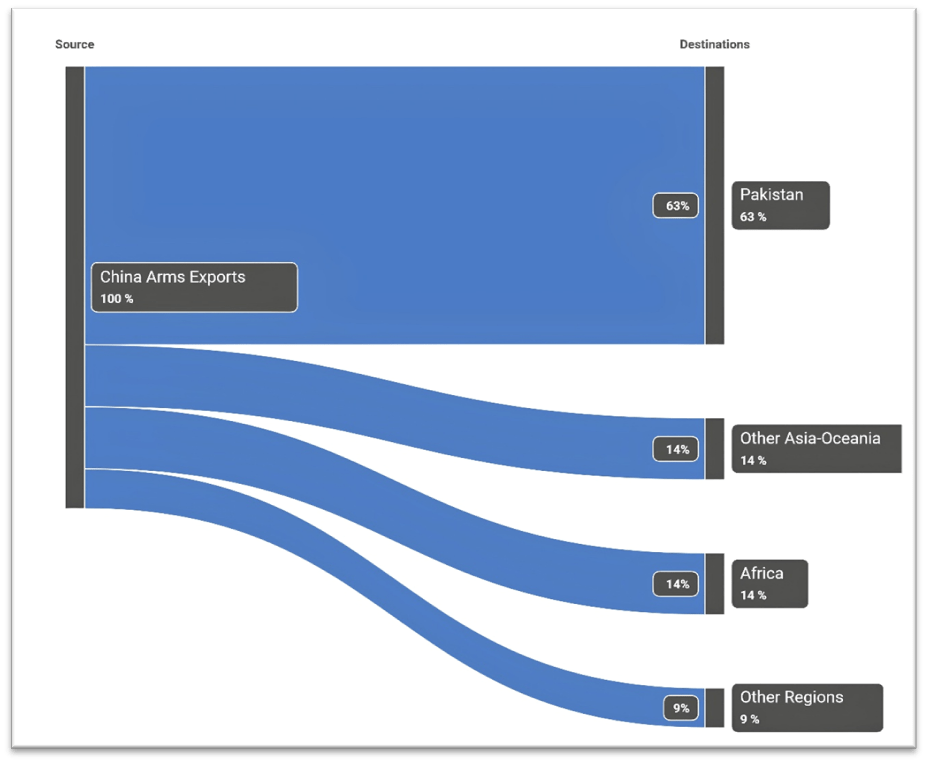
China delivered major arms to 44 states in 2020–2024. However, exports were extremely concentrated, with 63% of total Chinese arms exports going to a single country-Pakistan.
Documented Defective Chinese Weapons
The earlier report, “The Defective Chinese Equipment & Weapons” by IJ-Reportika, documented multiple cases of operational failures, maintenance breakdowns, and after-sales support deficiencies associated with Chinese-exported military systems across several recipient states. Drawing on publicly available records and field-level reports, it highlighted how a range of platforms, including naval vessels, aircraft, drones, and armored systems—have, in multiple instances, underperformed in real operational environments, raising broader questions about reliability and sustainment.
Building on those findings, Part 2 of this investigation expands the scope beyond individual case studies to examine systemic patterns across China’s defense export portfolio. Rather than isolated incidents, the focus here is on recurring themes emerging across multiple regions and platforms, including performance inconsistencies, logistical constraints, and limited long-term technical support frameworks.
Global Patterns of Failure and Key Systemic Issues
Across multiple recipient states and diverse operational environments, a consistent set of recurring issues emerges from Chinese-origin defence platforms. While individual cases vary in scale and context, the failures documented in this investigation point toward broader structural challenges affecting performance, sustainment, and lifecycle reliability of exported systems.
1. Recurring Technical Reliability Failures
A significant number of platforms across air, land, and naval domains have reported early-life technical faults, including engine malfunctions, avionics instability, sensor breakdowns, and fire-control system errors. These issues often appear shortly after induction, suggesting challenges in quality assurance, system integration, or adaptation to diverse climatic and operational conditions.
2. Maintenance Intensity and Low Operational Readiness
Many systems require high-frequency maintenance cycles, resulting in reduced availability rates. Aircraft, drones, and naval vessels in particular have been reported to spend extended periods grounded or docked due to recurring technical faults and limited spare-part ecosystems.
3. Spare Parts and After-Sales Support Gaps
A recurring concern across multiple countries is the delayed or inconsistent supply of spare parts, software updates, and technical assistance. In several documented cases, recipient states have reported extended downtime due to dependency on Chinese manufacturers for even routine maintenance components.
4. Limited Combat and Stress-Environment Performance
Several systems demonstrate performance degradation under high-intensity operational conditions, including electronic warfare environments, extreme weather, or sustained combat stress. Reported issues include radar disruption, missile guidance inconsistency, and UAV vulnerability to jamming.
5. Sensor, Radar, and Electronic Warfare Vulnerabilities
Across multiple platforms, radar and sensor systems have shown susceptibility to interference, reduced detection accuracy, and inconsistent tracking performance. These weaknesses are particularly evident in air defence and naval surveillance systems.
6. Integration and Compatibility Constraints
Export variants often require significant adaptation to integrate with non-Chinese command-and-control systems, Western-origin components, or legacy platforms. This has resulted in configuration mismatches and reduced system efficiency in joint operational environments.
7. Lifecycle Sustainability Concerns
Beyond initial procurement, long-term sustainability remains a persistent challenge. High dependency on original manufacturers for upgrades, software patches, and proprietary components has constrained indigenous maintenance capabilities in several recipient countries.
Illustrative Examples of Reported Systemic Issues
Across multiple recipient states, recurring reliability issues were observed in systems such as Pakistan’s JF-17 and F-7 fighter aircraft, Bangladesh’s F-7BGI fleet and MBT-2000 tanks, and Pakistan Navy’s F-22P frigates, where early technical faults and system malfunctions reduced operational performance.
Maintenance-heavy platforms such as Pakistan’s F-7 fleet and CH-4 drones deployed in Iraq and Algeria frequently required repeated servicing and suffered from low availability rates.
Spare parts and after-sales support gaps were reported in Bangladesh’s armored and naval systems, including MBT-2000 tanks and corvettes, leading to extended downtime.
Limited combat effectiveness was highlighted in systems such as Iran’s HQ-9B air defence network during the 2026 conflict and CH-4 drones operating in contested environments.
Sensor and radar vulnerabilities were evident in Pakistan’s FM-90 SAM system and Bangladesh’s naval radar suites, while integration constraints were observed in Pakistan’s J-10C and Bangladesh’s mixed-origin air defence architecture.
Lifecycle sustainability challenges were reflected in Myanmar’s JF-17 fleet and UAV operators such as Nigeria and Iraq, where long-term operational reliability and supportability remained persistent concerns.
To further contextualize these patterns, the following country-wise profiles present documented experiences from selected recipient states. These cases collectively illustrate how operational challenges have manifested across diverse military environments, ranging from South Asia to the Middle East and Africa. Together, they provide a structured examination of reported reliability concerns, maintenance constraints, and lifecycle sustainment gaps within Chinese-origin defence systems deployed globally, offering a clearer understanding of how these systemic issues translate into real-world operational impact.
Pakistan
Pakistan, a long-standing ally of China since 1951, has heavily relied on Chinese arms to bolster its military capabilities, especially following U.S. embargoes post the 1965 India-Pakistan war. While this partnership has enabled joint projects like the JF-17 fighter jet and Al-Khalid tank, the quality of Chinese equipment has often come under scrutiny, with numerous reports of defects, operational failures, and combat vulnerabilities leading to significant setbacks for the Pakistani armed forces.
| Weapon Name | Weapon Type | Year Ordered | Total Number |
| J-10C | Fighter Aircraft | 2021 | 36 |
| FN-6 Missile | Portable SAM | 2020, 2017, 2015, 2009 | 1,997 |
| HQ-9 SAM | SAM System | 2019 | 1 |
| HQ-9 | SAM – Missile | 2019 | 70 |
| CH-4A | MALE Drone | 2019 | 10 |
| PLC-181 | 155 mm SPG | 2018 | 236 |
| Wing Loong 2 | Armed UAV | 2018 | 48 |
| Wing Loong 1 | Armed UAV | 2015 | 5 |
| JF-17 | Fighter Aircraft | 2018, 2017, 2012, 2011, 1999 | 188 |
| YLC-18A Gap Filler | Air Search Radar | 2018 | 5 |
| JY-27A | Air Search Radar | 2018 | 1 |
| LY-80 (HQ-16) | SAM – Missile | 2017, 2014 | 500 |
| LY-80 SAM System (HQ-16) | SAM System | 2014 | 3 |
| IBIS 150 | Air Search Radar | 2014 | 8 |
| FM-90 SAMS | SAM System | 2013 | 10 |
| FM-90 | SAM Missile | 2013 | 400 |
| CH-3 | Armed UAV | 2011 | 50 |
| HQ-7 (Crotale) | SAM Missiles | 2005 | 100 |
| YLC-2A Radar | L-band Air Search Radar | 2003 | 1 |
| YLC-6 Radar | Air Search Radar | 2003 | 10 |
JF-17 Thunder Jets
Jointly developed with China, the JF-17 has been a cornerstone of PAF’s fleet, with over 100 units in service by 2025. Here is a detailed overview of the issues:
Engine Reliability Problems
- The Klimov RD-93 engine, sourced from Russia, has been a major concern for PAF.
- Reports indicate frequent engine-related malfunctions and mid-air failures, leading to multiple crashes.
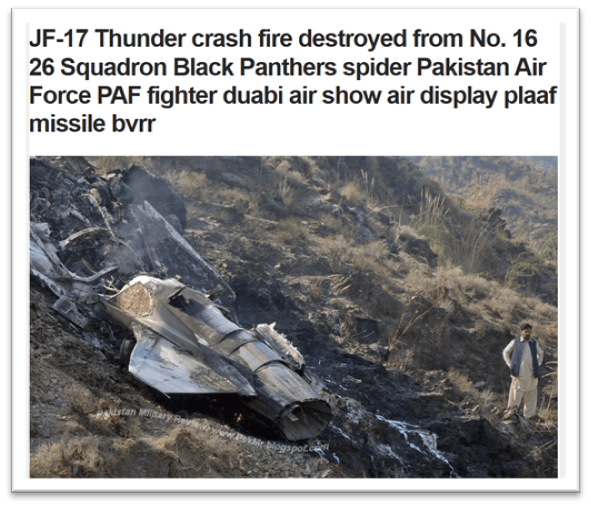
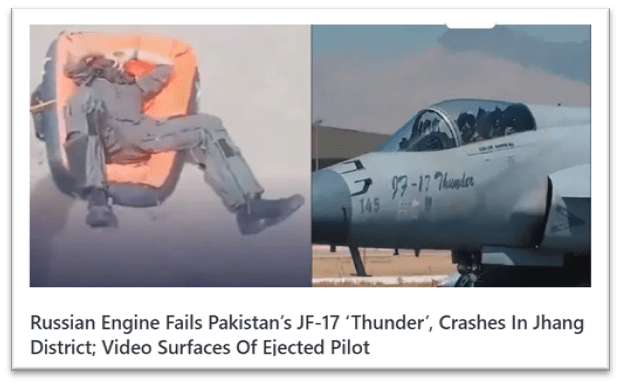
- Example: On June 5, 2024, a JF-17 Block 2 crashed near Jhang due to engine failure.
- Engine overhauls are complicated by limited access to Russian parts, especially post-Ukraine war sanctions.
Avionics and Systems Glitches
- The JF-17’s avionics suite (including radar and weapon integration) has suffered from reliability issues.
- Pilots have reportedly complained about intermittent radar performance and electronic system failures, especially under extreme conditions.
High Maintenance Burden
- Compared to Western counterparts, the JF-17 requires frequent maintenance cycles, reducing aircraft availability rates.
- Lack of indigenous engine production capability has made Pakistan reliant on external support.
Crash Record in Pakistan At least 6 known crashes of JF-17s in Pakistan have been reported due to technical malfunctions, primarily engine and system failures.
| Crash Date | Type | Operator | Location |
| 14 Nov 2011 | PAC JF-17 Thunder | Pakistan Air Force | Attock District, Punjab, Pakistan |
| 27 Sept 2016 | PAC JF-17 Thunder | Pakistan Air Force | Arabian Sea |
| 15 Sept 2020 | PAC JF-17 Thunder | Pakistan Air Force | Pindigheb, Attock District |
| 6 Aug 2021 | PAC JF-17B | Pakistan Air Force | Near Attock |
| 13 Dec 2021 | PAC JF-17 Thunder | Pakistan Air Force | Attock District |
| 5 Jun 2024 | PAC JF-17 Thunder | Pakistan Air Force | Jhang District |
Check out the comprehensive report : Link
Export Woes: Grounded Fleets and Reputational Injury
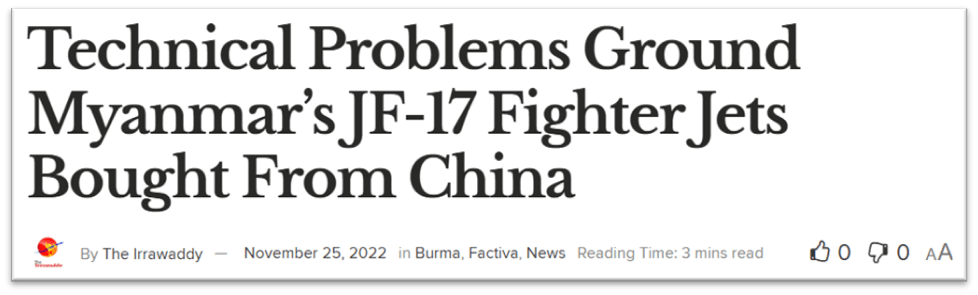
The first alarm bell for the JF-17’s export ambitions sounded in Myanmar, and it did so publicly, not quietly. The Irrawaddy’s headline “Technical Problems Ground Myanmar’s JF-17 Fighter Jets Bought From China” captured the scale of the crisis: an entire fleet rendered non-operational within years of induction due to structural cracking, avionics instability, and stubborn engine defects. Instead of routine upgrade cycles, Myanmar found itself in emergency troubleshooting mode.
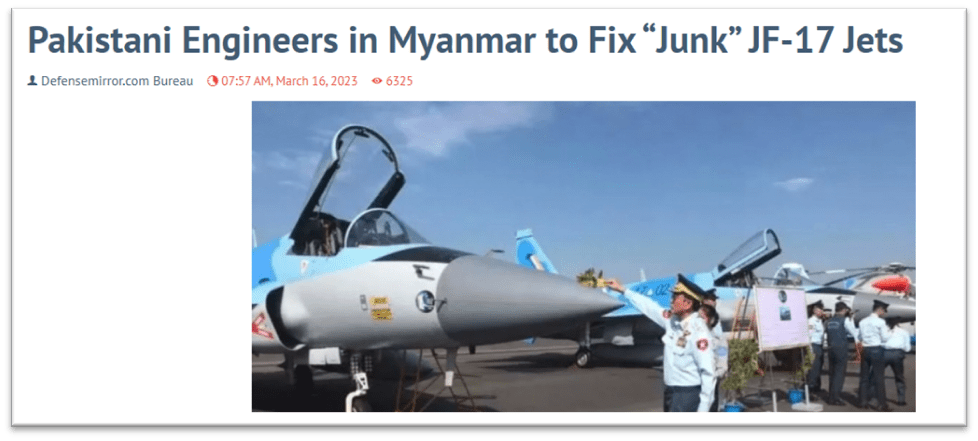
Matters worsened when Defence Mirror published the blunt assessment “Pakistani Engineers in Myanmar to Fix ‘Junk’ JF-17 Jets”, reporting that teams dispatched from Pakistan were attempting not standard maintenance, but fundamental remediation, incompatible with how a frontline fighter should function. Such coverage not only documented technical failings; it signalled to the global market that the aircraft required caretaker support unavailable to most small air forces.
Nigeria’s experience reinforced the reputational slide. Defence reporting chronicled radar outages, unreliable weapons integration, and inconsistent operational readiness, ultimately influencing Abuja’s pivot toward platforms such as the M-346FA, whose Western avionics architecture and proven support chain offered confidence the JF-17 could not. The message was unmistakable: even politically aligned or cash-constrained air forces were weighing sustainability above sticker price.
In defence procurement, reputation is currency. Once multiple operators publicly demonstrate reluctance and newsrooms begin describing a fighter as grounded, unreliable, or in need of rescue teams, affordability ceases to be a competitive advantage. The JF-17’s export headwinds therefore stem not from geopolitics, but from the cold arithmetic of risk: buyers cannot afford a fighter that cannot afford to fly.
F-7 Fighters
The Pakistan Air Force (PAF) has operated Chinese-made F-7P and F-7PG fighter aircraft since the 1980s and early 2000s, using them in roles ranging from training to air defence. These jets are export variants of China’s Chengdu J-7 series, itself born from Beijing’s 1960s effort to reverse-engineer the Soviet MiG-21 after incomplete technical transfers left Chinese engineers to reproduce missing components and systems for local production. While the J-7/F-7 became the backbone of several developing air forces due to its affordability, its aging design and service-life challenges have produced persistent maintenance, reliability, and operational limitations in PAF service.
Maintenance and Reliability Challenges
- High Maintenance Demands: The F-7P’s WP7B engine requires overhauls every 200 flight hours, necessitating shipment to Karachi for servicing. Additionally, the airframe mandates a complete rebuild after 800 flight hours, a process taking approximately 30 weeks and involving extensive disassembly and component replacement.
- Infrastructure Adaptations: To support the F-7 fleet, Pakistan established overhauling facilities domestically. However, initial challenges included adapting existing test beds designed for older aircraft, leading to the need for locally designed solutions to accommodate the F-7’s requirements.
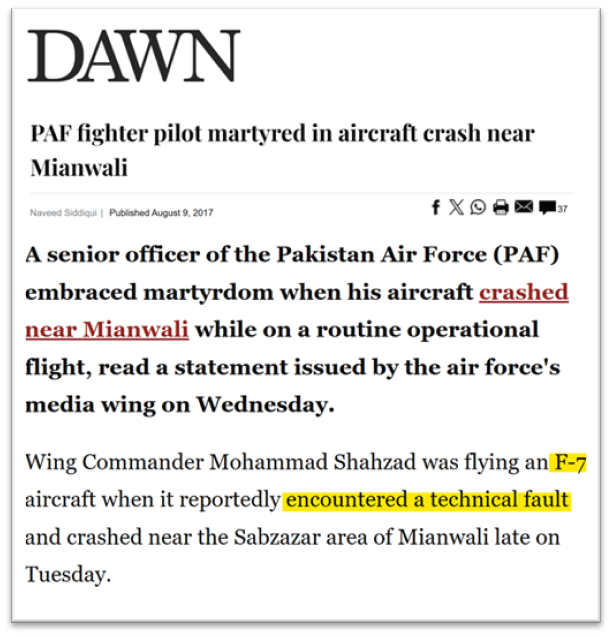
Crash Record in Pakistan:
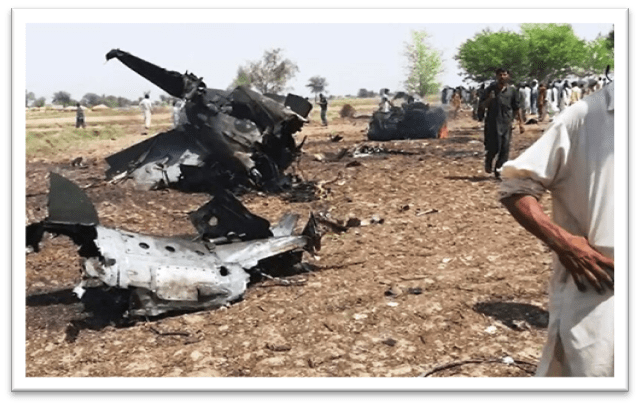
Over the years, the PAF has experienced multiple incidents involving F-7 variants. Following is the list (non-exhaustive) of the same:
| Crash Date | Type | Operator | Location |
| 25 May 2017 | F-7PG | Pakistan Air Force | Near Mianwali, Punjab |
| 25 Jan 2012 | FT-7P | Pakistan Air Force | Near Mianwali, Punjab |
| 8 Feb 2012 | F-7PG | Pakistan Air Force | Near Pishin, Balochistan |
| 24 Nov 2015 | FT-7PG | Pakistan Air Force | Near Kundian / PAF M.M. Alam Base, Punjab |
| 7 Jan 2020 | FT-7 (often reported as FT-7PG) | Pakistan Air Force | Near Chah Miana, Mianwali District, Punjab |
| 5 Sept 2007 | F-7PG | Pakistan Air Force | Southwestern Balochistan |
| 20 Jul 2000 | F-7P | Pakistan Air Force | Dera Ismail Khan, Khyber Pakhtunkhwa |

J-10 Fighters
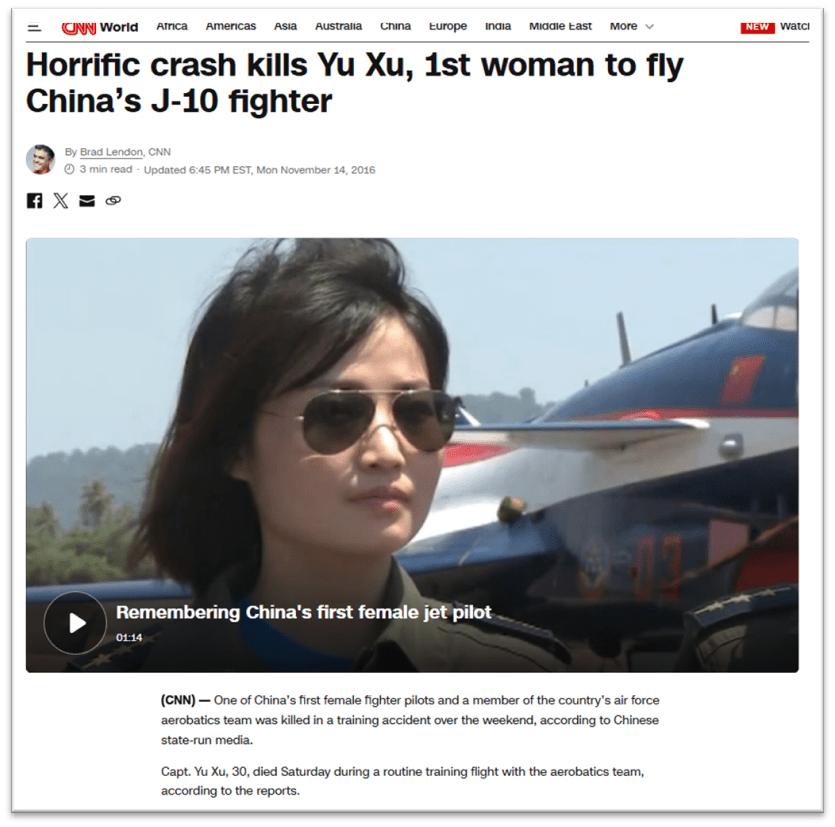
The Chengdu J-10, nicknamed Vigorous Dragon, is a Chinese single-engine, multirole fighter designed with a delta wing and canard layout. Built by Chengdu Aircraft Corporation for the PLA Air Force, it is capable of speeds up to roughly Mach 1.8 and serves as China’s primary modern lightweight fighter. The aircraft is also exported to Pakistan, where it forms a key component of the PAF’s frontline fleet. Pakistan acquired J-10CE fighters in 2022, with around 20 in service and 36 more ordered. The Pentagon’s 2025 China Military Power Report confirms the delivery of 36 Chinese J-10C fighters to Pakistan-marking a major post-India-Pakistan 2025 clashes shift in South Asia’s air power balance as Beijing strengthens Islamabad’s capabilities with advanced platforms and PL-15 missiles.
Mechanical and Engine Failures: Our investigation revealed that the Pakistan Air Force (PAF) sidelined J-10C and JF-17 Thunder jets during a counterinsurgency operation due to mechanical and engine issues.
Ejection Seat Concerns: In July 2024, PAF faced challenges fitting British Martin-Baker ejection seats on J-10C jets due to U.S. restrictions on China, forcing reliance on Chinese-made ejection seats, which were described as “unreliable” by aviation experts.
Check out the comprehensive report : Link
F-22P (Zulfiqar-class) Frigates
Pakistan Navy acquired four F-22P frigates between 2009 and 2013, tailored for multi-mission roles. However, soon after commissioning, major equipment, weapons, and sensors were found to be either non-functional or operating at reduced capacity, severely hampering their operational readiness. There are no specific reports of these frigates being shot down or direct combat losses, but their defective systems likely compromised their effectiveness in potential engagements.

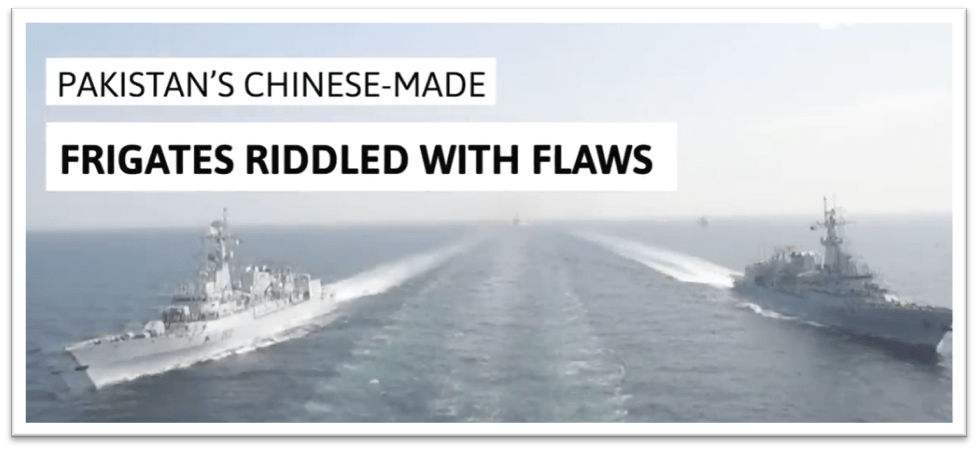
Defective Missile Systems:
- The FM90 (N) missile system’s imaging device suffers from an incorrect display, preventing accurate target locking for surface-to-surface and surface-to-air engagements. This renders the frigates ineffective in their intended air defence and interdiction roles. It compromises Pakistan’s ability to protect naval forces or engage hostile combatants, a critical deficiency for multi-mission operations.
Malfunctioning Sensors:
- The IR17 infra-red sensor system and SR60 radars (plagued by electromagnetic compatibility/interference (EMC/EMI) issues), essential for air and surface surveillance, exhibit performance glitches, particularly during high-power transmissions. It limits the frigates’ ability to detect and track threats, undermining convoy protection and patrol missions.
Engine Failures:
- All four frigates experience low engine speeds due to high exhaust temperatures, affecting diesel engines 3 and 4 across the fleet. This leads to crankshaft and liner degradation, lube oil issues, and vibration isolator deterioration.
- It reduces operational speed and reliability, increasing the infrared signature and making the ships more detectable, with potential for engine overhauls needed sooner than expected.
Sonar System Defects:
- The ASO-94 Sonar system on PNS Aslat (PNS Aslat (FFG-254) is a F-22P Zulfiquar-class guided missile frigate currently in active service with the Pakistan Navy since her commission in 2013) has faulty computing units, impairing underwater detection capabilities. The ASO-94 sonar system on PNS Zulfiquar reportedly produces false underwater targets due to excessive self-noise, degrading tracking accuracy and increasing vulnerability to hostile submarine detection and attack.
- It hampers anti-submarine warfare and heliborne operations, critical for the frigates’ multi-mission profile.
Radar Performance Issues:
- The SR-47 BG Search Radar on PNS Aslat underperforms and has been repaired using cannibalized parts from other F-22P ships, indicating a lack of spare parts and ongoing reliability problems.
- It disrupts consistent surveillance and tracking, leading to operational downtime and mission disruptions.
Gun System Malfunctions:
- The AK-176M 76 mm main gun on PNS Zulfiquar has experienced repeated mechanical and electrical failures, including stabilizer and control-unit malfunctions, degrading accuracy and firing reliability.
- These failures compromise both offensive firepower and last-ditch air-defence capability, with Pakistan Navy reports to the Chinese manufacturer yet to receive a substantive response.
Structural and Operational Downtime:
- The HP5 stabiliser gyro on PNS Saif (FFG-253), (a frontline Zulfiquar-class frigate commissioned in 2010), has been faulty since induction due to defective gimbal assembly motors, causing excessive roll and affecting safe berthing and maneuvering.
- The unresolved stabilizer defect has forced the Pakistan Navy to restrict the vessel’s deployment and incur repeated operational downtime, with no confirmed repair or replacement from the Chinese manufacturer to date.
- Disrupts mission schedules and reduces the fleet’s availability for essential roles like Exclusive Economic Zone (EEZ) protection.
Lack of Maintenance Support:
- The Pakistan Navy has sought compensation and repairs from Chinese manufacturers (Hudong-Zhonghua Shipbuilding and China Shipbuilding Trading Company) due to lost operational time, but resolution remains pending.
CH-4B UAVs
The Pakistan Army Aviation Corps received its first batch of five CH-4B drones in early 2021, with more ordered for reconnaissance and strike roles. We found that the fleet was in disarray, with Chinese company ALIT unable to maintain them, citing incidents of cracks and broken parts.
Mechanical and Structural Defects: Inspections by the Pakistan Army revealed multiple mechanical issues in the CH-4B drones manufactured by ALIT a China based firm:
- A broken exhaust manifold in one unit.
- A cracked turbocharger in another.
- Problems within the muffler spot connected to the engine mount.
Avionics and Navigation Failures: Pakistan Army’s CH-4B drones have suffered from critical failures, including GPS malfunctions, non-functional electro-optical/infrared cameras due to nitrogen leaks, and faulty synthetic aperture radars.
Operational Limitations: The CH-4B’s performance has been questioned due to:
- Limited payload capacity.
- Shorter endurance compared to other MALE (Medium Altitude Long Endurance) UAVs.
- Susceptibility to electronic warfare and jamming.
These limitations have affected the drones’ effectiveness in surveillance and combat missions.
Impact on Pakistan’s UAV Strategy: Due to the aforementioned issues, the Pakistan Army has considered diversifying its UAV inventory:
- Exploring options from Western manufacturers, such as Austria-based Schiebel’s S-100 UAV.
- Evaluating the integration of Turkish UAVs, like the Bayraktar TB2, into their fleet.
These steps aim to enhance the reliability and effectiveness of Pakistan’s unmanned aerial capabilities. In conclusion, while the CH-4B UAVs have provided Pakistan with advanced surveillance and combat capabilities, their operational challenges have prompted a reassessment of their role within the country’s defence strategy.
Read about HJ-16 Anti-Tank Guided Missiles (ATGMs) in the comprehensive report : Link
Bangladesh
Bangladesh has become one of China’s most significant defence partners in South Asia, with Beijing dominating Dhaka’s arms imports over the past two decades. Between 2019 and 2023, roughly 72 % of Bangladesh’s military equipment was sourced from China, making it the second-largest buyer of Chinese weapons globally and accounting for about 11 % of China’s total arms exports in that period.
Under its Forces Goal 2030 modernisation programme, Dhaka has acquired a wide range of Chinese platforms, from Ming-class submarines and Type 056 corvettes to MBT-2000 and VT-5 tanks, anti-ship and surface-to-air missiles, and short-range F-7 interceptor jets with Beijing also supporting domestic defence production and technology transfer. The two countries are now negotiating a US $2.2 billion deal for 20 J-10CE multirole fighters, a move that would be the largest aviation purchase in Bangladesh’s history and further deepen military ties with China.
F-7BG and F-7BGI Fighters
The Bangladesh Air Force (BAF) has operated F-7BG and upgraded F-7BGI fighters, derivatives of China’s Chengdu J-7, since the early 2000s.
- Engine Reliability: The WP-13F engines required frequent overhauls after only a few hundred flight hours. Sudden power loss and unplanned ejections were reported.
- Avionics Shortcomings: The KLJ-6E radar and avionics suite in F-7BGI lacked robust multi-target tracking and were susceptible to jamming, limiting dogfight performance.
- Impact: Persistent safety and performance concerns have prompted calls for fleet replacement.
Crash Record in Bangladesh: Over the years, the Bangladesh has experienced multiple incidents involving F-7 variants. Following is the list (non-exhaustive) of the same:
| Crash Date | Type | Operator | Location | Summary |
| 8 Apr 2008 | F-7 (trainer variant) | Bangladesh Air Force | Paharipara village, Ghatail, Tangail District | An F-7 training jet crashed, the pilot ejected but later died from injuries. |
| 29 Jun 2015 | F-7MB | Bangladesh Air Force | Bay of Bengal, near Chattogram | An F-7MB disappeared from contact and crashed into the sea; the pilot was missing and presumed lost. |
| Nov 2018 | F-7BG | Bangladesh Air Force | Madhupur, Tangail District | An F-7BG crashed during a training session; the pilot was killed. |
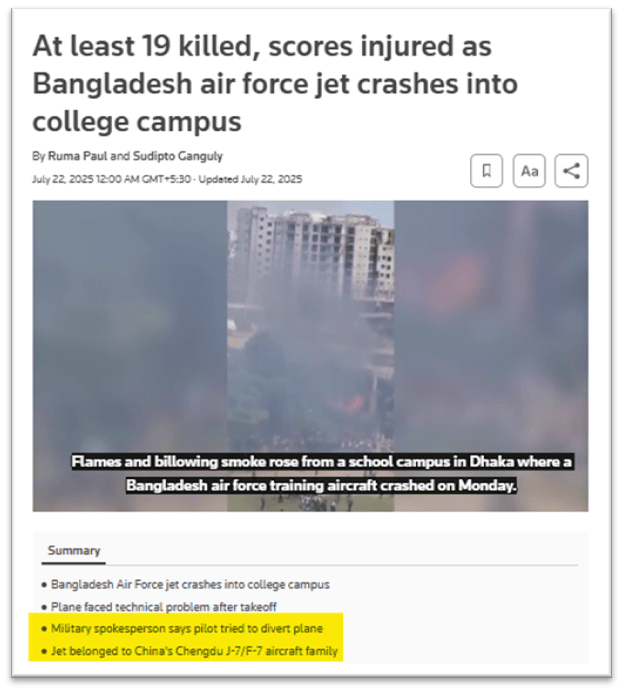
| 21 Jul 2025 | F-7BGI | Bangladesh Air Force | Milestone School & College campus, Uttara, Dhaka | A training F-7BGI crashed shortly after takeoff during a routine flight, striking a school, killing dozens including the pilot and many civilians and injuring many more. |
MBT-2000 Main Battle Tanks
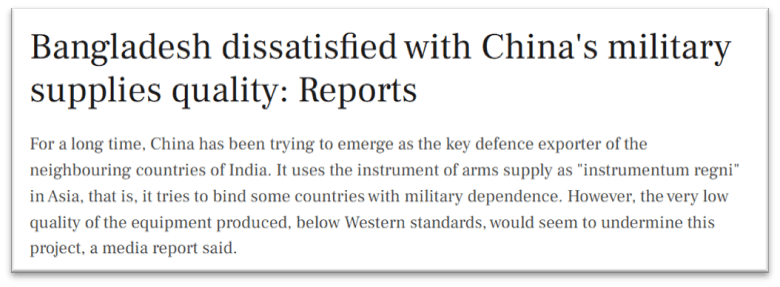
Bangladesh Army procured MBT-2000 tanks (export variant of China’s VT-1A) from NORINCO (Chinese state-owned defence corporation that manufactures commercial and military products) beginning in 2011–12 as part of its armoured modernisation under Forces Goal 2030, with 44 tanks delivered to date.
• Fire Control and Systems Glitches: Internal reviews and defence reporting indicate that fire-control and sensor subsystems on Chinese armour have shown calibration inconsistencies under field conditions, contributing to challenges in reliable target acquisition and accurate first-shot engagements in some exercises and operations, consistent with broader concerns raised about Chinese defence exports
• Engine and Thermal Stress: Although specific technical data on the MBT-2000’s powerpack in Bangladesh is limited, third-party reporting on Chinese military exports highlights that reliance on externally sourced engines and difficulty securing quality spares has been a major stress factor for large vehicles in hot and humid operational environments. NORINCO has faced difficulties supplying parts for tanks and other platforms, raising sustainment concerns.
• Spare Parts and Sustainment: Bangladesh has formally reported that NORINCO has struggled to provide timely spare parts and maintenance support for MBT-2000 tanks, complicating repairs and increasing ground time for units, a concern that extends across Chinese-supplied platforms.
Operational Impact: These logistical and support issues have reduced operational readiness metrics for mechanised formations and placed greater strain on local maintenance units and alternate technical support channels. The challenges reflect wider sustainment pressures faced by the Bangladesh Armed Forces due to concentration of Chinese hardware in the inventory.
Read about Short-Range Air Defence Systems (SHORAD), K-8W Trainer Aircraft and Type 039G Submarines (BNS Nabajatra, BNS Joyjatra) in the comprehensive report: Link
Chinese-Made Naval Ships
Chinese Corvettes – Manufacturing and Quality Defects: Bangladesh’s naval corvettes and patrol craft supplied by Chinese builders have shown manufacturing defects and technical problems, as documented by defence sources. These issues were serious enough to prompt complaints from the Bangladesh military about faulty spare parts and overall reliability concerns in vessels delivered under Chinese defence contracts.
Frigates – BNS Omar Farooq & BNS Abu Ubaidah: Multiple defects were reported soon after the delivery of these two Chinese Type 053H3 frigates to the Bangladesh Navy in 2020. Reported issues include non-functioning navigation radar systems and gun systems, undermining key elements of the ships’ combat and situational awareness capabilities. Rather than addressing defects under warranty, Chinese suppliers reportedly sought additional payments to carry out repairs, complicating sustainment and increasing costs for Dhaka.
Warship Weapon Systems – C704 Anti-Ship Missile on BNS Nirmul: The C704 anti-ship missile system installed on the Bangladesh naval vessel BNS Nirmul developed persistent faults after delivery. When the Bangladesh Navy reported these shortcomings to the Chinese supplier, the company agreed only to upgrade the system in exchange for an extra payment, rather than fulfilling fixes under the original contract terms.
Ming-Class Submarines – Obsolescence and Limited Utility: Bangladesh purchased two refurbished Type 035G (Ming-class) submarines from China (commonly bought in the mid-2010s), but these boats were later found to be obsolete and less capable than expected. Repeated Dhaka requests for Chinese assistance in upgrading or maintaining these submarines reportedly went unanswered, leaving the Navy with platforms that had limited operational utility relative to contemporary threats.
Iran
China’s military relationship with Iran is far more opaque and strategically calculated than its overt defence partnerships with countries like Pakistan. While Beijing publicly maintains that it adheres to international non-proliferation norms and denies destabilizing arms transfers, a deeper investigation into historical records, Western intelligence assessments, and supply-chain data reveals a layered pattern of engagement.
Unlike the highly visible joint platforms seen elsewhere, China’s support to Iran has evolved from direct weapons transfers in the 1980s–1990s to a more discreet model today—centered on missile systems, air defence platforms, and critical dual-use components that sustain Iran’s indigenous military production. This shift allows Beijing to maintain plausible deniability while still playing a consequential role in strengthening Tehran’s strategic deterrence capabilities.
Below is a structured breakdown of confirmed, reported, and historically documented Chinese-origin systems linked to Iran:
| Weapon Name | Weapon Type | Remarks |
| HY-2 “Silkworm” | Anti-Ship Cruise Missile | Dozens (used during Iran–Iraq War) |
| C-801 | Anti-Ship Missile | Significant quantities purchased and deployed |
| C-802 (derivative use) | Anti-Ship Missile | Locally produced variant in Iran |
| HQ-16 | Medium-Range Air Defence System (SAM) | Limited deployments (operational) |
| HQ-17AE | Short-Range Air Defence System | Delivered (reported active use) |
| HQ-9 / HQ-9B | Long-Range Air Defence System | Deployed during USA-Israel war on Iran in March 2026. |
| CM-302 (YJ-12 export variant) | Supersonic Anti-Ship Missile | Deal reportedly nearing completion |
| Loitering Munitions (Chinese-origin UAV tech) | Drone / Kamikaze UAV | Technology transfer / adaptation |
| Missile Fuel Chemicals (Ammonium/Sodium Perchlorate) | Ballistic Missile Support | Enough for hundreds of missiles |
| Electronic Components (chips, sensors) | Dual-Use Military Tech | Embedded across drone & missile systems |
| Semiconductor Manufacturing Support | Military Industrial Tech | Enhances domestic weapons production |
| YLC-8B | Anti-Stealth Radar System | Deployed during USA-Israel war on Iran in March 2026. |
| SF-200 | Loitering Munition / UAV | Deployed during USA-Israel war on Iran in March 2026. |
During the February–March 2026 conflict involving Iran, United States, and Israel, battlefield evidence and defence analyses point to a systemic failure of key Chinese-origin or Chinese-linked defence systems that Tehran had long projected as pillars of its deterrence strategy.
At the center of this collapse was the HQ-9B surface-to-air missile (SAM) system advertised as a high-end, long-range air defence shield comparable to Western systems. Deployed around Tehran and critical nuclear facilities, the system failed to intercept any confirmed incoming aircraft or precision-guided strikes, allowing repeated penetrations of heavily defended airspace. The inability to counter stealth-enabled attacks raises serious concerns about target acquisition, tracking fidelity, and electronic warfare resilience.
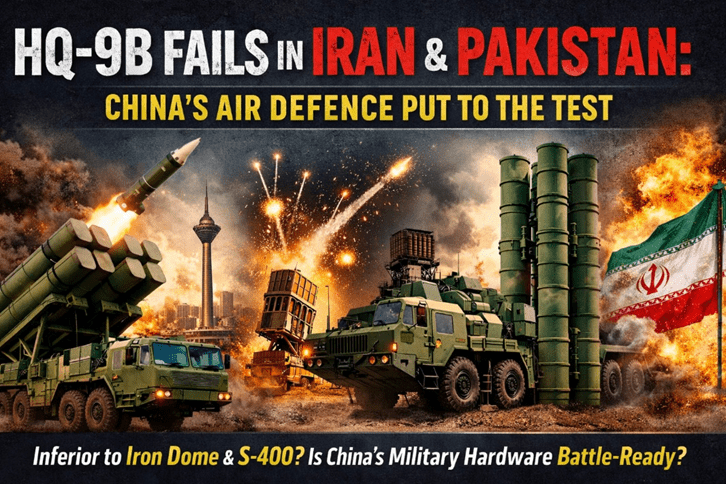
Equally significant was the reported breakdown of the YLC-8B anti-stealth radar, a system specifically designed to detect low-observable platforms such as F-35-class aircraft. In practice, it failed to detect or provide actionable tracking data, with multiple units reportedly destroyed or neutralized in the opening phases of the strikes. This suggests a critical gap between advertised anti-stealth capability and real-world performance under combat pressure.
Iran’s retaliatory posture also exposed weaknesses. The deployment of approximately 300 SF-200 loitering attack drones intended to overwhelm defensive systems resulted in near-total interception, primarily by layered missile defences such as Patriot systems. Only a single drone reportedly reached its target—and even then, failed to detonate, underscoring serious deficiencies in reliability, guidance, or payload effectiveness.
Beyond these headline systems, older Chinese-supplied drones and anti-aircraft platforms similarly failed to achieve a single confirmed shoot-down of attacking aircraft, indicating a broader collapse of integrated air defence effectiveness. Notably, there has also been no credible evidence of Chinese-origin offensive systems such as anti-ship missiles playing any decisive role in altering the battlefield dynamics.
The cumulative impact is stark: Iran’s reliance on these systems resulted in repeated airspace breaches, degradation of strategic sites, and an inability to impose meaningful costs on attacking forces. For Tehran, the conflict has exposed not just tactical shortcomings, but a deeper structural issue the gap between imported or adapted military technology and its actual combat survivability against technologically superior adversaries.
Global Pattern of Underperformance of Chinese Weapons
A growing body of defence assessments and field reports indicates that Chinese-exported military systems—once marketed as cost-effective alternatives to Western hardware—are facing mounting credibility challenges across multiple countries. From Southeast Asia to Africa and Latin America, operators have reported technical malfunctions, combat inefficiencies, and reliability concerns, particularly under real battlefield conditions. Analysts note that these issues often stem from maintenance gaps, component quality, and limited combat testing, raising broader questions about the operational dependability of Chinese arms exports.
| Country | Weapon System(s) | Reported Failure(s) | Key Sources |
| Venezuela | HQ-9B SAM & JY-27A radar | Failed to detect or engage any U.S. aircraft (including F-35s) during Jan 2026 Delta Force raid on Caracas; radars “blind” and systems non-responsive despite $2B+ investment. | Multiple U.S. and international defence reports (Jan–Mar 2026) |
| Thailand | NORINCO VT-4 main battle tank | 125 mm gun barrel ruptured during live combat firing in 2025 Thailand-Cambodia border clash; crew injured, vehicle disabled without enemy action; Thai crews questioned overall reliability. | Royal Thai Army incidents & defence analyses (2025) |
| Myanmar | JF-17 fighter jets (co-produced) & FTC-2000G jets | Multiple JF-17s grounded for technical malfunctions; FTC-2000G repeatedly shot down in civil war operations due to poor performance. | Burmese military reports & independent monitoring (2022–2025) |
| Nigeria | F-7 fighter jets & VT-4 tanks | F-7 jets plagued by repeated technical failures; VT-4 tanks showed poor combat effectiveness against Boko Haram (mechanical breakdowns and vulnerability). | Nigerian military assessments & RAND analyses |
| Algeria | CH-4 armed drones | Multiple crashes attributed to landing/structural issues during operations; early procurement interest led to documented reliability problems. | Operator reports & drone incident databases |
| Iraq | CH-4 armed drones | Multiple crashes due to technical malfunctions during routine flights; high maintenance demands and losses in contested airspace (including to SAMs); low mission-capable rates historically. | 2010s–2020s (e.g., anti-ISIS ops and later) |
| Jordan | CH-4 armed drones | Operational shortcomings led to decision to sell off units after ~3 years; issues included crashes, maintenance challenges, and overall dissatisfaction with reliability in service. | ~2016–2019 (disposal of fleet) |
Account of the Top Global Weapons Exporters
United States
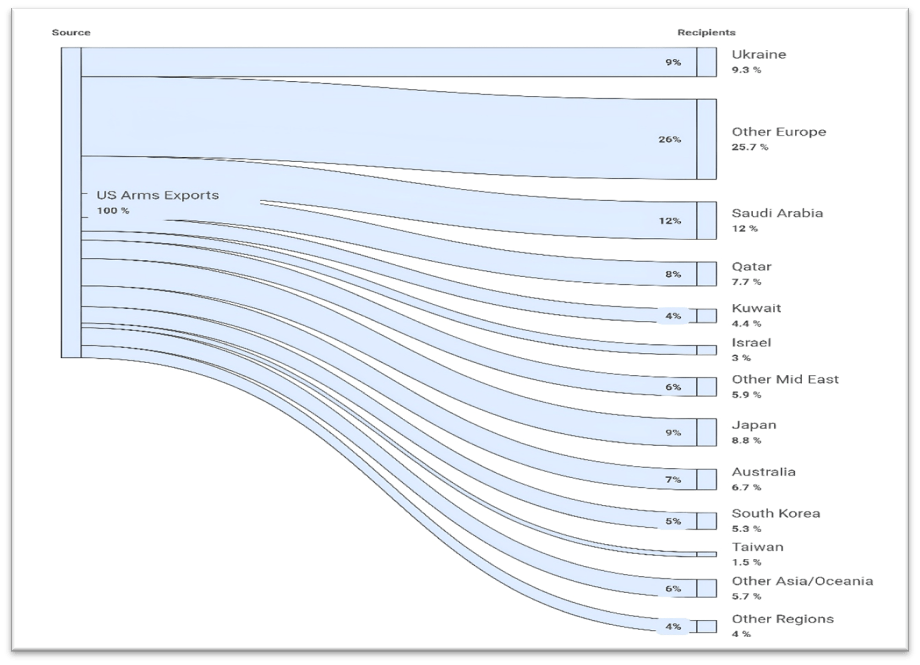
The United States is the world’s largest exporter of major weapons, accounting for about 43% of global arms exports in 2020–24, with a strong focus on advanced aircraft, missiles, and related systems. Its arms trade is dominated by large defence contractors such as Lockheed Martin, RTX (Raytheon), Boeing, Northrop Grumman, and General Dynamics, and key customers include allies in Europe and Asia–Pacific such as Ukraine, Japan, Australia, South Korea, and NATO partners.
The United States has strengthened its position as the world’s leading arms exporter. Between 2015–2019 and 2020–2024, US arms exports grew by 21 per cent, with its share of global arms exports increasing from 35% to 43%. This volume of exports was nearly equal to the combined exports of the next eight largest suppliers. In total, the US supplied major arms to 107 states during this period.
Major Arms Supplied
The US continues to supply advanced military systems globally, including combat aircraft, major warships, long-range missiles, and armoured vehicles. Highlights from 2020–2024 include:
| Category | Units Supplied | Notes |
| Combat Aircraft | 996 | Includes combat, trainer, and anti-submarine aircraft |
| Combat Helicopters | 342 | – |
| Major Warships | 7 | Includes aircraft carriers, corvettes, destroyers, frigates, submarines |
| Surface-to-Air Missile (SAM) Systems | 41 | Land-based systems only |
| Tanks & Fire-Support Vehicles | 403 | – |
| Other Armoured Vehicles | 1,706+ | – |
| Artillery | 678+ | – |
Main defence manufacturers
Lockheed Martin is the largest arms-producing company globally, with nearly 65 billion USD in arms revenue in 2024; its portfolio includes F‑16, F‑22 (not exported), F‑35 fighters, C‑130 transports, and missile systems.
RTX (Raytheon), Northrop Grumman, and General Dynamics are also among the top US arms producers, covering missiles, radars, air-defence systems, combat vehicles, and naval platforms.
Boeing remains a major producer of combat aircraft and military transports, including F‑15, F/A‑18, and various support aircraft, many of which are exported.
Best Performing U.S. Defence Exports
Among U.S. defense exports, several systems are widely regarded as the most combat-proven and operationally effective across multiple theaters. The F-16 Fighting Falcon, for example, has been extensively used by allied air forces in conflicts such as the Gulf War, Iraq War, and many NATO air policing missions, demonstrating high adaptability and multi-role performance.
The F-35 Lightning II, despite sustainment concerns, has been deployed in limited combat operations by Israel in the Middle East for precision strike missions, marking its first operational combat use. U.S.-supplied Patriot air defense systems have been actively used in Ukraine’s air defense against Russian missile and drone attacks, where they have played a critical role in intercepting high-speed aerial threats.
Similarly, the M1 Abrams main battle tank has seen combat service in the Iraq War, where it demonstrated strong battlefield survivability against conventional armored threats.
Collectively, these systems highlight the operational strength of U.S. exports, particularly in terms of battlefield versatility, integration with allied forces, and sustained combat deployment across multiple modern conflicts.
Reported Failures and Operational Concerns in U.S.-Exported Weapons Systems
Despite maintaining technological superiority and global dominance in arms exports, U.S.-origin weapons systems have faced documented reliability issues, operational constraints, and structural dependencies in several importing countries. These concerns are not universal, but where they exist, they have influenced procurement decisions, operational readiness, and strategic autonomy debates among U.S. allies.
1. Fighter Aircraft Reliability and Technical Failures
The F-35 Lightning II, the most widely exported fifth-generation fighter, has been central to both U.S. export success and recurring reliability concerns.
Several non-combat incidents and technical failures have been recorded:
- A U.S. Navy F-35C crash during routine operations and multiple earlier incidents involving engine fires, fuel system faults, and grounding orders point to systemic technical vulnerabilities.
- In Japan, an F-35A crash led to the grounding of the fleet during investigation, raising concerns over pilot-system interaction and situational awareness.
- A 2025 U.S. Air Force incident in Alaska showed how sensor and system misinterpretation (caused by ice contamination) rendered the aircraft uncontrollable, resulting in total loss.
Beyond crashes, operational reliability issues have also been highlighted:
- Persistent software instability, maintenance complexity, and spare-part shortages have reduced fleet readiness rates.
- The logistics ecosystem (including predictive maintenance systems) has faced criticism for inconsistent performance and availability.
These issues have had direct export implications:
- Countries such as Spain, Canada, and Switzerland have reconsidered or delayed procurement decisions, citing cost overruns, technical concerns, and operational dependency risks.
2. Maintenance Dependency and Operational Sovereignty Risks
A structural concern across U.S.-exported systems, especially advanced platforms like the F-35, is high dependence on U.S.-controlled logistics, software, and supply chains.
- Many systems require continuous access to U.S.-managed software updates, mission data, and spare parts pipelines.
- This creates limited operational autonomy for importing countries, particularly during crises where U.S. priorities may differ.
European defense analyses have identified:
- Delays in delivery timelines, with a majority of F-35 units delivered behind schedule in recent years.
- Risk of prioritization of U.S. forces over foreign operators in high-intensity conflict scenarios.
- Maintenance bottlenecks due to centralized supply chains and limited production capacity.
These factors have led to increasing calls in Europe for strategic autonomy in defense procurement.
3. Production Delays and Delivery Shortfalls
Export customers have faced significant delays in receiving key U.S. systems, affecting force planning and readiness:
- The F-35 program has experienced chronic delivery delays, with a sharp increase in late deliveries in recent years.
- The MIM-104 Patriot air defense system has also faced production constraints, with manufacturing capacity struggling to meet growing global demand.
For importing nations, these delays translate into:
- Capability gaps during critical periods
- Budgetary inefficiencies due to shifting timelines
- Increased reliance on interim or alternative systems
4. Integration and Interoperability Challenges
Operational incidents have also highlighted integration risks in multinational environments:
- A recent incident involving U.S.-origin F-15 aircraft being mistakenly targeted in a coalition environment underscore:
- Complexity of identification systems
- Challenges in joint operations under high-threat conditions
- Potential vulnerabilities in communication and coordination systems
While not solely attributable to platform design, such events reflect the operational complexity of U.S.-supplied systems in diverse environments.
5. Strategic and Political Constraints on Usage
Another recurring concern is the policy framework governing U.S. weapons exports, particularly:
- Export controls under ITAR (International Traffic in Arms Regulations)
- Restrictions on technology transfer and system modification
- Limits on independent use without U.S. approval in certain scenarios
These constraints have:
- Delayed indigenous programs (e.g., technology transfer limitations affecting partner projects)
- Reinforced perceptions of “conditional sovereignty” in the use of U.S.-origin systems
Key Areas of Concern
| Area | Nature of Concern | Impact on Importing Countries |
| Technical Reliability | Crashes, engine faults, software issues | Reduced trust, fleet grounding |
| Maintenance Dependency | Reliance on U.S. logistics and updates | Limited autonomy, readiness risks |
| Delivery Delays | Late production and supply shortages | Capability gaps |
| Operational Complexity | Integration issues in coalition warfare | Risk of misidentification, accidents |
| Policy Constraints | Export controls, tech restrictions | Strategic dependency |
While U.S. weapons systems remain among the most advanced globally, documented failures and systemic constraints particularly in high-end platforms like the F-35 highlight a pattern of complexity-driven vulnerability rather than outright unreliability.
The most consistent concern across importing countries is not simply technical malfunction, but a combination of:
- High maintenance burden
- Supply chain dependence
- Limited operational sovereignty
These factors are increasingly shaping procurement decisions, especially among advanced economies seeking greater control over their defense capabilities.
France
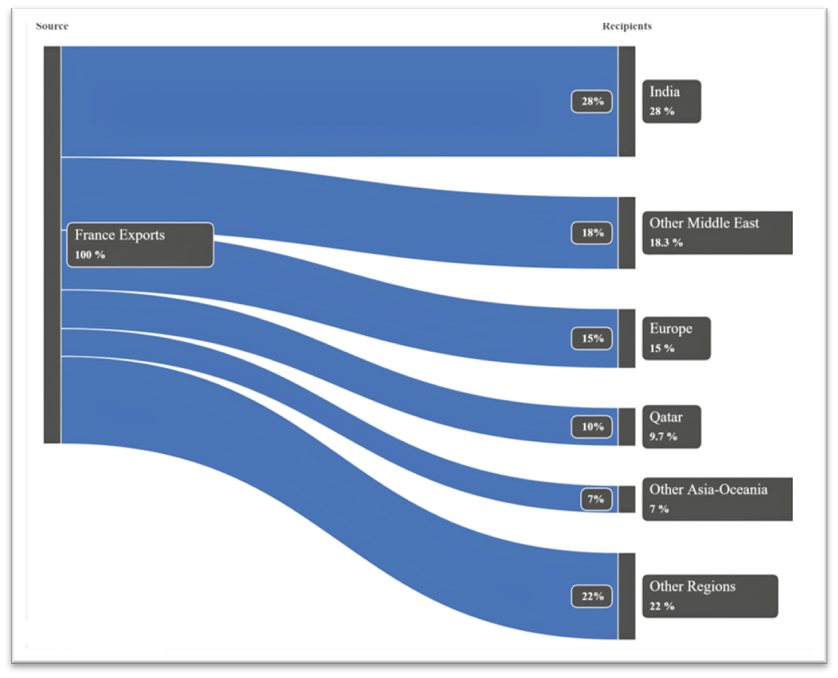
France was the second-largest exporter of major arms globally in 2020–2024, accounting for 9.6% of worldwide arms transfers. This represents an 11% increase compared to 2015–2019 and a 72% increase compared to 2010–2014. During this period, France supplied major arms to 65 states worldwide.
Major Arms Supplied
France exports a wide range of advanced military systems. Selected deliveries for 2020–2024 include:
| Category | Units Supplied | Notes |
| Combat Aircraft | 214 | Includes combat, trainer, and anti-submarine aircraft |
| Combat Helicopters | 3 | – |
| Major Warships | 22 | Includes aircraft carriers, corvettes, destroyers, frigates, submarines |
| Surface-to-Air Missile (SAM) Systems | – | Land-based systems only |
| Tanks & Fire-Support Vehicles | – | – |
| Other Armoured Vehicles | 537 | – |
| Artillery | 251 | – |
France also has a significant number of pending deliveries for combat aircraft and major warships, indicating that it is expected to remain a top-tier global arms exporter beyond 2024.
Performance of French Defence Exports in Operational Use
French defence exports have demonstrated strong operational credibility across multiple conflict environments, with the Dassault Rafale emerging as one of the most combat-proven multi-role fighters in the global export market. The Rafale has been actively deployed by India, Egypt, and Qatar in varied operational settings, including high-altitude patrols, precision strike missions, and air policing roles. Notably, during heightened tensions between India and Pakistan, Rafale aircraft were deployed by India for long-range deterrence patrols and rapid response readiness missions. Egyptian Rafales have been used in counter-terrorism operations in Libya, while Qatar has deployed them for regional air defense missions.
French-origin systems such as the Mirage 2000 have seen extensive combat use, including in India’s Kargil conflict operations, where they were employed for precision bombing in high-altitude terrain.
These deployments collectively highlight that French defence exports are not only technologically advanced but also consistently validated in real-world combat environments with a strong record of operational reliability.
Reported Failures and Operational Concerns in French-Exported Weapons Systems
French defense exports—led by platforms such as the Dassault Aviation Rafale and Mirage series—are widely regarded as technologically capable and combat-proven. However, documented incidents, procurement challenges, and operational constraints in importing countries reveal specific, credible areas of concern, particularly around cost, technical incidents, and export competitiveness.
1. Documented Technical Failures and Crash Incidents
While French aircraft have a relatively strong safety record, isolated but notable technical failures have occurred in export environments:
- A Rafale operated by India reportedly experienced a high-altitude technical failure, highlighting vulnerabilities under extreme operational conditions.
- Export users such as Egypt have recorded aircraft losses, with replacement purchases indicating at least one non-combat attrition event within the fleet.
These incidents are not widespread but indicate that:
- Even advanced French systems face performance stress under diverse climatic and altitude conditions
- Export variants may encounter adaptation challenges in non-European environments
2. Cost and Affordability Constraints in Importing Countries
One of the most consistent and verifiable concerns with French weapons exports—especially the Rafale—is high acquisition and lifecycle cost:
- India’s original large-scale fighter acquisition program was scaled down significantly due to cost concerns, reducing the planned number of aircraft.
- Multiple countries, including Morocco and South Korea, opted for alternatives such as U.S. fighters, citing cost-effectiveness and financing advantages over the Rafale.
Additionally:
- Belgium rejected the Rafale despite significant economic incentives, choosing a competing platform instead.
- Libya and other potential buyers did not proceed with deals, partly due to financial and procurement complexity.
This suggests that:
- French systems often struggle in price-sensitive markets
- High cost can indirectly affect fleet size, readiness, and operational sustainability
3. Limited Export Competitiveness and Failed Bids
Compared to U.S. systems, French weapons, particularly fighter jets, have historically faced difficulty securing export contracts, especially prior to 2015:
- The Rafale experienced a prolonged period without export buyers before its first major international sale.
- Several high-profile competitions were lost due to:
- Higher cost relative to competitors
- Perceived limited interoperability with NATO-standard systems
- Financing and industrial partnership limitations
Even in successful deals:
- Countries often negotiate heavy offsets and support packages, indicating concerns over long-term cost and sustainment.
4. Maintenance, Support, and Scalability Challenges
French defense exports generally provide strong after-sales support, but concerns remain:
- Smaller production scale compared to U.S. manufacturers can lead to:
- Slower supply chains for spare parts
- Limited global maintenance infrastructure in some regions
- Countries operating smaller fleets (e.g., Egypt, Qatar) may face:
- Higher per-unit maintenance costs
- Dependence on French technical support for upgrades and servicing
However, unlike U.S. systems, French platforms are often viewed as less politically restrictive, which partially offsets these concerns.
5. Operational and Strategic Constraints
French systems are often described as highly capable but complex and expensive to operate, leading to:
- Reduced fleet sizes in importing countries
- Greater reliance on select elite squadrons rather than mass deployment
- Challenges in scaling operations during prolonged conflicts
- Some analysts have pointed to over-engineering and high-end configuration as factors limiting broader adoption in developing countries.
Key Areas of Concern
| Area | Nature of Concern | Impact on Importing Countries |
| Technical Reliability (Limited Cases) | Isolated high-altitude/system failures | Localized operational risks |
| High Cost Structure | Expensive acquisition and lifecycle | Reduced fleet size, budget strain |
| Export Competitiveness | Lost bids to U.S. and other systems | Limited global footprint |
| Maintenance Ecosystem | Smaller global support network | Dependency on France |
| Operational Complexity | High-end systems, costly to scale | Limited mass deployment capability |
Russia
Russian arms exports traditionally focus on combat aircraft, air defence systems, tanks, artillery, combat helicopters, and missiles, particularly platforms designed during the Soviet and post-Soviet periods. The sector is dominated by state-owned conglomerates, primarily Rostec, which oversees major manufacturers such as United Aircraft Corporation (UAC), Almaz-Antey (air defence systems), Uralvagonzavod (tanks and armoured vehicles), Russian Helicopters, and Tactical Missiles Corporation (KTRV). These firms form the backbone of Russia’s military–industrial complex and its export portfolio.
Global Share and Sharp Decline
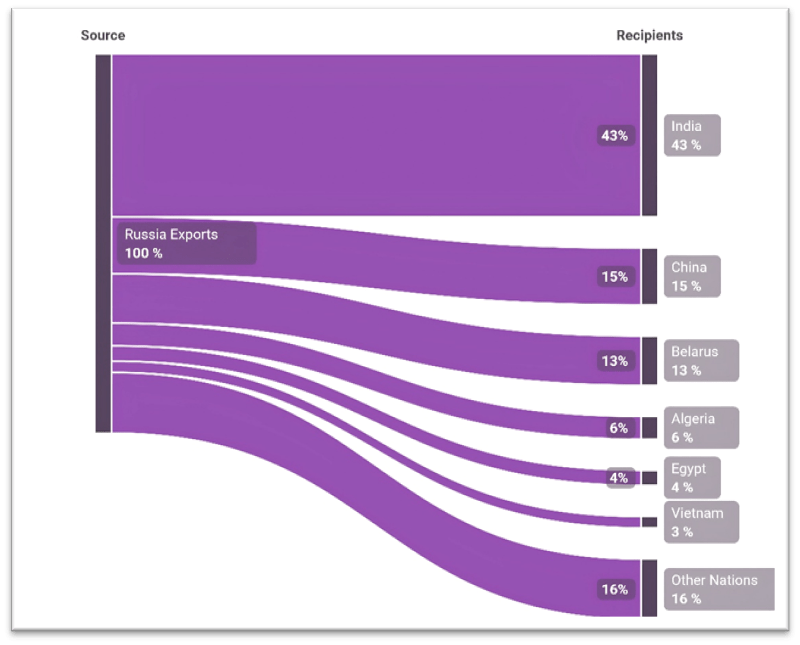
Russia’s arms exports fell by 64% between 2015–2019 and 2020–2024, marking the steepest decline among the world’s major arms exporters. Despite this contraction, Russia still accounted for 7.8% of global arms exports in 2020–2024, placing it third globally after the United States and France.
Importantly, the downturn in Russian arms exports began before its full-scale invasion of Ukraine in February 2022. In 2020 and 2021, export volumes were already 22–73% lower than in any year between 2000 and 2019. This early decline was largely driven by a drop in orders from China and India, traditionally Russia’s two largest customers.
Post-2022 Trends and Sanctions Impact
Following the invasion of Ukraine, Russian arms exports declined further. Export volumes in 2023–2024 remained around 47% lower than in 2022, reflecting several structural constraints:
- Prioritization of domestic military production to sustain Russia’s own armed forces
- Multilateral sanctions limiting access to components, finance, and logistics
- Intensified pressure from the United States and allied states on potential buyers to avoid Russian arms
These factors have significantly reduced Russia’s ability to compete in global arms markets, particularly for high-end systems.
Best Performing Russian Defence Exports in Operational Use
Among Russian defence exports, several systems have demonstrated notable operational effectiveness across multiple importing countries, particularly in air defence and legacy aircraft platforms. The S-400 Triumf air defence system is widely regarded as one of Russia’s most successful exports, with deployments in countries such as India, China, and Turkey. In India, the system has been integrated into layered air defence networks and was reportedly operationally deployed during heightened tensions with Pakistan, enhancing long-range aerial surveillance and interception capability.
In China, the S-400 has been incorporated into coastal and air defence architectures, supporting strategic coverage against high-altitude and long-range aerial threats. Alongside this, the Su-30MKI (India), a heavily customised variant of the Su-30 platform, has remained one of the most reliable Russian-origin fighters in active export service, extensively used for air superiority missions and long-duration patrol operations.
Similarly, the Su-35 (China) has been deployed for advanced air defence and interception roles, reflecting strong performance in integration with Chinese command-and-control systems.
These systems collectively highlight that certain Russian platforms, particularly air defence systems and adapted fighter variants, have achieved sustained operational acceptance in foreign militaries due to their range, versatility, and adaptability in regional combat environments.
Reported Failures and Operational Concerns in Russian-Exported Weapons Systems
Russian arms exports—long valued for their cost-effectiveness, ruggedness, and wide availability—have historically dominated markets in Asia, Africa, and the Middle East. However, credible operational data, accident records, and battlefield observations (particularly since 2022) indicate significant and recurring concerns related to reliability, maintenance, and technological limitations in several exported systems.
1. Technical Reliability Issues and Crash Incidents
Russian-origin aircraft and systems have been associated with multiple non-combat crashes and technical failures across export users:
- Though S-400s have performed exceptionally well in countries like India but it’s MiG-21 and MiG-29 fleets have recorded numerous crash incidents over decades, often linked to aging airframes, engine issues, and maintenance challenges.
- Algeria and India have reported MiG-29 crashes, including incidents attributed to engine failure and mid-air technical faults.
- Transport aircraft such as the Antonov An-26 (widely used by Russian-aligned forces) have experienced fatal crashes linked to mechanical malfunction.
These patterns suggest:
- Persistent issues with legacy platform reliability
- Challenges in upgrading older Soviet-era designs to modern standards
2. Maintenance Burden and Lifecycle Constraints
A consistent concern among importers is the high maintenance burden and lower service life reliability of Russian systems:
- Countries operating Russian aircraft have reported:
- Frequent overhaul requirements
- Lower mean time between failures compared to Western counterparts
- India has repeatedly flagged spare parts shortages and inconsistent supply chains, affecting operational readiness of Sukhoi Su-30MKI and MiG fleets.
- Russian systems often rely on less automated diagnostics, increasing dependence on manual maintenance and skilled personnel
- Post-2022 sanctions have further strained global spare parts availability, worsening sustainment issues for export customers
3. Performance Gaps Observed in Conflict (Ukraine War Impact)
The war in Ukraine has provided unprecedented real-world data on Russian weapons performance, raising serious concerns:
- Advanced systems such as the Su-34 and Su-35 fighter aircraft have suffered notable attrition rates, including losses attributed to:
- Air defense systems
- Operational vulnerabilities (e.g., low-altitude flight exposure)
- Russian armored systems, including export variants, have shown:
- Vulnerability to modern anti-tank guided missiles (ATGMs)
- Structural weaknesses such as ammunition storage design flaws
- Missile systems have reportedly exhibited:
- Accuracy issues in certain strikes
- Reliability inconsistencies in guidance systems (as noted in multiple battlefield analyses)
While battlefield losses are not purely “failures,” they expose:
- Design limitations
- Gaps in survivability and modern warfare adaptability
4. Quality Control and Export Variant Concerns
Another recurring issue is the variation in quality between domestic and export versions:
- Some importing countries have raised concerns over:
- Lower-spec export variants
- Inconsistent manufacturing quality
- Historical examples include:
- Algeria reportedly rejecting a batch of MiG-29 aircraft due to quality concerns
This suggests:
- Potential inconsistencies in production standards
- Export models sometimes lacking advanced avionics or protection systems
5. Declining Export Reliability and Supply Chain Disruptions
Since 2022, Russian arms exports have faced structural decline, affecting reliability perception:
- Domestic war requirements have:
- Prioritized Russian military supply over exports
- Delayed deliveries to international customers
- Sanctions have:
- Restricted access to high-tech components (electronics, semiconductors)
- Affected production quality and timelines
As a result:
- Countries such as Vietnam have begun diversifying away from Russian systems
- Long-term confidence in Russian supply chains has weakened
Key Areas of Concern
| Area | Nature of Concern | Impact on Importing Countries |
| Technical Reliability | Frequent crashes in legacy aircraft | Safety risks, fleet grounding |
| Maintenance Burden | High overhaul frequency, spare shortages | Reduced readiness |
| Battlefield Performance | High attrition, vulnerability in Ukraine | Credibility concerns |
| Quality Control | Export variant inconsistencies | Reduced trust |
| Supply Chain Disruption | Sanctions and war-driven shortages | Delays, diversification |
Underperformance Rate of Exported Systems
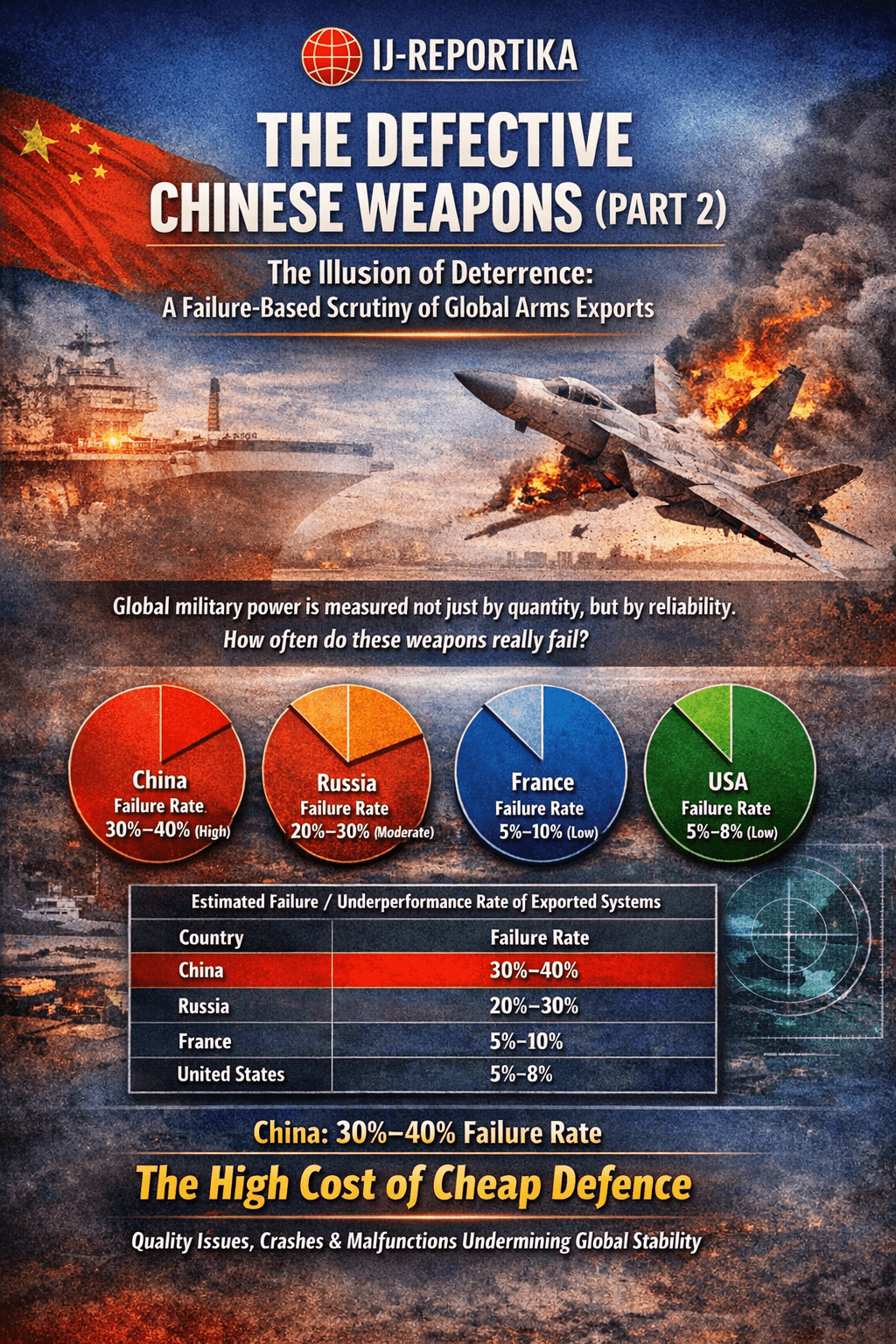
A comparative analysis of operational data reveals a stark divide in global arms reliability. China currently exhibits the highest proportion of reported failures, particularly within developing-world deployments in nations like Pakistan, Bangladesh, and Myanmar, where it faces an estimated underperformance rate as high as 30%–40%.
Meanwhile, Russia’s military hardware reliability is visibly deteriorating due to the combined impact of sustained wartime pressure in Ukraine and multilateral sanctions that have restricted access to essential components and maintenance logistics. Still in select countries like India it has performed satisfactorily.
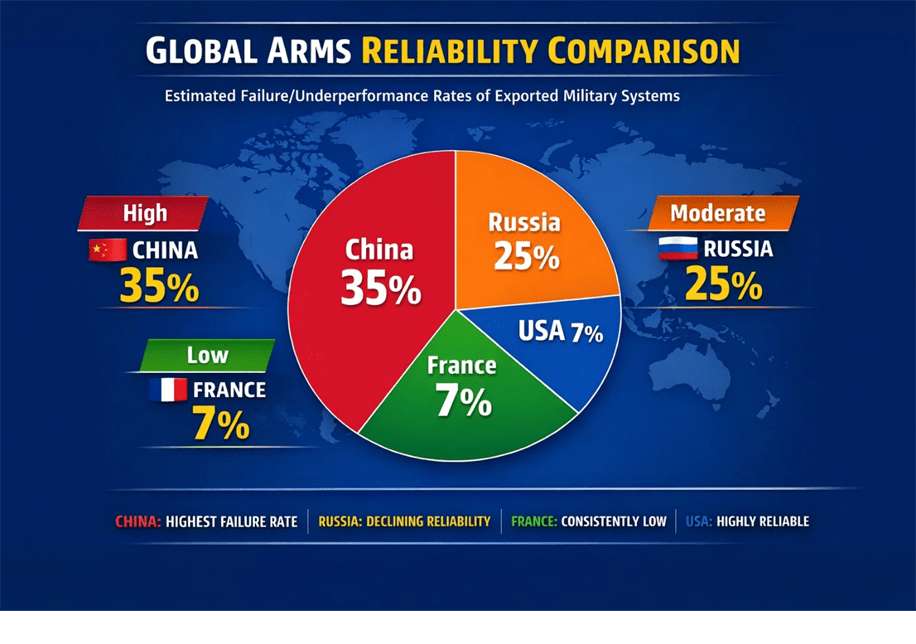
In contrast, Western systems from the United States and France maintain significantly lower failure rates (estimated between 5% and 10%), a success underpinned by extensive combat validation and the support of robust maintenance ecosystems that ensure long-term operational readiness.
Check out the comprehensive report : Link
Conclusion
The data compiled in this report underscores a widening gap between the advertised capabilities of emerging arms exporters and their real-world performance. China, now the world’s fourth-largest exporter, shows a failure and underperformance rate of 30%–40%, the highest among top-tier suppliers. This is not merely a matter of mechanical wear; it is a systemic crisis of quality control and accountability.
In Pakistan, the JF-17’s legacy of engine malfunctions and the F-22P Frigates’ non-functional missile systems have compromised national readiness. In Bangladesh, the reliance on Chinese hardware has resulted in “predatory” maintenance cycles where manufacturers demand extra payments to fix original manufacturing flaws. Most tellingly, the recent conflicts of 2025 and 2026 have exposed the total collapse of integrated air defence effectiveness when Chinese-origin systems like the HQ-9B and YLC-8B faced technologically superior, stealth-enabled adversaries.
The investigation concludes that while nations may pivot toward these platforms for political alignment or lower initial costs, they ultimately inherit a high maintenance burden and significant operational downtime. As demonstrated in Nigeria and Jordan, even cash-constrained air forces are beginning to weigh long-term sustainability over initial savings. In the modern theater of war, a weapon that fails in the field is not an asset it is a liability that carries a cost measured in both currency and lives.