North Korea requires cellphone users to install invasive surveillance app

North Korea is forcing smartphone users to install an app to use the isolated country’s closed intranet that also allows the government to remotely track their locations and monitor their devices in real time, sources there told RFA. The Kwangmyong app connects users to a corner of the intranet where they can access their subscription to the state-run Rodong Sinmun newspaper and other educational and informational services.  But some North Koreans say that the app is a massive invasion of privacy, as it enables the Ministry of State Security and other law enforcement agencies to see exactly where they are or if they are using their phones to access forbidden content like movies from South Korea or foreign news. “At the post office these days, residents are lining up to pay the fee to get their quarterly [license] card,” a resident of Pukchang county, South Pyongan province, north of the capital Pyongyang, told RFA’s Korean Service on condition of anonymity for security reasons. “Starting this month, cellphone users are forced to install an intranet app called Kwangmyong to get their quarterly cards,” he said. Citizens are not happy that they must agree to increased surveillance just to use their mobile phones. “They are reluctant to set it up because they know that they can be watched by the State Security Department at any time through the intranet. But the postal authorities stress that the Central Committee has ordered that they install Kwangmyong on all personal mobile phones. The cards cannot be issued unless Kwangmyong has been installed,” said the source. “Many of the residents reluctantly installed Kwangmyong on their phones … but some have refused to install the app and have been able to buy the quarterly card on the black market,” he said. The black-market version of the quarterly communications license is U.S. $12, much more expensive than at the post office, where it costs just 2,840 won ($0.40). Authorities have been touting the usefulness of the Kwangmyong app, a resident of Ryongchon county, in the northeastern province of North Pyongan, told RFA on condition of anonymity to speak freely.   “They say that installation of Kwangmyong can provide mobile phone users with information about the Rodong Sinmun [newspaper], foreign language education, and cooking techniques,” the source said. “The real intent is to monitor the residents through the Kwangmyong network installed on people’s mobile phones,” he said. Kwangmyong even tracks how devices are used as media players, according to the source. “When Kwangmyong … is installed on a personal mobile phone, the Ministry of State Security can monitor the users from that moment on. It can check when the users watched South Korean movies and how many times they read or downloaded illegal materials from abroad. It provides real-time monitoring,” he said. Because the North Korean intranet is not connected to the global internet, the illegal materials must be passed around from person to person on physical media like USB flash drives and easily concealable SD cards. With Kwangmyong installed, the authorities could easily learn that users viewed illicit material. “For this reason, many residents had been using their mobile phones without installing access to the intranet. But now, the post offices sell the quarterly cards only after they have installed it,” he said.  “They are accusing the authorities of using the intranet network as a surveillance tool,” he said. Another way that mobile phone users can avoid surveillance is to use a mobile phone smuggled from China, the second source said. These phones are illegal, but can access the Chinese network in areas close to the border. They are also not registered with North Korean authorities, so it is not necessary to purchase quarterly communications licenses. A 2019 report by the Washington-based Committee for Human Rights in North Korea described in detail how the government was able at that time to monitor cellphone activity and file sharing. The report said that all North Korean smartphones were required to have an application called “Red Flag” that kept a log of webpages visited by users and randomly took screenshots of their phones. Those could be viewed but not deleted with another app called “Trace Viewer.” “The system is sinister in its simplicity. It reminds users that everything they do on the device can be recorded and later viewed by officials, even if it does not take place online. As such, it insidiously forces North Koreans to self-censor in fear of a device check that might never happen,” the report said. Kwangmyong appears to have eliminated the need for a device check, as it allows remote monitoring through the intranet. Translated by Claire Shinyoung O. Lee. Written in English by Eugene Whong.
Read More

Late former prime minister saw the fates of Taiwan, Japan as bound together

Former Japanese Prime Minister Shinzo Abe, who was assassinated on Friday, once remarked: “If Taiwan has a problem, then so do Japan and the United States.” On a democratic island facing the threat of invasion by neighboring China, that warning is quite a legacy. In a post to her Facebook page on Friday, President Tsai Ing-wen eulogized Abe as “Taiwan’s most steadfast friend,” as well as a friend she had known for more than 10 years. “Taiwan and Japan have worked together to overcome many challenges and build deep friendships, and I am grateful for Abe’s support,” Tsai wrote. When Taiwan was still reeling from the 2019 Hualien earthquake, Abe had sent a personal message saying “Go Taiwan!”, Tsai said. He had also played a part in promoting the island’s pineapple exports in the face of an import ban from China, she revealed. The Japanese government had also made a point of shipping COVID-19 vaccines to Taiwan in 2021, at a time when supplies were tight. She said Abe had once more repeated his warning about the interconnectedness of Taiwan’s national interests with those of Japan and the U.S. when they spoke via video call in March 2022. “Taiwan and Japan will continue to support each other and prove to the international community that the axis of good will continue to stand in the face of violence,” Tsai wrote. Tenure as PM Abe was born into a political family in Yamaguchi Prefecture in 1954, becoming prime minister for the first time in 2006, one of the youngest to hold the office, and the first prime minister born after World War II. In 2012, he served again as prime minister again for eight years, resigning due to illness. By then, he was the longest-serving prime minister in Japan and had been in Japanese politics for nearly 30 years. One grandfather was Hiro Abe, a former member of the House of Representatives, while another was prime minister Nobusuke Kishi. His great-uncle was also a prime minister — Eisaku Sato. Japan is no stranger to the assassination of former prime ministers: Inuyo Hamaguchi, Ito Hirobumi, Takahashi Nissin, and others have met with the same fate as Abe. Three days after Abe stepped down as prime minister, he visited the Yasukuni Shrine in Tokyo, where the Class-A war criminals of World War II are enshrined, triggering a backlash from China and South Korea. Abe also urged the revision of the constitution, hoping to revise constitutional limits on Japan’s military. Both Abe and his grandfather, Nobusuke Kishi, successfully bid for the Olympics during their tenure, but neither of them actually presided over the opening of the Olympics their country hosted. After taking office in 2006, Abe chose China instead of the United States for his first foreign trip, which was seen as an “ice-breaker.” Both sides were looking to end the diplomatic deadlock caused by former Prime Minister Junichiro Koizumi’s visit to the Yasukuni Shrine. But Abe stepped down for health reasons after only one year in office. Elected to the House of Representatives in 2009, he led a number of congressmen to visit Taiwan the following year and met with former President Lee Teng-hui, then-President Ma Ying-jeou and then-DPP Chairman Tsai Ing-wen. In 2012, Abe led the Liberal Democratic Party to victory again, but Sino-Japanese relations deteriorated over the Diaoyu/Senkaku Islands and over Abe’s visit to the Yasukuni Shrine. When he eventually visited China in 2018, it was the first time in eight years that a Japanese leader had met with a Chinese leader — in this case, Xi Jinping. Abe invited Xi Jinping to Japan in return, but the pandemic and further deterioration in Sino-Japanese ties meant that trip never happened. Abe also presided over the end of 40 years of Japanese economic aid to China. Pro-Taiwanese leader In Taiwan, Abe is seen as the most pro-Taiwanese prime minister Japan has ever had. Five hours after he was fatally shot, many politicians and members of the public were offering prayers for him via social media. When the news of Abe’s death came, the ruling Democratic Progressive Party, the Kuomintang, the Times Power Party, the People’s Party, and the Fundamental Progress Party all issued statements of condolence. When Abe was at a low ebb, politically, he was encouraged by former Taiwanese President Lee Teng-hui, who gave him some tips to aid his comeback. Lee told Abe that nobody else could be trusted to do the job, and suggested Abe try to revise Japan’s constitution. The two former leaders were like father and son, according to some account. Abe once said: “There is no politician in the world who thinks about Japan like Lee Teng-hui.” Chen Tang-shan, chairman of Taiwan’s Friends of Abe Association, said there had been plans for Abe to visit Taiwan on the second anniversary of Lee’s death at the end of July, but the schedule had yet to be finalized at the time of Abe’s death. “At a time when the international situation is at its most dangerous for Taiwan, we had a good friend who supported Taiwan very strongly,” Chen said. “He sadly lost his life in the shooting. As a political figure in Taiwan, I am very grateful for his support.” “He saw Japan and Taiwan as bound together in the same community,” he said. “We are very sad that someone who saw politics so clearly, and who had the courage to speak out publicly is no longer with us.” Chen Yongfeng, director of the Center for Japanese Regional Studies at Tokai University, said Abe’s stance on Taiwan had become hugely influential in Japanese political circles. Translated and edited by Luisetta Mudie.

Read More

Fears grow for Guo Feixiong, on hunger strike in a Guangzhou detention center

Fears are growing over the health of Chinese dissident and former legal advocate Guo Feixiong, also known as Yang Maodong, who has been on hunger strike for several months while in detention. Guo has been detained and held incommunicado since writing an open letter to Chinese premier Li Keqiang, asking him to lift a travel ban and allow him to visit his critically ill wife Zhang Qing in the United States. His sister Yang Maoping told RFA that Guo now weighs less than 50 kilograms (110 pounds), citing a July 6 video call between Guo, who is being held in the police-run Guangzhou No. 1 Detention Center, and his defense attorney. Yang said her brother began refusing food shortly after being detained, and is only still alive due to force-feeding by the prison guards. “The lawyer told me that Yang Maodong has been on hunger strike since Dec. 5, 2021, and that they have been tube-feeding him, although his weight has dropped rapidly to around 100 pounds,” she said. “If he continues to lose weight, his life will be in danger,” she said. “He has two children, and one of them is still a minor.” “I am very sad and don’t know what to do … I don’t want his kids to be orphans,” Yang said. She said the state security police had tricked Guo into making a “confession” by promising he would be allowed to go to the U.S. to visit his then terminally-ill wife Zhang Qing, who died in January. ‘Ridiculous accusation’ Instead, when he confessed, they charged him with “incitement to subvert state power,” Yang said. “It’s a ridiculous accusation,” she said. “Who is he supposed to be subverting? Can he do it all alone?” “I kept writing letters to everyone in our country who could help him go abroad and see his dying wife,” Yang said. “I even told them I was willing to be a hostage, but Zhang Qing died without seeing him.” An employee who answered the phone at the Guangzhou No. 1 Detention Center appeared to confirm the news of Guo’s hunger strike. “His going on hunger strike was his personal choice, but we are also carrying out ideological work with  him,” the employee said. “As for the next step, his lawyer should also [try to influence him], right?” Zhang Lun, a professor at the University of Sergi-Pondoise in France who has been a vocal advocate for Guo internationally said he is very worried about Guo’s health, given that his health was already poor after serving so many years in jail already. Zhang said activists had appealed to U.N. human rights chief Michelle Bachelet to visit Guo Feixiong during her visit to Guangzhou in May, but to no avail. “Naturally, I am very worried,” Zhang said. “Mr. Guo Feixiong has been in prison several times before, to the great detriment of his health.” “I think the Commissioner has the responsibility to express her concern to the Chinese authorities,” he said. “The United Nations High Commissioner must make a statement on this matter.” ‘The inhumanity of this tyranny’ U.K.-based scholar Wang Jianhong said the treatment of Guo and his family was tyrannical. “Even when Guo Feixiong’s wife Zhang Qing fell ill, the authorities still refused to allow him to leave the country and arrested him, instead,” Wang said. “The tragic experience of this family shows us the inhumanity of this tyranny [regime].” Wang said an international campaign over jailed Shanghai citizen journalist Zhang Zhan’s hunger strike had led to a partial improvement in her health following her hunger strike. “We have not achieved our goal of medical parole, but we learned in mid-February that Zhang Zhan’s situation in prison had improved, so we should speak out for Guo Feixiong today,” he said. The U.S. State Department said in a statement on Zhang Qing’s death on Jan. 10, 2022 that the ruling Chinese Communist Party (CCP) had subjected Guo to “years of mistreatment, imprisonment, routine harassment and surveillance.” “We call on [China] to immediately grant Guo humanitarian relief and allow his travel to the United States to be reunited with his children and grieve the passing of his wife,” the statement said. Translated and edited by Luisetta Mudie.

Read More

Shooting death of Japan’s Shinzo Abe gets mixed reactions on Chinese internet

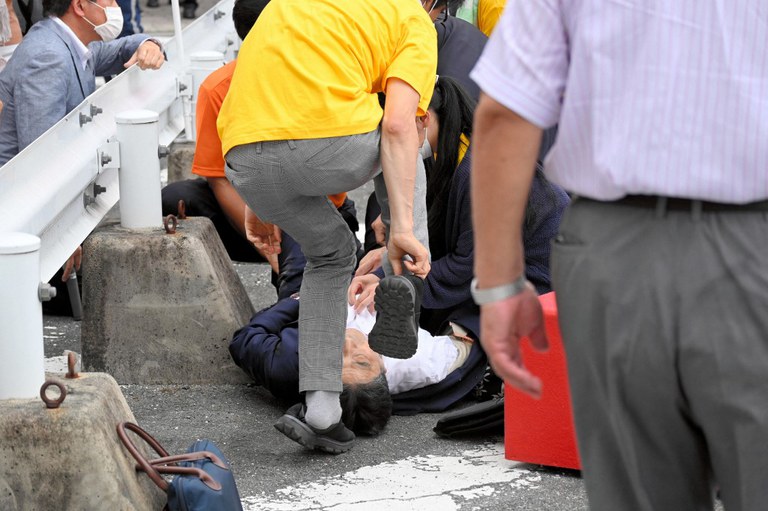
UDPATED at  10:40 a.m. EDT on 2022-07-08  The shooting death of former Japanese prime minister Shinzo Abe Friday prompted mixed reactions on China’s tightly controlled internet, with nationalistic Little Pinks openly celebrating Abe’s death and government censors blocking a cryptic hashtag that could be a reference to public anger at the ruling Chinese Communist Party (CCP)’s own leaders. The news of Abe’s death following a shooting by a gunman in Nara during an election campaign made it to the front page of the CCP’s official People’s Daily newspaper online edition, but as a fairly small headline below a plethora of stories about CCP leader Xi Jinping. The paper carried a factual news report from state news agency Xinhua in full, with a statement from the foreign ministry wishing Abe recovery as emergency medics tried to save him. However, its Japan channel also carried a Xinhua article about relations with South Korea dated July 6 and titled “From forced labor to ‘comfort women,’ Japan’s human rights misdeeds cannot be denied.” China’s nationalistic Global Times newspaper quoted Japanese prime minister Fumio Kishida’s reaction, condemning the “barbaric” attack, and Chinese foreign ministry spokesperson Zhao Lijian as saying that China was “shocked” by the incident. “After Japan’s announcement of Abe’s death, Chinese Embassy in Japan also mourned Abe’s passing and extended condolences to his family,” the paper said. It quoted “analysts” as saying that “Japanese right-wing forces may use this incident to push forward the trend of conservative transformation in Japanese politics … bringing more security risks to the geopolitics of Northeast Asia.” It quoted Da Zhigang, director of the Institute of Northeast Asian Studies at Heilongjiang Provincial Academy of Social Sciences, as saying that Abe’s death could boost nationalistic sentiment in Japan. “Japanese nationalism is also likely to be further strengthened by the incident,” Da said. “People may have concerns about whether the volume of calls in Japan to return to the path of war will increase further.” This image received from the Asahi Shimbun newspaper shows former Japanese prime minister Shinzo Abe (C) on the ground after being shot while attending a campaign event at Yamato Saidaiji Station in the city of Nara on July 8, 2022. Credit: Asahi Shimbun via AFP Hateful comments Some online comments reacting to Abe’s death on Chinese social media platforms were nakedly hateful, according to The Great Translation Project Twitter account, which translates and curates social media commentary in China. “The people of Shaanxi extend our warm congratulations to this,” the account translated one comment as saying. Several other comments followed with the exact same wording, but referring to different parts of China. Meanwhile a hashtag #kexibushini, which translates as “a pity it wasn’t you,” but could also be read as hinting at the wording “but Xi it wasn’t you” in a possible reference to CCP leader Xi Jinping, was blocked on social media platforms. One comment read: “These censors seem to know [what we mean] better than we do!” while another replied: “It’s so funny. Everyone knows.” “Someone is likely getting scared in Zhongnanhai,” another comment read, referring to the headquarters of the CCP leadership in Beijing. Abe, 67, was shot from behind minutes after he started his speech in Nara, the Associated Press reported. He was airlifted to a hospital for emergency treatment but was not breathing and his heart had stopped. He was later pronounced dead despite emergency treatment that included massive blood transfusions, the agency quoted hospital officials as saying. Police arrested the suspected gunman at the scene of the attack, while prime minister Fumio Kishida and his cabinet ministers rushed back to Tokyo to respond to what Kishida called a “dastardly and barbaric” attack. Sunday’s parliamentary elections will go ahead as planned, he said. Territorial, historical grievances China and Japan have been at loggerheads over a disputed island chain, visits by Japanese politicians to the Yasukuni shrine, where some Japanese war criminals are interred, and an ongoing war of words over Tokyo’s recognition of past military aggression and human rights abuses in East Asia. In 2012, a tense diplomatic standoff with Japan sparked nationwide protests and anti-Japanese riots over the Senkaku, or Diaoyu, Islands, while China held war drills in waters near Japan after then opposition leader Shinzo Abe visited the controversial Yasukuni shrine in Tokyo which honors Japan’s war dead, including Class A war criminals. The CCP later launched a crackdown on “irrational” forms of nationalism at home, after thousands of people took to the streets in a wave of mass protests in Chinese cities that lasted for several weeks. On the democratic island of Taiwan, where former president Lee Teng-hui was known to have a close relationship with Abe, President Tsai Ing-wen severely condemned the violence of the attack. “Japan … is an important democratic partner of Taiwan … and former prime minister Abe was committed over the long term to deepening friendly ties between Taiwan and Japan,” Tsai said. A similar statement was issued by the office of former president Ma Ying-jeou. Ko Wen-je, chairman of the Taiwan People’s Party, said Abe’s death was “a great loss for Taiwan-Japan relations.” Sadness, praise from Dalai Lama, Cambodia The Dalai Lama wrote to Abe’s widow Akie Abe offering his condolences. “I am deeply saddened to hear that my friend, Mr. Abe Shinzo has passed away following a gunshot attack this morning,” the Tibetan exiled spiritual leader wrote. “I pray for him and offer my condolences to you and members of your family.” “As you know, your late husband was a steadfast friend of the Tibetan people. I very much appreciated his friendship and support of our efforts to preserve our rich Buddhist cultural heritage and identity,” the letter said. Cambodian Prime Minister Hun Sen expressed grief for Abe, who he called a “”a long-time good friend of mine and Cambodia.” “I was extremely shocked and deeply saddened to learn about the passing of His Excellency Abe Shinzo, resulting from the daylight assassination.” Abe, he said, “was an outstanding Japanese…

Read More

Myanmar charges three pre-coup UEC members with breaching polling laws

Myanmar’s military government is cracking down on its opposition ahead of national elections expected next year by handing out jail sentences to members of the National League for Democracy ((NLD) and former Union Election Commission (UEC) members. UEC Chairman U Hla Thein and two UEC members from the pre-coup NLD-led government were sentenced to three-years in prison under Section 130 (a) of the criminal law, according to sources close to the court. One source identified the three as UEC spokesperson Myint Naing, UEC member Than Htay and UEC Chairman Hla Thein. They were sentenced by a special court on Thursday.  The three UEC members have been in Naypyidaw Prison since November 2021 and were tried in the prison’s court. The fate of other arrested UEC members is still unclear. Section 130 (a) aims to penalize those who prohibit or omit existing laws and carries a maximum sentence of three years plus a fine.  Myanmar’s former president Win Myint and NLD leader and State Counsellor Aung San Suu Kyi have also been accused of influencing and abusing their electoral power under Section 130 (a). The Union Election Commission organizes and oversees elections in Myanmar as well as vetting candidates and parties. The day after last year’s February 1 coup the State Administrative Council appointed six members aligned with the military.  The sentences handed out on Thursday are the first convictions of UEC members who were responsible for the 2020 election, the results of which were annulled following the coup. Other senior NLD ministers have also been charged under Section 130 (a) although local and international observers said the election had been free and fair. Sanchaung township NLD chairman Bo Bo Oo said that the military council is continuing to make mistaken legal judgements because it knows its claim to power is unfounded.  ”The coup was illegal and it did not comply with the law,” he said “They broke the law by seizing power in the first place. They want to say what is right and wrong but in reality they are just making more mistakes. It has been one mistake after another from the beginning.” The junta-appointed UEC said in January that 422 people, including Aung San Suu Kyi had been arrested and charged with electoral fraud. Suu Kyi faces a series of charges that could lead to a sentence of more than 100 years. In the 2020 election the UEC deliberated on 1,077 election-related cases, charging 546 people with breaches of the electoral law. Of these, 342 were prosecuted and 194 cases were dismissed. The UEC says 10 cases are pending as it awaits legal advice.

Read More

No amnesty for Vietnamese ‘anti-state’ prisoners this year

Vietnam’s annual September 2 National Day amnesty will not include anyone jailed for anti-state charges according to President Nguyen Xuan Phuc. A presidential spokesperson announced his decision on who to consider for early release at a Monday news conference, state-controlled media reported. This year’s amnesties will be granted to those sentenced to long or lifetime terms who will still be serving their sentences on August 31. The long list of charges not to be considered rules political prisoners out of the running. The exclusions include people charged with national treason; activities aimed at toppling the government; spying; trespassing on national security sites; and violence and terrorism against the State. Other cases ruling out release include sabotaging the material and technical foundations of the State of Vietnam; making, storing, disseminating or propagating information, documents and items aimed at opposing the State; disrupting security; attacking or damaging detention facilities; and terrorism. Crimes against peace and humanity, and war crimes are also on the list of who to exclude from the presidential pardons. RFA statistics show that Vietnam has arrested at least 12 dissidents from the start of the year through to Tuesday with five found guilty of conducting anti-state propaganda and sentenced to between five and eight years. The charges stem from crimes listed in the National Security provisions of the Criminal Code. These include “abusing democratic freedoms” under Article 331 of the Criminal Code 2015 and “conducting propaganda against the state” under Article 88 of the Penal Code 1999 or Article 117 of the Criminal Code 2015. Last year at least 32 people were found guilty of posting opinions critical of the government, according to Human Rights Watch. It said at least 26 others were arrested on fabricated political charges. In its World Report 2022 the independent pressure group was scathing in its criticism of the Vietnamese government and Communist Party. “Vietnam systematically suppresses basic civil and political rights. The government, under the one-party rule of the Communist Party of Vietnam, severely restricts freedom of expression, association, peaceful assembly, movement, and religion,” it said.

Read More

Junta bid for Russian deal to address Myanmar’s energy shortages faces hurdles

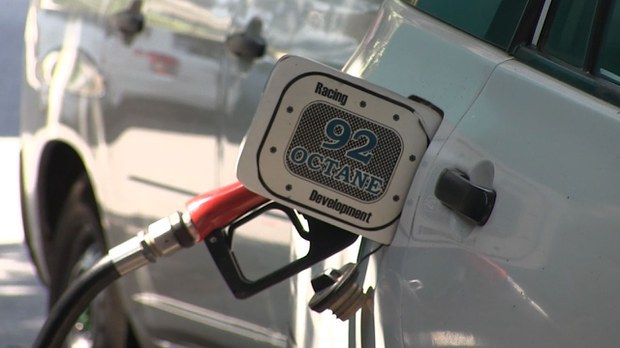
Myanmar’s junta is in talks with Russia to address the country’s fuel and electricity shortages, although inking a deal may be difficult amid Western sanctions and other obstacles, according to observers. A junta delegation attended the June 15-18 International Economic Forum in St. Petersburg, Russia, that included Myanmar’s ministers of electricity and energy, international cooperation, planning and finance, investment and foreign trade, economy and trade, and the deputy governor of the central bank. According to a June 20 report by the pro-military Myanmar Alin Daily, the delegation met with Russian Minister of Energy Shulginov Nikolay on the sidelines of the forum to discuss energy cooperation. During the meeting, the two sides held talks on Russian oil drilling in Myanmar and the export of oil and petroleum products, as well as the construction of a nuclear power plant, it said. They also discussed the possibility of direct exchanges of currencies between the two countries’ central banks and the purchase of fuel from Russia. In May, the junta announced that Russia would soon begin participating in Myanmar’s energy industry in place of international companies that quit, in response to the exit of three big Asian firms from a gas field in the nation a month earlier, citing commercial reasons. At least one of the three – Japan’s ENEOS – also mentioned Myanmar’s “current situation, including the social issues” as one of the reasons for quitting, referring to human rights excesses by the military that have led to the deaths of at least 2,069 civilians since a Feb. 1, 2021 coup. Speaking to RFA Burmese on condition of anonymity, a businessman with knowledge of Myanmar’s energy sector said that cheaper fuel imports from Russia could reduce the cost of high-priced commodities in the country that are the result of Western sanctions over the takeover and the junta’s subsequent crackdown on its opposition. “If we can buy cheap oil from a country that produces a lot of oil and gas, it’d benefit our energy sector and it’ll be good for energy security,” the businessman said. “I think we might also get a break from the high costs of food and consumer goods.” More than 17 months after the coup, Myanmar is mired in political and economic turmoil, while life is increasingly difficult for average people due to the rising cost of food, as well as regular power and water shortages. Even in Myanmar’s commercial capital Yangon, which is home to an estimated 7 million people, sources say power is cut off twice in every 24-hour period, with homes sometimes left dark for six hours each day. Only the capital Naypyidaw, where the country’s military junta is based, has enjoyed uninterrupted electricity since the overthrow of civilian rule. A difficult deal Myanmar-based political analyst Than Soe Naing said the junta is only in the beginning phase of negotiations with Russia to deal with its ongoing energy crisis and will need to overcome several obstacles before moving towards an agreement that will solve its problems. “Cooperation with Russia over a nuclear program is unlikely without China’s support. In addition, the junta, which is facing a foreign exchange crisis, cannot afford to spend money on nuclear energy,” he said. “The main purpose of [the junta attending] this business forum was to seek help as a way to resolve the current oil crisis in Myanmar. I think they are looking for a way to get engine oil and fuel. But it is unlikely that anything more than that would happen.” Than Soe Naing said it will be difficult for Myanmar to secure the help of Russia, which is itself facing sanctions as well as an economic downturn related to its invasion of Ukraine. Amid the sanctions, the Kremlin has been forced to improve relations with countries in the Middle East, as well as China and India, in a bid to find new markets for its oil and natural gas. Myanmar, which has seen its fuel prices skyrocket as a result of Western sanctions, is one prospective buyer of said Russian exports. However, a source in Yangon, who also declined to be named for security reasons, said he doubts that the junta’s claims of cooperation with Russia will end Myanmar’s energy shortages. “The junta has said a lot about many things. For instance, they said they will produce electric cars and electric trains as soon as possible,” said the source, who also has ties to Myanmar’s energy sector. “Nothing has happened since they seized power. In fact, our people see these promises as daydreams.” A car is refueled at a gas station in Yangon, in a file photo. Credit: RFA Seeking fuel imports Sources from Myanmar’s fuel industry have told RFA that companies close to the son and daughter of junta chief Snr. Gen. Min Aung Hlaing are in the midst of  negotiating import deals with Russia, although the claims could not be independently confirmed. RFA contacted Win Myint, secretary of the Myanmar Petroleum Importers and Distributors Association, seeking comment on the junta’s alleged attempts to purchase fuel from Russia, but he declined to discuss the issue. Oil traders say that even if Myanmar, which normally imports through Singapore, could buy fuel at a cheaper price from Russia, the cost of transporting it would essentially negate any discount. Another member of Myanmar’s business community told RFA that, despite ongoing political instability, the junta must find a way to end the country’s energy shortages if it hopes to cling to power. “It is true that there is instability. Global politics are unstable … but people have to go on with their lives. They are struggling to survive. All nations must have food and energy security,” he said. “The Ukraine conflict has been going on for four or five months, while the crisis in our country has continued for more than a year. We cannot stop our lives because of these problems. So we must find a way out.” Translated by Khin Maung Nyane. Written in English by Joshua Lipes.

Read More

Uyghurs abroad in shock after finding relatives listed in leaked police files

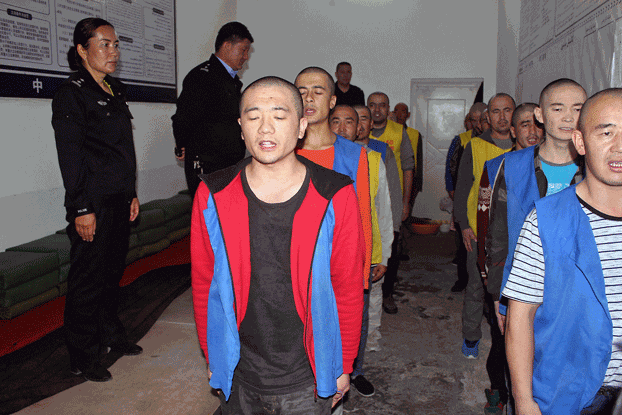
Rabigul Haji Muhammed was stunned to see a former classmate on a leaked list of Uyghurs and other Turkic people detained in internment camps in China’s far-western Xinjiang region. The doctoral student in Turkology at Hacettepe University in Turkey was searching through a trove of classified documents published by a U.S.–based human rights group in May. One of the group’s researchers had been given the information from an anonymous source. Muhammad saw that Nurali Ablet had been detained for “engaging in online propaganda about violence and terrorism.” Ablet majored in the Uyghur language at the Central Nationalities University, also known as Minzu University, in Beijing and graduated in 2015, she said. “I knew him very well from those five years in college. He was a very hard-working and active student at the university,” she told RFA. “People like Nurali are not just images for us, they are living beings like us and everyone else.” Muhammad and other Uyghurs living in exile have scoured the Xinjiang Police Files since the document was first published by the Washington, D.C.-based Victims of Communism Memorial Foundation on May 24, searching for information about missing relatives or friends, or on the off chance they might know someone who unbeknownst to them had been detained by Chinese authorities. Many say that the abducted Uyghurs are college-educated, law-abiding and working-class –– not “terrorists” in any sense of the word. The extraordinary leak of evidence from internal police networks in the Xinjiang Uyghur Autonomous Region (XUAR) describes prison-like “re-education” camps and provides fresh evidence of the direct involvement of top Chinese officials’ in the mass internment campaign. The files were analyzed and authenticated by a team led by Adrian Zenz, a researcher at the foundation who is an expert on the region. They were peer-reviewed by scholarly research and investigative teams from several major global media outlets. The documents include clear images and detailed information about camp detainees who were arrested in 2018 in Kashgar Kona Sheher (in Chinese, Shufu) county in Kashgar (Kashi), a southern city in the XUAR. Among the county’s more than 3,700 detainees labeled as “trainees” in Chinese government documents, the youngest is 14 years old, and the oldest is 73. Some photos show police minders wielding batons standing next to the detainees. Previously leaked Chinese government documents contained only the names and identification numbers of some detained Uyghurs. The new information includes photos and more information about their alleged crimes. The documents also describe a “shoot to kill” directive should the trainees try to escape what the Chinese government has called “voluntary vocational training centers” and the Chinese media has described as ordinary places of education. In one of the leaked documents, Chen Quanguo, former Chinese Communist Party secretary of the XUAR, said in a classified speech in May 2017 that if that “if they [trainees] try to escape, shoot them on the spot and report back later.” “The Xinjiang Police Files prove that China’s so-called vocational training centers are really prisons,” said Andrew Bremberg, president and CEO of the Victims of Communism Memorial Foundation, in a statement issued in May. “These documents conclusively demonstrate that Beijing has been lying about its gross human rights violations in Xinjiang,” he said. “The international community must take immediate and concrete action to hold China accountable for these atrocities.” Police guard detainees as they stand in line apparently reciting or singing at the Tekes County Detention Center in northwestern China’s Xinjiang region in an undated photo. Credit: AFP/The Victims of Communism Memorial Foundation ‘Revelations are very disturbing’ The police files were obtained by a third party through hacking into computer systems operated by the Public Security Bureau in Kashgar Kona Sheher country and in Tekes (Tekesi) county in Ili (Yili) Kazakh Autonomous Prefecture. Both areas are dominated by Uyghurs and other predominantly Muslim ethnic groups. Zenz authenticated the documents in a peer-reviewed academic paper published in the Journal of the European Association for Chinese Studies and in a second paper published in the online magazine China File. “These findings are significant because they provide us with frank policy implementation directives along with the thought processes and intentions that made them a reality,” Zenz said in the statement. “This gives an unprecedented look into the personal attitudes of Chinese authorities and the personal involvement of [Chinese President] Xi Jinping,” he said. “Documents with this kind of insight have never before been published and their revelations are very disturbing.” The leaker, who managed to access some of the encrypted material, attached no conditions to the provision or publication of the documents, though the person requested anonymity due to safety concerns.   According to the files, Tajigul Tahir’s son was sentenced to 10 years in prison in 2017 for being a “non-alcoholic and non-smoker” — signs, according to authorities, of his extremism. The 60-year-old woman was later arrested herself because she was the mother of an imprisoned Uyghur. Abdurrahman Qasim, a Uyghur based in Turkey, said he found the name of his former cellmate, Mehmutjan Nasir, in the leaked documents. They were in detention together in Hotan (Hetian), another city in southern Xinjiang, but met each other previously in Hotan when Nasir was a student at the Hotan Uyghur Medical College. Authorities detained Nasir in 2010 for communicating with people who prayed. A few years earlier, he had posted his Chinese national identification card on WeChat, a Chinese instant messaging social media app, of which Qasim took a screenshot. Qasim said he was able to find Nasir’s ID details when the files were published. “I searched the images in the files for people I know or any relative who might be among the images, and after looking at more than 1,000 images, I found Mehmutjan Nasir who was my cellmate in Hotan from late 2010 to early 2011,” Qasim said. “I was very saddened to find him on the detained Uyghurs’ list.” At least 1.8 million Uyghurs and other Turkic minorities are believed to have been held in…

Read More

Myanmar activists observe 60th anniversary of military crackdown amid tight security

Activists in Myanmar marked the 60th anniversary of a military crackdown that killed at least 100 students in the commercial capital Yangon with protests in more than a dozen townships on Thursday, despite increased security measures by junta authorities. The protests commemorating the July 7, 1962, crackdown were held in the Sagaing region townships of Salingyi, Yinmarbin, Tamu, Kani, Kale and Ayadaw; Tanintharyi region townships of Dawei and Launglon; Bago region’s Taungoo township; Kachin state’s Hpakant township; Mon state’s Thanbyuzayat township; as well as the cities of Yangon and Mandalay. Speaking from Yangon, where more than 30 students joined protests at around 11 a.m., a member of the Botataung Strike Group named Jewel told RFA Burmese that anniversary activities took place unhindered by authorities. “The July 7 protest is very important for every student movement and we observe it as a reminder to others so that people will never forget,” she said. “There were surprise checks in earlier days but fortunately there were none today. [The soldiers] came to the spot where we held the protest only after we left. There were no arrests today.” Thet Oo, a protester in Yinmarbin township, said people observing the anniversary event had to disperse after only 15 minutes of shouting slogans due to tight security. “The slogan ‘Do not forget 7.7.62’ refers to the many students and youths who bravely gave their lives in the fight for the truth,” he said. “In memory of that day, and to instill courage in people’s minds to fight like the fallen heroes for the freedom of the country, we members of the All Villages of the North Western Plains Strike Committee held this protest on the streets [despite the risk of arrest].” On March 2, 1962, Gen. Ne Win led the military in a coup to control Myanmar, appointing himself prime minister and dissolving the country’s legislature. On July 7 of that year, troops were sent to restore order as students protested tuition increases at Yangon University. The troops fired on the protesters, killing at least 100 people, and arrested thousands of students, according to local media reports. The following day, the military blew up the Yangon University Students’ Union building, which had stood as a monument to the anti-colonialism movement in Myanmar since the 1920s. Call to action In a statement issued Thursday in commemoration of the 60th anniversary of the crackdown, the All-Burma Federation of Students’ Unions called on people of Myanmar to take action in whatever way possible to overthrow the current military regime, which seized power in a Feb. 1, 2021, coup. Myat Min Khant, chairman of the Yangon District Students’ Union, called the announcement “a signal to end military rule.” “There are two reasons that the All-Burma Students Union issued the statement. The first is to remind people that it isn’t just now that the fascist military is killing people in cities and towns without hesitation. They have done so in the past,” he told RFA. “The second reason is to remind people we are still in the middle of the ‘Spring Revolution,’ fighting against the fascist military. We want to remind them that the fascist military and the 2008 constitution, which is the backbone of the fascist army, must be removed if they want real freedom.” A spokesman for the Yangon University Students’ Union, who spoke on condition of anonymity, said students have always been at the forefront of the opposition to military rule in Myanmar. “The July 7 protests we are commemorating now were also a fight against the Ne Win regime, which also seized state power,” he said. “And then there were student protests in ‘74, ‘75 and ‘76. Students also joined hands with the people in the 1988 pro-democracy uprising. And now, in the 2021 anti-coup protests, students have actively participated in the ‘Spring Revolution’ against the military along with the people,” he added. “Myanmar’s students are still fighting the military dictatorship in various ways.” Junta authorities have killed at least 2,069 civilians since seizing power and arrested more than 14,500 others — mostly during peaceful anti-coup protests, according to the Assistance Association for Political Prisoners, a Thailand-based NGO. At least 11,443 people remain in detention, the group says. Translated by Khin Maung Nyane. Written in English by Joshua Lipes.

Read More

NGOs urge Cambodia to  crack down on Chinese drugs

NGOs are urging government authorities to enact tougher measures against Chinese drug lords operating in Cambodia, as methamphetamine use continues to surge in the Southeast Asian country. The calls came following news this week of the arrest in Sihanoukville of seven Chinese nationals who set up a factory in the coastal province to make the drugs from smuggled ingredients. Authorities also seized 14 tonnes (15.4 tons) of drug precursors and production equipment during the arrests, according to a report on the National Police Facebook page on Tuesday. The 7 arrested suspects will next be sent for processing in Cambodian courts, police authorities said. Drug use has now spread from Sihanoukville city to the suburbs and will eventually spread even farther into the country, leading to kidnapping and violence by criminal gangs, Cheap Sotheary — provincial coordinator for the rights group Adhoc — told RFA this week. All drugs confiscated by authorities should be immediately destroyed, she added. “We are concerned that many of these confiscated drugs are being stored and that some may be taken out and removed, as some authorities in the past turned out to be drug traffickers themselves. “Authorities should be taking strong action in every case,” she said. Also speaking to RFA, Transparency International Cambodia Executive Director Pech Pisey said that Chinese drug lords began to come to Cambodia after they saw that the country lacked a strong rule of law. “International criminals think they can produce and distribute drugs as much as they like,” Pech Pisey said. Cambodia must strictly enforce its laws if it wants to be kept off the Grey List of countries corrupted by money laundering released by the Paris-based watchdog Financial Action Task Force, he added. Cambodian Minister of the Interior Sar Kheng said during a National Day for Combating Drugs on June 26 that Cambodian police had seized a combined total of more than 100 tonnes of finished drugs and drug ingredients from 2020 to 2021. However, of the nearly 10,000 tonnes of the finished drugs that were seized, only 6,000 tonnes were then destroyed, he said. Translated by Samean Yun for RFA Khmer. Written in English by Richard Finney.

Read More