US official expresses concern over crackdown on Tibetans protesting dam

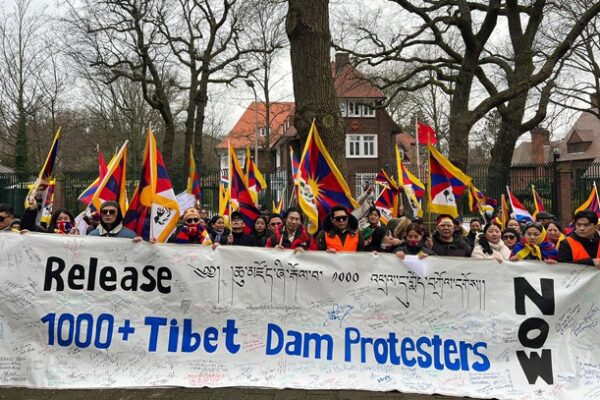
An American official expressed deep concern about the arrest of over 1,000 Tibetans protesting a dam project in central China that would destroy several Buddhist monasteries, saying the United States “stands with Tibetans in preserving their unique cultural, religious, and linguistic identity.”  Tibetan advocacy groups condemned China’s actions, calling for the immediate release of those detained. On Feb. 23, police arrested more than 1,000 Tibetans, including monks and residents, in Dege county in Kardze Autonomous Tibetan Prefecture, who had been peacefully protesting against the dam, which would also force two villages to be relocated, sources told Radio Free Asia.  Over the weekend, police began interrogations, beating some detainees so badly that they required medical attention, sources told RFA.  Uzra Zeya, U.S. under secretary for civilian security, democracy and human rights and U.S. special coordinator for Tibetan Issues, said on X on Feb. 25 that she was deeply concerned by reports of the “mass arrests of Tibetans protesting the construction of a dam that threatens displacement of villages & destruction of monasteries.” “China must respect human rights & freedom of expression and include Tibetans in the development & implementation of water and land management policies,” she tweeted.  “These centuries-old monasteries are home to hundreds of Tibetan Buddhist monks and contain irreplaceable cultural relics,” she wrote. “The U.S. stands with Tibetans in preserving their unique cultural, religious, and linguistic identity.”   ‘Wiping out culture and religion’ The arrests “should be a reminder to the world of how brutal daily life under China’s occupation is for the Tibetan people,” a  statement issued Monday on X from the International Campaign for Tibet by its president, Tencho Gyatso. “China tries to hide its forced relocation of Tibetans, its destruction of their environment, and its attempts to wipe out their culture and religion,” the statement said. Saying the protesters demonstrated “incredible courage,” Gyatso said they needed the support of the international community.  “We call on the Chinese government to free these Tibetans at once,” she said. “We also call on the U.S. and other governments to step up pressure on China to end its vicious occupation of Tibet.” Chinese authorities arrest Tibetan monks during a protest against a dam project on the Drichu River in Dege county, southwestern China’s Sichuan province, Feb. 22, 2024. (Image from citizen journalist video) Four Tibetan NGOs based in Dharamsala, India, home to the exiled Tibetan spiritual leader, the Dalai Lama, issued a statement of solidarity with the Tibetan community in Dege county. They said that the displacement of Tibetan communities is “not new phenomena,” just one of many examples. “The continued disregard for the rights and well-being of Tibetans in the face of such development projects is unacceptable and demands immediate attention from the international community,” said the statement by the Tibetan Women’s Association, National Democratic Party of Tibet, Regional Tibetan Youth Congress and Students for a Free Tibet.  Environmental disruption The four groups went on to say that the construction of the dam not only threatens the local Tibetan community but also poses a risk to the fragile ecosystem of the Tibetan plateau.  “Any disruption to Tibet’s rivers and a diversion of the rivers could have far-reaching consequences for the environment, biodiversity, and livelihoods of millions of people downstream,” they said.  William Nee, research and advocacy coordinator at Chinese Human Rights Defenders, or CHRD, told RFA that his organization was concerned about the situation of the detainees, whether they are being maltreated and if they have sufficient food.  RFA reported earlier that authorities told those who were arrested to bring bedding and food, suggesting they would not be released soon. CHRD was also concerned whether authorities were giving those arrested access to relatives and lawyers, and whether they were being detained according to Chinese Criminal Procedure Law.  “But beyond that, there are also concerns about the livelihood of the potentially affected communities by the dam and whether this has been taken into consideration,” Nee said. “And also the cultural rights, given that this might impact monasteries – some having ancient murals going back to the 13th century.”    Khenpo Sonam Tenphel, speaker of the Tibetan parliament-in-exile, tweeted on X that Tibetans worldwide condemned the crackdown.  “We urge China to promptly release those detained and to cease the dam construction,” he tweeted. “It is crucial for China to acknowledge the peaceful protests of Tibetans, addressing their concerns about preserving historic monasteries and safeguarding their homes.” Translated and edited by Tenzin Pema. Edited by Roseanne Gerin and Malcolm Foster.

Read More

Vacation is over for Cambodian strongman Hun Sen

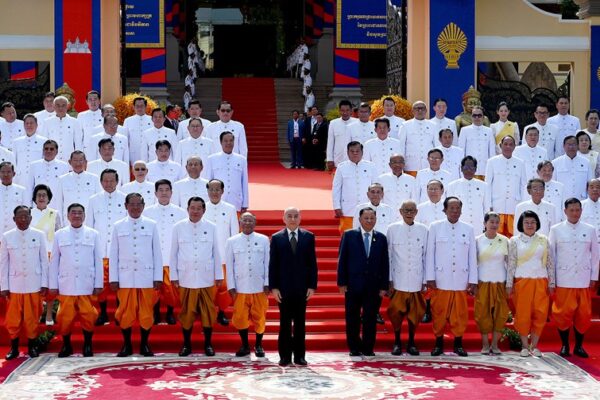
Every politician, especially one whose chokehold over a country lasted nearly four decades, needs some time off. Hun Sen, who handed over the prime ministership of Cambodia to his eldest son last summer, has had his feet up for the past seven months.  Not that he’s been idle; he’s still president of the ruling party and head of the King’s Privy Council, and has occasionally intervened to publicly chide his son for some mistakes. But after the Senate elections on Feb.  25, he’ll be coronated as the new Senate president.  The position will make him acting head of state when King Norodom Sihamoni is out of the country, as he often is for health checkups in China. With Cambodia now a Hun family fiefdom, you’ll have Prime Minister Hun Manet as head of government and Hun Sen as de-facto head of state.  What does it matter, you may ask, since Hun Sen is already all powerful? But the question contains the answer.  Clearly, Hun Sen doesn’t think of himself that way or else why would he want the Senate presidency? Indeed, he stated on the day that he resigned as prime minister last July that he would become Senate president, so clearly this had been decided when the ruling party was crossing the T’s on its vast succession plan in 2021 and 2022.  Moreover, it’s not a risk-free move. It means the current Senate president, Say Chhum, has to retire. This has the added benefit of pensioning off another graying ruling party grandee and one who some think controls a rival faction within the party.  Say Chhum had agreed to resign last year, perhaps safe in the knowledge that his family’s patronage networks are now in the hands of his son Say Sam Al, the land management minister.  But for those in the party (and there are some) angry that the CPP has become a family-run affair, the Hun duo as heads of government and state won’t sit well. Hun Sen stated last July during his resignation speech that by becoming Senate president, “I will not intrude into the responsibilities of the new prime minister,” but it certainly appears that may to some.  Cambodia’s Prime Minister-designate Hun Manet, center, and incoming cabinet members pose for a group photo at the headquarters of the Cambodian People’s Party in Phnom Penh, Aug. 10, 2023. (Kok Ky/Cambodia’s Government Cabinet via AFP) Moreover, it seemingly goes against the spirit of the party’s generational succession scheme in which the aging “first generation” CPP leaders (Hun Sen included) were supposed to retire from frontline politics and give formal powers to the “second generation”, even if the elders still called the shots behind the scenes. So why not give the Senate presidency to a younger, “second generation” politician?  Given that the CPP took years to meticulously plot this succession process – so it cannot be that they were stuck in making a decision about who would become Senate president and Hun Sen was the easiest option to fill the void – the only logical conclusion is that Hun Sen wants the Senate presidency because he thinks he needs it. First, it will allow him to travel abroad on state visits or welcome visiting leaders in an official capacity, which he hasn’t been able to do since August.  Despite having been the world’s longest-serving head of government, he never gained acceptance as a world’s statesman, certainly not one spoken of with the same reverence as Lee Kwan Yew of Singapore. The Senate presidency might give him another decade or so to attempt to claim such a mantle. Second, according to some, it gives him official diplomatic immunity, which may come in handy at some point in the future. Third, and while one ordinarily ought to avoid psychoanalyzing politicians, it’s probable that Hun Sen detests being away from frontline politics and not being able to make public displays of his power, so maybe it’s the case that he is taking the Senate presidency simply because he can.  Institutional capture Now 71, he has been a senior politician since the age of 27, and he never seemed the type to enjoy retirement nor to shy away from publicity. Hun Sen is never happier than when delivering a three-hour monologue to a crowd of bussed-in workers. But he’s had few opportunities to do so since August, although that’s partly because he has wanted to give his son the limelight. As Senate president, he will have a captive audience (in more ways than one) again.  Fourth, and perhaps most importantly, the Senate presidency gives him yet more institutional power to intervene if something was to go wrong with his son’s government – or, indeed, if there was ever a putschist attempt against Hun Manet.  Remember that Hun Sen has repeatedly said he would return as prime minister if any major crisis befouled the government; the insinuation being that his vacation from the premiership may be temporary. For the best part of a decade, the Hun family has been on a long march through the institutions, wary that some of its rivals may also be on their own such project.  Today, he has the King’s ear as head of the Supreme Privy Advisory Council. He controls the powerful but unruly (and quick to disgruntlement) business tycoons, the oknha, as president of the newly-formed Cambodian Oknha Association.  He’s also president of some other CPP-linked “uncivil society” groups. Through constitutional reforms in 2022, he greatly weakened the power of the National Assembly to reprimand ministers or the prime minister, and in 2023 he helped make the loyal but politically weak Khuon Sudary the new president of the lower chamber of parliament. These steps gave even more power to the CPP over personnel choices.  Cambodian People’s Party President Hun Sen, left, addresses supporters in Phnom Penh as his son Prime Minister Hun Manet, right, listens during a ceremony marking the 45th anniversary of the fall of the Khmer Rouge regime, Jan. 7, 2024. (Tang Chhin…

Read More

China’s diplomatic reach dominated global index

China has the world’s farthest-reaching diplomatic network, according to a new study, closely followed by the United States. It has a bigger diplomatic footprint than its larger economic rival in Africa, East Asia and the Pacific islands, according to the Lowy Institute’s 2024 Global Diplomacy Index released Sunday. It also has a bigger presence in East Asia, following the U.S. withdrawal from Afghanistan. Washington’s reach is more extensive in Europe, North and Central America and South Asia, with the same number of diplomatic posts as Beijing in the Middle East and South America, the survey found. China’s expansion has come at the expense of Taiwan, as China courts lower income nations with offers of infrastructure, economic and administrative assistance.  In January, Nauru switched diplomatic allegiance from Taipei to Beijing. The move by the tiny Pacific country reduced Taiwan’s diplomatic allies to 12 nations, including the Vatican, Paraguay and Eswatini. The index showed a rapid growth in diplomatic missions in the Pacific islands, seen as key geopolitical allies by the world’s two leading superpowers. “The Global Diplomacy Index shows that governments continue to invest in diplomacy to project power and achieve their interests,” said Ryan Neelam, the director of the Public Opinion and Foreign Policy Program at the Lowy Institute. “The ongoing rivalry between the United States and China is reflected in the superpowers’ dominance in the 2024 rankings, while geopolitical competition has propelled Asia and the Pacific into focus.” The index was launched in 2016. This year, it covers the diplomatic networks of 66 countries and territories in Asia, the Group of 20 nations and members of the Organisation for Economic Co-operation and Development. Data was collected between July and November last year. Edited by Taejun Kang.

Read More

INTERVIEW: How the West has been misreading China for years

Frank Dikötter, author of the “People’s Trilogy” about China under of Mao Zedong, has been chair professor of humanities at the University of Hong Kong since 2006. He recently published “China After Mao,” in which he argues that claims that the Chinese Communist Party has significantly changed direction in the post-Mao era are a misreading by those outside the country who “live in a fantasy world.” He told RFA Mandarin in a recent interview that Chinese leaders have been very consistent in their messaging on political reform, and their economic goals and determination to maintain their dictatorship at all costs. The interview has been edited for length and clarity. RFA: What is the difference between the Mao era and the post-Mao era? Dikötter: So, what have [Chinese leaders] been telling us? A very simple story: China is in the process of “reform and opening up.” So, there will be economic progress, and with economic change there will be political progress. China will become first a capitalist country and then a democracy. Of course, what has happened is the exact opposite. If you read the documentation carefully, you find out that never at any one point did Deng Xiaoping, Hu Yaobang, Zhao Ziyang, Jiang Zemin, all the way up to today, never did a single leader ever say, “We want a capitalist system.” They all said the exact opposite, that they would uphold the socialist road. It is in the Constitution.  People take pictures in front of portraits of, from left, the late Chinese chairman Mao Zedong and former Chinese leaders Deng Xiaoping, Jiang Zemin, Hu Jintao and current president Xi Jinping at an exhibition in Beijing, Sept. 26, 2019. (Wang Zhao/AFP) All along, they were very clear about what they wanted. They wanted to reinforce the socialist economy. So what is a socialist economy? [It’s] not necessarily something that you have under Mao. A socialist economy is one where the state has or controls the means of production. Money, labor, fertilizer, energy, transportation, all these are the means of production. They all belonged to the state. Today the money belongs to state banks. The land belongs to the state. Energy is controlled by the state. Large enterprises are controlled by the state. That was their goal, and they achieved it. Workers are seen near pumpjacks at a China National Petroleum Corp oil field in Bayingol in northwestern China’s Xinjiang region, Aug. 7, 2019. (Reuters) The second point is democratization. At no point did anyone say they wanted to have a separation of powers. On the contrary, Zhao Ziyang said very clearly back in 1987 that China would never have the separation of powers. Xi Jinping also made that very clear. But nobody in the West heard them, because they didn’t want to hear it. RFA: Has everyone misjudged the Chinese Communist Party? Dikötter: There is a profound failure on the part of a great many people, politicians, experts and scholars outside China to simply listen to what all of these leaders said very clearly and also to read and understand what’s been happening. The failure is reasonably straightforward. It is a refusal to believe that a communist — a Chinese communist — is a communist. Delegates attend the closing ceremony of the 20th Chinese Communist Party’s Congress at the Great Hall of the People in Beijing, Oct. 22, 2022. (Noel Celis/AFP) The truth is that the origins of the People’s Republic of China are not in the Tang Dynasty, not in the Song Dynasty, not in the Ming or the Qing. They are in 1917, when Vladimir Lenin seizes power and establishes a communist system. That is what inspired China after 1949. That was the system behind it. So, if you do not understand that China is communist, if you keep on saying it’s not really communist, that they pretend to be communist, you will never understand anything. RFA: Will China ever have a true democracy? Dikötter: In the People’s Republic, you have a dictatorship, but they call themselves a democracy. They have no elections, but they say they have free elections. So what is an election in the People’s Republic? If you vote for the person they tell you to vote for. They give you a list one, two, three names. You can you can pick one of these three. That’s it. That’s an election. People walk along a street in the Dongcheng district of Beijing, Dec. 3, 2023. (Pedro Pardo/ AFP) RFA: You devote an entire chapter in your book to the Tiananmen Square massacre in 1989, but you don’t go into the rights and wrongs of it. Why not? Dikötter: The Tiananmen massacre is … the most important moment after 1976. The 200 Chinese tanks that entered Beijing in June 1989 crushed Chinese people. That’s really quite extraordinary. It’s important because it shows that the party had an iron determination to retain its monopoly on power.   RFA: Do you believe that the Chinese people want democracy? Dikötter: Nobody knows what people in China want, for a very simple reason — they can’t vote. … If you do not have freedom of expression, if you cannot express your opinion at the ballot box, then we simply don’t know. You don’t know what people think in a dictatorship.  But it’s probably safe to assume that a system based on the separation of powers, including freedom of the press and a solid judicial system, would probably be beneficial, for instance, for the economy. … This is basically a modern economic model based on debt. You spend to create the illusion of growth. Then you spend more. My feeling is that there may be people in the People’s Republic of China who are probably thinking about whether this is really a successful system or not. That’s all we can say. Police detain a person in downtown Hong Kong on the 34th anniversary of the 1989 Beijing’s Tiananmen Square crackdown, near where the candlelight vigil is usually held, June 4, 2023….

Read More

China arrests more than 1,000 Tibetans protesting Chinese dam project

Police on Friday arrested more than 1,000 Tibetans including monks from at least two local monasteries, in southwestern China’s Sichuan province after they protested the construction of a dam expected to destroy six monasteries and force the relocation of two villages. The arrested individuals – both monks and local residents – are being held in various places throughout Dege County in Kardze Tibetan Prefecture because the police do not have a single place to detain them, said the sources who requested anonymity for safety reasons. The sources said that those arrested have been forced to bring their own bedding and tsampa – a staple food for Tibetans that can be used to sustain themselves for long periods. One source said that the fact that police are asking Tibetans to bring their own tsampa and bedding indicates that they will not be released anytime soon. On Thursday, Feb. 22, Chinese authorities deployed specially trained armed police in Kardze’s Upper Wonto village region to arrest more than 100 Tibetan monks from Wonto and Yena monasteries along with residents, many of whom were beaten and injured, and later admitted to Dege County Hospital for medical treatment, sources said. Citizen videos from Thursday, show Chinese officials in black uniforms forcibly restraining monks, who can be heard crying out to stop the dam construction.  After the mass arrests, several Tibetans from Upper Wonto village who were employed in other parts of the country returned to their hometown to visit the detention centers. They were demanding the release of the arrested Tibetans. However, they too got arrested by the authorities. The Chinese Embassy in Washington hasn’t commented on the arrests other than in a statement issued Thursday that said the country respects the rule of law. “China protects the legitimate rights and interests of Chinese nationals by the law,” the statement said. Massive dam project The arrests followed days of protests and appeals by local Tibetans since Feb. 14 for China to stop the construction of the Gangtuo hydropower station. On 14th February at least 300 Tibetans gathered outside Dege County Town Hall to protest the building of the Gangtuo dam, which is part of a massive 13-tier hydropower complex on the Drichu River with a total planned capacity of 13,920 megawatts.  The dam project is on the Drichu River, called Jinsha in Chinese, which is located on the upper reaches of the Yangtze, one of China’s most important waterways.  Local Tibetans have been particularly distraught that the construction of the hydropower station will result in the forced resettlement of two villages – Upper Wonto and Shipa villages – and six key monasteries in the area  – Yena, Wonto, and Khardho in Wangbuding township in Dege county, and Rabten, Gonsar and Tashi in the Tibetan Autonomous Region, sources told RFA. Sources on Friday also confirmed that some of the arrested monks with poor health conditions were allowed to return to their monasteries.  However, the monasteries – which include Wonto Monastery, known for its ancient murals dating back to the 13th century – remained desolate on the eve of Chotrul Duchen, or the Day of Miracles, which is commemorated on the 15th day of the first month of the Tibetan New Year, or Losar, and marks the celebration of a series of miracles performed by the Buddha. “In the past, monks of Wonto Monastery would traditionally preside over large prayer gatherings and carry out all the religious activities,” said one of the sources. “This time, the monasteries are quiet and empty. … It’s very sad to see such monasteries of historical importance being prepared for destruction. The situation is the same at Yena Monastery.”  Protests elsewhere Fueled by outrage over the destruction of cultural sites and alleged human rights abuses in Derge, Tibet, Tibetan communities across the globe have erupted in protest. From Dharamsala, home to the Dalai Lama, to rallies outside Chinese embassies in New York and Switzerland, demonstrators are raising their voices. Kai Müller, head of the International Campaign for Tibet, condemned China’s “ruthless destruction” of Tibetan heritage, while Human Rights Watch highlighted the difficulty of obtaining information due to China’s tight control. These protests underscore the simmering tensions between the Tibetan people and the Chinese government, with concerns ranging from cultural erasure to potential threats to regional water security. Read about the entire struggle for Tibet and of His Highness Dalai Lama: https://ij-reportika.com/his-holiness-dalai-lama-and-the-tibetan-cause/

Read More

Myanmar’s military recruiting Rohingya at displaced camps

Myanmar’s junta is offering freedom of movement to Rohingya Muslims restricted to camps for the displaced in Rakhine state as part of a bid to entice them into military service amid the nationwide rollout of a conscription law, according to sources in the region. The enactment of the People’s Military Service Law on Feb. 10 has sent draft-eligible civilians fleeing from Myanmar’s cities, saying they would rather leave the country or join anti-junta forces in remote border areas than fight for the military, which seized power in a 2021 coup d’etat. Myanmar’s military is desperate for new recruits after suffering devastating losses on the battlefield to the ethnic Arakan Army, or AA, in Rakhine state. Since November, when the AA ended a ceasefire that had been in place since the coup, the military has surrendered Pauktaw, Minbya, Mrauk-U, Kyauktaw, Myay Pon and Taung Pyo townships in the state, as well as Paletwa township in neighboring Chin state. But rights campaigners say the junta is drafting Rohingya into military service to stoke ethnic tensions in Rakhine state, while legal experts say the drive is unlawful, given that Myanmar has refused to recognize the Rohingya as one of the country’s ethnic groups and denied them citizenship for decades. Some 1 million ethnic Rohingya refugees have been living in Bangladesh since 2017, when they were driven out of Myanmar by a military clearance operation. Another 630,000 living within the country are designated stateless by the United Nations, including those who languish in camps for internally displaced persons, or IDPs, and are restricted from moving freely in Rakhine state. Residents of the Kyauk Ta Lone IDP camp in Rakhine’s Kyaukphyu township told RFA Burmese that junta forces, including the township administration officer and the operations commander of the military’s Light Infantry Battalion 542, took a census of the camp’s Muslims for the purpose of military service on Monday. Junta personnel compiled a list of more than 160 people deemed eligible for conscription and informed them they would have to take part in a two-week military training program, according to one camp resident who, like others interviewed for this report, spoke on condition of anonymity due to security concerns. “The township administration officer came … and told us that Muslims must also serve in the military, but we refused to follow his order,” the resident said. “Then, the military operations commander arrived here along with his soldiers, and forced us to do so under the military service law. They collected the names of more than 160 people.” Freedom of movement Some 1,500 Rohingyas from around 300 families have been living at Kyauk Ta Lone since ethnic violence forced them to flee their homes in Kyaukphyu 12 years ago.  Since taking the census on Monday, junta officers have repeatedly visited the camp, trying to persuade Rohingya residents to serve in the military with an offer of free movement within Kyaukphyu township, said another camp resident.  “They won’t guarantee us citizenship,” he said. “But if we serve in the military, we will be allowed to go freely in Kyaukphyu.” Other camp residents told RFA they “would rather die” than serve in the military, and suggested the recruitment drive was part of a bid by the military to create a rift between them and ethnic Rakhines – the predominant minority in Rakhine state and the ethnicity of the AA. No date was given for when the training program would begin, they said. After receiving training, the recruits would be assigned to a security detail along with junta troops guarding routes in and out of Kyaukphyu, and dispatched to the battlefield “if necessary.” Rohingya IDPs are afraid to serve in the military, but are unable to flee the camp because it is surrounded by junta troops, residents added. Other recruitment efforts The military service census at the Kyauk Ta Lone IDP camp came as Rohingyas in the Rakhine capital Sittwe, the Rakhine townships of Buthidaung and Maungdaw, and other parts of Kyaukphyu reported that junta troops have been arresting and collecting data from members of their ethnic group as part of a bid to force them into military training. On Monday and Tuesday evening, military personnel arrested around 100 Rohingyas of eligible service age from the Buthidaung villages of Nga/Kyin Tauk, Tat Chaung, Pu Zun Chaung and Kyauk Hpyu Taung, said a resident who also declined to be named. “People doing business in the village were arrested. Village elders were also arrested,” said the resident, who is also a Rohingya. “At least one young person from every house was arrested and taken to the army. The parents of those who were arrested are quite worried now.” Junta troops said that the AA had established camps near the Rohingya villages and residents would have to undergo military training to defend the area, he added. They said the residents would be equipped with weapons and returned to their villages after the training was complete. Rohingyas in Sittwe and Maungdaw, where an AA offensive is now underway, also reported junta census efforts and pressure to join military training. They said that larger villages are expected to provide 100 people for training, while smaller ones should send 50 residents. Law does not apply A lawyer who is representing Rohingyas in several legal cases told RFA that the People’s Military Service Law “does not apply” to members of the ethnic group because they do not have citizenship status in Myanmar. He added that the junta’s attempt to recruit Rohingyas is part of a bid to drive a wedge between them and the people of Myanmar, many of whom oppose the military regime. Nay San Lwin, an activist on the Rohingya issue, said that the junta hopes to divert attention from its losses to the AA in Rakhine state by igniting tensions between ethnic Rakhines and Rohingyas. “If the Rohingyas are forced into their army, there could be a lot of problems between the Rakhines and the Rohingyas,” he said. “That’s what they want….

Read More

For Uyghur family, a legacy of rootlessness

Tursun Muhammad was thirteen when political persecution forced his family to leave their prosperous farm in Yarkant, Xinjiang, and flee over the Pamir Mountains. Tursun’s father was targeted during the Cultural Revolution for his wealth and the fact that he was a landlord, Tursun told RFA. After attending Friday prayer at the local mosque he was locked up for three days. So, he packed up his family and left Yarkant to journey into Afghanistan.  It took 45 days to reach Kabul. So high are the Pamir ranges that they are known as the “roof of the world.” The family sheltered in caves on the route. Once, Tursun passed out from lack of oxygen. An older sister died along the way.  “Her body is left on the mountain, buried in stones,” he said.  In Afghanistan, the formerly prosperous farmer sold vegetables from a cart to feed his family. Tursun learned to be a tailor, and as a young man started a family of his own with another Uyghur refugee, until fighting in the country forced the Muhammads to move again, this time to Pakistan. About 15 years later, the Muhammads were forced to flee again, leaving Afghanistan due to conflict and eventually settling in Rawalpindi, Pakistan. (Illustration by Rebel Pepper) Now, decades later, the family’s legacy of rootlessness may soon pass to Tursun’s son, Turghunjan, who along with his wife and their three children are part of a small ethnic Uyghur community of Afghan refugees in Rawalpindi, Pakistan’s fourth largest city. The Muhammad family has built a modest, if limited, life there, but they remain undocumented and could be forced to leave their home as the government moves to deport Afghan refugees due to a claimed fear over terrorism.  “When we left Yarkant, our parents left everything in Yarkant,” Tursun told RFA. “When we moved from Afghanistan, we left everything in Afghanistan, only thinking about staying alive. Now we are hearing the same thing again.” Fears of deportation  Hundreds of other Afghans have already been kicked out of Pakistan. With the help of human rights groups and the U.N. refugee agency, the Uyghurs have for now been allowed to stay, but it isn’t clear how long the reprieve will last.  The family’s main worry remains being sent back to Afghanistan, a place they left decades ago.  But they have heard about China’s persecution of Uyghurs. Could the Taliban, as it cozies up the Chinese Communist Party, force the Uyghurs to return to China in some sort of gesture of goodwill? “The future is dark,” Turghunjan said. “It’s dark in Afghanistan, and even now, living in Pakistan, it is dark too.” Turghunjan Muhammad grew up in Pakistan, but as an undocumented immigrant he had few opportunities. He dreamed of becoming an engineer. Without a national ID, however, he couldn’t attend school. (Illustration by Rebel Pepper) Bradley Jardine, managing director of the Oxus Society for Central Asian Affairs, a Washington, DC-based group that promotes scholarship about the region, said it is “not beyond the realms of possibility” that the Uyghur families could be sent back to China. “Such incidents have occurred in the past when Uyghur passports have expired” to exiles who have caught the attention of Chinese officials, he said. From 1997 through January 2022, 424 Uyghurs were deported to China and another 1,150 were detained in 22 countries, according to a database maintained by the Oxus Society.  Tenuous existence In some ways the Muhammads’ story is unique. There are thought to be only about 20 families in a similar situation. Their feeling of precarity, though, is one that many Uyghur families outside of China can relate to.  Beyond the anxiety of deportation are also the limits placed on Uyghur refugees in host countries that may be reluctant to grant them the full rights of citizenship. Sometimes, it is for fear of upsetting an important international partner. Other times, it is simply because of their own restrictive immigration policies.  Turghunjan learned to be a tailor from his father, making traditional Pakistani shalwar kameez. His small salary supports his family, which includes his wife and three children. (Illustration by Rebel Pepper) As a refugee, Turghunjan couldn’t attend school. So, instead of becoming an engineer, an early aspiration, he learned to be a tailor from his father, stitching traditional Pakistani shalwar kameez. When his daughter was born, he could not even pick her up from the hospital because he lacked a national ID card. He had to enlist the help of a friend to convince hospital authorities to release her.   Though his children, now aged 17, 12 and 8, go to private schools, they will be unable to attend a university in Pakistan. “Sometimes my daughter says that if we had an ID, she would go to college and study computer engineering,” Turghunjan said. “The conditions are not letting us grow.” Dreaming of the west Despite the challenges, Tursun said he has tried to keep alive their Uyghur culture within his family.  His father has died, but Tursun has kept his almond doppa, a skull cap Uyghurs wear, and his prayer beads, along with his mother’s prayer mat. The family speaks to each other in the Uyghur language. “We follow the Uyghur culture,” Tursun said. “We are Uyghur, so even if we go back to Afghanistan there is nothing for us.” Now the family worries they could be sent back to Afghanistan or even China. Pakistan has threatened to deport Afghan refugees, including the small community of ethnic Uyghurs in Rawalpindi. (Illustration by Rebel Pepper) Like other Uyghur emigres, the Muhammads’ hope now is to reach a Western country better able to resist pressure from China and offer a greater chance for permanence.  Canada’s promise to take in 10,000 Uyghurs refugees – about the number of ethnic Uyghurs now thought to live in the United States – is particularly seen as a potential solution. But even in Western countries the process to citizenship is slow and cumbersome. In a report last year, the…

Read More

300 Myanmar junta troops who fled attack return from Bangladesh

Some 300 members of a junta military unit and a border police force who fled to Bangladesh during an attack by the rebel Arakan Army have been repatriated to Myanmar, according to several Rohingya refugees in Bangladesh. They were returned by sea on Thursday following a handover ceremony in Cox’s Bazar that was attended by five Myanmar junta officials and Myanmar’s ambassador to Bangladesh, a Rohingya refugee told Radio Free Asia. “We learned that five representatives, including a police colonel of the Border Guard Police, came,” the Rohingya refugee said. “Also, we learned that Amb. Aung Kyaw Moe met with the chief of Border Guard Bangladesh and handed them over.” Video showed uniformed Bangladesh guards escorting the junta troops and officers – some of them wounded – onto a ship.  Cox’s Bazar is located on southeast Bangladesh’s coast near Myanmar’s western Rakhine state. Over the last decade, almost 1 million Rohingya refugees have fled from Myanmar to the Cox’s Bazar area, which has become the world’s largest refugee camp.  The junta border guards who crossed over to Bangladesh were retreating from an attack by the ethnic Arakan Army on the Taung Pyo Let Yar outpost and a nearby strategic hill in Rakhine’s Maungdaw township on Feb. 4. AA takes control of Myebon The attack marked the latest blow to Myanmar’s military junta in Rakhine state, where the Arakan Army, or AA, ended a ceasefire in November that had been in place since the junta assumed power in a Feb. 1, 2021, coup d’etat. A total of 330 people crossed over to Bangladesh in early February, including Lt. Col. Kyaw Naing Soe, the commander of the junta’s No. 2 Border Guard Police battalion, 302 soldiers, four family members, two other military personnel, 18 immigration officers and four civilians, according to RFA sources on the Bangladesh border. Elsewhere in Rakhine, the AA said it has captured all military council camps and police stations in Myebon township. The Arakan Army said in a statement on Thursday that it now controls seven towns in the state. Myanmar nationals and Border Guard Police who crossed the Bangladesh-Myanmar border to seek shelter in Bangladesh amid recent conflicts between military forces and rebel groups, are escorted back into Myanmar at Cox’s Bazar on Feb. 15, 2024. (AFP) The AA has recently launched offensives in townships near the state capital of Sittwe, including Rathedaung and Buthidaung. There are reports that the AA has warned the junta’s regional operations command in Sittwe, the Rakhine state capital, to surrender. The junta has not released a statement about recent developments in Rakhine, and RFA’s calls to Hla Thein, junta’s spokesperson and attorney general of the Rakhine state, went unanswered on Friday. Rebel victory in Kayah state The junta has also suffered a loss to rebels in northeast Kayah state, where the Karenni Nationalities Defense Force, or KNDF, announced Friday that it had gained complete control of Shadaw city after a month-long battle. The KNDF began attacking junta outposts surrounding a strategic hill in Shadaw on Jan. 15, the group said in a statement.  On Jan. 21, they began a siege to a junta base after troops refused to surrender and the junta dropped in another 70 troops by helicopter, the KNDF said. A final attack on the base began on Monday.  More than 160 junta soldiers, including a colonel and a lieutenant colonel, were either killed or captured, the KNDF said. The junta hasn’t released a statement on the battle. RFA’s calls to junta spokesman Maj. Gen. Zaw Min Tun to seek comments on the KNDF’s claims went unanswered. Translated by Htin Aung Kyaw. Edited by Matt Reed and Malcolm Foster.

Read More

China’s Xi appeared ‘humble’ but now rules supreme, ambassador says

China’s Xi Jinping was once a “humble” leader who has “totally changed” since taking control of the country in the style of Mao Zedong, according to the memoir of Hideo Tarumi, a former Japanese ambassador to Beijing who left his post in December amid deteriorating bilateral ties. In the memoir published by the literary magazine Bungeishunjū just two months after he left his post, Tarumi describes meeting Xi during a visit to Japan when he was vice president under Hu Jintao in 2009. Tarumi’s job on the night was to greet each guest personally, and he noticed that Xi showed no sign of impatience while waiting to be greeted, despite the fact that Tarumi was running late, and took a while to get to him. The encounter was to leave Tarumi with the impression of a “humble” official, he wrote, adding that Xi has “totally changed” since taking power in 2012. “Xi Jinping’s aura has totally changed,” Tarumi wrote, adding that he is now surrounded by far more security guards than his predecessor Hu Jintao, making it hard to approach him. He said Xi has now steered China away from the decades of economic reform launched by late supreme leader Deng Xiaoping in 1979, and along a path that is closer to that chosen by Mao Zedong. Former Japanese ambassador Hideo Tarumi’s memoir in a recent edition of the Japanese magazine Bungeishunjū. (Chi Chun Lee /RFA) “Xi Jinping’s actions prove that he chose … to use a high degree of centralization to maintain the legitimacy of Chinese Communist Party rule,” Tarumi wrote, adding that the centralization of power in Xi’s hands now means that the formerly powerful Politburo Standing Committee is now subordinate to Xi Jinping. He said Xi had “sacrificed the economy to achieve national security goals,” or regime stability. ‘Contradictory’ But he said the amendment of the Counterespionage Law last year and the loosening of immigration controls are also tied in with economic development. “It’s a contradictory thing, and the ambassadors of Europe and the United States are also confused about it,” Tarumi wrote of the two moves. The reform era ushered in by Mao’s successor Deng Xiaoping saw people freed up to make money as fast as they liked, and the start of a burgeoning private sector and decades of export-led economic growth, while political ideology and authoritarian rule took a back seat.  In August, top Chinese economist Hu Xingdou published a 10-point plan calling for a return to those policies, and a move away from Beijing’s aggressive “Wolf Warrior” diplomacy under Xi. Chinese Foreign Ministry spokeswoman Hua Chunying at a daily briefing in Beijing, Aug. 3, 2022. (Andy Wong/AP) Yet Xi, who is serving a third and indefinite term in office after abolishing presidential term limits in 2018, is widely seen to be moving in the opposite direction to Deng. He’s cracking down on private sector wealth and power and boosting the state-owned economy while eroding the freedoms enjoyed by the country’s middle classes. Face-off Tarumi was feted as a “China hand” by the nationalistic Global Times newspaper when he took up his post in 2020 and has since gained a reputation as a fearless challenger of Wolf Warrior diplomacy. In the book, he also describes being hauled in by foreign ministry spokesperson Hua Chunying and lectured after then-Japanese Prime Minister Shinzo Abe took part in a regional strategic forum on Taiwan, which China claims as its territory despite never having ruled the democratic island. Tarumi went reluctantly after instructing his staff to “ignore” Hua’s summons – and after the foreign ministry threatened to cut him off from all future meetings. Hua berated him with Japanese militarism leading to “the slaughter of many Taiwanese.” But Tarumi, who had served in Japan’s economic and trade office in Taiwan, retorted that he knew more about Taiwan than she did, and that Japan’s 50-year rule over Taiwan was due to the ceding of the island under the Treaty of Shimonoseki in the wake of the First Sino-Japanese War. Hua appeared at a loss for words at this, and replied only: “Some people say Japanese militarism started in the 19th century. These new interpretations are unacceptable,” according to Tarumi’s memoir. A few months later, Tarumi faced an even bigger problem. One of his diplomats was detained by police after having lunch with Dong Yuyu, deputy head of editorials at the Communist Party’s Guangming Daily newspaper, who was arrested for spying on Feb. 21, 2022. Hideo Tarumi, Japan’s ambassador to China, gives a speech at his residence in Beijing, March 30, 2022. Tarumi, who left his post in Dec. 2023, has published a memoir. (Embassy of Japan in China) “Foreign personnel engaged in activities inconsistent with their status in China,” Hua told a regular news briefing at the time. “The relevant Chinese authorities conducted investigations and inquiries into this matter.” According to Tarumi, the Japanese diplomat had presented his passport and work permits, informing the police that his detention had violated the Vienna Convention because it breached his diplomatic immunity. Tarumi made an immediate protest to the foreign ministry, meeting with assistant foreign minister Wu Jianghao, who told him that the meeting was “irregular.” Chinese President Xi Jinping, right, shakes hands with Japan’s ruling Liberal Democratic Party’s General Secretary Toshihiro Nikai before a meeting at the Great Hall of the People in Beijing on April 24, 2019. (Fred Dufour/pool photo via AFP) Tarumi replied that Wu had misrepresented the meeting and objected strongly, with the support of the ambassadors of 13 other countries, according to his account. Eventually, the Japanese diplomat was released. A Beijing-based journalist who declined to be named said China intensified its surveillance of Japanese diplomatic missions following the incident, barring them from taking part in exchange activities as they normally would, and isolating them in their embassy and consulates. Listening devices Tarumi’s memoir appears to confirm this claim, adding that a number of dinner invitations sent to prominent Chinese intellectuals were declined after the incident, while…

Read More

Myanmar youths go into hiding to avoid getting forced into battle

With Myanmar’s junta plowing ahead toward a full-scale draft, young men say they are staying indoors to avoid getting dragooned into the army to fight in a war in which the military is losing ground and men. Most youths have no desire to fight – for the junta or the armed resistance, said a 22-year-old Mandalay resident who asked not to be identified.  “We have no choice as the junta is cornering us to join the army,” he said. “Now we don’t dare to go out – day or night. There are a lot of abductions [for forced recruitment], so I’m worried. My friends say they will join the [resistance] but I don’t know what to do, since I can’t fight.” With recent rapid advances by ethnic armies People’s Defense Force, or PDF, militias of civilians who have taken up arms against the junta, the military appears to be on the defensive as hundreds of soldiers have surrendered. Junta leader Senior Gen. Min Aung Hlaing announced on Feb. 10 that the People’s Military Service Law, enacted in 2010 by a previous military regime, would go into effect immediately. On Tuesday night, the junta announced the formation of a committee to oversee the conscription process. But reports suggest that the military and pro-junta militias are already rounding up as many able bodies as they can with the goal of forcing recruits to undergo simple training, putting weapons in their hands, and dumping them onto the battlefield. Eligible citizens have told RFA Burmese that they would rather join the armed resistance or flee Myanmar than fight for the junta, which seized control of the country in a Feb. 1, 2021, coup d’etat. One young resident of Yangon told RFA he would likely be killed if he is forced to join the military. “I don’t want to join and my friends feel the same, but … we can’t resist because they have weapons,” he said. “So, we have to take the training they’ll give us and if I get a chance, I will go to the liberated areas [controlled by anti-junta forces].” The ‘right’ to defend the country Junta spokesman Maj. Gen. Zaw Min Tun told military-controlled media on Tuesday that the national conscription law provides every citizen “the right” to receive military training to defend the country, and urged people not to be concerned because they wouldn’t immediately be sent to fight. “Just like us professional soldiers, you have to carry out national defense duties only after undertaking proper military training,” he said. A parade of the 78th anniversary of the Armed Forces Day which on March 27, 2023. (AFP) According to Myanmar’s compulsory military service law, men aged 18-35 and women aged 18-27 face up to five years in prison if they refuse to serve for two years. Professionals – such as doctors, engineers and technicians – aged 18-45 for men and 18-35 for women must also serve, but up to five years, given the country’s current state of emergency, extended by the junta on Feb. 1 for another six months. According to the 2019 census, there are 6.3 million men and 7.7 million women – totaling nearly 14 million people – who are eligible for military service in Myanmar, Zaw Min Tun said Tuesday. The number is equivalent to just over one-quarter of Myanmar’s population of 54 million. He added that parents “don’t need to worry” because there are more than 3,000 wards and 60,000 villages across the country, “so only one or two persons per ward need to join the military.” Zaw Min Tun’s comments did little to sooth the concerns of Yangon resident Wai Lwin Oo, whose 23-year-old son is eligible for the draft. “Parents are extremely concerned,” he said. “There are only two options and as a parent, the last thing I want to do is tell my children which path to choose … There are no parents who are amenable [to the conscription law].” Round-ups underway Residents of Yangon and Mandalay told RFA that since the military service law was announced on Feb. 10, young people are nowhere to be seen in the city after 8 p.m. Additionally, RFA received reports on Wednesday that at least 25 young people from Ngwe Than Win Ward in Yangon region’s Thanlyin township had been rounded up for conscription by joint forces of the junta and pro-junta militias conducting house-to-house inspections since Monday. The following day, at least 10 others were taken into custody from Thanlyin’s Darga ward, according to Private Sanda, an official with the local People’s Defense Force. Southwestern commander Brig. Gen. Wai Lin meets with members of militia from some townships of the Ayeyarwady region on Sept. 22, 2023. (Myanmar Military) RFA also received reports on Wednesday that the junta has been recruiting residents of five townships in Myanmar’s southwestern Ayeyarwady region for military training using a raffle drawing since January. Residents said that whoever is selected in the raffle in Kyonpyaw, Myanaung, Kyangin, Kyaiklat and Mawlamyinegyun townships and refuses to join the military is being made to pay up to 1 million kyats (US$475). A lawmaker, who declined to be named, said that the junta is targeting Ayeyarwady because the region is firmly under its control, adding that the military has a “very high demand for soldiers” because its troops are “surrendering, fleeing into other countries, and dying” on the frontlines. Attempts by RFA to reach junta officials for comment on the reported round-ups went unanswered Wednesday. ‘Human shields’ on the battlefield Zaw Min Tun, the junta spokesman, has been cited in media reports as saying that the conscription law will be put into practice after the traditional Thingyan New Year holidays in April, and 5,000 conscripts will be called up in each round. No further details have been provided. Myanmar’s shadow National Unity Government, or NUG, responded to the junta’s announcement of the formation of the Central Committee for Militia Recruitment on Tuesday with a statement urging people not to comply with the conscription…

Read More