Mass arrests in Myanmar spark fear over conscription laws

Junta soldiers on a two-day spree have arrested young and internally displaced people, locals in Bago region told Radio Free Asia. Since enforcing the People’s Military Service Law on Saturday, junta leader Senior Gen. Min Aung Hlaing announced conscription would begin immediately. Refusing to serve could result in a five-year prison sentence for young men and women across the country.   This isn’t the first time the area has faced conscription efforts. Soldiers in January made rounds across several townships, trying to gain numbers through threats, fines, and incentives.  On Monday, soldiers entered Htantabin township’s Za Yat Gyi city in eastern Bago, where locals fled conflict days before the arrests. It was the site of a battle a week ago when the Karen National Liberation Army and People’s Defense Forces fought with junta troops. Around 50 people were killed by junta artillery fire and more than 10,000 were forced to leave their homes amid heavy shelling. The city was left mostly empty, but residents who chose not to flee were abducted from their homes, locals said. Junta troops stationed at Za Yat Gyi Hospital also detained young people in Htantabin township’s surrounding villages. A local in Za Yat Gyi city who wished to remain anonymous for security reasons told RFA on Tuesday that he fled because people who have reached the age of 18 are being rounded up for military service. “At the moment, the whole village is fleeing because the junta’s army entered the village and dragged people out. We are also hiding and fleeing,” he said. “They arrest women who are around 18 and 19 years old. Men at that age are also being taken to the trucks and forced to serve in the military.” Since troops began raids, villages are nearly empty, he added. Internally displaced people from nearby villages were also targeted, although locals said they could not confirm the details of the arrests.  Regime denies mass arrests Junta forces set up blockades on roads leading from Za Yat Gyi to Htantabin city and conducted spot checks and arrests at Htantabin Bridge, according to locals.  Bago residents near the Sittaung river and Kayin state border haven’t been able to get to Taungoo city, roughly 290 kilometers (180 miles) north of Htantabin since the weekend because of blockades, they said. Bago region’s junta spokesperson Tin Oo denied people were being press-ganged into military service.  “As far as arrests are concerned, we are arresting organizations related to the People’s Defense Forces and organizations that support terrorists according to the law,” he told RFA. “We do not arrest innocent people without reason.” No mass arrests occurred, and only three or four people were taken in for interrogation, he said.   On Tuesday night, the regime-backed media announced the formation of a Central Militia Recruitment Team led by the Ministry of Defense.  Translated by RFA Burmese. Edited by Mike Firn.    

Read More

Myanmar junta kills 4 civilians in tea shop shelling

Junta shelling killed four civilians and injured seven others in Myanmar’s Sagaing region, locals told Radio Free Asia on Tuesday.  The army turned its big guns on Monywa township, where junta troops were accused of burning homes and bodies, as well as arresting children and elders last December. All the dead and injured in Hta Naung Taw village are men, said one local, declining to be named for security reasons. The injured are stable and their wounds are not life-threatening, he added. A shell exploded directly on a crowded tea shop in the village center, he said, adding that it was fired by a junta battalion based in Ma Au village on the Monywa-Mandalay road. “It dropped straight on the tea shop. The dead include a cattle broker from Kya Paing village and two brothers from Hta Naung Taw tea shop. Another one is a passenger who was having some tea,” he told RFA Burmese. RFA contacted Sagaing region’s junta spokesperson Sai Naing Naing Kyaw for more details about the shelling, but he had not returned the calls at time of publication.  The army opened fire on the village in retaliation after a battle in Hta Naung Taw 10 days ago between local defense forces and junta troops, residents said. Press-gangs in Monywa Elsewhere in Monywa, locals claim the junta’s conscription efforts have increased after regime leader Senior Gen. Min Aung Hlaing announced on Saturday he would immediately enforce the country’s People’s Military Service Law. The law forces men aged 18-35 and women aged 18-27 to serve for two years in the regime’s military. Professionals from a larger age bracket must serve for three to five years.  Junta police forces at a checkpoint in Monywa city on Nov. 21, 2021. (Citizen journalist) Following the announcement, junta troops seized nearly 50 men on Sunday, locals said.  Soldiers arrested roughly 20 people in Monywa’s Myawaddy neighborhood, including some sitting in a teashop on Sunday morning, witnesses said. They rounded up 28 more from public areas around the city. A Monywa resident who requested anonymity for security reasons said soldiers have been roaming the city in plain clothes, preying on locals, and conducting checks and arrests. Given that those arrested are between the ages of 18 and 35, some locals in the same age range have gone into hiding for fear of being conscripted, he said. “They often wander around the city and catch people. There are four to 10 soldiers in one place spreading out all over the city and conducting checks and arrests,” said the man. “They could be held at Monywa City Hall. I heard that some of them were being released after paying money. I don’t know how much.” Another Monywa resident said the city remained quiet until Monday morning, when people came out to do their shopping. Military-backed channel Myanmar Radio and Television called the reports fake news.  Also Sunday morning, nearly 40 passengers traveling on the Mandalay-Monywa road near Lel Gyi village, Sagaing township, were held by troops for interrogation, residents said. RFA has been unable to find out whether they have been released. According to the Assistance Association for Political Prisoners, more than 26,000 people have been arrested in the three years since the coup, as of Tuesday. Translated by RFA Burmese. Edited by Mike Firn.

Read More

Torture, forced labor alleged at Prince Group-linked compound

This is the third article in a three-part series on the Prince Group. For Part I of RFA’s investigation, click here. For Part II, click here.  Panha has an idea of the horrors that take place within the Golden Fortune Science and Technology Park in Cambodia’s southeastern border town Chrey Thom. He has witnessed what happens to those who try to leave. “When they recapture escaped workers they beat them until they’re barely alive. I’ve seen it with my own eyes,” Panha told RFA, declining to give his family name. His brother, he said, is head of security at the 15-acre (four-hectare) facility, and Panha has watched him hunt down escapees. “If you don’t beat them they will stop being afraid and more will try to escape.” While the compound is ostensibly open to the public, and billed as an industrial park, it is surrounded by a 10-foot-high (three-meter) concrete wall topped with barbed wire. Its heavy, metal front gate is manned by uniformed security guards, who bar entry to ordinary visitors.  Built by the powerful and well-connected Prince Group, the facility now counts cyberscam operations among its businesses, according to witnesses, staff and former employees. While the group denies any involvement in the park, it is run by a company headed by Prince executives and bears several other indicators of connections to the group. Golden Fortune Science and Technology Park in Chrey Thom, Cambodia, is surrounded by a 10-foot-high concrete wall topped with barbed wire. It is seen here in a recent photo. (RFA) Inside, locals allege, trafficked Vietnamese, Malaysian and Chinese nationals are forced to carry out cyberscams. They are part of an enslaved workforce that the U.N. estimates numbers approximately 100,000 people across Cambodia – a claim the government denies. Fourteen local residents – among them current and former employees working at the Golden Fortune compound – separately told RFA they had witnessed security guards violently subduing escaped workers before returning them to the compound. For security reasons, witnesses requested their names not be used. At least two other Prince Group-linked properties have previously been connected with human trafficking and cyberscam operations, according to local and international media reports.  Prince Group spokesperson Gabriel Tan told RFA that while the conglomerate built the Golden Fortune compound, it did so at the request of a client, whom he declined to identify. Asked about allegations of trafficking and cyberscam operations within the compound he added, “we are unaware of the incident you mentioned.”  Cambodian corporate records suggest that the park’s parent company, Golden Fortune, is run by Ing Dara, a businessman with extensive ties to the Prince Group. He holds directorships in a number of Prince companies, including one cited by the Prince Group’s founder as the ultimate source of his wealth in disclosures to an offshore bank. Ing Dara and Golden Fortune could not be reached for comment.  RFA has previously revealed that Chinese police have established a special task force to investigate the Prince Group’s alleged money laundering and illegal online gambling operations run from Cambodia. In part two of our series, RFA explored how illicit funds appear to be washed and funneled into legal Prince Group-affiliated businesses.  This final installment in the three-part investigation into the company explores allegations that one of its facilities holds victims of Asia’s blossoming cyber-slavery industry.  Dirty jobs Chrey Thom is a one-road town abutting the Bassac river just a few hundred yards upstream from Vietnam. Like many border communities in Cambodia, the town is thick with casinos built to service foreigners who face restrictions on gambling in their own countries.  A Cambodian government crackdown against online casinos in 2019 forced many to close. In some cases, the empty real estate has been taken over by criminal gangs that force trafficked workers to perform cyber fraud. Such frauds have exploded in recent years, in particular “pig butchering” in which victims are lured into putting large sums of money into phony investment schemes. However, those performing the scams are often also victims held against their will and forced to find people to dupe using various online platforms.  As cyberscam operations have proliferated, they’ve also been found operating in office blocks, apartment complexes and what appear to be purpose-built compounds.  A “hotel” just outside the Golden Fortune compound in Chrey Thom, Cambodia, has bars on its balconies to keep people from getting out, sources tell RFA. (RFA) Set on 15 acres of land and surrounded by concrete walls topped with barbed wire, the Golden Fortune facility hosts a soccer field, a basketball court and 18 large dormitory style buildings, all of which were constructed since mid-2019, according to satellite imagery reviewed by RFA.  Metal bars cover the dormitory windows on each of the five floors, suggesting they are designed to keep people in. Those allegedly imprisoned inside are mostly Vietnamese and Chinese, locals said. Cambodians work inside the compound, too, in security roles. Online Khmer-language advertisements for jobs within the compound seen by RFA called for Cambodians who speak Vietnamese, offering a salary of $600-800 a month on top of three meals a day and accommodation.  Though relatively well-paid, such work is wholly unappealing to 60-year-old Moeun, who asked that her full name not be used. She spoke with RFA reporters while standing in the thigh-high oily water of a drainage canal, catching fish with her bare hands. “If we don’t do good work and torture they will cut our salaries, so we prefer to come here and catch some fish to get some money,” said Moeun, whose children had worked inside the compound. “Besides working for them, what else can we do?”  A former Golden Fortune security guard says workers who escaped from the compound, the triangle-shaped area seen in this Dec. 19, 2023 satellite image, would be hunted down and bounties offered for their return. (CNES/Airbus) Her account was confirmed by a current Golden Fortune employee, who told RFA that disobedient or unproductive workers are detained on the first floor of a building…

Read More

The case for seating overseas legislators in Southeast Asian parliaments

Around 1.7 million Indonesians living overseas are registered to vote in this month’s presidential and legislative elections, a mammoth task for the General Elections Commission, which has had to prepare 828 voting booths at Indonesian representative offices worldwide, as well as 1,579 mobile voting boxes and 652 drop boxes for absentee voting.  How many overseas Indonesians will actually turn out to vote is another matter, and will there be any further controversy after reports that ballots were given to overseas nationals too early? According to a review by the Philippines’ Commission on Elections published this month, of the estimated 10 million overseas Filipinos, only 1.6 million are registered to vote and only 600,000 (around 40 per cent) did so at the 2022 elections.  Expat Filipinos react as presidential candidate and former president Joseph Estrada speaks during a campaign event in Hong Kong, April 4, 2010. (Tyrone Siu/Reuters) Most Southeast Asian governments, at least the more democratic ones, are looking at ways of reforming how overseas nationals vote. The Philippines’ electoral commission says it intends to have an online voting system in place by 2025 for overseas nationals, although there is still talk that this might be cost-prohibitive and could require digital voting to be rolled out at home too, which is simply too difficult for the election commissions of most Southeast Asian countries for now.  In Malaysia, where overseas balloting has been in something of a mess for the past decade, parliamentarians last month hit on fixed-term parliaments as one way to fix the problem.  However, it might be worth pondering why overseas voters are still asked to vote for representatives in parliament who live hundreds of miles away from them, whose priority is to represent constituents back at home, and who may know nothing about the concerns of overseas nationals.  Constituencies mismatched In Indonesia, for instance, votes from overseas Indonesians go to deciding the seven seats in the House of Representatives sent by Jakarta II district. (Jakarta II, which is Central and South Jakarta, was chosen because that’s where the Ministry of Foreign Affairs is located.)  This may actually be superior to how other Southeast Asian states count overseas ballots – indeed, at least the seven congresspeople from Jakarta II district know they’re supposed to represent overseas constituents. Compare that to Thailand, where overseas voters select the candidates in the constituency where they are from or were registered, so a Thai living in London but who hails from, say, Chiang Mai province votes for the MPs from Chiang Mai province. But how can the MP from Chiang Mai province be expected to adequately represent overseas electors when perhaps only 0.1% of the ballots cast for them came from overseas? An Indonesian voter receives a ballot-slip at the Indonesian Embassy in Singapore to vote in presidential election, July 8, 2009 (Wong Maye-E/AP) Why not, instead, make overseas voters a separate district and allocate six or seven seats solely for them? They could have one seat for an MP representing Indonesians in North America, another for Indonesians in Europe, another for those in Northeast Asia, another for Southeast Asia, and so forth.  And these seats would be occupied by candidates who live overseas. Imagine the Indonesian congressperson who resides in Berlin, New York, Seoul, or Melbourne. They obviously would be able to understand better the concerns and problems facing other Indonesians living abroad.  Aloof from local politics There’s a democratic element to this, too. An overseas MP wouldn’t have to mix daily with their peers in Manila, Kuala Lumpur or Jakarta. They would, on the one hand, remain aloof from the politicking and palm-greasing back home and, on the other hand, be able to bring new ideas learned from abroad back to their capitals.  They could attend parliamentary sessions every month or two, funded by the state, and spend most of their time abroad, where they could also work more closely with their country’s embassies in the regions they represent.  Officials check documentation of Indonesians living in Malaysia as they stand to cast overseas ballots ahead of the Indonesia’s general election, in Kuala Lumpur, April 14, 2019. (Mohd Rasfan/AFP) Currently, almost 10 million overseas Filipinos are represented by several government bodies, such as the Commission on Filipinos Overseas, an agency under the Office of the President. However, having overseas MPs in parliament would provide another layer of representation for nationals living abroad, allowing their voices to be heard by the government bodies and by overseas-based elected representatives.  Indeed, protecting the large population of overseas Filipinos is one of the three pillars of Manila’s foreign policy initially laid out in the 1990s, yet those emigrants have little legislative representation.  It isn’t a revolutionary idea to have overseas-based MPs represent overseas voters. France’s National Assembly has eleven lawmakers representing overseas constituencies. Italy’s parliament has had eight.  Global examples Nor is it specifically a European idea. The Algerian parliament has eight MPs who represent overseas nationals. Angola, Cape Verde, Mozambique, Peru and Tunisia, to name but a few, also have some parliamentary seats set aside for overseas constituencies.  To quickly rebut one argument against it, it would not require a massive change to the composition of parliaments, nor would it require too many administrative changes. At the most, we’re talking about less than ten seats, so a fraction of parliament in a country like Thailand, whose National Assembly has 500 seats! Philippine Senate president Juan Ponce Enrile looks at a tally board during the counting of overseas votes for presidential and vice-presidential candidates at the House of Representatives in Manila, May 28, 2010. (Romeo Ranoco/Reuters) But if electoral commissions are now pondering ideas to better include their overseas nationals in the democratic process, it might be worth considering the more affordable and, perhaps, more democratic option of giving a handful of seats in parliament to overseas representatives.  Nor, indeed, would it be a terrible idea if campaigners in Southeast Asia’s autocracies suggested this as a rational way of protecting their overseas compatriots –…

Read More

Critics dismiss Vietnam’s clemency for death row inmates as ‘progress’

Vietnam’s President Vo Van Thuong recently commuted the sentences of several inmates on death row to life in prison as part of a general amnesty, but rights campaigners and legal experts said the move should not be seen as a sign that the country is improving its rights record. Instead, they said, Vietnam’s liberal use of the death sentence is part of a bid by the government to keep its citizens in line and burnish its international image through regularly announced acts of clemency. On Dec. 27, Thuong granted amnesty to 18 death row inmates, commuting their sentences to life in prison. More than a month later, five other death row inmates had their sentences similarly reduced after they filed a petition to Thuong. California-based activist Nguyen Ba Tung of the Vietnam Human Rights Network told RFA Vietnamese that the amnesty was simply part of a bid by the government to “beautify Vietnam’s image on the world stage.” “The government retains the death penalty as a way to menace the people,” he said in a phone interview. “At the end of the year, or on special holidays, they let the president grant an amnesty to show that they are ‘humane.’ But international human rights groups can see through this act.” Vietnam’s judiciary is notorious for its application of the death sentence. Eighteen criminal charges in the country’s penal code carry maximum sentences of execution – most of which are related to drug crimes. Amnesty International’s latest annual report on death sentences and executions, released in May 2023, ranked Vietnam as eighth among nations with the most recorded death sentences in 2022, with at least 102. Just weeks prior to Thuong’s decision to grant amnesty to the five death row inmates, a court in Nghe An province handed down nine death sentences to convicted traffickers from a busted drug ring. Amnesty ‘not a progressive act’ Nguyen Van Dai, a veteran lawyer in the capital Hanoi, told RFA that the application and commutation of the death sentence is all part of a strategy by the government to threaten its citizens at home and avoid criticism abroad. “Every year, Vietnam hands out hundreds of death sentences to drug traffickers and murderers,” he said. “If all the death inmates were executed, the international community would pillory Vietnam. So they find inmates who were sentenced to death for less heinous criminal acts and grant them amnesty.” Dai dismissed the idea of amnesty for death row inmates as progress or a sign of judicial reform. “Progress means that clemency should be granted to all prisoners, both political or criminal, but it is never applied in cases of national security,” he said. “This is a form of discrimination and I don’t consider amnesty a progressive act.” In 2022, Vietnam granted clemency to 31 death row inmates, four of whom were foreign nationals. In September 2023, Vietnam executed death row inmate Le Van Manh, despite claims by Amnesty International that his case was “mired in serious irregularities and violations of the right to a fair trial,” and calls by the international community to stay his sentence. Manh was sentenced to death in 2005, when he was 23 years old, for allegedly raping and killing a female student from his village earlier that year. He had pleaded not guilty to the charges and maintained his innocence until his execution. Translated by RFA Vietnamese. Edited by Joshua Lipes and Malcolm Foster.

Read More

Arakan Army claims capture of third city in Myanmar’s west

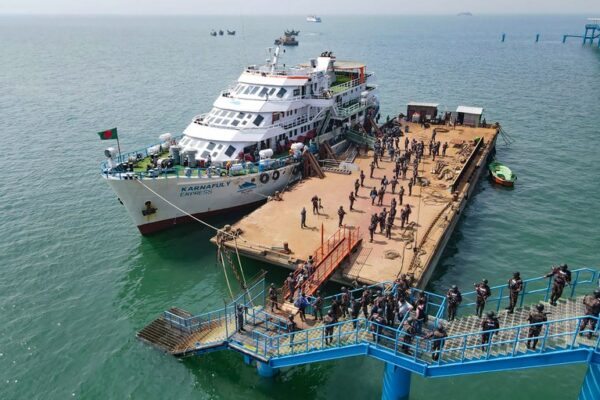
An ethnic armed organization in Myanmar announced it has now captured three major cities, according to a statement from the Three Brotherhood Alliance.  Rakhine state’s Arakan Army (AA) claims to have captured the last major junta territory in Mrauk-U, effectively taking control of the city. On Thursday, the group captured Police Battalion 31, following earlier captures of junta Battalions 377, 378, and 540. Both junta soldiers and policemen surrendered during the battle, said one Mrauk-U resident, asking to remain anonymous for security reasons. “The fighting in Mrauk-U is over. Locals are not allowed to enter the city at the moment. The No. 31 police battalion has also been captured by the AA,” he told RFA on Friday. “I heard they surrendered. But the AA attacked the military battalions. The junta troops surrendered after the battalion commander died.” However, it’s unclear how many police officers and soldiers surrendered and are in Arakan Army custody, he said, adding that the situation wasn’t stable yet. The Arakan Army currently occupies all 10 battalions formerly under control of the junta’s Kyauktaw-based No. 9 Military Operation Command Headquarters. The army also controls three townships across Rakhine: Mrauk-U, Kyauktaw, and Minbya. There is currently no military police or soldier presence in the townships, residents said, adding that most had surrendered, fled, been captured, or died during battles.   Radio Free Asia contacted the Arakan Army’s spokesperson Kaing Thu Kha and Rakhine’s junta spokesperson Hla Thein for more information on the battle, but neither responded by the time of publication. The regime has not released any information on conflicts in Rakhine state, including Thursday’s battle in Mrauk-U. The Three Brother Alliance, consisting of three ethnic armies, has made huge gains in Rakhine and Shan states since launching its campaign at the end of October, prompting thousands of junta troops to surrender or flee to neighboring countries. Bangladesh’s foreign minister Hasan Mahmud announced 340 members of Myanmar’s Border Guard Police fled to Bangladesh on Wednesday, adding they would be returned to Myanmar. Translated by RFA Burmese. Edited by Mike Firn.

Read More

Arakan Army captures two junta battalions in Rakhine state

The Arakan Army has captured two key military units in western Myanmar’s Rakhine state, giving it effective control of Minbya township and putting it in a position to challenge junta control of the state capital, according to an ethnic rebel alliance and sources in the region. On Tuesday morning, the Arakan Army, or AA, routed Light Infantry Battalions 379 and 541 – the two junta battalions that remained in Minbya after the ethnic rebels captured the 380th battalion on Jan. 28 – the Three Brotherhood Alliance, of which the AA is a member, said in a statement. “All junta soldiers surrendered to the AA,” said a resident who, like others interviewed for this report, spoke on condition of anonymity due to security concerns. It wasn’t clear how many soldiers this entailed, but the latest estimates by military experts suggest most battalions in the Burmese Army have around 200 men. The takeover means “the AA now controls Minbya,” he said. People are worried about possible airstrikes by the military and “don’t dare go outside.” ​​The advances are the latest in a series of victories for the Three Brotherhood Alliance, which launched a campaign in October on junta forces in the northern and western parts of the country. In northern Rakhine and neighboring Chin state, the AA seized arms and ammunition during several attacks on junta positions in January. On Jan. 16, nearly 300 junta troops surrendered to the AA after it took control of two major military junta encampments in Kyauktaw township. And on Jan. 24, the Three Brotherhood Alliance said in a statement that the AA had won full control of Pauktaw, a port city just 16 miles (25 kilometers) east of the Rakhine capital Sittwe. The takeovers follow the AA’s occupation of the entirety of western Chin’s Paletwa region – a mere 18 kilometers (11 miles) from the border with Bangladesh – in November, after it ended a ceasefire that had been in place with the junta since the military’s Feb. 1, 2021, coup d’etat. The Three Brotherhood Alliance claimed in a statement late on Tuesday that the AA has now captured all but two of the 10 light infantry battalions under the aegis of the No. 9 Military Operations Command in Kyauktaw. They include the 379th, 380th and 541th battalions in Minbya; the 374th, 376th and 539th in Kyauktaw; and 378th and 540th in Mrauk-U township – the last two of which were also taken on Tuesday morning, the alliance said. The two remaining light infantry battalions under the No. 9 Military Operations Command are 377th in Mrauk-U and 375th in Kyautaw, according to the Three Brotherhood Alliance, which added that the AA had also taken control of Artillery Battalion 377 in Kyauktaw. Central Rakhine offensive No. 9 Military Operations Command in central Rakhine’s Kyauktaw township is one of three junta command centers in the state, the other two being No. 5 in southern Rakhine’s Toungup township and No. 15 in northern Rakhine’s Buthidaung township. A Rakhine-based military observer told RFA that the AA is focusing on taking control of No. 9 Military Operations Command so that it can launch offensives from the region against battalions under No. 5 and No. 15. “If the AA can capture the [Operations Command] in Kyauktaw, then they will control the central area of the state,” the observer said. “This area is important for military offensives, so the AA could use it to launch strategic attacks on the military in other areas.” The observer noted that the junta is ceding battalions and townships despite its use of the air force, navy and ground troops, suggesting that it no longer has the capacity to counter AA offensives. Arakan Army forces display arms and equipment seized after the capture of the Myanmar army’s Light Infantry Battalion 540 in Minbya, Feb. 2, 2024. (AA Info Desk) He also suggested that if the AA is able to take complete control of Mrauk-U and Kyauktaw, it would likely push on to fight for control of the capital Sittwe and Ann township, where the junta’s Western Military Headquarters is located. “If the junta loses these towns, it can be assumed that the next phase of battles will occur in Sittwe … and Ann,” he said. “It may then spread further to Buthidaung and Rathedaung townships.” The AA has yet to issue any statements about the junta battalions they have captured, casualties suffered in the fighting, or the number of military troops who have surrendered. Rapid gains Another resident monitoring the military situation in Rakhine told RFA that the AA could assume control of as many as five townships in the north of the state by the end of February, before advancing south. “We earlier thought that the AA would proceed with attacks in southern Rakhine only in 2025, after first taking control of the north,” he said. “However, they have made significant gains in Ramree and Toungup townships in a short span of time. The junta soldiers have fled [across the borders] to Bangladesh and India, and more soldiers will surrender soon.” In its statement on Tuesday, the Three Brotherhood Alliance said it also expects that the AA will fully capture the Taung Pyo Let Wei and Taung Pyo Let Yar border outposts north of Rakhine’s Maungdaw township along the border with Bangladesh, days after launching attacks on the two areas. The alliance claimed that AA fighters had located the bodies of several members of the junta-affiliated Border Guard Forces killed in the fighting and confiscated a large cache of arms and ammunition, adding that “more than 200 junta soldiers fled the area to Bangladesh.” Meanwhile, fighting remains fierce in Ramree township, where the AA launched attacks on a military outpost in December, residents of the area said. More than 10,000 civilians have fled the clashes and at least 60 homes were destroyed in military airstrikes and artillery attacks, they said. The junta has yet to release any statements related to the military situation in Rakhine state….

Read More

Senate confirms Kurt Campbell as No. 2 US diplomat

The U.S. Senate on Tuesday confirmed President Joe Biden’s top Asia foreign policy aide, Kurt Campbell, as deputy secretary of state.  Campbell, previously the Indo-Pacific Affairs coordinator on the White House’s National Security Council, was confirmed in an overwhelming 92-5 vote to replace Wendy Sherman, who retired in July. During his confirmation hearing in December, Campbell said he would prioritize the strategic threat posed by China if confirmed, and coax the Senate to ratify the U.N. Convention on the Law of the Sea to help push back against Beijing’s expansive South China Sea claims. “Even our allies and partners say, ‘Hey, wait a second. You’re holding China to account to something you yourself haven’t signed up for?’” Campbell said at the time. “We’ve gotten very close in the past; I’d love to get that over the finish line. It’ll be challenging. I’m committed to it.” During the hearing, he was praised by Democrats and Republicans alike, with Sen. Bill Hagerty, a Republican from Tennessee who was the ambassador to Japan during the Trump administration, praising Campbell for his “most helpful, most insightful” guidance. In the Obama administration, Campbell was credited as being the architect of the president’s “pivot to Asia,” which aimed to reorient U.S. foreign policy away from the Middle East toward East Asia. In the current White House, he has been credited with reinvigorating “the Quad” dialogue between the United States, Australia, India and Japan. Campbell’s appointment shows the Biden administration’s increasing focus on China in its foreign policy. The longtime public servant was described as being possibly “the biggest China hawk of them all” by Politico upon his appointment to the White House in 2021. However, he also led the charge in organizing last year’s high-profile summit in San Francisco between U.S. President Joe Biden and his Chinese counterpart, Xi Jinping, which paved the way for the ongoing easing of diplomatic tensions between Washington and Beijing. Edited by Malcolm Foster

Read More

Myanmar resistance army deports nearly 60 Chinese nationals

An armed resistance group in northern Myanmar handed over nearly 60 Chinese nationals accused of online fraud and owning illegal weapons, according to the army’s statement on Monday night.  The Myanmar National Democratic Alliance Army, which occupies Kokang region on the country’s border with China, deported 59 Chinese citizens between Sunday and Monday, the army’s information department said.  One group of 36 people was arrested on Sunday and another 23 were captured on Monday. The army announced it had investigated the Dong Chein and Swan Hauw Chein neighborhoods of Shan state’s Laukkaing city during a crackdown on drug trafficking and illegal weapons. The Myanmar National Democratic Alliance Army’s Special Police Department seized mobile phones and weapons from the 36 suspected of online fraud, according to a statement from the Kokang Information Department. Monday’s suspects were arrested in relation to online money laundering. All those arrested were handed over to Chinese authorities at an internally displaced persons camp called BP-125 on the China-Myanmar border in Laukkaing, according to Kokang Police. The arrested Chinese nationals were transferred to Chinese authorities by Myanmar National Democratic Alliance Army forces on Feb. 5, 2024.  (The Kokang) Security forces have been conducting daily inspections in the city to combat drug and weapons smuggling, as well as online scam groups, a Laukkaing resident told RFA on Tuesday. “Now the forces conduct searches of homes and people every day,” he said. “People who work for a money scamming gang were arrested. The rest of the people were suspected [gang] leaders. They’ve also been arrested.” In Kokang region, local resistance forces have encouraged residents to report illegal online activities since Feb. 1. They are also registering foreigners residing in the area legally and allowing them to obtain temporary residence permits. Since the launch of Operation 1027 at the end of October, the Three Brotherhood Alliance, which includes the Myanmar National Democratic Alliance Army, has committed to fighting online fraud in Kokang region. In late January, China issued arrest warrants for 10 people believed to be gang leaders, including the former chairman of the Kokang regional junta administration group.  From September to December 2023, more than 44,000 Chinese nationals were deported by both the junta and the United Wa State Army.  More than 50,000 foreigners who entered Myanmar illegally from Oct. 5, 2023 to January 2024 have been sent back to their respective countries, regime leader Senior Gen. Min Aung Hlaing announced during a security and defense meeting on Jan. 31. Of those who were returned, 48,120 were Chinese nationals and 1,810 were from other countries, he added. Translated by RFA Burmese. Edited by Mike Firn.

Read More

Arakan rebels in Myanmar’s Rakhine seize outpost on Bangladesh border

The anti-junta Arakan Army seized an outpost manned by the military-affiliated Border Guard Force along western Myanmar’s border with Bangladesh on Sunday, confiscating arms and equipment, according to residents and an alliance of ethnic rebels. The attack marked the latest blow to Myanmar’s military in Rakhine state, where the ethnic Arakan Army, or AA, ended a ceasefire in November that had been in place since the junta assumed power in a Feb. 1, 2021, coup d’etat. The AA took control of the Taung Pyo Let Yar outpost in Maungdaw township on Sunday afternoon, taking prisoners and prompting nearly 60 fighters with the Border Guard Force, or BGF, to flee towards the border, the Three Brotherhood Alliance – of which the AA is a member – said in a statement. The statement by the alliance, which also includes the Ta’ang National Liberation Army, and the Myanmar National Democratic Alliance Army, said that AA fighters were killed in the battle, although it did not provide details of the number of casualties. It said the AA is also attacking a nearby BGF outpost called Taung Pyo Let Wae. The two outposts, located just north of the seat of Maungdaw township, are vital to the junta and each were manned by at least 100 soldiers, residents told RFA Burmese. Local people bring a man wounded by a gunshot to Médecins Sans Frontières (Doctors Without Borders) in Ukhia, Bangladesh, Feb. 4, 2024. (Tanbir Miraj/AFP) Photos and videos of the battle posted to social media appeared to show BGF troops running towards the Bangladesh border amid volleys of gunfire, as well as wounded BGF fighters. Media reports cited officials in Bangladesh as saying that at least 95 Myanmar border guards, some of whom are wounded, have fled across the border over the last few days. Reports said the Myanmar border guards had been provided shelter at Bangladesh Border Guard outposts and that at least 24 of them had been sent to hospitals in neighboring Cox’s Bazar district to be treated for their wounds. Fierce fighting continued in the area on Monday, residents said, and the military sent a jet fighter to carry out an airstrike. One resident of Maungdaw who declined to be named due to security concerns said the AA began attacking the outposts on Saturday, forcing villagers to flee to the border for safety. “Some local residents fled to Bangladesh, while others dug bunkers and took shelter,” he said. “Fighting is ongoing … so [people] don’t dare stay there. A plane came and attacked two or three times.” More than 1,000 people live in the Taung Pyo area, including residents of nearby Thin Baw Hla and Mee Taik villages who were displaced by fighting between the military and anti-junta forces in 2022. The junta has not released any information about the attacks on the BGF outposts in Maungdaw or troops fleeing to Bangladesh. Calls by RFA to Hla Thein, the junta’s attorney general for Rakhine state, went unanswered Monday. Fighting spills across border At least two people in Bangladesh – a Bangladeshi woman and a Rohingya refugee – were killed on Monday when a mortar shell fired from Rakhine exploded on the woman’s house in Bandarban district near where the fighting was happening, media reports said, citing Bangladeshi government officials. Police identified the two victims who died in the mortar explosion as Hosne Ara, 50, a local resident, and Nobi Hossain, 65, a Rohingya laborer who was working at her house. “Firing and shelling had intensified since the morning. Suddenly, a mortar shell landed in my sister’s house and exploded. She died,” Shah Alam, Hosne Ara’s brother, told BenarNews, an RFA-affiliated news outlet, on Monday. A Bangladeshi boy displays a bullet, allegedly shot from Myanmar during fighting between Myanmar security forces and Arakan Army, in Ghumdhum, Bangladesh, on Feb. 5, 2024. (Shafiqur Rahman/AP) Iman Hossain, the son of the dead Rohingya laborer, said his family had received the news that his father was killed in the explosion. “We came to Bangladesh from Myanmar to save our lives. But my father died in a Myanmar mortar shell [explosion]. What else can be more painful than this?” Nobi Hossain told BenarNews. Some 1 million ethnic Rohingya refugees have been living in Bangladesh since 2017, when they were driven out of Myanmar by a military clearance operation. ‘AA will press further’ Another resident of Rakhine’s Maungdaw township, who also spoke on condition of anonymity citing fear of reprisal, said only 10 BGF battalions and three BGF tactical forces remain there and in nearby Buthidaung township. “I believe the AA will press further,” he said. “If the outposts of Taung Pyo are captured, I think that [cross-border] trade will resume in Rakhine state. Also, I think, the rest of the outposts in the area will be attacked, too.” The resident said the AA is likely targeting outposts along the border to reestablish trade routes with Bangladesh, which had been blocked by the military. “When the junta blocked the roads to Rakhine, all goods became scarce, so the AA feels they have the responsibility to reopen them,” he said. “Therefore, it can be assumed that the main reason for the attacks in Maungdaw are to reestablish trade with Bangladesh.” Smoke rises from a Myanmar Border Police post following fighting with Arakan Army forces near Ghumdhum, Bangladesh, Feb. 5, 2024. (Shafiqur Rahman/AP) The AA announced in December that it had captured more than 60 BGF outposts since November, when fighting resumed in Maungdaw township. The group claimed that junta troops retreated from most of the outposts because they were “afraid of being attacked.” The AA has launched offensives against junta bases in Buthidaung, Maungdaw, Mrauk-U, Minbya, Kyauktaw, Rathedaung, Ponnagyun and Ramree townships. Rohingya refugees Meanwhile, in Rakhine’s Taung Nyo township, where clashes between the military and the AA are now raging, the junta has set up temporary camps to receive some of the Rohingya refugees who have been living in Bangladesh. Khin Maung, an aid worker who is assisting…

Read More