
Category: East Asia
US officials: China’s economic woes may slow military rise
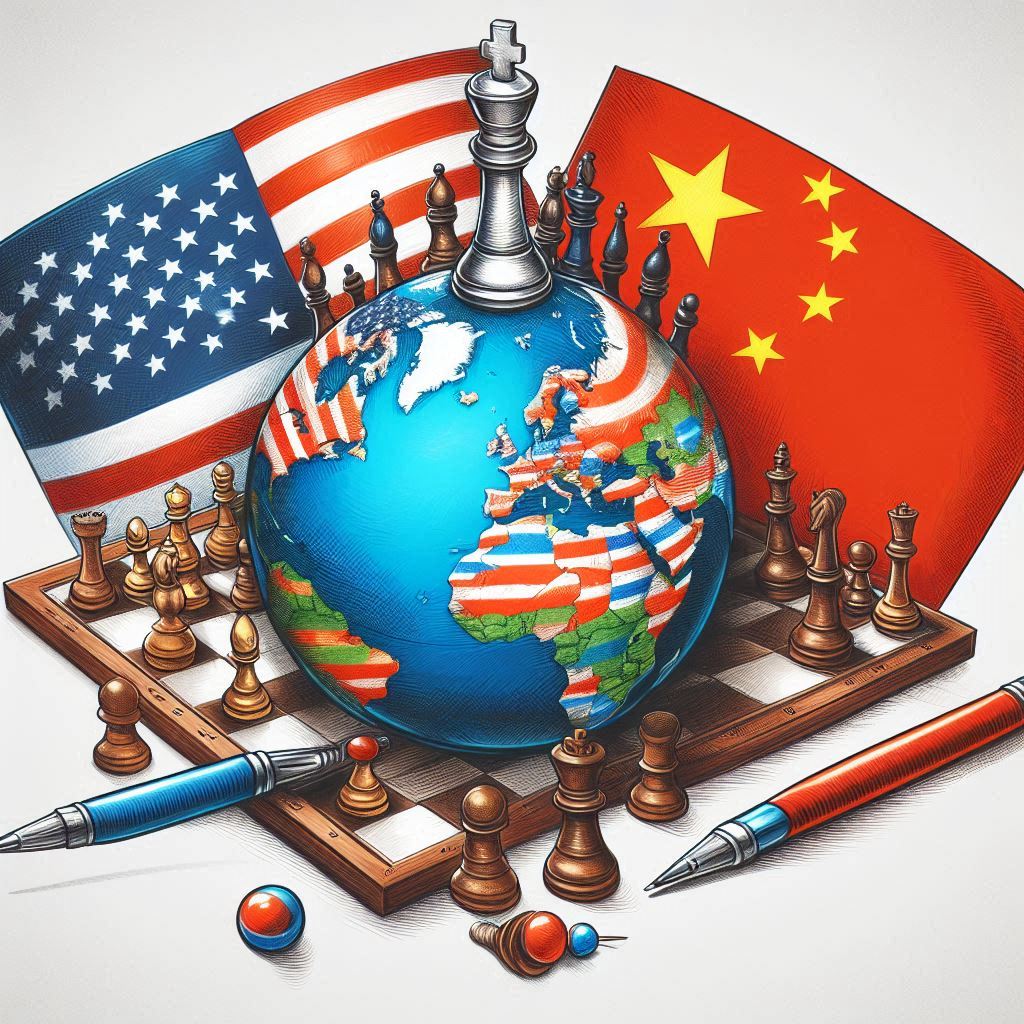
China’s military may be more aggressive than ever before, but economic woes could force some tough spending decisions that slow its continued rise, two U.S. defense officials said Monday. Speaking at the Atlantic Council about the Pentagon’s latest China Military Power Report, an annual evaluation of Beijing’s military power mandated by Congress, the officials said China’s economic troubles coincided with higher costs of military modernization. “They are getting into areas that are more expensive and more technologically complex,” said Michael Chase, the deputy assistant secretary of defense for China, Taiwan and Mongolia. Chase said Beijing relied more on the People’s Liberation Army “as an instrument of advancing his foreign policy objectives” than ever before, and that an economic slowdown would not likely change that. But U.S. officials, he said, were watching “whether a slowing economy imposes some trade offs between different projects that are important components of PLA modernization.” He listed the building of aircraft carriers, nuclear weapons and foreign bases as big-ticket items. “We’re probably beginning to see some of that evidence, and I think we’ll see more of it over time,” he said. “They’re becoming increasingly technologically sophisticated and, therefore, increasingly pricey.” Nuclear threat Released last week, the China Military Power Report says Beijing last year continued to build its nuclear weapons arsenal and may even be considering building missiles capable of reaching the United States. It also reiterated last year’s report that said China is the U.S. military’s “top pacing challenge” and the “the only competitor with the intent and increasingly the capability to reshape the international order.” Ely Ratner, the assistant secretary of defense for Indo-Pacific security, told the Atlantic Council on Monday that despite that assessment, he agreed that China’s economic issues had thrown a spanner in the works – both for the military and for its regular diplomacy. “We may be seeing some of those trade-offs already,” Ratner said. “We have seen for instance, over the last couple of years, Belt and Road investments by [China] dropping dramatically around the world.” The Belt and Road Initiative was “one of the top priorities for the leadership in Beijing” when it was launched 10 years ago, he said, but “because of their economic slowdown, you see them less able and less willing to be supporting those kinds of investments overseas.” “So even things that are high priorities are getting cut in the face of this economic slowdown, and the PLA will be no different over time.”
Will Hong Kong’s star shine again?
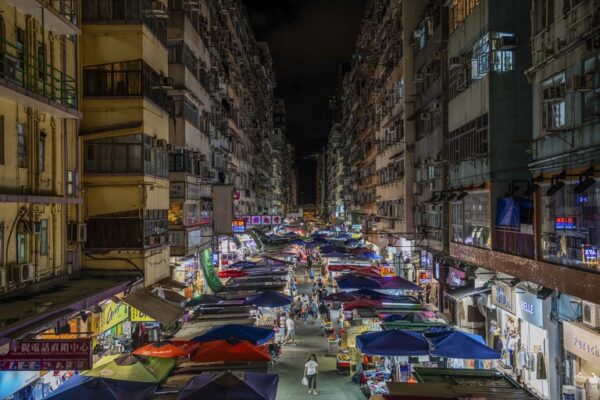
A typical Friday evening in Mong Kok district comes to a hush before midnight. It is the new normal for a district once fused with the buzz and raw energy that was the essence of Hong Kong. Yet, it is the old vibe that Hong Kong officials are aspiring to recover. In mid-September, the government launched “Night Vibes Hong Kong,” involving night markets, food stalls, movie screenings and live music events over weekends. Over the past 12 months, it has rolled out campaigns including a six-month program to bring tourists back and also gone on global roadshows to win back investors. The effectiveness of the efforts remains elusive, despite Chief Executive John Lee’s vow to a year ago in his maiden policy speech to go all out to draw back talent and businesses to a city battered by a stringent zero-COVID policy and Beijing’s hardened grip. Tell the world the good stories of Hong Kong was the mantra, he quipped. As Lee prepares to make his second policy address this week, analysts say the good stories are few, and the issues that have eroded Hong Kong’s unique competitiveness continue to chip away. The city’s international financial center and economic hub positions are crumbling under the weight of Beijing’s tightened grip of the special administrative region where the “one country, two systems” principle is taking a new form under Chinese President Xi Jinping. “Hong Kong’s major indicators – freedom, rule of law, international financial center status, international standards of practices, property market, stock market, government’s financial reserves – are all on the decline, and it is a Hong Kong government problem,” points out Lew Mon-hung, a businessman and former Chinese People’s Political Consultative Conference committee member. ‘Promoting Marxism’ To be exact, it’s a problem stemming from Beijing, Lew says, because Hong Kong’s progress and fate are intricately tied to China’s continuous reforms as they have been the past four decades. That path, however, has been stymied by the shift in political climate in the mainland, and the Chinese National People’s Congress’s passing of the National Security Law in June 2020 – bypassing Hong Kong’s legislature – to quell months of anti-government protests. “In China now, they are promoting Marxism – having gotten into the philosophy of struggle, wolf warrior diplomacy,” which Lew says comes at the expense of economic and thought regressions. People walk through an outdoor market in Hong Kong’s Mong Kok area on Aug. 20, 2022. Credit: Bertha Wang/AFP These weighed on the “one country, two systems,” China’s constitutional principle to govern Hong Kong under a mini-constitution called the Basic Law, where the city is allowed freedom of assembly and speech, an independent judiciary and some democratic rights – except in the areas of diplomacy and defense. “Beijing reckons that Hong Kong only needs to play an economic role after its return to Chinese rule,” says Hong Kong current affairs commentator Johnny Lau Yui-siu. “But Hong Kong people’s view of the world is different from mainland China’s political awareness and consciousness. And Beijing wants Hong Kong to align.” Hong Kongers, he says, are outward-looking, used to international practices, free flow of information and speech, unlike their Chinese counterparts who are restricted by the boundaries that the Chinese Communist Party had set. As China stalls in its convergence towards international standards, Hong Kong became the by-product of that stagnation, Lau says. The numbers add up The numbers tell the same story. China’s exports fell 14.3% and 8.8% in July and August respectively, while Hong Kong’s fell 9.1% and 3.7%. The benchmark stock index has lost about 12% since the beginning of 2023 and Hong Kong’s property prices are forecast to fall 5% for the year, according to a commercial real estate services firm Cushman & Wakefield. The uncertainties that keep foreign investors guessing about where the political winds blow in China also reverberate in Hong Kong. China’s crackdown on industries such as the technology sector, as well as its more recent position to let an indebted property industry go into a free fall, have done little to assure investors. A pedestrian passes the Hong Kong Stock Exchange electronic screen in Hong Kong on July 21, 2023. Credit: Louise Delmotte/AP The latest annual survey by the American Chamber of Commerce in Shanghai published in September showed that the percentage of U.S. firms optimistic about their outlook on China over the next five years slid to 52%, the lowest level since the annual report was introduced in 1999. In Hong Kong, a member sentiment survey by the AmCham in Hong Kong released in March found that American businesses’ three biggest challenges are U.S.-China tensions, a weakening global economy and the overseas perception of Hong Kong, a factor that was previously absent. “If the HKSAR Govt can reassure international investors that the rule of law will prevail, and the NSL will not put their staff in jeopardy, it will go a long way. But it is at the moment delivering neither,” says Steve Tsang, director of the SOAS China Institute at SOAS University of London. Rebuilding reputation The chamber has urged Hong Kong chief Lee to provide “straightforward interpretations and applications” of the law in his upcoming policy speech. In its written submission in September to the public consultation for the policy address, the chamber wants Lee to reassure businesses that the law will be applied narrowly and be consistent with the principles of an independent judiciary. The ramifications of the national security law, which criminalizes any act of secession, subversion, terrorism and collusion with foreign or external forces, have never ceased since it was implemented. How the Hong Kong government has used the law to change the political and civic institutions in the city has alarmed a wide spectrum of the society. Opposition parties and media outlets were shuttered, while pro-democratic figures have either been arrested or have fled the city. An earlier post-COVID reopening by longtime rival Singapore didn’t help. Toeing Beijing’s stringent zero-COVID policy was a death knell for…
51 nations blast China over violating Uyghurs’ rights
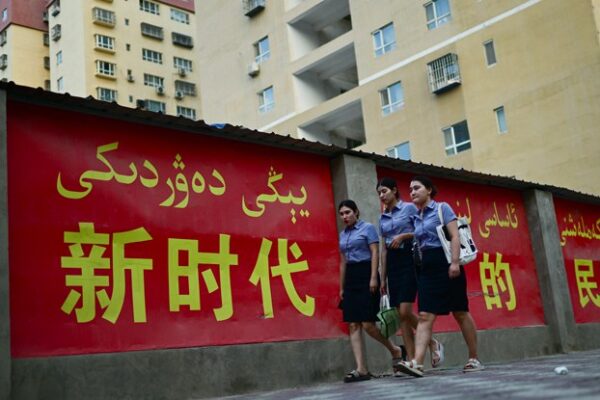
In a joint statement, 51 countries, including the United States, expressed deep concern to the United Nations on Wednesday over Chinese human rights violations of Uyghurs in its far-western Xinjiang region. The move comes after China was elected to the U.N. Human Rights Council for the 2024-2026 term – despite its poor track record in protecting rights. “Members of Uyghur and other predominantly Muslim minorities in Xinjiang continue to suffer serious violations of their human rights by the authorities of the People’s Republic of China,” said the statement, which was delivered by James Kariuki, Britain’s U.N. ambassador. It urged China to respond to an August 2022 report issued by the U.N. Office of the High Commissioner for Human Rights, or OHCHR, which concluded China’s mass detentions of Uyghurs and other predominantly Muslim minorities on a large scale in Xinjiang “may constitute international crimes, in particular crimes against humanity.” The report found that “serious human rights violations” have been committed in the Xinjiang Uyghur Autonomous Region amid the Chinese government’s claims of countering terrorism and extremism. The assessment cited evidence of invasive surveillance on the basis of religion and ethnicity, restrictions on cultural and religious practices, torture and ill-treatment of detainees, forced abortion and sterilization of Muslim women, enforced disappearances, family separations, and forced labor, the statement noted. “Over a year has passed since that assessment was released and yet China has not engaged in any constructive discussion of these findings,” said the statement issued at the U.N.’s Third Committee, which meets annually in early October to deal with human rights, humanitarian affairs and social matters. In its recommendations, the OHCHR had called on the Chinese government to release detainees from camps and other detention facilities, issue details about the location of Uyghurs in Xinjiang who have been out of touch with relatives abroad, allow travel so families can be reunited, and investigate allegations of human rights abuses. ‘Strong remedial action’ At the most recent session of the U.N’s Human Rights Council in September, Volker Türk, the current high commissioner for human rights, called on China to follow the recommendations of the assessment and take “strong remedial action.” Maya Wang, associate director of the Asia division at Human Rights Watch, said maintaining pressure on China is part of a continued effort to hold the country accountable for its actions in Xinjiang. “Suffice it to say that moving a government as abusive and powerful as China’s takes a lot of effort and time, and that pressing the U.N. to keep prioritizing human rights in its interactions with China is part of this long and hard effort,” she told Radio Free Asia. Women walk past a propaganda slogan promoting ethnic unity in ‘the new era,’ in both Chinese and Uyghur languages, in Yarkand, northwestern China’s Xinjiang region, July 18, 2023. Credit: Pedro Paro/AFP The New York-based right group called on U.N. Secretary-General António Guterres on Monday to press Chinese President Xi Jinping to end crimes against humanity in Xinjiang and other serious rights abuses in China, during a visit to Beijing to attend the third Belt and Road Forum on Oct. 17-18. “Since becoming secretary-general in 2017, Guterres has shown reluctance to publicly criticize the Chinese government for its severe and worsening repression,” HRW said in a statement. Growing number Dolkun Isa, president of the World Uyghur Congress, welcomed the joint U.N. statement, noting that a few African and South American countries have signed this year’s statement condemning China’s atrocities against Uyghurs. “In 2019, there were only 20 countries that signed on to the joint statement,” he said. “Despite China’s efforts to spread disinformation to cover up it genocide against Uyghurs by increasing tourism, inviting friendly diplomats and journalists to the region, the fact that there are more countries signed on to this joint statement this time proves the complete failure of China’s disinformation campaign,” he said. Luke de Pulford, executive director of Inter-parliamentary Alliance on China, said the latest statement should not be confused with action. “We shouldn’t be fooled,” he told RFA. “It’s good that the U.K. should be applauded for taking some symbolic action, but these statements do not achieve accountability. It shouldn’t be confused and conflated with accountability.” Xinjiang regional expert Adrian Zenz agreed that “writing a letter was good, but it cost you nothing,” he tweeted on X, formerly known as Twitter. “You are not paying any actual price for your values,” he wrote. “Actions speak louder than words. Actions could include: Effective forced labor ban. Legal atrocity determination. Sanctioning higher level officials.” Translated by RFA Uyghur. Edited by Roseanne Gerin and Malcolm Foster.
Police arrest former opposition councilor amid call to boycott poll
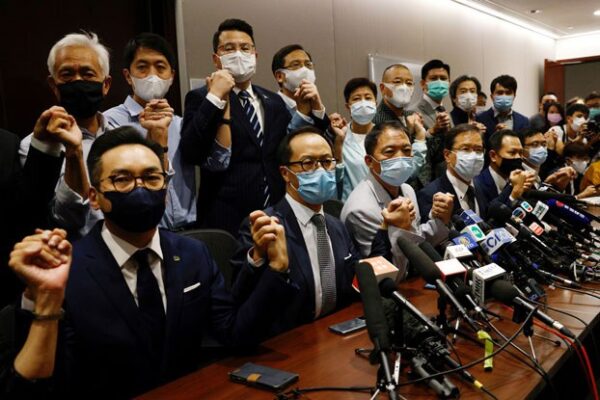
Hong Kong police have arrested a former pro-democracy member of the city’s District Council and prison welfare activist — amid calls for a boycott of forthcoming district elections, which are open to “patriots only.” Derek Chu, a 46-year-old former directly elected councilor who resigned in 2021 before being forced to take an oath of loyalty to the Hong Kong and Chinese governments, was arrested in Shatin on Tuesday on suspicion of breaching the city’s mandatory pension law, police told the paper. His arrest comes as the government moves ahead with an “election” process that will slash the number of directly elected seats on the District Council by 80%, while ensuring that almost nobody in the city’s once-vibrant opposition camp will stand for election again, the result of ongoing arrests of pro-democracy figures and rule changes requiring political vetting. “At about 12 noon, Derek Chu was taken to an office at Manulife Plaza in Kwun Tong by the police for evidence collection,” the report said. “He was later taken to a food store in W Plaza in Mong Kok and Fuk Keung Industrial Building in Tai Kok Tsui for investigation.” Those locations are linked to Chu’s “Migratory Bird” platform to support prisoners, which raised money via the As One online shopping platform – part of the “yellow economic circle of pro-democracy businesses” – to support his prison work. He is currently being held by the Sham Shui Po Crime Division pending further investigation, after his home was also searched and documents confiscated, the paper reported. Pan-democratic legislators announce their resignation from Hong Kong’s Legislative Council in Hong Kong, Nov. 11, 2020. Credit: Tyrone Siu/Reuters Chu was a member of the last directly elected District Council, which saw a landslide victory for pro-democracy candidates amid record turnout that was widely seen as a ringing public endorsement of the 2019 protest movement. He resigned his seat along with many like-minded colleagues amid an ongoing crackdown on dissent under a national security law imposed on the city by Beijing from July 2020. ‘Patriots’ only The government later changed the Legislative Council electoral rules to ensure only “patriots” loyal to Beijing could stand as candidates or hold any kind of public office, prompting record-low turnout of 30.2% in Legislative Council elections in December 2021 compared with more than 70% in the last District Council poll. Officials then rewrote the District Council poll rules in May, citing a “disastrous” result in the 2019 election, sparking calls from overseas activists for a boycott of the forthcoming poll on Dec. 10. “Abandon illusions, boycott this fake election,” read an Oct. 16 statement on Facebook signed by dozens of former pro-democracy councilors. “We, the last district councilors to be elected by the citizens of Hong Kong, solemnly declare that we will not recognize these so-called elections run by the Communist regime of Hong Kong, and call on all citizens of Hong Kong to boycott the election and the councilors it produces,” the statement said. It said candidates wishing to take part have to run a complex gamut of vetting from support for nomination to a slew of official recommendation letters to political background checks, “all of which runs counter to the democratic spirit,” warning that anyone who makes it to the list of candidates is “purely a permitted cheerleader for the regime.” It said the government also looks set to use the “election” as an opportunity to engage in “the political brainwashing of minors.” “This so-called election will actually take place under military totalitarian rule, and can have no fairness or legitimacy,” the councilors wrote. Australia-based former pro-democracy lawmaker Ted Hui, who signed the statement, said the forthcoming poll is a “huge step backwards for democracy” in Hong Kong. “Most of the seats will be controlled by the government,” Hui said. “We believe that it would be best for citizens to totally refuse to take part, to boycott [the election].” ‘Huge step backwards’ Some parties in the democratic camp have said they will field candidates, though it remains to be seen if their bid for candidacy will be accepted. The Democratic Party has said it hopes to field six candidates, and the Association of Democracy and People’s Livelihood wants to field two. Candidates celebrate after winning in the Legislative Council election in Hong Kong, December Dec. 20, 2021. The rules for the election were changed to ensure only ‘patriots’ loyal to Beijing could stand as candidates or hold any kind of public office. Credit: Lam Yik/Reuters But Hui said this could send a dangerous signal about complicity with the authorities, who have told opposition parties to give up any hope of “Western-style democracy” in the city. “One or two [pro-democracy candidates] might pass the test and get nominated, but this will do great harm, because it shows the people of Hong Kong that they agree with this huge step backwards for democracy,” he said. Former district councilor Sam Yip, who also signed the statement, said it was naive of pro-democracy parties to imagine it was worth contesting such elections. “It helps to whitewash these elections, which are illegal, unfair and inconsistent with the whole concept of democracy,” Yip said. “Their actions are actually ruining democracy.” ‘A screening process’ Secretary for Home and Youth Affairs Alice Mak, asked if the government is expecting turnout to fall in this year’s poll, said it wasn’t the most important thing. “We should not just look at the turnout in District Council elections, [which can be] affected by many factors, such as the weather, including whether it rains that day, whether there is a typhoon in the summer, and whether the weather will be too cold,” Mak said. “The most important thing is how to find patriots who sincerely serve the community and citizens through the electoral system,” she said. Former Hong Kong Island Eastern District councilor Derek Ngai, who also resigned to avoid taking his oath, said democrats faced with the oath of loyalty requirement feared being required to pay back two…

‘Some of them will be sent to … camps,’ some ‘may be executed’
North Koreans who have escaped to China need help to avoid being sent back against their will, and pressure on Beijing from South Korea alone is not enough to stop it, a former North Korean diplomat told Radio Free Asia. “It is important to send a strong message of international unity to prevent the Chinese authorities from forcibly repatriating [them],” said Thae Yong-ho, who is now a member of the South Korean parliament. “It is difficult to stop it with only the demands of the South Korean government.” The remarks come a week after Beijing secretly repatriated more than 500 North Koreans on Oct. 9, the day after the conclusion of the Asian Games in Hangzhou, China. Thae, who in 2016 defected with his family to the South while serving as Pyongyang’s deputy ambassador to the United Kingdom, is visiting Washington D.C. to inspect the South Korean Embassy in his role as a member of the national assembly representing Seoul’s wealthy Gangnam district. He is scheduled to meet with U.S. State Department officials and members of Congress to discuss the forced repatriation issue. A bus carrying escapees from North Korea crosses the bridge to North Korea’s Sinuiju from China’s Dandong on Aug. 29, 2023. Credit: Kim Ji Eun/RFA Thae said that Seoul had been repeatedly trying to raise the issue with Beijing. “Foreign Minister Park Jin and Unification Minister Kim Young-ho have both publicly requested that China stop repatriating North Koreans, ” said Thae. “Also, during the Hangzhou Asian Games, Prime Minister Han Duck-soo visited China and met with President Xi Jinping, demanding that North Koreans not be repatriated.” Even with the public requests and off-the-record pleas, China continues to justify forced repatriation by claiming that North Korean escapees in China are “illegal displaced persons” rather than refugees. More than words The distinction is not simply an issue of semantics. If escapees are not refugees, then China argues it is not bound to protect them under the U.N. Refugee Convention and as illegal immigrants, the principle of non-refoulement does not apply to them. Beijing maintains that it must repatriate North Koreans who fled the country because it is bound by two agreements it has with Pyongyang, the 1960 PRC-DPRK Escaped Criminals Reciprocal Extradition Treaty and the 1986 Mutual Cooperation Protocol for the Work of Maintaining National Security and Social Order and the Border Areas. If they are made to return to North Korea, many escapees will face a grim fate, Thae said. “Some of them will be sent to concentration camps for [at least] several months of detention and forced labor, and if they are found to have tried to escape North Korea and go to South Korea, they may be executed,” Thae said. Thae recalled his own fears of forced repatriation at the time when he decided to defect. “At the time, I was also very worried that some unexpected variable might arise in the process of defecting from North Korea,” he said. “People still detained in detention facilities in China are probably very anxious and worried that they will be forcibly repatriated to North Korea. During his U.S. trip, Thae has plans to meet with American officials to request that they join their voices in opposition against forced repatriation of North Koreans in China. “We plan to deliver a letter to President Biden appealing to the U.S. government to speak up [on this issue],” said Thae. “We plan to deliver it to the lawmakers [Monday]. There should be a campaign nationwide and globally calling for an end to forced repatriations. Thae attended an event hosted by human rights groups in front of the White House on Monday afternoon to raise awareness about the issue. New US Envoy On Friday, Washington swore in Julie Turner as its special envoy for North Korea Human Rights, ending a six-year vacancy for the position. She arrived in Seoul on Monday for a three-day visit. After meeting with Foreign Minister Park, the two sides promised to work together to improve North Korean human rights. Addressing a forum of rights activists and North Korean escapees in South Korea, Turner acknowledged that the United States often brings up the issue of forced repatriations in discussions with Beijing. “So I again hope that the PRC will not [repatriate North Koreans] and we will continue to remind them of their international obligations, but I can’t say that I believe that they will not,” she said. Julie Turner, the United States’ new special envoy for North Korea Human Rights, arrived in Seoul on Monday for a three-day visit. Credit: U.S. Department of State Thae said that he was regretful that he and Turner missed each other as his trip to the U.S. coincided with her trip to Korea. “We plan to meet at an early date and discuss specific ways to help the U.S. speak out more for North Korean human rights issues in the international community and what strategies and strategies can be used to solve the North Korean human rights issue and stop forced repatriation,” he said. Translated by Eugene Whong. Edited by Eugene Whong and Malcolm Foster.
No easy choices in Taiwan’s presidential polls
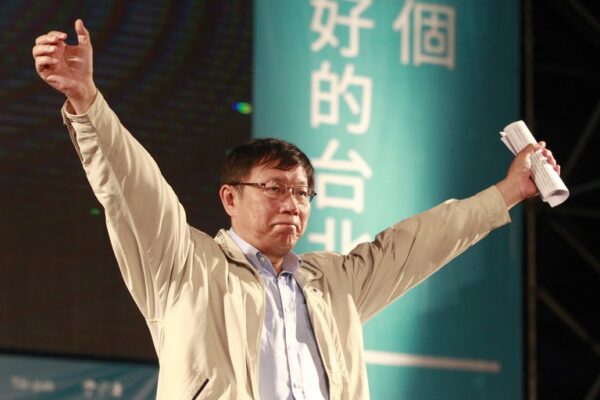
Updated Oct. 16, 2023, 06:30 a.m. ET. As Taiwan approaches its presidential elections in January, the spotlight falls on candidates leaning towards establishing agreements with China and those favoring the continuation of the Democratic Progressive Party’s (DPP) leadership. But amid rising concerns over stagnant wages and affordable housing, no opposition figure currently poses a significant challenge to the DPP’s Lai Ching-te, the incumbent vice president. Polls suggest that if the DPP secures a victory, it might not solely be due to their policies but rather because of the divided opposition. Opposition leaders, former Taipei mayor Ko Wen-je of the Taiwan People’s Party (TPP) and Hou Yu-ih of the Kuomintang (KMT), have been reportedly under pressure to potentially unify their bid for the presidency. Last Saturday, efforts towards this collaboration were visible when the campaign managers of both leaders met in Taipei, exploring the formation of a “blue-white alliance,” reflecting the party colors of KMT (blue) and TPP (white). While Hou’s team proposed an open primary to determine the leading presidential candidate between the two parties, Ko’s side suggested determining based on opinion poll averages. The KMT wants – for the first time – to deploy an open primary system for electing the leadership in the January election, with candidates receiving direct votes at polling stations across the island, which would play to the KMT’s long-standing political presence in Taiwan since 1949. This presence began when the party, also recognized as the Nationalists, relocated to Taiwan following their defeat by the Chinese Communist Party. If a vote of some kind were to happen, which most observers consider unlikely, the outcome would determine the order of a joint ticket: whether it’s Hou-Ko or Ko-Hou, indicating the roles of president and vice president, respectively. Taipei mayoral candidate Ko Wen-je celebrates winning the local elections at the campaign headquarters in Taipei November 29, 2014. Credit: Reuters However, Ko has dismissed the open primary proposal from KMT. “Ko thinks the KMT offer was just an attempt to show off their local organizational strength. It wasn’t a serious offer,” says Taiwan-based Californian lawyer Michael Fahey. Separately, Taiwan watcher and pollster Courtney Donovan Smith noted the challenges faced by the relatively new TPP. “Ko and the four-year-old TPP are struggling to establish themselves as a distinct party, and no doubt Ko is mindful of the experience of a similar party,” said Smith. “The People’s First Party, which accepted the vice-presidential slot on a unity ticket in the 2004 election but failed to effectively differentiate themselves from the KMT and have slid into irrelevance since.” There are other formidable obstacles to a joint ticket. Both Hou, a former police officer and current mayor of New Taipei City, and Ke, a trained doctor popular for his straightforwardness, are not keen on taking a secondary role to the other. “A ‘Ko-Hou’ ticket is impossible, and the chances of a ‘Hou-Ko’ ticket, I believe, are less than 10% likely,” Liao Da-chi, a professor at National Sun Yat-sen University’s Institute of Political Science, told Radio Free Asia. “The KMT, with its 14 mayors and 38 legislators, cannot possibly play second fiddle. Moreover, Hou Yu-ih has only been re-elected as the mayor of New Taipei City for less than a year. It would be a significant risk to give that up for a vice-presidential position. What would be the point?” Local issues count The recent Taiwan News “weighted poll of polls” shows Ko is ahead of Hou by about 5%. Lai from the DPP has an average support of 32%-35%, with Ko at 18%-20% and Hou at 15%-18%. Terry Gou, billionaire and Foxconn founder, polls at around 10%, but he suggests having additional “hidden supporters.” Observers believe Gou may seek a pivotal role after the election, especially as local issues gain prominence in Taiwanese politics. Foxconn founder Terry Gou and his running mate Tammy Lai speak to the press in front of his signature campaign office in New Taipei City, Taiwan, September 20, 2023. Credit: Reuters Many Taiwan elections in the past have turned on the China issue, said Roy Ngerng, a Taiwanese labor and wages activist who described the January elections as “different.” “While the two major parties still draw voters based on using China as the key campaign agenda, there has emerged a group where other issues take center stage and these seem to be around livelihood issues like Taiwan’s high housing prices and stagnant wages,” said Ngerng. There are significant numbers of younger voters, argues Ngerng, who “are eager for Taiwan’s elections to be normalized around local livelihood concerns … due to their distrust of KMT which is not seen as committed to Taiwan’s statehood, and due to the belief that the DPP has broken its promise of improving the livelihoods of Taiwanese over the last two terms.” Ngerng added: “These voters are gravitating to the … TPP, in the hope that Ko Wen-je might refocus, addressing the stagnant economic situation in Taiwan.” While this does not mean that Ko is likely to win the presidential election – particularly given the unlikelihood of being able to join forces with the KMT – it does signal that the DPP, if they do win, will not do so on a strong wave of support. Ngerng said he thinks there’s “disappointment arising from the fact that Tsai [Ing-wen] was elected on her promise to the youths of improving livelihoods but has failed to do so … and Ko has been adept at positioning his campaign to reflect their concerns.” “Eventually, the DPP cannot be using democracy and human rights as a rallying cry, without meaningfully enhancing the labor rights and livelihoods of Taiwan’s workers,” said Ngern. Edited by Mike Firn and Taejun Kang. Updated to clarify the process of the open primary and to correct the names of Hou Yu-ih and Roy Ngerng.

Southeast Asia’s mounting food insecurity
According to the United Nations Food and Agriculture Organization (FAO), global rice prices in August were 31% higher than the previous year, and at a 15-year high, which has left the inflation-sensitive governments of Southeast Asia scrambling for answers. Net rice importers such as populous Indonesia and the Philippines and net exporters like Thailand alike are wrestling with a surge in prices of the staple, driven by five underlying weather and international factors. First, states are confronted by declining agricultural output due to an acute El Niño effect this year, which has caused hotter than average temperatures across Southeast Asia, and a decrease in overall rainfall. In parts of the region, this also resulted in above average haze pollution caused by wildfires, in addition to annual haze generated by crop burning. Across the board, agricultural yields have been down, but rice, which is dependent on monsoon rains, has been particularly vulnerable in most countries. A worker rakes wheat in a granary on a private farm in Zhurivka, Kyiv region, Ukraine, Aug. 10, 2023. Credit: Efrem Lukatsky/AP Second, the ongoing war in Ukraine and Russia’s unilateral withdrawal from the July 2022 Black Sea Grain Initiative has created dislocations in global supplies of wheat, cereals, and cooking oil. Before Russia pulled out, 32 million tons of grain were exported, mostly to the developing world. Although successful Ukrainian attacks on Russia’s Black Sea fleet have allowed some ships to continue exports, without a firm agreement in place, this could be temporary. Southeast Asian states are all highly dependent on wheat imports and Ukraine is the 7th largest producer, with an annual production of 33 million tons. Its exports comprise 10% of global supplies. Third, as a result of El Niño-caused heat wave and food shortages, in August 2023, India announced curbs on rice exports. India is the largest exporter of rice in the world, accounting for 40% of global supply. India’s exports account for 11% of the global rice supply. Fourth, for the lower Mekong River states, Cambodia and Vietnam, rainfall shortfalls due to El Niño have been exacerbated by China’s retention of record amounts of water at their cascade of 11 upriver dams, plunging water levels in the river to an all time low. Fifth, declines in rice yields in the net-exporting states, such as Thailand and Vietnam, have led to higher prices and hoarding. Net importers The most immediate impact will be felt by the net importers: Indonesia, the Philippines and Malaysia. Between January and August, Indonesia imported 1.6 million tons of rice – more than triple the 429,000 million tons imported in 2022. Rice prices are now 16% higher year-on-year, a rise that prompted President Joko Widodo last month to order the release of stocks from BULOG, the strategic rice reserve, to try to keep a lid on inflation. In April, Jakarta contracted to import a total of 2.3 million metric tons of rice to shore up national stocks. In the Philippines, estimates that rice production would fall by 1.8% in 2023 caused rice prices to hit a record high in September. Workers unload rice imported from Vietnam by the Indonesian Logistics Bureau at the port of Malahayati, in Indonesia’s Aceh province, Oct. 11, 2023. Credit: Chaideer Mahyuddin/AFP Philippine President Ferdinand Marcos Jr., who is concurrently the Secretary of Agriculture, imposed price caps last month of 41 and 45 pesos (US$0.72 and US$0.79) per kilogram (2.2 pounds) for average and well-milled rice, respectively. As a candidate, Marcos had pledged to bring the price of rice down to 20 pesos per kilogram. The Philippines imported a record 3.9 million metric tons in 2022-23. In September, Marcos signed a five-year purchase agreement with Vietnam, which supplied 90% of Philippine imports in 2022. In early October, Marcos lifted the rice cap, promising a slew of other measures to control prices, which remain high. Domestic rice production in Malaysia only satisfies 70% of demand, and yields declined in 2023 due to excessive heat. The government has imposed a price cap of 26 ringgit (US#5.50) per 10 kilograms (22 pounds) for domestically produced rice. Nonetheless, prices have been surging and Prime Minister Anwar Ibrahim has threatened to take legal action against hoarders. In September 2023, the government announced a 36% increase in rice imports. This month, the government announced that restaurants could purchase imported rice RM160 ($34) per kilogram, half the normal wholesale price. Anwar, who is also the country’s finance minister, has announced some 400 million ringgit ($84.72 million) in subsidies to purchase imported rice for government use, while the Minister of Agriculture imposed rice price caps in the important vote banks of Sabah and Sarawak. Net exporters Even the net exporters have seen instability in their rice markets. As the second largest exporter in the world, accounting for 15% of exports, Thailand has benefitted from surging rice prices. The announcement of Indian curbs led to a 20% spike in Thai rice prices. Thai rice peaked at $650 a ton in August, nearly 50% higher than a year earlier. Nonetheless, the country has been hit by El Niño, with rainfall down 18%. The Ministry of Agriculture and Cooperatives estimates rice production will decline by 3-6% in 2023-24, down to 25.8 million tons, while its reservoirs were at 54% capacity. Thailand usually exports half of its rice harvest. But because of soaring prices, there’s been an increase in domestic hoarding. This year Thailand is expected to export just under 9 million tons. Vietnam, the third largest exporter in the world, accounting for 14% percent of global exports, expects to harvest 43 million tons in 2023. In 2022, Vietnam exported 7.1 tons, a ten-year high. This year the goal is to export 7.8 million tons, a 10 percent increase over 2022. Vietnam has already exported 5 million tons in the first seven months of the year, an 18% year-on-year increase. Thus far, Vietnam is benefitting from surging prices, with a 30-35% increase in value in exports. But while things are good for now, diminished rainfall,…
Million coal workers at risk: China, India face biggest cuts by 2050
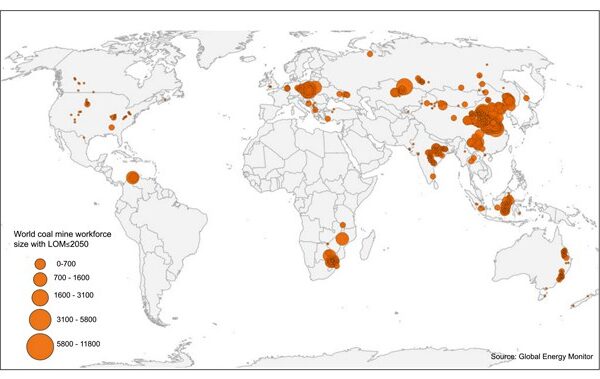
In the bustling hot city of Siliguri in northeast India, Jitendar Kumar spends his days breaking up and shifting cinder pieces at a coal depot. The 30-year-old has been working for half his life with coal, a legacy he inherited from his father, who spent 40 years in Ranigunj, India’s first coalfield that traces back to 1774, in West Bengal. “I also started there but later chose the city over the mines,” Kumar said. “Like many here, coal puts food on our table. I don’t know what else to do.” India, the world’s second-largest coal producer, has around 337,400 miners in its active mines. Labor activists estimate that this number could quadruple when accounting for informal workers in the sector. This week, a new report said state-owned Coal India, the world’s largest government-owned coal producer, is facing the biggest potential layoffs of 73,800 direct workers by 2050. Globally, close to a million coal mine jobs, or more than a third of the coalmining workforce, could vanish by 2050, with the vast majority of these losses expected in Asia, especially in China and India, the U.S.-based think tank Global Energy Monitor (GEM) said. That means, on average, 100 coal miners a day could face job cuts as the coal industry winds down due to a market shift towards cheaper renewables and planned mine closures, it said. This infographic shows where potential coal mining job layoffs are by 2050. Credit: Global Energy Monitor Nearly half a million workers may lose their jobs before 2035, GEM said. The drop in employment, the think-tank added, will likely occur irrespective of particular coal phase-out strategies or climate action since such shifts are probably inevitable due to the market’s inclination towards more economical wind and solar energy options. In Asia, more than 2.2 million people work in coal mines, according to GEM, with China leading the way. China is home to over 1.5 million coal miners, responsible for generating more than 85% of the nation’s coal. This represents half of the global coal production. It is followed by India and Indonesia. GEM said Indonesia, with about 160,000 coal mine workers, is expected to boost production enough to rival India’s output for the first time next year. The non-government research organization said that China’s Shanxi province alone will likely lose about a quarter million mine jobs by midcentury. The projections are based on data from the Global Coal Mine Tracker, which offers live information about 4,300 active and proposed coal mines globally, accounting for over 90% of the world’s coal production. “Coal mine closures are inevitable, but economic hardship and social strife for workers is not,” said Dorothy Mei, project manager for the Global Coal Mine Tracker at Global Energy Monitor. “Viable transition planning is happening, like in Spain where the country regularly reviews the ongoing impacts of decarbonization,” she said, adding that governments should learn from its success to plan their own “just energy transition strategies.” To limit global warming to 1.5 degrees Celsius under the Paris Agreement’s guidelines, GEM estimates that only 250,000 coal miners would be needed. This is less than 10% of the current workforce. Economic impact Coal mine jobs also greatly influence local economies. Mining towns often depend heavily on coal companies for wages, taxes, and even schools or hospitals. Past job losses from the 1980s and 1990s bankruptcies had led to economic distress, and future job cuts could have similar effects. The workers deserve a “just transition” to new employment sectors, particularly those offering well-compensated positions in the clean and renewable energy domain, GEM said. Mining is in progress at an open-cast mine near Dhanbad, an eastern Indian city in Jharkhand state, Sept. 24, 2021. Credit: Associated Press In 2016, China’s Ministry of Finance introduced the Industrial Special Fund, designating US$14 billion for the reemployment of 1.8 million workers in the coal and steel industries. However, with each person estimated to get just over US$6,887, GEM said the fund’s sufficiency is debatable. China Energy, the nation’s leading mining and energy firm, is among the country’s top five renewable energy investors. With renewables making up 28.5% of its capacity and coal at 72%, the company aims to boost clean energy to over 50% by 2025, aligning with government goals. Chance for sustainable future Following a year marked by devastating mining accidents, significant labor disputes, and public opposition to mining activities, it is essential that coal miners be provided the chance to seek a safer and more sustainable future, GEM said in the report. Hundreds of workers died from underground blasts, tunnel collapses, and equipment mishaps in mines worldwide. At least six people were killed when a significant section of the pit wall at the Axla League coal mine in China crumbled in February, with 47 others still missing. The China Labor Bulletin, an NGO monitoring work-related accidents in China, recorded 69 coal mine-associated incidents and fatalities in 2022, with 23 reported in the current year. “The coal industry, on the whole, has a notoriously bad reputation for its treatment of workers,” said Ryan Driskell Tate, GEM’s program director for coal. “What we need is proactive planning for workers and coal communities … so industry and governments will remain accountable to those workers who have borne the brunt for so long.” Edited by Taejun Kang and Elaine Chan.

Blast at Myanmar camp sounded like it came from the ‘world wars’
A farmer who lost his wife, three children and his mother when a bomb was dropped on his Kachin state village earlier this week said the powerful explosion wiped out buildings up to one mile away and sounded like something “used in the world wars.” “Houses built by NGOs and the locals are now left with only iron pillars.” Maran Bauk Lar told Radio Free Asia. “This was a type of bomb that has never been used in Myanmar.” The explosion at the Mung Lai Hkyet internally displaced persons camp at about 11 p.m. on Monday killed 29 people, including 11 children, and left 57 others wounded, relief workers told RFA. The camp is near Lai Zar in the mountainous border area between Kachin state and China. Lai Zar is the headquarters of the Kachin Independence Army, or the KIA, which has fought the Burmese military for decades and controls areas of northern Myanmar. KIA information officer Col. Naw Bu told RFA earlier this week that he believed the junta was targeting the headquarters in the attack. Maran Bauk Lar, whose wife and three children were killed in the Mung Lai Hkyet attack, found their bodies when he returned to the camp. His mother and sister-in-law also were killed. Credit: Provided to RFA Maran Bauk Lar said he was walking to his farm when he heard the explosion. When he returned, he found a deep pit and the remains of his sister-in-law and the other family members. “My mother’s body was completely dismembered, and her skull was broken,” he said. “Only the bones remain. My wife and children were killed under the collapsed building. Our dormitories were completely destroyed. There is nothing left.” ‘Emboldened by the indifference’ The Mung Lai Hkyet camp has 658 residents, many of whom are now suffering from psychological trauma as they recover from the explosion, relief workers said. Survivors have been temporarily relocated to a church in Woichyai, an internally displaced persons camp in Lai Zar. “At the moment, they are sleeping on the floor of the church,” a person helping them said. “They have to start a new life from scratch. They don’t have a single penny in their hands.” Coffins are lined up next to graves as a mass funeral takes place to bury victims of a military strike on the Mung Lai Hkyet camp near the northern Myanmar town of Laiza on Oct. 10, 2023. Credit: AFP The Special Advisory Council for Myanmar, a group of independent experts working to support human rights efforts in the country, urged the United Nations and its member states to hold the junta responsible for the attack. “The Myanmar military is so emboldened by the indifference of the international community in response to its decades of atrocity crimes that it is now attacking camps for internally displaced people,” said Yanghee Lee, a member of the council and a former U.N. Special Rapporteur on the situation of human rights in Myanmar. “The military is flagrantly massacring the most vulnerable people in society, and yet U.N. entities in Myanmar will not even publicly name the military as the perpetrator,” he said. At the State Department, spokesman Matthew Miller said that the United States was “deeply concerned” by reports of the explosion. “We strongly condemn the military regime’s ongoing attacks that have claimed thousands of lives since the February 2021 coup and continue to exacerbate the region’s most severe humanitarian crisis,” he said on Tuesday. A girl cries next to a grave as a mass funeral takes place to bury victims of the military strike on Mung Lai Hkyet camp near Laiza, Myanmar, on Oct. 10, 2023. Credit: AFP ‘The culture of military dictatorship’ Fighting in the area between junta forces and the KIA has intensified since July. Lately, there have been artillery strikes from the junta almost every day, local residents said. While some residents said they heard a plane just before Monday’s explosion, others told RFA that they heard nothing. The KIA has formed an investigation team to determine what caused the blast, Naw Bu said, adding that it may have been a bomb dropped by a junta-operated drone. “They always target the public, not only in our territory in Kachin state, but across the country,” he said of the junta. “It is the culture of military dictatorship.” A man stands amid debris left by the military strike on the Mung Lai Hkyet camp on Oct. 11, 2023, two days after the assault. Credit: AFP RFA’s calls on Wednesday to Win Ye Tun, the junta’s social affairs minister and spokesman for Kachin state, for comments on the death toll at Mung Lai Hkyet went unanswered. Junta spokesman Major Gen. Zaw Min Tun told RFA that junta troops were not behind the attack on Mung Lai Hkyet. He speculated that it was caused by an accidental explosion at a warehouse where the KIA stores gunpowder. A Mung Lai Hkyet resident told RFA that it was “totally untrue” that there are weapons factories and arsenals in the camp. “There is no arsenal,” he said. “There are only civilians who are displaced persons.” Translated by Htin Aung Kyaw. Edited by Matt Reed and Malcolm Foster.

Uyghur inmates forced to work on farmland leased to Chinese
Hundreds of Uyghur inmates at Keriye Prison in the far-western Chinese region of Xinjiang are forced to work 12-14 hours a day in vast fields of red dates called jujubes, a prison employee and a guard told Radio Free Asia. Under the watch of armed guards, the prisoners must walk to the fields while overseers wearing red vests and holding police dogs monitor them, the two people said. Armed soldiers surrounded the work area, some on horseback, to prevent any from escaping. “I witnessed prisoners being forcibly taken out to work during the day and returned to their cells at night,” said the prison employee – a Uyghur himself – who has worked at the prison for nine years, including one as a “team leader” of a group of inmates, although he was not allowed to mingle or talk much with them. Many inmates also work in factories located inside and outside the prison walls producing cement, shoes, gloves and tea, a prison guard told RFA Uyghur. Those serving sentences of more than 10 years work in factories inside the prison yard, while those serving less than 10 years work outside the prison, the guard said. The goal seems to be two-fold: To harness the prisoners’ free labor for the benefit of Han Chinese businessmen who rent the 1,650 acres of farmland that is owned by the prison, and to reform the inmates through labor, the two sources said, insisting they not be identified for fear of retaliation. “They want to make the prisoners undergo ideological transformation through labor in these big fields,” said the prison employee. The farm itself is called Lao Gai Nong Chang in Chinese, which means “Re-education through Labor Farm.” The work was arduous and painful, he said. Before the fields were converted to jujubes, they produced cotton, and he recalls seeing some inmates picking cotton worked until their hands bled. Arbitrarily sentenced The offenses committed by the Uyghur inmates in Keriye Prison – located about 25 kilometers (16 miles) from Siyek township in Hotan prefecture and which houses about 10,000 inmates – remain unclear. Most Uyghurs detained in Xinjiang in recent years have never been formally charged with any crime or tried by the government. More than 30 Uyghur teachers from Hotan Normal Technical High School jailed on charges of “national separatism” and “religious extremism” are serving their sentences in Keriye Prison, RFA previously learned. Keriye Prison has tracts of farmland around it. Credit: Google Earth photo; RFA annotation Though China formally abolished its “reform through labor” system in 1994, this account shows that it has remained in practice in some areas. Starting in 2017 and 2018, Chinese authorities in the Xinjiang Uyghur Autonomous Region detained an estimated 1.8 million Uyghurs and other Muslim minorities in “re-education” camps, where they were subjected to forced labor in factories producing textiles, wigs, tomatoes and solar panels for export. The forced work and other abuses, including torture and sexual assaults, are part of a wider genocide that China is committing against the Uyghur people, the United States and other governments have declared. Beijing denies the abuses, saying the camps were vocational training centers meant to prevent terrorism and religious extremism while teaching job skills. Chinese rent the land Many Han Chinese from Henan province and Xian, capital of Shaanxi province in northwestern China, rent the prison land under three-to-four-year contracts, the team leader said. For example, a Chinese businessman from Henan province leased about 200 acres on which he grew cotton for five or six years before switching to jujubes, he said. Under an agreement between prison administration and the factory owners, the Chinese owners pay the prison for using the forced labor, he said. “Some factories have 200 to 300, or even 500 workers,” said the guard. “In the factory where I work, we have around 1,670 workers.” In 2022, the United States enacted the Uyghur Forced Labor Prevention Act, which gave American authorities greater powers to block the import of goods linked to forced labor in China. Under the act, goods produced in Xinjiang are legally assumed to have involved Uyghur forced labor unless a business can prove otherwise to customs officials. However, hundreds of major U.S. companies may be unwittingly producing goods using gold that was mined using the forced labor of Uyghurs in China’s far-west Xinjiang region, according to a report released Wednesday by the Center for Advanced Defense Studies. Translated by RFA Uyghur. Edited by Roseanne Gerin and Malcolm Foster.
