Overview
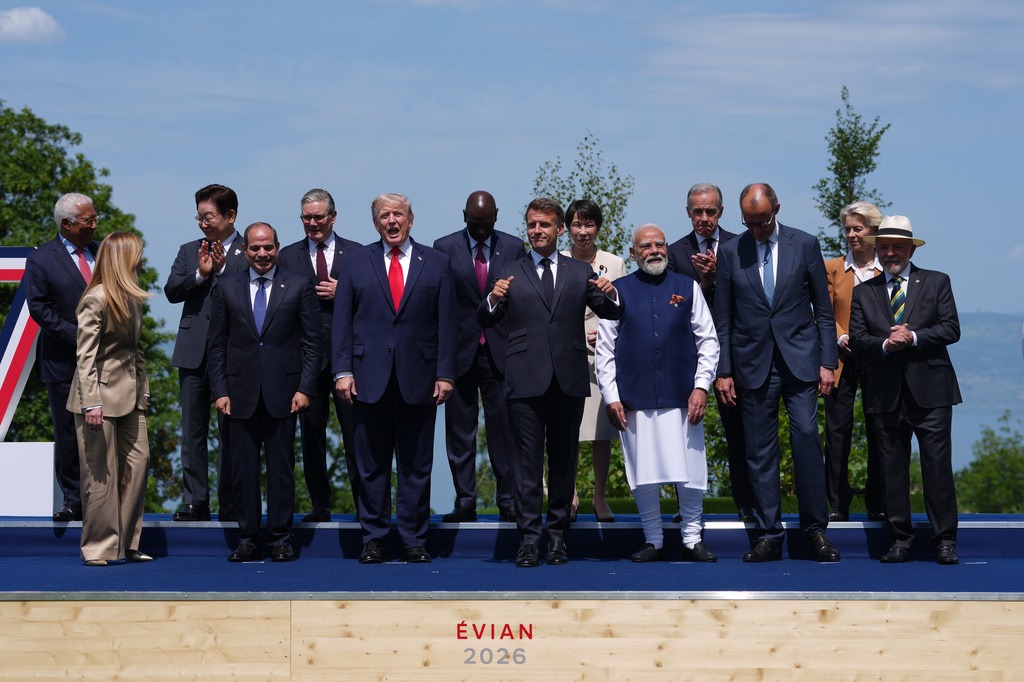
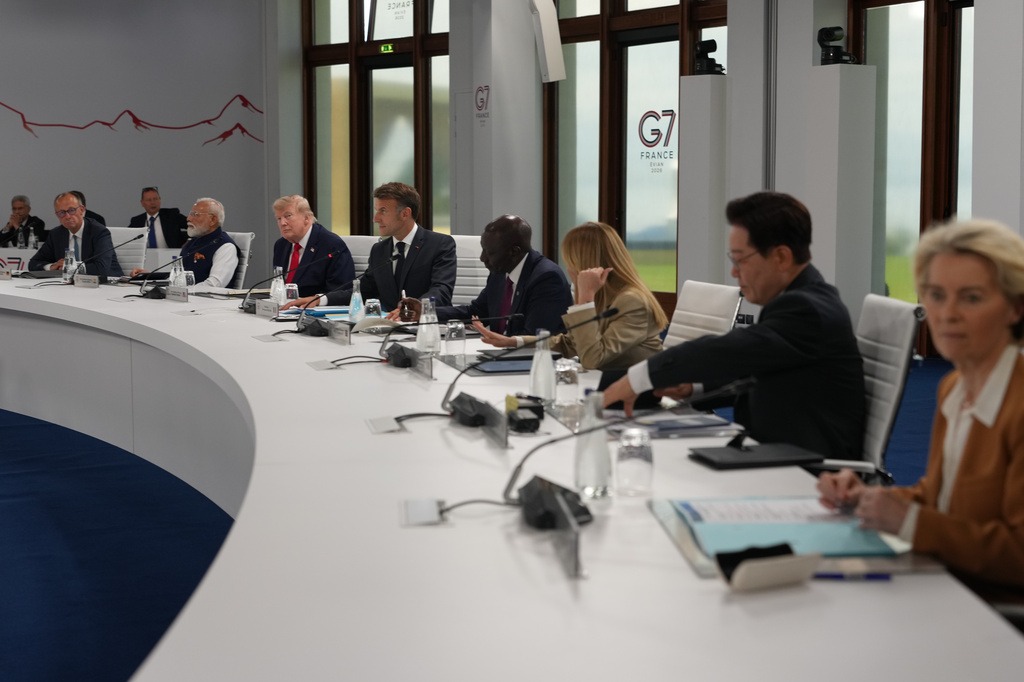
The 52nd G7 summit was held in Évian-les-Bains, France, from June 15–17, 2026, hosted by President Emmanuel Macron. It brought together leaders of the United States, France, the United Kingdom, Germany, Italy, Japan and Canada, with outreach partners including Brazil, India, Kenya, South Korea, and others. The summit produced joint statements on Ukraine, the Middle East, critical minerals and global economic imbalances, among other issues. France made reducing global economic imbalances, citing industrial overcapacity, underinvestment, and excessive trade surpluses, largely linked to China, its top priority for the presidency.
In practice, geopolitics dominated. The summit was officially dedicated to global economic imbalances, particularly the threat from China’s subsidized exports, but the wars in Iran and Ukraine took over the agenda instead.
The Trump–Meloni Rift
What should have been a routine bilateral moment turned into the summit’s most talked-about controversy. Footage from Évian showed Trump and Italian Prime Minister Giorgia Meloni in an extended one-on-one conversation on a sofa at the sidelines of the summit. Days later, in an interview with Italian broadcaster La7, Trump claimed Meloni had “begged” him for a photo, saying he had felt sorry for her and could have skipped the moment.
Meloni’s response was sharp and public. She accused Trump of fabricating the claim, posting a video saying she was “stunned” and that “Italy and I do not beg.” Italian Foreign Minister Antonio Tajani called the remarks “offensive” to all of Italy and cancelled a planned trip to the United States.
Rather than de-escalating, Trump doubled down. On Truth Social he wrote that Meloni had “asked, over and over, for a picture with me,” adding that she was “doing poorly in Italy with her level of popularity,” partly because she had declined to back the U.S. on Iran, and that now, after the U.S. “defeated Iran militarily,” she wanted to be friends again to boost her numbers, closing with “No thanks!!!” Meloni fired back that her popularity was “none of his concern” and suggested he focus on his own.
The episode is more than tabloid theatre. It is a reminder that even when G7 leaders manage to align on substance, personal pettiness and public one-upmanship from the U.S. president can overshadow the diplomatic output and strain relations with even sympathetic, ideologically aligned partners like Meloni’s Italy.
The Summit’s Most Prominent Outcomes
1. Ukraine and Russia. A joint statement, notable for the U.S. signing on, given Trump’s past reluctance, pledged renewed support for Kyiv and increased pressure on Moscow. Leaders committed to strengthen sanctions on Russia, including on its oil and gas sectors, and to bolster Ukraine’s energy resilience ahead of winter and its air defenses. Zelensky called the summit a success for Ukraine, citing agreement on strengthening air defense and new pressure on Russia “for the sake of peace.”
2. The Iran/Middle East deal. Trump signed a memorandum of understanding to end the U.S.–Iran war, under which the Strait of Hormuz would reopen and Washington would lift sanctions on Tehran. G7 leaders welcomed the U.S.–Iran agreement as a historic opportunity to prevent Iran from acquiring a nuclear weapon and to address its regional and ballistic activities, while reaffirming Iran “will never obtain a nuclear weapon.”
3. Global economic imbalances and China. Leaders welcomed the Global Convergence for Growth Summit convened by Macron on June 11, 2026, with China’s participation, and reaffirmed interest in working with other large economies to address persistent global imbalances.
4. Preceding ministerial meetings. The leaders’ summit was the culmination of months of lower-profile but substantive groundwork: G7 foreign ministers met in March 2026 and called for an immediate end to attacks on civilians in Iran; environment ministers met in April and issued declarations on marine protection, illegal fishing, desertification and water pollution; trade ministers met in May to discuss global value chains and economic coercion; and labour ministers met in Geneva in early June to address job quality, AI training and labour standards in critical mineral supply chains.
A Fragile Consensus in a Fracturing World
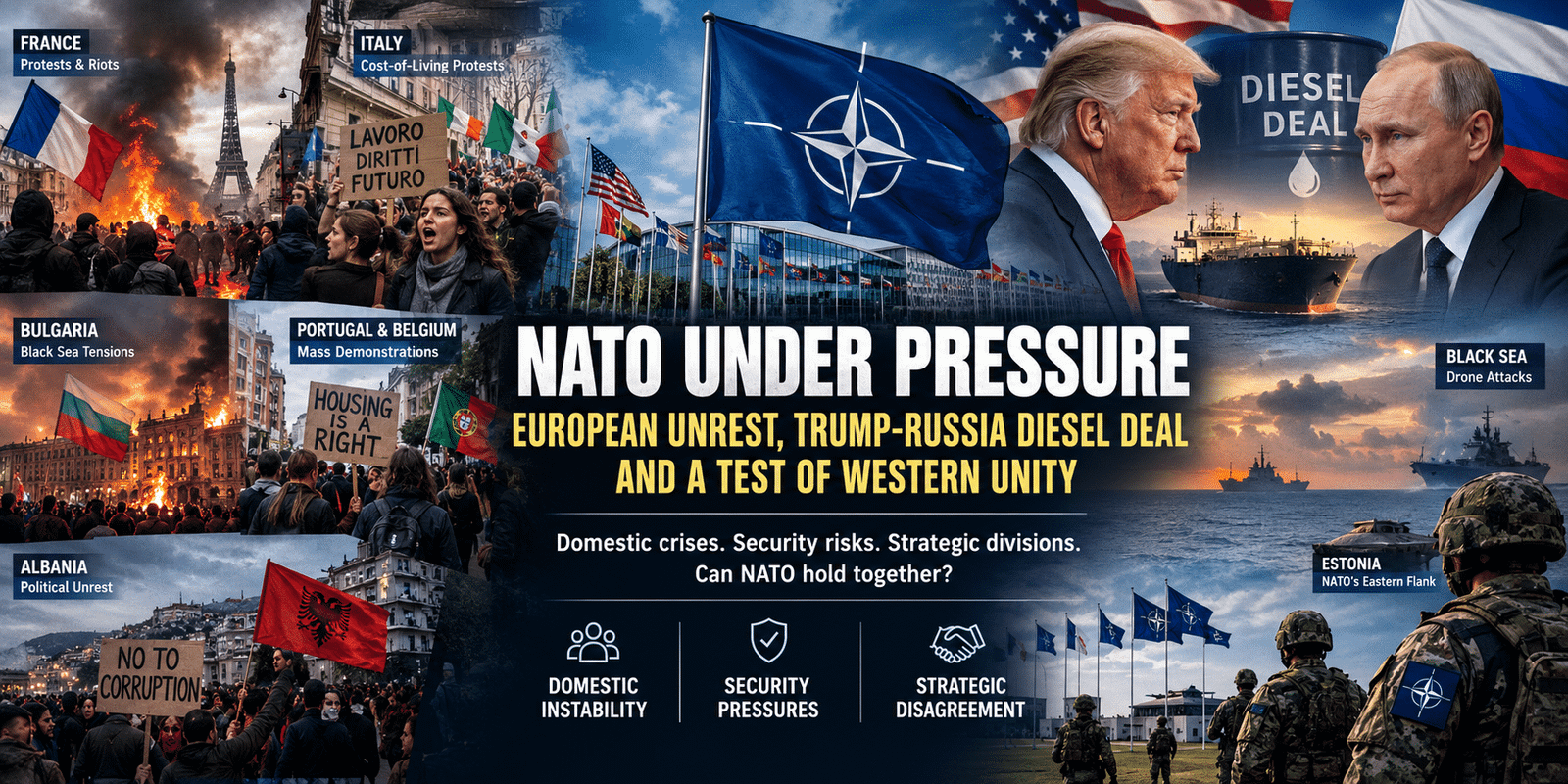
Beneath the joint statements, analysts warn the alignment is shallow. The Council on Foreign Relations notes that what looked like a rare moment of transatlantic unity on Iran and Ukraine is “much more brittle than it appears.” Europeans worked hard to convince Trump that Russia, not Ukraine, needs to make concessions, but fear he could still favor a deal that lets Russia off lightly, since intelligence-sharing and scarce air-defense interceptors remain Washington’s key leverage. A genuine rift had also opened between Europe and the U.S. over the continent’s limited contribution to the Iran war, prompting U.S. troop withdrawals from Germany even as the Pentagon pushes to scale back America’s conventional military footprint in Europe.
This is the deeper story of the 2026 G7: a world stretched thin across three simultaneous fronts, the war in Ukraine, the aftermath of the Iran conflict, and a brewing economic standoff with China, while the forum meant to coordinate a response is itself undercut by personal feuds, an erratic U.S. posture, and outreach partners present in name more than in substance.
The G7 still has real convening power: it can move sanctions regimes, coordinate military and energy support, and set the tone other forums (G20, NATO, IMF) follow. But its credibility as a stabilizing force depends on members treating it as more than a stage for individual political theater.
The Case for Wider Collaboration: Russia, China, and Beyond
The G7’s founding logic, a club of like-minded democracies setting the global economic and security agenda, increasingly looks insufficient for the world it is trying to manage:
- Russia is a direct party to the war dominating the summit’s agenda, yet remains entirely outside the room. Sanctions and military aid can shape Moscow’s calculus, but durable de-escalation ultimately requires some channel of negotiation involving Russia directly, not just pressure applied around it.
- China is already a de facto participant in the G7’s economic conversation, its industrial overcapacity and trade surpluses were this year’s official agenda item, and it was invited to Macron’s Global Convergence for Growth Summit days before Évian. But ad hoc invitations are not the same as structured engagement; China’s absence from the G7’s core decision-making leaves the world’s second-largest economy responding to G7 positions rather than helping shape them.
- Outreach partners like India, Brazil, Kenya and South Korea were consulted in preparatory sherpa meetings, but they remain “invited,” not “members”, a distinction that limits how much ownership they take of outcomes that affect them, particularly on trade, climate and critical minerals.
- India’s and Japan’s presence enhanced the group manyfold. Japan, as a full G7 member, brought weight on Indo-Pacific security, supply-chain resilience and a counterbalancing voice on China that the European-heavy bloc would otherwise lack. India’s participation as an outreach partner added the perspective of the world’s most populous nation and a major Global South economy, lending the summit’s positions on trade, critical minerals and global imbalances far more credibility and reach than a purely transatlantic G7 could claim on its own. Together, their involvement signaled that decisions taken in Évian were not confined to a narrow Western club but carried input from two of Asia’s most consequential powers, strengthening the G7’s claim to speak for a broader swath of the global economy, even as India remains formally outside the core membership.
A G7 that genuinely wants to “fix” a fracturing world, rather than simply respond to crises as they erupt, likely needs to evolve beyond a closed club issuing statements about other powers, toward a structure that creates real, sustained channels with Russia and China alongside its established allies and outreach partners. Without that, each summit risks producing strong language and short-lived unity, while the underlying fractures, in Ukraine, the Middle East, and global trade, continue to widen.
Conclusion
The 2026 G7 summit delivered tangible commitments: tougher sanctions on Russia, continued backing for Ukraine, formal welcome of the U.S.–Iran agreement, and renewed attention to global economic imbalances tied to China. Yet it also exposed how fragile and personality-driven the alliance has become, symbolized by the unusually public and bitter spat between Trump and Meloni in the summit’s immediate aftermath. If the G7 is to be more than a forum for managing its own internal frictions, it will need to find a way to bring Russia and China into a durable framework of dialogue, rather than leaving them as subjects of the conversation rather than participants in it.