
Category: East Asia

Hun Manet tells UN Cambodia’s elections were fair
A month after he succeeded his father as Cambodia’s prime minister in the wake of the country’s latest election without an opposition, Hun Manet falsely told the U.N. General Assembly on Friday that the July 23 ballot was “free and fair” and “credible and just.” Hun Sen handed power to his son after claiming victory in an election in which he banned the last remaining opposition party, the Candlelight Party, and threatened prison time and disenfranchisement for any Cambodians who joined the party’s efforts to boycott the vote. His ruling Cambodian People’s Party, which has been in power since 1979, won 120 of the 125 available seats – a five-seat drop from 2018, with those seats going to its longtime coalition partner Funcinpec. Speaking before the U.N. General Assembly in English, Hun Manet said it was his “great pleasure” to address the chamber “as the new prime minister of the Kingdom of Cambodia,” and lauded the election. “Over 8.2 million people cast their ballots, a turnout rate of 84.59%,” he said, pointing to the participation of 18 minor parties as evidence of fairness. “This is the highest turnout since the U.N.-supervised election in 1993, and a clear indication of our people’s greater political maturity and enthusiasm in exercising their democratic rights.” “The election has been widely assessed as free and fair, credible and just, by thousands of observers,” he said. The United States and European Union declined to send observers due to concerns about the election’s integrity. Hun Manet also appeared to address U.S. claims and satellite imagery that appears to show China building a military base in the port city of Sihanoukville, which his father has also repeatedly denied. The new premier declined to mention the banning of the opposition and his father’s threats of imprisonment. (Eduardo Munoz/Reuters) “Cambodia shall not authorize any foreign military base on this territory, as clearly stated in its constitution,” he said. “Cambodia will continue on its present path of independence and a neutral foreign policy.” Hun Manet became Cambodia’s new premier on Aug. 22, after 38 years of rule by his father, who rose to power in 1985 under the communist regime installed by Vietnam after its ouster of Pol Pot. Hun Sen long ruled with an iron fist, banning the resurgent Cambodia National Rescue Party shortly before the 2018 election and jailing its leader after the party threatened to win even a flawed election. Some members of the CNRP then reassembled into the Candlelight Party to contest this year’s election, before that party, too, was banned. Hun Manet’s government has appeared no more eager for friendly competition, and has refused to give the party official registration documents it would need to contest in any future elections. Change, or no change? Outside the U.N. building on Friday, Cambodian-Americans and former opposition party leaders protested Hun Manet’s appearance, calling for his government to be stripped of Cambodia’s U.N. seat. Former CNRP lawmakers including Ho Vann, Kong Saphea, Eng Chhay Eang and Mu Sochua – all of whom face lengthy prison sentences if they return to Cambodia – were in attendance, and the protesters reprised popular chants from the party’s post-2013 election mass protests, including the rhetorical “Change, or no change?” Sochua, who also served as Cambodia’s minister for women’s affairs from 1998 to 2004, told Radio Free Asia she thought Hun Manet would not be able to completely quieten the sense of shame about how he took power, unable to campaign, on his own, in a free election. “I don’t think that he sits in that seat comfortably,” Mu Sochua said of Cambodia’s U.N. seat. “Hun Manet is not a free man.” Former CNRP lawmaker Mu Sochua [right], who faces a lengthy prison sentence if she returns to Cambodia, says she believes Hun Manet would not be able to completely quieten the sense of shame about how he took power. She protested Cambodia Prime Minister Hun Manet’s appearance at the United Nations in New York City, Friday, Sept. 22, 2023. (Alex Willemyns/RFA) It was clear, she said, that Hun Sen hoped to give his regime – known for arresting opposition leaders, banning rival parties and violently attacking critics – a new coat of sheen using Hun Manet’s face. But Mu Sochua said the world should not buy what Phnom Penh was selling, and pointed to the decision to deny the opposition Candlelight Party its registration papers and the vicious beating of Ny Nak as evidence that the new prime minister was more of the same. “If he wanted to be legitimized, if he wanted to be a new generation of Cambodian leader, we would have to start with free and fair elections,” she said. “You cannot fake legitimacy. How can he show a new face for Cambodia when he is under the control of his father?” No change Others said they had traveled to New York to make sure the world knew Cambodians wanted the chance to freely choose their leaders. “I came here because Cambodia is going on the wrong path for democracy,” said Thy Doak, 63, who traveled from Boston. “This dictator passed his power to Hun Manet which goes against the Paris Agreements that [say] we should have free and fair elections.” Doak said he arrived in Cambodia as a refugee in 1984 and wanted his compatriots back home to enjoy the same freedoms he did now in the United States. He said he had no hope Hun Manet would deliver that. “He’s no different from his father. There’s no change,” he said. “I don’t want Hun Manet to be a part of this thing. Cambodia does not deserve it. We’re supposed to be a democracy, but we have a dictatorship.” Cambodian-Americans and former opposition party leaders protest Cambodia Prime Minister Hun Manet’s appearance at the United Nations in New York City, Friday, Sept. 22, 2023. (Alex Willemyns/RFA) Susie Chhoun, 45, who was born in the Khao-I-Dang refugee camp along the Cambodian-Thailand before her parents were given asylum in the…

Uyghur event in NY goes ahead despite Beijing’s warning
The Chinese government is increasingly moving Uyghurs from internment camps to the regular penal system while claiming it is closing the camps, experts and foreign diplomats told a forum on the sidelines of the U.N. General Assembly in New York on Tuesday. Chinese diplomats over the weekend tried to hamstring the event by sending out a letter to foreign missions to the United Nations warning them against attending. The panel of diplomats and human rights experts slammed Beijing’s attempted interference. “Thank you also for being here, notwithstanding the PRC’s continued attempts to intimidate and to silence those speaking out on human rights,” said Beth Van Schaack, the U.S. ambassador-at-large for global criminal justice, using an acronym for China’s government. She described the Chinese U.N. mission’s letter as “yet another example of a global campaign of transnational repression” against the Muslim minority, most of whom live in China’s far-west Xinjiang region. “I’m also pleased to see that their efforts have only increased international scrutiny on the situation within Xinjiang, and particularly the atrocities against the Uyghur people,” Van Schaack said. A detention facility in Jiashi County in Kashgar Prefecture in China’s northwestern Xinjiang region in July 2023. The Chinese government is increasingly moving Uyghurs from internment camps to the regular penal system while claiming it is closing the camps, experts and foreign diplomats told a forum on the sidelines of the U.N. General Assembly in New York on Tuesday. (Pedro Pardo/AFP) Sophie Richardson, the China director for Human Rights Watch, brandished a copy of the letter, which was first obtained by National Review, and said the “strong recommendation” from China that nobody attend the event made it more important that the room was full. “Any government that’s going to go out of its way to bother doing this, first of all, has no business sitting on the U.N. Human Rights Council, but also it’s essentially confirming that it’s got a lot to hide and it knows it,” Richardson said, defending the event as a moral imperative. The panel’s job was “to talk about the facts,” she said, “because we can, and because they don’t want us to, and because Uyghurs can’t.” Radio Free Asia contacted the Chinese Embassy in Washington, which said questions should be directed to China’s permanent mission to the United Nations. But Chinese diplomats at the U.N. mission could not be reached by phone and did not respond to an emailed request for comments. Diplomatic pushback Two European diplomats also spoke during the event. Peter Loeffelhardt, the German Foreign Office’s director for Asia and the Pacific, referred to China’s warning letter, which accused the panel of “plotting to use human rights issues as a political tool to undermine Xinjiang’s stability and disrupt China’s peaceful development.” “It is a false and dangerous narrative to say that human rights are an obstacle to development,” he said. “Human rights always need to be part of the discussion. When we address human rights violations, bilaterally and multilaterally, it is not an interference in internal affairs.” Belén Martinez Carbonell, managing director for multilateral affairs at the European Union’s foreign relations arm, said Europe believed the repression of the Uyghurs was “a very important topic that we would not like to be missed” among all the issues at the General Assembly. “In the European Union, we are concerned for many issues, such as political reeducation camps, mass arbitrary detentions, widespread surveillance, trafficking and control measures, systemic and severe restriction of the exercise of fundamental freedoms,” she said. Those included “the use of forced labor, torture, forced abortion and sterilization, birth control, and family separation policies and sexual and gender based violence.” “What a long list,” she said. Martinez Carbonell also said the European Parliament was working on Europe’s own version of the U.S. Uyghur Forced Labor Prevention Act, which bans the import of any product that was made even partially using forced labor of Uyghurs interned in Chinese camps. Shifting repression Gady Epstein, a senior editor at The Economist magazine and the forum’s moderator, noted that “stories about Xinjiang have faded a little from the headlines or from the front pages” in recent times, being replaced by some about the closure of certain internment camps. Uyghurs living in Turkey protest in Istanbul in March 2021 against China’s treatment of Uyghurs in Turkey. (Emrah Gurel/AP) Amnesty International Secretary-General Agnès Callamard said the decrease in attention was not due to any changes on the ground. “The situation has not changed in its essence,” Callamard said. “It may have shifted a little bit in the forms that certain violations have taken, but it has certainly not shifted in the essence of the violations.” Callamard said Uyghurs still enjoyed no freedom of movement, or religion or culture, or to “equality and non-discrimination.” She added that even the claims of camp closures were disingenuous. “It is a fact that we are witnessing more and more arbitrary detention [and] the shifting of individuals into formal prisons,” Callamard said. It was a concern mirrored by Van Schaak, the U.S. official. “We are now particularly concerned about the dramatic increase in prosecutions with long-term sentences in Xinjiang, including the reported transfer of some detainees from so-called re-education or vocational training centers into more formal penal prisons,” she said. “Of the more than 15,000 Xinjiang residents whose sentences are known, more than 95% of those convicted – often under very vague charges, like separatism or endangering state security – have received sentences of 5 to 20 years, and in some cases of life.” Bittersweetness Rayhan Asat, a Uyghur human rights lawyer and a nonresident senior fellow at the Atlantic Council, which organized the panel, told the panel that another enduring part of Beijing’s repression campaign was the cruel methods it often used to silence Uyghurs living outside China. “Uyghur-Americans living in America are still subject to China’s long-arm reach,” Asat said. “What they are using is our families, our loved ones, their lives. They are literally keeping them hostage.” She explained that…

South Korea Presidents clash over North Korea policy
Five years ago, when leaders of the two Koreas exchanged a historic handshake in Pyongyang, the Korean people looked on with hope, wishing that this masterpiece of diplomacy may finally put an official end to the seven-decade-long war on the peninsula. But as time surges forward, the once-celebrated inter-Korean agreement stands vulnerable, overshadowed by North Korea’s escalating nuclear threats, and its leader, Kim Jong Un reinforcing ties with his fellow authoritarian leader Vladimir Putin of Russia. Now, South Korea grapples with a growing divide on whether to uphold that deal. The debate is set to intensify on the back of former South Korean President Moon Jae-in’s attendance of the commemorative event of the fifth anniversary of the September 19 Pyongyang Joint Declaration in Seoul on Tuesday. “The [current] government and the ruling party have expressed their intentions to reconsider or possibly scrap the military agreement,” Moon said at the event. “However, it’s crucial to note that the inter-Korean military agreement has been instrumental in preventing military confrontations between the two Koreas.” Moon’s comments are largely seen as a warning against the administration of President Yoon Suk Yeol for its hardline policy on North Korea. “It would be irresponsible to remove the last safety pin in place,” Moon added. “As relations between the two Koreas deteriorate and military tensions escalate, it’s imperative for both sides to uphold the agreement.” His remarks may potentially improve public opinion of South Korea’s progressives before the general election in April. Should that happen, it would conversely work against Yoon’s hardline policy on Pyongyang. Under the 2018 inter-Korean military deal, the two Koreas agreed to “end hostility” and to “take substantial steps to make the Korean Peninsula a permanent peace zone.” “Military accords should be honored and respected to the fullest extent to ensure dialogue continues and to prevent dire consequences,” Moon said. The former president was supported by key officials from his administration – his foreign minister Kang Kyung-wha and unification minister Kim Yeon-chul at the event. North Korean leader Kim Jong Un with South Korean President Moon Jae-in inside the Peace House at the border village of Panmunjom in Demilitarized Zone, South Korea on April 27, 2018. (Credit: AP) South Korea’s progressives see consistent engagement with North Korea as a potential catalyst for altering Pyongyang’s hostile behavior and its actions of violating human rights. They believe that integrating North Korea into the international stage would foster transparency, open avenues for dialogue, and gradually shift the North’s stance towards global norms and values. Conservatives, on the other hand, have long protested against what it defined as far-fetched engagement, saying that excessive aid to North Korea despite its continued provocations would only foster its nuclear ambitions. The conversative Yoon administration is thus adopting a hawkish policy on North Korea, aimed at pressing Pyongyang to forfeit its nuclear weapons. The ongoing debate is set to gain its momentum, as Yoon’s Defense Minister nominee Shin Won-sik has opined about his inclination to scrap the inter-Korean military deal last week. Some analysts consider the deal invalid, with North Korea returning to its brinkmanship diplomacy after its high-stakes summit with the United States collapsed in Hanoi February 2019. For instance, in November 2019, North Korea fired coastal artillery near the maritime buffer around the border island of Changlin-do. In May 2020, North Korea fired gunshots towards a South Korean guard post at the inter-Korean border, and in September 2020, a South Korean civilian was shot dead at the maritime border by the North and subsequently incinerated. Further complicating matters is North Korea’s amplified nuclear and missile threats. The threats are expected to further intensify with Putin vowing to aid North Korea in developing its satellite technology. Rocket technology can be used for both launching satellites and missiles. For that reason, the UN bans North Korea from launching a ballistic rocket, even if it claims to be a satellite launch. South Korea’s internal disagreement surrounding its North North Korea policy could potentially undermine that of the allies. The lack of a unified stance – be it hardline or dovish policy – risks disabling Seoul and Washington to form a coherent strategy that could be implemented in the long-term. Experts, however, noted that the main reason for this policy inconsistency is due to Kim Jong Un’s altered stance on his diplomacy after the fallout in Hanoi in 2019. “North Korean inconsistency is what leads to South Korea having to change its policy. If Pyongyang had continued to engage post-Hanoi summit, I think that both, Moon first, and Yoon now would have probably sought to try to accommodate this. Alas, this hasn’t been the case,” said Ramon Pacheco Pardo, Professor of International Relations at King’s College London and the KF-VUB Korea Chair at the Brussels School of Governance of Vrije Universiteit Brussel. “Likewise, I think that it was domestic instability in North Korea in the late 2000s, due to Kim Jong Il’s health condition, and then the transition process to Kim Jong Un, [being] the main reason behind the end of the inter-Korean engagement. So liberals and conservatives may not fully agree on how to approach North Korea, but I actually think that Pyongyang is the main reason why Seoul changes its policy.” Edited by Elaine Chan and Taejun Kang.

Once hailed as role model, Uyghur entrepreneur sentenced to 15 years
For years, the young Uyghur entrepreneur was held up in Chinese media as a role model for other Uyghur youth – a clean-shaven, smartly-dressed young man who returned to China to start his educational consulting business after getting an MBA in the United States. “Rather than staying abroad, he decided the best place to launch his career was in Beijing,” read a June 2014 article about Abdulhabir Muhammad in the state-run Global Times that included a photo of him in a dark suit and tie, smiling and sitting confidently behind an office desk. In Beijing, he founded A.B.U. Education, which provides support services to young people wanting to study abroad. “I want to be an international businessman and show people that we, as Uyghurs, are more than just vendors who wear ‘flower hats’ and sell kebabs, naan and nut cake,” Muhammad said in the article, referring to a cap worn by many Uyghur men, also known as a doppa. “Unfortunately, many people don’t realize there are other business possibilities.” But in mid-2022, authorities arrested Muhammad, who is now 33 and proficient in English, Chinese, Arabic, Turkish and the Uyghur language, on religious extremism and national separatism charges, people with knowledge of the situation said. And later that year, he was sentenced to 15 years in prison, police in Xinjiang, the far western region of China that is home to more than 11 million mostly Muslim Uyghurs, the sources told Radio Free Asia. Murky reasons It is not entirely clear what prompted his arrest. As with so much in China, especially concerning the Uyghurs – an ethnic group whose language, religion and culture Beijing has tried to suppress – the details surrounding his case are virtually impossible to know, and RFA has been able to confirm his conviction only now, several months later. By one account, authorities may have arrested Muhammad for discussing the benefits of halal food a decade earlier in Xinjiang. By another, he may have gotten in trouble for communicating with his brothers while studying in the United States. One source familiar with the situation, who suggested that Muhammad was arrested for discussing halal food, said an entity in Beijing that monitors Uyghur businesspeople had been observing Muhammad for several years and cooperated with police during his arrest. Radio Free Asia contacted the Xinjiang People’s Assistance and Management Office in the capital to try to find out more information about his arrest, but an employee said the matter was classified and details could not be disclosed. A security guard watches from a tower at a detention facility in Yarkent County in northwestern China’s Xinjiang Uyghur Autonomous Region, March 21, 2021. Credit: Ng Han Guan/AP A former classmate of Muhammad, who requested anonymity to speak freely without risking retribution, also said it was possible that years earlier the man had discussed the advantages of halal food, prepared according to Islamic law, in terms of hygiene and safety. Muhammad’s father was a representative in Aksu for the Arman Foods Group, which distributes locally produced and imported food to supermarkets throughout the Xinjiang Uyghur Autonomous Region. “All the Arman stores in Aksu were under his parents’ management,” he said. “Since it’s an Arman store and related to food, perhaps during work he advocated for the abundance of halal food available at Arman stores.” Nearly 20 people attended the event where Muhammad discussed the benefits of halal food, said the source, including people who lived near his hometown, Araaymaq village. In recent years, Chinese authorities have clamped down aggressively on religious practices among Uyghurs, including keeping Islamic holidays and dietary practices, and even praying in mosques, many of which have been shuttered. In 2017 and 2018, authorities detained an estimated 1.8 million Muslims in camps and prisons to combat what China deemed religious extremism and terrorism. China called them “re-education” camps, and says they have all been dismantled, but other reports say they persist. Brothers tried with him Another possibility is that Muhammad was taken into custody for communicating by phone with his brothers, who stood trial for being in contact with him while he attended the State University of New York at Binghamton, where he graduated with a master’s degree in business administration in January 2014. A person familiar with the situation said four policemen from Aksu detained him in Beijing and transported him directly to Kelpin county in Xinjiang for interrogation. He was tried along with more than 10 of his associates at the end of 2022, the source said. A village police officer in the Xinjiang city of Aksu, where Muhammad had lived for several years, confirmed the sentence and said that some of those tried alongside him were his brothers. “Abdulhabir has been sentenced to 15 years, but I’m not aware of where he is serving his sentence,” said the police officer. “There were also brothers arrested for communicating with their sibling while he was abroad, and this was mentioned during the meeting.” Translated by RFA Uyghur. Edited by Roseanne Gerin and Malcolm Foster.

Cambodian farmer says raising rats for food has boosted his family’s income
The rats squeak as Muy Chameroun nears their cages to feed them foods like corn, rice, potatoes, grass and anything else that is healthy for them.. But these rats number more than 100 and they are not his pets. Muy Chameroun is a farmer, and he is raising the rats as food. Rats are not only consumed in Cambodia, but also in other countries in the region, including Thailand, China, and India. From his small farm in Kdol Tahen commune, Bavel district, in the western province of Battambang, Muy Chamroeun breeds and raises a type of rat that he imported from Thailand. He used to work in the construction industry in neighboring Thailand, but found that he could make more money raising the rodents that he has fond memories of eating in his childhood. In the four years he has been raising rats, Muy Chamroeun has been able to lift his family’s standard of living. The business has allowed him to save 2 to 2.4 million riel (US$486-583) per month. Growing an Industry Other farmers in the area are foregoing swine and cattle to try to get in on the rat racket, and Muy Chamroen sells them adults from his mischief to help them get started. He has also set up a Facebook page called Sovanrachna Rat Farm to share tips on raising, feeding and upkeep. Sum Pina, one of his customers, says the rats do not cost a lot to raise. The largest expense is building a shed to house them in, and their food is negligible, he says. Additionally, these Thai rats are better than the local domesticated and wild breeds because they do not emit such a foul odor, he said. Rat farmer Muy Chamroeun holds a rat at his farm in western Cambodia’s Battambang province, Sept. 14, 2023. Credit: RFA Once the rats have matured and fattened up to around 1 kilogram (2.2 pounds) or more, they can be taken to market and sold for 20,000 to 25,000 riel (about $5-6) per head. Theng Savoeun, President of the Association of Cambodian Farmers’ Communities, said that raising rats for meat can help reduce Cambodia’s meat imports of meat and improve the livelihood of farmers. There are no domestic regulations on breeding or raising rats or selling their meat, so it is an easy business to get into. Muy Chameroun wants to sell his rat meat overseas, and to do that he would need a license from the Ministry of Agriculture, but currently there are no regulations or procedures for doing that – yet. Translated by Samean Yun. Edited by Eugene Whong.

Storm in a teapot: Climate change hits ancient art of tea-growing
Climate change is having an impact on the ancient art of tea-growing, as a long dry spell has left high-end crops across the region parched and yellow amid dwindling supply, according to agricultural experts and tea connoisseurs. China’s traditional tea-making techniques and customs were included in UNESCO’s intangible cultural heritage list last year — at a time when the perfect cup of tea is getting harder and harder to find. The 8th century “Classic of Tea” by Lu Yu tells growers: “Make tea by looking at the weather. Make tea by looking at the tea.” Yet extreme weather that swings between drought and floods is creating hardships for the region’s tea-growers, who have a similar appreciation for the different kinds of leaf and the environments in which they’re grown to connoisseurs of fine wines. “Last year we had very dry weather, and so this year’s Longjing [Dragon’s Well] tea crop has been severely reduced,” Chinese tea expert Zhang Qin told Radio Free Asia’s Green Intelligence column. She blamed the lower yields on a lack of water supplied to the tea-growing areas around Xihu in the eastern Chinese city of Hangzhou. “It’s mainly because some of the tea-bushes have seen damage to their roots, and a small number of bushes have died,” Zhang said. Water evaporates Similar woes have beset tea-growing regions of China’s southeastern province of Fujian, according to Tsai Yu-hsin of the 186-year-old Taiwanese tea company Legacy Formosa, who said he had seen the effects with his own eyes. “When there are such high temperatures and drought, all the water in the tea bushes evaporates,” Tsai said. “If there’s a wind, then even more water is lost, so the tea bushes will turn yellow.” “Water is as important to tea-bushes as it is to humans,” Tsai said. “The tighter the water supply, the worse the disaster for the tea gardens.” A woman plucks tea leaves in Moganshan, Zhejiang province. Extreme weather, such as drought or heavy rainfall, is detrimental to the growth of tea trees, causing tea buds to germinate slowly and become smaller Credit: Carlos Barria/Reuters Tsai said he had seen leaves grown for the Wu Yi Rock Tea variety and white tea start to wither and turn yellow on the bush. He said similar problems have been seen in tea-growing areas of Taiwan’s Nantou, across the Taiwan Strait from Fujian. Plunging yields Tea yields in China, the world’s biggest producer of tea, and Taiwan, which serves a smaller but highly discerning tea-drinking public, saw the lowest levels of rainfall in 30 years last year. Overall tea production in China looks set to fall by around 15% this year as a result, according to industry associations, with falls of 40% in the central province of Henan, and of 30% in Fujian. In Taiwan, yields are down in the Chiayi tea-growing region by more than 50%, with other areas seeing falls of 20 to 30%, according to Chiu Chui-fung, a Ministry of Agriculture official who works on improving tea yields. And drought doesn’t just affect the amount of tea that can be harvested — it changes the quality of the tea that is available, he said. Drought-struck bushes will bear leaves with less sugars, polyphenols, amino acids and caffeine, which affects the taste and smell, Chiu said. Health-giving catechins are also reduced by around 50% in times of drought, according to a flavor study by researchers at Montana State University. Tea bushes like temperatures ranging between 18 and 25 Celsius, with annual rainfall of 1800-3000 mm, and a relative humidity of 75-80%, according to Chiu. Students learn how to hand-roll tea at a training workshop at the Tea Research and Extension Station in Nantou, Taiwan. Drought followed by torrential rains have decimated tea crops. Extreme weather exacerbated by climate change has left Taiwan’s tea farmers scrambling to adapt. Credit: Ann Wang/Reuters Rising temperatures While harvesting takes place several times a year, the spring harvest yields the most, he said. There are signs that fewer and fewer regions are now meeting all of those criteria, according to Zhang Qin. “Tea farmers in Yunnan [in the Mekong River basin] are saying that temperatures are getting higher and higher every year in recent years,” she said. And specialized teas like White Silver Needle Orange Pekoe or Oolong Rock Tea are more sensitive to changes in the environment than cheaper teas for daily consumption. “Without enough water, Silver Needle Pekoe won’t be able to open its leaves, and the quantity will decrease,” Tsai said. “Climate change is damaging a lot of tea bushes, and fewer of the most refined and high-quality leaves are being harvested, which means the price will be significantly [higher].” The EU-funded climate monitoring agency “Copernicus Climate Change Service” announced in August that July 2023 was the hottest month on Earth on record. Last month, China’s Climate Change Blue Book for 2023 showed an average temperature increase of 0.16C every 10 years between 1901 and 2022. The Meteorological Administration also reported record-breaking high temperatures at 366 weather stations around the country during 2022. Weather extremes Taiwan has seen similar increases over the past century, too. And record-breaking heavy rains dumped by increasingly frequent and powerful typhoons and rainstorms may not help tea-growers much. Too much rain means the soil is waterlogged, cutting off the supply of oxygen in the soil, and affecting respiration and absorption, Chiu said. The result is slower-growing tea and declining yields and quality. Extreme weather also means more pests that threaten tea crops, including red spider-mites, thrips and other insects. Zhang, who receives samples of tea from growers across the region every year, says there are already noticeable changes in the way the best teas taste. There is a black tea from Yunnan called Golden Silk Dianhong with “slight caramel and floral aroma, with a rich taste,” Zhang said. “It has always been very popular with consumers, but it doesn’t taste the way it once did when I have drunk it in recent years.” Elusive…

Kim-Putin military cooperation may pose potential setback for China
Updated Sept. 15, 2023, 5:35 a.m. ET North Korean leader Kim Jong Un and Russian leader Vladimir Putin inspected a fighter jet production facility in Russia’s Far East on Friday while the United States allies prepare joint countermeasures in response to safeguarding the security in both Asia and Europe. Kim’s high-profile visit this week has pressured the allies to intensify their multilateral security cooperation in the region, a development which experts noted, may see China emerging as the most disadvantaged nation. The North Korean leader went to the Far Eastern Russian city of Komsomolsk-on-Amur early on Friday and inspected the Yuri Gagarin Komsomolsk-on-Amur Aircraft Plant (KnAAZ), according to Russia’s official news agency Tass. “A red carpet was unfurled for the top-ranking guest,” Tass said. “In accordance with the Russian tradition for special guests, Kim was welcomed with bread and salt.” KnAAZ is at the heart of Russia’s fighter jet production, which produces advanced warplanes such as its fifth generation jets: the Su-35 and Su-57. Kim’s visit to Russia’s core defense facility came after both sides agreed on Wednesday to boost their military cooperation that would significantly aid their battle against the West. The core of the cooperation is most likely to be Russia’s weapons technology transfer in exchange for North Korea’s conventional ammunition. As the speculation continues to rise, North Korea has reportedly begun providing ammunition to Russia in aiding its Ukraine aggression, according to a report from the New Voice of Ukraine, the country’s one of the largest news outlets, on Thursday. Putin has already received “122mm and 152mm artillery shells as well as Grad rockets from North Korea,” the New Voice of Ukraine claimed, quoting the Ukrainian Defense Intelligence chief Kyrylo Budanov. The cementing of such a trade deal puts the U.S. at risk in its attempt to curb Russia’s aggression on Ukraine, potentially prolonging the war, and containing North Korea’s nuclear pursuits to enhance nuclear capabilities. In response, the U.S., South Korea and Japan are reinforcing security cooperation to confront the latest development that could threaten their interests. Top security aides of the three – the U.S. National Security Advisor Jake Sullivan, South Korea’s National Security Office Director Cho Tae-yong and Japan’s National Security Secretariat Secretary General Akiba Takeo – vowed to further consolidate their ties to jointly counter the possible Moscow-Pyongyang military cooperation. “The three NSAs reaffirmed the importance of trilateral coordination consistent with their commitment to consult,” White House said in a statement Thursday. “They noted that any arms exports from the DPRK to Russia would directly violate multiple UN Security Council resolutions, including resolutions that Russia itself voted to adopt.” The Democratic People’s Republic of Korea is the North’s formal name. Meanwhile, the U.S. and South Korea held discussions under the Extended Deterrence Strategy and Consulting Group (EDSCG) in Seoul on Friday, where vice foreign and defense ministers from both sides discussed practical ways to curb heightened security risk for the allies, including the latest posed by the high-stakes Kim-Putin summit. “The Russia-North Korea military cooperation is a serious violation of United Nations Security Council resolutions,” Chang Ho-jin, South Korea’s first vice minister of its Foreign Ministry, told reporters after the EDSCG discussion. “We have shared our concerns about the recent intensification of North Korea-Russia military cooperation and discussed future responses.” The U.S. and South Korea representatives said the trilateral cooperation including Japan would boost the allies’ capability in deterring North Korea’s nuclear provocations. “Japan would play a major role in stopping the North Korean naval and air threats in/over the East Sea, and Japanese Aegis ships might also assist in shooting down North Korean ballistic and cruise missiles,” said Bruce Bennett, adjunct international/defense researcher at the RAND Corporation and a professor at the Pardee RAND Graduate School. “In short, Japan would have a major role in helping to stop any North Korean invasion of the ROK,” he added, referring to South Korea’s formal name. “In the wake of a North Korean invasion of the ROK, the defense of the ROK might actually fail without Japanese assistance. And interestingly, if North Korea starts a major conflict against Japan and not the ROK, the ROK could play a major role in stopping the North Korean aggression,” Bennett pointed out. The EDSCG meeting represent an elevated level of cooperation among democracies, underscored by a heightened call for stronger trilateral collaboration. “To address the common security concerns, the initial step is to solidify and institutionalize the trilateral cooperation framework among South Korea, U.S. and Japan,” Jin Chang-soo, an expert at South Korea’s prestige think tank, Sejong Institute, said. “The most significant strategic disadvantage from this [cooperation] would likely be on China.” South Korea, the U.S., and Japan take part in joint naval missile defense exercises in international waters between Korea and Japan, April 17, 2023. (The South Korean Defense Ministry via Reuters) Biggest disadvantage: China China has long opposed the emergence of a multilateral security platform in the region, frequently expressing concerns over the possible establishment of what it called a “mini-Nato” in the Indo-Pacific. However, the latest Kim-Putin summit is likely to just provide the impetus for a more united security front involving the U.S., South Korea, and Japan – and possibly more. “This would be a major concern for China. The level of security cooperation among the U.S., South Korea, and Japan in terms of material capability, surpasses that of China, Russia and North Korea; they simply aren’t on the same playing field,” Jin said. “From China’s perspective, the North Korea-Russia summit intensifies pressure to bolster the trilateral cooperation among the like-minded nations. The military collaboration sought by North Korea and Russia to involve China might also not be in China’s best interests.” The consolidation of the trilateral security cooperation may work against China’s expansionist ambition. The institutionalized coalition could become a barrier to Beijing’s naval operations, including those in the South China Sea, where China has long pursued its territorial claims. Improved intelligence sharing and joint military exercises may also restrict China’s strategic options, potentially jeopardizing its…

Hypocritical? Christening of new North Korean submarine raises eyebrows
With supreme leader Kim Jong Un looking on, the foreign minister smashed a bottle of champagne against the hull of North Korea’s latest nuclear submarine, prompting the crowd of sailors and factory workers to erupt in thunderous cheers and applause. But the reaction to the smashed bottle among the general public was less than smashing. Many North Koreans saw the ceremony, involving Foreign Minister Choe Son Hui, as puzzling and even hypocritical in a country that suppresses superstitious activities – which is how the submarine christening appeared to many. “Everyone was surprised to see the female foreign minister come forward and break a liquor bottle by hitting it against the hull,” a resident from the northeastern city of Rason told RFA Korean on condition of anonymity for security reasons. “The authorities have been cracking down on the simple rituals of fishermen performing ancestral rites and pouring alcohol to ensure the safe navigation of boats, defining them as superstitious practices,” he said. In this North Korea’s Korean Central News Agency released photo on Sept. 8, North Korean leader Kim Jong Un claps after Foreign Minister Choe Son Hui smashed a bottle of champagne against the hull of a new submarine during a launching ceremony in North Korea. Credit: KCNA via Reuters North Korean fishermen have traditional ceremonies whenever they take a new boat out to sea or when they repair an old boat, and sometimes they involve elements of superstition that have been passed down over generations. Those rituals, which can involve a pig’s head and copious amounts of alcohol, are, like the submarine christening, meant only to wish for the safety of ships at sea, the resident said. Punishing ‘capitalist’ behavior Though anti-superstition laws have long been on the books they were not strictly enforced all the time, but the recent passing of a new “anti-capitalist” law caused authorities to be less tolerant of superstitious activities. The 2020 Anti-Reactionary Thought and Culture Act, is aimed at preserving the purity of North Korean socialist ideals by harshly punishing people for watching foreign media, speaking like a “South Korean,” wearing “capitalist” fashion, or even dancing like a “capitalist.” The law does not specifically mention superstitions and the fishermen are emulating their own ancestors rather than “capitalist” fishermen in the South, but authorities have interpreted their activity as “reactionary ideology” brought in from the outside. Fishermen have therefore been secretly holding these ceremonies under cover of night to avoid being punished. In this North Korea’s Korean Central News Agency released photo on Sept. 8, North Korean leader Kim Jong Un attends a launching ceremony for a new tactical nuclear attack submarine in North Korea. Credit: KCNA via Reuters “I couldn’t help but be surprised that a ceremony that the authorities say is a punishable superstitious act was held in front of Kim Jong Un,” the resident said, adding that the small ceremonies fall under Article 256, a different law that forbids fortune telling, divination, and exorcism as superstitious acts. According to that law, punishments can range from “up to a year” in a disciplinary labor facility to “a minimum of three to seven years” depending on how serious the act is. “After seeing the reports of the submarine launch ceremony, fishermen and other residents are saying that the authorities are two-faced, and they should no longer have to do their own ceremonies in secret,” the resident said. It was the first time that a ship christening was reported in state media, a resident of Rason’s surrounding North Hamgyong province told RFA on condition of anonymity to speak freely. “It is deeply contradictory for the authorities to tell residents not to believe in superstitions and not engage in superstitious behavior, but then to do something similar [themselves.]” he said. “People are mocking the authorities by asking, ‘Do [the authorities] believe in superstitions, too? Is it okay to do superstitious acts in front of Kim Jong Un?’” Translated by Claire Shinyoung Oh Lee. Edited by Eugene Whong and Malcolm Foster.

Close call as Chinese ships again harass Philippine ships in Manila’s EEZ
The Chinese ships began to swarm around the BRP Cabra soon after 7 a.m. on Friday, sailing uncomfortably close to and hemming in the Philippine Coast Guard ship as it escorted civilian boats toward Ayungin Shoal. A China Coast Guard ship, with bow number CCG 21616, was the first to arrive on scene some 10 nautical miles (18.5 km) from the shoal located in South China Sea waters within the Philippines exclusive economic zone. A BenarNews correspondent and other reporters, who were given special permission to travel aboard the Cabra and another coast guard ship for the resupply mission, witnessed the tense moments at sea. Similar scenes where Chinese ships acted aggressively had played out lately during previous Philippine missions to deliver supplies to the BRP Sierra Madre, a rusty old navy ship that serves as Manila’s military outpost at Ayungin (Second Thomas) Shoal. “Philippine vessel, you are approaching the waters of China. To avoid miscalculation and misunderstanding, please inform your intention,” the China Coast Guard ship radioed to the BRP Cabra at around 6:30 a.m. The Cabra radioed back, saying it was “conducting lawful routine maritime patrol within the Philippines’ exclusive economic zone in accordance with international and Philippine laws.” “Request to stay clear from our passage in accordance with collision regulations,” the radio operator said from the Cabra’s bridge. About 30 minutes later, at least three other CCG ships and vessels from China’s maritime militia fleet joined the fray. The Chinese ships then executed maneuvers to try to impede the civilian boats’ passage that Philippine Coast Guard officials described as dangerously close. A CCG vessel, with bow number 21551, repeatedly tried to cut the Cabra’s path to separate it from one of the supply boats. After failing to overtake the Cabra from the right side, CCG 21551 then sped up to overtake it from the left side. As the Chinese ship executed this maneuver, it sailed toward the Cabra and then abruptly stopped only three to five meters (9.8 to 16.4 feet) from the Philippine ship, PCG officials said. During the standoff, at least a dozen more radio exchanges as well as challenges and counter-challenges ensued between the Philippine and Chinese ships. “Your behavior has infringed upon [the] authority, security, and interest of China. I warn you, please leave the area immediately. Any consequences will be borne by you,” a voice from CCG 5305, the largest of the China Coast Guard ships present, warned the Cabra’s crew. After being separated from their PCG escort ships, as the Chinese ships had intended, the Filipino civilian boats managed to sail on, reach the Sierra Madre, pick up Philippine Navy personnel and deliver food and other supplies. The coast guard rated the latest mission a success, despite the tense encounter with the Chinese vessels. “The routine RoRe [rotational and resupply] mission was again subjected to dangerous maneuvers, jeopardizing the crew members’ safety aboard the PCG vessels and Philippine supply boats,” Commodore Jay Tarriela, the Philippine Coast Guard spokesman on the West Philippine Sea (South China Sea), said in a statement to media. This photo taken by a drone shows the Philippine Coast Guard Ship BRP Cabra surrounded by Chinese coast guard and maritime militia ships in South China Sea (West Philippine Sea) waters near Ayungin (Second Thomas) Shoal, Sept. 8, 2023. Credit: Handout/Philippine Coast Guard During Friday’s incident, the PCG said it had recorded 10 instances of dangerous maneuvers carried out by four CCG ships and four Chinese maritime militia ships toward the BRP Cabra and another Philippine Coast Guard ship, the BRP Sindangan. Two Chinese warships from the People’s Liberation Army Navy were also spotted monitoring the area. At one point, CCG 5305 blew its horn three times while crossing the bow of BRP Sindangan at a distance of approximately 50 to 60 yards. The BRP Cabra, for its part, was corralled by five Chinese ships: three maritime militia vessels and a CCG ship in front, and another CCG ship behind. Overnight journey The crews of the Cabra and Sindangan, 44-meter-long (144.3-feet-long) coast guard multi-purpose response vessels, and the journalists aboard them had left the Philippine island of Palawan at around 9 a.m. on Thursday. The coast guard ships were deployed to escort two small supply boats, the Unaizah May 1 and Unaizah May 2, which the Philippine Navy had commissioned for its routine rotational and resupply mission. The wooden boats were transporting food, supplies, and a new batch of sailors headed to the Sierra Madre, a decrepit World War II-era ship. In 1999, the Philippines deliberately ran it aground in Ayungin Shoal, which lies in the contested Spratly Islands, in response to China’s occupation of nearby Mischief Reef. The two Unaizah May boats and the PCG vessels met up near Sabina Shoal late Thursday night, with the two smaller ships sailing between the coast guard ships. “That was the instruction to us, protect the Unaizah May boats,” Emmanuel Dangate, the commander of the Cabra, told the reporters aboard his ship. Emmanuel Dangate, commanding officer of the BRP Cabra, looks out from the ship’s bridge as Chinese vessels try to cut its path and maneuver close to it in waters near Ayungin Shoal, Sept. 8, 2023. Credit: Camille Elemia/BenarNews View from the bridge During Friday’s standoff, the atmosphere on the bridge of the Cabra was quiet and sober as the Chinese ships closed in on the PCG ship. Some of the crew were even smiling and joking around. Dangate, the Cabra’s skipper, remained calm as he gazed ahead from the bridge and gave orders to his crew. “During this kind of mission, it ignites our patriotism and dedication,” the commanding officer told the select group of reporters, who had been allowed to travel to get a rare first-hand view of one of the Philippine resupply missions. From time to time, he would look through his binoculars and ask brief questions to his team. “Does that ship have an AIS [automatic identification system]?” he asked, pointing to a distant vessel…
G20 ends on high note for Indian host
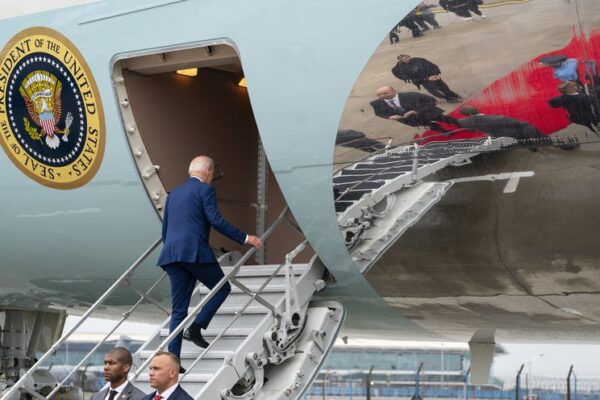
The G20 wound up on Sunday with leaders visiting a memorial statue to Indian independence leader Mahatma Gandhi, a day after adding 55 new member states via the African Union and coming up with a compromise communique soft on Russia’s invasion of Ukraine. Prime Minister Narendra Modi invited the African Union to join the G20 as a permanent member on Saturday in his opening remarks, calling on members to end a “global trust deficit.” “It is time for all of us to move together,” Modi said. Despite widespread anticipation that this year’s summit would be a damp squib, it appeared to have featured some significant pushback on China’s apparent unwillingness to play ball with the developed world. Modi announced on Saturday that negotiators had resolved deep differences over the wording on the war in Ukraine, but the phrasing – not invasion by Russia but “war in Ukraine” – was clearly a bone to Russia and China, whose leaders did not attend. China and Russia were opposed to any joint statement that censures Russia’s invasion of Ukraine. U.S. President Joe Biden skipped the final session of the summit, heading to Vietnam, where a Whitehouse official said the two nations would elevate their relationship to a comprehensive strategic partnership, putting it on a par with Beijing and Moscow’s engagement with Hanoi. U.S. President Joe Biden leaves for Vietnam after attending the G20 Summit, in New Delhi, India, Sunday, Sept. 10, 2023. Credit: AP Modi pronounced the summit a success. “On the back of the hard work of all the teams, we have received consensus on the G20 Leaders Summit Declaration. I announce the adoption of this declaration,” Modi told the G20 leaders in New Delhi. “#G20India has been the MOST ambitious in the history of #G20 presidencies. With 112 outcomes and presidency documents, we have more than tripled the substantive work from previous presidencies,” said India’s G20 Sherpa representative Amitabh Kant on social media. Commentators said that it was significant that India appeared to be ready to take a more assertive role in global politics. Modi ended the summit by passing on the ceremonial gavel to Brazil’s president Luiz Inacio Lula da Silva, whose country takes over the bloc’s presidency. Welcome Africa The announcement of permanent inclusion of the 55-nation African Union (AU) is likely to be a blow for Chinese president Xi Jinping, who did not attend the summit for unknown reasons, and recently heralded the new membership of six countries in the BRICS grouping as “historic.” The AU’s young population of 1.3 billion is expected to double by 2050, when it will account for a quarter of the global population. It’s strategically important to both China, Africa’s largest trading partner and one of its largest lenders, and Russia, its leading arms provider. Indian Prime Minister Narendra Modi, right, shares a light moment with African Union Chairman Azali Assoumani upon his arrival at Bharat Mandapam convention center for the G20 Summit in New Delhi, India, Saturday, Sept. 9, 2023. Credit: Pool via Reuters Meanwhile, in what will likely be seen as a challenge to Xi’s ambitious Belt and Road Initiative (BRI), U.S. President Joe Biden, Modi and allies announced a rail and shipping corridor connecting India with the Middle East and ultimately Europe. The project will include the United States, India, Saudi Arabia, the United Arab Emirates, the European Union and other countries in the G20. Commentators speculate it will enable greater trade and be an ambitious counter to China’s massive BRI, through which it has sought to invest and lend its way to making its economy better connected with the world. Saudi Arabian Crown Prince Mohammed bin Salman, left, and Indian Prime Minister Narendra Modi shake hands next to U.S. President Joe Biden on the first day of the G20 summit in New Delhi, India, Sept. 9, 2023. Credit: AP/POOL The moves on Saturday, which were roundly seen as pushback against China, came against a background of speculation as to why China’s Xi was not present and calls for Beijing to explain itself. “It’s incumbent upon the Chinese government to explain” why its leader “would or would not participate,” Jon Finer, the U.S. deputy national security adviser, told reporters in Delhi. He said there was speculation that China is “giving up on G20” in favor of groupings like BRICS, where it is dominant. Chinese Premier Li Qiang, who attended the summit as a representative of Xi, called on the European Union Commission President Ursula von der Leyen for greater unity and cooperation between the two sides to counter global uncertainties, according to a statement on Sunday from China’s Ministry of Foreign Affairs. Li urged the EU to provide a non-discriminatory environment for Chinese companies, as the bloc becomes warier of the risks of engaging China, seeing it as a “systemic rival” since 2019. Edited by Mike Firn and Elaine Chan.
