
Category: East Asia
Myanmar company director and regional officials ‘arrested in China’
Eleven businessmen from Myanmar’s Shan state were reportedly arrested while visiting China’s Yunnan province over the weekend, according to traders based on the border. Among them are local officials from the Kokang Self-Administered Zone. Liu Zhengxiang, the director of the Laukkaing-based Fully Light Group, was also arrested. Along with Liu’s connections to the Kokang Border Guard Force, the director is also allegedly involved in online gambling across the country. Fully Light Group, a multi-sector conglomerate working in jewels, tourism, and rubber, is the largest business in Laukkaing. On Sept. 30, about 30 businessmen from Kokang, Laukkaing and Chinshwehaw cities attended a Chinese trade fair in the Lincang district of Yunnan province. The police arrived at the hotel where they were staying and targeted the most well-known businessmen, said a border-based merchant, asking to remain anonymous for fear of reprisals. “Nothing happened on the first day of the trade fair on September 30. They were arrested in their hotel where they were staying on the second day,” the man told Radio Free Asia. “Big businessmen from Laukkaing, in other words the wealthy businessmen, were taken.” Laukkaing junta spokesperson and economic minister Khun Thein Maung told RFA he did not know the specifics of the most recent arrests in Yunnan province. RFA contacted the Chinese Embassy in Yangon and the Myanmar Consulate in Kunming via email, but received no response at the time of publication. Arrests of Chinese nationals living in Myanmar increased sharply last month. An official from the Kokang Self-Administered Zone confirmed on Sept. 28 that authorities detained 377 Chinese nationals who were living illegally in Laukkaing city. The area is a well-known hotspot for fraudulent online businesses, human trafficking and casinos. The official told RFA those arrested last month are being interrogated in relation to online money laundering in Laukkaing. The United Wa State Army also arrested more than 1,300 Chinese nationals in relation to online money laundering schemes last month and handed them over to Chinese authorities at the border. Translated by RFA Burmese. Edited by Mike Firn.

Conflict in Myanmar’s Shan state drives 1,000 civilians into China
Fighting between junta troops and the ethnic Ta’ang National Liberation Army, or TNLA, has driven more than 1,000 people from northeast Myanmar’s Shan state across the border with China to seek shelter, according to residents. The group is the latest example of civilians displaced by conflict in Myanmar, where the U.N. Office for the Coordination of Humanitarian Affairs says that tens of thousands have fled into neighboring countries to avoid conflict since the military’s February 2021 coup. More than 1.6 million people have been internally displaced by fighting since the takeover, according to the U.N. Fighting between the military and the TNLA in Shan’s Muse and Kutkai townships broke out on July 23, when the latter’s forces attacked a pro-junta militia convoy near Sei Lant village on the Muse-Namhkan highway. Since then, more than 1,000 residents of seven villages – including the border tracts of Nam Kat and Sei Lant – have fled into China, said a resident of Nam Kat who, like others interviewed for this report, spoke to RFA Burmese on condition of anonymity, citing security concerns. “We have been fleeing from our homes for two months now,” said the resident. “We can’t make a living and the children’s education has also been impacted.” The resident said that few people felt the need to flee the fighting initially, even when the military began firing artillery in the area. “But one evening recently, lots of people from Namhkan fled after being attacked because the military used a jet fighter and the attack was at night,” he said. There are more than 100 internally displaced persons, or IDPs, sheltering in Namhkan’s Kawng Tat village and more than 300 IDPs sheltering in Muse’s Nam Hsant village, the resident said, while at least 1,000 people have fled to Ruili and Jie Gao in southwest China’s Yunnan province. The number of people who have fled elsewhere was not immediately clear, he added. Caught between two factions Residents of Sei Lant told RFA that while some villagers had fled to Muse, most are “living in fear” in their homes. One resident named Aik Sai said that although fighting has stopped in recent days, “they are worried that it will resume” due to the presence of troops from both sides stationed near the village. “Both sides are staying [near] the village and we can’t drive them out,” he said, urging the troops to “fight in the jungle, if possible … [because] it isn’t good for both sides to use locals as shields.” Aik Sai said life in the village had ground to a halt amid the fighting and that “we can’t earn a living.” “We’re worried about residents being shot in the village,” he added. TNLA spokesman Lt-Col. Mai Aik Kyaw confirmed the military’s recent use of air power in the area. He said that on Sept. 25 at around 10:00 p.m., the military dropped six bombs, including two 500-pound bombs with an impact radius of up to 30 meters (100 feet), in the jungle near a TNLA camp along the Muse-Namhkan highway, around 16 kilometers (10 miles) from the Chinese border. “We don’t know why they came and attacked,” he said, adding that the TNLA has “only engaged in self-defense.” “Since Sept. 22, there has been no retaliatory attack from our side,” Mai Aik Kyaw said. “On their side, they are constantly firing from the air and artillery every day. In the last three or four days, there have been drone attacks.” A Myanmar junta jet dropped 500 lb. bombs on a TNLA base on Loi Mauk Mountain, Sept. 26, 2023. Credit: News & Information Department A resident of Kutkai’s Ngawt Ngar village also confirmed the military’s use of aircraft, saying that two fighter jets fired on the tract on the afternoon of Sept. 26. That same evening, he said, junta troops in nearby Nam Hpat Kar lobbed artillery at Ngawt Ngar, damaging a home. The resident said that the incidents were enough to cause many villagers to flee and others to go into hiding nearby. “There are only a few people left [in the village],” he said. “Some ran away to the jungle, since people don’t dare to stay in the village anymore.” Control of border town Attempts by RFA to reach the junta’s economic minister and Shan state spokesman Khun Thein Maung went unanswered. Similarly, RFA contacted the Chinese Embassy in Yangon via email regarding the issue of Myanmar nationals fleeing into China due to fighting near the border, but received no response. Than Soe Naing, a Myanmar political commentator, said he believes that the junta has been stepping up attacks in the area because it “cannot tolerate” TNLA control of Muse, a town of economic importance due to its proximity to the border. “That’s why the junta is putting pressure on the TNLA, and the fighting has become intense,” he said. According to the TNLA, the two sides fought nearly 50 battles between July 23 and Sept. 26. RFA reporting found that a total of nine civilians – including a child – were killed and 13 civilians were injured in Mogoke, Muse and Kutkai townships over the same period. Translated by Htin Aung Kyaw. Edited by Joshua Lipes and Malcolm Foster.
Myanmar guerrilla group says it shot junta conspirator in Yangon
A man accused of working with Myanmar’s ruling junta has been shot in the head in central Yangon, a local guerilla group said. The Urban Owls released a statement shortly after Monday’s shooting claiming responsibility for the attack, saying that businessman Nyan Lwin Aung was targeted for his close relationships with military leaders. They said the man accompanied junta leader Senior Gen. Min Aung Hlaing on his trip to Russia last year and met with Russian Defense Ministry officials. Nyan Lwin Aung also bought weapons for the junta, the group claimed. He was shot in the head at an intersection in Latha township, residents told Radio Free Asia on Tuesday. “It happened at around 10 p.m. last night,” said one local, asking to be kept anonymous for fear of reprisals. “He was sent to the Yangon General Hospital. A large number of junta troops arrived with military vans and investigated 17th to 19th Street after the shooting incident.” Police and soldiers began searching civilians along the busy Shwedagon Pagoda Road after the shooting, the local said. Another Latha resident said Nyan Lwin Aung was shot at close range in his left temple and was sent to Yangon General Hospital. The hospital’s emergency department confirmed to RFA Burmese that Nyan Lwin Aung arrived at the hospital Monday night with a serious wound. One surgeon said he was in a critical condition and being treated in the intensive care unit. Yangon division’s junta spokesperson and regional attorney general Htay Aung had not responded to RFA at the time of publication. Monday’s statement by the Urban Owls added that Nyan Lwin Aung had also worked for the Ministry of the Interior, installing CCTV facial recognition cameras. It said he had a company in Myanmar with business subsidiaries in Thailand, Russia, China, and the United Arab Emirates under the name North Gate Engineering and Technology. RFA has yet to confirm the group’s claims. When a reporter called North Gate’s Yangon office an employee said he was not authorized to comment. The guerilla group has carried out a number of killings, claiming responsibility for the death of Ye Khine, security chief of the Yangon International Airport, as well as Minn Tayzar Nyunt Tin, a junta-affiliated lawyer accused of money laundering. Translated by RFA Burmese. Edited by Mike Firn.
Myanmar junta seeks to wipe out headquarters of Kachin rebel group
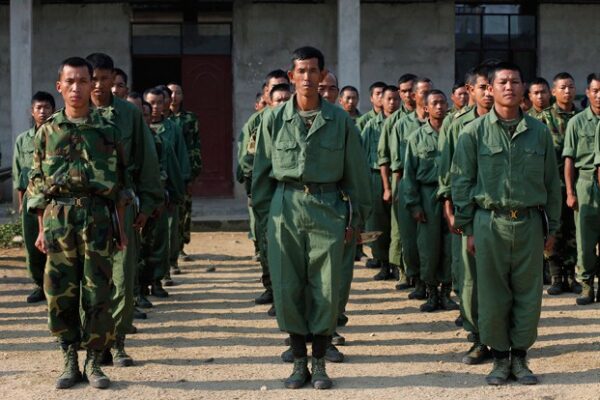
The Myanmar junta is going all out with its air and ground forces to wipe out the headquarters of ethnic Kachin rebels in northern Kachin state, eliminating a lifeline of support for anti-regime militias in neighboring Sagaing region, political and military analysts said. A fierce battle broke out between military troops and Kachin Independence Army forces on Monday near the Lai Lum Awng Jar base camp in Kachin’s Momauk township, said Col. Naw Bu, the group’s information officer. Between 50 and 100 junta soldiers have been trapped by KIA forces inside the camp for more than two months, he said. The junta launched three air strikes while some of its troops who tried to rescue them were intercepted by the KIA along the route. Fierce fighting between junta troops and joint KIA and local People’s Defense Forces – ordinary citizens who have taken up arms against the junta – in the upper townships of adjacent Sagaing region earlier this year began moving in July towards the KIA’s headquarters in Laiza, a remote mountainous town in Kachin state that lies on the border with China, area residents and KIA members said. Since then, the junta’s 1,000-strong force has been attacking Nam Sam Yang village in Waingmaw township near Laiza, while the KIA and some soldiers from the Arakan Army, another ethnic armed group, have jointly defended it, they said. There also has been three months of intense and continuous fighting along the Myitkyina-Bhamo road as the junta tried to gain control of the major cities of Hpakant, Bhamo and Myitkyina in Kachin state, Naw Bu said. “The junta even launched air strikes,” he said. “That’s how intense the military situation is.” “They have reinforced their troops to try to control Hpakant, Myitkyina and Bhamo cities,” he added. “That’s why their troops have reduced strength in Sagaing region, and fighting there has decreased as well.” Hotbed of resistance Up to now, areas of northern Sagaing bordering Kachin have been a hotbed of armed resistance since the military seized power from the democratically elected government in a February 2021 coup. Nine military junta warships loaded with weapons and food supplies, which sailed up from Mandalay along the Ayeyarwady River, arrived in Bhamo on Aug. 19 to reinforce the military base along the Myitkyina-Bhamo road near Laiza, according to local and KIA sources who declined to be named for safety reasons. When the junta columns could not move forward after intercepting KIA forces burned their vehicles and destroyed their supplies, the junta launched air strikes, they said. More than 1,000 residents displaced by the fighting have taken refuge in monasteries and Christian churches in Momauk and Bhamo, said a Bhamo local. Kachin Independence Army recruits undergo training at a military camp near Laiza in northern Myanmar’s Kachin state, Feb. 13, 2012. Credit: Vincent Yu/AP Over 80 battles have occurred in the vicinity of Bhamo, Hpakant, Tanai, Shwegu, Momauk, Waingmaw and at the KIA’s Laiza headquarters between July 23 to Sept. 11, during which junta forces conducted more than 20 air strikes, Naw Bu said. During these battles, 51 junta soldiers were killed and 106 were injured, he said, though he did not disclose the number of KIA casualties. Win Ye Tun, the junta’s social affairs minister and Kachin state spokesman, said he did not know details about the fighting. Junta spokesman Maj. Gen. Zaw Min Tun could not be reached for comment. ‘Cut it from the roots’ Thein Tun Oo, executive director of the pro-military Thayninga Institute for Strategic Studies, said the military is targeting KIA headquarters in Laiza because it wants to eliminate the supply source for armed opposition in the region. “As long as you cannot control the sources of supply for your enemies, you won’t be able to control what is happening on the front,” he said. “This means that if you only cut the branches without cutting the root sources, it will not be enough to kill a tree. To cut down a tree, you need to cut it from the roots.” “Because Laiza is a major source of supplies for the resistance groups, the military’s major aim is to wipe it out so that at least its supply lines of personnel and weapons can be eradicated,” he said. The military junta is trying to wipe out Laiza, so it can control the upper part of Sagaing region, said a political and military analyst on condition of anonymity so he could speak freely. “Since the junta has suffered the loss of many territories especially in Sagaing region, it is attacking Laiza in Kachin state to strategically control and cut the source of supplies for the revolutionary forces becoming stronger in Sagaing region.” Junta troops have been attacking the Laiza headquarters with a much larger force than before, while the KIA is strongly resisting them to prevent the regime from achieving its goal, he added. With junta soldiers stepping up fighting in Kachin state, the number of attacks in the upper Sagaing region, such as Indaw, Tigyaing, Katha and Banmauk townships, has decreased, local defense forces said. The junta’s Light Infantry Battalions 416, 309, 301 and 416 used to be stationed in Indaw township and would raid villages, but now only the 77th battalion is there, said the information officer of Indaw Revolution, a defense team in Sagaing region, as troops appear to be headed to Hpakant for reinforcement. More than 80 battles have been fought in Indaw township, and more than 20 civilians have been killed by junta soldiers since the 2021 coup, said the information officer, who declined to identify himself by name for safety reasons. Similarly, KIA-PDF joint forces have fought more than 100 battles with junta troops in Katha township, resulting in the deaths of over 80 civilians and the burning of more than 900 houses, according to an official of the Katha township People’s Defense Force. RFA could not independently confirm the death toll figures. More than 24,000 civilians have fled to safety due to…
Chinese police harass family of Washington DC student activist
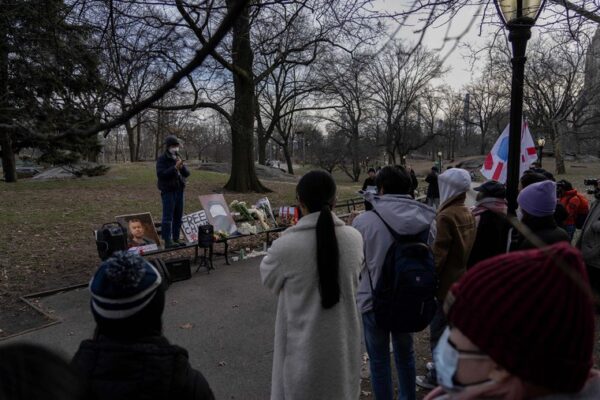
An international student in the U.S. capital has been harassed by China’s state security police for pro-democracy activism on American soil, with his loved ones back in China hauled in by police for questioning and told to get him in line, Radio Free Asia has learned. Zhang Jinrui, a law student at Washington’s Georgetown University, said his family in China received an unexpected visit in June from state security police, who interrogated his father about Zhang’s level of patriotism and questioned him about his activities in the United States. “The state security police knocked on our door and took my father away for lengthy questioning,” Zhang told Radio Free Asia in a recent interview. “[They asked him] ‘Does this child of yours take part in pro-democracy activities? Do they usually love their country and the [ruling Chinese Communist] Party?’” “If not, you have to teach him to love his country and the party better,” the police said. “It’s not OK that he’s doing this, and it won’t do any good.” Zhang’s experience comes amid growing concern over Beijing’s “long-arm” law enforcement targeting overseas activists and students, who had expected to enjoy greater freedom of speech and association while living or studying in a democratic country. Zhang said the questioning of his father came after he took part in protests in support of the “white paper” protest movement in November 2022, and against Beijing’s hosting of the Winter Olympics in February. There are growing concerns over Beijing’s “long-arm” law enforcement targeting overseas activists and students. Here, “Viola,” a New York University graduate student, delivers a speech during a gathering to mark the third anniversary of the death of Chinese whistleblower Li Wenliang in New York on Feb. 5, 2023. Credit: Gemunu Amarasinghe/RFA Yet he wasn’t contacted at the time by police, who sometimes contact overseas Chinese nationals via social media platforms to get their message across. “On the evening of June 29, I suddenly received a WeChat message from my sister saying ‘Contact me urgently, something happened,’” Zhang said. “The people from the police station had called my sister and asked about her [relative] in Washington, wanting to know if they took part in the Torch on the Potomac group, saying I was a key member.” Fear and self-censorship Torch on the Potomac was set up by students at the George Washington University in April, to provide a safe space for dissident activities by Chinese students. But Zhang was nonplussed by the accusation, saying that the group has yet to organize any activities, and that police have also been harassing the families of Chinese students who haven’t taken part in any activism at all. Calls to the Wusan police station, which is close to Zhang’s family home in the northeastern Chinese city of Shenyang, rang unanswered during office hours on Sept. 19. Several other Chinese students declined to be interviewed when contacted by Radio Free Asia. Sarah McLaughlin, senior scholar at The Foundation for Individual Rights in Education, said speaking to the foreign media could bring down further trouble on the heads of students who may already have seen their families hauled in for questioning. “I know that that’s something that international students have run into before,” she said. “They’ve gotten in trouble when they returned home for things they’ve said online while in the United States.” McLaughlin said the harassment of their families in China will have a chilling effect on students’ speech, even overseas. “There are definitely some real fears among these students, and there’s definitely self censorship,” she said. Classroom informants And the police aren’t the only source of such anxiety – there is also the risk of being reported by fellow students from China, who are encouraged via the Chinese Students and Scholars Associations to keep an eye on each other. A Georgetown University faculty member who asked to remain anonymous said the problem is becoming more and more serious, with Chinese students feeling unable to speak freely in class, for fear of being informed on by their Chinese classmates. Georgetown University student Zhang Jinrui says he was harassed by members of the Georgetown branch of the Chinese Students and Scholars Association as he was distributing flyers. Credit: Gemunu Amarasinghe/RFA Last year, when students at George Washington University put up posters on campus opposing China’s hosting of the 2023 Winter Olympics, the Chinese Embassy sent members of the campus branch of the Chinese Students and Scholars Association to tear them down again and put up posters denouncing their actions. “They even got in touch with the school, saying that the Chinese students who support democracy and oppose zero-COVID are racist,” Zhang said. “That’s why they set up the Torch on the Potomac, because a lot of their activities weren’t getting the support of the school.” George Washington University President Mark Wrighton admitted in a Feb. 8 statement that the removal of the posters was a mistake, and the university administration should have waited until they better understood the situation before acting. “We began to receive a number of concerns through official university reporting channels that cited bias and racism against the Chinese community,” Wrighton said. “I also received an email directly from a student who expressed concerns.” “I have since learned from our university’s scholars that the posters were designed by a Chinese-Australian artist, Badiucao, and they are a critique of China’s policies,” he said. “Upon full understanding, I do not view these posters as racist; they are political statements.” Neither Georgetown University nor George Washington University had responded to requests for comment on the renewed harassment of Chinese students in the United States by Sept. 19. A wall with posters at Georgetown University in Washington. Torch on the Potomac was set up by students at the George Washington University in April, to provide a safe space for dissident activities by Chinese students. Credit: Gemunu Amarasinghe/RFA Close contact with embassies Zhang said he has also been personally harassed by members of the Georgetown branch of the…

Zoned out: China-Myanmar Economic Corridor still going nowhere
As Myanmar’s economy continues to skid, with soaring inflation, a depreciating kyat, and flat revenue, junta leader Min Aung Hlaing seems to be looking for a few Chinese-backed marquee projects to kickstart growth, and ensure Beijing’s long-term commitment to the State Administrative Council, as the regime is formally known. In August Min Aung Hlaing called for the completion of the Kyaukphyu special economic zone (SEZ) and container port, while engineering work is starting on the 810-km railway connecting Kyaukphyu with Muse, a city on the Myanmar-China border. The project in western Myanmar has evolved and absorbed different components since a 2011 memorandum of understanding for the Kunming-Kyaukphyu railway led eventually to a set of projects under China’s ambitious $1 trillion Belt and Road Initiative. But as the BRI prepares to celebrate its tenth anniversary at a summit in Beijing in October, China, unhappy with the slow pace of CMEC implementation, looks unlikely to extend an invitation to Min Aung Hlaing, denying him the recognition that he covets. Oil tanks seen on Maday island outside Kyaukphyu, Myanmar, are seen May 17, 2017. Credit: Soe Zeya Tun/Reuters Chinese projects in Myanmar were facing trouble before Min Aung Hlaing overthrew the country’s elected government on Feb. 1, 2021. Now they are beset by unrest, power shortages and transport woes. Kyaukphyu began as a small port for offshore and imported oil, as well as being the land terminus for the Shwe gas field. The 51-49 joint venture between China National Petroleum Company and the Ministry of Oil and Gas Enterprises constructed a pier and 12 tanks, which commenced operations in 2013. The US$2.5 billion 750 km oil pipeline and 770 km gas pipeline to Kunming became fully operational in 2017. That year, PetroChina opened up a refinery in Kunming that was able to handle 7% of China’s total refining needs. These pipelines were China’s strategic priority, but Beijing had other goals for linking landlocked southwestern China to the Indian Ocean. China saw the project as a way to address what then Chinese President Hu Jintao described in 2003 as the “Malacca dilemma” of vulnerability to a naval blockade of the Southeast Asian waterway which carries two-thirds of China’s energy imports and trade flows. In 2018, the two sides established the China-Myanmar Economic Corridor (CMEC) to jumpstart the projects as part of the BRI, the signature project of Hu’s successor Xi Jinping. Beijing also saw as supporting Myanmar’s National Ceasefire Agreement signed by some ethnic armies in 2015 to end years of hostilities with the government. All existing Myanmar projects were folded into the CMEC, and still there was little movement. Two of the first MOUs were a feasibility study for the first phase of the railway project and an environmental and sustainability impact study of Kyaukphyu. Ambitious projections A December 2015 tender between the government of reformist military leader Thein Sein and a consortium of Chinese corporations led by the state controlled investment company, CITIC, established the Kyaukphyu SEZ and deepwater port. The $7.3 billion project was 85% owned by the Chinese consortium. The phased project included the 1,736 hectare Kyaukphyu SEZ followed by two deep water container ports on Maday and Ramree islands. At capacity, 270 and 237 hectares ports would be able to berth 10 ships at once and handle 4.9 million containers annually. There were wild promises by CITIC, including projections of adding $10 billion to GDP annually and the creation of 100,000 new jobs. But little happened. And there was already pushback from the elected National League of Democracy government led by Aung San Suu Kyi . Fearful of a scenario that played out when Sri Lanka became heavily indebted to China, in 2018, the Suu kyi administration renegotiated the agreement, lowering China’s stake to 70% as well as decreasing the overall debt for the project. But the ethnic cleansing and violence in Rakhine state, the location of the port facility, kept everything at a standstill. Xi Jinping’s January 2020 visit to Myanmar took advantage of Aung San Suu Kyi’s diplomatic isolation following the forced expulsion of Rohingya Muslims in 2017 that led to UN genocide charges. More than 30 agreements were signed, many of which related to Kyaukphyu and its rail links. Days before the February 2021 coup, Chinese Foreign Minister Wang Yi met with Suu Kyi to push for the quick implementation of CMEC projects, including Kyaukphyu. Myanmar’s State Counsellor Aung San Suu Kyi meets with China’s Foreign Minister Wang Yi in Naypyidaw, Jan. 11, 2021. Credit: Thar Byaw/Myanmar State Counsellor Office/AFP Seven months after the military seized power, site work began on the 1,740 hectare site. But there were immediate protests from the 20,000 people who were being displaced and harbored mistrust over promised compensation. Unrest was also fueled by civil disobedience against the coup, and junta crackdowns and arrests of local officials and activists. Another impediment for the project is the regional shortage of electricity. In 2019, a Hong Kong based firm, VPower, which is partially owned by CITIC, won an emergency tender to provide electricity in Myanmar. By 2021, it had nine different power projects around the country, including three in Kyaukphyu. Yet, the firm shut down the 200mw Kyaukphyu II project in mid-2021, despite it being a 60-month contract. By 2022, VPower had shut down the Kyaukphyu I plant. Both were dismantled. The firm cited a number of factors in the closing of the plants, including irregular supply of LNG, currency controls and other issues related to the post-coup investment climate. Left unsaid was the government’s inability to pay for the amount of electricity that it contracted for and to pay the sum in U.S. dollars. That left only one power plant in Kyaukphyu, a 135mw gas-fired plant, a 2020 joint venture between VPower, CNTIC, and Myanmar’s Supreme Group. It was still in operation in early 2023, though there are reports that it has recently closed. Underwriting the junta Without power, little is progressing. In March 2023, a Chinese company signed a MOU…
Short changed: Can China pay the bills?
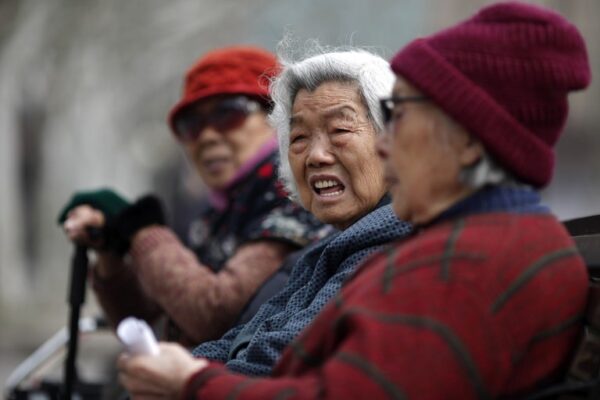
Amid reports and rumors of starving zoo animals and retirees not being paid their pensions, the chair of financially distressed China Evergrande Group, the world’s most indebted property developer, is now under “residential surveillance.” Call it house arrest – and as the Chinese property sector loses its mojo some 42,000 local governments are looking for money to pay off creditors. Evergrande chairman Hui Ka Yan, or Xu Jiayin, is under 24-hour police supervision and can neither leave his home nor receive guests without permission. He was once the richest man in China. In 2017, Hui Ka Yan had a net worth of US$42.5 billion, surpassing Alibaba founder Jack Ma and Tencent founder Pony Ma. Much of China’s prosperity – like Hui’s – probably now begs a question mark, and it’s not just the private property giants like Evergrande; it’s the tens of thousands of local governments that have built out and “modernized” China on what may be the speculative property bubble of all time. The court is out on the extent to which real estate accounts for China’s GDP – 25% to 30% by most reckonings – but the issue, in a new era of massive oversupply and low demand, is where the new equilibrium will settle. Says Andrew Collier, managing director of Orient Capital Research, “China has to reduce the size of the property industry by about one-third, which is going to cause a lot of pain for homeowners, local governments and some banks.” Some analysts might describe that as an optimistic assessment. ‘Too big to resolve’ George Magnus, Research Associate at the China Center, Oxford University says that debt is everywhere in the Chinese system, and the extent of it is difficult, if not impossible to evaluate. “Debts are lurking in public-private partnership projects – [there are] loans that are off balance sheet or off the books completely, and other local government fund raising schemes.” Anne Stevenson-Yang, founder and research director of J Capital Research describes it as “a very inexact science,” referring to the problem of ascertaining the depth of China’s countrywide debt. “A government may write a contract with a company to get a loan of, say, 100 million yuan,” Stevenson-Yang says, adding that it might be presented “as a land sale.” “There’s an understanding that the land will be turned back once the money is repaid, but that understanding may not be written down.” Adds Stevenson-Yang, “I think the problem is just too big to resolve.” An accurate measure of off-the-books debt would be a tall order, says Dexter Roberts, director of China affairs at the Mansfield Center at the University of Montana and a senior fellow at the Atlantic Council. “What we do know is that it is very large and growing,” Roberts says. “Beijing does seem determined to avoid the moral hazard of bailing out local governments. The trouble with that is the indebtedness of local governments has become so severe that it is spilling over and affecting many regular Chinese as well, as is true with elderly who are seeing their pension payments delayed or civil servants who aren’t getting paid on time.” Elderly women sit at a park in downtown Shanghai March 16, 2012. Credit: Reuters In short, the debt that’s weighing down the former Chinese growth juggernaut has to settle somewhere and it will be likely to fall on the heads of those least likely to be able to afford it. “The people of China,” says Stevenson-Yang. She adds, speaking on the question of how Beijing might approach the problem: “I have no idea what their plan is other than to hide head in sand. I actually think they are bureaucratically stuck.” Economist Michael Pettis commented in a tweet thread, on the social media platform now known as X, that it would probably be best if Beijing provides only temporary relief while forcing local governments to resolve the debt themselves.” The “extremely difficult bind” local governments found themselves in, with dwindling revenue that crimps ability to repay debts, was due to a confluence of factors, says Roberts. “The pandemic lockdowns plus crackdown on the overleveraged property sector which was probably necessary but has been so damaging to the overall economy, plus the drop in incomes and the ability to spend brought on by the overall economic hard times.” Oxford’s Magnus says, “The central government has seemingly started sending inspectors in to get a proper picture of local government debt, and there is talk from finance pros and some policy people about debt swaps, under which expensive local government debt would be swapped for cheaper central government bonds. “This would, at best, buy a bit of time, but it’s just replacing debt with debt and doesn’t really solve the problem.” The Country Garden One World City project under construction is seen on the outskirts of Beijing, Thursday, Aug. 17, 2023. Credit: AP In the meantime, China’s private property giants – Evergrande, Country Garden and Vanke, among others, continue to reel in a market with no takers. Local governments that have indebted themselves on the basis of property assets that are now overvalued and will not be bailed out from on high are in a bind. “Emigrate,” said J Capital Research’s Stevenson-Yang when asked what she might do if she was running an indebted local government in China. Edited by Mike Firn and Elaine Chan.
Authorities arrest Tibetan man twice for possessing Dalai Lama photo
Chinese authorities have arrested a Tibetan man for a second time for being in possession of a photo of the exiled Tibetan spiritual leader, the Dalai Lama, sources with knowledge of the situation said. Possessing photos of the Dalai Lama, who has resided in northern India since 1959, is considered an act of separatism and has been a punishable offense in Tibetan-populated areas of China for decades. Tibetan sources recently told RFA that authorities arrested Tsultrim, a Tibetan from Tsaruma township in Ngaba’s Kyungchu county, in February 2023 after they discovered pictures of the 14th Dalai Lama on his mobile phone. He was detained until April, they said, when he was sentenced to two years in prison by the People’s Court of Ngaba, a Tibetan region in southwestern China’s Sichuan province, also known as Aba in Chinese. Chinese authorities maintain a tight grip on Tibet, restricting Tibetans’ political activities and peaceful expression of cultural and religious identity. Tibetans frequently complain of discrimination and human rights abuses by authorities and policies they say are aimed at eradicating their national and cultural identity. Authorities in China maintain a tight lockdown on the flow of information in and out of the country’s Tibetan regions, and it can often take weeks to learn of arrests and other incidents through the exile community. Tsultrim, whose age is unknown, is serving his sentence in Yaknga Prison, and none of his family and friends are allowed to see him, said a Tibetan who lives in exile. After graduating from Northwestern Minzu University in 2016, Tsultrim worked as a self-employed businessman, said the source who declined to be named so he could speak freely. “He has always been an intelligent young Tibetan and has advocated for preservation of the Tibetan language,” the source said. Prior to this incident, Chinese authorities summoned and interrogated Tsultrim in July 2022 for sharing a picture of the 14th Dalai Lama on social media and saving the photo on his mobile phone, said a Tibetan from inside the western region. Authorities examined his phone and detained him for two months until September when he was released, said the source who also declined to be named. “However, during his detention, he was beaten and had gone through such a tough time that he wished death upon himself,” the source told RFA. In May, authorities also sentenced two Tibetan monks in Sershul county, or Shiqu in Chinese, on separatism charges for possessing photos of the Dalai Lama on their phones, giving one three years and six months in jail, and the other three years, RFA reported earlier. Translated by Tenzin Dickyi for RFA Tibetan. Edited by Roseanne Gerin and Joshua Lipes.
Make revolution, not love
North Korean authorities have threatened to punish young couples partaking in “degenerate” romantic behavior at solemn historical sites honoring the ruling Kim family. The warning came after an angry official carped that lovebirds were “casually holding hands and openly dating” at the birthplace of Kim Jong Suk, grandmother of leader Kim Jong Un. Monuments to the three-generation Kim dynasty that dominate the urban landscape of North Korea are popular dating venues because they are well-lit in a country where electricity is a luxury.
Clean energy growth is keeping the 1.5 C target alive, IEA says
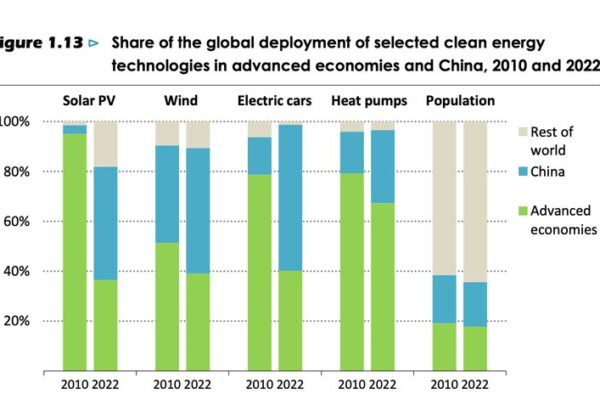
Significant growth in clean energy technologies, like solar panels and electric vehicles, has helped keep viable the target to limit global warming to 1.5 degrees Celsius, the International Energy Agency said in a new report on Tuesday. However, it warned that China and advanced economies must intensify their climate commitments to reach the goal on time. According to the 2015 Paris Agreement, the world must limit global warming to 1.5 C above pre-industrial temperatures by the end of this century to tackle the urgent threats posed by climate change, including rising sea levels, extreme weather events, and disruptions to ecosystems. Global investment needs to escalate to US$4.5 trillion annually from the next decade, a leap from the anticipated $1.8 trillion in 2023, the International Energy Agency (IEA) said in its updated report on the “Net Zero Emissions by 2050 Scenario.” For the world to adhere to the Paris climate goal, wealthy nations are urged to achieve carbon neutrality by 2045, five years ahead of previous targets. China, the world’s top carbon emitter, is called on to expedite its timeline by a decade to 2050. The report comes as temperatures reached unprecedented highs this year, with last month declared the warmest August globally and warmer than all other months except July 2023, when the record was broken with the global average temperature at 16.95 C (62.51 F), according to the World Meteorological Organization. Fossil fuel is peaking, but needs to decrease more The Paris-based IEA said the past two years have witnessed a 40% surge in clean energy investments, with solar energy and electric vehicles projected to contribute to a third of emissions cuts by 2030. “Our analysis showed that even if no new climate policies are put in place by the governments … three fossil fuels, coal, oil, and natural gas, may well peak before 2030 within this decade,” IEA Executive Director Fatih Birol told a virtual press conference on Tuesday. He added that this is a significant development due to a robust and spectacular increase in clean energy technologies and the changes in the economic structure of key consuming countries. “Solar [has] become the king of electricity markets. The old king – coal – is over; now solar is the new king. Not only for climate reasons, but because it is cheap, the cost is coming down.” He also said that one in 25 cars sold worldwide two years ago was electric, whereas this year it has increased to one in five and is growing in key markets. “So the growth coming from solar, electric cars, other renewable technologies are very, very impressive, and they will play an extremely important role in bringing down the need for fossil fuels in the next years,” he said. Birol also said that to reach the 1.5 degrees target, the use of fossil fuels must decline close to 25% between now and 2030. China’s coal expansion and 1.5 can’t go hand in hand The report said China’s 2030 carbon emissions projection is expected to be more than a third of the 2015 scenario due to the substantial solar and wind power growth. Less than 10% of China’s electricity production comes from renewable sources, but Beijing has floated a plan to increase it to 25% by 2030. An infographic showing the deployment of clean energy technologies that remains highly concentrated in China and advanced economies. Credit: IEA According to the IEA report, the Chinese government in 2016 had aimed for EVs to be 12% of total vehicle sales in 2020. The target has been revised to 20% for 2025, bolstered by significant subsidies and tax breaks. However, all these new developments and climate change impacts, including heat waves and drought, have put tremendous pressure on China’s electricity. From 2015 to 2022, power production surged over 6% annually, according to the IEA. Despite the vast growth of renewables, the demand was unmet, leading to a spike in coal-powered electricity generation. Consequently, China’s global contribution to coal-based electricity grew by 10 percentage points during this timeframe. Answering a question by Radio Free Asia on China, Birol said that according to the IEA’s analysis, China is “number one” in solar, wind, electric cars, additional new nuclear capacity, and hydropower, “in all clean energy sources,” as well as a leader in clean energy investments. “But at the same time, coal – the fuel with the most carbon content – is still having a dominant position in the Chinese energy mix,” Birol said. “When we look at the global picture, we see that there is no room for unabated new coal plants if we want to stick to our 1.5 degrees target.” Edited by Mike Firn and Elaine Chan.
