Junta’s second bombing of Sagaing village meant to destroy evidence, rebels say

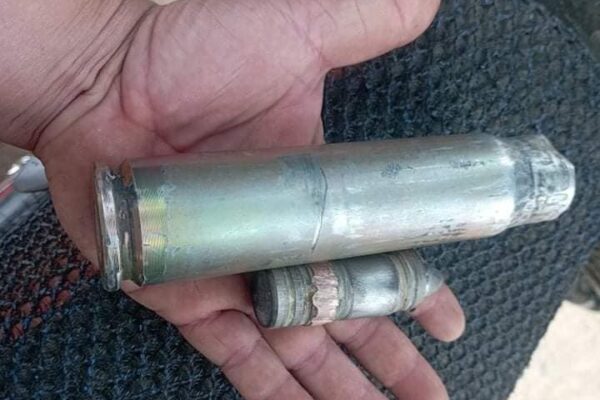
A military airstrike last week on a village in Myanmar’s northern Sagaing region where an earlier attack killed nearly 200 people was part of a bid to “destroy evidence,” a member of the armed opposition said Monday, as reports emerged that the latest bombing killed nearly 20 of the junta’s own troops. The junta’s April 11 air raid on the opening ceremony of a public administration building in Kanbalu township’s Pa Zi Gyi village is believed to be one of the deadliest attacks on civilians in Myanmar since the February 2021 coup. The attack has drawn condemnation from across the globe. On April 20, the military carried out a second airstrike on Pa Zi Gyi, although no civilian casualties were reported, as residents had fled the village following the earlier attack. Ba La Gyi, the head of the anti-junta People’s Defense Force paramilitary group in Ma Lal sub-township, told RFA Burmese that he believes the military carried out the second airstrike to cover up the devastation and loss of life caused by the first one. “I think they aimed to hide or destroy evidence that they killed innocent civilians in their first airstrike,” he said. “Since they haven’t been able to find either the civilian refugees or the PDF fighters, they bombed the village to set it on fire.” During the April 11 attack, jets bombed and helicopters strafed the opening ceremony for a public administration building in the village. It was the latest example of the junta’s increased use of air power in their conflict with armed resistance groups amid falterning progress on the ground. Witnesses have said that it was hard to tell how many people had died in the attack because the bodies were so badly mangled by the bombs and machine gun fire. Ba La Gyi, who was near Pa Zi Gyi at the time of the follow-up attack on the morning of April 20, said two separate junta columns of around 100 troops each raided the village and “went through everything.” “I believe they were looking for refugees [who might have returned to the village],” he said. “At about 2 p.m., they fired heavy artillery into the village from the southwest. They fired exactly 10 times … At 2:26 p.m, a jet fighter flew over and fired at the village after dropping a bomb.” Military account disputed Myanmar’s military confirmed in a statement that it had carried out a “precision” attack on Pa Zi Gyi on April 11 because members of the armed resistance had gathered there and “committed terrorist acts.” Junta Deputy Information Minister Major Gen. Zaw Min Tun also claimed that the large number of casualties was the result of a rebel weapons cache exploding during the operation. But rescue workers have disputed that account. They say the attack on the site was deliberate and thorough, beginning with a jet fighter bombing run and followed by an Mi-35 helicopter strafing the area. A spent cartridge and round found after the first attack at Pa Zi Gyi village in Sagaing’s Kanbalu township, Myanmar, April 11, 2023. Credit: Citizen journalist On Monday, Pa Zi Gyi resident Kyaw Tint accused the junta of making false reports about the airstrike. “Since their attack drew major attention from the international community, the junta tried to cover up its brutality with false accusations that some weapons and ammunition depots exploded during the bombing,” he said. “That’s why they entered the village [on April 20] and I think they are going to fabricate evidence, saying they obtained proof of their accusations.” Attempts to reach Zaw Min Tun for comment on claims that the second attack was part of a junta cover up went unanswered Monday. But Thein Tun Oo, the executive director of the Thayninga Institute for Strategic Studies group, which is made up of former military officers, called the operations in Pa Zi Gyi “ordinary … from an anti-terrorism standpoint” and said they were ordered because the opening of a public administration building in the area was tantamount to a “declaration of autonomy.” “No government of a country can accept a declaration of autonomy within its sovereign territory,” he said. “When you consider the matter of national law and security seriously, human rights and other issues are less important.” Pyae Sone, a member of the Kanbalu PDF, said that the attacks are proof that the junta will not be moved by international pressure. “It also shows that the junta is determined to oppress the people even more severely and brutally,” he said. “I also think the attacks aimed to destroy the evidence left from the first airstrike.” Friendly fire incident Meanwhile, reports emerged Monday that nearly 20 military troops were killed and more than 10 injured in last week’s follow-up airstrike on Pa Zi Gyi when a junta aircraft mistakenly bombed its own soldiers. A resident of the village told RFA that a jet fighter dropped six bombs in the April 20 airstrike, hitting junta troops stationed nearby. “This morning, at about 9:00 a.m., they were picked up by three civilian vehicles,” said the resident. “Seven injured junta soldiers were taken away. We got reports that they are being treated at a 100-bed hospital in Thabeikkyin township. I think they have buried the bodies of the dead junta soldiers near the village.” The resident said that the junta’s 13th Shwebo Training Platoon, which is composed of nearly 200 soldiers, had been stationed near Pa Zi Gyi since April 19. Other residents also reported military casualties in the latest airstrike and confirmed earlier reports that none of the village’s inhabitants were victims of the attack. RFA has been unable to independently verify the claims. Attempts by RFA to contact Aye Hlaing, the junta’s spokesman and Sagaing region social affairs minister, for comment on the incident went unanswered Monday. Residents of Pa Zi Gyi said Monday that they have been unable to investigate the condition of the village amid the continued presence of junta troops in the area. Translated by…

Read More

Troops arrest around 100 villagers in Myanmar’s Tanintharyi region

Junta troops arrested around 100 villagers in Myanmar’s southernmost Tanintharyi region and are still holding almost 80 of them, locals told RFA. They said around 30 soldiers entered Yae Nge village in Thayetchaung township and took residents to a local monastery for questioning. “All the people who were there were arrested. Troops opened fire and captured them when some people ran,” said a villager who didn’t want to be named for security reasons. He said he didn’t know the names and ages of those arrested but said both men and women were being questioned by the junta. Other locals speculated that the junta is interrogating them because there are People’s Defense Forces in neighboring villages. RFA called Yin Htwe, the junta spokesperson for Tanintharyi region, but he said he didn’t know about the incident. Tanintharyi region, bordering Thailand, has seen some of the fiercest resistance to rule by Myanmar’s military, which seized power in a Feb. 2021 coup. There were more than 3,700 clashes in the region and nearly 400 deaths between Feb. 2021 and Feb. 2023, according to the UN Organization for the Coordination of Humanitarian Affairs. The junta declared martial law in Palaw and Tanintharyi townships on Feb. 2 this year and sent more troops into the area as armed clashes intensified and residents staged nonviolent “silent strikes” across Tanintharyi. The junta has arrested nearly 21,500 civilians across Myanmar since the coup, according to the Assistance Association for Political Prisoners. More than 17,500 are still in custody. Translated by RFA Burmese. Edited by Mike Firn.

Read More

Philippines raises concerns with China about spiraling Taiwan tensions

The Philippines on Saturday raised concerns with China about soaring tensions related to neighbor Taiwan when the two countries’ top diplomats met in Manila. The meeting between Chinese Foreign Minister Qin Gang and Foreign Secretary Enrique Manalo came amid heightened rhetoric over the Philippines recently granting the United States access to four additional military bases, two of them fronting Taiwan, which Beijing considers a renegade province. “Manalo reaffirmed the Philippines’ adherence to the One China Policy, while at the same time expressing concern over the escalating tensions across the Taiwan Strait,” said a statement by the Department of Foreign Affairs (DFA) after a meeting of the two officials. Manalo also told his Chinese counterpart that the Philippines continues to pursue “an independent foreign policy, which seeks to ensure stability and prosperity in the region,” according to a report by BenarNews, an affiliate of Radio Free Asia. For his part, China’s Qin reminded Manalo of the “promises” the two nations have made to each other, in what appeared to be an oblique reference to the One China policy, which Beijing’s envoy to the Philippines brought up last week in not so delicate a fashion. Qin called the situation “‘fluid’ and turbulent,” without elaborating. “[A] healthy and stable China-Philippines relationship is not only meeting the aspirations of our two peoples, but also in line with the common aspirations of regional countries,” he said. “We need to work together to continue our tradition of friendship, deepen mutually beneficial cooperation, and properly resolve our differences in the spirit of credibility, consultation, and dialogue, and keep our promises to each other so as to bring more benefits to our two countries and people and inject greater positive energy to the peace and stability of this region and the whole world,” Qin added. Analysts had called expanded access to Philippine military bases “central” to Washington’s aim to deter any plan by Beijing to attack Taiwan. China has said it amounted to interference. But the latest controversy involving China was the warning of its envoy here to the Philippines. Ambassador Huang Xilian had strongly advised Manila to “unequivocally oppose” Taiwan’s independence rather than fan the flames of conflict by offering the U.S. military additional access to bases. He also commented on the safety of 150,000 Filipino workers in Taiwan.  Protesters hold signs demanding the expulsion of Huang Xilian, the Chinese envoy to the Philippines, outside the Chinese Consulate in Makati City, the Philippines, April 21, 2023. [Gerard Carreon/BenarNews] The Philippine government and opposition slammed the Chinese envoy for his statements on Manila’s policy on Taiwan and its workers on the neighboring island, saying they will not brook any attempts at intimidation by Beijing. Philippine President Ferdinand Marcos Jr. later downplayed the Chinese envoy’s comments noting the latter’s speech released in English may have been “lost in translation.” On Saturday Marcos met with China’s Qin and called the meeting “useful.” “Some of the pronouncements that have been made recently by our two countries and many other countries might be misinterpreted,” according to a statement released by Marcos’ office.  “So today it was really useful that we were able to speak with Minister Qin Gang, the Foreign Minister of China, so we can talk directly to one another and iron things out.” South China Sea issue Qin’s visit came even as the Philippines is hosting more than 12,000 American soldiers for the largest-ever joint exercises between the two long-time allies. The exercises were for “maritime defense, territorial defense, [and] coastal defense,” a Filipino military official said last month, amid seemingly hostile actions by Beijing in the South China Sea, parts of which both countries claim. During the meeting Saturday with the top Chinese diplomat, his Philippine counterpart Manalo raised the issue of the disputed waterway. “Our leaders have agreed that our differences in the West Philippine Sea are not the sum total of our relations,” he said, referring to the part of the South China Sea that lies within the exclusive economic zone of the Philippines. “These differences should not prevent us from seeking ways of managing them effectively, especially with respect to the enjoyment of rights of Filipinos, especially our fisherfolk.” Manila has said that China has ramped up its presence in the Philippine Exclusive Economic Zone in the disputed sea and increased harassment of Filipino fishermen in recent years.  At a high-level foreign department consultation last month on the sea dispute, the government reminded China that intimidation and coercion have no place in solving the issue.  While there have been significant developments already after the bilateral consultative meeting, Manalo noted that much still needed to be done. Philippine President Marcos on Saturday referred to the dispute saying more communication would help. “As to the conflicts, we agreed to establish more lines of communications so that any event that occurs in the West Philippine Sea that involves China and the Philippines can immediately be resolved,” he said.  “So we are currently working on that and are awaiting the Chinese response and we are confident that these issues would be worked out that would be mutually beneficial for both our nations.” Manila had recently lodged a complaint about the swarming of more than 40 Chinese fishing boats, which were escorted by a Chinese Coast Guard ship and a People’s Liberation Army (PLA) Navy ship near Pag-asa (Thitu), one of the Philippine-occupied islands in the disputed waters. In February, a CCG ship allegedly pointed a laser towards a Philippine Coast Guard vessel in Ayungin Shoal (Second Thomas Shoal). Still, as the Philippines’ Foreign Secretary Manalo noted, China has remained the country’s top trading partner over the past few years, even amid the COVID-19 pandemic. And when Marcos visited Beijing in January, he took home investment pledges worth about U.S. $22.8 billion. Meanwhile, Marcos is scheduled to make his second visit within a year to the U.S. on May 1, when he is set to meet with U.S. President Joe Biden in the White House. The two leaders are expected to discuss…

Read More

‘Ogre’ battalion uses brutality to instill terror in Myanmar

Eds Note: Some readers may find the content of this article disturbing. They lop off people’s heads and mutilate bodies to instill terror. They torture victims to death. They seem fearless in battle, surging forward when under fire.  Officially, they make up part of the 99th Light Infantry Battalion of the Myanmar military. But to most people, they are known as the “Ogre” column, a unit of killers notorious for their cruelty in a military already known for its brutality. And they have been criss-crossing Myanmar’s heartland, killing rebel fighters and massacring villagers believed to be supporting them, terrorizing everyone in their path. “What makes this column different is that they are specially trained to kill people,” said Nway Oo, a member of a resistance group in Myaung township. “They chop off the heads and ears of victims in cold blood.” “They appear ghostly in battles, too,” he said. “They move forward in battles no matter how risky the situation is or how much they are under attack.” Myanmar’s military has faced stiff resistance from ordinary men and women who have taken up arms to form People’s Defense Force bands to fight junta troops since the military’s coup two years ago.  The Ogres’ atrocities are meant to terrorize their foes, who often have little combat training and aren’t usually well-armed. It’s all part of psychological warfare that was developed by the country’s generals known as “Sit Oo Bi Lu,” the “First wave of brutal attack,” or “Yakkha Byu Har” – “The Ogre Strategy,” a former military captain who defected to the rebel side since the junta’s takeover. “Brutal acts by the junta troops, such as beheading people and burning down civilian properties, are intended to frighten the people,” said the captain, who goes by Nat Thar. “This is a psychological tactic to scare the people into thinking that they don’t want to be the one beheaded when the junta’s 99th Division enters their village, to make them fear head-on conflict, although they belong to a population of tens of thousands,” he said. Battleground Sagaing Some of the fiercest resistance against the military has been in the northern Sagaing region, and in recent weeks the “Ogre” battalion has been attacking dozens of villages and rebel bases there in townships such as Ye-U, Khin-U, Taze, Myinmu and Myaung. On March 30, the column raided a PDF base under the command of Capt. Bo Sin Yine near the village of Swae Lwe Oh. The junta troops soon overwhelmed the rebel fighters, and soldiers then took Bo Sin Yine, a 31-year-old former corporal in the township’s Fire Brigade, and his fighters captive. Footage taken by a drone operated by the Civilian’s Defense and Security Organization of Myaung, CDSOM, captured a junta soldier beheading Bo Sin Yine, whose name means “wild elephant,” and carrying his head away on his shoulder. A few days later, Bo Sin Yine’s wife and a team of villagers discovered his body abandoned near the jungle. In addition to beheading him, junta soldiers had lopped off his arms and legs. “They beheaded him and took away his head, but it wasn’t just him. They took away the heads of many people in other townships, too,” she said of her husband, who became the deputy battalion commander of the PDF No.1 in Sagaing. Prior to entering Myaung township, the column raided Myinmu’s Let Ka Pin village, where it killed 10 civilians and disemboweled local PDF leader Kyaw Zaw before chopping off his head and limbs, residents said. The column also killed 16 civilians it had taken as human shields to protect against landmines after raiding Sagaing township’s Tar Tai village. Among the column’s members are soldiers the CDSOM has identified as Capt. Aung Hein Oo, Lt. Capt. Zaw Naing, Sgts. Zaw Set Win, Myint Zaw, Maung Naing, Soe Hlaing, Tun Zaw Myo, and Thein Tun; Lt. Sgts. Ye Yint Paing and Thiha Soe; Engineer Trooper Nay Lin, and Troopers Pyae Sone Aung, Min Thu, and Thant Zin. ‘They told us to pass a message’ In mid-March, the “Ogre” column crossed the Chindwin River from Sagaing into Magway region and made its way south to Yesagyo township, one of several areas under martial law as a hotbed of anti-junta resistance. Early on the morning of March 19, the unit blocked all of the exits from Mee Laung Kyung Ywar Thit village and arrested some 140 residents who didn’t have time to flee. By the end of the day, Ogre fighters had shot and killed a man in his 50s named Han, who worked as a cook feeding refugees of conflict, tortured a 47-year-old mentally disabled man named Sandra to death, and wounded a 16-year-old boy as he tried to escape, villagers told RFA. Villagers in Myinmu township, Sagaing region, move the bodies of people killed by Myanmar military troops on Nyaung Yin island, March 3, 2023. Credit: Citizen journalist Those captured in Mee Laung Kyaung Ywar Thit were added to prisoners from Sagaing’s Myaung township, where the unit had conducted its last raid, including inhabitants of Za Yat Ni, Min Hla, Thar Khaung Lay, Shwe Hlan, Myay Sun, and Sin Chay Yar villages. Around 200 women were divided into two groups and held at the Taung Kuang Monastery on the outskirts of Mee Laung Kyun village, while another group of 40 men and teenage boys were placed under guard in civilian homes, sources who escaped the unit said. A man who escaped after three days said that Ogre fighters confiscated his jewelry and interrogated him about the local PDF, claiming they had already crushed more than 20 of the group’s bases. “We didn’t know if they would take us to the battlefront and force us to step on landmines or kill us before they left the village,” said the man, who declined to be named out of fear of reprisal. “They told us to pass a message to our relatives to give up fighting, bury their weapons, and end their support for…

Read More

US case against alleged monkey smuggler is ‘attack on Cambodia,’ his lawyers claim

The former head of Cambodia’s Department of Wildlife and Biodiversity should not be held responsible for illegally smuggling research monkeys because he was acting on orders of his government and not in a personal capacity, his lawyers have argued in a U.S. government case against him. Moreover, the U.S. case against Masphal Kry is tantamount to an attack on the Cambodian government, his defense lawyers argued, calling the indictment “a full-on assault on a foreign ministry.” U.S. Justice Department officials said Kry and seven other individuals were running a smuggling operation involving hundreds of long-tail macaques – a primate key for medical studies – poached from the wild in Cambodia and shipped illegally to the U.S. Kry, who has been under house arrest since he was apprehended at New York’s JFK airport in November 2022, made his first court appearance at an evidentiary hearing in Miami on Friday.  Officials in the U.S. Attorney’s Office in the Southern District of Florida have accused Kry of taking monkeys from the national parks and other locations in Cambodia and then falsifying permits, making it seem as though the animals had been raised in a breeding facility – the only legal place where the research primates can be sourced from. The prosecutors accused him of being part of a conspiracy in which monkeys were sold with inaccurate export permits to the U.S. The prosecutors accused Kry and his associates of trying to make it seem as though the monkeys had been bred in captivity, when in fact the monkeys had been caught in the wild. Prosecutors said that Kry and his associates concocted a scheme to sell the monkeys. He and his associates have each been charged with seven counts of smuggling and one count of conspiracy. Masphal Kry, the former head of Cambodia’s Department of Wildlife and Biodiversity. Credit: Masphal Kry Facebook On Friday, a judge, Lisette Reid, considered whether some of the evidence gathered by federal investigators could be admitted at trial. The lawyers argued about the circumstances of Kry’s arrest at Kennedy International Airport in New York in November, and whether information that he provided to an investigator on that day can be admitted. At the airport, Kry was read his Miranda rights (his right to have a lawyer present and to remain silent). But his lawyers said that he does not speak or understand English well enough to have comprehended the full meaning of his rights. If he was not aware of his rights, then the information he shared cannot be admitted. The prosecutors said that he was told of his rights, and that he was given a translation of his rights in the Khmer language. Therefore, they said, the evidence can be admitted.Kry, sitting next to an interpreter, listened intently to their arguments. He wore a dark suit and white socks, with an electronic ankle bracelet – a GPS tracking device – bulging under one of his socks. Outside the courthouse, animal rights activists, holding signs (“End Monkey Smuggling”) and wearing cardboard monkey faces, stood in a line. “Hunters in Cambodia are taking mothers away from their babies,” said Amanda Brody, a senior campaigner for an organization, the People for the Ethical Treatment of Animals (PETA), referring to the captured animals. “We’re standing here in solidarity with the monkeys.” Protecting public spaces? Ahead of Friday’s hearing, Kry’s lawyers sought to have the indictment dismissed, arguing that he was following the Cambodian government’s request to obtain monkeys from “public spaces,” places where monkeys are a nuisance for local residents.  In fact, Cambodian officials viewed the capture of the monkeys as a service to the people who live in these areas. Local authorities had wanted the monkeys removed, the lawyers claimed. Kry was fulfilling his duties as a wildlife official and U.S. prosecutors are attempting “to criminalize public acts by a foreign government employee that occurred entirely within that foreign country.” “These public acts are legal under Cambodian law,” said the defense lawyers. Experts say the argument has little credibility as the issue is not whether poaching monkeys is legal under Cambodian domestic law, but that Kry and his conspirators faked import documents to pretend that the provenance of the macaques was legitimate.  This would be illegal under U.S. law and under the Convention on International Trade in Endangered Species of Wild Fauna and Flora (CITES), which Cambodia has signed. The defense’s argument “epitomizes the Cambodian government’s way of thinking — it’s not illegal if the government says it’s not,” said Ed Newcomer, a former U.S. Fish and Wildlife investigator. “[But] Cambodia is a signatory to CITES and, as such, has to follow CITES rules if they want to export their wildlife.” Long-tailed macaques, highly intelligent creatures prized in research for their biological similarity to humans, are protected under international trade law, and their handlers need a permit to ship them to the U.S.  They were added to the endangered species list in 2022 amid increased poaching as demand for the primates surged in the midst of the COVID pandemic. The biggest market is the U.S. From 2000 to 2018, the U.S. imported between 41.7% and 70.1% of the total annual trade, according to a forthcoming article in the International Federation of Tropical Medicine journal.

Read More

Junta air strike in Myanmar’s Magway kills 3, injures 12

A junta airstrike in Myanmar’s central Magway region killed three people and injured 12, residents told RFA.  Thursday’s attack destroyed a National Unity Government administrative building in Tilin township’s Laung Bo Lay village, the second deadly attack on an NUG village office this month. “The Public Administration Office was bombed,” said a resident who requested anonymity for safety reasons. “Three People’s Defense Force comrades died on the spot and about 12 other people were injured.” The two men and a woman who died were members of the Yaw Revolutionary Army, based in Tilin township, according to an official from the local defense force, who also declined to be named. He said four men and eight women were injured, including one person in charge of assisting people left homeless by the conflict in Magway region. The official told RFA a jet fighter flew over Laung Bo Lay village at around noon Thursday, dropping three bombs. He said the junta ordered the air strike after being tipped off about the presence of People’s Defense Force members at the office. It cut telephone lines in Tilin and nearby Gangaw township ahead of the attack. After the air strike, troops stationed at the Shwe Htee Hall in Tilin township and the junta-affiliated Pyu Saw Htee militia staged ground attacks on villages in Tilin, according to locals. They said hundreds of residents from 13 villages were forced to flee. The junta has not issued a statement on the incident and calls to the junta’s Deputy Information Minister Major Gen. Zaw Min Tun by RFA went unanswered. Myanmar’s military is increasingly resorting to air attacks as it meets fierce resistance on the ground from People’s Defense Forces and ethnic armies across the country. On April 18, it carried out an air strike on Ma Gyi Kan village in Magway region’s Myaing township, destroying the hospital. Thursday’s air strike comes 10 days after the junta bombed an NUG office in Sagaing region’s Pa Zi Gyi village, killing around 200 people, the deadliest air strike since the military seized power in a February 2021 coup. The junta bombed the Pa Zi Gyi again Thursday but no one was injured in that attack as most people had fled the village. The National Unity Government was formed shortly after the 2021 coup and serves as a parallel government, campaigning for the restoration of democracy. It also carries out local administrative work in areas not under junta control, while its People’s Defense Forces fight junta troops for control of townships across Myanmar. Translated by RFA Burmese. Edited by Mike Firn.

Read More

Over 20,000 locals flee as Myanmar’s military raids Sagaing region villages

More than 20,000 locals abandoned their villages in Sagaing region’s Khin-U township as Myanmar’s military intensified its offensive against local People’s Defense Forces. A column of around 100 troops staged a dawn raid on Myin Daung village on Wednesday killing five defense force members, according to a PDF official who declined to be named. The defense force responded by detonating mines and exchanging gunfire with junta forces. A resident of nearby Aung Thar said that after the battle, the junta column shelled other villages in Khin-U township, destroying a monastery and burning down three houses in his village. He added that five men who were farming outside the village were taken by troops to act as human shields when they left Aung Thar village. CAPTION: The corner of a house damaged by gunfire in Aung Thar village on April 19, 2023. Credit: Citizen journalist A resident of Myin Daung, who also requested anonymity, said thousands of residents of nearby villages fled their homes “There are more than 10 villages to the south of Myin Daung with a population of about 18,000 people,” the local said.  “Along with the people leaving villages to the north there will be more than 20,000 people fleeing.” A People’s Defense Force member who also declined to give his name told RFA that 21 villages are now empty. RFA called Sagaing region junta spokesperson Aye Hlaing but no one answered. Translated by RFA Burmese. Edited by Mike Firn.

Read More

Woman killed in attack on junta truck in Myanmar’s Kachin state

A woman has died after the Kachin Independence Army set off a mine under a truck carrying junta troops in Myanmar’s eastern Kachin state. Along with soldiers the truck was carrying around 50 civilians, who had been seized by the junta in a raid on Hseng Hpa Yar village in Hpakant township on Tuesday. “The woman who was killed was called N-dup Seng Nu Mai. She died on the spot. Four more residents were injured but not seriously,” said a local who didn’t want to be named for fear of reprisals. “The troops stormed into Hseng Hpa Yar village and took the locals on a 12-wheeled truck along with to serve as human shields.” When RFA contacted Kachin Independence Army Information Officer Col. Naw Bu, he said his  troops did not know that the junta had taken prisoners with them on the truck. “All the junta convoys were covered up with blue waterproof [tarpaulin]. So we detonated the mine as we had prepared in advance,” he told RFA. “Why would we do it if we knew that villagers were in the truck? We never do anything to harm the local people. They [the junta] arrest the locals and force them to go to the front line.” RFA called the junta spokesperson for Kachin state, Win Ye Tun, but there was no response and the junta has not issued a statement on the incident. At least 3,400 civilians have been killed across Myanmar since the Feb. 1, 2021 coup, according to the Assistance Association for Political Prisoners. Translated by RFA Burmese. Edited by Mike Firn.

Read More

Friends say it’s likely Vietnamese blogger was abducted from Bangkok

Wearing a short-sleeved T-shirt, shorts and sandals, the man with the glasses whistled as he slid onto the saddle of his Fino motorbike, backed it away from his Bangkok rental home and rode off. Those were the last images captured by the security camera of blogger Duong Van Thai. The camera screen showed the footage was recorded at 4:37 a.m. on April 13, 2023 – but the timestamp was almost certainly inaccurate.  The video showed Thai motoring away during daylight, and neighbors said he left home at around 11 a.m. on Thursday. Later that day, he live-streamed for about 20 minutes on his YouTube channel with nearly 120,000 followers. He talked about last week’s trial of blogger Nguyen Lan Thang and the U.S. secretary of state’s visit to Vietnam. Calls to his mobile phone and messages on WhatsApp on Thursday afternoon went unanswered, several of his friends said, and he never returned home.  On Sunday, police in Vietnam’s northern province of Ha Tinh announced they had found a person without identification illegally entering the country via trails on its border with Laos. They confirmed that the person was named Duong Van Thai, born in 1982. Duong Van Thai, also known as Thai Van Duong, had been applying for refugee status with the United Nations refugee agency’s office in Bangkok. Thailand for many decades has served as an informal safe haven for political refugees in the region. The 41-year-old fled Vietnam in either 2018 or early 2019 fearing political persecution for his many blog posts and videos that criticized the government and leaders of the Communist Party on Facebook and YouTube.  Now it appears that he was abducted and forced to return to Vietnam. ‘Everything looks normal’ at rental home Grace Bui, a Vietnamese American human rights activist living in Thailand, told Radio Free Asia that she and her friends went to Thai’s home on Monday.  “Inside his room, everything looks normal, just like Duong has just gotten up in the morning and gone out for a quick walk,” she said. “We found the bag he often carried when going out. His wallet was still in the bag, and his UN card and bank cards were still in the wallet. We found his laptop also.” The UN card is a refugee card issued by the UN High Commissioner of Refugees office in Bangkok to people who have refugee status and are waiting to be resettled in a third country.  The back of refugee card has text in both English and Thai that reads as follows: “The bearer of this card is related to UNHCR, registered and documented under the UN General Assembly’s authorization, and cannot be forced to return to their country of origin. All support to the bearer is highly appreciated.” All the belongings in his room seemed to show that Thai was not prepared for a long trip back to Vietnam, where he faces a heavy sentence for his criticism against the government and the ruling Communist Party.  A close friend of Thai said that Thai had a stable life in Thailand and very much wanted to resettle in a third country. He had no plans to return to Vietnam, according to Hoang Trong Man, also known as Man Hien Phap. “I would like to affirm that Mr. Duong Van Thai did not intend to return to Vietnam because if he had had such a plan, he would have told us and collected some belongings before he left,” he said. Pre-disappearance signs Several of Thai’s friends told RFA that he had shared with them a piece of great news on Wednesday. He did an interview with UNHCR officials, who asked if he had any relatives in Australia. Thai replied that he wanted to resettle in the United States, where his girlfriend lived.  Bui, who was in regular contact with Thai before his disappearance, told RFA that it was very unlikely that Thai would return to Vietnam a day after doing an immigration interview with UNHCR. “Duong [Thai] never intended to return to Vietnam, and if you ask Duong’s friends, you will know that he never wanted to go back to Vietnam,” she said.  Nguyen Xuan Kim, another Vietnamese refugee in Thailand and a close friend of Thai’s, said that around two weeks before going missing, he shared his feelings of insecurity just after he posted videos about political infighting in Vietnam. “His recent posts referred to many senior officials of the Ministry of Public Security, about the general who had an extramarital affair,” Kim said. “He said briefly that he should be vigilant just in case but did not go into the specifics.” Thai told Kim that one of his neighbors said that on April 6, a man riding a motorbike with a Chiang Rai provincial number plate approached Thai’s home to film and take photos. The man spoke Thai but with a strange accent, the neighbor told Kim. Kim told RFA on Tuesday that Thai gave him access to his rental home’s security camera system, some social media accounts and some electronic devices. However, Kim said he hasn’t been able to access much of the data. Who was involved?  A statement from Amnesty International’s regional office expressed concern over the information about Thai’s arrest in Vietnam, particularly given that the UNHCR had recognized his refugee status.  “Viet Nam keeps close tabs on dissidents and has in the past shown that it is not above tracking and surveilling them beyond its borders. Vietnamese refugees living in Thailand who fled the country because of the government’s repression must be protected and should not have to live in constant fear,” the group said in the statement sent to RFA on Tuesday. RFA contacted UNHCR and its office in Thailand, as well as the Thai Ministry of Foreign Affairs, via email to inquire about Thai’s case but hasn’t received a response. Phil Robertson, the deputy Asia director of Human Rights Watch, urged the Thai government to clarify Thai’s case.  “There are…

Read More

Albert del Rosario, who led the Philippines in landmark case vs China, dies

Albert del Rosario, the Philippines’ former top diplomat who successfully led the country in its international arbitration case over a territorial dispute with China in the South China Sea, died on Tuesday, his family said. He was 83.  The Philippine case was considered groundbreaking because it marked the first time that any country had challenged China in a world court over its territorial claims in the waterway. His daughter, Dr. Inge del Rosario, confirmed the news to reporters, but did not disclose the cause of death. Other sources close to the family said the ex-foreign secretary died while on a flight to San Francisco. “The family of Ambassador Albert Ferreros del Rosario is deeply saddened to announce his passing today, April 18, 2023. The family requests privacy during this difficult time,” his daughter said. Foreign Affairs Secretary Enrique Manalo confirmed the news. He called del Rosario “an advocate of protecting and advancing national security and promoting the rights and welfare of Filipinos both in the Philippines and abroad.” “You will be missed, Mr. Secretary,” he said. Born in Manila on Nov. 14, 1939, del Rosario, a critic of former President Rodrigo Duterte’s foreign policies – particularly in dealing with China – served as the Philippine foreign affairs chief under late President Benigno Aquino III, from 2011 until 2016. While heading the Department of Foreign Affairs, del Rosario spearheaded the Philippines’ legal battle against China before the Permanent Court of Arbitration in The Hague, Netherlands over a territorial dispute in the West Philippine Sea. The Philippines brought the case before the court in 2012. In July 2016, the arbitration court ruled in favor of the Philippines, and threw out China’s expansive claims in the sea, including in waters that reach its neighbors’ shores. The Philippines calls the part of the South China Sea that is within its territory the West Philippine Sea. Activists who traveled to the contested Scarborough Shoal and were blocked by the Chinese coast, react after a ruling on the South China Sea by an arbitration court in The Hague in favor of the Philippines, at a restaurant in Manila, July 12, 2016. Credit: Erik De Castro/Reuters The Chinese, however, ignored the landmark ruling, even as most countries in the West, led by the United States, hailed the award in the Philippines’ favor. Since then, China has carried on with its military expansionism in the strategic waterway, including building artificial islands. But President Duterte, who took office within a month before the historic ruling, played it down and chose instead to build up warm bilateral relations with China. Late into his presidency, however, he told the United Nations General Assembly that the arbitration court’s ruling was “beyond compromise” and part of international law. The Philippines not only lost a patriot “but an esteemed diplomat who represented our country with utmost grace, honor, and dignity,” Sen. Risa Hontiveros said in paying tribute to del Rosario. His “leadership inspired in us the courage and the creativity to fight for our national interest using lawful and diplomatic means. Defending and protecting our rights in the WPS is an intergenerational battle, one we can win because of the work Sec. del Rosario started,” Hontiveros said in a statement, referring to the West Philippine Sea. Philippine Foreign Secretary Albert del Rosario, who spearheaded the filing of a complaint against China, attends a hearing regarding the Philippines and China on the South China Sea, at the Permanent Court of Arbitration at The Hague, the Netherlands, Nov. 24, 2015. Credit: Permanent Court of Arbitration via AP Jose Antonio Custodio, a military historian at the Institute of Policy, Strategy and Development Studies, a Philippine think-tank, described Del Rosario as “a brave man” who had endured public insults from Duterte. “He was a hero of the republic for successfully fighting against China’s illegal claims in our maritime entitlements. May his memory be a blessing,” Custodio said. The think-tank Stratbase ADR Institute, where del Rosario served as chairperson, said the former foreign affairs chief championed “democratic values and rules-based international order.” “He has fought for an independent foreign policy that prioritizes the interests of the country and of the Filipino people. He believed that diplomacy is a great equalizer in international affairs and that each state had an equal voice in the global community regardless of their political, economic, or military capabilities,” the institute said. Jeoffrey Maitem and Jojo Riñoza contributed to this report from Manila. BenarNews is an RFA-affiliated news organization.

Read More