Myanmar’s military reportedly suffers heaviest casualties since coup

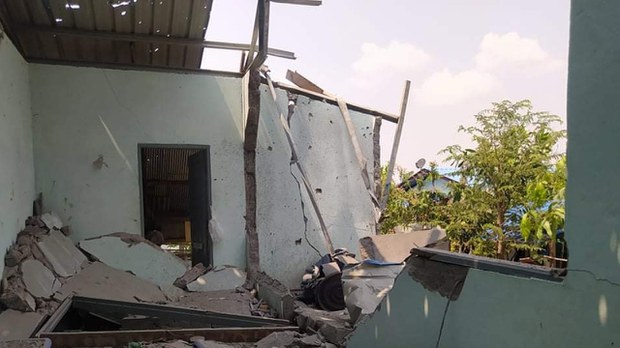
Heavy fighting between junta troops and a joint force of ethnic fighters and prodemocracy paramilitaries in Myanmar’s Kayin state resulted in the largest number of casualties the military has suffered in clashes since it seized power last year, according to sources. Karen National Liberation Army (KNLA) and anti-junta People’s Defense Force (PDF) fighters squared off with the military on Sunday after some 45 soldiers from the 207th Battalion, led by Maj. Thet Naing Oo of the 44th Division, approached the town of Lay Kay Kaw near the border with Thailand at around 2 a.m. on Sunday. The KNLA’s Cobra Column reported that the junta forces began the attack at 5 a.m. with 40 mm guns, supported by heavy artillery fire from Swei Daw Hill and nearby Let Khat Taung township, as well as airstrikes. It said that by the time the fighting was done at around 11 p.m. on Sunday, the military had retreated, leaving 12 soldiers dead. Padoh Saw Tawney, the foreign affairs officer of the Karen National Union (KNU), told RFA’s Myanmar Service that the military suffered its worst casualties since its Feb. 1, 2021, coup. “There weren’t many of them, only about 40 or 50. We could say we wiped out the entire military column,” he said. “They lost their commanding officer. One officer with three stars, the rank of a company commander, surrendered. We also seized a total of nine firearms and a lot of ammunition. And we lost two soldiers from our side.” Padoh Saw Tawney said that the commanding officer, Maj. Thet Naing Oo, was killed in the fighting and that the company commander, Capt. Tin Lin Naing, “will be dealt with in accordance with the KNU’s code of conduct for prisoners of war.” RFA was not able to independently confirm the number of casualties in the fighting. Hpa-Tarah, the mayor of Lay Kay Kaw, said two military jets dropped “at least 16 bombs” in a bid to take control of the town. “The fighting began at about 5 a.m. and ended at about 11 p.m., and then jet fighters flew in and bombed the area about 15 times between 11 p.m. and 2 p.m. [on Monday]. Two jets at a time — it was frightful,” he said. “Their artillery units from the hills also shelled us. About 50 or 60 rounds. The shelling finally stopped at about 5 p.m. [on Monday].” Residents of five villages in the area fled their homes because of the airstrikes on Sunday night, he said. The airstrikes damaged about 30 houses and a school in Lay Kay Kaw, and burned down five houses, according to residents. KNLA Cobra Column spokesman Myo Thura Ko Ko told RFA that the military might have used “chemical bombs” in the airstrikes. “After the bombing raids, there was a strange smell,” he said. “Some of our comrades said it was kind of a sweet smell and some yellow dust was seen floating in the air. Some of them suffered from spells of dizziness.” Attempts by RFA to contact junta Deputy Information Minister Zaw Min Tun for comment on the fighting went unanswered Monday. A school destroyed by a military airstrike in Lay Kay Kaw, April 11, 2022. Credit: KNLA Cobra Column Refugees face food shortage An aid worker, who spoke on condition of anonymity, told RFA that thousands of residents have been sheltering on Myanmar’s side of the border since Dec. 15, when fighting first broke out between the military and anti-junta forces in the region. “There aren’t many refugees from Lay Kay Kaw on the Thai side,” he said. “There are about seven [refugee] camps on this side of the border. According to the latest findings, there are more than 12,000 in seven groups. Along the banks of the Moei River [which separates Myanmar and Thailand], from Phlu Lay village to Kyauk Khat village. All spread out.” Myet Hman, a refugee on the banks of the Moei River, said there were more than 900 people from 600 households in his camp, adding that there is a severe food shortage. “The problem is that we need food badly. Currently, roads are closed on the Thai side and aid workers do not dare to come to us from the Myanmar side. Donors cannot come to us because of several checkpoints,” he said. “We are in dire need of food. We can only provide about a dozen milk-cans of rice to each family this month.” He said the ongoing fighting makes it difficult to estimate when residents will be able to return to their homes. KNU officials have reported daily clashes in areas under their administration, including the townships of Kawkareik and Kya Inn Seik Kyi, and say they are likely to intensify. A video posted to social media purports to show anti-junta fighters opening fire on a military outpost on Yangon’s Inya Road, On April 11, 2022. Credit: Citizen journalist Yangon resistance Meanwhile, various armed resistance groups told RFA on Monday that they had launched a dozen attacks on military-held areas of Myanmar’s commercial capital Yangon over the past three days. A fighter with the Free Tiger Rangers said that a bomb exploded at a pro-junta garment factory in Yangon’s Hlaing Tharyar township at 7:30 p.m. on Sunday, damaging vehicles. “The junta wants to show that there is peace and things are normal in Myanmar. The revolutionary forces cannot let that happen,” said the fighter, who declined to be named. “The current situation is that we had a military coup, and we will fight the regime in whatever way we can.” Separately, a video posted on social media Monday purports to show a group of anti-junta fighters in a car open fire on a military and police outpost on Yangon’s Inya Road on Sunday evening, killing a police officer. Other anti-junta attacks in the Yangon region over the past three days included the killing of Maj. Kaday Phyo Aung, the Lanmadaw Township’s administration officer, by unknown gunmen, as well as the killing of two plainclothes…

Read More

Malaysian Police arrest fugitive allegedly close to US-sanctioned Chinese triad boss

Malaysian police announced the arrest of a suspected criminal leader who is said to be close to the Chinese underworld, following his surrender to law enforcement here on Monday after more than a year in hiding. Nicky Liow Soon Hee, who faces 26 counts of money laundering according to the police, had been on the run since March 2021 when authorities smashed his syndicate and arrested more than 60 suspects, including some law enforcement officers, police said. Nicky is alleged to be close to the United States-sanctioned Chinese triad leader Wan Kuok Koi (commonly known as Broken Tooth), the head of the 14K Triad, one of the largest Chinese organized crime gangs in the world. “[Nicky] Liow Soon Hee also known as Nicky Liow was arrested at 11 a.m. at the Federal Police Commercial Crime Department office in Jalan Tun Razak after he turned up and surrendered to police,” Commercial Crime Director Kamarudin Md. Din said. “Liow will be charged with 26 counts of money laundering under … the Anti-Money Laundering, Anti-Terrorism Financing and Proceeds of Unlawful Activities Act 2001,” he added. Liow is scheduled to be produced at Shah Alam court in Selangor on Tuesday. He is staring at a prison sentence of 15 years and hefty fines, if convicted. Last month, the Federal Police Commercial Crime Department obtained an arrest warrant for Liow after it filed charges against him at the Shah Alam Court for money laundering offenses under the instructions of the Attorney General’s Chambers, according to Kamarudin. Liow’s Nicky Gang operated a telecommunication scam where it tricked victims, mostly in China, into handing over large sums of money, allowing the gang to allegedly amass millions of ringgit, police said. The syndicate would also target investors from China by promising them huge returns through investments in cryptocurrency, real estate and the foreign exchange market. During a series of raids in March 2021 to take down the Nicky Gang, police arrested more than 50 people and seized 773,000 ringgit (U.S. $187,500) along with 35 vehicles valued at 8.86 million ringgit ($2.14 million) under provisions of the Anti-Money Laundering, Anti-Terrorism Financing and Proceeds of Unlawful Activities Act of 2001. Among those arrested were Liow’s two brothers, Liow Wei Kin and Liow Wei Loon, but they were later freed after prosecutors dropped charges against them. A series of sanctions by the U.S. Treasury Department on Wan Kuok Koi, the Macau underworld kingpin allowed the Royal Malaysia Police to establish links to the Nicky Gang, Ayob Khan Mydin Pitchay, then the police chief of Johor state, told BenarNews, an RFA-affiliated online news service, in an interview last April. “It was crucial information as based on the tip of the iceberg. We were able to study the serious and extensive operations of the local syndicate, which has international connections,” Ayob told BenarNews. “It is very serious and we are very concerned what would have happened should we have failed to react accordingly and slam the brakes on their operation.” He described Liow’s and Wan Kuok Koi’s relationship as close. “Liow and Broken Tooth are as close as siblings,” Ayob said. “They have known each other since 2018 and Broken Tooth … had since been providing Liow with patronage and security assurance under his 14K Triad.”

Read More

Thai authorities detain Vietnamese dissident with UN refugee status

A Vietnamese political dissident granted refugee status by United Nations is being detained in an immigration detention center in Thailand and faces possible deportation, he told RFA on Monday. Chu Manh Son said that authorities detained him on April 8 when he went to the headquarters of the Royal Thai Police in Bangkok to request a police report for an immigration application to relocate to Canada with his family members, who already have obtained U.N. refugee status. Thai police asked Son to present his passport, but he did not have it as he was forced to flee Vietnam in 2017 after being sentenced by a court in Nghe An province to 30 months in prison for “conducting propaganda against the state.” The authorities arrested Son with four other Vietnamese refugees when they went to police headquarters for the same reason, he said. “When I and my friends, Mr. Them and Ms. Luyen, went to the Judicial Department of Royal Thai Police to get our criminal records, they asked for my personal papers,” he told RFA from the Immigration Detention Center (IDC). “I gave them my U.N. card. Then they asked for my passport, but I did not have it.” Nguyen Van Them, Nguyen Thi Luyen and their two children — Nguyen Tien Dat, 16, and Philip Nguyen Nhat Nam, five months — did not have passports either, said Son. “After that, they asked us to stay and called the immigration police,” he said, adding that the police accompanied the group to the IDC. Vietnamese dissidents often flee to Thailand to avoid persecution by the government for political and religious reasons. But Thailand has not signed the U.N.’s 1951 Refugee Convention, which prohibits sending refugees back to their home countries if they face threats to their life or freedom. People running to Thailand to escape persecution therefore face the risk of being arrested by immigration authorities and treated as illegal immigrants. A day after their arrest, the five attended a court hearing during which they were charged with illegally residing in Thailand, Son said. “On the morning of April 9, the police accompanied us to a hearing during which we were fined 10,000 baht [U.S. $300] each,” he said. “I had to pay an extra 1,000 baht fine because I had entered the country illegally. After paying the fines, we were taken back to the IDC to wait for a deportation order.” Son’s case in Vietnam also involved 14 young Catholics and Protestants. He said that his family left Vietnam and entered Thailand illegally in 2017 to avoid jail. “As a former political dissident chased by the Vietnamese police, if I am repatriated to Vietnam, I will face a very tough sentence,” he said. RFA has not been able to reach Thai authorities to find out if Son and the others will be deported. The Refugee Protection Department of the Office of the United Nations High Commissioner for Refugees in Thailand declined to provide information on the five for confidentiality reasons. Translated by Anna Vu for RFA’s Vietnamese service. Written in English by Roseanne Gerin.

Read More

Vietnamese girl’s 1940 birth certificate could support Paracels sovereignty claim

New evidence has emerged that may help support Vietnam’s claims over the Paracel islands in the South China Sea, currently occupied by China. A copy of a birth certificate issued in June 1940 claims that Mai Xuan Quy, a girl, was born at 3 p.m. on Dec. 9, 1939, on Pattle Island to Mai Xuan Tap, a Vietnamese meteorologist and his wife, Nguyen Thi Thang. The paper was witnessed by Nguyen Tang Chuan, a medical doctor, and Do Duc Mui, head of the local radio communication station. As such, it indicates that French Indochina, of which Vietnam was part, had administration of the island and Vietnamese people worked there. That could be significant evidence as claimants to disputed features in the South China Sea may seek to show they were the first to have an official presence there. Pattle is a coral island, part of the Crescent Island group of the Paracel Islands in the South China Sea. It served as the main base for the colonial-era French Indochinese and later, South Vietnamese occupation of the Paracels. Vietnam, Taiwan and China all claim sovereignty over the entire Paracel archipelago but China has occupied it since 1974. Peaceful life During the 1930s, the French colonial government built some infrastructure including a weather station, a medical facility and a post office on Pattle Island. Mai Xuan Tap, father of Mai Kim Quy, was among the civilians sent there to man the weather station when it was first set up in 1938. He brought with him his wife and two daughters, Mai Thi Phi, then two years old, and a newly born baby, Mai Thi Phuong. The eldest daughter, Mai Thi Phi, who is now 86 and lives in Ho Chi Minh City, said: “Our family lived in Pattle four years, from 1938 to 1941. My sister Mai Kim Quy was born there.” “Unfortunately Quy died in 1942 after we returned to the mainland.” “Our life on Pattle Island was quiet and peaceful. The Vietnamese living there were mainly civil servants working at the weather station, the post office and the hospital,” Phi recalled. “We had never seen any Chinese person on the island during the whole time we were there,” she said. Mai Xuan Tap died in 1983, his wife died much earlier in 1954. After returning to Saigon, the couple had seven more children including three sons and four daughters. The birth certificate of Mai Kim Quy was passed to the eldest son, Mai Xuan Phu, for safekeeping. “My family has donated the birth certificate to the Vietnamese foreign ministry,” said Mai Thi Phi. “The ministry said this is a valuable document that can play an important role in defending the country’s territorial claims in the South China Sea,” she added. The birth certificate issued in June 1940 by the French colonial authority on Pattle Island in the Paracels for Mai Xuan Quy. Credit: Mai Xuan Tap family ‘Useful evidence’ The Paracel archipelago is now occupied and fully controlled by China, with the biggest feature – Woody Island – being extensively developed. China has also carried out land reclamations and substantial upgrades of its military infrastructure there, according to the Asia Maritime Transparency Initiative at the Washington-based Center for Strategic and International Studies. Yet disputes remain over the islands’ ownership. Contested territorial claims are hard to verify, especially because until the 20th century, there was no permanent military nor civilian presence of any country there.  China, Vietnam and Taiwan all have ample historical documents to back up their claims, including maps, declarations and different materials. Vietnam, which was part of French Indochina, said the troops of Annam (the then-name of colonial Vietnam), and after that, civilian administrators, set up base on the Paracels before anybody else. Mai Xuan Quy’s birth certificate may serve as a historical evidence of physical acts of administration on the Paracel islands, said Bill Hayton, associate fellow in the Asia-Pacific Program at Chatham House, an independent U.K. think tank. “My argument would be that this [the birth certificate] doesn’t swing the argument decisively but it is very useful evidence that Annam was in effective occupation of some of the Paracels at that time,” Hayton said. “If the case ever went to a tribunal of some kind, the Chinese would put forward their own evidence and the judges would decide which case was stronger.” “Such cases aren’t decided by vague claims or printing names on maps but on proving that a state had administrative control over a feature – and registering a birth on the island to a civil servant is quite strong evidence of that,” the British analyst said. His argument, however, is being rejected by some historians who point out that China’s stance would be to stick to historical claims. “The French Government stated at the time that they only occupied the Paracels ‘before any other Power did so’, meaning Japan. This was widely reported in the press,” said Mark Hoskin, an independent researcher and lecturer on China’s maritime history and law. This action was taken because the Japanese had occupied Hainan and implemented a blockade of the Southern Chinese coastline. Japan was threatening France due to the transport of arms via Indochina to China. “So the French occupation of the Paracel islands had strategic and military reasoning, but was not sovereignty related. The French statements themselves negate any potential for a sovereignty claim,” Hoskin added.

Read More

Uyghurs in exile grapple with discussing genocide in Xinjiang with their children

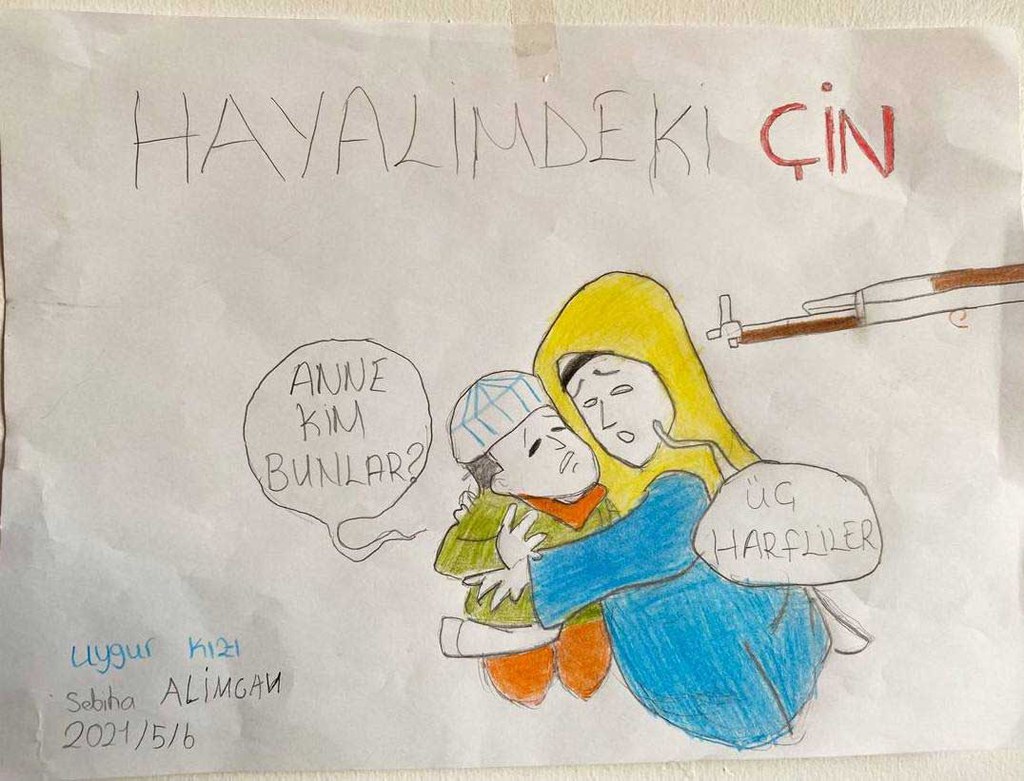
The 12-year old Uyghur girl, who now lives in the U.S. state of Virginia, was about seven years old and starting to absorb a bit more knowledge when she first learned about the repression of Uyghurs in their homeland northwestern China’s Xinjiang region. As she got older, her mother would tell her more and more about the back story, bringing it up in the normal course of conversation or if they were in the car and the girl asked a question about her grandparents still in Xinjiang. “I felt really sad,” the girl said about when her parents starting telling her about the crackdown. The girl, who spoke on condition of anonymity and did not want to identify her parents to avoid endangering relatives in Xinjiang, said that the pain hit home with her when schoolmates would talk about where they were from originally. When the girl thought about her family coming from Xinjiang, other questions would arise, such as why her grandmother would never come to visit her family in the U.S. Her voice grows weaker and begins to trail off whenever she is asked about her hometown. “It does affect my voice,” the girl told RFA. “Sometimes if people ask me where I’m from, it’s going to be sometimes difficult because they don’t know much about us [Uyghurs], and because they think that China is like a perfect place. They don’t know about the government and everything.” “They’re going to think you’re crazy, she added. It’s never easy for teenagers and children to discuss tragedies in their families, nor is it easy for parents to broach such topics with their offspring. Mom, who are they? They are military. Uyghurs, who are being persecuted as an ethnic and religious group by the Chinese government, face a common challenge of figuring out how best to talk with young people about the 21st-century atrocities occurring in China’s northwestern Xinjiang region. Uyghur children, born and raised in the diaspora, are asking their parents why they can’t see their grandparents, why Uyghurs in Xinjiang face genocide, and why they can’t visit their homeland. Uyghur adults living abroad, frustrated by the inability to stop the atrocities despite widespread and credible reports about right abuses those living in Xinjiang face, say they are unsure about how to discuss the genocide with their children and sometimes falter when asked why it is happening. At least 1.8 million Uyghurs and other Turkic minorities are believed to have been held in a network of detention camps in Xinjiang since 2017, purportedly to prevent religious extremism and terrorist activities. Beijing has said that the camps are vocational training centers. The government has denied repeated allegations from multiple sources that it has tortured people in the camps or mistreated other Muslims living in Xinjiang. The United States and parliaments of several Western countries have declared that China’s repression and maltreatment of the Uyghurs amount to genocide and crimes against humanity. What should they be told? Although children’s questions may seem simple to parents, what they are actually asking is about the history of Uyghurs, Chinese politics, and how to ensure the existence of Uyghurs abroad, said Suriyye Kashgary, co-founder of Ana Care, a Uyghur language school in northern Virginia with about 100 students ranging in age from five to 15 years old. Uyghur boys who have lost at least one parent, raise their hands during a Koran class in a madrasa, or religious school, in Kayseri, Turkey, January 31, 2019. The madrasa that shelters 34 children, including eight who have lost at least one parent, in Kayseri, a central Anatolian city, has received Uyghurs since the 1960s and today hosts the second largest population of Uighur exiles in Turkey. REUTERS/Murad Sezer “They always ask questions like “Why isn’t my grandma here? Why isn’t my grandpa here? Where are my relatives? My grandpa isn’t around. My grandma isn’t around. Where are my relatives?” she said “What I’ve been able to learn is that [many of] the children are a bit confused because some parents answer their kids’ questions, while some parents don’t speak with them in much detail at all,” she said. While some Uyghur parents do not disclose information to their children about the genocide, others do talk about it and take them to local demonstrations against China’s repression of Uyghurs in Xinjiang. “There are many disagreements over whether it’s OK to explain some things to the children or not,” Kashgary said. “Some people argue that we shouldn’t let [the genocide] negatively impact their psyches, that children shouldn’t be sad about these things, and that they shouldn’t live under such stress from a young age.” At her school, Kashgary expects teachers to be comprehensive, balanced, and vigilant as they work with the children, given the teachers’ need to be well-informed on a range of topics, she told RFA. Uyghurs in the diaspora, who are indirect victims of China’s genocide, have been demanding justice by exposing the oppression of their families to others, including to the media. But as a collective group of genocide victims, they have not been able to fully shield their children from the emotional suffering and negative psychological influences of the ongoing atrocities targeting Uyghurs. Zubayra Shamseden, four of whose family members were killed or tortured by the Chinese government as part of the Ghulja Massacre in 1997, and who has relatives currently being held in internment camps in Xinjiang, works as China’s outreach coordinator for the Washington-based Uyghur Human Rights Project and as a Uyghur human rights activist. “When it comes to the Uyghur genocide, it’s a fact that it is tearing up and impacting the lives of Uyghurs on the outside in the diaspora as well,” she said. “It’s not just adults — the shadows of the Uyghur genocide are affecting children and teenagers.” Shamseden says that Uyghurs in the diaspora are dealing with a kind of emotional genocide and that trying to hide the genocide from the children will not solve the issue….

Read More

Under junta scrutiny, Myanmar HIV clinic and orphanage at risk of closure

The Nurture AIDS Center (NAC) in Ward 11 of Yangon’s East Dagon township is a place of refuge for orphans and patients with HIV/AIDS in Myanmar’s commercial capital. The center cares for a total of 150 people – 94 children and 66 adults – and spends 400,000 kyats (U.S. $225) per day to provide them with food, medicine, and other necessities.   But times have been tough for the NAC in the 14 months since the military’s Feb. 1, 2021 coup, with the economy devastated by a combination of factors including mismanagement, widespread unrest, Western sanctions and the COVID-19 pandemic.   The center has also come under the scrutiny of the junta since its founder, a former lawmaker for the deposed National League for Democracy (NLD) named Phyu Phyu Thin, joined the shadow Pyidaungsu Hluttaw Committee of Representatives (CRPH) after the military takeover.   Phyu Phyu Thin established the NAC in 2012 and had cared for the center’s orphans and patients with the help of NLD youth volunteers but was forced to abandon her work and flee to an area under the control of an armed ethnic group to avoid arrest. She was stripped of her citizenship by the junta on March 7.   Yar Zar, the man who assumed her duties at the NAC and is known by the residents there as “Aba,” was arrested by security forces on March 2 and is now facing charges of “money laundering” and “terrorism.” The junta froze the center’s bank accounts in connection with the arrest.   The volunteers who remain at the NAC told RFA’s Myanmar Service that they now face regular harassment from the junta and the donors they rely on are afraid to be associated with the center.   One volunteer named Aung Kyaw Lin said that as donations have dried up, the NAC now only has enough food and supplies left for slightly more than a week.   “This past week, we received some donations, but not much,” he said.   “Right now, we can only afford to provide very basic meals, unless we receive aid. We used to be able to afford meat twice a week but can only do so once a week these days.”   Thae Thae, a resident of the NAC, said even the center’s rice supplies are running low.   “We have been relying solely on donations to feed more than 100 people. But they come infrequently,” he said.   “We need one bag of rice per day and around 100 bags for three months. We receive donations of one or two bags occasionally, and that’s what we are living on.”   Thae Thae said the food shortage is seriously impacting the health those who rely on the center, as they include people ranging in age from two months to over sixty years old.   ‘We would have to close’   He expressed concern that the center could also be shut down because there is no longer anyone in charge.   “We saw the news that they arrested [Yar Zar], so many donors might be thinking that [junta] informers are watching the center and they might be arrested as well,” he said.   “If the donations don’t come, the center won’t be able to survive anymore. We would have to close. But if these people are forced to live on the street, they won’t have access to regular medicine, and without regular dosages, they will face an increased HIV viral load … Their health will deteriorate severely.”   The residents of the NAC are mostly homeless or were abandoned by their families. The children who live there are being provided with opportunities that they would never have had on their own, including the chance to study English and a vocation under the tutelage of the NLD volunteers.   Wai Yan Moe, a 13-year-old who is studying at the seventh-grade level at the NAC, told RFA he doesn’t know what he will do if the center is forced to close.   “We are worried that Aba won’t be back, and the center will be gone,” he said.   “I have no other home and no place to go. I have only ever lived under Aba’s roof.”   Translated by Ye Kaung Myint Maung. Written in English by Joshua Lipes.

Read More

Junta forces kill 7 in Saigang village, torch hundreds of homes

A joint force of junta troops and pro-military Pyu Saw Htee militiamen carried out a raid on a village in Myanmar’s Sagaing region Thursday, killing seven civilians and setting nearly half of the tract’s homes on fire, according to sources from the area. A resident of Wetlet township’s Ywar Nan village told RFA’s Myanmar Service that six of the victims were young adults, while the seventh was a 70-year-old woman. “The death toll is seven and 325 houses were burnt down,” said the resident, speaking on condition of anonymity for fear of reprisal. “[The perpetrators] are stationed in [nearby] Sadaung village. There were so many of them. They suffered many casualties during a clash [with anti-junta fighters] at Nyaung Ngote-toe village, so they attacked our village in revenge and set the houses on fire.” The resident said that only the identity of the 70-year-old victim could be confirmed because the other victims were badly burned or mutilated, although RFA was unable to independently confirm the information. A village of about 700 houses, Ywar Nan is home to more than 3,000 people. Nearly all the inhabitants fled to the nearby jungle during the attack, sources said. Another resident told RFA that the fires were started at around 6 a.m. at a house near a lake on the southern side of Ywar Nan. “Even the monastery was burned,” he said. “The northern part is sparsely populated, and the houses are scattered here and there. People live mostly on the south side. Everything on the inhabited side is gone.” Residents said that the fire killed all the village’s chickens, pigs, goats and cattle, although the exact number was unclear. Photos provided to RFA of the aftermath of the attack appeared to show charred buildings, an elderly woman whose body had been badly burned, a young man whose throat was cut, and slaughtered livestock. A member of the anti-junta People’s Defense Force (PDF) paramilitary group in Wetlet township confirmed to RFA that a day prior to the raid on Ywar Nan village his group had carried out an attack on junta troops and Pyu Saw Htee fighters stationed in nearby Nyaung Ngote Toe village. “Many of them were wounded in the battle at Nyaung Ngote Toe, and so they went to Ywar Nan, chased the villagers out and set the village on fire,” he said. “They must have been furious because they suffered many casualties. They must have thought that residents of Ywar Nan did it, so they set it on fire. They shelled the village at about 1 a.m., before raiding it.” The PDF fighter said that the joint junta force also set fire to 15 houses in Nyaung Ngote Toe. Wetlet township’s Ywar Nan village, April 7, 2022. Credit: Citizen journalist No acknowledgement of crimes Myanmar’s military seized power in a Feb. 1, 2021, coup. Security forces have killed at least 1,700 civilians since then, mostly during peaceful anti-junta protests, according to Thailand-based rights group Assistance Association for Political Prisoners. Meanwhile, the military has launched a series of scorched earth offensives against ethnic armed groups and PDF groups in the country’s remote border regions, where reports regularly emerge of acts of arson, looting, torture, rape and murder by junta troops. The junta initially responded to reports of civilian deaths during raids by saying that villages were targeted because they had offered haven to fighters with the PDF, which it has labeled a terrorist organization. As evidence of largescale killing and destruction mounts, however, it has shifted blame to the PDF itself. Junta Deputy Information Minister Maj. Gen. Zaw Min Tun told RFA on Thursday that the military was not involved in the arson attack on Ywar Nan village. “There was no arson attack by the [military]. There is no reason to burn [the village] down. The culprits are the PDFs. They entered villages where local militias were formed by the people, attacked them, and set the area on fire when they left,” he said. “But whether the fires were started by the military or the PDFs, the government is responsible for rebuilding the villages. It is the government that avoids fighting. We must help those who are in trouble.” Zaw Min Tun did not provide evidence of the PDF’s responsibility for the attack or details about how the military plans to rebuild Ywar Nan and other villages that have been torched during raids. Kay Jay, a political activist in Wetlet township, told RFA that the military has never acknowledged any of the crimes committed by its troops. “They have never admitted that any village was set on fire. The junta has never admitted that people were intentionally shot or set on fire,” he said. “The people have no faith in any of the junta’s statements.” According to Data for Myanmar, an independent research group, nearly 8,000 homes have been destroyed by the military and its supporters since the coup, some 5,000 of which were in Sagaing region. Translated by Khin Maung Nyane. Written in English Joshua Lipes.

Read More

Manila eyes broader ties with Indo-Pacific nations looking to counter Beijing

The Philippines is broadening its relationship with countries that are trying to counter Beijing’s growing assertiveness in the region, while it maintains friendly ties with China despite the Asian superpower’s incursions into Manila’s waters in the South China Sea. Nurtured by President Rodrigo Duterte to much criticism at home, Manila is keeping its relationship with Beijing on an even keel, ostensibly demonstrating, according to political analyst Rommel Banlaoi, a “pragmatic independent foreign policy” in a polarized world. For instance, the Filipino foreign secretary is in Tokyo this weekend to take part in the first ever bilateral two-plus-two talks involving the foreign and defense ministers of the Philippines and Japan. This visit follows a meeting between China’s Xi Jinping and Duterte on Friday, where they “committed to broaden the space for positive engagements” on the South China Sea issue. And on the same day, the Philippines concluded one of its largest military exercises with the United States, its longtime defense ally. Banlaoi, president of the Philippine Association for Chinese Studies (PACS), said Manila is demonstrating its independence by maintaining its longstanding security alliance with the U.S, strengthening is strategic partnerships with Japan, Australia, South Korea, and the European Union, and maintaining friendly relations with China despite tensions over the waterway. Still, disputes to do with the South China Sea, part of which is called the West Philippine Sea by the Filipinos, are the main reason behind for broadened security cooperation between the Philippines and other countries in the region, analysts said. Celia Lamkin, Founder of the National Youth Movement for the West Philippine Sea “The foreign and defense talks between Japan and the Philippines in Tokyo [on Saturday] are significant because of the non-stop aggression and militarization by China in our West Philippine Sea,” Celia Lamkin, Founder of the National Youth Movement for the West Philippine Sea, told BenarNews, using the Philippine term for the South China Sea. On Thursday, the Philippine Defense Secretary Delfin Lorenzana met with his Japanese counterpart, Nobuo Kishi, in Tokyo to discuss “ways to further enhance bilateral and multilateral cooperation,” according to the official Philippine News Agency. The two defense ministers agreed to bolster security cooperation and expand bilateral and multilateral exercises, according to a statement from the Japanese Ministry of National Defense. “They shared their intent that they will not tolerate any unilateral change of the status quo by force in the Indo-Pacific, particularly in East Asia and Southeast Asia,” the statement said. China is involved in maritime disputes with Japan over the Senkaku/Diaoyu Islands in the East China Sea. The inaugural two-plus-two meeting on Saturday will continue to “promote bilateral defense cooperation and exchanges to uphold and strengthen the Free and Open Indo-Pacific (FOIP),” Japan Defense Ministry said. “We need allies like Japan and the U.S. to show China to respect international law in our West Philippine Sea and the rest of the South China Sea,” said Lamkin from the National Youth Movement for the West Philippine Sea. China claims nearly the entire South China Sea, including waters within the exclusive economic zones of Brunei, Malaysia, the Philippines, Vietnam and Taiwan. While Indonesia does not regard itself as party to the South China Sea dispute, Beijing claims historic rights to parts of that sea overlapping Indonesia’s exclusive economic zone as well. ‘Open, warm, and positive’ A day before this two-plus-two meeting, Duterte, who is due to leave office after the Philippine general election in May and who has consistently called China’s Xi a friend, had a telephone meeting with the Chinese leader. During the call, the two said they work towards maintaining peace and stability in the South China Sea by exercising restraint, a statement from Duterte’s office said. A Chinese statement, meanwhile, said Xi had expressed his approval for how the two nations have dealt with the issue of the disputed South China Sea. Beijing, however, has consistently ignored a 2016 decision by an international arbitration court in The Hague that rejected China’s expansive claims in the contested waterway. Meanwhile, news emerged on Thursday that, for days, a Chinese coastguard ship had followed a research vessel deployed by Philippine and Taiwanese scientists in waters in off the northern Philippines, sparking concerns. Still, the statement from Duterte’s office described the hour-long telephone conversation as “open, warm and positive.” Then again, Manila surprised many a day earlier by voting against Beijing’s ally Moscow, and in favor of a resolution to suspend Russia from the United Nations Human Rights Council. It was the only ASEAN Nation to vote in favor of the resolution, apart from the Myanmar government in exile. Also, last September, when Australia, the United Kingdom and the U.S. announced the establishment of a trilateral security pact, AUKUS, the Philippines was the first country in Southeast Asia to endorse it despite concerns from regional players including Malaysia and Indonesia. With the Philippine presidential election looming in May, all eyes are on who will win the race, said Lamkin from the National Youth Movement for the West Philippine Sea. She added: “Our struggle for sovereign rights in the West Philippine Sea depend very much on who will be the next president.” Jason Gutierrez of BenarNews, an RFA-affiliated on-line news outlet, contributed to this report from Manila.

Read More

Vietnam’s vote for Russia on UN council could damage campaign to lead it

Vietnam’s vote against a U.S.-led resolution to remove Russia from the U.N. Human Rights Council on Thursday likely ends any hope Hanoi had to lead the body, one analyst told RFA. Cambodia’s abstention from voting, meanwhile, drew criticism from local rights groups who accused Phnom Penh of flip-flopping its position on Russia’s invasion of Ukraine. In all, 24 countries voted against booting Russia from the council, including Russia, China, North Korea, Iran and Syria. But after 93 countries voted yes, Moscow resigned its seat. Vietnam’s ambassador to the U.N., Dang Hoang Giang, said in remarks prior to the vote that Hanoi was concerned about the impact of the war on civilians. He said that the country was “against all attacks on civilians that were in violation of international laws on humanitarianism and human rights.” He also said that it was important “to examine and crosscheck recent information publicly, with transparency and objectivity and with the cooperation of relevant parties.” Vietnamplus was the only Vietnamese outlet that reported Giang’s comments. Vietnamese state media made no mention of Vietnam’s vote in coverage of the resolution. Alienating vote Vietnam has publicly voiced its intention to run for chairmanship of the council for the 2023-2025 term, but experts told RFA’s Vietnamese Service that Hanoi will now find it difficult to gain support from Western countries. “I should say that Vietnam has shot itself in the foot,” Carl Thayer of New South Wales University in Australia told RFA. “Vietnam has always been proud of its prestige in the international circles as a commodity that made it important. Any country in the world that is now opposing Russian action are not going to support Vietnam,” he said. Thayer noted that Vietnam’s profile among the international community had been on the rise, as it had twice been elected as a non-permanent member of the U.N. Security Council. “Now that smooth sailing is going to hit headwinds and if it continues to support boats like [Russia], Vietnam is going to find increasingly there will be a drop-off in support,” Thayer said. He said that Hanoi may have been trying to demonstrate that dialogue and negotiation are more effective than measures to isolate Russia. But it would have been better to abstain from the vote, because now Vietnam has alienated the West and has little to gain by casting its lot with Russia. “That country is never going to play a major role with Vietnam in coming years. In my opinion, it is going to be weakened and economically isolated as long as Putin remains in power.” Isolation ineffective Cambodia did abstain from Thursday’s vote with Ambassador Ke Sovann saying in a statement that Russia’s isolation will not help resolve the conflict in Ukraine, but will only make a bad situation worse. “At a fragile time for world peace, security and stability, the engagement among the member states in all relevant United Nations bodies including the Human Rights Council is very important,” he said.  Phay Siphan, a spokesman for the Cambodian government, told RFA’s Khmer Service that kicking Moscow out of the council will “only allow the country to avoid its responsibility.” But Ny Sokha, president of The Cambodian Human Rights and Development Association, said the vote to remove Russia from the council is a stand against the death and destruction the country’s invasion of Ukraine has caused. “We should not allow the country that abuses human rights in the U.N. Human Rights Council. As a member it needs to respect human rights,” he said. Cambodia’s abstention from Thursday’s vote is an example of flip-flopping in its response to the situation in Ukraine, said Ny Sokha, an apparent reference to Cambodia’s vote last month at the U.N. condemning the invasion. Political analyst Kim Sok said Cambodia voted for a resolution last month to condemn Russia as part of its efforts to convince the U.S. to attend a special summit with ASEAN while Phnom Penh chairs the regional bloc. Thursday’s vote, in contrast, was an effort to appease China, he said. “When China opposes, Hun Sen dares not to vote in favor,” he said.   Russian Threats Prior to Thursday’s vote, Russia warned that votes in favor or abstentions would be seen as an “unfriendly gesture” and would have consequences in bilateral relations. Despite voting to remove Russia, the U.N. Human Rights Council remains an organization with a shaky reputation likened to an old boys club for dictators. Of its 47 member nations, only 15 are classified as “free” societies by rights watchdog Freedom House. The rest are either only “partly free” or “not free,” and include countries with poor human rights records like China, Eritrea, Somalia and Cuba. The U.S. left the council temporarily in 2018, calling the organization a mockery of human rights for not punishing rights abusers and for what then-ambassador to the U.N. Nikki Haley called bias against Israel. After Tuesday’s vote, the Russian representative announced Russia’s decision to withdraw its membership from the council before the 2021-2023 term ends, and called the resolution “an illegal and politically motivated move to punish a permanent member of the U.N. Security Council who was pursuing an independent domestic and foreign policy.” Translated by Anna Vu and Samean Yun. Written in English by Eugene Whong.

Read More

Philippines: Xi, Duterte agree to ‘positive engagements’ over South China Sea

Philippine President Rodrigo Duterte and Chinese counterpart Xi Jinping agreed during a bilateral meeting on Friday to remain “committed to broaden the space for positive engagements” in dealing with disputes over the South China Sea.  The telephone summit between the two leaders took place the same day the Philippines and the United States wrapped up two weeks of war games, which were among the biggest between both allies. The scenarios included the defense of an isolated island from foreign invaders.  In their phone call, Duterte and Xi “stressed the need to exert all efforts to maintain peace, security and stability in the South China Sea by exercising restraint, dissipating tensions and working on a mutually agreeable framework for functional cooperation,” Duterte’s office said in a statement. “Both leaders acknowledged that even while disputes existed, both sides remained committed to broaden the space for positive engagements which reflected the dynamic and multidimensional relations of the Philippines and China,” it said. The statement described the hour-long telephone conversation as “open, warm and positive.” China has been continuing to expand territories and islands it occupies in the South China Sea. Still, Xi and Duterte affirmed the “importance of continuing” talks in solving the sea dispute, and for all claimants to work towards finally concluding a “code of conduct” for the sea. China claims nearly the entire South China Sea, including waters within the exclusive economic zones of Brunei, Malaysia, the Philippines, Vietnam and Taiwan. While Indonesia does not regard itself as party to the South China Sea dispute, Beijing claims historic rights to parts of that sea overlapping Indonesia’s exclusive economic zone as well. Duterte, who has consistently called Xi a “friend,” has said several times since his term began in 2016 that Beijing has the capability of sending missiles to the Philippines, and that he won’t deploy Filipino troops to be slaughtered. Instead, he has sought to rebuild ties with China – ties that were soured by a 2016 decision by an international arbitration court in The Hague that rejected China’s expansive claims in the contested waterway. The 77-year-old Duterte will be leaving office after the Philippine general election next month. Duterte and Xi also discussed the elevation of bilateral relations “into a comprehensive strategic cooperation” as a way to build on the gains made since the Filipino leader took power. For his part, Xi said that both sides have “properly” handled the South China Sea issue, according to a statement about the phone call, issued by the Chinese Embassy in Manila. “During the phone conversation, Xi said that he still has fresh memories about Duterte’s first visit to China in October 2016, which he called an ice-breaking trip and a milestone in the history of bilateral relations,” the statement said. “The two sides’ properly handling of the South China Sea issue has provided an important foundation for the China-Philippines friendly cooperation, benefited the two people and also effectively safeguarded regional peace and stability, Xi said,” according to the statement. Meanwhile, both presidents on Friday expressed “deep concern” over developments in Ukraine, the statement by Duterte’s office said. “The two Presidents renewed the call for a peaceful resolution of the situation through dialogue in accordance with international law,” the statement said. A day before the Xi-Duterte telephone meeting, Manila voted in support of a resolution on suspending Russia from the United Nations Humans Rights Council, together with the U.S. and other Western countries. China, which is Russia’s ally, voted against the resolution. BenarNews is an RFA-affiliated news service.

Read More