
Category: East Asia
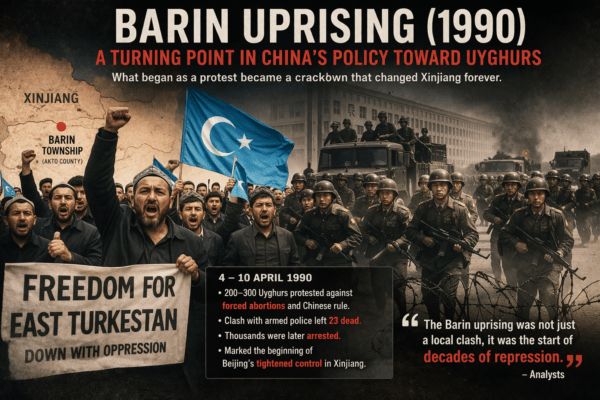
Barin Uprising: A Turning Point in China’s Policy Toward Uyghurs
The Barin Uprising of 1990 marked a critical shift in China’s approach to Uyghurs in Xinjiang, triggering decades of tightened control and security policies.

Taiwan’s AI Island: Rising as a Global AI Leader Amid Competition from the US, China, and Europe
Taiwan’s AI Island initiative is transforming the island into a global AI leader. With world-leading semiconductor capabilities and a rapidly expanding innovation ecosystem, Taiwan is now a key competitor alongside the US, China, and Europe in the global AI race.
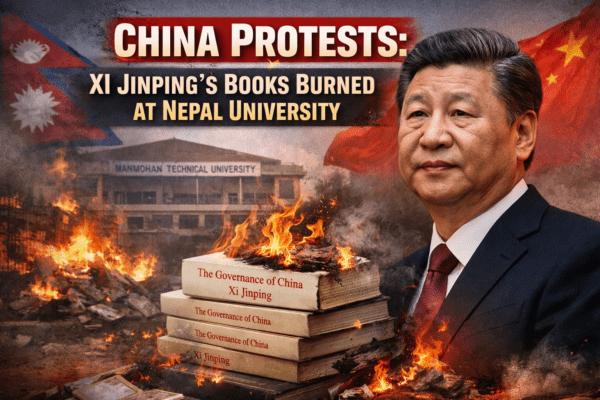
Nepal Book Burning Incident Sparks Diplomatic Protest from China
China has lodged a diplomatic protest after hundreds of copies of The Governance of China, authored by Xi Jinping, were burned at Manmohan Technical University in eastern Nepal. Beijing has demanded a full investigation, while the university claims the books were termite-damaged and destroyed during a routine clean-up—an explanation that has failed to quiet the diplomatic controversy with China.
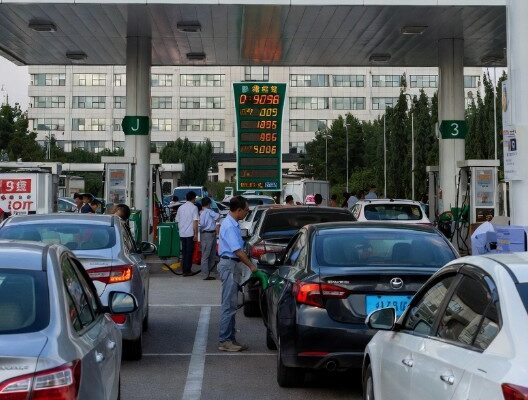
China Hikes Fuel Prices Despite Reserves and Iran Oil
As the US-Israel conflict with Iran enters its third week on March 17, 2026, global oil markets remain volatile, with crude prices often exceeding $100 per barrel amid Middle East disruptions, Strait of Hormuz threats, and supply uncertainty. China, the world’s largest crude oil importer, has not escaped the impact. On March 9, 2026, the National Development and Reform Commission (NDRC) implemented its largest retail fuel price increase in four years, lifting gasoline ceilings by 695 yuan ($100) per tonne and diesel by 670 yuan ($97) per tonne. The change, effective March 10, raised pump prices by approximately 0.53–0.57 yuan per liter, noticeably increasing costs for drivers and businesses. China holds one of the world’s largest strategic petroleum reserves, with combined strategic and commercial stockpiles estimated between 900 million and over 1.2 billion barrels—enough to cover several months of imports. The country has aggressively built these reserves, with imports surging nearly 16% in January–February 2026 as Beijing stockpiled discounted crude from sanctioned Iran, Russia, and other sources during lower-price periods in 2025. Iran continues to be a major supplier, providing a large share of China’s seaborne imports—often accounting for over 80% of Iran’s exported crude, much of it processed by independent “teapot” refineries at discounted rates to bypass Western sanctions.Despite these advantages, domestic retail prices have risen significantly. China’s fuel pricing mechanism ties refined product prices to international benchmarks like Brent crude, with adjustments every 10 working days. While the government can cap retail prices and intervene during extreme volatility, sustained global price surges force partial pass-through to consumers to prevent severe losses for refiners and preserve market stability. The conflict has not only pushed benchmark prices higher but also increased effective costs through elevated shipping insurance, rerouting expenses, and risk premiums—even for Iranian oil still reaching Chinese ports.Large-scale release of strategic reserves could theoretically temper domestic prices by increasing supply, but authorities have so far avoided major drawdowns. These reserves are primarily intended to ensure physical supply security during prolonged crises, such as a potential full closure of the Strait of Hormuz, through which a substantial portion of China’s maritime oil imports flow. Instead, Beijing has focused on diversifying sources—boosting pipeline deliveries from Russia, expanding overland routes, and continuing selective stockpiling—while planning further reserve growth under its current five-year plan.The price increases have led to visible consumer reactions, including lines at gas stations as drivers fill up ahead of possible further hikes. In an economy facing growth challenges, higher fuel costs flow through to transportation, logistics, and manufacturing. Nevertheless, China’s swift transition to electrification—with the world’s largest electric vehicle market and ambitious renewable energy goals—offers some protection compared to more oil-dependent countries. Observers suggest the government may tolerate moderate price pass-through to promote energy efficiency and accelerate the shift from fossil fuels.This situation reveals the limits of even extensive stockpiling and preferential sourcing in today’s interconnected global oil market. While China’s preparations give it greater resilience than many nations during supply shocks, consumers still bear part of the burden from geopolitical events. As the conflict develops, NDRC pricing moves, reserve usage signals, and shifting import patterns will show how effectively Beijing balances energy security with economic pressures.
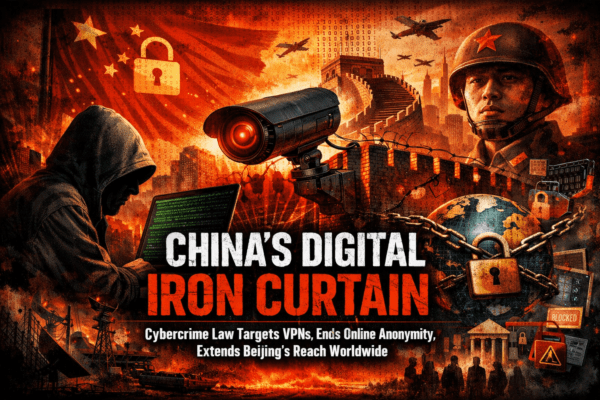
Beijing’s Cyber Crackdown: Draft Law Aims to End Online Anonymity and Expand Global Control
China’s draft Cybercrime Prevention and Control Law could end online anonymity, ban VPNs, and expand Beijing’s digital control globally, raising serious concerns for privacy, cybersecurity, and international businesses.
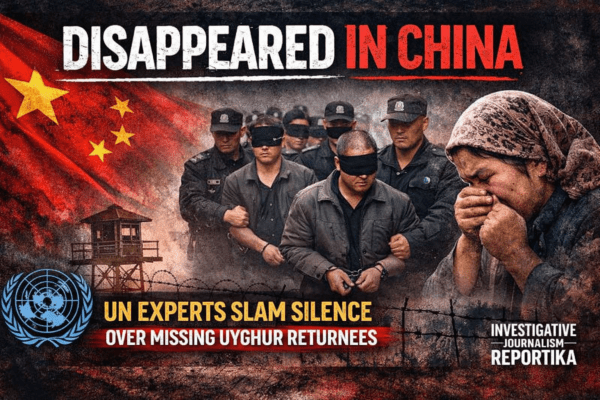
UN Experts Raise Alarm Over Disappeared Uyghur Returnees as China Remains Silent
Uyghur disappearance, China human rights, forced return, Thailand deportation, UN human rights report, transnational repression, enforced disappearance, arbitrary detention, Xinjiang, minority rights, international law, non-refoulement
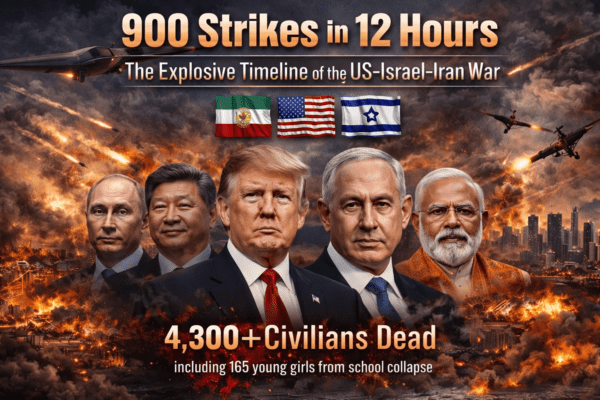
900 Strikes in 12 Hours: The Explosive Timeline of the US–Israel–Iran War
The US–Israel–Iran war enters its second week after massive strikes, missile barrages, and regional escalation. Over 1,300 dead as global powers including China, Russia, and India maneuver amid rising tensions.
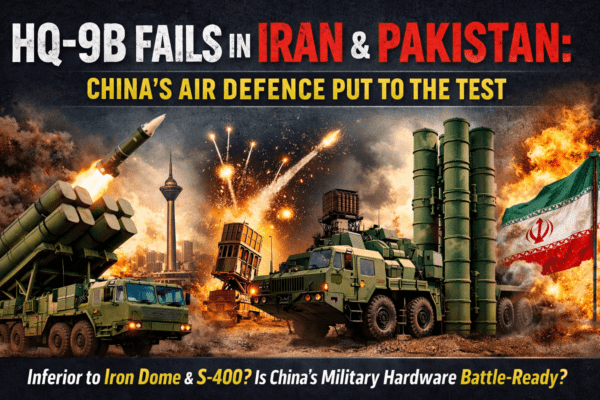
Air Defence Collapse: HQ-9B Exposed in Iran and Pakistan
The myth of invincibility surrounding China’s flagship air defence export—the HQ-9B—is rapidly unraveling. Following devastating coordinated US–Israeli airstrikes across Iran, and earlier scrutiny during Pakistan’s military confrontation with India, serious questions now confront Beijing: Is the HQ-9B truly battle-ready? Or is it another overhyped system that collapses under real-world combat stress? The recent destruction across more than 20 Iranian provinces—despite Tehran’s layered air defence shield—has placed China’s long-range surface-to-air missile (SAM) system under the harshest spotlight yet. A Layered Shield That Crumbled Iran’s air defence network was theoretically formidable. Its architecture combined: On paper, this layered defence should have complicated any air assault. Instead, US and Israeli forces reportedly neutralized radar nodes, command infrastructure, and critical military installations within hours. The Israeli Defence Forces claimed they dismantled the majority of western and central Iran’s air defence systems—clearing the path toward aerial superiority over Tehran. If accurate, this outcome represents not merely operational overwhelm—but systemic failure. And at the heart of that failure lies the HQ-9B. The Promise vs The Battlefield Developed by the China Aerospace Science and Industry Corporation, the HQ-9B was marketed as China’s answer to advanced Western systems. Beijing claimed: Its design reportedly drew inspiration from Russia’s S-300 and the US Patriot PAC-2. But battlefield performance tells a different story. When confronted with: The HQ-9B appears to have been either overwhelmed—or technologically outmatched. Comparison: HQ-9B vs Iron Dome vs S-400 🔹 Iron Dome 🔹 S-400 Triumf 🔹 HQ-9B The contrast is stark: Iron Dome and S-400 have reputational capital earned through repeated operational validation. The HQ-9B, by contrast, faces mounting evidence that its battlefield resilience may not match its advertised specifications. Pakistan Precedent: A Pattern? The HQ-9B had already drawn attention after reports during India’s Operation Sindoor suggested it failed to shield key Pakistani targets effectively. Though official confirmations remain limited, the pattern emerging from Iran suggests a recurring vulnerability: the system may perform adequately in controlled environments—but struggles when facing advanced electronic warfare and high-volume coordinated assaults. If two separate theatres show similar cracks, it ceases to be coincidence. The Bigger Question: Are Chinese Weapons War-Ready? A prior investigative report by IJ-Reportika on defective Chinese weapons exports raised concerns about quality control, overstatement of capabilities, and limited real combat validation. The HQ-9B controversy reinforces those concerns. China has aggressively marketed its defence platforms globally as cost-effective alternatives to Western systems. But affordability without survivability is not deterrence—it is illusion. To become genuinely war-ready, Beijing must confront uncomfortable realities: Without these reforms, China’s air defence ecosystem risks being perceived as technologically ambitious—but operationally fragile. Strategic Fallout for Beijing China has deployed the HQ-9B around sensitive zones including Beijing, Tibet, and the South China Sea. If the system’s vulnerabilities are confirmed, adversaries will take note. The implications extend beyond Iran: Military hardware is judged not by brochures—but by battlefield survivability. And right now, the HQ-9B faces its most severe credibility crisis. Conclusion: A Wake-Up Call for China’s Defence Industry The Iran strikes may represent more than a regional escalation—they may mark a turning point in perceptions of Chinese military technology. If the HQ-9B could not safeguard a layered defence network against a coordinated modern assault, Beijing must urgently reassess its technological readiness. Becoming a global military superpower requires more than scale, ambition, and marketing. It requires systems that endure the chaos of real war. At this moment, the HQ-9B appears to have fallen short.
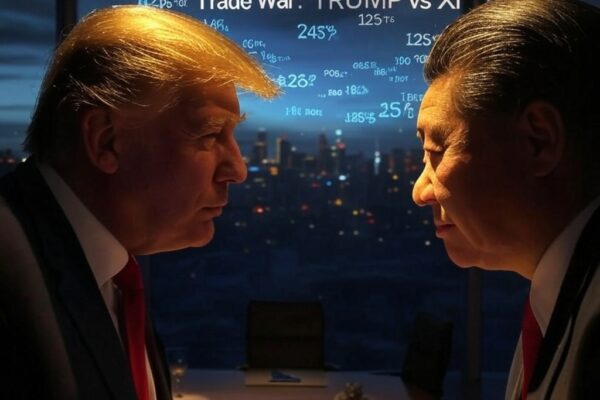
Trump’s “New Monroe Doctrine”: Latin America the Frontline of U.S.–China Economic War
Trump’s revived “Monroe Doctrine” targets China’s growing influence in Latin America, reshaping power dynamics in Venezuela, Panama, Peru, and Argentina while risking regional instability and economic disruption.
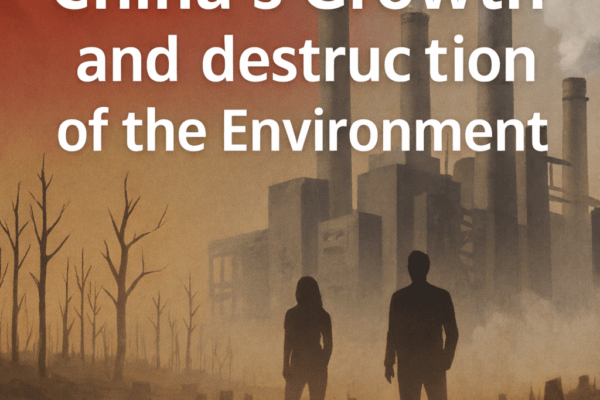
China’s Growth and destruction of the Environment
An in-depth investigative report exposing the scale of environmental damage, examining pollution, deforestation, climate impact, and policy failures while highlighting urgent solutions for sustainable recovery and global accountability.
