Myanmar comedy troupe uses online video income for charity

A comedy troupe in Myanmar uses income generated from videos to fund charitable initiatives, including supporting needy families and single mothers, members of the team told us. The group, formed in 2021 in the central Sagaing region’s town of Kale is led by comedian Nau Sing, who moonlights as a taekwondo coach. The short videos are posted on Nau Sing’s Facebook and YouTube accounts, both of which have tens of thousands of followers or subscribers. Nau Sing told us that the Myanmar Service channel did not start out profitable, but now that it is, he continues to make them for charity. “I have loved charity since I was young,” he said. “After three years of creating these videos, I started to get money, so now that I have income, I donate as much as I can.” The comedy troupe lacks access to a computer, so all the editing is done on mobile phones, but recent trends have made short videos with minimal editing popular, and that has made the videos successful, the Nau Sing charity said. Ma San San, one of the team members, told us that she is happy when the charity can make a difference in other people’s lives. “When we … gave them a bag of rice, they burst into tears,” she said. “They said they had never been able to buy a whole bag of rice, rather they could buy only a few tins of here or beg for more there. They were in tears because they said a bag of rice would hold them over for a long time, and I was thrilled. The Nau Sing charity group, seen May 12, 2023, raises money by creating comedy short videos and posting them on Facebook and YouTube. Credit: Citizen journalist   The group plans to donate to the needy once every month, said Ko Nau Sing, another member of the group. “We have established a Nau Sing page [on social media],” said Ko Nau Sing. “We are planning to donate once a month as much as we can based on the income. But whether there are contributions or not, we plan to donate once a month.” The charity donates food worth 100,000 kyats per month (US$48) for a family of five that is struggling to make ends meet, it said. The charity also supports single mothers who struggle to take care of their children.  One such mother, Ma Man Lan Nyaung, lives with her five children at a shelter inside a church. She told us that she and two of the older children had been begging on the streets to support the family. “We were not shy anymore. We begged from every house that we thought had some food to spare,” she said. “At that time, the Nau Sing group donated rice, oil, salt, and chickpeas. I am very grateful to them for their donations.” Translated by Htin Aung Kyaw. Edited by Eugene Whong.

Read More

Vietnam’s communists are constrained domestically in choice between the US and China

It wasn’t the Communist Party that lifted the Vietnamese out of poverty; the people did it themselves. The country’s free-market revolution was the result of bottom-up pressure from the masses who broke the command-economy so much that the communist government had to accept a private sphere of business. Their pilfering from state-run companies and trading on the black market, and their ability to own more and more surplus produce after the state took its share, meant the government simply couldn’t handle the collectivized economy that had left Vietnam one of the world’s poorest countries in the 1980s.    When the communist government gave an inch, the people demanded more. “The idea that economic success stems from a strategic shift in Party thinking [in 1986]… is actually a myth,” the economist Adam Fforde wrote. “Success instead drew upon systematic violations of Party ideology dating from the late 1970s, if not earlier.”    The party’s economic reform package of 1986 (doi moi, or “renovation”) is common knowledge. Less so the promises of political renovation. Nguyen Van Linh, the incoming party general secretary that year, told writers and journalists that they should ‘stick to the truth’. One of those who took Linh at his word was Bao Ninh, a young novelist and war veteran from the North. “So much blood, so many lives were sacrificed for what?” he wrote in his 1990 book, The Sorrow of War. The poet and translator Duong Tuong called Bao’s work the “first truthful book about the war.” Truthful because it neither glorified victory against the Americans (“In war, no one wins or loses. There is only destruction”), nor regarded Communist Party leaders as the only heroes. Bao argued most Vietnamese were fighting for national peace, nor for Marxism. Naturally, the book was banned.    Vietnam’s Prime Minister Pham Minh Chinh (R) gestures to U.S. Vice President Kamala Harris in the Government office in Hanoi on August 25, 2021. Credit: Manan Vatsyayana / Pool / AFP The point is that even in a one-party, communist state, ordinary people can exert power. Today, the government still severely represses its citizens. There is no free media. There are no genuine elections. But the Communist Party is genuinely worried about the thoughts of the common man. Those domestic pressures are difficult to assess and frequently in debates on policy, such as about Vietnam hedging between the United States and China, it’s far easier to focus on “externalities”.    The position at one extreme of that foreign policy debate, for instance, argues the Vietnamese government is denied any agency whatsoever because of material conditions: China is Vietnam’s main trading partner and principal aggressor; the United States is Vietnam’s main export partner and security “guarantor.” So by more closely aligning with either, Vietnam risks war or economic ruin. The other extreme says the Communist Party has a good deal of agency, and what shapes foreign policy is a shared ideology that makes it friendly with China, factional struggles within the party, and the whims of certain government officials.    But consider a speech given in 2021 by Nguyen Phu Trong, now three-term Communist Party general secretary. Any nation “has to deal with two basic issues, internal and external,” he stated. “These two issues have an organic, dialectical relationship…[they] support each other like two wings of a bird, create positions and forces for each other, connect and intertwine more and more closely with each other.” Foreign policy today, he added, is a “continuation of domestic policy”. He said a little later: “Foreign affairs must always best serve the domestic cause.” That domestic cause for Trong is the survival and virality of the Communist Party.    Domestic concerns dictate The other importance of The Sorrow of War was as an early sign nationalism was tumbling out of the hands of the Communist Party, which had staked its legitimacy on having led victory over the French, then Americans and then Chinese. But it was starting to lose its grip in the early 1990s when it struck peace with Beijing. Further anger flowed from the public as Chinese capital began flowing into Vietnam. In 2006, national hero General Vo Nguyen Giap (the “Red Napoleon”) accused the regime of selling off Vietnamese land for exploitation by Chinese bauxite speculators. Years-long protests turned “the nationalist tables on the Party by accusing it of caving in to the Chinese at the very time the latter were expanding their territorial claims against Vietnam in the South China Sea”, wrote the historian Christopher Goscha. That process has only expanded over time. One could say that the Communist Party is now scared of nationalism.    Chinese academics seem especially taken with the idea  that all nationalist protests in Vietnam are directed by the Communist Party. That is rarely the case. The party follows events; it seldom leads them. Netizen anger drove the recent cases of the Hollywood film “Barbie” being banned in Vietnam over a crude map that some said showed China’s territorial claims in the South China Sea, and threats to boycott concerts by the South Korean K-Pop band BlackPink. During the Vanguard Bank standoff in 2019, when the Chinese military was once again harassing Vietnamese vessels in the South China Sea, officials in Hanoi reportedly discussed whether to allow some limited protests. “But, warned some other officials, demonstrations must be tightly controlled. If not, the protests might be taken over by individuals and groups in Vietnam, specifically democratization advocates”, wrote Ben Kerkvliet in Speaking Out in Vietnam, a study of political activism.  That remains a concern. If the party takes a strong stance against China, that risks setting off nationwide nationalist protests that the party cannot control and which might quickly be whipped up into anti-communist agitation. Between June 9 and 11, 2018, more than 100,000 protesters demonstrated across Vietnam, arguably the largest nationwide protest seen in decades, as the National Assembly debated a bill to create three special economic zones (SEZs) along Vietnam’s coastline. The investment minister said publicly…

Read More

Bangladesh police: Rival Rohingya militant groups in deadly gunfight at refugee camp

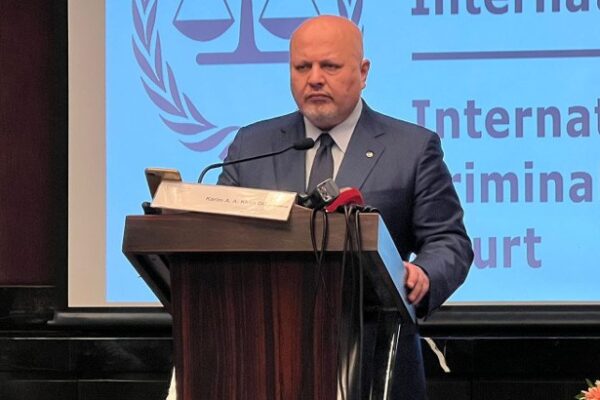
At least five members of rival Rohingya militant groups were killed in a gunfight Friday at a refugee camp in Bangladesh’s Cox’s Bazar district, police and other sources said. Separately, following a four-day visit to refugee camps in that southeastern district, International Criminal Court (ICC) Chief Prosecutor Karim A.A. Khan urged the world to provide more humanitarian support because, he said, Rohingya were missing meals after the U.N. World Food Program had cut monthly aid to U.S. $8 from $12 on June 1. The killings in Friday’s shootout before dawn marked the latest bloodshed between the Arakan Rohingya Salvation Army (ARSA) and Rohingya Solidarity Organization (RSO). Up until relatively recently, Bangladesh officials had denied that Rohingya militants had a foothold in the sprawling refugee camps near the Myanmar border, where security has deteriorated sharply. “The gunfight that left five dead this morning was between two Rohingya armed groups, ARSA and RSO,” Md. Farooq Ahmed, an assistant superintendent with the Armed Police Battalion, told BenarNews.   Sheikh Mohammad Ali, officer-in-charge of the Ukhia police station, said law enforcers recovered the corpses of those killed in the gunfight, which took place around 5 a.m. at the Balukhali camp.  Camp resident Nur Hafez said gunshots woke him. “I heard a hue and cry. Rushing to the scene, I found some blood-stained injured people lying on the ground. The police took them away after a while,” he told BenarNews. “Due to contests among different groups inside the camp, the killings are increasing,” Hafez said. Syed Ullah, a Rohingya camp leader, said that the feud between the Arakan Rohingya Salvation Army and Rohingya Solidarity Organization had surfaced over efforts to exert dominance in the camps. “The ordinary Rohingya people have been living in a terrified atmosphere,” he said. The population of the densely crowded camps has swollen to about 1 million after about 740,000 Rohingya crossed the border into Bangladesh as they fled a brutal military offensive in their home state of Rakhine in Myanmar. That followed a series of deadly attacks by ARSA forces on Burmese military and police posts in Rakhine in August 2017.  Ullah said uncertainty over efforts to repatriate the Rohingya to Myanmar had caused frustration, leading to an increase in criminal activities at the camps. “We at the camps have faced two-pronged difficulties – our monthly food allocations have been reduced twice and now we face the danger of being killed by the armed groups,” he said. ICC Chief Prosecutor Karim A.A. Khan speaks to reporters in Dhaka following his first visit to Rohingya camps in Cox’s Bazar, Feb. 27, 2022. (BenarNews) Karim Khan, the ICC’s chief prosecutor, visited the camps to interview Rohingya about atrocities they suffered before fleeing to Bangladesh.  He had made a similar visit in February 2022 after the Hague-based ICC authorized the investigation in 2019, but that was delayed by the COVID-19 pandemic. The pre-trial chamber concluded at the time that it was reasonable “to believe that since at least 9 October 2016, members of the Tatmadaw [the Myanmar military], jointly with other security forces and with some participation of local civilians, may have committed coercive acts” against the Rohingya people that constitute crimes against humanity, according to a 55-page court document. In a separate investigation, the International Court of Justice allowed a case to proceed that the Gambia had brought against Myanmar’s military regime alleging genocide against Rohingya.  The ICJ in May ruled to allow Myanmar officials until Aug. 24 to present arguments and evidence “necessary to respond to the claims” made against them. Following his four-day visit, Karim Khan expressed concern that Rohingya are going without meals. “[U]p to March, Rohingya men, women and children were given three meals a day, they were given enough money to eat three times a day. And since March, they have (been) eating twice a day, and not even twice,” he told reporters at the Inter-Continental Hotel in Dhaka hours after flying in from Cox’s Bazar. Mohammad Alam, a leader of Leda camp in Teknaf, had told BenarNews that the new monthly allocation translates to about 28 taka (25 cents) per day per person or about nine taka (eight cents) per each of three meals a day. “Is it possible to feed a family with such an allocation,” Alam asked. During his news conference, Karim Khan, who said he discussed the issue with Prime Minister Sheikh Hasina, expressed similar concerns. “What could you do with nine taka – I was told one egg is 12 taka,” he said, pointing out that some meals are skipped. He said children would ask their parents, “‘Where is lunch?’” “The heart should note that this is an area where the world should give support,” Karim Khan said while urging the World Food Program and other United Nations agencies to step up. “[I]t is a symptom of a malaise in which we have to show that every human life matters, that we give resources fairly and adequately wherever possible, that we realize 1.1 million people in a camp, the government of Bangladesh also needs support,” he said. “If people are hungry and there is no hope, it will lead to tension and difficulties.”  BenarNews is an RFA-affiliated online news organization.

Read More

Not so hotline

Laos has launched a hotline that citizens can call for government assistance, but people appear afraid to use it because callers must reveal their names, phone numbers and addresses. Laos, one of the world’s few avowed Marxist-Leninist states, has given critics lengthy jail terms for social media comments. Residents say they don’t want to get in trouble for reporting problems.

Read More

Myanmar’s junta accuses People’s Defense Force of killing 15 civilians

Myanmar’s junta has accused a Sagaing region People’s Defense Force of killing 15 civilians in an attack on a village, a state news agency reported Thursday. Locals confirmed to RFA that fighting between junta troops and the local defense force broke out on Wednesday morning at Ngwe Twin village in Ayadaw township. People Media, a news agency of the military-backed Union Solidarity and Development Party, said the defense force fired hand-made mortars, killing 15 locals – including a 12-year-old – at a monastery. It said seven people, including three monks, were also injured. The report did not give the names and ages of the alleged casualties but said the injured were being treated at the Monywa Military Hospital. RFA has not been able to confirm the report. Ngwe Twin village is occupied by several junta-backed militia groups and residents say the local People’s Defense Force often attacks because the army is also stationed there. When RFA asked the defense force based in Ayadaw township about alleged deaths, the information officer confirmed the attack on Ngwe Twin village but said it targeted a Pyu Saw Htee militia base. “There could have been [civilian] casualties,” said the man who declined to be named for security reasons. “There was some resistance against us when fighting broke out at the monastery. Almost all of them were Pyu Saw Htee. But some unrelated people may have been affected. We expected this and moved elderly people into their homes to minimize [civilian casualties] when we entered the village.” He declined to confirm the reported mortar attack, citing the need for security. The People’s Defense Force did issue a statement claiming responsibility for a June 20 attack on the village and Pyu Saw Htee camp in which it used drones to drop bombs. More than 8,000 people have been killed across Myanmar due to armed clashes following the February 2021 military coup according to reports last month by independent research group ISP (Myanmar) and the Oslo Peace Center. Translated by RFA Burmese. Edited by Mike Firn.

Read More

International aid groups still unable to deliver supplies to Cyclone Mocha victims

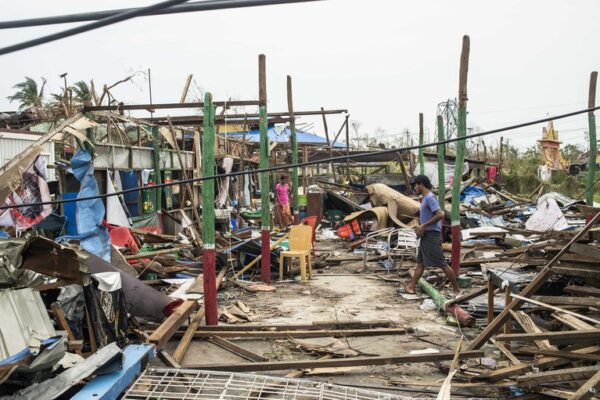
Nearly two months after Cyclone Mocha devastated Myanmar’s Rakhine state, international organizations are still unable to travel to affected areas to provide humanitarian aid. The acting head of the U.N.’s Office for the Coordination of Humanitarian Affairs, Danielle Parry, met with the junta’s minister of relief and resettlement on Tuesday in the capital Naypyidaw to discuss delivery of relief supplies. The meeting followed a U.N. announcement on June 22 that relief activities for cyclone victims have been delayed because of the junta’s decision earlier in June to stop giving practical assistance and permission to travel to humanitarian aid groups, according to the junta-controlled Myanma Alinn Daily. The announcement from the U.N. Office for the Coordination of Humanitarian Affairs also said that they are negotiating with junta authorities in Naypyidaw and state level government officials to get a wide range of access to Rakhine.  Cyclone Mocha – one of the worst cyclones to hit Myanmar in a decade – made landfall on May 14 with sustained winds reaching over 220 kilometers per hour (137 mph), killing more than 400 people and leaving widespread destruction. Residents walk past damaged buildings after Cyclone Mocha in Sittwe township, Rakhine State, Myanmar, Tuesday, May 16, 2023. Credit: AP In the weeks after the storm, aid workers told Radio Free Asia that more than 90% of houses and buildings in northern Rakhine were damaged by the storm.  The U.N. said last month that it’s prepared to provide shelters and relief materials for 1.6 million people in Rakhine, but has so far only been able to assist 110,000 people. A Rohingya refugee in the Dar Paing refugee camp said there has been no international support in the camps.  “Nothing has been done about the shelters in the IDP camps so far. They are also facing food shortages,” the refugee told RFA. The news that international support will come does not reach this area. Their support has not reached this side of the state yet.” ‘We do not expect that the help will arrive’ In early June, junta officials issued a blanket ban on transportation for aid groups operating in Rakhine. A June 7 announcement mandated that all international humanitarian aid, including U.N. assistance, be donated through the junta.  Cyclone victims are going to have to try to survive on their own now, a person in charge of a local help group in Rakhine’s capital, in Sittwe, told RFA. “Many of our people have lost hope in international aid,” he said. “We do not expect that the help will arrive to us.” RFA called junta spokesman Maj. Gen. Zaw Min Tun regarding whether organizations will be able to provide direct international aid to the cyclone victims, but he did not respond.  Workers rebuild a damaged UN World Food Programme warehouse in Sittwe, Myanmar, on May 17, 2023, in the aftermath of Cyclone Mocha. Credit: Sai Aung Main/AFP It is customary for outsider organizations to communicate with the government that is currently in power before providing assistance inside the country, said Thein Tun Oo, executive director of the Thayninga Institute for Strategic Studies, which is made up of former military officers. “In the shortest and simplest terms, the military is the ruling government of the country that holds these sovereign powers,” he said. The junta is intentionally preventing humanitarian aid from reaching those who really need it, said Dr. Win Myat Aye, the Minister of Humanitarian Affairs and Disaster Management of the shadow National Unity Government. “The military council treats the refugee people as their enemies and has no compassion for them as humans,” he said. Translated by Myo Min Aung. Edited by Matt Reed.

Read More

Aid workers hunt for bodies after shelling, air raids in Myanmar’s Shan state

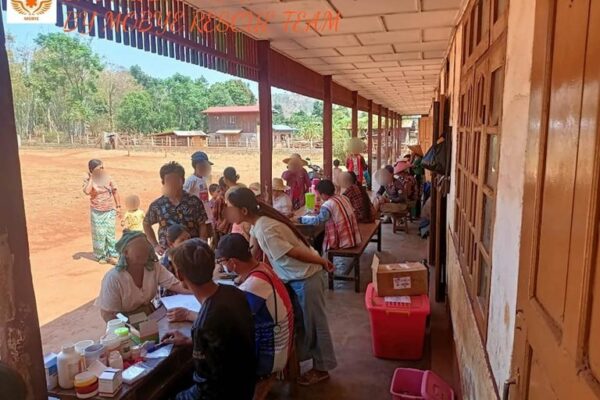
At least 28 civilians have been killed in nearly six weeks of fierce fighting between junta forces and ethnic armies in Myanmar’s eastern Shan state, aid workers told us on Wednesday. Junta troops shelled Moebye (also known as Moe Bye and Mobye) in the south of the state from May 25, and targeted the township with air raids. Rescue workers say they are treating another 20 locals and still looking for bodies. “Most of the injured were shot,” said an official from a local aid group, who requested anonymity for fear of reprisals. “In addition, the number of the deaths from May 27 to July 4 is about 28 people who were hit and killed by heavy artillery.” He added that Moebye Hospital has been closed since the Feb. 1, 2021, military coup, so the injured had to be sent to Loikaw Hospital in Kayah state and Aungban Hospital in southern Shan state. Aid groups say it has been difficult to look for bodies and take the injured for treatment because the main road is impassable during battles and closed at night. “[The junta troops] do not harm us, but if you pick up [bodies] near where they are, you have to ask for permission,” said a local who has been collecting bodies and who also requested anonymity for safety reasons. “Some dead bodies have been around for almost a month. The deceased were buried in the nearest cemetery to where their bodies were found.” The volunteer told us some neighborhoods are still inaccessible so it has been impossible to bury the dead there. Shadow government condemns killings Myanmar’s shadow National Unity Government issued a statement on June 14, saying the bodies of 14 locals had been discovered near a pagoda to the north of Moebye between June 6 and 8. It strongly condemned the killings. We tried to contact the Mobye People’s Defense Force and the Karenni Defense Forces about the military situation in Moebye township, but telephone services had been cut. A report Wednesday by the local paper Mekong News quoted a local defense force member as saying the fighting was ongoing, phone and internet communication had been cut and people should stay in their homes. Ba Nyar, the founder of the Karenni Human Rights Group, said most of the civilians who died in Moeby were deliberately targeted by junta troops. “These actions can be viewed as war crimes. They are deliberate killings,” he told us. “If we look at some of the ways things have been done: for example, continuous bombing by fighter jets is a war crime which makes it impossible for people to live there.” Wecalled Major Gen. Zaw Min Tun, the junta’s deputy information minister, and also Shan state spokesperson Khun Thein Maung, seeking their comments but nobody answered. Villagers displaced by the fighting receive medical care at a camp in Moebye township, Shan state on 28 April 2023. Credit: Mobye Rescue Team   Locals said more than 20,000 people, or two-thirds of Moebye’s population, fled their homes at the height of the fighting and have been unable to return. They said that junta troops are stationed in the center of the town and only a few people have stayed behind to guard homes. According to the figures from the Karenni Human Rights Group, more than 260,000 people in Moebye – which borders Kayah state – and in the whole of Kayah state have been unable to return home. Moebye and Kaya state are close to Myanmar’s capital and junta stronghold Naypyidaw, leading some analysts to speculate that the junta is trying to prevent them from being used as bases to attack the regime’s leaders.  

Read More

Hong Kong warrants spark fears of widening ‘long-arm’ political enforcement by China

Concerns are growing that China could start using the Interpol “red notice” arrest warrant system to target anyone overseas, of any nationality, who says or does something the ruling Communist Party doesn’t like, using Hong Kong’s three-year-old national security law. Dozens of rights groups on Tuesday called on governments to suspend any remaining extradition treaties with China and Hong Kong after the city’s government issued arrest warrants and bounties for eight prominent figures in the overseas democracy movement on Monday, vowing to pursue them for the rest of their lives. “We urge governments to suspend the remaining extradition treaties that exist between democracies and the Hong Kong and Chinese governments and work towards coordinating an Interpol early warning system to protect Hong Kongers and other dissidents abroad,” an open letter dated July 4 and signed by more than 50 Hong Kong-linked civil society groups around the world said. “Hong Kong activists in exile must be protected in their peaceful fight for basic human rights, freedoms and democracy,” said the letter, which was signed by dozens of local Hong Kong exile groups from around the world, as well as by Human Rights in China and the World Uyghur Congress. Hong Kong’s national security law, according to its own Article 38, applies anywhere in the world, to people of all nationalities. The warrants came days after the Beijing-backed Ta Kung Pao newspaper said Interpol red notices could be used to pursue people “who do not have permanent resident status of the Hong Kong Special Administrative Region and commit crimes against Hong Kong outside Hong Kong.”  “If the Hong Kong [government] wants to extradite foreign criminals back to Hong Kong for trial, [it] must formally notify the relevant countries and request that local law enforcement agencies arrest the fugitives and send them back to Hong Kong for trial,” the paper said. While Interpol’s red notice system isn’t designed for political arrests, China has built close ties and influence with the international body in recent years, with its former security minister Meng Hongwei rising to become president prior to his sudden arrest and prosecution in 2019, and another former top Chinese cop elected to the board in 2021. And there are signs that Hong Kong’s national security police are already starting to target overseas citizens carrying out activities seen as hostile to China on foreign soil. Hong Kong police in March wrote to the London-based rights group Hong Kong Watch ordering it to take down its website. And people of Chinese descent who are citizens of other countries have already been targeted by Beijing for “national security” related charges. Call to ignore To address a growing sense of insecurity among overseas rights advocates concerned with Hong Kong, the letter called on authorities in the United Kingdom, United States of America, Canada, Australia, New Zealand and Europe to reiterate that the Hong Kong National Security Law does not apply in their jurisdictions, and to reaffirm that the Hong Kong arrest warrants won’t be recognized. The New York-based Human Rights Watch said the “unlawful activities” the eight are accused of should all be protected under human rights guarantees in Hong Kong’s mini-constitution, the Basic Law. Hong Kong police on Monday, July 3, 2023, issued arrest warrants and offered bounties for eight activists and former lawmakers who have fled the city. They are [clockwise from top left] Kevin Yam, Elmer Yuen, Anna Kwok, Dennis Kwok, Nathan Law, Finn Lau, Mung Siu-tat and Ted Hui. Credit: Screenshot from Reuters video “In recent years, the Chinese government has expanded efforts to control information and intimidate activists around the world by manipulation of bodies such as Interpol,” it said in a statement, adding that more than 100,000 Hong Kongers have fled the city since the crackdown on dissent began. “The Hong Kong government’s charges and bounties against eight Hong Kong people in exile reflects the growing importance of the diaspora’s political activism,” Maya Wang, associate director in the group’s Asia division, said in a statement. “Foreign governments should not only publicly reject cooperating with National Security Law cases, but should take concrete actions to hold top Beijing and Hong Kong officials accountable,” she said. Hong Kong’s Chief Executive John Lee told reporters on Tuesday that the only way for the activists to “end their destiny of being an abscondee who will be pursued for life is to surrender” and urged them “to give themselves up as soon as possible”. The Communist Party-backed Wen Wei Po newspaper cited Yiu Chi Shing, who represents Hong Kong on the standing committee of the Chinese People’s Political Consultative Conference, as saying that those who have fled overseas will continue to oppose the government from wherever they are. “Anyone who crosses the red lines in the national security law will be punished, no matter how far away,” Yiu told the paper. The rights groups warned that Monday’s arrest warrants represent a significant escalation in “long-arm” law enforcement by authorities in Beijing and Hong Kong. Extradition While the U.S., U.K. and several other countries suspended their extradition agreements with Hong Kong after the national security law criminalized public dissent and criticism of the authorities from July 1, 2020, several countries still have extradition arrangements in force, including the Philippines, Portugal, Singapore, South Africa and Sri Lanka. South Korea, Malaysia, India and Indonesia could also still allow extradition to Hong Kong, according to a Wikipedia article on the topic. Meanwhile, several European countries have extradition agreements in place with China, including Belgium, Italy and France, while others have sent fugitives to China at the request of its police. However, a landmark ruling by the European Court of Human Rights in October 2022 could mean an end to extraditions to China among 46 signatories to the European Convention on Human Rights. “The eight [on the wanted list] should be safe for now, but if they were to travel overseas and arrive in a country that has an extradition agreement with either mainland China or Hong Kong, then…

Read More

Around 6,000 villagers forced to flee township in Myanmar’s Sagaing region

Myanmar’s military is carrying on its campaign to seize control of townships in northern Sagaing region, torching buildings and forcing around 6,000 locals to flee Khin-U, residents told RFA on Monday. An official of Khin-U township’s Right Information Group told RFA that a total of 15 villages in the township were raided by two military columns. The man, who requested anonymity for security reasons, said nearly 3,500 residents in the northeastern part and 2,500 in the southwestern part of Khin-U township abandoned their homes ahead of the military raids. A resident of Khin-U’s Ah Lel Sho village told RFA troops killed livestock and captured locals. “Four cows and two pigs were slaughtered, and five people were arrested. I think they have to carry the packs. Three people were in their 20s and two in their 60s,” said the local who declined to be named for fear of reprisals. “Now, the junta troops are burning down Yauk Thwar Aing village to the south of Ah Lel Sho. I can see the smoke in the distance but I can’t get close because of the troops.” Residents of Chan Thar Kone village said a 60-year-old man, Than Win, was shot and injured while he bumped into a military junta column on July 1. Meanwhile, residents of neighboring Shwebo township said troops shot dead two local men. They said the bodies were discovered after a column of around 40 troops withdrew on Saturday. “Two people were shot dead near a rest tent in Kawt village in the eastern part of Shwebo. That was the route the junta took when it carried out its offensive,” said a local who didn’t want to be named for security reasons, “It’s not yet known who they were or where they were from. The bodies were still there on Monday morning.” RFA called the junta spokesperson for Sagaing region, Saw Naing, on Sunday and Monday regarding the arson attacks and killings, but he did not answer. More than 1.5 million civilians have fled their homes since the Feb. 1, 2021 coup, according to the United Nation Office  for the Coordination of Humanitarian Affairs (UNOCHA), It said around 765,200 were from Sagaing region. Translated by RFA Burmese. Edited by Mike Firn.

Read More

Hong Kong social activists brave threat of arrest to keep speaking out

Three years after Beijing imposed a law criminalized public dissent and peaceful political opposition in Hong Kong, a dwindling band of social activists say they’re not giving up just yet. Opposition party leader Chan Po-ying, who chairs the League of Social Democrats, was recently detained by police on a downtown shopping street carrying an electric candle and a yellow paper flower on the 34th anniversary of the 1989 Tiananmen massacre, commemoration of which is now banned in Hong Kong. Undeterred, she showed up a few days later outside the headquarters of HSBC Bank, protesting the closure of the party’s bank accounts — something that is increasingly happening to opposition parties and activists in the city since the crackdown on dissent began. Chan’s husband Leung Kwok-hung is one of 47 political activists and former lawmakers currently standing trial for “subversion” after they organized a democratic primary in the summer of 2020. Police also forced Chan and fellow women’s rights and labor activists to call off a march on International Women’s Day in March, in a move she told reporters was due to pressure from Hong Kong’s national security police. So why does she keep going, when so many have already left? “Why do I still want to stay in Hong Kong?,” she said. “It’s not to prove how brave we are, but because we still hope to speak out when we see political, economic, social or intellectual injustice in Hong Kong.” “Dissent must be voiced, regardless of how much room is allowed for it,” she said. “There are still some people willing to speak out, even in such a high-pressure situation.” “It also inspires other people.” Stalking street stalls Still, even a simple plan of action like handing out leaflets on the street is now fraught with difficulty. “Sometimes we set up a street stall with just four of us, and there are sometimes more than 10 plainclothes police standing right next to us,” Chan said. “They may try to charge us under laws they haven’t used before, such as illegal fundraising.” Police officers take away a member of the public on the eve 34th anniversary of China’s Tiananmen Square massacre in Hong Kong, June 3, 2023. Credit: Louise Delmotte/AP And it’s not just the national security law they need to watch out for. “The easiest way for them to prosecute us is under colonial-era sedition laws, because they can charge us for posting any opinion online that the authorities don’t like,” she said. “They are gradually starting to use a whole variety of laws to curb the freedoms granted to us in the Basic Law,” Chan said, referencing the promises in Hong Kong’s mini-constitution that the city would retain its freedoms of press, expression and association beyond the 1997 handover to Chinese rule. What’s more, the League is now having huge difficulties funding its activities in the face of bank account closures, and can only hope that its members will work voluntarily to further the party’s agenda. ‘Destroying a system’ Former pro-democracy District Council member Chiu Yan Loy has also decided to stay for the time being, to serve his local community. “District councilors spend 90% of their working hours on issues that have little to do with politics, but which serve important social service functions,” Chiu said. Until the authorities recently rewrote the electoral rulebook to ensure that there would be no repeat of the landslide victory seen in the 2019 district elections, which was seen as a huge show of public support for the 2019 protest movement and its goals, which included fully democratic elections. University students observe a minute of silence to mourn those killed in the 1989 Tiananmen crackdown, in front of the “Pillar of Shame” statue at the University of Hong Kong, June 4, 2021. Credit: Kin Cheung/AP “When you destroy a system, but don’t replace it with a new system, this will only create more social problems that will start occurring in Hong Kong,” he said, adding that he is putting his own money into community-based projects to try to address these issues. “These services don’t involve the sort of politics that the government often talks about, so there is still room to keep doing this work,” he said, despite being in a financially precarious situation. Current affairs commentator Johnny Lau said that while the risks have risen, Hong Kong’s activists have yet to be totally silenced. “Of course there are far more obstacles under the national security law than before,” he said. “The so-called red lines are constantly moving, and there are a lot of people watching and reporting people.” “It’s still OK to talk about issues affecting people’s livelihoods,” Lau said. Translated by Luisetta Mudie. Edited by Malcolm Foster.

Read More