Lao Christians given permission to celebrate Christmas

Christians in Laos are preparing to celebrate Christmas more freely this year after the Lao Evangelical Church received permission to do so from the Ministry of Interior, several believers told Radio Free Asia. In the past, Christians across the country had to get permission from their village and district authorities – approval that was not granted in many cases. Even though Laos has a national law protecting the freedom of religion, Christians have been restricted, persecuted and sometimes attacked in the one-party communist country with a mostly Buddhist population. Earlier this year, 15 Christian families and a pastor in Luang Namtha province were evicted and their homes destroyed because they didn’t participate in traditional and cultural activities of the communities. This year, however, the security minister sent a notice asking the district and provincial authorities to facilitate Christmas celebrations. Christmas, which celebrates the birth of Jesus as the promised messiah, falls on Monday this year, but churches are marking the holiday with various services and gatherings during this time. “We’re inviting some local leaders to attend our Christmas celebration,”  a member of the Lao Evangelical Church in Savannakhet Province, who like other sources in this report requested anonymity for safety reasons, told RFA Lao. “This year, we don’t have to request permission to celebrate the holy day from the local authorities because we got permission from the central government more specifically from the Ministry of Interior,” he said. “The ministry has just sent a notice of the authorization to all provinces then the provincial authorities passed it down to the districts,” he said. “A district official told us that there are some changes this year; one of the changes is that we don’t have to request permission from the local authorities.” The Lao Evangelical Church is the largest registered Christian church in Laos with in 2021 more than 200,000 followers and around 200 pastors. Restrictions in some places Still, Christians in Savannakhet Province said they faced restrictions. “We’re celebrating Christmas this year, but not in our village because our village chief wouldn’t allow us to celebrate the holy day here, we would have to join the celebration in another village in the district,” a follower in Nong district said. Last year, Christians in three villages in that same district requested permission to celebrate Christmas, but the district authorities gave permission to only one village, Nalao. When Christians defied those restrictions and set up stages, tables and tents in all three villages, about 20 police and military officers armed with guns came. They dismantled and confiscated all the things the people had set up, prompting the women and children to cry, said a believer from the province. “We lost everything. We lost about 30 wooden planks, several hundreds of tables, chairs and tents. We rented these materials and equipment: so, we lost a total of ten million kip (US$500), and religious ceremonies were canceled,” he said. Historically, the district has been resistant to Christians. In 2018, seven Christian leaders in Nong district were arrested then released about a week later for organizing services without proper permission.  A Christian in the district called for more freedom to exercise one’s faith.  “We’d like to call on the authorities to allow us to freely celebrate Christmas and other religious ceremonies in every village, not just only one or two villages,” he said. Translated by Max Avary. Edited by Malcolm Foster.

Read More

Breaking the laws of the land: Vietnam’s real estate scandals

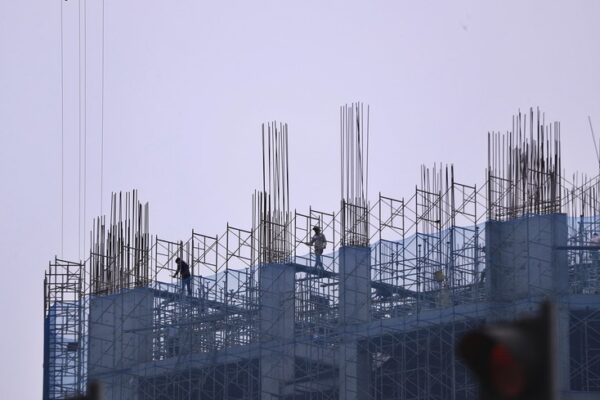
For a country whose regime was founded as a land-to-the-tiller movement, one would expect the Vietnamese government to be more sensitive to real estate issues. While abuse and corruption have been a persistent irritant in the countryside, they’ve increasingly spread to the cities and impacted the middle and emerging middle classes. Land has always been a very sensitive issue in Vietnam. Technically, the state owns all land, but since the Doi Moi reforms and the implementation of a contract based agricultural system in the mid-1980s, people can acquire leases.  Yet, not all land is created equal, and the best often goes to local officials and their cronies. Local-level officials routinely appropriate land for development projects or to profit from urban sprawl.  Farmers complain of unfair compensation. And even when compensation is market value, the forced sale is an irritant. Farmers are often not provided with new skills to make a living. Social media has amplified these cases, resulting in an increased number of civil demonstrations. To respond to the growing unrest, the National Assembly recently passed legislation that consolidated a myriad of existing local-level security forces to augment the police. RFA reported some 3.5 trillion dong (US$145 million) was earmarked for what could be a 400,000-man force, with powers of arrest.  But corruption and a lack of government accountability in the real-estate sector is also being felt by the urban middle class, though in very different ways. Vietnam’s real estate market has been booming. By 2021, the real estate sector accounted for at least 12% of GDP, up from 2% in 2018, fueled by the country’s burgeoning middle class.  Workers at a construction site in Hanoi, Vietnam in 2023. (Hau Dinh/AP) Property developers rushed to develop apartment complexes, luxury villas, and malls. The more politically connected they are, the cheaper the land and faster the approvals.  In return for approvals, local officials receive bribes or real estate. Proceeds of land sales are supposed to go into local coffers to pay for government services, but are routinely misappropriated. Developers tried to finance their projects through pre-sales, but this was never sufficient. Beginning in 2016, developers began turning to the nascent corporate bond market to raise funds.  And raise they did. For the developers, it was literally minting money. NovaLand, alone, raised some 160.7 trillion dong (US$6.5 billion) through the bond market by 2021. Some US$15 billion in real estate debt alone will mature in 2025.  Defaults, followed by investigations But then the defaults began. So, too, did the investigations.  In the first half of 2022, at least four high profile real estate executives were arrested for either stock price manipulation or fraud in financial disclosures in bond sales.  Then came the big one: Truong My Lan, the CEO of Van Thinh Phat.  The Ministry of Public Security (MPS) said upon her arrest on October 8, 2022, Lan had “fraudulently engaged in the issuance and trading of bonds in contravention of the laws to appropriate thousands of billions of dong from the people.”   They were not even close.  In the end, the MPS concluded that she had raised 30 trillion dong (US$1.23 billion) in bonds and embezzled some US$12.53 billion from Saigon Commercial Bank that she secretly controlled, through more than 900 shell companies.  To put that into perspective, that’s equivalent to 3.2% of Vietnam’s GDP.  Newly built buildings jam the skyline in Hanoi, Vietnam in 2016. (Tran Van Minh/AP) Lan’s scheme worked because she paid US$5.2 million in bribes to 24 government regulators. In all, 15 officials from the State Bank, three from the Government Inspectorate, and one from the State Audit Office will face charges.  To date, no one higher than the former head of the department of inspection and supervision of the State Bank’s office in Ho Chi Minh City has been investigated, let alone prosecuted. Not coincidentally, the government’s investigation into Lan has shed no light on how she acquired some 156 properties, including some in the most high-end district in Ho Chi Minh City. She was well-served by her political connections, and no one wants to open up that can of worms.  Another recent case merits attention, though with a mere US$345 million in embezzled funds. Property developer Tan Hoang Minh got into financial trouble during the pandemic. Between July 2021 and March 2022, three of its subsidiaries began selling bonds to raise funds.  But the lack of scrutiny and oversight allowed them to fabricate business activity and withhold or obfuscate pertinent financial information in their disclosures. The category of the nine tranches of bonds was only supposed to be sold to institutional investors, but they marketed them to retail investors. Of the 10.3 trillion dong  (US$437 million) raised through those bond sales to 6,630 investors, Tan Hoang Minh’s chairman, Do Anh Dung, embezzled 8.6 trillion dong (US$354 million). Three apartment buildings were left unfinished, leaving homebuyers in the lurch. Why fraud in the real-estate market matters Real estate is where Vietnam’s middle class parks their money. They have few other investment alternatives, while the emerging middle class struggles to buy a home. Access to vast amounts of capital, without regulatory oversight, created – at the same time – an oversupply in the housing market and a bubble. Do Anh Dung, for example, flew onto the authorities’ radar screen when he made substantially above-market bids on properties to drive up all real estate prices. Truong My Lan purchased much of her property on the secondary market from competitors at above market prices.  Market manipulation was their game. But in the process, they created a glut.  By August 2023, the 10 largest property developers had a combined US$11.4 billion in unsold inventory. In Ho Chi Minh City, real estate prices are expected to fall 5-7%, while the prices of high-end homes are expected to fall by 10%. The investigations into several of these real estate developers led to a credit crunch. In short, the State Bank blocked the issuances of new bonds for periods, meaning many developers…

Read More

Myanmar junta kills 7-year-old in northern airstrike

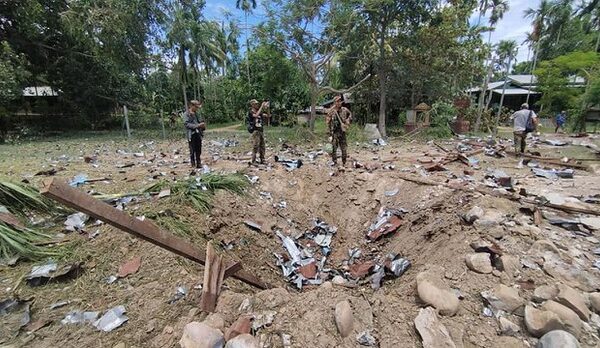
A junta airstrike on a village in Myanmar’s northern Sagaing region killed a seven-year-old girl, residents told Radio Free Asia Friday. The Dec. 16 attack on Paungbyin township’s Kha Maing (West) also claimed the life of an adult woman. Separately on Thursday, a helicopter attack killed 30-year-old Kyaw Soe, and injured five other civilians in Paungbyin’s Tha Yau, according to a local village administrator who wished to remain anonymous for fear of reprisals. “A monastic school building, a market, the road, the soccer field and a highway station were shot at,” he said. “It took only 25 minutes, but the helicopter turned around twice and continued firing. People were not aware and were calm because there had been no fighting. “People are in shock. Women and children are very scared. People didn’t have time to dodge and were shot as soon as they heard the sound of the helicopter.” The injured are being treated by the humanitarian team of Paungbyin People’s Administration Group, he said. Destroyed homes in Nyaung Pin Te village, Chaung-U township, Sagaing region, Dec 21, 2023. (Citizen journalist)  In another attack Thursday, junta troops raided Nyaung Pin Te village in Sagaing’s Chaung-U township, killing a local man and burning nearly 120 houses down – nearly half the homes in the village – residents told RFA. The body of 55-year-old Zaw Win was found on Thursday evening after troops left the village, according to a villager who didn’t want to be named for safety reasons. “He was brutally killed. Only half of his head is left,” he said. “The junta troops burnt the houses in the village for three days. Yesterday … troops torched four places in the village, and took the village rice which was recently harvested at the end of the rainy season.” Troops took 2,000 baskets of rice and 50 bags of fertilizer from the village and slaughtered 10 cattle, he said. Locals said the column of around 100 soldiers from Chaung-U abducted about 80 civilians but released them when they returned to base. They said the villagers were used as human shields because troops feared they would be intercepted by People’s Defense Forces along the route. RFA called the junta’s Sagaing region spokesman Sai Naing Naing Kyaw about the incidents but he said he had no information about them because he had been traveling. Although many villagers returned after the troops left, around 1,400 residents of Nyaung Pin Te village are too afraid to go home, locals told RFA. Across Myanmar more than 2.6 million people have fled the fighting according to the United Nations. Data for Myanmar, an independent research group, announced on Dec 13, that more than 77,000 homes had been burned down since the Feb. 01, 2021 coup. Translated by RFA Burmese. Edited by Mike Firn and Taejun Kang.

Read More

Anti-junta forces claim attack on Myanmar’s central region military HQ

Anti-junta armies have attacked Myanmar’s military headquarters of Central Region Command in an old palace compound of Aungmyaythazan township, Mandalay city, the residents and members of forces who conducted the attack told Radio Free Asia on Thursday.  This attack was carried out on Dec. 21 by the Mandalay Security and Special Task Force, People’s Defense Group from Pyinoolwin District, No More Dictatorship and Brave Warriors for Myanmar (BWM), according to a BWM announcement. A BWM official said that they targeted the dormitories where the regional commander and deputy regional commanders of junta’s Central Region Military Command were staying. “We were able to attack with six long-range 107-mm missiles. One device failed to detonate due to a material malfunction. But, five others successfully launched their attacks,” said the official who wished to remain unnamed due to security reasons. “The targets, which included the special office of the Central Region Military Command, the barracks of junta troops, and the residences of the regional commander and deputy regional commander, were successfully struck.” Damages to the buildings and casualties are still under investigation, the official added. A resident of Mandalay who lives near the royal palace compound speaking on condition of anonymity for fear of reprisals said Thursday that following the attack, junta troops intensified security measures and are carrying out searches and checks throughout the city.  “It is true that the military headquarters in the palace compound was attacked. I became anxious and couldn’t sleep anymore. Since it was over two or three o’clock [in the morning]. This morning, as I rode my motor scooter around the neighborhood, I noticed something unusual. The roads were blocked off more than they had been in previous days, and there was an increased checking of motorcycles and cars,” he told RFA Burmese. The Central Region Military Command’s interrogation center is infamous for detaining and questioning anti-coup demonstrators, university students, and members of the People’s Defense Force in Mandalay city, following the military coup on February 1, 2021. RFA Burmese contacted Thein Htay, the military junta spokesman for Mandalay region and regional economic minister, regarding the incident by phone, but he did not reply at time of publication. Separately, on Dec. 20, Mandalay Palace – military headquarters – and some police stations in Mandalay city, including Obo Prison’s main guard posts, were attacked with drone bombs as part of “Operation Shwe Pyi Soe,” according to the Mandalay-based People’s Defense Forces. Edited by Taejun Kang.

Read More

Food, supplies run low at large prison in Myanmar’s Kayah State

Food and medicine shortages are putting nearly 500 prisoners in eastern Myanmar’s Kayah State at risk as fighting between the military junta and resistance forces has hindered the transport of supplies into the capital of Loikaw, aid workers said. Ethnic Karenni forces and anti-junta People’s Defense Force paramilitaries began a coordinated offensive against the military on Nov. 11 in an attack that’s been dubbed “Operation 1111.”  Intense fighting has taken place near Loikaw Prison over the last week as food and medicine supplies continue to drop, said Thike Tun Oo, a member of the leading committee of the Political Prisoners Network-Myanmar.  Basic supplies at the prison are typically stockpiled for about three months, he said. “The military troops are defending the prison against the attacks of joint forces who are holding back on all-out attacks out of consideration for the prisoners,” said Khu Nye Reh, the spokesman of the Karenni Military Information Center.  “Family members dare not visit prisoners due to security concerns,” he said. “In this circumstance, the prisoners will receive only a very small quota of food. Just enough for survival.” Civilians trapped amid airstrikes run to safety during a battle to take over Loikaw in Kayah state, Myanmar, Nov. 14, 2023. (Reuters) Karenni forces have suspended attempts at taking control of the prison, but continue to occupy 85 percent of Loikaw, according to Col. Phone Naing, the Karenni Army’s adjutant general. The prison’s 500 inmates include 140 pro-democracy activists and other prisoners of conscience. Human shield worries “Whether the prison is attacked or not, food supplies and fuel cannot be taken into the city due to the ongoing armed conflict,” said Banyar, the founder of the Karenni Human Rights Group.  “The prisoners will also not receive regular meals and medicines. Patients in the prison cannot be taken out for medical treatments,” he said. “They have lost their human rights.” He added that he’s worried that junta troops will force prisoners to wear military uniforms if they attempt to relocate them or use them as cover. Junta officials haven’t made any statements about the situation of inmates at Loikaw Prison. Radio Free Asia attempted to contact the office of the deputy director-general of the Prison Department, as well as junta spokesman Maj. Gen. Zaw Min Tun, but no one responded to messages. Fighting between Karenni forces and junta troops near the prison in January 2022 also caused food shortages. “We were tightly confined in a prison cell. Food rations were significantly reduced,” a member of the Karenni Political Prisoners Association and a former Loikaw Prison inmate recalled to RFA on Wednesday.  “We even had a hard time finding salt to eat,” he said. “We had no chance to avoid heavy weapon shelling. While I was in this prison, some 120 mm mortars and RPG attacks hit the prison. Our lives were at risk at that time.” The former prisoner also expressed concern for the security of prisoners currently inside the facility. Translated by Aung Naing. Edited by Matt Reed and Malcolm Foster.

Read More

Escaping war in Myanmar for prison in India

Women who escaped the fighting in Myanmar are being detained and beaten in an Indian prison, according to a group that helps Burmese refugees. The India For Myanmar group said Tuesday the women have gone on hunger strike to demand their release from the prison in Manipur state which borders Sagaing region and Chin state. The group’s spokesperson Salai Dokhar said that the hunger strikers were being tortured at the command of prison authorities. “The prison authorities promised to release them on Dec. 15. Since they were not released on the 15th, the inmates of the women’s prison went on a hunger strike from the 16th. But starting on the night of the 17th, they were forced to sleep where it had snowed as punishment,” he said.  “On Dec. 19, the authorities started beating the inmates. They called policemen and asked them to beat the female prisoners. I heard that there are some critically injured people.” The husband of one of the women, who wished to remain anonymous for fear of reprisals, told Radio Free Asia on Tuesday that 36 protesting Myanmar women were beaten. “Those who have already been sentenced to five months in prison and fined were told that they would be released on Dec. 15. But they were not released, so they started protesting on the 16th. On the 18th they were beaten by policemen, and they were severely beaten,” the man said. “My wife has swollen cheeks. Some of the women lost their Htamein [Burmese traditional lower dress for women]. The policemen stopped beating them when their Htamein came off and they looked inappropriate.” He added that Burmese prisoners in the men’s dormitory had also been on hunger strike since Dec. 19 to support the female inmates. There are currently around 100 Myanmar nationals in Manipur prisons. Male inmates are held in detention centers and the women are in prisons according to family members. Manipur authorities charged those arrested under the Foreigners Act and sentenced them to a fine and imprisonment of up to six months. RFA Burmese emailed the Indian Embassy in Yangon about the beatings but did not receive a reply at time of publishing on Wednesday. Salai Dokhar said India For Myanmar would call on the chief minister of Manipur to release the Myanmar nationals as soon as possible and treat them as war victims. Currently, a total of 86 Myanmar refugees and migrant workers are being held in Manipur prisons, according to those helping refugees and migrant workers. They said there are around 6,000 Myanmar war refugees in Manipur state. Most of them are from Kale and Tamu townships in Sagaing region and Tedim, Tonzang townships in Chin state. Translated by RFA Burmese. Edited by Mike Firn and Taejun Kang.

Read More

Son of prominent Cambodian lawyer sought in fatal hit-and-run crash

A Phnom Penh prosecutor issued an arrest warrant on Tuesday for the son of a prominent lawyer who is suspected in a hit-and-run car accident that killed a decorated badminton player. The victim’s wife posted on Facebook this week that the suspect’s father – Prohm Vicheatsophea – attended the funeral of badminton gold medalist Seang Kimhong and offered the family US$1,000 if they agreed to not pursue criminal charges against his 23-year-old son. The victim’s wife, Kruy Chhin Liang, said on Facebook that she rejected Prohm Vicheatsophea’s proposition and said she would continue to demand justice for her husband. Her post has received hundreds of comments from Cambodians outraged by the offer.  Justice Minister Keut Rith responded by ordering Phnom Penh Municipal Court prosecutors to “investigate and resolve the matter properly and strictly according to the law,” ministry spokesman Chin Malin told the Khmer Times. The Dec. 14 accident between a jeep and a motorcycle took place in Phnom Penh’s Toul Kork district, an area of the capital known for its large villas. Seang Kimhong was riding on the motorbike, according to Kruy Chhin Liang. Prosecutor Plong Sophal wrote in the warrant that evidence proves that Prohm Vichet Sosakda was the driver of the car and fled the scene “without responsibility.” The suspect has been ordered to appear at the Phnom Penh Municipal Court before Jan. 9. Seang Kimhong won the gold medal in badminton at this year’s SEA Games, a regional Olympiad that takes place every two years and was hosted by Cambodia for the first time in May. Because of its rampant corruption and inadequate constraints on government power, Cambodia often places near the bottom of global rankings for adherence to the rule of law. In October, the World Justice Project put Cambodia at 141st out of 142 countries. Soeung Sengkaruna, a spokesman for human rights group Adhoc, said authorities should take strict measures against the suspect, regardless of his background. Several NGOs are closely monitoring this case, he added. Typically, prominent suspects are able to escape justice when they are accused of a crime, he told Radio Free Asia.  “But we are looking to see if the authorities are working hard to bring this suspect to justice,” he said.   Translated by Yun Samean. Edited by Matt Reed and Malcolm Foster.

Read More

Anti-junta forces capture Myanmar border crossing gate

One of Myanmar’s powerful anti-junta armies has seized a key border gate from the military in a self-administered part of eastern Shan state, residents told Radio Free Asia on Tuesday. Communist Party breakaway group the Myanmar National Democratic Alliance Army – or MNDAA – occupied the Yanlonkyaing (Yan Long Zhai) border trade gate in the Kokang Self-Administered Zone’s Laukkaing township on Monday. A Laukkaing resident told RFA he heard gunshots near the gate on Monday morning. “I heard continuous shots from [the Myanmar] side of Yanlonkyaing gate Monday,” said the man who didn’t want to be identified for fear of reprisals.  “The gate was seized in the morning. That was the only place left and [MNDAA troops] are saying there are no more places left to capture. I do not hear the sound of gunfire anymore.” A source with knowledge of the military situation, who wished to remain anonymous for safety reasons, said junta troops and affiliated militias had surrendered. A video of the MNDAA providing cash assistance to those who surrendered – seen by RFA Burmese – was posted on social media by the group. Shan state-based media outlets have also reported that the Yanlonkyaing border gate was captured by MNDAA forces. RFA tried to contact MNDAA Kokang spokesman Li Kyarwen but did not receive a reply at time of publication Tuesday. The junta has not released any statement regarding the incident.  Translated by RFA Burmese. Edited by Mike Firn and Taejun Kang.

Read More

The limits of a Russia-China partnership that claims to have none

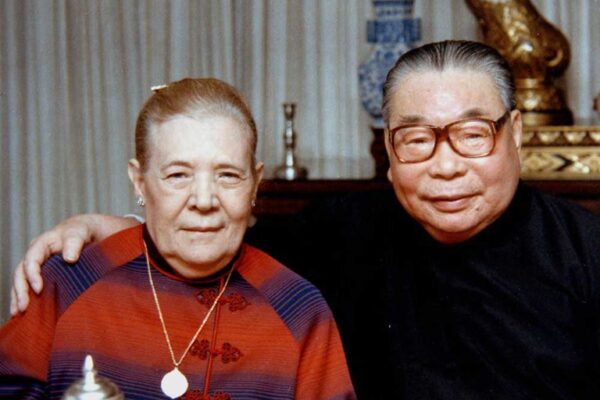
Three weeks before Russian tanks rolled into Ukraine last year, President Vladimir Putin traveled to Beijing for the opening ceremony of the Winter Olympics hosted by Chinese President Xi Jinping – an event shunned by Western leaders. In a 5,300-word joint statement issued the same day, Xi and Putin said their friendship had “no limits” – a declaration that caused a wave of unease in the West. It signaled that the world’s two preeminent authoritarian powers were making common cause. Beijing was also Putin’s first overseas visit outside the former Soviet Union in October since an arrest warrant was issued by the International Criminal Court against him for war crimes in Ukraine. In recent years, the China-Russia relationship has deepened as the two nations have sought a new world order against their common rival, the United States. However, since the war began, China has avoided providing direct military aid to Russia. Bilateral ties between the two powers are more complex and nuanced than meets the eye. Moscow’s association with China has a long and storied past that pre-dates the rise of the Chinese Communist Party to power in Beijing seven decades ago. Belarus-born Chiang Fang-liang poses with her husband, former Taiwan President Chiang Ching-kuo, March 15, 1985. Credit: AFP Kuomintang’s Soviet bride In the early afternoon on Dec. 15, 2004, Chiang Fang-liang – widow of former Taiwanese President Chiang Ching-kuo – died of respiratory and cardiac failure at a hospital in Taipei at age 88. She had lived a quiet, lonely life as a member of Taiwan’s first family. Her husband and three sons all passed before her. Born Faina Vakhreva in the Russian Empire, she was a member of the Soviet Union’s Communist Youth League and met her future husband when they both worked at a factory in Siberia. They married in 1935. A few years before that, Chiang’s father, Generalissimo Chiang Kai-shek, led the Chinese nationalist party Kuomintang to power in mainland China. Yet in 1949, the victory of the Communists drove the Chiang family and their government to retreat to the island of Taiwan, where Fang-liang lived and died. The Soviet Union, and Russia afterwards, have had little contact with Taiwan, but the Chiang family’s Russian connection served as a reminder of how much influence the Soviets once had over the politics across the Taiwan Strait. Chiang Ching-kuo arrived in the USSR aged 15 and spent 12 years there. He embraced the life of a Soviet Marxist, even adopted a Russian name – Nikolai Vladimirovich – after Vladimir Ilyich Lenin, the first leader of the USSR. The Kuomintang, founded in 1912 by Sun Yat-sen, for a long time received support and aid from the Soviet Union. However, during the Chinese Civil War (1927-1949) the Soviets turned to support the Communists who defeated the Nationalists and established the People’s Republic of China. Chiang Fang-liang is seen with her husband, former Taiwan President Chiang Ching-kuo, and their children in an undated photo. Credit: AFP/KMT In his memoir “My Days in Soviet Russia,” Chiang Ching-kuo recalled his time as being “completely isolated from China, I was not even allowed to mail a letter,” and those long years were “the most difficult” of his life. All his requests to return to the mainland were rejected by the authorities, according to Russian historians Alexander Larin and Alexander Lukin, as Chiang was virtually held hostage by Lenin’s successor as Soviet leader, Joseph Stalin. Chiang and his small family were allowed to leave the USSR in 1937 when in China the Kuomintang and the Communists formed a new alliance to fight against a Japanese invasion that presaged World War II. That was a lucky escape for them as the Soviet country was undergoing a period of extreme political repression known as the Great Purge, during which hundreds of thousands of Stalin’s political opponents were removed and eliminated. From then until her final days, Chiang’s Russian wife would never set foot in her motherland again. The years in the Soviet Union led Chiang Ching-kuo “to examine socialism with a more critical eye, and contributed to his evolution towards anti-communism,” argued Larin and Lukin, who said that the failure of the Soviet economic system played a part in Taiwan’s transition to market reforms under Chiang’s premiership during the 1970s. And not only in Taiwan, “eventually, the Chinese communists in mainland China arrived at the same conclusion” about the Soviet economic model, according to the Russian authors. “Deng Xiaoping, the architect of mainland Chinese economic reforms, was a classmate of Chiang … and had a similar although much shorter experience in the USSR,” they wrote. Good neighbors From the 1960s to the 1990s, the Sino-USSR relationship was marked by turbulence, including a seven-month border conflict in 1969. Mao Zedong’s China condemned Moscow for “betraying communism” while the Soviet Union withdrew all economic assistance to Beijing. It only warmed up after Mikhail Gorbachev became the general secretary of the USSR Communist Party and initiated the political and social reform called perestroika. After the Soviet Union dissolved, China recognized the Russian Federation as its legal successor on Dec. 24, 1991. Moscow and Beijing signed a Treaty of Good-Neighborliness and Friendly Cooperation 10 years later, paving the way for a new chapter in their special partnership. Soviet leader Mikhail Gorbachev [right] gestures as he talks with Chinese leader Deng Xiaoping during a meeting in 1989 in Beijing. Credit: Boris Yurchenko/AP A joint statement on the 20th anniversary of the treaty in 2021 said that Russian-Chinese relations “have reached the highest level in their history.” “The Russian-Chinese relations are based on equality, deep mutual trust, commitment to international law, support in defending each other’s core interests, the principles of sovereignty and territorial integrity,” it said. Officially, Sino-Russia ties are described as a “comprehensive partnership and strategic interaction in the new era,” according to the Russian Ministry of Foreign Affairs. China has been Russia’s largest trading partner since 2010, with two-way trade reaching US$140.7 billion in 2021 and $134.1 billion in…

Read More

Ancient theatrical tradition falls on hard times in crisis-torn Myanmar

For 145 years, the Myanmar city of Pyapon has marked the end of the rainy season with a performance of the ancient Indian epic poem Ramayana–never halting the annual ritual, even during Japanese occupation in World War II, a major uprising against harsh military rule and a catastrophic cyclone.  These days, however, the dancers who have for seven generations made the Ayeyarwady River delta region city famous for performances of the Burmese version of the Sanskrit epic fear they may be the last of their kind in a country plunged into economic hardship and political turmoil in the wake of the COVID-19 pandemic and a 2021 military coup. “COVID health problems arise. Political crises arise. The days of performance are getting shorter,” said Zaw Oo, chairman of the Pyapon Ramayana troupe. “Funds are scarce. Jobs are scarce. Moreover, foreign culture infiltrates. It is really hard to preserve it so it won’t disappear,” he told RFA Burmese. People gather to watch Ramayana, a traditional drama being performed. (RFA photo) The 53-year-old father of two is a national gold medalist in performing as Dathagiri, the ten-headed chief antagonist in the Ramayana epic poem and the subject of worship in both Hindu and Buddhist temples in India and across Southeast Asia. “The main reason for performing is for safety,” Zaw Woo said of the belief that to keep Pyapon safe, the annual reading of the play must not be broken.   “If we cannot perform it, we have to serve meals for Dathagiri as a token offering every year,” he told RFA. “We have to perform it – even if it’s an hour or a verse – to keep the tradition.” The Pyapon dance troupe has made modifications to tradition to keep people in seats for a lengthy poem that in the original Sanskrit has 24,000 verses.  The Burmese Ramayana’s 94 chapters used to take up to 45 days to perform. (RFA photo) Overseas tour The Burmese version of the Ramayana used to require 45 days to perform, but the troupe trimmed it back – to nine days and nine nights. During the  pandemic and following the February 2021 military takeover, the dance became a one-day, closed-door performance at Pyapon’s Shwe Nat Gu Pagoda. Last year, they put on the Ramayana for one day at the Rama theater, but this year, it ran for three days at the end of November. The truncated version of Myanmar’s national epic got mixed reviews, even from sympathetic fans. “In the past, I liked watching it. Watching all nine episodes. Now it’s just one afternoon,” said a 65-year-old woman named Myint. “I’m just watching it to slake my desire.” “Now, young people don’t dare to go out, so it’s not as crowded as it used to.” added Myint.  The Ramayana dates as far back as 7th to 4th centuries BCE in what is now northwestern India, and became a major cultural and moral influence on Hinduism and Buddhism. Versions of the story of Prince Rama are found across South Asia and Southeast Asia, from the Maldives to the Philippines. Children with Thanaka, a light-yellow cosmetic paste in their faces, gather to watch Ramayana being performed. (RFA photo) She told RFA that fears of instability in Myanmar since the coup has taken away her enjoyment in going to the theater. The Pyapon dancers – proud amateurs with day jobs – are hoping their fame in Myanmar can translate into international support for the struggling troupe. In October they were invited to perform the Ramayana at the Indian embassy in Yangon, 75 miles (120 kilometers), which led to plans to put on the drama in India, Nepal and Indonesia, said Zaw Woo. “While he was giving us certificates of honor, the Indian ambassador – together with diplomats from the Nepali and Indonesian embassies – promised that he would do everything possible to help our Pyapon Ramayana troupe to visit these countries to perform the drama,” he said. Dancing trumps job Passion for performing remains high in Pyapon, despite the gloom and doom. A Ramayanaya performer backstage. The Ramayana was performed continuously even during World War II under Japanese occupation. (RFA photo) “I may not have eaten a meal, but if I’m performing the drama, I’m satisfied,” said Wai Phyo Aung, who is playing the role of Lakshmana, younger brother of Rama and has been dancing in the Ramayana troupe for 15 of his 34 years. He is the first in his family to perform after becoming fascinated with Ramayana dancing as a schoolboy. “I used to work for a company, and I lost my job again and again after performing nine nights,” he told RFA. “So, in order not to lose my next job, I became a taxi driver.” Sein Myint, the 77-year-old father of Zaw Woo, winner of three gold medals in a long dancing career, urges people to help keep the Pyapon Ramayana troupe dancing. “Some people think we are performing the drama because we are receiving payments,” he said. “We’re not. We’re manual laborers. If anyone offers to help us, we’ll accept it at any time.”   Translated by Htin Aung Kyaw. Edited by Paul Eckert.

Read More