Vietnamese police detain journalist Nguyen Vu Binh, family say

Authorities in Hanoi have detained a journalist and long-time critic of the Vietnamese government, a relative told RFA Vietnamese on Friday, in the latest sign of the squelching of dissent in the communist-ruled nation. Police took Nguyen Vu Binh, 55, into custody on Thursday. He was then briefly brought home to pack some clothes and his house searched on the basis of a warrant, the relative said.  His family was informed that he was being arrested but not provided any documents, before Binh departed with the police. The reason for his arrest was not immediately clear. “The police brought Nguyen Vu Binh home, read out the search warrant, a list of confiscated items and other documents, and took him away,” said the relative, who spoke on condition of anonymity due to security concerns. “However, he was not handcuffed.” Binh worked for 10 years as a reporter with the official Tap Chi Cong San, or Communist Review, before becoming a prominent activist in Hanoi. In December 2003, the Hanoi People’s Court sentenced him to seven years in jail for “espionage,” accusing him of collecting and composing documents “distorting” the democratic and human rights situation in Vietnam and sending them to “reactionary organizations” overseas. He was released in early 2007 as part of an amnesty order, after which he continued to participate in peaceful activities promoting human rights. Binh has been a regular contributor of blogs published on the RFA Vietnamese web site.  Running for re-election Nguyen Van Dai, a Germany-based human rights lawyer, told RFA that on Wednesday Binh had received a summons from the Hanoi Security Investigation Agency ordering him to attend a meeting on Thursday regarding his participation in video livestreams on the YouTube channel TNT Media Live, owned by San Jose, CA-based radio station Tieng Nuoc Toi, or My Country’s Language.  But Dai said that Binh had stopped participating in those programs in June 2022. Vietnam is ruled by a communist government that is intolerant of dissent. It is currently running for re-election as a member of the United Nations Human Rights Council. Vietnam sits 178th out of 180 nations on the Reporters Without Borders press freedom index. The Paris-backed watchdog says Vietnam is the world’s third largest jailer of journalists. New York-based Human Rights Watch presented Binh with the Hellman-Hammett Award twice, in 2002 and 2007, for writers around the world “who have been victims of political persecution and are in financial need.” He is also an honorary member of the International PEN organization.  Three bloggers who contributed to RFA Vietnamese are currently serving prison terms in Vietnam: Truong Duy Nhat, Nguyen Tuong Thuy, and Nguyen Lan Thang. Translated by Anna Vu. Edited by Joshua Lipes and Mat Pennington.

Read More

Burmese city of Mongmit left ravaged after months of battles

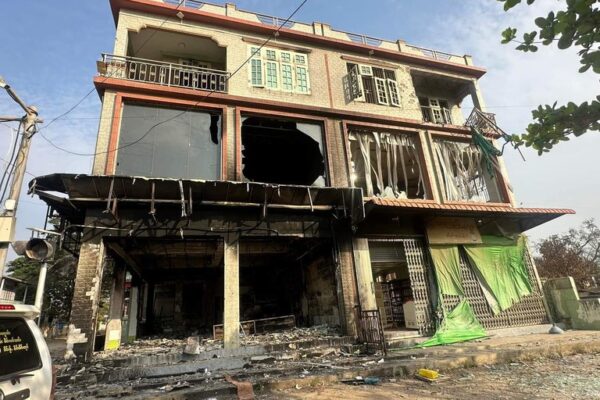
Months of intense battles between anti-junta groups and junta forces have ravaged the city of Mongmit in Myanmar’s Shan state, resulting in widespread displacement, lootings and arson, according to locals.  Currently under junta control, the city was once a battleground where the Three Brotherhood Alliance clashed with junta forces. A ceasefire between the two, mediated by China, was established on Jan. 11, but battles persisted with the Kachin Independence Army, which did not partake in the ceasefire agreement. After launching attacks on Jan. 18, the KIA, in alliance with the All Burma Students’ Democratic Front and People’s Defense Forces, temporarily took over the city, residents told Radio Free Asia on Friday.  However, on Jan. 29, the junta forces recaptured the city through a fierce counterattack involving airstrikes and heavy artillery. This offensive led to the destruction of over 200 buildings, including key structures like the market, monasteries, and a school, as well as 100 residential homes. In this tumultuous period, close to 10,000 inhabitants evacuated the city, abandoning their homes and businesses for extended durations. The resulting void has triggered a wave of robberies throughout the urban neighborhoods, according to locals.  The Kachin Independence Army joint forces and the military junta fought in Mongmit city in northern Shan state on Jan. 28, 2024. (Citizen journalist) A resident, among those who have returned to the city, told RFA that he saw a group of people holding sticks and swords looting houses.  “They took everything without leaving anything behind. It was a group of people in plain clothes and most of them were criminals in the past,” said the resident who wished to remain anonymous for security reasons. “They did not even leave the fence door. They took it away and no one dared to say anything. Then they burned homes. It’s already like a ruined city.” Another woman from Mongmit said that nearly all the shops in the city had been looted, including her own. “Our shop has been looted and there is nothing left, just like every shop in the city now. It was broken into and our goods were stolen,” she said, declining to be identified for fear of reprisals. “It’s worse where there are no people now, some of them are returning to the city.” Mongmit and its neighboring city Mabein have been under martial law since Wednesday.  Shan state’s junta spokesperson, Khun Thein Maung, did not respond to RFA’s inquiries. According to the Shan Human Rights Foundation’s statement on Tuesday, a total of 27 civilians were killed by heavy artillery and airstrikes from Jan. 1 to Feb. 2, including two mass killings. Translated by RFA Burmese. Edited by Taejun Kang.

Read More

Myanmar junta kills 12 after firing into crowded market

Junta shelling of a crowded market killed 12 people and critically injured 18 more on Thursday morning, rescue workers told Radio Free Asia. A junta battalion on a nearby road fired indiscriminately into a marketplace in Rakhine state’s capital of Sittwe during the busiest time of day, locals said. Sittwe has become a disputed territory since a rebel group, the Arakan Army, captured surrounding junta camps and seized six townships across Rakhine state. In early February, the Arakan Army demanded junta troops in Sittwe surrender before their arrival in the capital.  The junta army’s grasp on the area has been tenuous after losing territories, but troops have attempted control by placing restrictions on the capital and making large-scale arrests. On Feb. 19, regime forces detained 500 people who landed in Sittwe off a flight arriving from Yangon. A rescue volunteer who wished to remain anonymous for security reasons told RFA the dead have been sent to Sittwe Hospital’s mortuary, and the injured are being treated there “Those 18 were critically injured and their injuries are life-threatening,” he said. “Some people died on the spot and others after arriving at the hospital. All of them are vendors and shoppers.” The names and ages of the deceased could not be confirmed. However, most of them were women, children and the elderly, the volunteer added. The shell was fired by a battalion near Shu Khin Thar road, residents said. RFA contacted Rakhine state’s junta spokesperson Hla Thein for further details about the attack, but he did not reply.  The Arakan Army ended a humanitarian-based year-long ceasefire on Nov. 13 with the junta when they began to attack border outposts and convoys across Minbya and Rathedaung townships.  The Arakan Army released a statement on Tuesday saying that 111 civilians have been killed and 357 have been injured by small and heavy artillery fired by the junta from the ceasefire to Feb. 18, 2024. Translated by RFA Burmese. Edited by Mike Firn.

Read More

Junta troops beat Myanmar man unconscious during interrogation

Junta troops have arrested at least 10 young people from Myanmar’s delta region, beating one unconscious during questioning, locals told Radio Free Asia on Wednesday. The youths, from three villages in Ayeyarwady region, were accused of involvement in political activities, residents from Kyonpyaw township said, citing sources close to the police station. On Sunday, soldiers arrested a man from Kyee Taw Yoe village who goes by the name Freddy. Following Freddy’s arrest, around 10 youths from Nyaung Kone and Kyar Inn villages were rounded up.  A Kyonpyaw township resident who wished to remain anonymous for security reasons told RFA the youths were thought to be connected to Freddy, who was tortured by the police. “There was a young man who was arrested in Kyonpyaw on Feb. 25. He was the first to be arrested. He is still under investigation and in Ah Htaung police custody,” said the local. “We found out that the young man was unconscious because they beat him during the interrogation. After that, more than 10 people were arrested on political suspicion.” Some other young people from the area have fled as a result of the arrests, he said. RFA called Ayeyarwady region’s junta spokesperson Khin Maung Kyi to learn more about the arrests, but he did not answer calls. In October, 20-year-old Kyonpyaw local Soe Paing Oo died during interrogation after being accused of communicating with resistance forces.  Days earlier, he was awarded cash and a certificate  for his surrender in a junta ceremony.  On Jan. 6, at least seven locals were arrested in connection with the murder of two village administrators, Than Min Aung and Ngwe Thein in Kyonpyaw township’s Ma Gu Yoe village, locals said.  The township in eastern Ayeyarwady has faced some of the nation’s heaviest recruitment efforts, even before junta leader Senior Gen. Min Aung Hlaing announced on Feb. 10 plans to enforce the People’s Military Service Law.  Junta troops demanded 10 recruits per village in January, threatening to burn down houses if their quota was not met.  Relying on surrendered resistance fighters and retired military personnel, troops also attempted to bolster numbers in December. Translated by RFA Burmese. Edited by Mike Firn.

Read More

Mud-soaked residents scuffle with officials trying to demolish their homes

Pleading for help from the mud, residents scuffled with authorities in Cambodia’s capital on Tuesday as they tried to block machinery brought in to demolish their homes to make way for a planned high-rise development. “I can’t live without my house! I used to cultivate rice during the dry season, but now they say I occupied the land illegally, and they will confiscate it,” cried a woman named Kong Toeur while sitting in waist-deep muddy water. “All children must know this pain!” she shouted. “This is Cambodia law.”  Another villager, Tim Ouk, said the villagers had done nothing wrong. “Authorities must stop all machinery from destroying our houses,” she said. Such land disputes are common in Cambodia and other Southeast Asian countries as authorities seek land on which to build apartment buildings and shopping malls. In this case, authorities have been looking for ways to evict food vendors and residents from the area next to Ta Mok Lake in Phnom Penhl’s Preaek Phnov district.  The lake is the city’s largest, with a total area of more than 3,240 hectares (8,000 acres). Hundreds of hectares of Ta Mok Lake have already been filled in to pave the way for the development projects. About 200 families are asking authorities to set aside four hectares of land from the development where they can live. Translated by Yun Samean. Edited by Matt Reed and Malcolm Foster.
Read More

Fourteen injured in Myanmar after jet attack in rebel territory

Junta bombs injured 14 villagers in the country’s west on Tuesday, residents told Radio Free Asia.  The attack occurred when a jet attacked Rakhine state’s Minbya township in the middle of the night, they said. The bombs destroyed houses and critically injured several civilians in Thay Kan village.  Minbya township is part of Mrauk-U district, the sprawling ancient capital of Rakhine state.  The Arakan Army has won control of Rakhine state’s Pauktaw, Minbya, Mrauk-U, Kyauktaw, Myay Pon and Taung Pyo townships in the last four months, as well as neighboring Paletwa township in Chin state to the northeast.  Following the ethnic army’s capture of Minbya city on Feb. 6, there has been no fighting in the township for several weeks, one resident said. “At around 1 a.m., a jet came and dropped two bombs, injuring 14 people. Four among the injured were in critical condition,” he said, declining to be named for security reasons. “A house was destroyed by fire. Some other houses were also destroyed.” Thay Kan village has a population of only 400 people, and no military junta troops were stationed nearby, he added. The injured are currently being treated at nearby clinics, residents told RFA. Calls to Rakhine state’s junta spokesperson Hla Thein by RFA seeking comment on the incident went unanswered. On Feb. 20, junta troops arrested over 100 young ethnic Rakhine men on a bus leaving the country’s commercial capital of Yangon. Many were traveling to their homes in Minbya, among other nearby townships. Translated by RFA Burmese. Edited by Mike Firn.

Read More

Six-day battle in central Myanmar kills 7 civilians

Ongoing junta shelling across central Myanmar has killed seven civilians as of Monday, locals told Radio Free Asia.  Battles began last Wednesday when anti-junta forces in China state attacked the junta troops in the state’s Tedim township, in Khaikam city near the border with Kale township. Kale township of Sagaing region has been the site of other junta attacks in the last few months. On Wednesday, a drone crash, perceived by locals to be an accident, injured 13 children when the drone’s explosives detonated over a village monastery.  In September, four family members died when a junta shell exploded on their home in the township.  A Kale resident who wished to remain anonymous for security reasons told RFA Monday that seven people were killed by heavy artillery in other neighborhoods of Kale city, the capital of Kale township, but the whereabouts of the other six have not been identified yet, as the fighting is ongoing. “One was killed and one was injured on Feb. 25. Now people in Sin Ywar neighborhood have also fled to safety,” said the resident. “Many homes were damaged due to the military junta’s shelling and many people were injured.” All the victims were from Kale city, the resident added. The extent of civilian and soldier injuries is still unknown at this time. Roughly 5,000 residents of Kale city have fled to safety, according to aid workers assisting internally displaced people.  Kale city became the first to resist the February 2021 military coup in May, with civilians arming themselves with age-old Tumee rifles. This mobilization came in the wake of one of the deadliest single-day massacres, with junta troops killing 110 people across the nation on March 27, 2021. According to Myanmar’s 2019 General Administration Department statistics, Kale township is home to more than 340,000, of whom almost half are ethnic Chins. Translated by RFA Burmese. Edited by Taejun Kang.

Read More

Vacation is over for Cambodian strongman Hun Sen

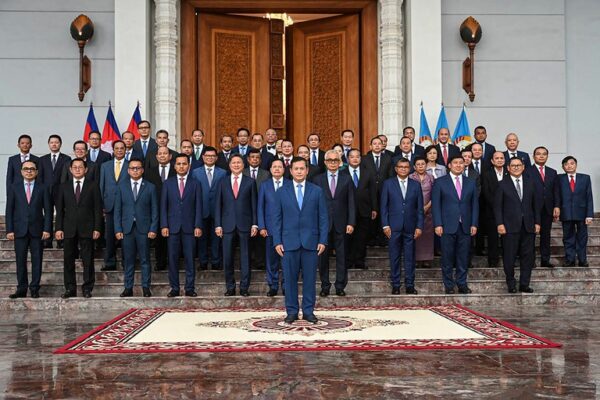
Every politician, especially one whose chokehold over a country lasted nearly four decades, needs some time off. Hun Sen, who handed over the prime ministership of Cambodia to his eldest son last summer, has had his feet up for the past seven months.  Not that he’s been idle; he’s still president of the ruling party and head of the King’s Privy Council, and has occasionally intervened to publicly chide his son for some mistakes. But after the Senate elections on Feb.  25, he’ll be coronated as the new Senate president.  The position will make him acting head of state when King Norodom Sihamoni is out of the country, as he often is for health checkups in China. With Cambodia now a Hun family fiefdom, you’ll have Prime Minister Hun Manet as head of government and Hun Sen as de-facto head of state.  What does it matter, you may ask, since Hun Sen is already all powerful? But the question contains the answer.  Clearly, Hun Sen doesn’t think of himself that way or else why would he want the Senate presidency? Indeed, he stated on the day that he resigned as prime minister last July that he would become Senate president, so clearly this had been decided when the ruling party was crossing the T’s on its vast succession plan in 2021 and 2022.  Moreover, it’s not a risk-free move. It means the current Senate president, Say Chhum, has to retire. This has the added benefit of pensioning off another graying ruling party grandee and one who some think controls a rival faction within the party.  Say Chhum had agreed to resign last year, perhaps safe in the knowledge that his family’s patronage networks are now in the hands of his son Say Sam Al, the land management minister.  But for those in the party (and there are some) angry that the CPP has become a family-run affair, the Hun duo as heads of government and state won’t sit well. Hun Sen stated last July during his resignation speech that by becoming Senate president, “I will not intrude into the responsibilities of the new prime minister,” but it certainly appears that may to some.  Cambodia’s Prime Minister-designate Hun Manet, center, and incoming cabinet members pose for a group photo at the headquarters of the Cambodian People’s Party in Phnom Penh, Aug. 10, 2023. (Kok Ky/Cambodia’s Government Cabinet via AFP) Moreover, it seemingly goes against the spirit of the party’s generational succession scheme in which the aging “first generation” CPP leaders (Hun Sen included) were supposed to retire from frontline politics and give formal powers to the “second generation”, even if the elders still called the shots behind the scenes. So why not give the Senate presidency to a younger, “second generation” politician?  Given that the CPP took years to meticulously plot this succession process – so it cannot be that they were stuck in making a decision about who would become Senate president and Hun Sen was the easiest option to fill the void – the only logical conclusion is that Hun Sen wants the Senate presidency because he thinks he needs it. First, it will allow him to travel abroad on state visits or welcome visiting leaders in an official capacity, which he hasn’t been able to do since August.  Despite having been the world’s longest-serving head of government, he never gained acceptance as a world’s statesman, certainly not one spoken of with the same reverence as Lee Kwan Yew of Singapore. The Senate presidency might give him another decade or so to attempt to claim such a mantle. Second, according to some, it gives him official diplomatic immunity, which may come in handy at some point in the future. Third, and while one ordinarily ought to avoid psychoanalyzing politicians, it’s probable that Hun Sen detests being away from frontline politics and not being able to make public displays of his power, so maybe it’s the case that he is taking the Senate presidency simply because he can.  Institutional capture Now 71, he has been a senior politician since the age of 27, and he never seemed the type to enjoy retirement nor to shy away from publicity. Hun Sen is never happier than when delivering a three-hour monologue to a crowd of bussed-in workers. But he’s had few opportunities to do so since August, although that’s partly because he has wanted to give his son the limelight. As Senate president, he will have a captive audience (in more ways than one) again.  Fourth, and perhaps most importantly, the Senate presidency gives him yet more institutional power to intervene if something was to go wrong with his son’s government – or, indeed, if there was ever a putschist attempt against Hun Manet.  Remember that Hun Sen has repeatedly said he would return as prime minister if any major crisis befouled the government; the insinuation being that his vacation from the premiership may be temporary. For the best part of a decade, the Hun family has been on a long march through the institutions, wary that some of its rivals may also be on their own such project.  Today, he has the King’s ear as head of the Supreme Privy Advisory Council. He controls the powerful but unruly (and quick to disgruntlement) business tycoons, the oknha, as president of the newly-formed Cambodian Oknha Association.  He’s also president of some other CPP-linked “uncivil society” groups. Through constitutional reforms in 2022, he greatly weakened the power of the National Assembly to reprimand ministers or the prime minister, and in 2023 he helped make the loyal but politically weak Khuon Sudary the new president of the lower chamber of parliament. These steps gave even more power to the CPP over personnel choices.  Cambodian People’s Party President Hun Sen, left, addresses supporters in Phnom Penh as his son Prime Minister Hun Manet, right, listens during a ceremony marking the 45th anniversary of the fall of the Khmer Rouge regime, Jan. 7, 2024. (Tang Chhin…

Read More

INTERVIEW: How the West has been misreading China for years

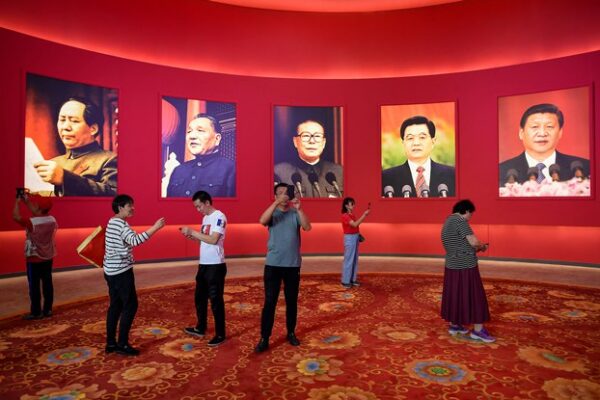
Frank Dikötter, author of the “People’s Trilogy” about China under of Mao Zedong, has been chair professor of humanities at the University of Hong Kong since 2006. He recently published “China After Mao,” in which he argues that claims that the Chinese Communist Party has significantly changed direction in the post-Mao era are a misreading by those outside the country who “live in a fantasy world.” He told RFA Mandarin in a recent interview that Chinese leaders have been very consistent in their messaging on political reform, and their economic goals and determination to maintain their dictatorship at all costs. The interview has been edited for length and clarity. RFA: What is the difference between the Mao era and the post-Mao era? Dikötter: So, what have [Chinese leaders] been telling us? A very simple story: China is in the process of “reform and opening up.” So, there will be economic progress, and with economic change there will be political progress. China will become first a capitalist country and then a democracy. Of course, what has happened is the exact opposite. If you read the documentation carefully, you find out that never at any one point did Deng Xiaoping, Hu Yaobang, Zhao Ziyang, Jiang Zemin, all the way up to today, never did a single leader ever say, “We want a capitalist system.” They all said the exact opposite, that they would uphold the socialist road. It is in the Constitution.  People take pictures in front of portraits of, from left, the late Chinese chairman Mao Zedong and former Chinese leaders Deng Xiaoping, Jiang Zemin, Hu Jintao and current president Xi Jinping at an exhibition in Beijing, Sept. 26, 2019. (Wang Zhao/AFP) All along, they were very clear about what they wanted. They wanted to reinforce the socialist economy. So what is a socialist economy? [It’s] not necessarily something that you have under Mao. A socialist economy is one where the state has or controls the means of production. Money, labor, fertilizer, energy, transportation, all these are the means of production. They all belonged to the state. Today the money belongs to state banks. The land belongs to the state. Energy is controlled by the state. Large enterprises are controlled by the state. That was their goal, and they achieved it. Workers are seen near pumpjacks at a China National Petroleum Corp oil field in Bayingol in northwestern China’s Xinjiang region, Aug. 7, 2019. (Reuters) The second point is democratization. At no point did anyone say they wanted to have a separation of powers. On the contrary, Zhao Ziyang said very clearly back in 1987 that China would never have the separation of powers. Xi Jinping also made that very clear. But nobody in the West heard them, because they didn’t want to hear it. RFA: Has everyone misjudged the Chinese Communist Party? Dikötter: There is a profound failure on the part of a great many people, politicians, experts and scholars outside China to simply listen to what all of these leaders said very clearly and also to read and understand what’s been happening. The failure is reasonably straightforward. It is a refusal to believe that a communist — a Chinese communist — is a communist. Delegates attend the closing ceremony of the 20th Chinese Communist Party’s Congress at the Great Hall of the People in Beijing, Oct. 22, 2022. (Noel Celis/AFP) The truth is that the origins of the People’s Republic of China are not in the Tang Dynasty, not in the Song Dynasty, not in the Ming or the Qing. They are in 1917, when Vladimir Lenin seizes power and establishes a communist system. That is what inspired China after 1949. That was the system behind it. So, if you do not understand that China is communist, if you keep on saying it’s not really communist, that they pretend to be communist, you will never understand anything. RFA: Will China ever have a true democracy? Dikötter: In the People’s Republic, you have a dictatorship, but they call themselves a democracy. They have no elections, but they say they have free elections. So what is an election in the People’s Republic? If you vote for the person they tell you to vote for. They give you a list one, two, three names. You can you can pick one of these three. That’s it. That’s an election. People walk along a street in the Dongcheng district of Beijing, Dec. 3, 2023. (Pedro Pardo/ AFP) RFA: You devote an entire chapter in your book to the Tiananmen Square massacre in 1989, but you don’t go into the rights and wrongs of it. Why not? Dikötter: The Tiananmen massacre is … the most important moment after 1976. The 200 Chinese tanks that entered Beijing in June 1989 crushed Chinese people. That’s really quite extraordinary. It’s important because it shows that the party had an iron determination to retain its monopoly on power.   RFA: Do you believe that the Chinese people want democracy? Dikötter: Nobody knows what people in China want, for a very simple reason — they can’t vote. … If you do not have freedom of expression, if you cannot express your opinion at the ballot box, then we simply don’t know. You don’t know what people think in a dictatorship.  But it’s probably safe to assume that a system based on the separation of powers, including freedom of the press and a solid judicial system, would probably be beneficial, for instance, for the economy. … This is basically a modern economic model based on debt. You spend to create the illusion of growth. Then you spend more. My feeling is that there may be people in the People’s Republic of China who are probably thinking about whether this is really a successful system or not. That’s all we can say. Police detain a person in downtown Hong Kong on the 34th anniversary of the 1989 Beijing’s Tiananmen Square crackdown, near where the candlelight vigil is usually held, June 4, 2023….

Read More

Over 100 scam gang suspects arrested in Myanmar

Junta troops arrested over 100 people while raiding a casino on the Thai-Myanmar border, locals said on Friday.  The compound was the site of an online gambling den in Myanmar’s Tachileik city in eastern Shan state.  The region comprising northern Thailand, eastern Myanmar and southern Laos is known as the Golden Triangle, notorious for gambling, trafficking and fraud. A resident declining to be named for safety reasons told Radio Free Asia that the 1G1-7 Hotel in Tachileik’s San Sai Kha neighborhood, where the casino crackdown occurred, is a long-standing institution in the city. “The raid and arrests at the casino, which was opened behind the 1G1-7 Hotel, has been open for about a decade as a casino,” he said. “It was raided and people were arrested in the morning.” Junta soldiers and police arrested Myanmar, Thai and Chinese nationals, locals said. They are currently in custody, but no further details about their location or identity are known.  Troops and police gather outside the 1G1-7 Hotel in Tachileik city on Feb. 23, 2024 (Telegram: People Media) Another Tachileik resident said there are hundreds of online gambling businesses in the 11 neighborhoods of the city and in its surrounding villages. Many operate in homes and hotels, he said.  “Houses are entirely rented, and the hotels were rented out by floors for operating [online casinos],” he said. “Chinese and Thai nationals are also involved.” Online money scamming gangs often disguise their operations as casinos, locals said. In 2023, more than 40,000 Chinese nationals were deported from Shan state for staying illegally in Myanmar and working in illegal businesses and scam centers. This is the first time police have cracked down on scam centers in Tachileik, locals said.  The junta has not officially released any information on Friday’s arrests. RFA reached out to Shan state’s junta spokesperson Khun Thein Maung, but he did not respond by the time of publication.  However, pro-military channels on the social messaging app Telegram shared that the people arrested in Tachileik were committing online fraud as part of an organization known as “Kyar Pyant.” It reported the Chinese gang, which specializes in online fraud, was raided by junta security forces. State-owned newspapers reported on Feb. 9 that more than 50,000 foreigners, mostly made up of Chinese nationals, were transferred back to their respective countries for illegally staying in Myanmar from Oct. 5, 2023 to Feb. 8, 2024. Some 48,803 Chinese, 1,071 Vietnamese, 537 Thai, 133 Malaysian, 20 Korean, and 18 Lao nationals were transferred, the statement said.  In November, 19 South Koreans were rescued by junta forces after being forced to work in Tachileik in an illegal business.  Translated by RFA Burmese. Edited by Mike Firn.

Read More