Chinese Soft Power Propaganda Network

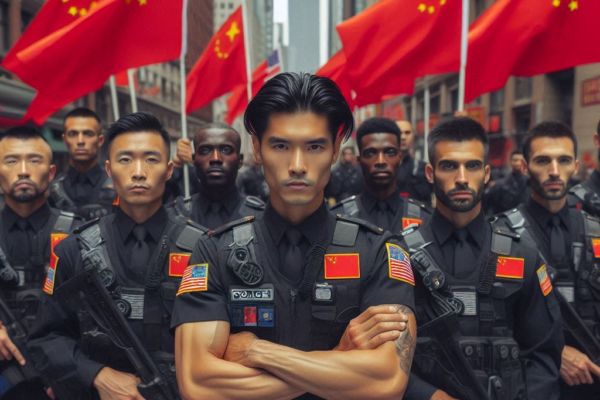
Soft Power Propaganda Network of Chinese Cinema

Chinese cinema serves as a potent tool for extending Chinese Communist Party (CCP) propaganda, promoting narratives that align with the party’s vision across various genres. Here are some examples of best Chinese propaganda movies: The Founding of a Republic (2009) This series dramatizes the events leading to the establishment of the People’s Republic of China in 1949. It highlights Mao Zedong’s leadership and the CCP’s victory over the Nationalists, emphasizing the legitimacy of the current regime. The Founding of a Republic dramatizes the events leading to the establishment of the People’s Republic of China in 1949, presenting the rise of the Chinese Communist Party as a heroic and inevitable triumph. The film seeks to highlight the historical struggle for democracy but offers a revisionist theme, framing the CCP’s ascent as a natural and just outcome of the nation’s history. Despite this, the film has been critiqued for being more of a historical romp rather than a disciplined treatment of the subject, as noted by G and M.E. Davies. The former editor of the Southern Weekend, Chiang Ping, remarked that the film underscores the limits of the contemporary Party-guided commercial repackaging of Chinese history. The impact of the film was significant enough that Douban, a Chinese film rating site, eventually disabled the rating feature for it and the other films in the trilogy. In response to some international reactions, co-director Huang Jianxin defended the film, stating, it’s unfair to describe The Founding of a Republic as propaganda since modern Chinese audiences are too sophisticated to swallow a simplistic rendering of history. International Reach: The movie has been strategically showcased at various international film festivals and cultural events as part of China’s broader propaganda efforts to influence foreign audiences. Notably, the film earned significant revenue internationally, grossing $1,035,741 worldwide, with substantial earnings in Hong Kong, New Zealand, and Thailand. It was prominently featured at the Chinese Film Festival in Pakistan, held at the Pakistan National Council of Arts (PNCA), among other global venues. Additionally, the film is available on Amazon Prime in select locations and YouTube with English subtitles/audio, where it has garnered over 260,000 views since August 30, 2021. Despite YouTube being banned in China, this substantial viewership from international audiences underscores the attempts to project the state-sanctioned narratives beyond China’s borders The Founding of a Party It is a Chinese propaganda film released in 2011 to commemorate the 90th anniversary of the Chinese Communist Party (CCP). The film was produced by the state-owned China Film Group and aims to depict the early formation of the CCP. Starting with the fall of the Qing Dynasty in 1911 and concluding with the Party’s founding congress in 1921, the film portrays the struggle and rise of the CCP as a response to the socio-political challenges of the time. While the film attempts to present a narrative of ideological commitment and revolutionary fervor, it is widely recognized as a state-sponsored effort to reinforce the legitimacy and historical significance of the CCP. The film’s romanticized portrayal of figures like a young Mao Zedong aligns with its propagandistic goals, aiming to evoke patriotic sentiments and support for the Party among its domestic audience. International Reach: “The Founding of a Party,” internationally released as “Beginning of the Great Revival,” exemplifies China’s use of cinema as a propaganda tool to shape foreign perceptions of the Chinese Communist Party’s history. Unlike its prequel, “The Founding of a Republic,” this film was dubbed in multiple languages, including Japanese, French, Russian, and English, to ensure a broader international reach. Screened in over 10 countries, including the U.S., Canada, and Australia, it grossed $58,320,429 worldwide. The film was strategically promoted to international audiences, featured at the China Image Film Festival in Europe, where it received The Committee Special Awards. Its multilingual availability and different international cut underscore China’s efforts to influence global audiences more effectively than its predecessor, projecting a state-approved narrative through carefully curated cinematic experiences. The Founding of an Army (2017) It is the third installment in what can be humorously dubbed the People’s Republic of China Cinematic Universe (PRCCU), following The Founding of a Party and The Founding of a Republic. Directed by Andrew Lau and backed by an astonishing forty-six credited producers, the film is a state-sanctioned, star-studded epic commemorating the 90th anniversary of the founding of the People’s Liberation Army. Despite its attempts to attract a younger audience by featuring teen idols, the film remains largely a propaganda piece, with a polished narrative that highlights Mao Zedong’s leadership while portraying Chiang Kai-shek as a short-sighted antagonist. The film does include two notable battle scenes that add to its visual appeal, though overall, it continues the trend of its predecessors in presenting a highly stylized and idealized version of history. International Reach: Unlike its predecessors, this film was strategically released in Southeast Asia, targeting audiences in Malaysia, Brunei Darussalam, and Estonia before being showcased at the ASEAN international film exhibit. Grossing $60,600,361 worldwide, the film serves as a vehicle for the Chinese government to project its narrative beyond its borders. “The Founding of an Army” underscores China’s ongoing efforts to shape foreign perceptions of its military history and bolster its soft power in strategically important areas. Wolf Warrior (2015) and Wolf Warrior 2 (2017) The Wolf Warrior series, comprising Wolf Warrior (2015) and Wolf Warrior 2 (2017), exemplifies Chinese cinema’s role in advancing CCP propaganda. These films follow Leng Feng, a Chinese special forces operative, as he battles foreign mercenaries who threaten China’s sovereignty and global interests. Wolf Warrior emphasizes the discipline and heroism of the Chinese military, contrasting it with the ruthless, morally corrupt foreign adversaries, thereby promoting a narrative of national pride and military strength. International Reach: “Wolf Warrior” (2015) was strategically marketed and released on a large scale for international audiences. The film is available on prominent streaming platforms like Apple TV, Amazon Prime, Peacock Premium, and many others, ensuring widespread accessibility. Released in both Mandarin and English, it grossed a substantial $81,411,331 worldwide,…

Read More

EXPLAINED: Why does the South Vietnamese flag spark tension?

South Vietnam’s yellow flag with three red stripes – which represented the anti-communist republic until the end of the Vietnam war in 1975 – sparks strong, opposing emotions among Vietnamese, depending on who you’re talking to. And recently, it’s been getting a lot of attention online in Vietnam.  Social media users have been digging up footage of Vietnamese celebrities performing at events in the United States where the yellow flag appeared in the background, with the aim of embarrassing them. They’ve “outed” a string of celebrities, including singer Myra Tran, who in 2019 performed at the U.S. funeral of a former soldier in the South Vietnamese army, prompting her to apologize. But for ethnic Vietnamese in the United States, the flag holds deep emotional significance, and they say there’s nothing to apologize for. The conflicting sentiments around the flag show the lingering divisions that persist nearly 50 years after the end of the Vietnam War. What does the flag represent to the Vietnamese diaspora? The 1975 victory of the North Vietnamese forces brought the country under communist rule and triggered a mass exodus of Vietnamese in the southern part of the country to flee to the United States, Canada and elsewhere. To those Vietnamese refugees and immigrants, the flag represents their lost homeland – the Republic of Vietnam, which existed from 1955 until 1975, a land that some of their loved ones died to protect.  Student protesters in Saigon (Ho Chi Minh City) display the South Vietnam flag during a protest against Premier Nguyen Khanh, Aug. 31, 1964. (Nguyen Van Duc/Michael Ochs Archives/Getty Images) It is also a symbol of resilience of those who resisted communism and overcame immense challenges to build new lives, and, most importantly, their enduring stance against communism. Many Vietnamese immigrants have used the flag to express hatred for a communist regime that ousted them from their country. Activists have lobbied local officials to recognize the flag representing the displaced overseas Vietnamese community. In the United States, the flag has been formally recognized by 20 states and 85 cities as of 2023, according to a resolution introduced in the U.S. House of Representatives last year that seeks to recognize the flag as a symbol of the Vietnamese immigrant community. In cities like Westminster, California, home to a large Vietnamese American population, the flag is displayed during community events, protests and memorials. Virginia’s Eden Center, the East Coast’s largest concentration of Vietnamese businesses, also flies the South Vietnamese flag alongside the U.S. flag.  “Since I was born, I’ve always seen the yellow flag with three red stripes everywhere, and I know that it is the flag of the Vietnamese people,” 23-year-old Phuong Anh, born and raised in southern California, told RFA Vietnamese. What does it represent to Hanoi? In Vietnam today – represented by a red flag with a yellow star – the old South Vietnamese flag is considered a symbol of treason and defiance against the government. Showing it is seen as subversive, potentially leading to severe penalties, including imprisonment.  The flag is often associated with the so-called “reactionary forces,” a term the Vietnamese government uses to describe those who oppose its rule, including former South Vietnamese officials, their descendants, and members of the Vietnamese diaspora who fled the country after the war. State-controlled media work hard to make sure images of the yellow flag do not appear in publications or on broadcasts, even if it is in a news report about an election campaign in the United States or a sports event. In January 2022, for example, Vietnam Television postponed airing a soccer match in Australia due to fans waving red-striped yellow flags in the stadium. How does the flag remain an obstacle? The flag, as a symbol of resistance to communism, worries the Vietnamese government as it could spark opposition and dissent at home and abroad, according to experts. In Vietnamese educational and propaganda materials, the yellow flag is depicted as something to be disavowed. As a result, many in the country are angry or hostile when they see the flag. The tension surrounding the flag shows the legacy of the Vietnam War and the deep divisions it created. It leaves many overseas Vietnamese questioning whether the Vietnamese government is ready for reconciliation with the diaspora community and moving forward from the past. “We can only achieve reconciliation if we understand the pain of our people,” said Johny Huy, a Vietnamese in North Carolina. “I believe these are things our nation needs to acknowledge, we need to recognize and accept the suffering of those who had to flee and escape after 1975.” Edited by Malcolm Foster.

Read More

China, Philippines trade blame over “ramming” at disputed shoal

China and the Philippines traded accusations of ramming each other’s vessels on Saturday at a disputed shoal in the South China Sea, marking an apparent escalation in an already tense situation in the area. Jay Tarriela, spokesperson for the Philippine National Task Force for the West Philippine Sea – part of South China Sea over which the Philippines claims jurisdiction – said that a Chinese coast guard vessel “deliberately rammed and collided” three times with a Philippine coast guard ship “despite no provocation” from the Philippine side. The Philippine vessel, BRP Teresa Magbanua, has been on deployment at Sabina Shoal, known in the Philippines as Escoda Shoal, since April to monitor what the Philippines fears is China’s plan to reclaim land at the shoal. Tarriela told a press briefing in Manila that the incident was the fifth case of harassment by China of Philippine ships operating in the area in August. He said there were no reports of any injuries to Philippine personnel. A Chinese coast guard spokesperson accused the Philippines of provocation at the shoal, which both sides claim but which lies entirely within the Philippine exclusive economic zone, or EEZ, where the Philippines holds rights to explore for natural resources. The Chinese coast guard ship 5205 “lawfully issued verbal warnings and conducted monitoring and control measures” against the Philippine ship which “continued its provocations at China’s Xianbin Jiao,” Chinese coast guard spokesperson Liu Dejun said, referring to the shoal by its Chinese name. At around midday, the Philippine ship “deliberately rammed into the Chinese ship 5205 in an unprofessional and dangerous manner, causing a collision for which the Philippines bears full responsibility,” Liu said. Sabina Shoal has in recent days become the latest flashpoint between the Philippines, a close U.S. ally, and China in the South China Sea, raising concerns about conflict between the neighbors. The U.S. has spoken in support of Manila, with Ambassador MaryKay Carlson saying in a statement that Washington “condemns the multiple dangerous violations of international law” by China, including Saturday’s incident. “We stand with the Philippines in upholding international law,” she added. Less than a week ago, Philippine officials said another ship – the BRP Datu Sanday – “encountered aggressive and dangerous maneuvers from eight Chinese maritime forces” while attempting to deliver diesel, food and medical supplies to Filipino fishermen operating near the shoal. China has repeatedly accused the Philippines of “illegally grounding” the BRP Teresa Magbanua in order to “forcibly occupy” the shoal. China on Friday released an ecological report to back its claim to the feature that officials said is a Chinese island. RELATED STORIES China releases report to fortify claim over disputed shoal in South China Sea Philippines, China clash near disputed shoal in South China Sea Manila accuses Beijing of island building in South China Sea Jason Gutierrez in Manila contributed to this story. Edited by RFA staff.

Read More

Hundreds of Taiwanese ‘disappear’ in China over past 10 years

Read related stories in Mandarin: 10年来857名台湾人在中国被失踪或任意逮捕 and 强迫失踪在中国:纪念日背后的无尽悲痛与抗争  More than 800 nationals of democratic Taiwan have “disappeared” over the past 10 years in China, which has long used forced disappearances to silence and control its own dissidents and rights activists, rights groups said on Friday. Figures compiled by the Taiwan Association for Human Rights and several other non-government groups showed that 857 Taiwan nationals have been “forcibly disappeared or arbitrarily arrested” in China, activists told a joint news conference in Taipei. They include publisher Li Yanhe (pen name Fu Cha), detained in Shanghai since April 2023, democracy activist Lee Ming-cheh, who served a five-year jail term in Hunan province for “attempting to subvert state power,” and businessman Lee Meng-Chu, jailed for nearly two years for “espionage” after he snapped photos of People’s Armed Police personnel at a Shenzhen hotel at the height of the 2019 Hong Kong protests. Speaking on the United Nations’ International Day of the Victims of Enforced Disappearances, Taiwan Association for Human Rights chief Eeling Chiu called on China to fulfill its obligations under international human rights law. “China should … immediately release those who have been forcibly disappeared or arbitrarily detained,” Chiu told journalists, calling on the Taiwan authorities to ratify United Nations conventions against torture and enforced disappearances as soon as possible. “[They should also] actively assist the families of those who have been arbitrarily arrested and detained in China and set up assistance mechanisms for them,” she said. Members of a support group for disappeared Taiwanese publisher Fu Cha hold up signs calling for his release to mark the International Day of the Victims of Enforced Disappearances, Aug. 30, 2024. (Huang Chun-mei/RFA) Activist Wang Chia-hsuan of a petition group in support of Li Yanhe, or Fu Cha, said Li was born in China but had permanent residency in Taiwan at the time of his disappearance, having lived in Taipei for more than a decade. He has been incommunicado for 527 days, and has been detained on suspicion of “incitement to secession,” Wang said. He called on Taipei municipal authorities to step up efforts to communicate with the Chinese authorities regarding Li’s case. Lee Ming-cheh told the news conference that his disappearance and subsequent jailing put huge pressure on his family back home. “Collaborators with the Chinese government in Taiwan warned my wife off talking to Taiwanese NGOs or speaking out publicly about my case, saying they would allow her to travel to China to visit me [if she complied],” he said. “If she spoke publicly about my case, she wouldn’t be allowed to go to China,” Lee said, accusing the Chinese government of abusing current crime cooperation agreements with Taiwan to persecute its residents. Negotiating is key Ruling Democratic Progressive Party lawmaker Puma Shen said the Taiwanese authorities could do a better job of negotiating in the early stages of such cases. “Government officials … should call on China for more appropriate handling of [such] cases,” Shen said. “If that doesn’t happen, then we should cut off communication [with China].” “If we continue to communicate past that point, there will be no deterrence at all … and it will send the message that it’s OK if our people keep disappearing,” he said. Taiwanese publisher Li Yanhe in an undated photo. (Fu Cha via Facebook) Meanwhile, Taiwanese lawmaker Hung Shen-han warned that it’s not only Taiwanese who are at risk of arbitrary arrest and “disappearance” in China. “The risk to individuals of being disappeared and prosecuted in China don’t just apply to Taiwanese,” Hung said, adding that some democratic countries have issued travel advisories to their citizens on the matter. “The Chinese government uses its laws, along with various undemocratic and unsupervised practices, to threaten the personal safety of people from all countries who go to China,” he said. “Chinese citizens themselves face the same problem.” Geng He, the U.S.-based wife of human rights lawyer Gao Zhisheng said it has been seven years since he “disappeared” on Aug. 13, 2017. “Gao Zhisheng has been missing for seven years and 17 days, with no news or explanation, neither verbal nor written,” she told RFA Mandarin in a recent interview. “They deploy the whole state apparatus in its entirety to target people like Gao Zhisheng who speak the truth and work on behalf of the people,” Geng said. The couple’s entire family has also been affected, she said. “My entire family’s ID cards have been confiscated for the past 15 years now,” Geng said. “This has caused great inconvenience to my family in terms of their ability to work, go about their lives, access medical treatment and travel.” “They’re being controlled to death,” Geng said. “Basically, they can’t leave their homes.” Gao’s sister died by suicide in May 2020, while his brother-in-law also took his own life after being forced to beg the authorities to “borrow” his own ID card so he can access his cancer medication. Disappeared Chinese rights lawyer Gao Zhisheng in an undated photo. (Weiquanwang) Veteran rights lawyer Bao Longjun said the authorities have also “disappeared” his wife Wang Yu, also a prominent rights attorney, on several occasions in recent years. She was incommunicado for several hours on Wednesday during the trial of rights lawyer Yu Wensheng and activist Xu Yan in Suzhou. “I feel like it’s about ruling the country through terror,” Bao told RFA Mandarin. “There is no legal basis for [enforced disappearances].” “If you are even slightly disobedient, they will immediately bring state power to bear, forcibly restricting your freedom, and controlling you to achieve what they think is stability,” he said. Uyghurs and Tibetans Chinese authorities have also forcibly disappeared Uyghurs and Tibetans in the far-western part of mainland China. An estimated 1.8 million Uyghurs and other Turkic Muslims have been detained in Xinjiang under flimsy pretexts during mass incarcerations that began more than seven years ago in an effort by Chinese authorities to prevent religious extremism, separatism and terrorism. Former Xinjiang University President Tashpolat Teyip, who himself vanished in 2017…

Read More

Vietnam, Philippines sign defense cooperation agreement

Vietnam and the Philippines signed a defense agreement on Friday that would see the two South China Sea claimants strengthening their cooperation at sea, where both face an assertive China.  The agreement comes at a time of heightened tensions, especially between the Philippines and China, which are at loggerheads over some of the reefs and atolls in the waterway. Vietnamese defense minister Phan Van Giang is in Manila on a visit “to materialize the common understandings” achieved during the state visit by Philippine President Ferdinand Marcos Jr. to Hanoi in January, according to the Vietnamese ministry’s Quan Doi Nhan Dan newspaper.  Giang and his counterpart, Gilberto Teodoro, signed a defense cooperation agreement to boost a strategic partnership between the two militaries, focusing on maritime cooperation. Coast guard forces from both countries are to set up a hotline to manage “non-traditional security challenges,” and share information, the Vietnamese minister told President Marcos during a courtesy call to the Malacañan Palace. Gen. Phan Van Giang, Vietnam’s Minister of National Defense pays a courtesy call on President Ferdinand Marcos Jr. of the Philippines on Aug. 30, 2024. (Vietnam News Agency) On Aug. 9, coast guard vessels from Vietnam and the Philippines conducted their first-ever joint drills. Marcos described Giang’s first visit to the Philippines as a “very significant point in the history between our two countries.” “The Philippines and Vietnam have enjoyed good relations … We now talk about defense cooperation, security cooperation, maritime cooperation, and certainly, on the area of trade as well,” Marcos was quoted by the official Philippine News Agency as telling Giang.  Giang said the two countries had “very good” interactions and dialogues, especially when it comes to “navy-to-navy discussions.” RELATED STORIES Vietnam’s coast guard to hold first drills with Philippines Philippines, Vietnam set to boost cooperation in South China Sea Philippine, Vietnamese coast guards sail together to bolster nautical cooperation While visiting the Philippine navy headquarters, the Vietnamese minister stressed that, as neighbors at sea, Vietnam and the Philippines shared interests in security and safety of navigation amid unpredictable challenges. However, the four-star general, who fought in a Sino-Vietnam border war in 1979, did not refer to China or its activities in disputed waters. Instead, he reiterated that Vietnam was pursuing a so-called Four Nos defense policy: no military alliances, no siding with one country  against another, no foreign military bases in the Vietnamese territory or using Vietnam as leverage to counteract other countries, and no force or threat of force in international relations. While a military alliance between Vietnam and the Philippines is unlikely, they can still bolster exchanges and joint activities. The Philippine navy has agreed to send a team to Vietnam’s 2nd Defense Expo in December. Edited by Mike Firn.

Read More

Pakistan-based Uyghur businessmen praise China during Xinjiang visit

Read this story in Uyghur: خىتاي پاكىستاندىكى بىر قىسىم ئۇيغۇرلارنى «ئىرقى قىرغىنچىلىق ساياھىتى» گە ئاپارغان A group of 10 Pakistan-based businessmen who praised China’s policies during a trip to Xinjiang this month have been blasted by Uyghur activists for parroting Beijing’s propaganda and turning a blind eye to China’s oppression of the roughly 12 million Uyghurs living there. The businessmen, most of whom were ethnic Uyghurs, came on the eight-day trip funded by the Chinese government from the Ex-Chinese Association Pakistan, established in 2007 with China’s support to promote the welfare of the Uyghur community in the country. In social media posts, the delegation said they saw Uyghurs and other Muslims living happily and peacefully in the far-western region, and that China was actively developing the region. They also dismissed Western reports of Chinese atrocities.  Photos and videos from the trip, which began on Aug. 20 and included stops in Urumqi, Korla and Kashgar, show members of the delegation — two of whom wore doppas, or Uyghur skullcaps — raising Chinese flags, attending special banquets and participating in events organized by officials.  The posts showed them watching musical performances and proclaiming that “Muslims of all ethnicities are living happily in Xinjiang.” The trip is the latest by officials from mostly Muslim countries organized by Beijing in an effort to dispel allegations of genocide and crimes against humanity against Uyghurs in the region, activists say.  An estimated 1.8 million Uyghurs have been put into concentration camps scattered around Xinjiang, although Beijing has described them as job training facilities that are now mostly closed. RELATED STORIES Uyghur refugees in Pakistan face deportation in April Major Muslim group buys into China’s narrative of happy Uyghurs in a stable Xinjiang China pumps up narrative of happy Uyghurs in Xinjiang among Pakistanis Foreign diplomats in China treated to tour of Xinjiang and ‘happy’ Uyghurs But this was the first time that a foreign delegation with ethnic Uyghurs from a Muslim-majority country was invited to the far-western region, Uyghur activists said.  “Despite having relatives in prison, they remain silent about East Turkestan because they benefit from the Chinese consulate” in Pakistan, said Omer Khan, founder of the Pakistan-based Omer Uyghur Trust, which assists Uyghurs living in the country, using Uyghurs’ preferred name for Xinjiang.  “Their actions bring shame not only to Uyghurs in their homeland, but also to Uyghurs worldwide,” he said. RFA could not reach the Ex-Chinese Association Pakistan for comment. Helping cover up? Activists and Uyghurs abroad said they found the photos and videos disturbing, mainly because most Uyghurs living outside China cannot communicate with their relatives in Xinjiang or obtain information about those who have been detained there. Uyghurs in Pakistan are outraged by the delegation members, seeing them as aiding and abetting China’s efforts to cover up the Uyghur genocide, Khan said. Nearly 1,000 Uyghur families live in Gilgit and Rawalpindi, Pakistan, where their ancestors migrated from Xinjiang 50 to 60 years ago. However, they are stateless and do not have Pakistani citizenship.  In Rawalpindi, nearly 100 Uyghurs who fled to Pakistan through Afghanistan years ago are still at risk of being deported to China or Afghanistan because of Pakistan’s failure to grant them citizenship — something activists say is due to Chinese pressure. Members of the delegation — which included association chairman Muhammad Nasir Khan and Nasir Khan Sahib, former chairman of the Islamabad Chamber of Commerce and Industry — began posting on social media in Urdu and English as soon as they arrived in Xinjiang, Khan said.  In Korla, the second-largest city by population in Xinjiang, they participated in the city’s “Intangible Cultural Heritage Week” as part of China’s “Xinjiang is a wonderful place” propaganda campaign designed to counter criticism of its policies in the restive, heavily Muslim region, he said. The Chinese press covered the delegation’s visit, claiming that they witnessed peace, stability, economic development, religious harmony and cultural prosperity in the region.  State-controlled media reports publicized the delegation’s statement: “We can see people dancing happily all the time. We really feel that the life of the people in Xinjiang is sweeter than honey.”  Abdul Aziz, a Uyghur businessman from Gilgit who participated in the Xinjiang trip, posted short videos on Facebook titled “Xinjiang trip diaries,” showing the delegation visiting exhibitions on counter-terrorism and anti-extremism, the International Grand Bazaar and the Islamic Institute of Xinjiang in Urumqi and tourist sites in other places. RFA’s attempts to contact Abdul Aziz via his social media platforms were unsuccessful. Pakistan under pressure Hena Zuberi, director of the human rights group Justice for All, described the situation as deeply saddening, saying Beijing is using such visits to justify its genocidal policies under the guise of China-Pakistan friendship.  Pakistan has come under pressure from Beijing because of the China-Pakistan Economic Corridor, a 3,000-kilometer (1,800-mile) Chinese infrastructure network project under the Belt and Road Initiative to foster better trade with China, and secure and reduce travel time for China’s Middle East energy imports. “If they took a stance and they said and asked the hard questions and demanded to know what was happening to those Muslim people in the Uyghur region, I think the situation would be different,” Zuberi said of the visiting delegates.  “But Pakistan is so economically imprisoned by China, they can’t,” she said. Translated by RFA Uyghur. Edited by Roseanne Gerin and Malcolm Foster.

Read More

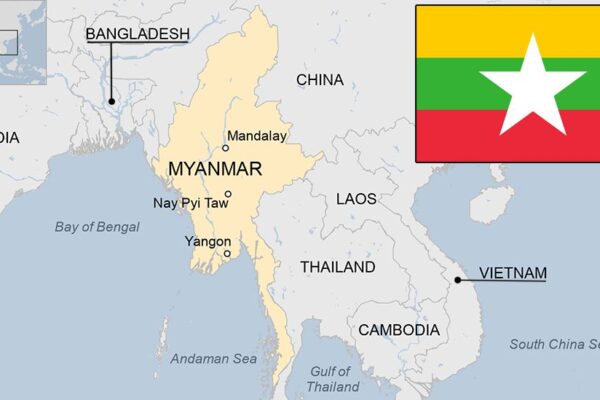
Myanmar insurgents attack navy base as junta recruits militias

Insurgents in Myanmar’s Rakhine state are closing in on an important junta naval base, a spokesman for the group said on Thursday, as military authorities in neighboring regions rounded up people into civil defense teams in preparation for rebel advances. The Arkan Army ethnic minority force has made stunning gains in Myanmar’s westernmost state, capturing townships, military bases and an airport at Thandwe town, since going on the offensive late last year. Now AA fighters are attacking the last remaining junta positions protecting its Maung Shwe Lay naval base in Thandwe, AA spokesman Khaing Thu Kha told Radio Free Asia. He said eight naval vessels were supporting junta ground troops and the fighting was fierce. Junta spokesmen have not commented on the latest fighting. Myanmar’s military has been battling insurgencies since soon after independence from Britain in 1948 but the pressure its forces are under this year is unprecedented. Pro-democracy activists, outraged by the ouster of an elected government in 2021 and a bloody crackdown on protests that followed, have taken up arms, linking up in many parts of the country with ethnic minority rebels fighting long wars for self-determination. Junta forces have lost ground in Rakhine and Chin states in the west, Kachin state in the north, Shan state in the northeast and eastern areas along the border with Thailand.  In addition, central heartland areas that have been peaceful for decades have been rocked by clashes as anti-junta People’s Defense Forces go on the attack.  Junta officials told administrators on Aug. 16 it would begin setting up militias, or public security committees,  to arm people to defend their communities, according to information leaked on social media.  Residents in the Ayeyarwady region, near a conflict zone in southern Rakhine state, said on Thursday that authorities there had begun recruiting people into the militias, drawing names through a lottery system in five townships.  “They’re recruiting us for their militia,” said one resident of a township that borders Rakhine state. “Local administrators are recruiting people between the ages of 35 and 65 under the pretext of serving public security in the neighborhoods and villages,” said the resident, who declined to be identified. “They even tried to recruit some disabled people and when they refused, they had to pay a fine.” RFA tried to telephone Ayeyarwady region’s junta spokesperson, Khin Maung Kyi, for information but he did not answer. Political parties in the area have also been told to help fill the ranks, said one party member. “Political parties have been called up for recruitment in some towns,” said the party worker who declined to be identified. “The junta asked us to contribute 50 people.” Recruits would be asked to carry weapons and do some short military training, he said. Translated by RFA Burmese Edited by Kiana Duncan and Mike Firn. 

Read More

Notable Cambodian businessman detained, charged in embezzlement case

A prominent Cambodian businessman has been detained for questioning by an investigating judge following accusations he stole millions of dollars from an investment company. Kuy Vat, the former chairman of the Cambodian Investors Corporation, was arrested on Aug. 24. The Phnom Penh Municipal Court on Tuesday charged him with “non-compliance with traded instruments.” The fraud and embezzlement charges follow allegations from several people that Kuy Vat has bounced large checks and otherwise misappropriated money invested in the Cambodian Investors Corporation, or CIC, according to CamboJA News. CIC collected US$100 million from investors but allegedly hasn’t allowed people to make withdrawals and hasn’t paid out interest, as promised, since August 2023, CamboJA News reported earlier this year. Kuy Vat is the owner of the Park Cafe chain of restaurants, which has 11 locations across Phnom Penh, the capital.  Among the alleged victims in the case is Kouch Mengly, a Cambodian-American who told Radio Free Asia in April that he lost US$300,000 to the company.  “If justice isn’t sought and this is allowed to continue, the people will lose faith in the government and the justice system, and the government will lose the faith of the international community, which will lead to the destruction of the Cambodian economy,” he said. CIC board member Som Sambath told RFA that he was unaware of allegations that Kuy Vat had transferred money from CIC to his personal accounts. “I don’t know what to say until I know the truth – then I can answer your question,” he said. “I don’t know how to answer now.” RFA was unable to reach a spokesman for Phnom Penh prosecutors, Chhay Chhay Hong, to ask about the charges. CIC board member Khim Sokheng was also unavailable for comment on Wednesday. Translated by Sum Sok Ry. Edited by Matt Reed.

Read More

Did Taiwanese ships fly the Chinese flag while passing through the Red Sea?

A video and photograph of a cargo vessel have been shared in Chinese-language social media posts that claim they show vessels from  the Evergreen Group – Taiwan’s shipping and transportation conglomerate – flying a Chinese flag while passing through the Red Sea in July. But the claim is false. Evergreen vessels have not passed through the Red Sea since December 2023. A video of a cargo ship was posted on Chinese social media Bilibili on Aug. 17. “A cargo ship belonging to China’s Taiwan-based Evergreen Group passed through the Red Sea flying the five-star red flag without incident. Previously, the Houthis have repeatedly attacked passing ships in the Red Sea, but ships flying the Chinese and Russian flags have usually been able to pass through safely,” the video’s caption reads.  The 12-second video shows multiple scenes, including China’s national flag, the Five-star Red Flag, and a cargo ship with an “EVERGREEN” sign on it.  Separately, a photo of what appears to be Evergeen’s cargo vessel was shared on X, formerly known as Twitter, on Aug. 18, alongside a caption that reads: “The Evergreen Hotel refused to fly the Chinese flag, but Evergreen Marine flew the Chinese flag when it passed through the waters under the jurisdiction of the Houthis in the Red Sea.” A number of influencers posted photos of Evergreen ships purportedly flying China’s flag (Screenshots/X, Weibo and Bilibili) The claim began to circulate online after Chinese social media users criticized a decision by a branch of the Taiwanese Evergreen Laurel Hotel in Paris to refuse to fly China’s national flag during the Olympics. Some users further criticized the Evergreen Group, the hotel’s parent company, for what they said was double standards after several of its ships passed through the Red Sea in July while flying the Chinese flag for protection.  Evergreen Group is a Taiwan conglomerate with businesses in shipping, transport and associated services such as energy development, air transport, hotels and resorts. Taiwan has been self-governing since it effectively separated from mainland China in 1949 after the Chinese civil war, but China regards Taiwan as a renegade province that should be reunited with the mainland, by force if necessary. However, the claim about the Evergreen vessels flying the flag is false.  Vessels in question Reverse image searches found the two vessels seen in the Bilibili video and the photo on X are Evergeen’s EVER ALP and EVER BUILD.  A comparison of the EVER ALP and the EVER BUILD with the respective Chinese influencers’ content. (Photo/AFCL) According to the ship tracking service Marine Traffic, both vessels are under the jurisdiction of Panama.  Since the internationally recognized United Nations Convention on the Law of the Sea stipulates that a ship must sail under the flag of the state to which it is registered, those ships should fly Panama’s flag.  Information on the EVER ALP and EVER BUILD. (Screenshot/Marine Traffic)  According to a contingency plan issued by Evergreen in December 2023, all of its cargo vessels originally scheduled to pass through the Red Sea  between Asia, Europe and the eastern United States would be rerouted around the Cape of Good Hope due to the threat of attacks on merchant ships. Since the release of the contingency plan by Evergreen, the EVER ALP has not passed through the Red Sea, while the EVER BUILD has only sailed between northeast China and Thailand, nowhere near the Red Sea. Records from the ship tracking service Marine Traffic also show that neither the EVER ALP nor the EVER BUILD has sailed through the Red Sea since the group issued its contingency plan.  The respective routes of both vessels recorded on Marine Traffic show that they have not entered through the Red Sea in the last 9 months.  (Screenshots/Marine Traffic) A representative of Evergreen told AFCL that it had not changed its company-wide shipping reroute around the Cape of Good Hope, and the company required its vessels to follow the international and industry practice of flying the flags of the country under whose jurisdiction they sail.  Hoisting a different country’s flags A former Taiwanese Coast Guard official told AFCL that, in practice, there are cases when a ship might fly a different country’s flags.  It is common for ships to fly another country’s flag alongside their own registered state flag to show goodwill when passing through that country’s territorial waters, the official said.  In disputed waters, ships from one country involved in the dispute might fly the flag of the other country to reduce the risk of interference from the rival state’s authorities or militias. Lastly, ships from smaller or less powerful nations often fly the flag of a more powerful country when passing through pirate-infested waters to create a deterrent, the official explained, adding that Taiwan did not legally permit ships under its jurisdiction to engage in the second or third scenarios. Translated by Shen Ke. Edited by Shen Ke and Taejun Kang. Asia Fact Check Lab (AFCL) was established to counter disinformation in today’s complex media environment. We publish fact-checks, media-watches and in-depth reports that aim to sharpen and deepen our readers’ understanding of current affairs and public issues. If you like our content, you can also follow us on Facebook, Instagram and X.

Read More