Myanmar junta recruits thousands of soldiers: report

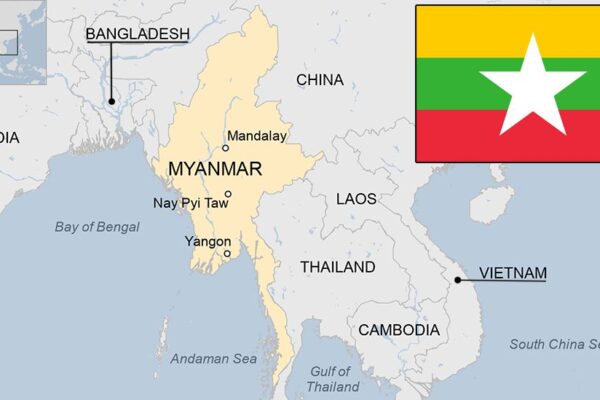
Myanmar’s junta has recruited nearly 4,000 men nationwide in its latest round of conscription as it seeks to reinforce the ranks of its army in the face of battlefield setbacks to insurgents battling to end military rule, a nonprofit group said.  Under the People’s Military Service Law, enacted by the junta in February,  men between the ages of 18 and 45 can be conscripted. The announcement has triggered a wave of killings of administrators enforcing the law and driven thousands of draft dodgers into neighboring Thailand.  A new round of conscriptions was undertaken in mid-April, according to the analysis and data group Burma Affairs and Conflict Study. Training for the nearly 4,000 new recruits began on May 14 in 16 schools across the country, the group said in a release on Wednesday.  One mother was relieved that her two sons were not selected in a raffle system used for the recruitment. She said all families with military aged men had to pay 10,000 kyats (US$ 2) to support the recruits. “I’m so worried that my sons will be picked in the next round,” she told RFA on Friday. The woman declined to be identified. About 5,000 people were recruited in the first round of conscription in early April, which brings the total number to about 9,000, according to the research group.  Spokesmen for the junta were not immediately available for comment on Friday but they said in state-backed media during the first round of recruitment that people were not being forced to join and only volunteers were allowed to begin training.  However, civilians reported mass arrests of young people in the Ayeyarwady and Bago regions, as well as village quotas that included adolescents and threats to burn residents’ houses down if recruits did not come forward. Senior junta official Gen. Maung Maung Aye, who is in charge of the national recruitment drive, said at a meeting in the capital of Naypyidaw on May 20 that the second round of recruitment had begun successfully. Those who failed to attend would  be dealt with according to the law, he said. Translated by RFA Burmese. Edited by Kiana Duncan and Mike Firn.     

Read More

Mass arrest in Myanmar’s Rakhine State ends in interrogations, beatings

Myanmar’s junta detained hundreds of villagers in Rakhine State, including children, over suspected links to ethnic minority insurgents and beat at least three people to death, residents told Radio Free Asia on Thursday. The security sweep appeared aimed at preventing the Arakan Army insurgent force making more advances after a string of recent gains and stopping them from closing in on the state capital of Sittwe, residents said.  “The junta soldiers ordered all villagers to gather and they’ve been detained all day since yesterday,” said one resident of Byian Phu village, which is several kilometers north of Sittwe. “Now, the men have been taken in military vehicles. The women and children were gathered in the cemetery,” said the villager, who declined to be identified in fear of reprisals. Another villager said three people were beaten to death while junta soldiers interrogated them RFA could not verify the villagers’ accounts and telephone calls to Rakhine State’s junta spokesperson, Hla Thein, to seek information went unanswered.  The Arakan Army has seized junta bases in Rakhine and Chin states since a ceasefire between the junta and one of Myanmar’s most powerful insurgent groups ended in November. Residents have accused junta troops of carrying out indiscriminate attacks on civilians, recruiting members of the persecuted Rohingya Muslim minority and detaining  civilians hostage on suspicion of supporting groups fighting  the junta that seized power more than three years ago.  As the Arakan Army gets closer to Sittwe, residents said the junta has increased security, arresting and interrogating more people. About 100 junta soldiers conducted the raid on Byain Pyu  at noon on Wednesday, iand checked lists that households are meant to keep of overnight visitors, a monitoring system made stricter since the army seized power again in a 2021 coup. Soldiers also went from house to house to search for anyone hiding from them, residents said. Some people were beaten and taken away, along with valuables discovered in their houses, residents said.  Another villager, who also declined to be identified for safety reasons, told RFA that at least three men were beaten to death by the junta soldiers. “Men were being interrogated near the tea shop at the market. They were beaten and interrogated one after another. One of my relatives died there,” the Byain Phyu resident said. “It is said that two or three more people died. The bodies have not been returned.” In northern Rakhine State, the Arakan Army captured Rathedaung and Ponnagyun townships in March and Pauktaw in January, leaving only Sittwe and Maungdaw, near the border of Bangladesh, under junta control.  While insurgent forces in several parts of the country have made significant gains since late last year, seizing numerous junta camps, villages and towns, no group has captured a state capital. The junta has arrested 425 civilians in Rakhine State  since November, the Arakan Army said in a statement on Monday. Fighting in the state had killed 268 civilians and wounded 640, it said.  Translated by RFA Burmese. Edited by Kiana Duncan and Mike Firn. 

Read More

Clashes displace 15,000 civilians in western Myanmar

Fighting in western Myanmar has forced thousands of people to flee from their homes, left parts of a town in smoldering ruins and killed three civilians, residents told Radio Free Asia, as opponents of military rule try to defeat the junta that seized power in 2021. The clashes between junta troops and insurgent groups in Chin State, which is on the border with India, displaced 15,000 people in two days and led to the destruction of parts of Tedim town, they said.  Anti-junta insurgents from Chin State control 10 towns in the state, while another ethnic minority rebel group, the Arakan Army, controls two others. A battle broke out on Sunday night and continued into the next day, said a resident who declined to be identified for security reasons. Two people fleeing by motorcycle from Tedim on Monday morning were hit by artillery fire. A 40-year-old woman was killed  while her male cousin was wounded. “She was taken to a nearby house after she was injured. That’s when she died. She was cremated in Tedim on Tuesday morning,” he said. “Her cousin, who was also hurt, has a broken leg and is now being treated at a hospital in Kale town.” On Sunday, the junta’s air force bombed nearby camps occupied by the Zoland People’s Defense Force, a Chin group opposed to the junta, residents said. Junta aircraft also bombed two villages controlled by the rebel group, killing two civilians. RFA called Chin State’s junta spokesperson, Aung Cho, to ask for information about the clashes, but the calls went unanswered. Most of the displaced people are taking shelter in Kale, a town in the neighboring Sagaing region, about 80 km (50 miles) away, said another resident who also asked to remain anonymous for fear of reprisals. Others are sheltering in nearby forests.  “Most of the residents fled,” the second resident told RFA  “Most of them fled to Kale town. There are some who could afford to go to Champhai,” he said, referring to a town in India. At around noon on Monday, junta soldiers burned about 30 houses in Tedim, one of the residents said. “The burnt houses were the ones near the clock tower in Myoma neighborhood and down by the telecommunication office,” he said, asking to remain anonymous given security worries. “All the houses near the local administration office were also set on fire.” Dr Sasa, a senior official in a shadow civilian government, said the destruction in Tedim was a crime against humanity and the international community should help. “Tedim town in Chin State has been burned down by the brutal forces of Myanmar’s military junta … It is imperative to help Myanmar end this reign of terror and build peace,” Sasa, who goes by one name, said on the social media platform, X.  An official from Zoland People’s Defense Force, which occupies territory in Tedim township, told RFA that the allied Chin defense forces captured nine junta soldiers, as well as several military camps. “There are three places [we captured], including the junta’s Electric Power Corporation office,” he told RFA on Tuesday, declining to be identified for security reasons. “Some junta soldiers were killed during the battle, but those captured alive will be treated according to the law.”  One member of the anti-junta Chin force was killed and three were wounded, he said.  Translated by RFA Burmese. Edited by Kiana Duncan and Mike Firn.         

Read More

China cracks down on Tibetans during holy month

Chinese authorities have instructed Tibetan students, government workers and retirees to refrain from engaging in religious activities in Tibet’s capital Lhasa during the Buddhist holy month of Saga Dawa, four sources said. The Saga Dawa festival occurs during the fourth month of the Tibetan lunar calendar and runs from May 9 to June 6 this year.  For Tibetan Buddhists, it marks the period of Buddha’s birth, enlightenment and parinirvana — the state entered after death by someone who has attained nirvana during their lifetime. During the holy month, thousands of religious pilgrims visit temples and walk sacred kora routes around Lingkhor and Barkhor streets in Lhasa, encircling the revered Jokhang Temple.  The ritual kora — making a circumambulation around sacred sites or objects as part of a pilgrimage — holds immense significance for Tibetan Buddhists who believe that virtuous deeds performed during Saga Dawa are magnified based on their location. A video obtained by Radio Free Asia showed heavy police presence surrounding the Barkhor area — the heart of the capital with its famed pilgrimage circuit — on May 22, the eve of the 15th day of the fourth month of the Tibetan Lunar calendar, considered one of the holiest days during Saga Dawa.  Since the start of Saga Dawa, Chinese police have tightened security around key religious sites, including Potala Palace, Jokhang Temple, and the Barkhor area, the sources told RFA. The measures illustrate the deterioration of religious freedom in Tibet under the Chinese government’s suppression and Sinicization of Tibetan Buddhism — a policy that seeks to bring the religion under the control of the Chinese Communist Party. Police everywhere While devotees were seen on pilgrimage on the other days of Saga Dawa, the 15th day on May 23 saw heightened restrictions, with police stationed along the pathways leading to the Sera, Gandhen and Drepung monasteries, said the sources who declined to be named out of fear of retribution by authorities. “There isn’t any place where you don’t see police and interrogation stations,” one of the sources told RFA.  Tibetans line up to offer prayers as they mark the day of Buddha’s birth, death and enlightenment at the Tsuklakhang temple complex in Dharamshala, India, May 23, 2024. (Ashwini Bhatia/AP) The Chinese government has increased the number of police checkpoints in and around Lhasa, and authorities have been interrogating Tibetans spontaneously, the person said.  Individuals who do not have a shenfenzhang, or Chinese resident identity card, are prohibited from visiting temples, leading to the heightened restrictions now in effect, said a second source.  “During our visits to circumambulate the holy sites, Chinese police regularly inspect everyone’s identity cards and engage in arguments,” said a third source.  “Having to engage in disputes with the Chinese police takes an emotional toll on us, and this is one of the reasons why many are afraid of engaging in religious activities as often as they’d like,” he said. A Nepalese monk lights a butter lamp during Saga Dawa at Swayambhunath, one of the holiest Buddhist stupas in Nepal, in Kathmandu, May 24, 2013. (Prakash Mathema/AFP) Facial recognition technology is pervasive at key pilgrimage sites and authorities regularly frisk Tibetans making pilgrimages, said a fourth source. Flag-raising festival Additionally, during the Ngari Flag Raising Festival in Purang county, called Pulan in Chinese, of Ngari Prefecture in the Tibetan Autonomous Region, ​​Chinese authorities increased security  as people gathered on May 23 for the annual ceremony, and banned the use of drones during the event, according to the sources.  The annual tradition of hoisting a large central prayer flag pole in front of Mount Kailash in Tibet began in 1681 during the time of the 5th Dalai Lama. Buddhist monks and Hindu holy men sit by a roadside expecting alms as Tibetans mark the day of Buddha’s birth, death and enlightenment in Dharamsala, India, May 23, 2024. (Ashwini Bhatia/AP) In a government notice dated May 16, the Pulan County Public Security Bureau in Talqin said the use of drones and other aircraft during the Saga Dawa flag raising festival was prohibited and that violators would be punished.  Tibetans who attended the event were subjected to extensive questioning and coerced into agreeing to uphold social order and refraining from causing discord, said one of the sources. Police instructed people not to share photos or videos of the festival on social media, he said. Translated by Tenzin Dickyi for RFA Tibetan. Edited by Tenzin Pema for RFA Tibetan and by Roseanne Gerin and Malcolm Foster.

Read More

China ‘can claim the South China Sea’: former Malaysian PM

Former Malaysian Prime Minister Mahathir Mohamad said that China can claim the South China Sea, but that doesn’t mean that other countries with overlapping claims should accept it, a view that differs from the Malaysian government’s official line.  Beijing has drawn a so-called nine-dash line to demarcate its “historic claim” of 90% of the disputed waters. Brunei, Malaysia, the Philippines, Taiwan and Vietnam also hold conflicting claims over smaller parts of the South China Sea. “OK, you can claim,” said Mahathir at the annual Future of Asia conference hosted by Nikkei Inc. in Tokyo at the weekend. “We don’t accept your claim but we don’t have to go to war against you because of your claim.” “Maybe one day you will realize that the claim means nothing,” the 98-year-old former leader said. He did not elaborate. Mahathir’s statement appears to differ from the Malaysian government’s official line. Most recently in 2023, Malaysia, together with the Philippines, Taiwan and Vietnam, rejected China’s map that depicts its sovereignty in the South China Sea. “They claim that the South China Sea’s belonging to them, but they have not stopped ships from passing through,” he said, adding that Kuala Lumpur has been producing oil and gas in the sea but “so far they have not done anything.”  “As long as there is no stoppage of the passage of ships through the South China Sea then it’s good enough.” The former leader argued that priorities should be given to maintaining peace and fostering economic development. The 10-member Southeast Asian bloc, ASEAN, has been peaceful “compared to other regional groupings,” he said, “Until now there’s no major wars between ASEAN countries.” ASEAN could serve as “a good model” for the world where there are different ideologies but “we don’t go to war with each other.” Malaysia will hold the grouping’s rotating chair in 2025, taking over from Laos. Not taking sides When asked about China-U.S. rivalry, the veteran leader urged regional countries to stay neutral as “if we take sides, we are going to lose either the American market or the Chinese market.” He noted that China did appear to be aggressive but it was the biggest trading partner for ASEAN countries and “we cannot lose that market.”  He also warned against taking sides in the Taiwan issue, saying that there was “no necessity” to see a confrontation between China and Taiwan. Beijing considers democratically governed Taiwan a Chinese province that should be reunited with the mainland, by force if necessary.  Last week, China conducted a two-day “punishment” military exercise around Taiwan, believed to be in response to the inauguration of the new Taiwanese president, Lai Ching-te. Mahathir said that  China’s leader, Xi Jinping, “seems to be more ambitious and aggressive,” but China’s policies may change in  future because of changes at the top. “Leaders don’t live forever so policies may change when leadership changes,” he said.  Mahathir Mohamad, who will be 99 in July, served as prime minister from 1981 to 2003 and again from 2018 to 2020.  Incumbent Malaysian prime minister Anwar Ibrahim was also present at the Future of Asia 2024 forum and delivered a speech. In an interview with Nikkei Asia on the forum’s sidelines, Anwar said that his focus “will be the economy.” Malaysia’s position remains that disputes should be settled via engagement and the way forward is to seek peaceful resolution through negotiations, according to Anwar. Future of Asia, held by Japan’s Nikkei annually since 1995, is “an international gathering where political, economic, and academic leaders from the Asia-Pacific region offer their opinions frankly and freely on regional issues and the role of Asia in the world,” according to the company. Edited by Taejun Kang and Mike Firn.

Read More

Episode 7a: Hollywood, we have (had?) a problem! (Or did we?)

In Honor of Asian American Native Hawaiian Pacific Islander Heritage Month, this edition of RFA Insider brings together a panel of four Asian American RFA staffers to discuss Asian representation in U.S. media. Joining the insiders on the panel are Charlie Dharapak, RFA’s multimedia managing director, and Boer Deng, director of RFA’s Investigative team. Recording for this episode went on way longer than expected, so the decision was made to release it as two separate episodes. In the rundown, the panel each introduced Asian two Asian characters from their youths in an effort to make a top five list out of them. Eugene’s characters were Ensign Harry Kim from Star Trek Voyager (1995-2001) and Rufio from the 1991 film Hook. Amy’s were Prince Christopher from Rogers and Hammerstein’s Cinderella (1997) and Kelly Kapoor from The Office (2005-2013). Charlie’s characters were two played by Pat Morita, Arnold from Happy Days (1974-1984) and Martin Yan, from the cooking show Yan Can Cook (1982-present according to Wikipedia). Boer said that because she was born abroad and moved to the U.S. as a child, she did not feel the need or expectation to be represented and therfore did not submit any characters to our top 5 list but acknowledged that for people who were born in the U.S., representation is important. Prior to the show, Eugene, Charlie and Amy ranked each other’s characters but not their own. The ranks were averaged. Who will come out on top? Tune in next week for Episode 7b, which will feature How its Made, and the panel will discuss their journeys as Asians in the journalism field, how their parents reacted to their choice of study or profession, given that jobs in journalism do not confer the traditional markers of success, and ways they think coverage of Asian Americans or Asia can improve.

Read More

South Korea, China, Japan to hold trilateral talks on May 26-27 in Seoul

Leaders of South Korea, China and Japan will meet on May 26-27 in Seoul for their first trilateral talks in more than four years, South Korea’s presidential office said on Thursday. South Korean President Yoon Suk Yeol will have bilateral talks with Chinese Premier Li Qiang and Japanese Prime Minister Fumio Kishida on Sunday, ahead of their three-way gathering on Monday, South Korea’s deputy national security adviser, Kim Tae-hyo, said. The summit will cover six areas of cooperation: economy and trade, sustainable development, health issues, science and technology, disaster and safety management, and people-to-people exchanges, Kim said, adding that the leaders would issue a joint statement. The leaders will also discuss regional and international issues and meet about 80 businesspeople at a dinner on Sunday and a business forum the next day, Kim said. “The summit will serve as a turning point for fully restoring and normalizing the trilateral cooperation system among South Korea, Japan and China,” he added. “It will also provide an opportunity to recover future-oriented and practical cooperation momentum that will allow the people of the three countries to feel the benefits.” The neighbors held an inaugural stand-alone trilateral summit in 2008, and were supposed to meet annually after that. But the summit has been suspended since it was last held in December 2019, in China, because of bilateral feuds and the COVID-19 pandemic. Relations between all three have been fraught for various reasons over recent years. South Korea and Japan are working to improve relations strained due to historical disputes stemming from Japan’s wartime aggression. They are also strengthening their trilateral security partnership with the United States amid growing rivalry between China and the U.S. Japan, South Korea and the United States underscored their security cooperation against North Korean threats and reinforced their commitment to a “free and open Indo-Pacific” during an August 2023 Camp David summit. In 2018, the year before the last summit between the three Asian neighbors, in the Chinese city of Chengdu, North Korea unexpectedly changed its aggressive stance toward the U.S. and South Korea. Seoul, in turn, eased its criticism of Pyongyang.  Japan, however, continued to prioritize pressure on North Korea, causing disagreement with Seoul over North Korea policy. By the 2019 talks, the three neighbors could only agree on a general policy of cooperating on efforts to denuclearize North Korea. China and South Korea have also clashed in recent years over a U.S. missile defense shield installed in South Korea. Meanwhile, Chinese President Xi Jinping and Russian President Vladimir Putin criticized the U.S. and its allies for their “intimidation in the military sphere” of North Korea at a recent bilateral summit. In March, Russia vetoed a U.N. resolution to extend a monitoring panel for enforcing North Korean sanctions, while China abstained, blocking U.S.-led efforts to control Pyongyang’s weapons program. Edited by Mike Firn.

Read More

In a first, Kim Jong Un’s portrait is displayed next to his predecessors

For the first time, a large portrait of North Korean leader Kim Jong Un was placed alongside portraits of his father and grandfather in a public place in what experts say is a move to boost the cult of personality surrounding him. State media released images of the three portraits adorning the facade of the Central Cadres Training School of the Workers’ Party of Korea in Pyongyang during the school’s opening ceremony this week.  The three portraits were also shown above the chalkboard in one of the classrooms. Photos of the first two dynastic leaders, national founder Kim Il Sung, and his son and successor Kim Jong Il, are displayed in every public building and private home. They are treated with such respect that citizens have been praised in state media for dashing into their burning homes to rescue the portraits. A general view of the completion ceremony to mark the opening of the newly completed school of the Workers’ Party of Korea Central Cadres Training School in Pyongyang, May 21, 2024. (Photo by KCNA VIA KNS/AFP) Until now, Kim Jong Un’s photo had not been displayed next to his predecessors in an official setting. It’s not yet known if this will become the norm nationwide.  Should the display of all three leaders be mandated by law, it would suggest that Kim Jong Un demands more respect than his father did. Displays of Kim Jong Il’s portrait only became mandatory upon his death in 2011, though people voluntarily hung it up while he was still living as a display of patriotism.  Kim Il Sung portraits, meanwhile, have been mandatory since the 1970s. Murals and music video The move comes amid other propaganda efforts to elevate Kim Jong Un’s status.  Just a few weeks ago, the country debuted a new music video that casts him as the “friendly father of the nation.” New murals depicting Kim have been erected nationwide over the past few years. These are all examples of the systematic idolization of Kim Jong Un carried out in stages according to Kim In-tae, a senior researcher at the South Korea-based Institute for National Security Strategy. The portrait display follows the trend of “placing Kim Jong Un at the pinnacle of North Korea’s collectivism and totalitarianism,” he told RFA Korean. By placing his photo alongside his father and grandfather, Kim is trying to inherit the legacy and revolutionary tradition of his predecessors, Hong Min, from the North Korean Research Division at the Seoul-based Korea Institute for National Unification, told RFA. “It shows that he has gone from prioritizing his predecessors and setting himself at a level lower than them to now standing as a leader of the exact same level,” said Hong, adding his prediction that the country will now start heavily promoting Kim Jong Un’s own ideological principles. The cadre school’s opening ceremony also served to cast Kim as a champion of socialism, as portraits of prominent communist ideologues Karl Marx and Vladimir Lenin also were also on display, Hyun In-ae, from Seoul’s Ewha Womans University noted.    “It seems they declared to the whole world, ‘We are orthodox socialism,’” she said. “At the same time, this also signifies a declaration to the world that Kim Jong Un is the firm leader of North Korea.” Translated by Leejin J. Chung. Edited by Eugene Whong and Malcolm Foster.

Read More

North Korean toy store blows up on state media with ICBM-themed fireworks

A fireworks store in North Korea was featured in the country’s state media for its unique products, including fireworks shaped like intercontinental ballistic missiles, or ICBMs. Experts told Radio Free Asia that the fireworks, shaped like North Korea’s Hwasong-17 ICBM, unveiled in 2020 and first test fired in 2022, are meant to instill national pride among children, and the parents who would buy them. “Our store carries fireworks that everyone loves, and that teenagers and students enjoy,” a worker at the Changgwang Fireworks Store said on the May 19 Korea Central Television broadcast.  The report showed an entire section of the store with missile-themed fireworks, including a launcher in the shape of a transporter erector launcher vehicle, or TEL. The store’s military-themed products are clearly aimed at children, as its interior includes colorful pictures of animals on the walls, and a small fenced-off play area for toddlers, flanked by two very large Hwasong-17 models and a mural depicting the missile being launched into a sky full of cartoon stars and bursting fireworks. Military themed-toys are very common in North Korea, but the country seems to want the people to be on board with dedicating resources and labor to missile and rocket development. KCTV (Korean Central TV) reported that the Changgwang fireworks store in Hwasong District, Pyongyang, North Korea, is now selling new fireworks, including models of the Hwasong ICBM, May 19 ,2024. (KCTV) In February 2023, North Korean leader Kim Jong Un’s wife, Ri Sol Ju, was spotted wearing an ICBM-shaped necklace at a banquet commemorating the 75th anniversary of the Founding of the Korean People’s Army. In February 2024, the country forced residents to buy laminated photos of a reconnaissance satellite rocket launch to display in their homes as a constant reminder of the country’s military achievements. Instilling pride  The missile-themed displays are an attempt to foster national pride among the people, both through children and their parents, Bruce Klingner, senior research fellow at the Heritage Foundation and a former analyst at the U.S. Central Intelligence Agency, told RFA Korean. “It reinforces the message that North Korea needs nuclear weapons and missiles because of the U.S. threat,” he said. “And it is a way of explaining away the dire economic conditions that North Korean people suffer from because it’s being blamed on the United States.” David Maxwell, vice president of the Center for Asia Pacific Strategy, said the displays are an effort by the authorities to try to “ reinforce the legitimacy of North Korea as a military power to show off its nuclear and missile capabilities.” “It’s an example of the prioritization of resources that the Kim family regime does,” said Maxwell. “It prioritizes enhancing the reputation of the regime over the welfare of the people, while the people suffer the worst lives of really any population in the world today.” Such militaristic children’s toys were unheard of decades ago, said Kim Su-kyung, who escaped North Korea in 1998 and resettled in the United States. “When I was young, there were no goods like this,” she said. “We used to play a military game called ‘Kill the Yankee’ during field day at school, but it seems like that has now been upgraded and made into these types of toys.” She said the public would not be receptive to these toys and would not appreciate the government’s attempts to manipulate public opinion with “useless toys.”  Translated by Claire S. Lee. Edited by Eugene Whong and Malcolm Foster.

Read More

Airstrike kills woman on Myanmar-Bangladesh border

A Myanmar junta airstrike near the border with Bangladesh on Tuesday killed one civilian and injured 11, residents told Radio Free Asia, the latest casualties in a region that has seen some of the country’s most intense fighting in recent weeks. Junta forces launched air attacks after insurgents from the Arakan Army assaulted the military regime’s Border Guard Force near Maungdaw town on Monday. In response, aircraft dropped three bombs on two nearby villages in Rakhine State’s Maungdaw township. Since November, the Arakan Army has captured eight townships across Rakhine State and has launched several offensives in other areas. Fighter jets bombed Shwe Baho and Baw Di Kone villages at around 4 a.m., one resident, who declined to be identified in fear of reprisals, told RFA.  “A young woman died in Shwe Baho. She is a university student and was taking refuge in the village. The whole family was fleeing the battle but they were injured,” he said. “The Arakan Army is attacking Lay Mile’s Border Guard Force, so [the junta] bombarded all areas and surrounding villages.” The dead woman, Pan Ei Pyu, 22, also worked at a social assistance group, residents said. The wounded ranged in age from 5 years to 71, residents said.  Myanmar’s junta has yet to release any information on the attack. Rakhine State’s junta spokesperson, Hla Thein, did not answer calls from RFA. Forces of the junta, which seized power in an early 2021 coup, have lost territory in several parts of the country since late last year when militia groups, formed by pro-democracy activists and allied ethnic minority insurgent groups fighting for self-determination went on the offensive. Despite making advances, the junta’s opponents have no air power, leaving them, and villages in areas in which they operate, vulnerable to airstrikes. Four civilians were killed and six were wounded between May 14 and 19 when the junta bombed villages in southern Maungdaw township, residents said. On Saturday, the Arakan Army announced it had captured all junta camps in Buthidaung, a township along the Myanmar-Bangladesh border. Hours earlier, the group was accused of attacking a school with a drone where members of the Rohingya minority, a mostly Muslim community that has faced persecution for decades, were sheltering. Eighteen people were killed and more than 200 were wounded, residents said. The Arakan Army, in its Saturday statement, did not mention the Rohingya deaths, but said its forces were aiming to capture Maungdaw town, about 16 km (10 miles) west of Buthidaung township, also near the Myanmar-Bangladesh border. International aid groups and local residents in Buthidaung, Maungdaw and Thandwe townships were told to evacuate by the United League of Arakan, the political wing of the Arakan Army, after it issued a warning of more attacks on junta forces on Monday. Translated by RFA Burmese. Edited by Kiana Duncan and Mike Firn. 

Read More