
Category: East Asia

Overseas activists vow to keep fighting despite new Hong Kong security law
Overseas activists have vowed to keep up their campaign for Hong Kong’s promised rights and freedoms amid international condemnation of the city’s second national security law, which critics say will likely widen an ongoing crackdown on dissent when it takes effect on Saturday. The Taiwan-based advocacy group Hong Kong Outlanders said the Safeguarding National Security Law, passed unanimously in a Legislative Council with no opposition members on Tuesday, had been rushed through in just 11 days. “We will continue to speak out without fear of this evil law,” the group said, announcing a protest on the streets against the legislation on Saturday, to “defend the rights of Hong Kongers.” U.S. Senator Ben Cardin, who chairs the Senate Foreign Relations Committee, said the law will have “a chilling effect on the remaining vestiges of Hong Kong’s autonomy and freedoms.” He said he was “alarmed” about the impact of the law on American citizens, businesses and independent media in the city. “I urge the Beijing and the Hong Kong governments to rescind Article 23, as well as the 2020 National Security Law, and restore to the people of Hong Kong their basic rights and freedoms,” Cardin said, adding that Congress will continue to reevaluate the treatment of Hong Kong as a separate entity from the rest of China under U.S. law. Making life harder British Foreign Secretary David Cameron warned that the law will make it harder to live, work and do business in Hong Kong. “It fails to provide certainty for international organizations, including diplomatic missions, who are operating there,” Cameron said in a statement on the government website. A poster advertises a street activity in Taipei on the Facebook page of the Taiwan-based exile group Hong Kong Outlanders. (hkoutlanders.tw via Facebook) “It will entrench the culture of self-censorship which now dominates Hong Kong’s social and political landscape, and enable the continuing erosion of freedoms of speech, of assembly, and of the media,” he said. In Beijing, foreign ministry spokesperson Lin Jian said such comments were “slander.” “China expresses strong dissatisfaction and firm opposition to certain countries and institutions that denigrate and smear Hong Kong’s Safeguarding National Security Ordinance,” Lin told a regular news briefing in Beijing. “The Chinese government is unswervingly determined to safeguard national sovereignty, security, and development interests, and … to oppose any external interference in Hong Kong affairs,” he said. ‘Puppet government’ U.S.-based Hong Kong rights campaigner Frances Hui said she had “struggled to get out of bed” due to depression after the government bypassed democratic institutions that took decades to build. “I know #JoshuaWong, Wong Ji-yuet, and others will probably spend more days in jail under this law,” Hui said via her X account, in a reference to democracy activists already imprisoned for taking part in protests in the city. “The only remaining bits of freedom in the city will soon be crumbled. Hong Kong will become just another Chinese city with a puppet govt that obeys China,” she wrote. But she added: “I know our determination for freedom & democracy will never change. One day, we will meet again.” Taiwan’s ruling Democratic Progressive Party condemned the passing of the law as the “darkest day” for Hong Kong. Police officers stand guard outside the Legislative Council in Hong Kong, March 19, 2024. (Louise Delmotte/AP) “Hong Kong is now completely shrouded in the shadow of the Chinese Communist Party’s totalitarian rule,” the party said in a statement on Wednesday, adding that the Legislative Council was now just a “rubber stamp” for Beijing. It said the new law’s more expansive interpretations of national security crimes would “completely destroy what Hong Kong has left in the way of human rights or a legal system.” The party vowed to support the international effort to help Hong Kong, safeguard democracy and counter totalitarianism. Investors will leave In Japan, Foreign Ministry Press Secretary Kobayashi Maki said the government has “grave concern” about the law, and called on the authorities to ensure that the rights of Japanese nationals and companies in Hong Kong were respected, citing close economic ties with the city. U.S. State Department spokesperson Vedant Patel said the law has the potential “to accelerate the closing of Hong Kong’s once open society.” “We’re alarmed by the sweeping and what we interpret as vaguely defined provisions laid out in their Article 23 legislation,” he told a regular news briefing in Washington on Tuesday. “We think that this was fast-tracked through the non democratically elected Legislative Council after a truncated public comment period,” he said, adding that U.S. officials are in the process of analyzing potential risks to American interests under the law. Wu Jui-ren, an associate researcher at Taiwan’s Academia Sinica, predicted that the law will spell the end of Hong Kong’s status as a global financial center. Foreign investors will leave one after another, he predicted. Patrick Poon, human rights campaigner and visiting researcher at the University of Tokyo, said the law gives officials too much power, especially when it comes to defining what is meant by “collusion with foreign forces” or “state secrets,” or what constitutes subversion. He said anyone working for foreign organizations in the city could be at risk under the law, even if they post something online that the government doesn’t like. “It’s all entirely up to those who enforce the law to decide, in line with the practice of totalitarian governments,” Poon said. “Hong Kong has gone a step further towards being just like mainland China.” Translated by Luisetta Mudie. Edited by Malcolm Foster.

Blinken stresses ‘ironclad’ support for Philippines in South China Sea standoffs
U.S. Secretary of State Antony Blinken met with his Philippine counterpart in Manila on Tuesday to lay the groundwork for a summit between the leaders of the United States, the Philippines and Japan next month. U.S. President Joe Biden, Philippine leader Ferdinand Marcos Jr. and Prime Minister Fumio Kishida will meet in Washington on April 11 for trilateral talks that will focus on protecting a “free and open” Indo-Pacific region, according to the White House. Speaking at a press conference alongside Blinken, Filipino Foreign Secretary Enrique Manalo said the three-way summit aimed to capitalize on “complementarities” between the countries, notably in infrastructure, critical minerals, energy and maritime security. Blinken said that collaboration on defense and economic issues would only result in all three countries becoming stronger. “So that’s what the summit is about, as well as our work together to uphold international law,” he said. He and Manalo had discussed ways of streamlining the budding trilateral alliance “to make sure that even as we have this leaders’ summit, we have mechanisms in place to make sure there are things working together day in day out.” Blinken’s visit comes at a crucial moment in bilateral relations between the two allies, who have ramped up defense cooperation amid increasing Chinese assertiveness in the South China Sea, including in waters that fall within the Philippine’s exclusive economic zone. China claims nearly all of the South China Sea while dismissing the territorial claims of several Southeast Asian nations and Taiwan. “The alliance has never been stronger, but we not only have to sustain that, we have to continue to accelerate the momentum,” said Blinken, who was making his second trip to Manila as America’s top diplomat. He first visited the Philippines in August 2022, weeks after Marcos took office as president. Filipino activists protest at the Mendiola Peace Arch outside the presidential Malacañang Palace in Manila ahead of a meeting between President Ferdinand Marcos Jr. and U.S. Secretary of State Antony Blinken on March 19, 2024. (Jojo Riñoza/BenarNews) Manalo said he had thanked Blinken for Washington’s “consistent support,” particularly in regards to Chinese harassment of Filipino supply boats. In the most recent incident, four Filipino sailors sustained minor injuries earlier this month when China Coast Guard boats intercepted a supply vessel and fired at them with water cannons. “We discussed regional issues, especially the situation in the South China Sea, and I stated that the Philippines is committed to managing disputes in accordance with our national interests, the rules-based international order and international law, especially UNCLOS,” Manalo said, referring to the United Nations Convention on the Law of the Sea. “We reaffirmed our shared view that a strong and capable Philippines would make a formidable ally for the United States.” Blinken reiterated Washington’s “ironclad commitments” to defend the Philippines from outside aggression. He also said the two allies had shared concerns about Chinese “actions that threaten our common vision for a free and open Indo-Pacific,” including within the Philippine exclusive economic zone. “Repeated violations of international law and the rights of the Philippines – water cannons, blocking maneuvers, close shadowing, other dangerous operations – these waterways are critical to the Philippines, to its security, to its economy, but they’re also critical to the interests of the region, the United States, and the world,” Blinken said. On Tuesday, China’s foreign ministry spokesman Lin Jian said the U.S. had no right to interfere in disputes between Manila and Beijing and China would take the necessary actions to defend its territory. “Military cooperation between the United States and the Philippines should not harm China’s sovereignty and maritime rights and interests in the South China Sea, let alone be used to prop up the Philippines’ illegal position,” Lin told a regular briefing, according to a report from Reuters. Blinken is expected to meet with Marcos later on Tuesday. The Philippine leader recently returned from a trip to Germany and the Czech Republic in which he criticized Beijing’s expansive territorial claims and sought support for a free and open South China Sea. Camille Elemia contributed reporting from Manila. BenarNews is an RFA-affiliated online news organization.
COVID symptoms kill 5 North Korean children, schools and daycares shuttered
At least five North Korean children have died as a resurgence of a respiratory disease believed to be COVID-19 has caused authorities to enact quarantine procedures in Ryanggang province, residents told Radio Free Asia. Residents living in the central northern province, which borders China, will have to wear masks and children will be confined to their homes, as schools and daycare centers have been temporarily shuttered. Sources said they were not sure if the lockdown applied outside of Ryanggang province. “In early March, children showing symptoms of coronavirus died one after another in Paegam county,” a resident of the province, who requested anonymity for safety reasons, told RFA Korean. “The provincial party committee took emergency quarantine measures through the quarantine center.” According to the resident, quarantine workers that went house-to-house informed residents that three children in Paegam county died along with two more in nearby Kapsan county after exhibiting coronavirus-like symptoms. Another Ryanggang resident confirmed how the news was spread. ‘Fever cases’ Residents, however, say they believe the situation could be much worse than reported, the first resident said. For the first two-and-a-half years of the pandemic, North Korea claimed outwardly to be completely “virus free,” but in April 2022, Pyongyang admitted the virus had spread to all areas of the country and declared a state of “maximum emergency” the following month. During the entirety of the emergency, the government kept an official tally of “fever cases,” but its official total on global COVID-19 case tracking websites remained at or near zero. Experts said it was likely that cases could not be confirmed due to a lack of reliable testing capacity. Prior to the emergency, when patients in North Korean hospitals with COVID symptoms died, the hospital would quickly cremate the bodies so that they could not be tested for the disease, then attributed the deaths to other causes. Though authorities acknowledge that five children have died, residents think that the response points to many more casualties, as daycare centers, kindergartens and schools will be closed for a 10-day period, and everyone will be required to wear masks or face punishment, the resident said. He said that the quarantine center in the city of Hyesan ordered all children to be kept at home as much as possible because they are at greater risk than adults. “Some are complaining about how children are supposed to be kept indoors when the adults have to do whatever it takes to make a living and find food,” the resident said. “On the other hand, some others agree that the temporary school closure is the best option in the absence of medicine.” The quarantine center also promoted personal hygiene practices when it went house-to-house, the second Ryanggang resident told RFA on condition of anonymity to speak freely. “The quarantine workers warned of the seriousness of the situation and they also shared the news that several children infected with the coronavirus had died in Paegam and Kapsan counties,” she said. “There are many patients around me who are coughing and suffering from high fevers, similar to coronavirus symptoms.” The second resident said things were just as bad now as they were during the pandemic. At that time, the border with China was closed and trade had been suspended, so there were shortages of everything. Additionally, lockdowns at home meant that people could not go out to earn money to support themselves. “There is no money now, just like during the big outbreak,” she said. “And even if you have money it is difficult to get medicine.” Translated by Claire S. Lee. Edited by Eugene Whong.

Vietnam’s next leader faces crunch time with economy, demographics
January brought a fresh gust of rumors about the whereabouts of Nguyen Phu Trong, the Communist Party of Vietnam general secretary. He hadn’t been seen in public for a few weeks and failed to meet with the visiting president of Indonesia, leading some commentators to speculate that his health was deteriorating once again. We had been here in 2019 when it was rumored – accurately, it turned out – that Trong had suffered a stroke while on a visit down south. This time around, Trong showed up again rather quickly, delivering a speech to the National Assembly on January 15. But rumors of the 79 year-old’s failing health are a reminder of his and the country’s frailty. Given that party chiefs tend to rule for two five-year terms, we can assume that the next general-secretary, if voted in at the next Communist Party of Vietnam (CPV) National Congress in 2026 and if Trong does actually retire then, will rule until 2036. It is not overly dramatic to say that the next party chief will govern during the most consequential decade of Vietnam’s development. Women work at the Hung Viet garment export factory in Hung Yen province, Vietnam, Dec. 30, 2020. (Kham/Reuters) Not least, that person is likely to enter office facing even more uncertain world politics. One uncertainty is China, whose economy is in a terrible state and which is set to experience perhaps the worst demographic crisis of any country in known history. The other is a retreating America. The great debate in the United States right now is whether to maintain its post-1945 interest in world affairs or to descend into nationalism and protectionism. If Washington chooses the latter – and Donald Trump’s possible re-election later this year would be an indication of that – the globalization we’ve known since 1945 that has depended on U.S. security guarantees, not least to keep the seas safe for world trade, could collapse. Vietnam has arguably been one of the biggest beneficiaries of globalization – perhaps second only to China in recent decades. More to the point, China and the United States combined account for 46 percent of Vietnam’s exports and 40 percent of its imports. Demographic time bomb Hanoi can do little to rectify China’s troubled economy or dispel America’s isolationist tendencies. But it can clean its own house. The most existential concern, as framed by a headline in the state-run press last year, is its “demographic time bomb.” Thailand is set to lose 10 million people of working age by 2050, about a quarter of its current workforce. China, based on conservative estimates, will lose 217 million workers, down from 984 million today. Vietnam, thanks to its citizens having so many children in the 1990s, will only see its working-age population dip by around 253,000 people by 2050, from 67.6 million now – a 0.3 percent fall. The workforce will have passed its peak by the mid-2030s. Instead, Vietnam appears set to suffer the problem of too many retirees. Vietnam became an “aging” society in 2011, when 7 percent of its population was aged over 65. It will become an “aged” society, when that demographic is more than 14 percent of the population, in 2034. Elderly people exercise at a public park in Hanoi, Oct. 9, 2018. (Kham/Reuters) Vietnam will be the fourth “aged” society in Southeast Asia, after Singapore, Thailand and Brunei. The percentage of people over 65, those who don’t work and are net extractors of state money, will double between now and 2050, from 10 percent to 20 percent. In fact, people over 60 will go from 14.7 to 26.5 percent of the population over this timeframe. That’s the figure to bear in mind since Vietnam’s retirement age for men will be 62 in 2028 and 60 for women in 2035. Moreover, the proportion of retirees will probably be higher than 26 percent of the population since women, who retire earlier, outnumber men by the time they’re 60 years old. So it’s possible that Vietnam is looking at around a fifth of its population in retirement by 2030 and nearly a third by 2050. Unlike Thailand and China, whose demographic future is dire, more so than some analysts think, Vietnam won’t see a declining workforce at the same time as an increase in retirees, so it won’t be left trying to scrape less money from fewer workers for greater welfare payments to more retirees. However, Vietnam is starting from a lower wealth base. If its GDP per capita doubles between now and 2034, it would still be on par with Thailand’s GDP per capita today. If it triples, it will be on par with today’s Malaysia, which won’t become “aged” until 2042. Tough decisions won’t wait Vietnam risks becoming old before it becomes rich, unless, that is, it can turbocharge its economy over the coming decade and half. According to the World Bank, Vietnam has until 2042 before its “demographic window of opportunity will close.” The state will have to find vastly more money for its retirees, sapping funds that could be invested in infrastructure and education. Spending on education has already fallen from around 18 percent of government expenditure in the early 2010s to around 15 percent. Infrastructure spending has been criminally misused. Just look at the badly managed Ho Chi Minh City metro project. Currently, average social insurance payments are just $240 per month, a little over two-thirds of workers’ average income. A lengthy World Bank report noted that “Countries with old-age dependency ratios equal to Vietnam’s projected level in 2035 typically spend 8-9 percent of GDP on public pensions, well above the 2-3 percent that Vietnam has spent over the past decade”. Commuters fill the street during morning rush hour in Ho Chi Minh City, Jan. 12, 2024. (Jae C. Hong/AP) By today’s GDP, that means the Vietnamese state will need to find something in the range of $18-21 billion annually just for pensions within a decade. That’s not counting the additional…
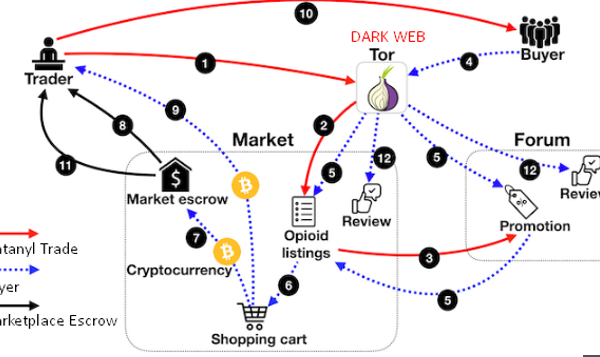
Smuggling of the deadly Synthetic opioid FENTANYL
An investigative report on Fentanyl production, smuggling, its impacts on health and on geopolitics of the world.

China’s stability maintenance system kicks into high gear on ‘sensitive dates’
On dates considered politically sensitive by the ruling Chinese Communist Party, police and local officials across China call up or visit anyone they think might cause some kind of trouble for the authorities, and take steps to silence or control them. On “sensitive dates” such as June 4, the date of the 1989 Tiananmen killings, authorities target independent journalists, rights activists and lawyers, anyone with a grievance against the government, people who complain and petition the authorities, and anyone with a track record of posting online content that the government doesn’t like. Meanwhile, an army of internet censors, many of whom work for private service providers, keeps a list of metaphors, code words, homophones and other workarounds to help them block and delete unwanted content. They are putting into practice China’s “stability maintenance” system, designed to nip social unrest in the bud. Security personnel walk outside the Great Hall of the People after the second plenary session of the 14th National People’s Congress in Beijing on March 8, 2024. (Jade Gao/AFP) Blogger and former police detective Deng Haiyan, who uses the online handle “Second Uncle,” said the police are trying to get ahead of any potential unrest, and nip it in the bud. “Every time there is a major celebration or festival, they want to make sure nothing untoward happens,” Deng said. “They assume that certain people will take the opportunity to cause trouble at a time like that.” “Once trouble starts, it spreads very easily, so they want to lock it down beforehand.” Former Sina Weibo censor Liu Lipeng said online service providers must keep a calendar of “sensitive dates” and be aware of certain keywords and workarounds that internet users may employ to evade censorship. “As a service provider, you have to have a manual to avoid getting into trouble,” he said. “Sensitive dates” include major political meetings like the National People’s Congress that ran in Beijing from March 5-11. ‘Picking quarrels and stirring up trouble’ Fu Yuxia, who is pursuing a complaint against the government through official petitioning channels, hails from a small town outside Lianyungang city in the eastern province of Jiangsu. She was detained by police in her hometown of Niushan in late February on charges of “picking quarrels and stirring up trouble.” The reason? Fu had bought a rail ticket to visit her parents in Xuzhou, an action that was flagged by the stability maintenance system ahead of the Beijing parliamentary sessions. “They’re afraid that I’ll go to Beijing during the National People’s Congress, so they have detained me in a rescue facility, with people from my local police station on guard outside, round the clock,” Fu told RFA Mandarin from detention. “They keep coming to check that I’m still in my room,” she said, adding that police had also questioned her and taken her fingerprints, warning that she would be jailed if she made plans to travel to Beijing. A petitioner holds photos of evidence in her grievance against local officials, outside a government petition office in Beijing on March 2, 2016, a few days before the National People’s Congress opens its annual session. (Greg Baker/AFP) Calls to the Niushan police department rang unanswered during office hours one day ahead of the National People’s Congress’ opening session. Hangzhou-based freelance writer Zan Aizong also had his liberty restricted during the parliamentary sessions by police in his home city of Hangzhou, who kept coming to his apartment to check up on him. He complained in an online statement: “What do the parliamentary sessions have to do with me? I’m not a delegate to the National People’s Congress or the Chinese People’s Political Consultative Conference.” Zan couldn’t see why he was being targeted, as he isn’t someone who is pursuing a grievance, nor a member of a persecuted group. “I’m just a writer and a not-very-famous online commentator,” he said. “Is it necessary to waste so much manpower and material resources? Is it necessary to maintain stability in this way?” Zan wanted to know. Placed under guard Meanwhile, state security police in Beijing were placing a guard outside the home of independent political journalist Gao Yu, according to her social media account. “How are Beijingers supposed to live a normal life?” Gao said in a Feb. 27 post to her X account, calling the surveillance “unbearable.” Gao said national security police repeatedly called her phone and turned up at her home in a bid to prevent her from meeting a dissident who was believed to be in Beijing. Similar protocols are typically put in place every five years ahead of the Communist Party’s national congress, dissidents and activists have told RFA. Petitioners and dissidents have told RFA Mandarin that they are also placed under guard, detention or house arrest up to two weeks ahead of China’s National Day, when the ruling Chinese Communist Party marks the founding of the People’s Republic of China by late supreme leader Mao Zedong on Oct. 1, 1949. Veteran Chinese journalist Gao Yu works at her desk in her home in Beijing on March 31, 2016. (Greg Baker/AFP) Qing Ming, the tomb-sweeping festival, can also be a political minefield for the authorities, because people often use it to commemorate high-profile dissidents like Liu Xiaobo and ousted former leaders like Zhao Ziyang. Every April 5, police across the country are out in force to stop people from visiting the former homes and graves of people regarded as politically “sensitive” by the government. In 2021, Geng He, wife of disappeared rights lawyer Gao Zhisheng, vowed to make offerings every year outside the Chinese Consulate in San Francisco on Qing Ming, because she can only assume her husband has died. “I don’t have any dreams now. I only hope that the Chinese Communist Party (CCP) can return Gao Zhisheng’s ashes to me for humanitarian reasons.” “I now have a premonition that is getting stronger and stronger, which is that Gao Zhisheng has been persecuted to death,” she said in a public statement. “Otherwise,…
Three years on, whereabouts of Tibetan poet is a mystery
More than three years after the arrest of a popular Tibetan writer and poet in northwestern China, police have not provided any details about his whereabouts, his sentence or his well-being, despite repeated appeals by his family for information, two sources told Radio Free Asia. Gendun Lhundrub, a former monk at Rongwo Monastery in Rebgong county of Malho Tibetan Autonomous Prefecture in China’s Qinghai province, was detained on Dec. 2, 2020. Authorities did not cite any reasons for his arrest, which followed a long period when police monitored his activities for signs of dissent and opposition to Chinese policies, RFA learned at the time. Chinese authorities frequently detain Tibetan writers, artists and singers who promote Tibetan national identity and culture or who have criticized China’s rule of the western region. They scrutinize their writings for content considered as “endangering national security” or constituting an “act of separatism,” thereby deeming them threats to the ruling Chinese Communist Party. Lhundrub’s relatives have made repeated requests to authorities in Rebgong county to find out where he is and whether he has been sentenced, said one source from inside Tibet. “However, they have not received any response to their queries,” said the source, who declined to be identified for safety reasons. Whenever the family wants to send items to Lundrub, officials at the Chinese government’s Rebgong county office tell them to leave the items with them, and they will forward them to Lundrub, he said. “His well-being is also unclear as no one has been allowed to meet him,” the source added. Additionally, officials have shared no details or documentation as proof of Lhundrub’s sentence, both sources said. Long list Lhundrub is among those on a long list of well-known Tibetan writers and poets arrested by authorities. In 2016, Tibetan language advocate Tashi Wangchuk was arrested and tortured. He was released in 2021 after being held for two years in pre-trial detention and serving part of a five-year prison sentence. Gendun Lhundru was born in 1974 in Rebgong in the traditional Amdo region of Tibet in the northeastern part of the Tibetan Plateau. He became a monk at a young age and enrolled in the Rebgong Dargye Monastery. He later studied at the Rebgong Rongpo Monastery, Labrang Tashi Kyil and Serta Labrang. Starting in 1994, he wrote poetry. In October 2022, he released an anthology of poems called “Khorwa,” and wrote on the website Waseng-drak that writers and artists require freedom to express their thoughts and emotions without restriction, RFA learned from sources that year. Lhundrub’s collection of poems, which include “Black Rosary,” “Melody of Life” and “White Book,” and his literary skills are highly regarded by Tibetans around the world. Written by Tenzin Pema for RFA Tibetan. Edited by Roseanne Gerin and Malcolm Foster.
800 Chinese deported from Myanmar’s Thai border
More than 800 Chinese nationals were deported from near Myanmar’s border with Thailand in relation to online fraud, according to China’s Ministry of Public Security. The group was deported Wednesday from Myawaddy’s infamous gambling and scam center, Shwe Kokko, in Myanmar’s Kayin state through neighboring Thailand, the ministry said in a statement on Wednesday. Scam centers have plagued the border areas of Thailand, Myanmar and China as nationals from all three countries are tricked into – and subsequently enslaved in – online fraud. Tens of thousands of Chinese nationals were deported from Myanmar in 2023 by both junta and rebel army officials for their roles in both perpetuating and being trapped in criminal schemes. Many are linked to forced labor, human trafficking and money laundering, which proliferated after COVID-19 shut down casinos across Southeast Asia. A resident in Myawaddy told Radio Free Asia that the gambling businesses in Myawaddy should be eradicated. “The [Chinese nationals] have been repatriated through Thailand as they were illegally staying in Shwe Kokko. They kept saying that [authorities] are continuously sending them back,” he said, declining to be named given the issue’s sensitivity. “There are still gambling businesses in Myawaddy. The [big] gambling business split off and many small ones appeared in the city center. They are still there.” Since March 2023, the Chinese Ministry of Public Security has been cooperating with Myanmar and Thai authorities on the border to crack down on transnational communication network fraud and online gambling activities. The 800 Chinese nationals were linked to an online money laundering gang, according to the statement. The details of the repatriation could not be confirmed by RFA. The arrests were a result of the long-term trilateral cooperation between China, Myanmar and Thailand, it continued. According to Myanmar junta-backed media, 52,820 foreigners, including 50,772 Chinese nationals, were repatriated from Oct. 5, 2023 to March 6, 2024. Translated by RFA Burmese. Edited by Kiana Duncan and Mike Firn.
’10 Don’ts’ for Chinese young people
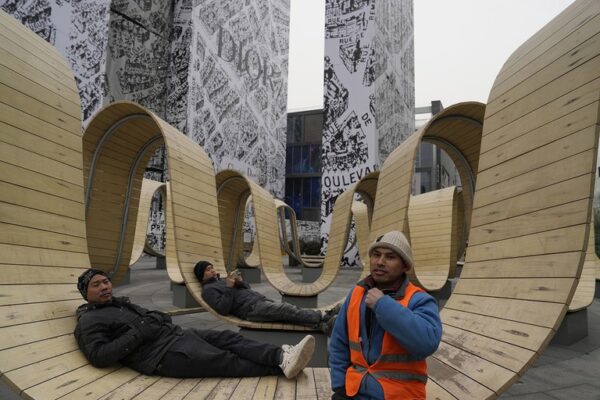
Over the past year or so, young Chinese “refuseniks” have been swearing off marriage, children and mortgages – rejecting traditional milestones on the path to adulthood – amid apparent despair over their futures, the economic outlook and politics. But recent social media posts show that they’ve added several more “don’ts” to the list. They include not donating blood, not giving to charity, not playing the lottery, not investing money, including in property, and even not helping an elderly person — largely because they’re afraid they might get exploited or trapped. The list, dubbed the “10 Don’ts” of young people, has been circulating on social media. “This generation of young people have no hope, so they don’t bother working hard any more,” said a university graduate who gave only the surname Wang for fear of reprisals. “They might as well just lie down in the hope of a stress-free life.” The attitude is particularly problematic for the ruling Communist Party as it tries to encourage people to use the internet to share “positive” content, particularly about the economy, rather than complaining about how hard their lives are. Young workers rest outside a shopping mall in Beijing, Jan. 17, 2024. (Ng Han Guan/AP) Author and political essayist Yu Jie said the refusal to marry and have kids is linked to young people’s disillusionment with the Chinese government and the way it manipulates them to believe they are the future of the nation, when actually they are merely its tools. “No young person today believes in the lies of Mao Zedong or his successor Xi Jinping,” Yu wrote in a commentary for RFA Mandarin. Motivated by fear Many Chinese don’t want to donate blood because they fear the data could be used to force them into donating organs for the elite, said a resident of the eastern province of Shandong who gave only the surname Lu for fear of reprisals. People worry that if they get into an accident, their organs will be taken without their consent if information about their blood type is available to the authorities, she said. “The reason they won’t donate to charity is that they can barely support themselves, and that they need donations themselves,” Lu said, summarizing some of the many comments on the topic that were no longer visible on Weibo on Tuesday. The resistance to investing in property is linked to overpricing and the fear of becoming a “mortgage slave,” current affairs commentator Tianluke told RFA Mandarin, using his pen-name “Pilgrim” for fear of reprisals. “The economic situation in China is very bad right now,” Tianluke said. “A lot of people have been laid off, and there are a lot of graduates who are unemployed.” And some people are afraid of helping an elderly person in trouble in case they get accused of causing the problem they’re trying to address. It’s a “manifestation of the collapse of trust … in Chinese society,” he said. A young couple walk by a construction site near office buildings in the Central Business District in Beijing on March 2, 2024. (Andy Wong/AP) Yu, the essayist who wrote a Dec. 29 column for RFA Mandarin, said the various “don’ts” are all about avoiding the various “traps” set by the Communist Party – meaning people getting caught up in a system that exploits them for the benefit of the privileged political and financial elite. “Things such as donating money to charity, donating blood, and helping the elderly are all good deeds that are taken for granted in civilized countries,” he wrote. “But in China, they are all taken advantage of.” “The rich are getting richer, and the poor are getting poorer,” Yu wrote. “That’s why young Chinese people warn each other to avoid these traps to avoid disaster.” ‘Kids have no future’ Meanwhile, censors have deleted an article that questions the value of hothousing children through the highly competitive education system — a defining behavior of the country’s middle class. The article, titled “Middle-class kids have no future,” was unavailable “due to violations of regulations” on Tuesday, though copies were still visible outside China’s Great Firewall of internet censorship. People tour by a deserted shopping mall in Beijing on Feb. 19, 2024. (Andy Wong/AP) The blog post tells the tale of a successful Shanghai parent whose son didn’t want to study any more, because he wasn’t naturally good at passing exams, and didn’t see the point. He started delivering food in the evenings instead, to earn some money. In a follow-up post in which he reports that the article has been taken down, the blogger argues that only gifted kids should compete for spots at top schools, because the rest are effectively only there as “cannon fodder” for the competitive system. “It’s the middle-class trap, isn’t it?” commented X user @passi0nateGirl under RFA’s X post about the article. “Nowadays, the middle class can wind up back in poverty due to sickness, unemployment, a property crash, badly performing stocks, or a company partner running away.” Translated with additional reporting by Luisetta Mudie. Edited by Malcolm Foster.

China’s ‘little pinks’ go after drinks maker over ‘Japanese’ styling
Shares of Chinese soft drink maker Nongfu Spring have dropped after some consumers said they were boycotting their products due to a perceived lack of patriotism, and posted videos of themselves on social media dumping out their contents. Hong Kong-listed shares in Hangzhou-based Nongfu Spring slid 7.7% from HK$44.60 on Feb. 29 to HK$41.20 on March 5, as online nationalists launched a boycott at the start of the annual National People’s Congress, which ended Monday. Users shared photos of labels on some of the company’s spring water bottles, complaining that it depicted a Japanese temple. Others likened a Greek letter on the company’s bottled jasmine tea to the shape of Tokyo’s Yasukuni Shrine, where the Japanese war dead are remembered. Others targeted the company’s founder and China’s richest man Zhong Shanshan, calling him a profiteer, and pointing out that his son Zhong Shuzi is an American citizen, citing the company’s 2020 prospectus. Still others said the red bottle cap used on Nongfu Spring water bottles recalled the red sun emblem in the Japanese national flag. Zhong Shanshan, chairman of Nongfu Spring, gestures during a speech at a press conference in Beijing, May 6, 2013. (CNS via/ AFP) Nongfu Spring responded on March 8, saying that the labels on its Oriental Leaf Green Tea bottles are based on a Chinese temple, and pointing to text on the label which mentions that the Japanese art of tea-drinking originated in China. “The content is not only authentic but also meticulously sourced, with the intention of highlighting the profound impact of Chinese tea and tea culture on a global scale, thereby showcasing a strong sense of national pride and confidence,” the company said in comments reported in the nationalistic Global Times newspaper. Targets of wrath The statement appears to have done little to mollify the “little pinks,” a nickname for zealously patriotic supporters of the ruling Chinese Communist Party. On Sunday, two branches of 7-Eleven in the eastern province of Jiangsu said they had pulled all Nongfu Spring products from the shelves, saying that they won’t sell products that “adulate Japan,” the paper reported. Nongfu Spring hasn’t been the only target of nationalists’ ire in recent days, either. They have also gone after Nobel literature laureate Mo Yan for hurting their feelings by “insulting the People’s Liberation Army, late Chairman Mao Zedong, and the Chinese people.” Mo’s work “Red Sorghum,” which was made into a 1987 film starring Gong Li, “vilified the Eighth Route Army” and “insulted revolutionary martyrs,” according to some comments, while others demanded compensation for hurt feelings and “reputational damage.” Chinese Literature Nobel Prize winner Mo Yan, center, leaves following a panel discussion at the Beijing International Book Fair in Beijing, Aug. 23, 2017. (Mark Schiefelbein/AP) Netizens also took aim at Beijing’s Tsinghua University for being the only top university that hasn’t been targeted for U.S. sanctions. China has laws banning insults to revolutionary heroes and martyrs, as well as to the national anthem, its soldiers and police force. You’re hurting my feelings Its lawmakers are also considering a law criminalizing “hurting the feelings of the Chinese people,” a stock phrase frequently used by Chinese officials and state media to criticize speech or actions by outsiders that Beijing disapproves of. Under a proposed amendment to the Public Security Administration Law, wearing the wrong T-shirt or complaining about China online could lead to a fine of up to 5,000 yuan (US$680) or 15 days in jail. The law doesn’t specify what kind of acts might do such a thing, but does warn that “denying the deeds” of revolutionary heroes and martyrs or defacing their public memorials would count. “Sometimes it’s directly organized by the government, and sometimes it’s not — it’s just people jumping on the bandwagon,” political commentator Ji Feng said. He said the hate campaign against Mo Yan recalled the public denunciations of the 1966-76 Cultural Revolution, and the Anti-Rightist Movement of the 1950s. If such denunciations continue, Ji warned that they will eventually target people who say nothing at all, and eventually move on to include those who don’t sing the praises of the Communist Party or its leaders loudly enough, “layer by layer.” Hard-wired U.S.-based political commentator Hu Ping said both Mo Yan and Nongfu Spring were once considered to be firmly inside the Chinese political establishment, and they are now next in line because public figures who supported democracy have long since been dealt with. “[Their targets] are getting more and more left-wing, because there’s nobody left on the other side of the political spectrum,” Hu said. “So they just find the most liberal-minded person and attack them, which we all think is pretty ridiculous.” Members of security look on after the opening session of the National People’s Congress at the Great Hall of the People in Beijing on March 5, 2024. (Pedro Pardo/AFP) Independent political scholar Chen Daoyin said patriotism has become hard-wired into China’s legislation, administrative regulations and throughout law enforcement under the leadership of Xi Jinping. “Anyone deploying this kind of patriotic [attack] is protected by these structures, so internet censors wouldn’t dare to stop them, or they might get burned themselves,” Chen said. He said nationalistic witch hunts drive huge amounts of traffic on Chinese social media platforms, suggesting that the latest wave of “little pink” activity wasn’t driven by any government order. “It was a spontaneous thing, and purely driven by economic motives.” Mo, who won the Nobel Prize for Literature in 2012, has yet to respond publicly to the criticisms of his work. British-Chinese writer Ma Jian said totalitarian regimes lend themselves to such dramas in the absence of freely available information. “When a totalitarian country has eliminated true patriots, and anyone with a sense of morality or justice … then when the mob starts to bite there is nowhere they won’t go once they take the opportunity,” Ma said. “We will continue to see stories like this, and the most extreme kind of absurdities — it won’t just be…
