

Category: East Asia
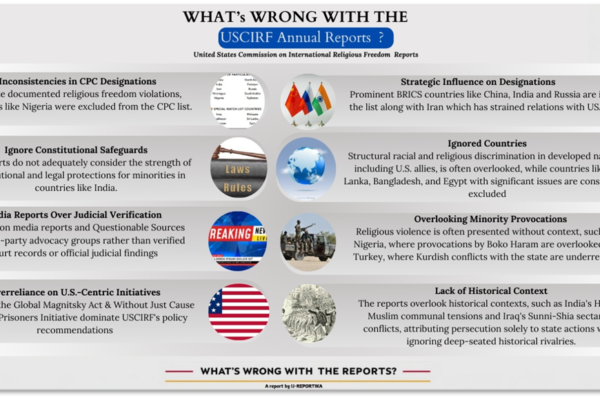
What’s Wrong with the USCIRF Report
Discover the hidden flaws in the USCIRF Annual Report, including strategic biases, methodological gaps, and lack of transparency, which challenge its credibility and impartiality on international religious freedom.
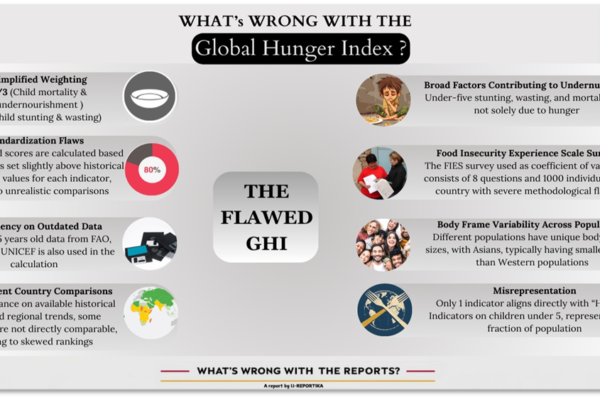
What’s Wrong with the Global Hunger Index
“The Global Hunger Index serves as a critical benchmark for global food security, but this investigative report by IJ-Reportika uncovers its methodological flaws. From outdated data to inconsistent scoring, these issues misrepresent nations’ progress and obscure systemic challenges, calling for urgent reforms to ensure accuracy and accountability.”
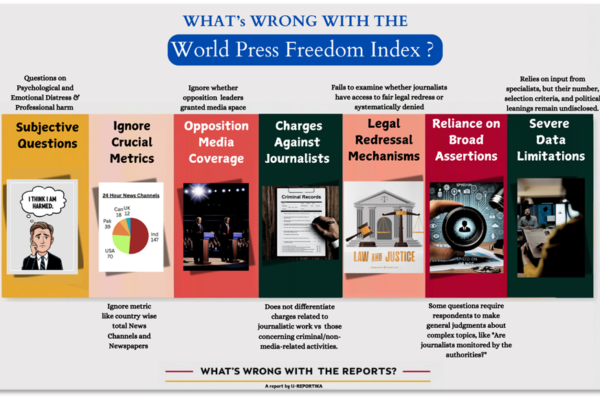
What’s Wrong With the World Press Freedom Index
The World Press Freedom Index aims to measure media freedom worldwide, but its reliance on subjective surveys and perceptions often oversimplifies the nuanced realities journalists face. This article delves into its methodological flaws and the need for a more data-driven, context-sensitive approach.
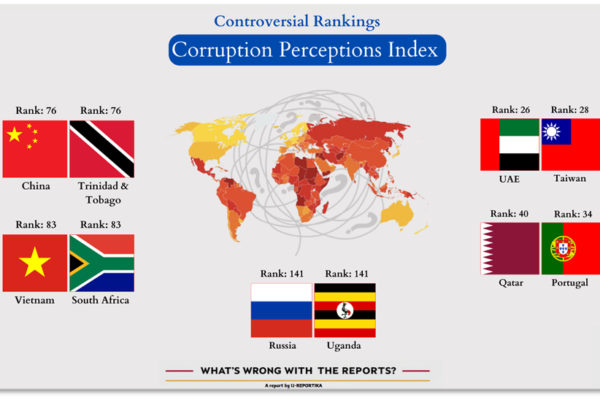
What’s Wrong With the Corruption Perceptions Index
Discover the critical flaws in the Corruption Perceptions Index by Transparency International. Learn about its biases, subjective methodology, and the challenges in accurately measuring global corruption levels.
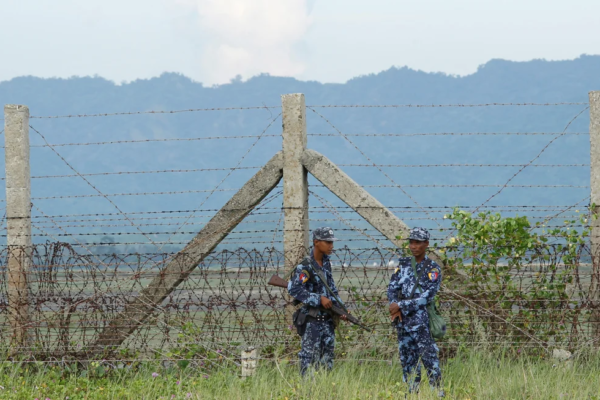
Myanmar rebels capture last military post on Bangladesh border
Ethnic minority insurgents have captured the last Myanmar military position on the border with Bangladesh after its defenders, including pro-junta militiamen from the mostly Muslim Rohingya community, abandoned the post and fled, the rebel group and residents said. The Arakan Army, or AA, which is fighting for self-determination in Rakhine state, seized the military stronghold known as Border Guard Post No. 5 near the town of Maungdaw on Sunday, the group said. “The Arakan army successfully captured and neutralized the last remaining outpost … in the Maungdaw region,” it said in a statement. Junta forces and members of Rohingya militia raised by the junta to battle the AA were trying to flee across the Naf River, which forms the border with Bangladesh, “using motorboats and canoes” and launching attacks as they did so, the AA said. “Clashes are still occurring … Therefore, due to military necessities and public security concerns, all river transportation in the Naf River will be indefinitely suspended,” the group said. Residents of Maungdaw said they were worried about the possibility of a navy boat operating offshore opening fire in retaliation for the AA’s capture of the position. “The AA has captured the entire border with Bangladesh,” said one resident who declined to be identified for safety reasons. “There’s still one junta navy ship … we need to keep that in mind, they can still shoot pretty far with their cannon.” The junta that seized power with the ouster of an elected government in February 2021 has been pushed back by insurgents in several parts of the country over the past year, raising questions about the sustainability of military rule. The capture of the entire border with Bangladesh by one of Myanmar’s most powerful insurgents armies comes days after ethnic minority Kachin insurgents in northern Myanmar, seized control of all of the border with China where its forces operate. ‘Commander captured’ A source close to the AA said the commander of military operations in the area, Brig. Thurein Tun, was among junta forces captured as they were trying to flee after the fall of the base. “He was arrested last night on the road that goes down to the river along with his personal staff, majors, captains and senior police officers,” said the source, who also declined to be identified. RFA tried to telephone the AA spokesperson, Khaing Thu Kha, and the junta spokesperson, Maj. Gen. Zaw Min Tun, to ask them about the situation but neither answered calls. Rohingya militia men from groups such as the Rohingya Solidarity Organization, Arakan Rohingya Salvation Army and Arakan Rohingya Army, were among the pro-jutna forces that fled, the AA said. AA fighters were on Monday searching for fleeing junta forces along the Ah Leh Than Kyaw Beach and in various waterways, residents said. The AA draws its support from the state’s Buddhist majority and has a fraught relationship with members of the Muslim minority, particularly since the junta started recruiting Rohingya this year into militias to battle the AA. Human rights investigators said the AA was responsible for killing scores of Rohingya civilians trying to flee from Maungdaw to Bangladesh on Aug. 5, when they were attacked with drones and artillery as the AA intensified its campaign to capture the town. The AA denied responsibility. The AA controls about 80% of Rakhine state – 10 of its 17 townships and one in neighboring Chin state. In townships it does not control, it has pinned junta forces into pockets of territory, such as the state capital, Sittwe, a military headquarters in the town of Ann and the Kyaukpyu economic zone on the coast where China has energy facilities and wants to build a deep-sea port. We are : Investigative Journalism Reportika Investigative Reports Daily Reports Interviews Surveys Reportika
Is Laos actually tackling its vast scam Industry?
In early August, the authorities in Laos delivered an ultimatum to scammers operating in the notorious Golden Triangle Special Economic Zone: Clear out or face the consequences. On Aug. 12, the Lao police, supported by their Chinese counterparts, swooped in. Some 711 people were arrested during the first week. Another 60 Lao and Chinese nationals were arrested by the end of the month, and more arrests have been made since. The way Vientiane frames it, Laos is now getting tough on the vast cyber-scamming industry that has infested much of mainland Southeast Asia. In Laos, the sector could be worth as much as the equivalent of 40 percent of the formal economy, according to a United States Institute of Peace report earlier this year. The think tank estimated that criminal gangs could be holding as many as 85,000 workers in slave-like conditions in compounds in Laos. People in Laos tell me there is some truth to Vientiane’s assertions. This might have been why Laos was downgraded to Tier 2 on the U.S. State Department’s annual human trafficking ranking in July, while Myanmar and Cambodia were downgraded to the lower Tier 3. According to one expert, “Laos is taking this issue more seriously than Cambodia and has more capacity to respond than Myanmar.” An apparent call center in Laos is raided by authorities, Aug. 9, 2024. However, Vientiane would care if scammers are now merely set up shop elsewhere in Laos. One source tells me that they are already embedding themselves in the capital and near the Laos-China border. Depending on how things play out, Laos might end up with a diffuse scam industry that’s structured a lot more like Cambodia’s — and which is far harder to dismantle. Dispersing the scam compounds means increasing contacts between the criminals and officials from other provinces. Less sophisticated syndicates mean more of the scamming profits stay in-country, laundered through the local economy, infecting everything. Narco-states like Mexico and Colombia have learned the brutal lesson that it’s simpler to deal with an illegal industry run by one dominant cartel, even one you have to tolerate, rather than a scorched-earth free-for-all between many warring factions. Possibly, a similar impulse may be why Vientiane seemingly wants to push Zhao and his associates enough for some smaller operators to flee the country, but not enough that the Golden Triangle SEZ collapses. David Hutt is a research fellow at the Central European Institute of Asian Studies (CEIAS) and the Southeast Asia Columnist at the Diplomat. He writes the Watching Europe In Southeast Asia newsletter. The views expressed here are his own and do not reflect the position of RFA. We are : Investigative Journalism Reportika Investigative Reports Daily Reports Interviews Surveys Reportika

INTERVIEW: An Ex-FBI agent helps unravel the mysteries of a spy swap
A secret deal between the US and China announced in November allowed Chinese nationals to be freed in exchange for the release of several Americans imprisoned in China. One of the Chinese nationals who was freed, Xu Yanjun, had been serving a 20-year sentence. He had worked for China’s Ministry of State Security. One of the Americans in China, John Leung, reportedly an FBI informant, had been held in prison for three years. Two other Americans, Kai Li, also accused of providing information to the F.B.I., and Mark Swidan, a Texas businessman, were freed at the same time. In addition, Ayshem Mamut, the mother of human-rights activist Nury Turkel, and the two other Uyghurs were allowed to leave China. They all traveled on the same plane to the United States. Holden Triplett, the co-founder of a risk-management consultancy, Trenchcoat Advisors, has served as the head of the FBI office in Beijing and as director of counterintelligence at the National Security Council. Here, he weighs in on the high-stakes game of exchanging spies. This interview has been edited for length and clarity. Interviewer: Spy swaps have a long history. What was it like in the past? Holden Triplett: During the Cold War, there were a lot of spy swaps. It’s kind of a normal way of interacting between two rival powers. But it was always Russia, or the Soviet Union, and the United States. It’s not something that China had typically engaged in in the past. Interviewer: Why would China, or any country, be interested in a spy swap? Holden Triplett: China would be very interested in getting back the individuals who’d worked for them. The longer they’re in prison in the U.S., the more chance they’re going to divulge information about what they’ve done. Also, the Chinese want to be able to say to the people who work for them, ‘Hey, we may put you in dangerous situations. But, don’t worry, if anything happens, we’ll get you back home.’ The down side for the Chinese, of course, is that it’s an implicit acknowledgement of what they’ve been doing. In the past, they’ve denied that they’re [engaged in espionage]. Interviewer: And for the U.S? Holden Triplett: The idea is the same; We get our spies back. It’s more of a game, I guess you could say. There’s a bit more protection for spies than for others. They get arrested, but they don’t serve time. And so, spying on each other is made into a regularized affair. My concern is that the Chinese say, ‘Now that we’ve established this kind of exchange, people for people, now all we need to know to do now is pick up some more Americans and arrest them.’ Then, the Chinese can try and bargain with the U.S. for their release. We’ve already seen that in Russia with Brittney Griner [an American basketball player who was imprisoned in Russia]. Look at who the Russians got back – Viktor Bout [a Russian arms dealer found guilty of conspiring to kill Americans]. The Russians have wanted him for decades. Nothing against Ms. Griner, but that is a pretty easy decision-making process. They pick up somebody who has star power, and they can get someone they want back. If China’s gotten that message, then Americans should be concerned about going to China. They could become a chip in a larger geopolitical game. There’s a possibility that they could get arrested and end up in a nightmare jail. Interviewer: Well, they say you’re not supposed to negotiate with – Holden Triplett: – with terrorists. Look, I think the U.S. is in a really difficult place. There’s pressure on the U.S. government from the families to get them back. Interviewer: Several Uyghurs were also released. What is the significance of that? Holden Triplett: I would assume the Chinese got something for this. They’re very transactional. They’re not doing something for the good of the relationship between the U.S. and China. Interviewer: It didn’t seem as though John Leung, who’d been held in a Chinese prisoner, was an important asset for the FBI. What do you think was behind this? Holden Triplett: I don’t know what role he played for the FBI, or even if that’s true. But regardless, the message from the bureau is: Don’t worry. Even if you’re doing dangerous work, we will protect you. We will come and get you. We are : Investigative Journalism Reportika Investigative ReportsDaily ReportsInterviews Surveys Reportika
Activists tell US Congress of China’s far-reaching cultural erasure
WASHINGTON – A campaign by China’s government to rewrite the cultural identity and history of the country’s minority ethnic groups and political dissidents is increasingly being waged on American shores, activists told a U.S. congressional hearing on Thursday. The Tibetan, Uyghur, Mongolian and Chinese activists said that while the United States once stood as a bastion of free speech and a redoubt of cultural preservation for groups targeted by the Chinese Communist Party, many now feared Beijing’s extensive reach. Rishat Abbas, the president of the U.S.-based Uyghur Academy, told the hearing of the Congressional-Executive Commission on China that his sister Gulshan had been jailed in China on a 20-year sentence due to his and other family member’s anti-government activism abroad. RELATED STORIES Students banned from speaking Tibetan in Sichuan schools Hong Kongers self-censor out of fear, says sacked Tiananmen scholar US officials call for release of detained retired Uyghur doctor The U.S. government says China’s government is carrying out a “genocide” against the mostly Muslium Uyghur minority in the country’s far-west. Many Uyghurs abroad actively campaign to end the genocide and to do what they can to preserve their language and culture. But many look to the treatment of the family members, still trapped in China, of those Uyghurs who choose to speak out, and decide it’s safer not to provoke the Chinese Communist Party, even from abroad. “My sister’s imprisonment is a clear action of retaliation,” he said. “Her detention exposes the CCP’s aggressive policies that target Uyghurs simply for their identity and for the activism of their relatives abroad.” “She has never engaged in any form of advocacy in her life,” he said. Abbas said he was nonetheless not deterred, and hoped to one day bring a Uyghur-language textbook developed in the United States back to China’s Xinjiang region, where Uyghurs live under surveillance. Lawfare It’s not only Uyghur immigrants who have been targeted. In years gone by, American higher education institutions like Stanford University fearlessly curated U.S.-based historical archives about events censored by the Chinese government, said Julian Ku, a constitutional law professor at New York’s Hofstra University. But things have changed. Ku pointed to a lawsuit brought in the United States by the Beijing-based widow of the late Li Rui – a former secretary to Mao Zedong and later dissident who donated diaries to Stanford. Stanford says Li Rui donated the diaries through his daughter, fearing that they would be destroyed by Chinese officials if left in China. But Li Rui’s widow says they are rightfully hers and wants them returned. The widow, Ku explained, was inexplicably being represented by “some of the most expensive law firms in the United States,” and had likely already racked up legal fees in the “hundreds of thousands of dollars – and probably more – on a widow’s Chinese state pension.” Describing the tactic as “lawfare,” he suggested that the widow had powerful backers funding the battle, who may not even care if the litigation is ultimately successful. The nearly four years of costly legal battles sent a message to other U.S. universities, museums or nonprofits to avoid any contentious documents that might attract the attention of Beijing, Ku said. “They might think, ‘Well, maybe I don’t want to acquire that one, because it might subject me to litigation in China and maybe litigation here in the United States,” he said. “It serves as a deterrence for universities, museums and other institutions in the United States.” Living in fear Like Uyghurs, many ethnically Han Chinese in America also fear speaking out against Beijing even while in the United States, said Rowena He, a historian of the 1989 Tiananmen Square massacre in Beijing who was last year banned from entering Hong Kong. “It’s very difficult to not to be emotional being in this room again because I remember 5-10 years ago, when I was first invited to testify to Congress,” He recalled. “I was extremely hesitant, because I was so concerned about my family members, and I was so worried.” “I lived with fear ever since the day I started teaching and researching the topic of Tiananmen,” she explained, citing the “taboo” around the topic in China, where the massacre is not openly acknowledged. She said increased funding for curriculums with alternate Chinese histories to the one put forward by Beijing could be one way to counter the “monopoly on historiography” held by China’s government. “If you go to Chinatown, many people are still supporting the CCP, even though they’re physically in the United States,” He said, noting that figures like herself were denigrated as anti-government. “Sometimes people call us ‘underground historians,’ but I do not like the term ‘underground,’” she said. “We are the historians.” Government funding Geshe Lobsang Monlam, a Tibetan monk who authored a 223-volume Tibetan dictionary and helps lead efforts to preserve Tibetan language outside of China, said one of the main obstacles for Tibetans outside China outside of pressure from Beijing was finding needed funds. “Inside Tibet, the young Tibetans have appeared powerless in their ability to preserve and promote their language,” the monk said, pointing to concerted efforts to erase use of the Tibetan language as young Tibetans grow proficient in using Mandarin through smartphones. “If there can be assistance by the United States to help procure technological equipment that can enable those of us in exile to continue our work on preservation of Tibetan culture and language and way of life … that would be very useful for us,” he explained. Temulun Togochog, a 17-year-old U.S.-born Southern Mongolian activist, similarly appealed for more funding for cultural preservation. Temulun Togochog,17, U.S.-born Southern Mongolian activist testifies before the Congressional-Executive Commission on China, Dec. 5, 2024. Togochog said while the decreased global focus on the plight of Mongolians in China had allowed her family in the United States to openly teach her about Mongolian culture and their native language with little fear of reprisal, resources were few and far between. Mongolians living in China’s Inner Mongolia…
Myanmar’s Arakan Army captures Ann town, focus now on army HQ
Insurgents in Myanmar’s Rakhine state have captured the military’s last posts in Ann town and have turned their attention to a nearby army headquarters, residents said on Tuesday, another major step in the rebels’ aim to control the entire state. The Arakan Army, or AA, is fighting for self-determination in Myanmar’s western-most state and has made unprecedented progress over the past year, pushing forces loyal to the junta that seized power in 2021 into a few pockets of territory. Residents of Ann, which is 220 km (135 miles) west of the capital, Naypyidaw, said the AA had seized the junta’s last posts in the Myo Thit, Lay Yin Kwin, Aut Ywar and Ah Hta Ka neighborhoods by Saturday, taking complete control of the town. “The Arakan Army has captured the entire town except the Western Command headquarters,‘’ one resident told Radio Free Asia. “Junta forces from their battalion areas captured by AA have gone to gather at the headquarters and are defending there,” said the resident, who declined to be identified for safety reasons. The military had fired at the advancing insurgents, setting fires in some of the town’s neighborhoods but the extent of the damage was not known, said the resident, adding he had no information about casualties in the fighting. AA fighters were now trying to seize the military headquarters on the southern side of Ann, where the defenders were being supported by extensive airstrikes, residents said. “The junta is protecting the Western Command day and night with massive firing from the air,” said the resident, who declined to be identified for safety reasons. Only a few civilians had remained in Ann and the AA had taken them to safety so the town was now empty, the resident said. “There are people staying in the forest in shelters they’ve made waiting to go home if the situation improves,” the resident said. RFA tried to telephone AA spokesperson Khing Thukha, as well as military council spokesman Hla Thein to ask about the situation but neither of them answered phone calls. RELATED STORIES EXPLAINED: What is Myanmar’s Arakan Army? A year after offensive, rebels control most of Myanmar’s Rakhine state Myanmar rebels capture town on main road to Chinese-built port The AA, which largely draws its support from the state’s Buddhist majority, has made steady advances over the past year, from the state’s far north on the border with Bangladesh, through central areas to its far south, and it now controls about 80% of it. On Nov. 20, the insurgents captured the town of Toungup in the centre of the state, which is on a road hub including a link to the the Kyaukpyu economic zone on the coast, where China is funding a deep-sea port, and has energy facilities including natural gas and oil pipelines running to southern China. Residents said that AA was attacking the military’s Number 5 Operation Command headquarters, to the south of Toungup on the road to the town of Thandwe. In the far south of the state, fighting is getting closer to the junta-controlled town of Gwa township, residents there said. The AA has fully captured 10 of Rakhine state’s 17 townships as well as Paletwa township in neighboring Chin state. Edited by RFA Staff We are : Investigative Journalism Reportika Investigative Reports Daily Reports Interviews Surveys Reportika
Kachin, Shan residents face hardships as China and Myanmar block trade
Read a version of this story in Burmese. Closures along Myanmar’s shared border with China have cut off residents of Kachin and Shan states from humanitarian aid and sent the prices of goods skyrocketing, sources from the regions said Monday. Myanmar’s civil war in the aftermath of the military’s Feb. 1, 2021 coup d’etat prompted China to close all its border gates in Kachin state beginning on Oct. 19, and all border crossings in northern Shan state except for Muse township since July. Meanwhile, Myanmar’s junta has imposed restrictions on the transportation of goods to Kachin state from the country’s heartland, as the rebel Kachin Independence Army, or KIA, now controls all 11 of the state’s border gates with China, including the major trade checkpoints of Kan Paik Ti and Lwegel townships. In Shan state, the junta has also restricted the transportation of goods from Muse to areas of the state under the control of ethnic armed groups. The restrictions have left residents of the two border areas, and especially civilians displaced by fighting, feeling the squeeze, sources told RFA Burmese. A civilian sheltering in the Jay Yang camp for the displaced near Kachin’s Laiza township, where the KIA’s headquarters is located, said that between the border closures and junta restrictions on goods transported from the Kachin town of Bhamo and the state capital Myitkyina, “the situation has become dire.” “Residents are enduring severe hardships,” he said. “We are facing an uncertain and bleak future.” The displaced civilian said that the price of food items in Kachin state has risen dramatically, making it difficult for camp residents to afford basic necessities. RELATED STORIES Myanmar junta chief seeks China’s help on border stability Myanmar’s Kachin insurgents take control of their border with China Myanmar rebels seize major border gate near China Nearly all prices have doubled since the border closures, he said, with eggs at 1,000 kyats from 400; a viss (3.5 pounds) of pork at 50,000 kyats from 20,000; a viss of fish at 30,000 kyats from 15,000; a viss of chicken at 40,000 kyats from 20,000; a viss of beef at 60,000 kyats from 30,000; a viss of potatoes at 10,000 kyats from 6,000; and a cup of chili peppers at 3,000 kyats from 1,500. Meanwhile, a liter (.26 gallon) of cooking oil now costs 25,000 kyats, up from 10,000, and a liter of gasoline costs 15,000 kyats, up from 7,000. At the time of publishing, the official exchange rate was 2,100 kyats to the U.S. dollar, while the black market exchange rate was 4,300 kyats per dollar. Prior to the border closures, relief groups had been providing camps for the displaced with rice, oil, salt and chickpeas, but now can only distribute around 30,000 kyats per person, camp residents told RFA. Displaced suffer shortages Residents said that since the KIA seized the Kan Paik Ti border gate on Nov. 20 and Chinese authorities shut down the crossing, food prices had increased in Myitkyina, and the Kachin capital is now enduring a fuel shortage. A resident of the Sha Eit Yang camp for the displaced, located in a KIA-controlled area along the border, told RFA that the gate closures had made life extremely difficult. “There is no work to earn money in the area near our camp, so we can only find jobs far away from the camp,” he said. “With all the border gates closed, we can’t earn any income.” A Chinese flag flies over the border wall between China and Myanmar in Ruili, west Yunnan province on Jan. 14, 2023. Residents said that the TNLA has also blocked the transportation of fuel and food from Nam Hkam to Muse since Sunday, although TNLA spokeswoman Lway Yay Oo insisted that her group had imposed no restrictions on the flow of goods. RFA also tried to contact the junta’s spokesperson and economic minister for Shan state, Khun Thein, for comments on the commodity blockades, but he did not respond. Residents reported that restrictions have caused the prices of goods to “more than double” in Muse and Nam Hkam. Additionally, traders and drivers are out of work due to the closure of trade routes, traders in Muse told RFA. The restrictions imposed by China and Myanmar’s junta have impacted most of the nearly two million people who live in northern Shan state’s 20 townships, residents said. Translated by Aung Naing. Edited by Joshua Lipes and Matt Reed. We are : Investigative Journalism Reportika Investigative Reports Daily Reports Interviews Surveys Reportika
