
Category: East Asia
Shanghai restaurants offer secret dining, ‘hire’ customers for the night
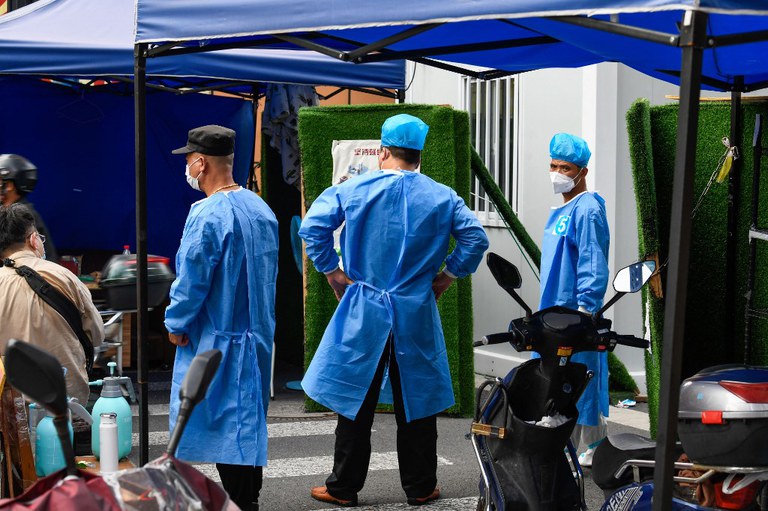
Restaurants in Shanghai are offering secret lights-out dining and fake recruitment drives in a bid to get around the city’s stringent COVID-19 restrictions, RFA has learned. Residents of the city told RFA that despite the official lifting of a citywide lockdown on June 1, the municipal authorities have yet to lift a ban on in-house dining. “They’re still not allowing people to eat in,” a Huangpu district resident surnamed Yang said. “I can only eat secretly in the upstairs area, as dining in isn’t generally allowed, only takeout.” “My brother did the same — a friend invited him out to eat, and they went upstairs to an area of the restaurant you couldn’t see,” he said. Photos and video uploaded to social media showed people sitting at restaurant tables filled with food, but eating the light of their mobile phones, to avoid alerting any enforcement personnel to their presence. Other posts said some restaurants had made diners fill out application forms to work there, claiming them as employees, who are allowed to eat together in restaurants. When their meal was over, the diners resigned from the payroll, the reports said, likening the process to an underground party. “Many restaurants have closed down because they haven’t been able to survive [lockdown], which has lasted for more than three months,” Yang said. “If you rent premises … it’s going to cost tens of thousands of yuan a month, so they haven’t been able to keep up with it.” Community volunteers stand at an entrance in a residential area under a Covid-19 lockdown in Shanghai’s Huangpu district, June 22, 2022. Credit: AFP Testing burden Shanghai’s 26 million people are still being required to take a COVID-19 test several times a week, to be allowed to move around in public, residents said. “If you need to go out, to leave your residential compound to see the doctor, go to the supermarket, take the bus, etc., you need a negative PCR test result from the last 48 hours,” a Jing’an district resident surnamed Dai told RFA. Authorities in the southern city of Shenzhen announced similar requirements for anyone using public transportation in the city, including taxi or ride-sharing hires. Beijing-based current affairs commentator Hua Po said the impact of the ruling Chinese Communist Party (CCP)’s zero-COVID policy on the Chinese economy has been huge. “Beijing is carrying out mass PCR testing for all employees, and there is a lot of money involved,” Hua said. “The Beijing municipal government is in a very strong financial position, and it has that money to spend.” “But the situation is very different in other places,” he said. “Some local governments are very poor, and the people there are being forced to pay for the tests themselves.” Hua said the policy is more about political performance and official rankings than public health. “If officials fail to prevent or control COVID-19, they are severely punished, so party and government leaders are implementing these policies while trying to help out local governments and take on double the economic burden,” he said. Abuse of health code app A resident of the central province of Hubei who gave only the surname Lu said PCR testing is still mandatory in the provincial capital, Wuhan. “Things can’t go on like this … the economy is really bad and can’t take much more of this,” Lu told RFA. “Many companies, logistics and supply chains can’t carry on.” “Such frequent PCR testing is totally ridiculous … it would be better not to have any testing at all,” he said. Meanwhile, a resident of the central province of Henan said they are suing the government for using the “health code” COVID-19 app to restrict their movements during protests by depositors unable to withdraw their money from the Agricultural Bank. Xie Yanling, a resident of Dingzhuang village in Henan’s provincial capital Zhengzhou, told Caixin.com that she is suing the authorities for allegedly turning her traffic-light style health code amber despite her having submitted a negative PCR test result, on the day she was due to attend a court hearing relating to the demolition of her home. “It’s inexplicable,” a person familiar with the case told RFA. “The code had been green.” “I wish they would carry out the relevant policies in a normal manner, legally, and in the plain light of day,” the person said. Cai Fan, a retired associate professor of law at Wenzhou City University in Zhejiang, said health codes are being used for “stability maintenance” purposes in China. “This forced demolition involves the vested interests of the village committee and local government,” Cai said. “If they turn your health code amber for the hearing, you won’t be able to get in.” “Then, after a period of time, the government will level the land, put new buildings there, and you won’t be able to do anything about it,” Cai said. “It will be a fait accompli.” Translated and edited by Luisetta Mudie.
‘After the Apple Daily shut down, I couldn’t write another word’
One year after the pro-democracy Apple Daily newspaper was forced to close amid an investigation by national security police, its former journalists are struggling to come to terms with the loss of the paper, an often sensationalist, sometimes hard-hitting daily founded by jailed media mogul Jimmy Lai. The paper’s closure came after hundreds of national security police descended on the headquarters of Next Digital in Tseung Kwan O on June 17, 2021, confiscating computers and journalistic materials police said were “evidence” of collusion with foreign forces under the national security law. Five executives were arrested, and the paper’s assets totaling around H.K.$18 million were frozen by the authorities. Chief editor Ryan Law and Next Digital CEO Cheung Kim-hung have since been charged with “collusion with foreign powers,” while three other executives have been released on bail without being charged. A former journalist who gave only the surname Leung said she still remembers the crowd of well-wishers who gathered outside the paper’s headquarters on the night that it closed, cheering and shouting encouragement. “The editors in charge came out to boost morale, with a strong sense that they were going to be martyrs,” Leung told RFA. “Everyone knew even then that the senior editors were in danger [of arrest and prosecution].” “I was hoping, as their employee, that they would leave Hong Kong that same night and go to a safe place, we also knew they were mentally prepared [for arrest],” she said. “As employees, we were sad that it had to end, but we felt it was an honorable defeat,” Leung said. Leung, a veteran newspaper reporter of 20 years’ experience who had only worked at the paper for a year when it closed, said she suffered insomnia and suffered emotionally due to the arrests of her bosses, friends and colleagues. “Some places contacted me with jobs after Apple Daily closed on June 23, but I looked at the materials for a long time, and couldn’t write a word,” she said. “My heart had died along with the Apple Daily.” Leung gave up on journalism after the paper’s demise, and moved to the democratic island of Taiwan with her family, where she was able to disconnect and heal for a while, slowly recovering from the pain of the paper’s demise. But while she longs to write to her former colleagues and friends back in Hong Kong, she hasn’t contacted them for fear that doing so would render them vulnerable to further charges from the authorities. “I have always wanted to write to them, and I want to tell them that a lot of people are still flying the flag, and I would like to thank them for giving me the opportunity to work at Apple Daily,” Leung said. “But I fear that they could have fresh charges imposed on them like collusion, if they receive [letters] with Taiwan stamps on them,” she said. A draconian national security law imposed by the ruling Chinese Communist Party (CCP) on Hong Kong from July 1, 2020 has sparked a crackdown on pro-democracy media organizations. After Lai’s Next Digital media empire was forced to close, the crackdown has also led to the closure of Stand News and Citizen News, as well as the “rectification” of iCable news and government broadcaster RTHK to bring them closer to Beijing’s official line. Hong Kong recently plummeted from 80th to 148th in the 2022 Reporters Without Border (RSF) press freedom index, with the closures of Apple Daily and Stand News cited as one of the main factors. Translated and edited by Luisetta Mudie.
Interview: Nury Turkel to ‘call China out’ for atrocities against Uyghurs, others
Uyghur-American lawyer Nury Turkel was unanimously elected chair of the U.S. Commission on International Religious Freedom (USCIRF), a bipartisan and independent federal government body. In a long career in advocacy, Turkel, who also serves as chairman of the board for the Uyghur Human Rights Project in Washington, he has played a major role in raising global awareness of the plight of the 12 million Uyghurs in the Chinese-controlled Xinjiang Uyghur Autonomous Region (XUAR). China’s targeting of Uyghurs in XUAR in a crackdown on the minority group and its language, religion, and culture that intensified in 2017, has been declared a genocide by the United States and other western governments. The 50-year-old Turkel, who was born in Kashgar in a detention camp during China’s Cultural Revolution and in 2020 became the first Uyghur-American appointed to the USCIRF, was welcomed as “a tremendous asset to both USCIRF and the mission of protecting religious freedom,” in a statement by Campaign for Uyghurs Executive Director Rushan Abbas. He spoke with RFA Uyghur Director Alim Seytoff about his goals as 2022-23 USCIRF chair. RFA: As a Uyghur American who’s elected as the USCIRF Chair, what does this position mean to you? Turkel: It’s simply humbling to be elected by my fellow commissioners to lead the US government agency. But, on the other hand, I feel incredibly proud and privileged to be a citizen of this wonderful country that has given me so much– freedom and now a leadership role that is both substantive and symbolic. It is one of the great American stories for someone with my background—an immigrant and indirect victim of the Uyghur genocide. RFA: What are USCIRF plans to address China’s destruction of Uyghur Islam and genocide against Uyghurs? Turkel: As part of our legislative mandate, we will continue to monitor China’s atrocities against the Uyghurs and other vulnerable ethnic and religious groups, making sure that our government continues to call China out for the ongoing Uyghur genocide and advocate for a strong policy response to stop the atrocities committed against the Uyghurs and others in communist China. RFA: Will the USCIRF work with its counterparts in other democracies to address the Uyghur Genocide? Turkel: USCIRF has advocated for multilateral and bilateral responses to the Uyghur crisis in light of its complex and global nature. As a result, the U.S. has led the efforts to raise awareness and press China to end persecution, shut down the camps, and end the enslavement of the Uyghurs. RFA: Will the USCIRF reach out to the Muslim countries and ask them to raise China’s genocide against Uyghur Muslims? Turkel: We have [worked with] our State Department counterparts to engage with Muslim majority countries to speak out against China’s atrocities and join the US-led efforts to end the Uyghur genocide.
North Korea ends COVID-19 travel restrictions as ‘fever cases’ subside
North Korea has lifted COVID-19 travel restrictions nationwide, a sign the government may soon claim victory over the coronavirus pandemic, RFA has learned. After two years of denying the virus had penetrated its closed borders, North Korea in May acknowledged COVID had begun to spread among participants of a large-scale military parade the previous month and declared a “maximum emergency” to fight the disease. As part of its response, the government restricted movement between provinces and prohibited large gatherings. But now, after a partial lifting of the travel ban in late May, North Korea ended the limitations completely on June 12, a source from the northeastern province of North Hamgyong told RFA’s Korean Service on condition of anonymity for security reasons. “Residents are able to travel to other provinces and even to the capital city, Pyongyang,” the source said. “The new order from the National Emergency Quarantine Command was given to residents of each neighborhood in Pohang district.” Each neighborhood watch unit held meetings to explain the policy change to residents, the source said. “They have been unable to travel outside the provincial borders with only the partial lifting of restrictions, so they welcome the news,” he said. “It is especially great news for merchants who rely on long-distance travel between provinces for their businesses. “But even if the restrictions are completely ended, there is still a separate procedure that requires travelers to carry a COVID-19 test certificate issued by the quarantine command. We can get a travel pass only if we have the test certificate,” he said. North Korea requires passes for travel between provinces even under normal circumstances. Residents with mobile phones can access test certificates through a smartphone app, a resident of the northwestern province of North Pyongan told RFA. Others must travel to receive a paper copy. “In rural areas such as Pakchon county, you have to visit the town quarantine center, which is miles away, to get a COVID-19 test certificate,” the second source said. “If a resident who wants to get a test certificate does not have a mobile phone, it is inconvenient.” But she agreed that most residents are happy the restrictions are ending. “Now they hope that the residents will have their livelihoods restored as soon as possible, but also by lifting the blockade of the border with China,” she said. After briefly restarting rail freight shipments from China earlier this year, new outbreaks in China forced Beijing and Pyongyang to suspend trade again. Aside from the short respite, trade has been suspended since the beginning of the pandemic in January 2020, with disastrous effects on the North Korean economy. The first source said that not all residents were overjoyed at the lifted restrictions, believing that the government had an underlying and unsaid motive. “There are speculations that restrictions were lifted in order to mobilize the residents,” the first source said, referring to the government practice of forcing residents to provide free labor for construction, farming and other government projects. “The COVID-19 lockdown restricted mobilizations on national construction projects and on rice planting duties,” he said. Nevertheless, the government has been saying that it is the leadership of Kim Jong Un that has eradicated the coronavirus, the second source said. Sources told RFA that North Korean traders and their Chinese counterparts are preparing to resume trade quickly once the Sino-Korean border reopens. They anticipate that cross-border trade will resume once coronavirus case numbers subside. German broadcaster Deutsche Welle reported Monday, citing North Korea experts and South Korean government sources, that North Korean authorities were preparing to declare victory over COVID-19 and give the credit to Kim Jong Un. The North Korean government has only reported a handful of confirmed COVID-19 cases, but it has been tracking fever symptoms since the beginning of the maximum emergency. According to data published by the state-run Korea Central News Agency, more than 4.67 million people have come down with fever, at least 99.4 percent of whom have made full recoveries. Translated by Claire Lee. Written in English by Eugene Whong.
Experts raise concern about implementation of US law on Uyghur forced labor
A U.S. law that bans the importation of products from Xinjiang in China in response to allegations that Uyghurs in the region are being used as forced labor took effect this week, but the tough new prohibitions could prove difficult to enforce, experts said Wednesday. The Uyghur Forced Labor Prevention Act (UFLPA) created what is referred to as a “rebuttable presumption” that assumes goods made in the Xinjiang Uyghur Autonomous Region (XUAR) are produced with forced labor and thus banned under the U.S. 1930 Tariff Act. The law requires U.S. companies that import goods from the region to prove that they have not been manufactured at any stage with Uyghur forced labor. In previous U.S. investigations of imports from China, cotton used in major clothing brands, tomatoes and polysilicon for solar panels have been linked to forced labor in the XUAR. The U.S. and several Western parliaments have said that China’s action in Xinjiang constitute a genocide and crimes against humanity. China denies that it has persecuted Uyghurs or other ethnic minority groups in the region. The new forced labor law passed with overwhelming bipartisan support in Congress and was signed into law by President Biden on Dec. 23, 2021. But Douglas Barry, vice president of communications and publications for the U.S.-China Business Council, said the law is unclear about how companies can definitively prove that no forced labor was involved in the goods they import from China. Several Chinese companies are already on the U.S. government’s Entity List, which forbids American firms from doing business with them unless they obtain special licenses, Barry said. Beyond that, the UFLPA places the onus on the U.S. firms to provide evidence that no forced labor was involved in the production of imported goods. “That’s a challenge because of the lack of independent third party auditors on the ground in China,” he said. “At the end of the day our member companies are fanatical about working in their supply chains to make sure there is no forced labor involved,” he said. “We hope that when enforcement issues arise in the coming days, the government agencies will work with the business community to resolve the issue as quickly as possible adjusting enforcement of tactics as the facts on the ground require.” ‘Challenging but doable’ Jessica Rifkin, an attorney who leads the customs, trade and litigation team at Benjamin L. England & Associates, said that exporters could get around the law by shipping their products to another country before they arrive in the U.S. “[Y]ou have a good that’s subject to certain legal requirements based on its manufacture in one country, but then is shipped to another country, and then shipped through there to the U.S. in order to potentially evade those requirements,” she said. These types of transactions could still happen under the new law, although Rifkin said that U.S. customs officials have ways to identify those goods. U.S. companies could also divide their supply chains to get around the new requirement, presenting a major challenge to enforcement, said Peter Irwin, senior program officer for advocacy and communications at the Washington, D.C.-based Uyghur Human Rights Project. “You have one supply chain that is for the U.S. market to comply with the law, and then maybe they’ll bifurcate their supply chain and have another supply chain that doesn’t necessarily need to follow this law,” he told RFA. Since 2017, Chinese authorities have allegedly ramped up their repression of predominantly Muslim Uyghurs and other Turkic minorities in the XUAR, detaining up to 1.8 million members of these groups in internment camps. The maltreatment also includes severe human rights abuses, torture and forced labor. Sophie Richardson, China director at New York-based Human Rights Watch, said the law’s implementation will be difficult but not impossible. “Some of the most complex challenges may be for companies that have, for example, taken a semi-finished product and sent it to the Uyghur region for finishing, and then sent it someplace else, and then sent it on into the United States,” she said. “Tracking the actual trajectory of the full supply chain is going to be challenging, but it is doable,” Richardson added. “Over time, hopefully what will happen is that companies will be do a better job of keeping records and sharing information about how things were produced and how they reached the U.S.” Holding China to account Rushan Abbas, executive director of the Washington, D.C.-based Campaign for Uyghurs, said called U.S. Customs and Border Protection should release data about any violations to the new law it finds. “Data should be released on the Customs and Border Protection’s website on a regular basis about the goods it holds, re-exports, excludes, and seizes, including information on the company importing the banned goods, their nature, value, and why the action was taken,” Abbas said in a statement issued on Wednesday. At a regular news conference in Beijing on Wednesday, Chinese Foreign Ministry spokesman Wang Wenbin called the allegations of forced labor in the XUAR “a huge lie made up by anti-China forces to denigrate China.” “It is the complete opposite of the reality Xinjiang, where cotton and other industries rely on large-scale mechanized production and the rights of workers of all ethnic groups in Xinjiang are duly protected,” he said. “The U.S.’s Uyghur Forced Labor Prevention Act is built on a lie and designed to impose sanctions on relevant entities and individuals in Xinjiang,” said Wang. “This move is the furtherance of that lie and an escalation of U.S. suppression on China under the pretext of human rights. Moreover, the act is solid evidence of U.S.’s arbitrariness in undermining international economic and trade rules and global industrial and supply chains.” The U.S. government has taken measures to promote accountability in the XUAR, including visa restrictions, financial sanctions, export controls and import restrictions, U.S. Secretary of State Antony Blinken said in a statement on Wednesday. In July 2021, multiple U.S. agencies released an updated business advisory on Xinjiang warning of the legal risks…
Protest in Malawi over Chinese video showing children saying anti-Black racial slur
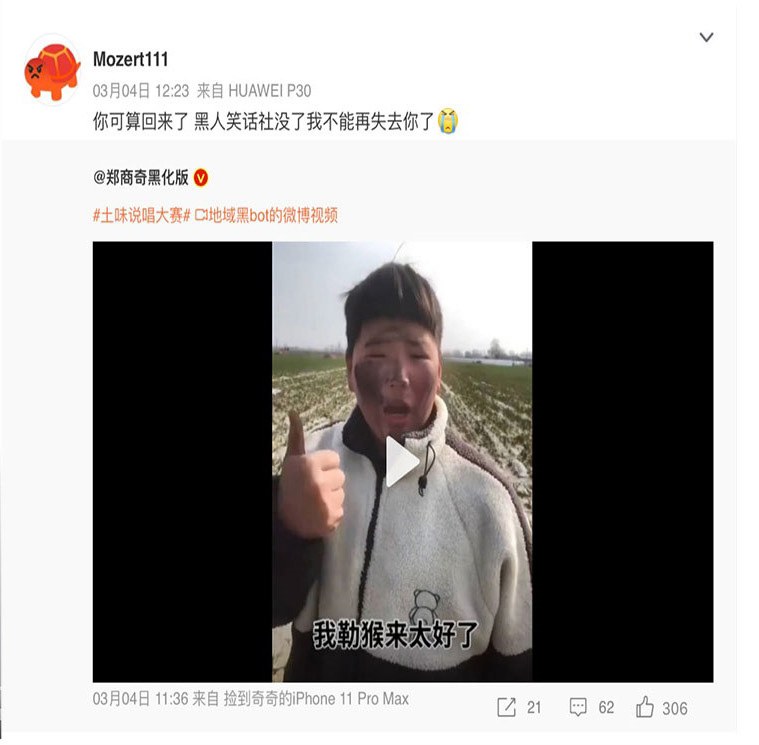
Civic groups in Lilongwe, Malawi, marched in protest over the actions of Chinese national Lu Ke, who was arrested by Zambian authorities after filming a racist video involving local children, calling for him to be tried in the country rather than sent back to China, the Nyasa Times reported on Wednesday. Protesters from the University of Malawi Child Rights Legal Clinic and other civil society organizations also called for compensation and psychological support for the children exploited by Lu and made to say racist things about themselves in Chinese, the paper said. The Maravi Post cited clinic supervisor Garton Kamchedzera as saying that Lu’s treatment of the children was in breach of the Malawian constitution. The group said it would also deliver a petition to the Chinese embassy. The paper said Lu had been “using violence to force the children say the phrases he wanted.” Lu fled the country after being outed by BBC journalist Runako Celina as the maker of a video in which children from Lilongwe’s Njerwa village said “I am a black ghost. I have a low IQ” to camera. The phrase “black ghost” is considered the Chinese equivalent of the N-word. Lu’s video was far from being a one-off. Celina’s documentary also uncovered a lucrative industry in short videos featuring Africans. “There’s something inherently sinister in swanning into a village somewhere in Africa, tossing a few coins at people less privileged than you and being able to instruct them to do whatever you want,” Celina wrote in an article on the BBC website after the documentary aired. “If the price (or pay off) is high enough, or the sense of humor crude enough the possibilities are endless.” “It’s this exact boundless freedom, plus a deeply ingrained racist ideology that has made an online Chinese industry I’ve spent the last year investigating possible,” she wrote. A social media post with a commenter in blackface supporting anti-black racist commenters. Weibo. Anti-Black racism remains uncensored Immigration authorities in Zambia confirmed they had arrested Lu on June 21. Ghanaian YouTuber Wode Maya told the Black Livity China podcast that the Chinese term “heigui,” or “black ghost,” is equivalent to the N-word in English. Guests told the show that anti-Black racism remains largely uncensored on China’s tightly controlled internet, and that the video was part of a lucrative industry exploiting African adults and children with custom-made greetings videos. Not everyone in China likes the videos, which have been sold on online stores, but many believe they are a harmless and fun way to send a novelty greeting, while others see anti-Black racism as a function of Chinese colonial power in Africa, according to views expressed on the podcast and on social media. One video resulting from a keyword search on Wednesday showed young black men dressed in coordinated clothing, performing to camera to cheer up residents of Shanghai during the grueling COVID-19 lockdown in April. Another showed black children dressed in red holding flowers and chalk boards with birthday messages for a Chinese woman called “Xingxing.” The Malawian Centre for Democracy and Economic Development Initiatives (CDEDI) has called on the Chinese embassy in Malawi to apologize to black Malawians over the racist video filmed by Chinese national Lu Ke, and called for an immigration sweep for Chinese nationals who remain illegally in the country. “CDEDI is hereby challenging both the Malawi and the Chinese governments to treat this matter with the urgency and seriousness it deserves,” Namiwa said in a June 17 statement posted to the group’s website. A screenshot of the Chinese embassy statement on Twitter on June 13 that it had “noted with great concern” the findings of the BBC documentary Racism for Sale. ‘Zero tolerance’ “It should be emphasized that any attempts to downplay the issue or help the suspect to beat the long arm of the law will only succeed in stirring avoidable actions with far-reaching consequences,” Namiwa said, but said the group didn’t want anyone targeting the Chinese community for retaliation as a whole. “Since the matter also borders on aspects of profit-making, CDEDI is urging the relevant authorities to ensure that survivors of the exploitative filming should benefit by way of compensation,” it said. The Chinese embassy said via Twitter on June 13 that it had “noted with great concern” the findings of the BBC documentary Racism for Sale. “We strongly condemn racism in any form, by anyone or happening anywhere,” it said. “We also noted that the video was shot in 2020. It shall be stressed that Chinese government has zero tolerance for racism.” It added on June 17: “We demand internet & social media platforms to strictly prohibit the dissemination of all racist contents.” The BBC documentary found that two Douyin accounts were sharing the video in question, along with other anti-Black racist content, and that Lu had bribed the kids with food and candy to take part in the shoot. Shih Yi-hsiang of the Taiwan Association for Human Rights said China’s response to the incident was inadequate. “The Chinese government is condemning this matter and also saying that China has zero tolerance for racism, which is ridiculous, because what the Chinese regime has done to Tibetans [and] Uyghurs … for a long time is seriously racist,” Shih said. “What we actually see behind [these words] is exploitation and oppression,” Shih said. “Chinese people are abusing these kids.” Shih called for further investigation into the exploitation of African children by Chinese content creators. Blackface on CCTV Taiwan strategic analyst Shih Chien-yu cited the use of blackface on the CCTV Lunar New Year TV gala, as well as costumes associating black people with monkeys. Chinese people go to Africa to shoot these videos to make money, rationalize racism, which is clearly colonialism with Chinese characteristics, Shih Chien-yu said. “They believe that the local people are poor and they will be obedient if you give them some small benefits,” Shih said. “We see the 19th century colonial mentality being replicated in 21st century China.” Gong Yujian, a Chinese dissident now living in democratic Taiwan, said…
80,000 tons of Chinese diplomacy
China has launched a third aircraft carrier, a Type 003 christened the Fujian, firming up its place in an elite group of countries led by the United States that are able to deploy huge seaborne military airports. The Fujian–which follows the People’s Liberation Army Navy’s Liaoning carrier in 2012 and the Shandong in 2019–will “enhance the ability to safeguard world peace,” said a Chinese Embassy spokesman in Washington. Taiwan, which has come under intense Chinese political and military pressure aimed at unifying the island with the mainland, views the vessel differently than Beijing.

Mes Aynak Threatened By Chinese Copper Mines
Mes Aynak Threatened By Chinese Copper Mines Mes Aynak (meaning “little source of copper“), also called Mis Ainak or Mis-e-Ainak, was a major Buddhist settlement 40 km (25 mi) southeast of Kabul, Afghanistan, located in a region of Logar Province. The site is also the location of Afghanistan’s largest copper deposit. Located at the confluence of Hellenistic and Indian cultures, Mes Aynak near Kabul was once a vast city organised around the extraction and trade of copper. The site of Mes Aynak possesses a vast 40 ha (100 acres) complex of Buddhist monasteries, homes, over 400 Buddha statues, stupas and market areas. The site contains artifacts recovered from the Bronze Age, and some of the artifacts recovered have dated back over 3000 years. As its name suggests, the presence of copper at Mes Aynak has been known about for some time, while the site’s archaeological wealth had been discovered by Russian and Afghan geologists in 1973–74. Mes Aynak was at the peak of its prosperity between the 5th and 7th centuries AD. A period of slow decline began in the 8th Century, and the settlement was finally abandoned 200 years later. Archaeologists believe that Mes Aynak is a major historical heritage site. But the need for the Taliban, who returned to power in August last year, to find new revenue streams after international aid was frozen has made mining the project a priority, and could put an end to further archaeological work. In November 2007, a 30-year lease was granted for the copper mine to the China Metallurgical Group (MCC) for US$3 billion. Fifteen years later, the mine still does not exist — insecurity and disagreements between Beijing and Kabul over financial terms of the contract have caused delays. The project is once again a priority for both parties. All of this historical material is in imminent danger of destruction by the mining endeavor. Many experts are comparing the Chinese mining company to those who destroyed the Buddhas of Bamiyan. Despite the imminent danger, negotiations between Afghanistan’s new Taliban government and China’s state-owned MCC and its publicly listed subsidiary Metallurgical Corp. of China are underway over the resumption of mining activity at the Mes Aynak Logar copper project. The discussions are about “80% finished“, says the Taliban spokesman, with only technical points remaining to be settled, which should be done soon. The Taliban are demanding that the contract, which includes the construction of a power station to supply the mine and Kabul, and a railroad to Pakistan, be respected. They also insist that the copper be processed locally with an Afghan workforce. China, whose economy is in dire need of copper, is reluctant to meet these demands. MCC, which did not respond to AFP, also continues to demand a reduction in royalties due. When it was last in power the Taliban shocked the world by dynamiting the giant Buddhas of Bamiyan in March 2001, but today they say they are determined to preserve the findings of Mes Aynak. “It is the duty of the Ministry of Information and Culture to protect them,” Esmatullah Burhan, the spokesman for the Ministry of Mines and Petroleum, told AFP. But while the rhetoric seems sincere, many of the remains are simply too bulky or fragile to be moved and seem destined to disappear. The Chinese favors open-pit rather than underground mining. If this goes ahead, it would open up the copper mountain and bury all the fragments of the past. The Taliban hope to earn more than $300 million a year from Mes Aynak. This is about 60% of the full state budget for 2022. Therefore, it wants to speed up the process undermining the environmental consequences and cultural values attached with the place. Mes Aynak would qualify as a World Heritage site if the government of Afghanistan were to apply for that status. This is an outstanding and complex archaeological landscape, with astounding quality of preservation. archaeologist and UNESCO advisor Tim Williams in 2017 So instead of destroying a potential UNESCO World Heritage Site with emotional and cultural connect of the Buddhist World, it should be preserved as a Buddhist Civilizational Wonder of the world.
Unvaccinated North Korean soldiers told to use saltwater, mugwort smoke when sick
With a shortage of vaccines in North Korea, the government is telling unvaccinated soldiers to rely on unproven folk remedies if they come down with coronavirus symptoms, sources in the country told RFA. North Korea has been importing Chinese vaccines for use among the military and has held widely publicized vaccination campaigns involving soldiers. But not every member of the military has been fortunate enough to receive the so-called “potion of love” from the country’s leader, Kim Jong Un. Instead, they have been told to turn to unproven folk remedies if they get sick. “Fever continues to emerge among soldiers who could not be vaccinated due to a lack of vaccines,” a resident of South Hwanghae province, on the peninsula’s western coast, told RFA’s Korean Service on condition of anonymity for security reasons. “Military authorities are recommending folk remedies such as indoor disinfection using mugwort smoke and gargling with salt water,” she said. According to the source, only soldiers working off base were vaccinated due to an insufficient amount of vaccine inventory imported from China. “The vaccinations were limited to the soldiers of the military police squadron who perform crackdowns against other soldiers, the communication battalion, the divisional medical office, and the rear support battalion. Even so, soldiers within those units who are on ordinary guard duty, are known to have been excluded from the vaccination,” she said. “Unvaccinated troops and soldiers were excluded from rural support or community service. Last year, soldiers helped rice planting and harvesting at a nearby farm. But, this spring, the authorities banned the unit from rural support activities due to fear of the spread of COVID-19,” said the source. In North Hamgyong province, in the country’s northeast, only the coast guard, the military police and staff of military hospitals are vaccinated, a resident there told RFA on condition of anonymity to speak freely. “The military authorities are designating units and soldiers to be vaccinated separately as there is a shortage of COVID-19 vaccines. Only officers and soldiers who have been vaccinated are permitted to engage in outside activities,” the second source said. “Most soldiers who did not get vaccinated were instructed not to leave the barracks and to prevent COVID-19 with folk remedies such as mugwort smoke disinfection and gargling salt water,” she said. Soldiers tending two salmon farms, one of which Kim Jong Un once visited to provide guidance on its operations, were also excluded from vaccination, according to the source. Places visited by the country’s leaders are usually given special considerations long after the trip, so it is somewhat surprising that the fish-raising soldiers did not receive vaccines. “There are complaints within the military over what authorities have implemented. The authorities have declared a national emergency and even implemented nationwide lockdown measures to prevent the spread of COVID-19, but they have failed to secure enough COVID-19 vaccines,” said the second source. “Very few soldiers have been vaccinated. However, some soldiers are rather fortunate in that they were not mobilized for rural support labor because they are not vaccinated,” she said. RFA reported in May that the North Korean government began a vaccination campaign for soldiers working on a high-priority construction project in Pyongyang. The event was filmed and used as propaganda, complete with soldiers weeping at receiving Kim Jong Un’s “Immortal Potion of Love.” Citizens who saw the propaganda complained that the government only secured enough vaccines for the military, not for the general public. After two years of denying the pandemic had penetrated its closed borders, North Korea in May declared a “maximum emergency” and acknowledged the virus had begun to spread among participants of a large-scale military parade the previous month. Though North Korea has not been tracking confirmed coronavirus cases, possibly due to lack of testing equipment, state media has been publishing daily figures of people who report fever symptoms. As of Monday, 4.65 million people have come down with fever, nearly 99.4 percent of whom have recovered, according to data published by the state run Korea Central News Agency. Translated by Claire Lee and Leejin J. Chung. Written in English by Eugene Whong.
Number of Chinese nationals seeking asylum grows tenfold under Xi Jinping
The number of Chinese nationals seeking political asylum overseas has skyrocketed under ruling Chinese Communist Party (CCP) leader Xi Jinping, according to a recent report. Figures released by the United Nations’ refugee agency UNHCR showed that while around 12,000 Chinese nationals sought asylum overseas in 2012, the year that Xi took office as CCP general secretary, that number had rising to nearly 120,000 by 2021. “Year by year since Xi Jinping came to power, in lockstep with a more oppressive system of governance, the number of asylum-seekers from China has continued to grow at an alarming rate,” the overseas-based rights group Safeguard Defenders reported on its website. “In 2020, and now with new figures just released for 2021, it shows continued growth despite COVID restrictions,” it said. In total, around 730,000 Chinese nationals have sought asylum since 2012, with more than 170,000 living outside China under refugee status, the report said. “Seeking asylum is for many a desperate act, reserved for those with few other options, which does not apply to the great many Chinese who have moved, and continue to do so, to the U.S, Australia, and beyond, often via naturalization, work visas or property purchases,” Safeguard Defenders said. The U.S. remains the most popular destination, accepting 88,722 applicants from mainland China last year. Australia took 15,774 asylum-seekers in the same year, the figures showed. Thousands also apply for asylum in Canada, Brazil, South Korea, and the U.K. Transnational repression The group warned of a growing risk of transnational repression, including the use of involuntary returns, now that a growing number of Chinese nationals have fled the country. Safeguard Defenders researcher Jing-jie Chen said the data also reflect the impact of Xi’s zero-COVID policy, that has led to grueling lockdowns and draconian restrictions of people’s movements under the guise of disease control and prevention. “China has basically been in a state of lockdown during the past couple of years that these data are from, and it is actually very difficult for asylum seekers to go abroad,” Chen told RFA. “Yet we can see that the number has reached a new high … with the number of asylum seekers rising every year over the past three years.” The figures don’t include Hong Kong, where a draconian crackdown on public dissent and peaceful political opposition has been under way under a national security law imposed by Beijing since July 1, 2020. Chen said many more people are voting with their feet and opting to emigrate from China, either through overseas study or investment visas and residency cards. World Uyghur Congress spokesman Dilxat Raxit said many of the asylum-seekers are Uyghurs fleeing a network of concentration camps and technological totalitarianism in the northwestern region of Xinjiang. He said overseas Uyghurs remain at risk from the Chinese authorities. “Uyghurs in exile are constantly at risk from China putting pressure on their countries of residence to detain and forcibly return them,” Dilxat Raxit said. “We call on the international community to continue to take measures to provide Uyghurs at risk with adequate protection,” he said, adding that many Uyghur asylum-seekers had been unable to renew expired passports and sometimes had trouble documenting the oppression they suffered back home. Foxhunt and Skynet Chen said the CCP has a coordinated international operation called “Operation Foxhunt” to force Chinese nationals to return home. “Since Xi Jinping took office, he has brought the ‘foxhunt’ plan for the global oppression of dissidents that extends internationally,” Chen said. “If you only have a simple immigrant residency status, you may not be able to actually be protected in some countries,” he said. “Sometimes, asylum and refugee status application can offer more protection.” The CCCP’s law enforcement agencies routinely track, harass, threaten and repatriate people who flee the country, many of them Turkic-speaking Uyghurs, under its SkyNet surveillance program that reaches far beyond China’s borders, using a variety of means to have them forcibly repatriated. Beijing often relies on pliant allies to circumvent criminal justice processes and ensure political refugees and Muslims are sent back. China will target ethnic groups like the Uyghurs, but also political dissidents, rights activists, journalists and former officials using its overseas networks, according to a 2021 report by Safeguard Defenders. Between the launch of the SkyNet program in 2014 and June 2021, China repatriated nearly 10,000 people from 120 countries and regions, the report said. Yet according to Safeguard Defenders, just one percent are brought back to China using judicial procedures; more than 60 percent are just put on a plane against their will. Translated and edited by Luisetta Mudie.
