
Category: East Asia
North Korea’s Kim, Putin vow cooperation in phone call
North Korean leader Kim Jong Un and Russian President Vladimir Putin agreed to deepen their countries’ collaboration, North Korean state media said Wednesday, as Putin praised the “bravery, heroism, and self-sacrificing spirit” of North Korean troops who fought with the Russian military against Ukraine in the Kursk border region. On a telephone call on Tuesday with the Russian president, Kim said that North Korea would “fully support all measures to be taken by the Russian leadership in the future, too.” According to Russia’s TASS news agency, Putin shared with Kim information about his upcoming meeting with U.S. President Donald Trump in Alaska on Friday. Trump is expected to press Russia to end the war with Ukraine. North Korea has sent around 15,000 troops to Russia since last fall, according to South Korean tallies — and it has also supplied equipment including artillery and ballistic missiles to support the operation against Ukraine. Pyongyang first acknowledged its role in the Ukraine conflict in late April, around six months after the first reports of their troops’ presence. Ukrainian officials have released handwritten letters and combat instructions that are said to have come from North Korean soldiers who were killed in battle. Ukraine has also broadcast messages in Korean appealing to North Korean soldiers to surrender. Includes reporting from The Associated Press and Agence France-Presse. We are : Investigative Journalism Reportika Investigative Reports Daily Reports Interviews Surveys Reportika
Chinese vessels collide while chasing Philippine boat near disputed Scarborough Shoal
Two Chinese vessels collided in the South China Sea on Monday while pursuing a Philippine patrol boat near the contested Scarborough Shoal, officials in Manila said, releasing video footage of the incident. The video shows a Chinese coast guard vessel shooting a water cannon and tracking close behind a Philippine coast guard boat until it collided with a much larger People’s Liberation Army craft, leaving visible damage on both Chinese vessels. The Scarborough Shoal is a triangular chain of reefs located 125 nautical miles from the main Philippine island of Luzon. Over the past year, China has sought to strengthen its claim to the shoal, mounted large-scale military drills and deployed the world’s largest coast guard ship, known as “The Monster,” in the area. Includes reporting from Agence France-Presse. We are : Investigative Journalism Reportika Investigative Reports Daily Reports Interviews Surveys Reportika
Video: China pressures Bangkok gallery to remove Uyghur, Tibetan, Hong Kong artwork
A Bangkok gallery is pressured — at China’s request — to remove and redact artwork about Beijing’s treatment of Uyghurs, Tibetans and Hong Kongers from an exhibit on authoritarian governments, according to a report by the Reuters news agency. Video: China pressures Bangkok gallery to remove Uyghur, Tibetan, Hong Kong artworkIn what the artists called the latest attempt by Beijing to silence critics overseas, the Bangkok Arts and Cultural Center changed multiple works by artists in exile in the exhibit on authoritarian governments collaborating across borders. According to Reuters, works removed included a multimedia installation by a Tibetan artist, while other pieces had been altered, with the words “Hong Kong”, “Tibet” and “Uyghur” redacted, along with the names of the artists. Artists names are redacted following what the Bangkok Arts and Cultural Center (BACC) said in an email was ‘pressure from the Chinese Embassy’, at the exhibition titled ‘Constellation of Complicity: Visualising the Global Machinery of Authoritarian Solidarity’ in Bangkok, Aug. 7, 2025.(Athit Perawongmetha/Reuters) Sai, co-founder of Myanmar Peace Museum, the organization that put together the exhibition, said the removed pieces included Tibetan and Uyghur flags and postcards featuring Chinese President Xi Jinping, as well as a postcard depicting links between China and Israel. Earlier this year Thailand repatriated 40 Uyghurs to China. U.N. experts had warned they would be at risk of torture, ill-treatment and irreparable harm. Reporting by Reuters We are : Investigative Journalism Reportika Investigative Reports Daily Reports Interviews Surveys Reportika
Philippines, India conduct joint exercises in South China Sea
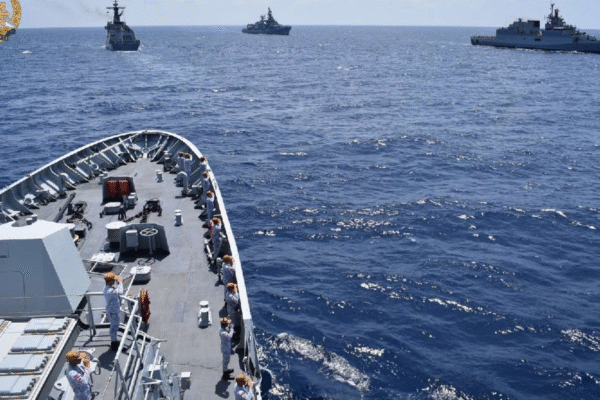
Indian and Philippine naval crews sailed together for the first time in the South China Sea, officials said on Monday, one of several joint exercises the Philippine navy has held to counter China’s far-reaching maritime claims. The two-day joint sail included three Indian ships. It began on Sunday, a day before Philippine Prime Minister Ferdinand Marcos left for a five-day state visit to New Delhi that will include talks with Indian Prime Minister Narendra Modi. Before departing, Marcos lauded the two countries’ “shared values” and “steadfastness in upholding international maritime law.” China claims almost all of the South China Sea, a critical shipping route that’s also partially claimed by Brunei, Indonesia, Malaysia, the Philippines and Vietnam, despite an international arbitration court in 2016 ruling that its assertions had “no legal basis.” Beijing did not accept the ruling. A spokesperson for China’s military on Monday said that Chinese ships had conducted patrols in the South China Sea during the same period as the joint exercises. The spokesperson said those patrols were “routine,” but said that the joint exercises “disrupted regional peace and stability.” The Philippines has pressed its claims over the disputed waterway in recent months, enacting new laws, pushing for a maritime code of conduct, and considering new international lawsuits. Since 2023, it has conducted joint exercises with partners including the U.S., Japan, Australia, France and Canada. This year, Manila and Beijing have expressed their quarrel in the physical world — with each country’s coast guard unfurling a flag on a contested sandbank in April — and in cyberspace, jousting over a Google Maps update labeling part of the waterway the “West Philippine Sea.” Includes reporting from Agence France-Presse and Reuters. We are : Investigative Journalism Reportika Investigative Reports Daily Reports Interviews Surveys Reportika

Two Chinese Charged in Smuggling US AI Chips to China
Two Chinese nationals have been charged with smuggling restricted U.S. AI chips to China via Singapore and Malaysia. This case ties into IJ-Reportika’s investigation into China’s global AI ambitions and talent repatriation strategy.
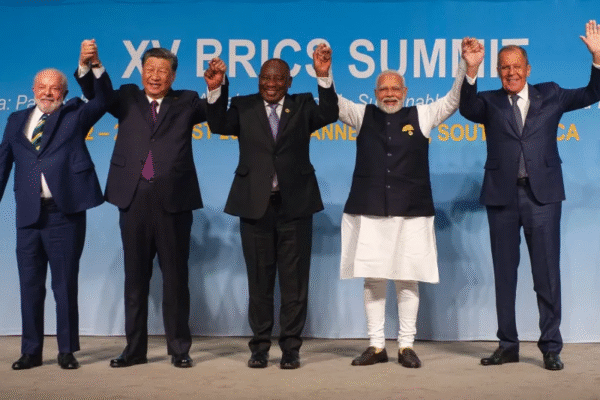
BRICS Expansion Signals Shift in Global Power Dynamics Amid Internal Divisions
Explore the expanding influence and challenges of BRICS as it grows beyond five members, reshaping global economics and politics amid internal divisions and rivalries.
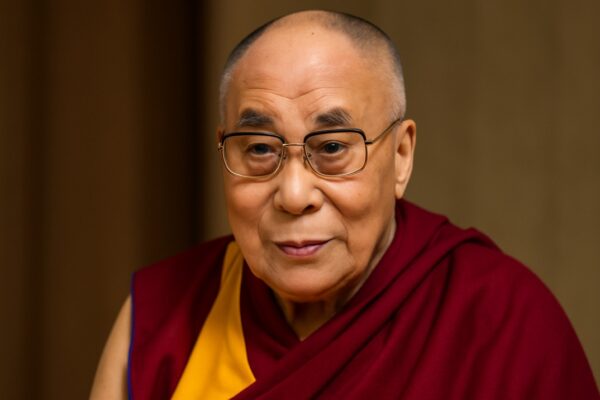
Dalai Lama Affirms Continuation Amid China’s Tightening Grip on Succession
The Dalai Lama confirms the continuation of his spiritual institution, asserting that the Gaden Phodrang Trust will solely oversee his succession—rejecting any Chinese interference and reaffirming Tibetan religious autonomy
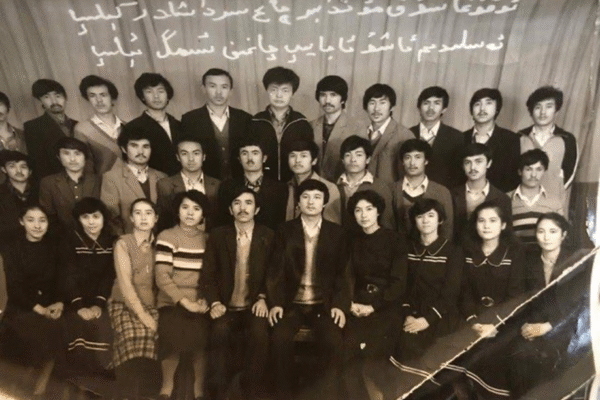
Remembering the June 15 Uyghur Student Demonstration
June 15 marks a significant day—the 37th anniversary of the 1988 Student Demonstration, one of the most unforgettable acts of resistance in Uyghur history.
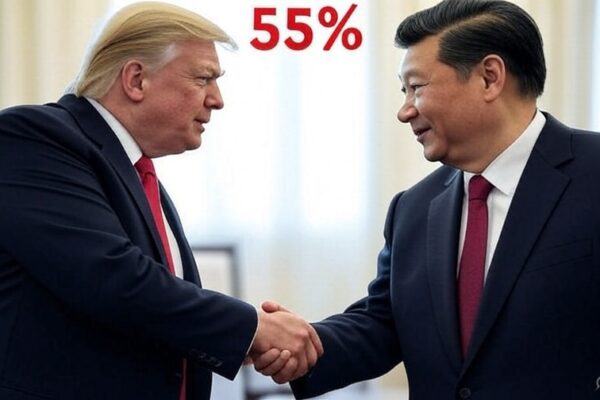
US and China Reach Trade Framework Agreement, Trump Announces 55% Tariffs
On June 11, 2025, President Trump announced a US-China trade framework to supply critical rare earth minerals and magnets, with 55% tariffs on Chinese imports. Negotiated in London, the deal awaits approval from Xi Jinping.
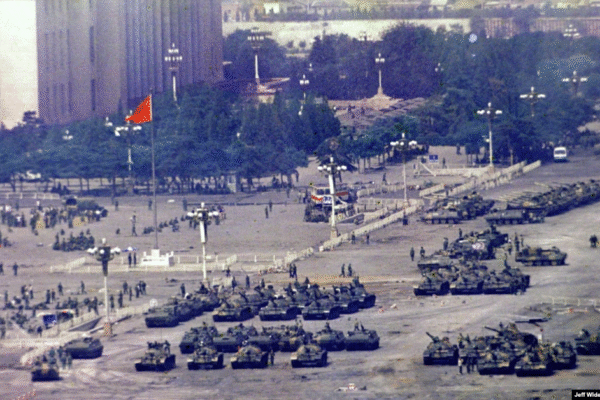
Justice for Tiananmen is the JUSTICE FOR ALL
Dolkun Isa, the ex. President of the World Uyghur Congress, commemorates the 36th anniversary of the Tiananmen Square Massacre by drawing a powerful connection between the 1989 atrocity and China’s continued oppression in East Turkistan. He calls for international solidarity and justice for all victims of Chinese authoritarianism.
