Interview: Indonesian special office to ‘steer ASEAN’s efforts’ on Myanmar

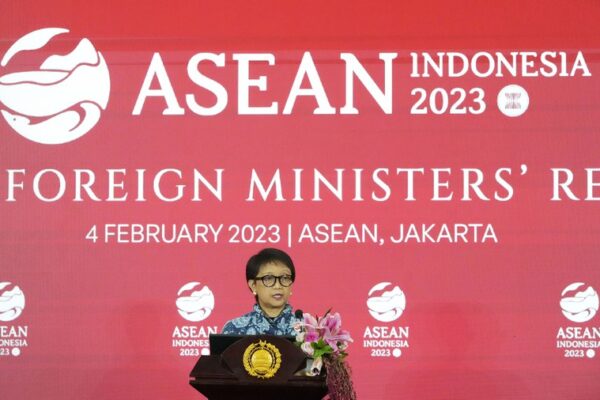
U.S. State Department Counselor Derek Chollet recently returned from a trip to Southeast Asia with stops that included Bangkok and Jakarta. During his visit to Indonesia, Chollet spoke with officials about their country’s role as this year’s chair of the Association of Southeast Asian Nations, or ASEAN, and the establishment of a special office within its foreign ministry to focus on the political crisis in fellow bloc member Myanmar. At the end of January, Chollet described Washington’s goal as being to “foster conditions that end the current crisis” in Myanmar and return the country to “the path of inclusive, representative multiparty democracy.” Amid frustration over the lack of progress in Myanmar and ASEAN’s handling of the crisis, Chollet claimed that sanctions leveled against the junta for its violent repression of the opposition “have had some effect,” reducing its sources of funding. But he acknowledged that more needs to be done, including ending the “steady pipeline of arms” that continues to enter the country and which the junta has used against its people. Chollet sat down with RFA Burmese’s Ye Kaung Myint Maung on Monday to discuss how the United States is working to achieve its goal in Myanmar both unilaterally and through cooperation with partners in the region. The following interview has been edited for length and clarity. RFA Burmese: What can you tell me about your trip to Southeast Asia last week? Chollet: I was able to talk to our partners in Indonesia about their ASEAN chair year and some of their aspirations for that year. They have established a special office inside the foreign ministry to focus on the crisis in Myanmar and help steer ASEAN’s efforts when it comes to addressing the crisis in Myanmar. They have named a very senior diplomat to lead that office. Someone who is very well known to us here in the United States … I had a chance to speak with him as well as Foreign Minister [Retno] Marsudi about the situation in Myanmar. And some of their thinking about how they’re going to try to achieve some results. So we talked about all sorts of issues related to the crisis, whether it’s our work to help provide humanitarian assistance to the refugees in and across the border from Myanmar into Thailand to ways that we’re going to work together with ASEAN to try to continue to pressure the junta, to further isolate them and to do what we can to support the democratic opposition inside Myanmar. RFA Burmese: So what would be the [role] of that office in Indonesia? Chollet: They are looking to help coordinate efforts on behalf of Indonesia for ASEAN in this chair year and it’s including trying to lead the diplomatic efforts that ASEAN is undertaking and implement the five point consensus [agreed to in April 2021 at an emergency meeting to end violence in Myanmar], to setting up a process to provide greater humanitarian assistance through the [ASEAN Coordinating Centre for Humanitarian Assistance] into Myanmar, to coming up with a work plan for how to use the coming year with key leadership meetings with ministers meetings and, of course, eventually with the summit later this year to try to get some important decisions made through ASEAN about Myanmar – all in the service of trying to implement the five point consensus. Indonesian Foreign Minister Retno Marsudi, shown in this file photo, spoke with US State Department Counselor Derek Chollet about the situation in Myanmar. Indonesia is the current chair of Association of Southeast Asian Nations (ASEAN). Credit: Associated Press RFA Burmese: What updates do you have on U.S. assistance for the people of Myanmar as mandated by the Burma Act? Chollet: We are working every day to implement the measures of the Burma Act. And we are one of the largest, if not the largest, donor of humanitarian assistance to Myanmar. We work intensively through our embassy in [Yangon] to provide humanitarian assistance and also to provide non-lethal assistance to the pro-democratic opposition and help them on everything from planning to budgeting to administration, particularly in areas which are now about 50% of the country that fall outside the [junta’s] control. So we find it very important that we have this support, bipartisan support, on Capitol Hill and are regularly in touch with our Congress on the way forward in implementing the Burma Act. RFA Burmese: The establishment of the special office – do you think it’s significant and why? Chollet: Previous chairs of ASEAN, Brunei and Cambodia, [have acted as] foreign ministers and special envoys … They were worried about managing the ASEAN agenda across the board. They have to participate in many meetings all around the world, in addition to their ASEAN duties and in addition to their concerns about Myanmar. So I think it makes a lot of sense to have this special office. It’s ensuring that there is high-level focused attention on the situation inside Myanmar. And they’re good partners of the United States. Russian and Chinese influence RFA Burmese: You said, during your trip, that Russian arms support for the junta is destabilizing the entire region. So what can you tell me about what the U.S. is doing to counter that Russian support? Chollet: We are making very clear to all of our partners that that support is unacceptable. We are also trying to make it harder for the junta to get the resources to acquire weapons that are fueling its war machine. Just last week, on Friday, when I returned from the trip, the United States announced another round of sanctions against several individuals and entities inside Myanmar that are associated with its acquisition of arms and particularly air power. Because what we’re seeing is the junta is increasingly using air power to go after the opposition because they’re finding that they’re less successful when they’re using ground forces. Myanmar junta leader Snr. Gen. Min Aung Hlaing sits in the cockpit of a newly acquired Russian SU-30 SME…

Read More

Aung San Suu Kyi’s National League for Democracy party dissolved by Myanmar’s junta

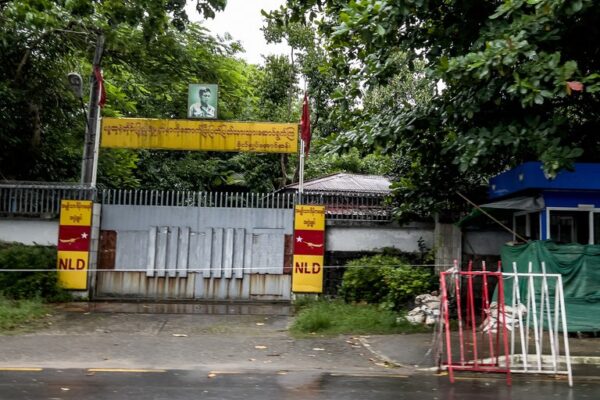
Myanmar’s military junta on Tuesday announced the dissolution of the National League for Democracy – the party led by Aung San Suu Kyi that won the 2020 elections in a landslide – ahead of elections the regime plans to hold later this year. The NLD did not re-register with the military junta’s Election Commission, which said a total of 40 political parties were dissolved because they did not re-register as political parties within 60 days, according to the new laws and regulations enacted by the military council. Opponents and analysts say new stricter eligibility requirements, approved in January by the military that took control of the government in a February 2021 coup, favor military-aligned parties and seek to legitimize the junta through a sham election. Some opponents of the military have urged a boycott of the election, the date of which has yet to be announced. Opponents warn that smaller parties that take part will likely lose and only lend credibility to the junta.  There are 63 political parties that have registered with the commission as of Tuesday. Only the Union Solidarity and Development Party, which ran the country as a quasi-civilian government under then-President Thein Sein after an opposition boycott of the 2010 election held by the previous junta, is seen as a legitimate contender in 2023.  The party, which serves as the junta’s electoral proxy, challenged the NLD’s election win in 2010 based on allegations of fraud and assumed Myanmar’s presidency following the 2021 coup.  But other groups, including the Shan and Ethnic Nationalities Party, believe that an election is the only way to reestablish civilian rule in Myanmar. A cordoned-off gate with the insignia for the National League for Democracy (NLD) party is seen near the home of deposed NLD leader Aung San Suu Kyi in Yangon, Myanmar, June 23, 2022. Credit: AFP ‘Never turning back to democracy’ “The military junta has learned clearly by taking the 2010 general election into account that they would lose the election if the opposition party NLD competes,” political and legal analyst Kyee Myint said.  That’s why the junta has detained Suu Kyi, just as they have in the past, he said. “The military has proven again this time that they are never turning back to democracy,” Kyee Myint said. “In fact, we already know it as a fact. We just continue to see more and more proof that backs this fact.” The election commission is organized under an illegal military junta that has operated as a terrorist organization, said Nay Phone Latt, a spokesman for the shadow National Unity Government. “There is no reason that these political parties should be dissolved just by an announcement of this so-called election commission,” he said. RFA sought comment from the U.S. State Department on the election commission’s action but didn’t immediately receive a response on Tuesday.  The announcement that the 40 parties have been dissolved carries no legitimacy because the junta itself doesn’t represent the people and “is by no means legal,” said Kyaw Htway, a Central Working Committee member for the NLD. Over and over, the junta has searched party offices, sealed off homes and seized the property of party members, Kyaw Htway said.  “Our party has a lot of experience resisting the repression of a series of military dictators over the 30 years since it was established,” he said. “In this modern technological age, we can still do even more for the people despite the junta’s announcement.” “That’s why I want to say that our party that emerged from the people, with the trust and support of them, will continue to exist so long as the people exist.” Translated by Myo Min Aung. Edited by Matt Reed and Malcolm Foster.
Read More

Myanmar junta chief marks Armed Forces Day with vow to eradicate opposition

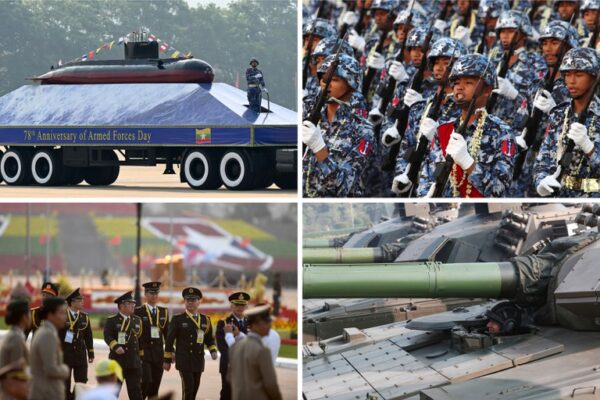
Myanmar’s junta chief Min Aung Hlaing marked the 78th anniversary of the country’s Armed Forces Day on Monday with a vow to “take decisive action” against the military’s opposition, prompting derision from observers who dismissed what they said were empty threats. Speaking at a ceremony in the capital Naypyidaw, Min Aung Hlaing called the shadow National Unity Government, anti-junta People’s Defense Force paramilitary groups, and armed ethnic organizations “terrorists” who seek to destroy the nation, vowing to eradicate them. “The Tatmadaw is going to work to ensure the safety and security of the socio-economic lives of the people and to achieve full stability and rule of law throughout the nation,” he said, using the official name of the country’s military. “In doing so, we are going to take decisive action against the NUG and terrorist organizations and the [ethnic armies] who are helping them.” Min Aung Hlaing spoke at a massive parade ground flanked by the towering golden statues of three kings who founded Myanmar’s key dynasties. The ceremony was replete with a color guard on horseback, thousands of marching soldiers shouldering rifles with bayonets, tanks, and mobile missile launchers. Amid the fanfare, it was difficult to tell that the parade ground had come under attack only a day earlier by the PDF, which hit the site with four 107mm rockets. While the junta has yet to issue any statement about the rocket attack, security was notably tightened on Monday, with double the number of troops posted at Naypyidaw’s entrances and crowded marketplaces. As the festivities were held, opposition groups protested military rule in several cities, including the commercial capital Yangon. Clockwise from top left: A military display takes part in the parade celebrating Myanmar’s 78th Armed Forces Day in Naypyidaw on Monday, March 27, 2023; soldiers march during the parade; a soldier sits drives a tank during the parade; and Chinese military officers attend the ceremony. Credit [clockwise from top left]: AFP, Associated Press, Associated Press, AFP Nan Lin of the University Students’ Union Alumni Force in Yangon told RFA that the junta was using Armed Forces Day to display its strength to its opponents, but said his impression was much different than it was two years ago, just weeks after the military seized power in a Feb. 1 coup d’etat. On Armed Forces Day in 2021, the junta violently suppressed and fired on protesters across the country, killing more than 100 civilians, according to data collected by Thailand’s Assistance Association for Political Prisoners (Burma).   “Their military demonstration two years ago was intended to show the international community how powerful they were and how much they were in control of the country,” he said. “But this year, I see that the military parade on Tatmadaw Day is just a failing attempt to show the military and its sympathizers – as well as the people and the international community – that they still hold onto power.” Following the coup, the military launched an ambitious offensive to subdue its opposition throughout the country. The offensive quickly devolved into a scorched earth campaign, with junta troops regularly looting villages, torching homes, and torturing and killing civilians. But more than two years later, the military has made little headway, while the armed opposition has increasingly adapted and made significant gains, despite being outmatched in equipment, training, and manpower. Empty threats Ethnic armed groups and PDF groups shrugged off Min Aung Hlaing’s threats on Monday, telling RFA that there is little the military can do that it hasn’t already tried. Khu Hteh Bu, the spokesperson of the Karenni National Progressive Party (KNPP), the political wing of the Karenni Army, said the military has been arresting and torturing Myanmar’s ethnic minorities “for decades” with no result. “We think that the more threateningly they talk to us, the more they reveal the pain and loss they have suffered because of us,” he said. “They are using all their strength to crush us. But since the people neither support them nor give up rebelling against them, they are just creating their own sordid destiny.” Former Major Cpt. Ngwe Soe, who defected from the military and is now the spokesman for the Naypyidaw PDF, called Min Aung Hlaing’s threats hollow. “This is just his foolish stance to never back down until his last breath, but it will never be possible to crush us like he said,” Ngwe Soe said. “The revolutionary forces – such as the NUG, the PDF and the [ethnic armies] have made significant progress in the two years since the military coup.” National Unity Government Ministers’ Office spokesman Nay Phone Latt said the military is already throwing everything it has at the armed resistance, with little to show for it. “The NUG, the PDFs and the ethnic forces are well prepared for their attacks,” he said. Seven elderly villagers killed Armed Forces Day came as at least seven elderly residents burned to death in fires set by junta troops during a raid on Sone Kone village in Sagaing region’s Budalin township over the weekend. A resident of Sone Kone told RFA that a military column of more than 50 troops descended on the village at around 8 a.m. on Saturday and began setting structures alight, trapping the six elderly women and one elderly man inside. “Their family members left them at home as they were too old to run or move quickly,” said the resident who, like other sources interviewed for this story, spoke on condition of anonymity citing fear of reprisal. “Since the elderly people who were left in their homes during previous raids were spared, the younger villagers just ran for their lives, leaving the victims behind in their homes, thinking that [the soldiers] would not harm the elderly. When the burnings began, there was nothing they could do to save them.” Myanmar junta forces destroyed 175 of the 300 homes in Sone Kone village, Budalin township, Sagaing region on Saturday, Mar. 25, 2023. Seven elderly people were killed in the…

Read More

U.S. sanctions two people, six entities for supplying Myanmar with jet fuel

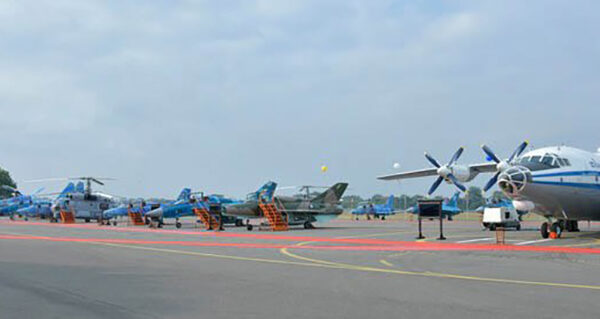
The United States Treasury Department has announced additional sanctions on Myanmar to prevent supplies of jet fuel from reaching the military in response to airstrikes on populated areas and other atrocities. The sanctions came just days before Myanmar celebrated its 78th Armed Forces Day on Monday. The announcement on Friday targeted two individuals, Tun Min Latt and his wife Win Min Soe, and six companies including, Asia Sun Trading Co. Ltd., which purchased jet fuel for the junta’s air force; Cargo Link Petroleum Logistics Co. Ltd., which transports jet fuel to military bases; and Asia Sun Group, the “key operator in the jet fuel supply chain.” The statement said that since the Feb. 1, 2021 coup that overthrew the country’s democratically elected government, the junta continually targeted the people of Myanmar with atrocities and violence, including airstrikes in late 2022 in Let Yet Kone village in central Myanmar that hit a school with children and teachers inside, and another in Kachin state that targeted a music concert and killed 80 people. According to a March 3 report by the Office of the United Nations High Commissioner for Human Rights, junta-led airstrikes more than doubled from 125 in 2021 to 301 in 2022. Those airstrikes would have been impossible without access to fuel supplies, according to reports from civil society organizations, Friday’s announcement said.  “Burma’s military regime continues to inflict pain and suffering on its own people,” said Under Secretary of the Treasury for Terrorism and Financial Intelligence Brian E. Nelson. “The United States remains steadfast in its commitment to the people of Burma, and will continue to deny the military the materiel it uses to commit these atrocities.” Helicopters and other aircraft are displayed at the Diamond Jubilee celebration of Myanmar’s air force, Dec. 15, 2022. on diamond Jubilee celebration of the Military Air Force. Credit: Myanmar military The announcement named Tun Min Latt as the key individual in procuring fuel supplies for the military, saying he was a close associate of the junta’s leader Sr. Gen Min Aung Hlaing. Through his companies, he engaged in business to import military arms and equipment with U.S. sanctioned Chinese arms firm NORINCO, the announcement said. “The United States continues to promote accountability for the Burmese military regime’s assault on the democratic aspirations of the people of Burma,” said U.S. Secretary of State Anthony Blinken in a separate statement. “The regime continues to inflict pain and suffering on the people of Burma.” The additional sanctions by the U.S. aligned with actions taken by Canada, the United Kingdom and the European Union, Blinken said. Cutting bloodlines “I am very thankful to the United States for these sanctions,” Nay Phone Lat, the spokesperson for Myanmar’s shadow National Unity Government, told Radio Free Asia’s Burmese Service. “I know that sanctions are usually done one step after another. It’s like cutting the bloodlines of the military junta one after another.” He said that the shadow government was trying to cut each route of support for the junta, including jet fuel, one after another. “[The junta’s] capability of suppressing and killing innocent civilians will be lessened,” he said. Banyar, the director of the Karenni Human Rights Group, which was among 516 civil organizations that made a request in December to the United Kingdom to take immediate action to prevent British companies from transporting or selling jet fuel to the Myanmar military junta, told RFA that the U.S. sanctions would have many impacts.  “If you look at the patterns, the number one thing is that taking action against these companies that provide services to the junta directly discredits the military junta,” he said. “And the sanctioned companies are also punished in some ways. We can say that this is also a way to pressure other companies to not support the military junta.” But Myanmar has been sanctioned before to little effect, said Thein Tun Oo, executive director of Thayninga Institute for Strategic Studies, which is made up of former military officers. “No matter what sanctions are imposed, there will not be any major impact on Myanmar as it has learned how to survive through sanctions. There may be a little percentage of economic slowdown but that’s about it,” he said. The military has many options when it comes to buying jet fuel, said Thein Tun Oo. “We are not buying from just one source that they have just sanctioned, we can buy from all other sources. Jet fuel is produced from not just one place,” he said. “If we want it from countries in affiliation with the United States, we may have problems but the United States is not the only country that produces jet fuel, so there is no problem for the Myanmar military.” The military could look to China, Thailand, India or Russia for jet fuel if necessary, political analyst Than Soe Naing told RFA. “The sanctions imposed against the Myanmar military are little more than an expression of opinion, in my point of view, as they cannot actually restrict the junta effectively from getting what it needs,” said Than Soe Naing. “The reason is that the three neighboring countries and Russia can still supply the junta with the jet fuel from many other routes.” Ze Thu Aung, a former Air Force captain who left the military to join an armed resistance movement after the coup, told RFA that U.S. sanctions are not enough to stop the junta. “Whatever sanctions [Washington] imposes, the military junta can still survive as it is still in control of its major businesses such as the jade, oil and natural gas industries,” he said. “They have enormous funds left. They have Russia backing them as well. China is supporting them to some extent, too.” Translated by Myo Min Aung. Edited by Eugene Whong and Matt Reed.

Read More

Chinese coast guard ship chased out of Vietnam waters

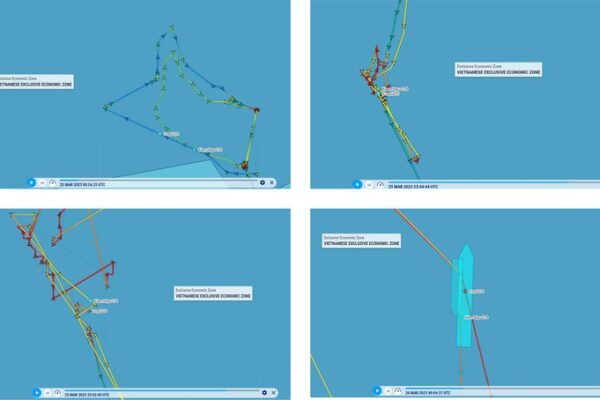
A Chinese coast guard ship and a Vietnamese fisheries patrol boat apparently had a tense encounter during the weekend in the South China Sea, coming as close as 10 meters to each other, according to data from Marine Traffic, a ship-tracking website. The data, based on the ships’ automatic identification system (AIS) signals, shows that the China Coast Guard ship, CCG5205, and Vietnam’s Kiem Ngu 278 came “crazy close” to one another at around 7 a.m. on Sunday local time (midnight UTC), said a researcher based in California. As of Monday afternoon (local time), the CCG5205 was operating in Malaysia’s exclusive economic zone after it left Vietnam waters where the Kiem Ngu 278 had been pursuing the considerably larger Chinese ship since March 24, tracking data showed. At one point the two ships were less than 10 meters (32.8 feet) apart, according to Ray Powell, the Project Myoushu (South China Sea) lead at Stanford University, who first spotted the incident at sea. “The Vietnamese ship was pretty bold given the difference in size – the Chinese ship is twice the size of the Vietnamese ship,” Powell said. “It must have been a very tense engagement.” The incident occurred some 50 nautical miles (92.6 kilometers) south of Vanguard Bank, a known South China Sea flashpoint between Vietnam and China. About 90 minutes later, the Chinese ship left Vietnam’s exclusive economic zone (EEZ) where it had been since Friday evening. An EEZ gives a state exclusive access to the natural resources in the waters and in the seabed. Ship-tracking data shows Vietnam’s Kiem Ngu 278 was closely following the Chinese coast guard vessel CCG5205. [Marine Traffic] Last month, the same China Coast Guard ship was accused of approaching about 150 yards (137 meters) from a Philippine Coast Guard ship and pointing a laser at the crew, causing temporary blindness to them. On Feb. 6, the Philippine Coast Guard said that the Chinese ship had “directed a military-grade laser light” twice at the BRP Malapascua, which was on its way to deliver food and supplies to the troops stationed at the Second Thomas Shoal in the South China Sea. Manila lodged a diplomatic protest and the U.S. State Department issued a statement supporting “our Philippine allies.” Beijing rejected the allegation, saying the Philippine ship had “intruded into the waters” off the Spratly Islands “without Chinese permission” and the Chinese coast guard ship had “acted in a professional and restrained way.” ‘Too close for comfort’ In the Sunday encounter, Marine Traffic’s past track showed the Chinese CCG5205 and the Vietnamese Kiem Ngu 278 were so close that they could have collided. “Ten meters between ships is really too close for comfort,” said Collin Koh, a Singapore-based regional maritime analyst. “Depending on the sea state, the risk of collision is fairly high,” Koh told Radio Free Asia (RFA). A retired Vietnamese Navy senior officer, who spoke to RFA on condition of anonymity because of the sensitivity of the topic, said the two ships must have narrowly escaped a collision because they were sailing in opposite directions and at a very slow speed. “If they were heading to the same direction a collision would have not been avoidable as the distance is too close and too dangerous,” he said. Chinese ships had deliberately rammed Vietnamese patrol ships in the past, he added, but not in recent years. The CCG5205 left Sanya, in Hainan island, for the current mission on March 11 and entered Vietnam’s EEZ the first time on March 12. It then moved to the overlapping area between claimant states in the South China Sea and Malaysia’s EEZ before entering Vietnam’s EEZ again on March 21 for a couple hours and for the third time on March 24 when the Kiem Ngu 278 chased it. At around midnight UTC on March 26, Vietnam’s Kiem Ngu 278 and China’s CCG5205 were dangerously close. [Marine Traffic] The Kiem Ngu 278, officially named Vietnamese Fisheries Resources Surveillance ship KN-278, is homeported in Vung Tau, south of Ho Chi Minh City. It left base on March 13 and had been following the Chinese vessel closely since. In July 2021, the Kiem Ngu 278 was following another Chinese coast guard ship, the CCG5202, which Vietnam accused of harassing its gas-exploration activities. Six parties hold claims to parts of the South China Sea and its natural resources but China’s claim is the biggest and Beijing has been trying to hinder other countries’ oil and gas activities in the waters inside its self-claimed nine-dash line. A 2,600-ton Chinese survey vessel, the Haiyang Dizhi Si Hao, had lingered inside Vietnam’s EEZ from March 9 until March 25, when it switched off its AIS, according to data from Marine Traffic.  Its whereabouts are currently unknown.

Read More

Impacts of Chinese DWF on the Asian countries

China’s Distant-water fishing fleet, which operates on the high seas and also in the Exclusive Economic Zones of other countries, is the biggest fleet in the world with an estimated 2,700 ships. The distant-water fishing sector is infamous for being secretive and unregulated as many countries fail to publish their fishing data. This is not surprising given the fact that it is often found guilty of illegal, unreported, and unregulated (IUU) fishing practices, targeting prohibited species and causing irreversible environmental damage as well as intelligence gathering, espionage, and space tracking. The presence of illegal Chinese DWF vessels is felt all over the world, but it is particularly worse in Africa, Latin America, and Asia. Countries in the Indian Ocean Region (IOR), South China Sea region, as well as East Asian countries, and Russia, are all victims of IUU fishing and violation of EEZ by Chinese vessels. Despite the fact that the IOR has the presence of many countries in the region, the Chinese DWF fleets have increasingly become a hazard, especially in the Northern Indian Ocean region (NIOR). The NIOR is an important region as most of the world’s maritime traffic passes through it, hence the presence of dubious Chinese DWFs raises concern.    The NIOR, which comprises countries like India, Sri Lanka, Pakistan, Iran, and Oman, is seeing a surge in unregistered Chinese fishing vessels. According to the Indian Navy, they monitored more than 392 Chinese IUU fishing incidences in the Indian Ocean in 2021 compared to 379 in 2020. It is also reported that spy ships disguised as fishing boats are being used by the Chinese to gather intelligence data and spy on assets of other countries, including India’s Andaman and Nicobar islands. While the other countries have seen a significant increase in Chinese activities in their EEZ, in Pakistan on the other hand, the presence of China’s DWF is minimal and on a downward slope. Could it be a benefit of being a trading partner and ally to China? The island nations in the NIOR like Sri Lanka and Maldives have reported the presence of Chinese DWF vessels such as squid jiggers, trawlers, and long liners that fish in the area before moving to other target areas like Oman in the Arabian Sea. The Chinese vessels in Oman, according to our report, often misuse the Iranian flag as a disguise and are engaged in fishing at an industrial scale. This activity has increased exponentially since 2016. A similar issue persists in Iran where the trawlers are taking close to 46,000 tons of commercial fish, as stated in a report from the Iranian parliament. This is leading to depletion in numbers of protected species and dolphins which are killed by commercial dragnets. Reflagging themselves under Iran’s flags, these trawlers fish for seahorses, who are then dried and powdered to be used in Traditional Chinese Medicines (TCM). Eastern Indian Ocean Region In the eastern IOR, nations like Indonesia and Malaysia are sea-based economies that are highly dependent on fishing. As Chinese DWFs with huge capacities stay longer in the area, the local fishermen are finding it tough to earn their daily bread and butter. Indonesian laborers, who work on some of these fishing vessels, suffer racial abuse and exploitation at the hands of their Chinese managers. It has been reported that between 2019 and 2020, 30 Indonesian fishermen died onboard Chinese long-haul fishing boats because of substandard food, dangerous drinking water, and excessive working hours. Due to its close proximity to China, East Asian nations like Japan and South Korea are the most vulnerable and the most impacted by Chinese vessels. South Korea has also reported Chinese-flagged ships fishing in their EEZ. The western region neighboring China is the worst affected with over 300K hours of illegal fishing done by Chinese vessels. The governments of South Korea and China have held several talks to smooth out this issue since the beginning of the last decade, which have failed to bear any fruit. Chinese coast guard ships and fishing vessels have been making attempts to change the status quo by coercion in the Senkaku islands. Chinese ships mounted with artillery approached Japanese ships in the Japanese territory. The Japanese Ministry of Foreign Affairs has released a statement saying, “The Senkaku Islands are indisputably an inherent part of the territory of Japan in light of historical facts and based upon international law, and are, in fact, effectively under the Japanese control… It is a violation of international law for the China Coast Guard ships to act making their assertions in Japanese territorial waters around the Senkaku Islands, and such acts will not be tolerated.“ Japanese Ministry of Foreign Affairs Quite surprisingly, Chinese trawlers were also spotted in the EEZ of Russia. The vessels have done over a million hours of dark surfing in the Russian far-east. While many countries have strongly opposed the fishing activities by Chinese vessels, some have taken strict measures. Indonesia, for example, has sunk many Chinese ships in the last four years which were dangerously close to their land boundary. The Quad, comprising India, Australia, Japan, and the US have announced a major regional effort under the ambit of Indo-Pacific Maritime Domain Awareness (IPDMA) aimed to provide more accurate maritime pictures of activities in the region. As the Chinese distant-water fishing activities are growing rapidly and unsustainably all around the world, it is depleting global fish stocks and disrupting the marine ecosystem. Moreover, it is increasingly becoming a source of diplomatic and environmental tensions with other nations. Hence, it has become imperative to introduce laws, policies, and strict measures to keep it in check.

Read More
Laos Brides on Sale

BRIDES FOR SALE: Laos

The COVID-19 pandemic has triggered poverty and economic downturns in the rural heartlands of Laos, fueling an upsurge in the trafficking of women and girls to China. Poor and illiterate women and girls who are desperate to find jobs are being deceived and lured into the sex trade and false marriages in China. Police are investigating more than 20 cases of underage Lao girls trafficked into China in 2021. Statistics At least 3,000 (reported) Lao women and girls were tricked into moving to China between 2008 and 2018 in spite of government education efforts aimed at stopping the trade. They offer up to 40 million kips (~USD 4,000$) ‘dowry’ to girls or women in poor families in rural areas, saying all they have to do is go to China and marry Chinese men,” she said Routes Laos is a landlocked country and shares borders with China, Vietnam, Thailand, and Myanmar. It acts as a transit country for all its neighbors and a source country for brides to China. The lax management at border crossings resulting from the insufficient training of provincial and district-level immigration authorities especially enables illegal entry and exit from Laos. Additionally, Chinese traffickers have begun working with Lao middlemen to facilitate the transit of victims across borders. In NorthWest Laos the hub of all illegal activities and sex trafficking is the  Golden Triangle SEZ. There is a significant presence of Chinese businessmen and natives in the SEZ and women from all over South East Asia, particularly from Laos, are brought here as brides and then used in prostitution or trafficked to China.  The ordeal of Laotian Women A 25-year-old woman living in the capital Vientiane was trafficked to China last year, and was later rescued by police and sent back home. Speaking to RFA the young woman said she had been told by a neighbor that she could find good work in China. She said, “A woman in my village told me that she was married to a Chinese man, and she convinced me to go to China to get a good job. I decided to follow her advice, but in China, I was sold to a Chinese man instead of getting the job, and I was detained in the man’s house for four months. Later, I escaped somehow”.

Read More
vietnam Brides on sale

BRIDES FOR SALE: Vietnam

It has been reported that in the rural mountains of Vietnam, young girls are disappearing from their homes with increasing regularity. Many turn up across the border, sold as wives for the price of a buffalo. There, they are generally first sold into prostitution in big cities. After several months or years of forced sex work, they are sold again – this time to poor, older Chinese men looking for wives. Other Chinese bachelors use professional marriage brokers to meet Vietnamese women. Statistics On average, a broker makes a profit of USD 4,000$ out of each deal, according to the Chinese magazine China Reform. Vietnamese and Chinese authorities reported court cases that involved trafficking for marriage from rural areas in the north of Vietnam to China. Cases referred to include that of a Chinese man who engaged Vietnamese persons with local knowledge to find girls for marriages in China at the price of 10,000 yuan (approximately USD 1,500$) for each girl recruited. The recruiters then moved the victims across the border into Chinese territory where the victims were sold for marriage for the agreed-upon price. (Global report on trafficking in persons 2018) According to a 1999 survey by Dongxing Women’s Federation, 1,269 Vietnamese women are living in the city with a population of 120,000. Of them, 647 are married to local residents without going through legal formalities. Statistics from Dongxing Public Security Bureau indicate that 242 Vietnamese women are involved in the 74 trafficking cases recorded since The Pingxiang Public Security Bureau rescued 13 Vietnamese women between 1992 and 1997. All of them had been sold for “marriage” in China. In 2000, the bureau rescued 103 Vietnamese women, nearly half of whom had been forced into prostitution. According to Wei Xiaoning, director of the Women’s Rights Department of the Guangxi Women’s Federation, Guangxi police rescued and expatriated a total of 1,030 Vietnamese women during the crackdown in 1990. To date, 231 of these women have been rescued. According to Vietnam’s Ministry of Labour, Invalids and Social Affairs, the authorities saved about 7,500 people from trafficking between 2012 and 2017, almost 90 percent of them women and children, especially girls. Between 2012 and 2018, local authorities foiled 48 trafficking cases. Some 85 traffickers were arrested, and 78 victims were rescued. In 2018 and the first quarter of 2019, provincial authorities helped repatriate 60 Vietnamese women and infants taken to China. More than 1,000 cases were detected by June 2019 involving 2,600 victims. In 829 of them, the traffickers sold 2,319 people to China, according to ministry data released at a meeting on Tuesday. Routes Many cross-cultural relationships begin when Chinese men meet their future wives while working in Vietnam. Vietnam and China share a 1,000-mile, largely unprotected border without major natural barriers. The two countries have forged close economic ties through a free-trade agreement effective since 2010. Citizens from border areas of both countries don’t need a passport to cross back and forth. The destination for trafficking has extended from border regions to inland provinces such as Henan, Hebei, Anhui, Jiangsu, and Guangdong. Criminal organizations operating in the Northern province are mainly concentrated in three border locations: the city of Móng Cái, plus Bình Liêu and Hải Hà districts. In particular, Móng Cái – which has a border crossing – is now the main hub for human trafficking. One reason is that Chinese citizens entering Vietnam here do not need a visa for up to 15 days. Dongxing City, at the southwest tip of the Guangxi Autonomous Region in China, shares a 33-kilometer borderline with Vietnam, where border trade between the two countries is carried out. Women and children are trafficked using this route. Some women are also trafficked using the sea route as depicted on the map. The ordeal of Vietnamese Women Ha Thi Phan, 32, is from Mai Pha Commune in Lang Son in northeast Vietnam. She was a divorcee who became a coolie in 1991, carrying goods across the border day after day. “One day,” she recalls, “my hirer told me that if I go further into China I could earn more money. So I did, leaving my children to an acquaintance.” But on her way she was led to a Chinese woman who later sold her to a Chinese man in Ningming County, about 40 kilometers from Pingxiang, also a Chinese border town. The “couple”, so to speak, could hardly communicate because Hadid does not speak Chinese. “The man often beat me,” she says. “To win his trust I decided to have a baby with the man.” In 1993, two months after the baby was born, Ha persuaded the man into letting her go back to Vietnam and see her parents. “I made him believe that my parents were seriously ill and wouldn’t live long,” she says. In another case, Phạm Thị Minh T lives in the Mekong Delta, in south-western Vietnam. The young woman was duped and sold in China when she was 17 years old. There she was made to work in a brothel.

Read More

BRIDES FOR SALE: Cambodia

The number of women traveling from Cambodia to China for forced or arranged marriages has surged since 2016 and experienced a further spike since the beginning of the COVID-19 pandemic. Cambodian women and girls are coerced and forced into arranged and forced marriages through various means:  Statistics According to statements by Cambodian government officials, out of 112 trafficked brides who returned to Cambodia in 2019, 111 returned from China. Based on the reports by various organizations and police actions, it is estimated that more than 10,000 women from Cambodia are trapped in China. Routes According to Cambodia’s Trafficked Brides Report by Global Initiative, the route of trafficking from Cambodia to China changed from a land/air route to a land/water route due to stricter regulations in the transit countries like Vietnam in 2016. It changed further in 2020 to just air routes since the COVID-19 pandemic 2020. Following is a representation of the same. The ordeal of Cambodian Women Cambodian women who have returned from China described experiences of sexual, physical, and psychological abuse, confinement, torture, and forced labor. Here is one example of the same: Neath (pseudonym), 27, was lured to China with the promise of well-paid employment. Neath and her cousin Noun (pseudonym) caught a flight from Cambodia’s capital, Phnom Penh, to Guangzhou. They had tourist visas but little money, so the brokers facilitating their journey provided them with cash to bribe any border guards who might grow suspicious. A Khmer woman and her Chinese husband greeted the girls at the airport. The cousins didn’t realize something was amiss until the woman locked them in a rented apartment for several days and allowed a stream of visitors to come to assess them. Eventually, a couple purchased Neath for almost  USD 12,000$. They bought her home and forced her to sleep with their son. That was the beginning of her four years in captivity, during which she was forced to work for the family’s construction business for no pay, and to cook and clean for her new “husband” – they were never officially married – and his parents. “I tried to run away three or four times,” Neath says. “But every time they would lock me up and keep me without food for two or three days … They all beat me, my ‘husband’ and his parents.” Neath met a Cambodian woman at a local market in China who promised that she could help Neath escape, but the assistance would come at a price. Neath hadn’t been in contact with her family since she arrived in China, but the woman provided her with a phone to call them and arrange the payment. Neath’s aunt sold her farmland in Cambodia and brought the USD 3,000$ in profit to the parents of the woman Neath met in the market. Once that deal was done, the woman helped Neath escape, along with two other Cambodian women who were also running away from forced marriages. Neath says the woman and her Chinese husband regularly earned money helping Cambodian women flee China. Source: https://www.globalcitizen.org/fr/content/cambodia-women-escape-slavery-as-brides-in-china/ Read about the other stories of hardships faced by Cambodian women in China: https://www.ijm.org/news/cambodian-woman-rescued-from-bride-traffickers-in-china

Read More

Xi steals the limelight at APEC, showcasing China’s regional clout

UPDATED at 5:45 a.m. EST on 11-19-2022. Even as host Thailand passes the APEC baton to its successor the United States, Chinese President Xi Jinping has been busy using the Asia-Pacific Economic Cooperation forum to highlight China’s growing clout and push back against U.S. influence in the region. Having secured an unprecedented third term as leader at the Chinese Communist Party’s Congress last month, Xi embarked on his first major foreign tour since the pandemic struck nearly three years ago – to the Group of 20 Summit in Bali, then the APEC Summit in Bangkok that ended Saturday. The APEC summit was the third and final gathering of world leaders in Asia in the space of nine days. With U.S. President Joe Biden and his Russian counterpart Vladimir Putin both absent from APEC, the Chinese president virtually had the stage to himself.  During his tour, Xi has for the most part struck a conciliatory tone during his encounters with other heads of states – including U.S. president. The Biden-Xi meeting on the sidelines of the G-20 went some way to tamping down months of rising U.S.-China tensions. “It certainly appears that Xi Jinping and China’s propaganda enterprise are trying to set a softer tone and appear less overtly antagonistic during the G-20 and APEC summits,” said Drew Thompson, visiting senior research fellow at the Lee Kuan Yew School of Public Policy in Singapore.  While in the Thai capital, Xi met with a host of regional leaders including key U.S. allies. He held bilateral talks with Japanese Prime Minister Fumio Kishida, Singaporean Premier Lee Hsien Loong and Philippine President Ferdinand Romualdez Marcos Jr. on a wide range of issues including economic cooperation and security.  Xi also met with Thai Prime Minister Prayuth Chan-o-cha — although their initial photo op went viral on social media for the wrong reasons because of the appearance that Xi had snubbed Prayuth’s offer of a handshake. “President Xi certainly wants to be a major player,” said Ja Ian Chong, a political scientist at the National University of Singapore, noting the Chinese leader’s confidence in having unscripted interactions with other leaders – like when he chastised Canadian Prime Minister Justin Trudeau over alleged leaks of diplomatic conversations at the G-20. But Thompson observed: “The underlying differences between China and its neighbors and trading partners remain deeply entrenched and there are no signs that China is adapting its foreign policy approach and how it pursues its interests.”  Chinese leadership Gao Zhikai, vice president of the Beijing-based Center for China and Globalization, said Xi’s attendance at APEC accentuated China’s growing leadership role in stark contrast with the U.S.’s “diminishing relevance.” Biden did in fact attend the G-20 Summit in Bali, Indonesia, and the Association of Southeast Asian Nations summit in Cambodia that preceded it – a meeting Xi skipped – in an effort to signal U.S. commitment to the region.  But when it came to APEC, which focuses on economic cooperation – an area of Asia policy in which Washington is generally perceived as trailing China – Biden had returned home for a family event. “The fact that Biden is not at the meeting shows that the U.S. doesn’t care much about APEC,” Gao told RFA. “Of course, the whole world is aware that his granddaughter is getting married,” said the academic who served as a translator for late Chinese leader Deng Xiaoping and sometimes acts as de-facto media spokesman for the Chinese Communist Party. “But if there was interest, the U.S. would know how to show it,” he added. ‘Proud Pacific power’ That’s obviously not the narrative conveyed by Washington, which now takes over the rotating chair of the 21-member APEC bloc, which was set up in 1989 to promote free trade.  U.S. Vice President Kamala Harris, who was in Bangkok in Biden’s place, told the summit that her country is “a proud Pacific power” and that “the United States is here to stay.” Harris had a brief meeting with Xi in which she urged the Chinese leadership to “maintain open lines of communication to responsibly manage the competition between our countries.” U.S. Vice President Kamala Harris greets China’s President Xi Jinping before the APEC Leaders’ Retreat in Bangkok, Thailand Nov. 19, 2022. (The White House/Handout via REUTERS) On the theme of economic cooperation, Harris said the Indo-Pacific serves as the market for almost 30 percent of American exports and U.S. companies invest $1 trillion a year in the region. She vowed that the U.S. “will uphold the rules of the road” and “will help build prosperity for everyone.” Her statement clearly struck a chord with some participating nations which want to avoid being caught up in big-power competition between China and the United States. Vietnamese President Nguyen Xuan Phuc said his country supports “all regional and multilateral cooperation frameworks which are based on international principles and regulations.” Harris appeared to draw a contrast between the U.S. initiative and China’s Belt and Road Initiative that has invested large sums of money in infrastructure across the world, but which critics say can leave recipient countries in heavy debt to Beijing. Xi said that China is considering holding the third Belt and Road Forum for International Cooperation in 2023. Reinvigorating APEC Gao contended that Harris’ main purpose at APEC was actually to promote the U.S.-led Indo-Pacific Economic Framework.  The Biden administration launched the IPEF in May as the center of its economic strategy for the region, and the U.S. vice president said the grouping now represents some 40 per cent of the global gross domestic product and is “dedicated to equitable growth and high environmental and labor standards.” It does not include either Russia or China. Gao said he suspects “the U.S. is hollowing out APEC for the benefit of IPEF,” which he described as an “artificial, ill-designed” grouping. “But APEC will remain APEC, a natural, coherent forum of cooperation for all countries in the region,” he said. Ja Ian Chong at the National University of Singapore said “China…

Read More