Junta troops forcibly recruit more than 70 young men in Myanmar town

Read RFA coverage of this topic in Burmese. Authorities in Myanmar forcibly recruited more than 70 young men from a single town in the south-central Ayeyarwady region, residents said Monday, as the junta launched a new round of training for the country’s draftees. It’s the latest round-up under Myanmar’s military service law, which the junta began implementing last April as a way of shoring up its dwindling ranks amid mounting losses to rebel groups. On March 14, junta troops in Ayeyarwady’s Mawlamyinegyun township arrested more than 70 men — including some as young as 17 years old — and sent them to depots in the Yangon region to take part in the 11th round of military training, residents told RFA Burmese. The arrests were carried out by troops from the junta’s 534th Infantry Battalion based in Mawlamyinegyun, said one resident who, like others interviewed for this report, spoke to RFA on condition of anonymity due to security concerns. “Young people in the villages are too afraid to sleep at home at night due to fear of conscription,” he said. “Soldiers are forcibly arresting them. The local battalion is carrying out the arrests, and at times, parents have no idea where to look for their children [after they are taken].” The identities of the young men were not immediately clear, and RFA was unable to independently verify who was taken in the dragnet. Attempts by RFA to contact Khin Maung Kyi, the junta’s spokesperson and social affairs minister for the Ayeyarwady region, for comment on the situation went unanswered Monday. The forced recruitment comes after residents of Ayeyarwady’s Hinthada, Laputta, and Kangyidaung townships last month said that several young men fled the area after they were summoned by name for conscription, instead of an earlier used lottery system. Administrators targeted over draft Under the mandatory military service law, men aged 18 to 35 and women aged 18 to 27 must serve a minimum of two years in the military. Young people have been looking for ways to leave the country ever since the law was enacted. Many new recruits have been sent for training after being detained at gunpoint by junta troops. They face torture or execution if they are caught trying to escape. In late February, rebels in Myanmar’s Bago region assassinated two local administrators who forcibly recruited civilians for military service, residents and other sources said, bringing the number of officials killed for their involvement in carrying out the draft to at least 110. Prior to the incidents, the latest killing of an administrator for their involvement in military recruitment was that of Than Htwe, of Khwet Ma village in Magway region’s Minhla township, who was shot dead on Feb. 15. Between February and September 2024, anti-junta forces killed 108 ward and village administrators involved in recruiting, compiling name lists and extorting money for military service, according to data compiled by RFA. Translated by Aung Naing. Edited by Joshua Lipes and Malcolm Foster. We are : Investigative Journalism Reportika Investigative Reports Daily Reports Interviews Surveys Reportika
Read More

Myanmar children, monks among dozens killed in heavy airstrikes

Read RFA coverage of this topic in Burmese. Myanmar’s military killed 40 civilians, including Buddhist monks and children, in airstrikes in northern Myanmar as it tries to pound its enemies into submission, insurgents told Radio Free Asia on Monday. Myanmar’s rising toll of civilian casualties comes as a humanitarian crisis is looming and a major food aid agency announced it will have to cut support because of a funding shortfall. Myanmar has been engulfed by conflict since the military overthrew an elected government led by Nobel laureate Aung San Suu Kyi in 2021, with thousands of civilians killed, villages razed and some 3.5 million people displaced by war and natural disasters. Forced onto the defensive by unprecedented opposition from young people from the majority Barmar community teaming up with ethnic minority insurgents, the military has increasingly turned to its air force to unleash devastation, often on civilian areas, rights groups and insurgents say. “We can say they are purposefully attacking civilians,” said Lway Yay Oo, spokesperson for the Ta’ang National Liberation Army, or TNLA, an ethnic minority insurgent force in Shan state, which is on the border with China. Junta airstrikes on the Sein Yadanar monastery in Shan state’s Nawnghkio town on Sunday, killed 13 civilians, including six monks, four of them young novices, said Lway Yay Oo. Seventeen people were wounded in the air attack, 13 of them monks, she said, adding that the military was trying to force the TNLA back into peace talks that China, with extensive economic interests in Myanmar, is trying to broker. The Myanmar army has a long record of trying to overcome insurgencies by undermining their civilian support, often by attacking villagers, rights investigators say. Lway Yay Oo said there was no question the military was targeting civilians. “They’re deliberately attacking religious buildings in Nawnghkio and they also bombed the hospital …. We’ve also seen that they’re burning and destroying homes.” The spokesperson did not say anything about prospects for talks with the military, which is keen to roll back insurgent gains over the past year as it prepares for an election, due by January, which it hopes will bolster its legitimacy at home and abroad. Myanmar’s military rarely releases information about the fighting, which has erupted in almost all corners of the country, and attempts by RFA to reach the junta spokesperson, Maj. Gen. Zaw Min Tun, by telephone were not successful. Related stories Living ‘day-by-day’ in Myanmar’s rebel camps Myanmar junta troops massacre 11 villagers, most too old to flee, residents say Myanmar’s Karen fighters capture junta camp, soldiers flee to Thailand Blood on road to Mandalay On Friday, a junta air attack on Let Pan Hla village, on a main road 70 kilometers (45 miles) north of Mandalay city, killed up to 27 people, according to a spokesperson for a pro-democracy insurgent force operating in the area. “They attacked for no reason and deliberately targeted the public. They were targeting customers and vendors in a busy street near the village market,” said Mandalay People’s Defense Force spokesperson, who goes by the one name Osman. Residents of Let Pan Hla village, north of Mandalay city, survey damage after a Myanmar military airstrike on March 14, 2025.(Mandalay People’s Defense Force) The People’s Defense Force, or PDF, captured the area in July and junta forces have been on the attack ever since, he said. The PDF commander, Soe Thu Yazaw, said in a social media post that six children were among the dead and many people were wounded. “The bombing targeted people going about their daily activities at the market, so the number of injured is also high,” he said. “Long distance buses often stop in Let Pan Hla for food and a break, so it’s busy.” The death and destruction from the fighting is compounding a dire humanitarian outlook in a country where the U.N. says a “staggering” 15.2 million people are unable to meet their minimum daily food needs and some 2.3 million people are facing emergency levels of hunger. The U.N. food agency has warned that more than one million people will be cut off from its food assistance from April due to critical funding shortfalls. “The impending cuts will have a devastating impact on the most vulnerable communities across the country, many of whom depend entirely on WFP’s support to survive,” Michael Dunford, representative and country director of the World Food Programme, said in a statement. Internally displaced people in Rakhine state, where fighting has been particularly heavy, would be hard hit, the WFP said. Aid agencies helping in Myanmar have been under pressure since a January order by the administration of U.S. President Donald Trump to freeze all global aid until a review was completed. Translated by Kiana Duncan. Edited by RFA Staff. We are : Investigative Journalism Reportika Investigative Reports Daily Reports Interviews Surveys Reportika

Read More

UN chief: Discussing humanitarian aid corridor from Bangladesh to Myanmar

Read this story on BenarNews site. DHAKA, Bangladesh — The United Nations is discussing the possibility of a humanitarian aid corridor to Myanmar from Bangladesh in an effort to create equitable conditions for Rohingya refugees to eventually return, the U.N. chief said in Dhaka on Saturday. However, the Rohingya refugees sheltering in Bangladesh could not make and immediate, “dignified return to their homeland in Myanmar’s Rakhine state amid the continued fighting there, added U.N. Secretary General António Guterres at a media briefing. U.N. chief António Guterres at a photo exhibition in Dhaka for the 50th anniversary this year of Bangladesh joining the United Nations, March 15, 2025.(Chief Adviser GOB via Facebook) “The crisis in Myanmar demands urgent global attention and action,” said Ejaz Min Khant in a statement Wednesday. “A humanitarian corridor between Myanmar and Bangladesh would be a lifeline for civilians impacted by the conflict.” The statement said Bangladesh should also lift restrictions on border trade with Myanmar “to help ease access to basic commodities for civilians in Rakhine state.” The NGO noted that Bangladesh’s interim leader, Chief Adviser Muhammad Yunus had said in an interview aired earlier this month on Sky News that his government was in ongoing negotiations with the Arakan Army to create a “safe zone” for Rohingya refugees to return to Rakhine. Bangladesh’s Foreign Adviser Touhid Hossain, who also spoke at the joint media briefing, said the establishment of a humanitarian channel was not discussed with the U.N. chief during his visit. “This is much more of an operational matter, which we will of course deal [on] with the local offices of the U.N.,” Hossain said. Nearly a million Rohingya, a persecuted minority Muslim community in Myanmar, live in refugee camps in Cox’s Bazar in southeastern Bangladesh. Almost 800,000 of them crossed into neighboring Bangladesh to flee a deadly Myanmar military crackdown in 2017. Their return to Rakhine has been prolonged after civil war broke out in Myanmar following the military coup of February 2021. RELATED STORIES UN chief Guterres breaks Ramadan fast with 100,000 Rohingya in Bangladesh ‘Deeper into hunger’: UN to halve food aid for Rohingya in Bangladesh Rubio allows humanitarian aid as Dhaka claims Rohingya funding will continue U.N. human rights experts had said on Thursday that the Myanmar junta had not been allowing in relief supplies, with the situation “particularly critical in Rakhine,” which is home to the Rohingya and other ethnic minorities. Rakhine State was “on the brink of famine,” with two million people at risk of starvation, the statement added citing another U.N. agency. Meanwhile, heavy fighting continues in Rakhine between the Myanmar military and the rebel Arakan Army, Guterres said on Saturday. “There is a consensus that it would be extremely difficult in such a situation for an immediate and dignified return of the Rohingya,” he told the mrdia in Dhaka on Saturday. Guterres further noted that in the past, the relationship between the ethnic Rakhine and the Rohingya has not been an easy one. “So I think it is important to engage with the Arakan Army in order for ensure full respect of the rights of the Rohingya population in Rakhine,” the U.N. chief said. U.N. Secretary-General António Guterres observes a traditional tool used by Rohingya to thresh rice, March 14, 2025.(Press Wing of the Chief Adviser) The Arakan Army founded in 2009 is fighting to “liberate” Rakhine towards its goal of self-determination. It has made significant gains over the past year to root out the military and now controls a majority of Rakhine’s townships, reported radio Free Asia, a news service affiliated with BenarNews. Comprising mainly Rakhine Buddhists, the Arakan Army claimed it respects the rights of Rohingya. But experts have said there was plenty of evidence that the Arakan Army carried out mass arson attacks on Rohingya villages in May and August last year. Guterres again made an impassioned plea to donor nations for more humanitarian aid for the Rohingya refugees in Bangladesh, whose food ration is set to be cut by more than half starting next month due to a funds shortage. “With the announced cuts in financial assistance, we are facing the dramatic risk of having only 40% in 2025 of the resources available for humanitarian aid in 2024,” he said. “This would have terrible consequences starting with the drastic reduction of food rations. That would be an unmitigated disaster. People will suffer and people will die.” He said that by offering the Rohingya refuge, Bangladesh had shown its humanitarian spirit. “By offering Rohingya refugees sanctuary, Bangladesh has demonstrated solidarity and human dignity, often at significant social, environmental and economic cost,” he said. “The world must not take this generosity for granted.” BenarNews is an online news organization affiliated with Radio Free Asia. We are : Investigative Journalism Reportika Investigative Reports Daily Reports Interviews Surveys Reportika

Read More

RFA operations may cease following federal grants termination

The federal grants that fund Radio Free Asia and partner networks were terminated Saturday morning, according to a grant termination notice received by RFA. An executive order issued by U.S. President Donald Trump late Friday calls for the reduction of non-statutory components of the United States Agency for Global Media, or USAGM, the federal agency that funds RFA and several other independent global news organizations. The U.S. Congress appropriates funds to USAGM, which disburses the monies to the grantee news outlets. The brief order calls for the elimination “to the maximum extent consistent with applicable law” of USAGM and six other unrelated government entities that work on museums, homelessness, minority business development and more. While the order addresses “non-statutory components” of USAGM, RFA is statutorily established, meaning it was congressionally established by a statute in the International Broadcasting Act . But a letter sent to the president of RFA Saturday and signed by USAGM special adviser Kari Lake, whose title is listed as “Senior Advisor to the Acting CEO with Authorities Delegated by Acting CEO,” notes that the agency’s federal grant has been terminated and that RFA is obliged to “promptly refund any unobligated funds.” It says that an appeal can be made within 30 days. It was not immediately clear how and when operations would cease, but RFA is solely funded through federal grants. In a statement issued Saturday, RFA President Bay Fang said the outlet planned to challenge the order. “The termination of RFA’s grant is a reward to dictators and despots, including the Chinese Communist Party, who would like nothing better than to have their influence go unchecked in the information space,” the statement says. “Today’s notice not only disenfranchises the nearly 60 million people who turn to RFA’s reporting on a weekly basis to learn the truth, but it also benefits America’s adversaries at our own expense.” An editorially independent news outlet funded through an act of Congress, RFA began its first Mandarin language broadcasts in 1996, expanding in subsequent years to a total of nine language services: Cantonese, Uyghur, Tibetan, Korean, Khmer, Vietnamese, Burmese and Lao. RFA news programming is disseminated through radio, television, social media and the web in countries that have little to no free press, often providing the only source of uncensored, non-propaganda news. Because RFA covers closed-off countries and regions like North Korea, Tibet and Xinjiang, its English-language translations remain the primary source of information from many of these areas. Its parent agency, USAGM, oversees broadcasters that work in more than 60 languages and reach an audience of hundreds of millions. These include Radio Free Europe/Radio Liberty, which reported Saturday that its grants had also been terminated. Voice of America and the Office for Cuba Broadcasting, which are directly run by USAGM, put all staff on paid administrative leave Saturday. In a post on Facebook, VOA Director Michael Abramowitz wrote: “I learned this morning that virtually the entire staff of Voice of America—more than 1300 journalists, producers and support staff—has been placed on administrative leave today. So have I.” Committee to Protect Journalists Program Director Carlos Martinez de la Serna urged Congress to restore funding to USAGM, “which provides uncensored news in countries where the press is restricted.” “It is outrageous that the White House is seeking to gut the Congress-funded agency supporting independent journalism that challenges narratives of authoritarian regimes around the world,” he said in a statement. China watchers cautioned that cuts to RFA in particular could impact Washington’s ability to counter Beijing. “Radio Free Asia plays a vital role in countering China’s influence by providing accurate and uncensored news to audiences facing relentless propaganda from the People’s Republic of China,” Rep. Ami Bera, a California Democrat, wrote in a post on X. “RFA helps advance American values amidst our ongoing Great Power Competition with China and exposes egregious human rights abuses like the Uyghur genocide and Beijing’s covert activities abroad.” Former U.S. Ambassador to Russia Michael McFaul called the dismantling of RFA and its sister publications “giant gifts to China,” while Human Rights Watch’s Maya Wang posted that in places like Xinjiang and Tibet: “Radio Free Asia has been one of the few which can get info out. Its demise would mean that these places will become info black holes, just as the CCP wants them.” In a statement issued by USAGM Saturday evening and posted to X by Lake, the agency deemed itself “not salvageable” due to a range of alleged findings of security violations and self-dealing, though few details were provided. “From top-to-bottom this agency is a giant rot and burden to the American taxpayer — a national security risk for this nation — and irretrievably broken. While there are bright spots within the agency with personnel who are talented and dedicated public servants, this is the exception rather than the rule,” the statement read. We are : Investigative Journalism Reportika Investigative Reports Daily Reports Interviews Surveys Reportika

Read More

Immigration crackdown in southern China puts Myanmar migrant workers on edge

Read RFA coverage of this topic in Burmese. Undocumented Myanmar migrant workers in southern China are living in fear amid an increase in raids by Chinese authorities on farms and factories near the border, workers and labor activists say. The arrests increased after 500 workers at a factory in Yunnan province protested against poor labor conditions in early March, migrant workers told Radio Free Asia. Ever since, Chinese police have made daily arrests of at least 30 Myanmar migrant workers in the border towns of Ruili and Jiegao who are undocumented or carry expired border passes, which people use to cross the border without a passport, the workers told RFA Burmese. Win Naing, who landed a job at a toy factory Ruili in early January, was issued a border pass so that he could commute to work, but it was short-term and has since expired. But now he’s too afraid to go outside, and isn’t sure when he’ll next see his his wife and three children, who are just across the border in Myanmar. “Since we stay inside the factory, we don’t have to worry as much about being arrested, but we can’t leave at all,” said Win Naing, who earns around 1,500 Chinese yuan (US$210) per month, considered a decent salary. “Without passports, we have to work and live very cautiously.” Most of those detained are being held in prisons in Ruili and nearby Yinjing village, they said, although some have been deported and banned from re-entering China “for several years.” People are desperate for jobs Every day, nearly 10,000 people wait at the border in Muse, in Myanmar, for a chance to cross into China and authorities only issue passes to about 700 of them. Short-term border passes are good for one week of entry into China, and when they expire, holders must reapply for one in Muse. But those who make it across often overstay their pass, said a resident of Shan state’s Kutkai township named De Dee, who is working in Ruili. That puts them at risk of arrest during frequent police inspections in places such as the Htike Li and Hwa Fong markets, where Myanmar migrants are known to live and work. “Chinese officials conduct checks on the streets and even inside homes,” she said. “Around 30 or 40 migrant workers are arrested each day.” The situation is similar in Jiegao, a migrant working there said on condition of anonymity due to security concerns. He said there are frequently “police cars circling the markets,” while authorities regularly “stop motorbikes and arrest people.” A migrant working in Muse told RFA that the amount of time undocumented workers are detained in the Ruili and Yinjing prisons varies, as does the lengths of bans on their re-entry to China. “Some undocumented migrants … are detained for a week, 10 days, or a month,” he said. “Those arrested in early March — mostly women— following the protest were banned from reentering China for about five or six years.” Those banned from re-entry who need to return to China are forced to pay more than 2 million kyats (US$953) — an incredibly steep cost for the average Myanmar citizen — to do so via illegal routes, the migrant added. Aid workers were unable to definitively say how many Myanmar migrants have been arrested in China since the protest earlier this month, and RFA was unable to independently confirm the number. ‘There are so many of them’ Attempts by RFA to contact the Chinese Embassy in Yangon about the arrests of undocumented Myanmar nationals in Ruili and Jiegao went unanswered by the time of publishing, as did calls to the Myanmar Consulate in Yunnan. RFA Mandarin spoke with a Chinese resident of Ruili surnamed Sun who said that police in the town had been targeting illegal Myanmar migrants for at least six months, although the arrests had intensified beginning in March. “Most of them are men who enter the country and go to the industrial park to find work, including jobs making parts for domestic cell phones and daily-use hardware, with salaries of 1,000-3,000 yuan (US$140-420) per month,” he said. Sun said that illegal migrants who are arrested “are usually repatriated, but not fined.” A merchant surnamed Zhang from Yunnan’s Dehong Dai and Jingpo Autonomous Prefecture, where Ruili and Jiegao are located, told RFA that Myanmar migrants also find work in area restaurants and massage parlors. He said that “because there are so many of them, the Chinese police are not in a position to carry out mass expulsions” and choose to repatriate small numbers of them back to Myanmar at a time. Translated by Aung Naing and RFA Mandarin. Edited by Joshua Lipes and Malcolm Foster. We are : Investigative Journalism Reportika Investigative Reports Daily Reports Interviews Surveys Reportika

Read More

Thailand’s power and fuel cuts hurting ordinary Myanmar residents

Thailand’s move to cut off electricity, fuel and internet service to an area across the border in Myanmar rife with scam centers is hurting ordinary people more than the crime syndicates it was trying target, residents told Radio Free Asia. The shutoff of the grid since Feb. 4 has resulted in many turning to electric generators, and that’s doubled the price of gas in Myawaddy in just five weeks. Described by some as it’s “most decisive action ever,” Bangkok said the move was aimed at closing down the scamming operations, where hundreds of trafficked workers have been trapped and often tortured. Thailand also banned the export of 12 items, including mobile phones and electrical appliances, to Myanmar. But the criminal organizations are finding their way around the blockade, including often illegal ways to acquire the fuel needed to power their generators and continue their operations, residents told RFA Burmese. Instead of its intended targets, the shutdown is taking a much larger toll on residents in the area, which is controlled by the Karen Border Guard Force and the Democratic Karen Buddhist Army. “Ordinary people are suffering the most from the Thai government’s fuel cuts,” said a Myawaddy resident who used the pseudonym Thura for fear of reprisals. “Meanwhile, scam call center gangs continue to receive fuel supplies with the help” of region rebel groups. Fuel is hard to buy because demand is high and supply is low. Gas has nearly doubled to 7,000 kyats per liter ($12.64 per gallon), Thura said. In Myawaddy, across from the Thai town of Mae Sot, gas stations are all closed, and residents instead have to buy fuel from residents on the Thai side of the border. The criminal gangs, by relying on their connections with these local armed groups, can get what they need without much difficulty. “In contrast, ordinary people are struggling due to fuel shortages caused by illegal traders.” Attempts by RFA to contact the Karen Border Guard Force spokesperson Lt. Col. Nai Maung Zaw and the Democratic Karen Buddhist Army DKBA chief of staff General Saw San Aung, on March 10, for comment on these situations went unanswered. Illegal trade routes Kyaw Naing, a Myawaddy merchant who used a pseudonym for security reasons, told RFA that despite the Thai government’s bans on 12 types of products — which also include batteries, inverters and generators — are still being smuggled in. “Fuel is filled in cars from Mae Sot to be sold in Myawaddy,” Kyaw Naing said. “Buying fuel can be somewhat challenging, but it is still possible since the border routes are not completely closed all the time.” The banned Thai items can also be imported instead from China, to the point that the ban is almost ineffective, he said, adding that the Thai government should reopen the fuel market considering it is a basic need for the people. RFA attempted to contact Thin Thin Myat, chairman of the Myawaddy Border Trade Chamber of Commerce for comment, but she did not respond. With people buying fuel in Thailand to sell in Myanmar, sellers in Mae Sai, far to the north of the Mae Sot-Myawaddy border crossing are now requiring that buyers fill up only the gas tanks of their vehicles, not portable containers. Workers repatriated Meanwhile, the Karen Border Guard Force on Tuesday handed nearly 250 Indian and Malaysian workers who had been trafficked and held in Chinese gambling dens and scam centers in Myawaddy to authorities from their respective countries via the Mae Sot-Myawaddy Friendship Bridge. Among those freed were 226 Indian nationals and 24 Malaysians. “Plans are in place to repatriate more foreign nationals in the coming days,” a spokesperson for the Border Guard Force told RFA. Between Monday and Tuesday, 509 Indian nationals had been sent over the bridge to Indian authorities working alongside their Thai counterparts. The Karen Border Guard Force claims to have been conducting anti-scam and anti-human trafficking operations for nearly a month. According to a source at their Investigation Office, around 3,000 scam workers from China, Indonesia, India and Malaysia have been repatriated via Thailand. Translated by Aung Naing and Thane Aung. Edited by Eugene Whong and Malcolm Foster. We are : Investigative Journalism Reportika Investigative Reports Daily Reports Interviews Surveys Reportika

Read More

Chinese defense company builds industrial estate in Cambodia

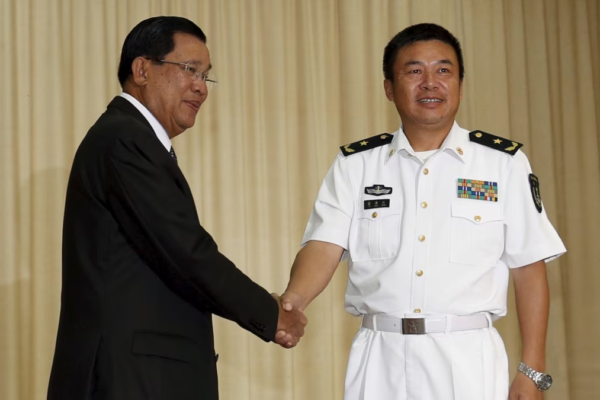
A Chinese defense company and its Cambodian partner have begun developing an industrial park on the outskirts of Phnom Penh, strengthening China’s foothold in the kingdom’s defense sector. Cambodia’s defense minister Tea Seiha, who is also a deputy prime minister, presided over a groundbreaking ceremony for the C-01 industrial park, on Monday in Kandal province outside the capital, according to for their involvement in the development and production of drones for Russian military use in the Ukraine war. China is the largest foreign investor in Cambodia and has provided loans to many major infrastructure projects via the Belt and Road Initiative. As of October 2024, Cambodia had more than 2,300 industrial factories, half of which received investment from China of US$9 billion in total, according to the Kingdom’s industry ministry. Edited by Mike Firn We are : Investigative Journalism Reportika Investigative Reports Daily Reports Interviews Surveys Reportika

Read More

Myanmar junta troops massacre 11 villagers, most too old to flee, residents say

Read RFA coverage of this topic in Burmese. Myanmar soldiers on a sweep through a central village known for its support of anti-junta forces killed 11 civilians, most of them too old to flee, residents of the area who saw the bodies told Radio Free Asia on Monday. The Myanmar military has had an appalling human rights record for decades in its wars against ethnic minority guerrillas in remote frontier regions, independent investigators have said. But violence over the past couple of years has been particularly brutal in central areas dominated by members of the majority Barmar community who, since a popular government was overthrown in a coup in 2021, have for the first time risen up in opposition to military rule. All of those killed in Magway region’s Myay Sun Taw village were elderly apart from two, residents said. “My father was left behind and didn’t escape the village. He’s elderly, so he’s attached to his home and didn’t run away. We were urging and calling for him but he didn’t follow us,” said the son of one of the victims. “As far as I know, he was shot in the head. I feel devastated. This is my village, my people and my parents,” said the son, who declined to be identified for safety reasons. Soldiers from the 101st Infantry Division Headquarters and three other battalions were involved in the sweep through the region that began on March 2, villagers said. There was no battle to explain the soldiers’ actions as they raided the village, though the area is known to support pro-democracy fighters in militias called People’s Defense Forces that have sprung up across the country since the coup, especially in the central Magway and Sagaing regions, residents said. “They were all just civilians,” said one witness of the aftermath of the raid. RFA called the junta’s spokesperson, Maj. Gen. Zaw Min Tun, to ask about the incident but he did not respond by the time of publication. Destruction after a raid by Myanmar soldiers on Myay Sun Taw village, Magway region, taken on March 6, 2025.(Yesagyo Township Info Committee/Facebook) RELATED STORIES Myanmar junta chief says election to be held by January 2026 Nearly 30,000 civilians displaced by fighting in Myanmar’s heartland Fighting in Myanmar’s Sagaing region prompts thousands to flee to India border Residents identified the victims as a man over 70 named Han Tin, a man in his 60s named Htay Myint, 88-year-old woman Than Ma Ni, 60-year old woman Than Pyae, 86-year-old woman Hla Ngwe, 67-year old man Kyi Htay, 69-year old man Aung Myaing, 35-year old man Thant Zin, 40-year-old man Aung Lin Naing, 70-year-old man Nyunt Wai, and 50-year-old man San Win. Soldiers also burned down nearby Thar Gaung and Za Yat Ni villages, destroying about 600 homes and forcing some 10,000 people to flee. “Soldiers have launched a lot of offensives in this region. Most villages are carrying out actions with armed groups to protect themselves,” said a representative of the anti-junta Yesagyo Township Information Committee, who also declined to be identified in fear of reprisals. “The people killed in Myay Sun Taw were elderly and innocent. The military is malicious and extremely cruel.” Translated by Kiana Duncan. Edited by RFA Staff. We are : Investigative Journalism Reportika Investigative Reports Daily Reports Interviews Surveys Reportika

Read More

‘Free education’ in Southeast Asia often isn’t free

Many Southeast Asian countries have adopted a policy of “free education” for students through middle school and, in some cases, through high school. But in Vietnam, Laos, Cambodia and Myanmar, it isn’t really free. Many additional or hidden costs — for uniforms, textbooks, supplies, transportation, extracurricular activities and sometimes even teachers’ salaries or school maintenance or improvements — make education too expensive for some families to afford. In Vietnam, the Communist Party Politburo recently eliminated tuition fees for public school students from preschool to grade 12, a move parents initially welcomed — before learning about the high costs of other monthly educational expenses. According to a Feb. 28 report by state media, the Politburo decided to waive the tuition fees beginning in the 2025-26 school year, following a recommendation from the Ministry of Education and Training. The move marks the first time Vietnam has ordered an end to the fees, which applied to some 23 million students, on a national scale, said the report. Around 30 trillion Vietnamese dong (US$1.17 billion) will be applied from the country’s budget to make up for the shortfall, it said. The government will provide students at private schools with subsidies equivalent to the public school tuition rate, but private school families will be required to cover the remaining difference of their child’s yearly tuition, the report said. The state media report cited the Department of Education for Ho Chi Minh City as saying that monthly tuition for public high school students ranges from 100,000-200,000 Vietnamese dong (US$4-8), while tuition for preschool students is around 300,000 Vietnamese dong (US$12). A mother of two children in middle and high school in Hanoi applauded the end to tuition fees, but said other costs were higher than tuition. “While this may be a significant cost for the government, a tuition exemption of 200,000–300,000 dong is quite small compared to the other expenses parents have to cover for their children’s education in the city,” the mother told RFA Vietnamese, who like others in this report spoke on condition of anonymity due to fear of reprisal. The mother said she spends between 1 million and 2 million dong (US$39-78) per month on tuition fees, meals and drinking water. Additionally, families are expected to contribute to a yearly “parents’ fund,” which schools use for events like Teachers’ Day, Vietnam Women’s Day and other extracurricular activities. Another parent, whose child is in high school in Hanoi, told RFA that she remains concerned about monthly education expenses — particularly a 325,000 dong (US$13) fee for the student’s’ afterschool classes. Concerns over high and opaque fees at public schools in Vietnam — which are seen as a burden for low-income families — have been widely reported in both state and social media for years. In 2024, the average monthly income of workers in Vietnam was approximately 7.7 million dong (US$300), according to the country’s General Statistics Office. Schools ‘don’t have enough money’ In Laos, public schooling is free but students are required to pay several other unofficial fees for their education, according to parents. This includes tutoring fees and the cost of textbooks, as well as contributions towards maintenance fees and utility bills. A parent who previously lived in the capital Vientiane told RFA Lao he had to pay up to 650,000 Lao kip (US$30) for “learning and teaching activities” each year his child was in first through fifth grade. “On top of that I had to pay 150,000 kip (US$7) per month for a ‘special tuition fee’ for a subject my child wasn’t good at,” said the parent, who also declined to be named. The same parent recently relocated his family to Khammouane province and noted that schools in the countryside collect less than those in the cities. “They collect money to pay for textbooks for school and everyone has to pay 60,000 kip (US$3) per year for school maintenance,” he said. “But poorer families may not be able to afford it, preventing their kids from getting into schools.” In Bokeo province, on Laos’ northern border with Thailand, another parent told RFA that he had to pay 300-400 Thai baht (US$9-12) for electricity each year since his child first began attending middle school. “When I first learned from the government that school is free, I felt so happy,” he said. “However, the school claims that they don’t have enough money, so they have to collect it from parents.” Speaking to RFA, an educator said that his and other schools have to spend money on things such as “repairing restrooms, painting, fixing sports facilities, building fences and buying materials” each year, requiring them to ask parents to contribute. ‘I am stressed out and exhausted’ Cambodian parents told RFA that while tuition is free, they also find fees at primary and secondary school to be exorbitant and complain that they take up a large part of their daily income. Those who live in extreme poverty often stop their children’s education altogether by 6th grade because of the cost, they said. Some have likened the teaching profession to a “business,” despite free tuition, citing the payments they must regularly make to their children’s schools. A student reads at Banlech Prasat Primary School, Prey Veng province, Cambodia, in an undated photo.(Business Wire/AP) Soeung Sakona, a tailor based in Siem Reap province’s Sala Kamreuk Sangkat, has two daughters studying at a high school in Siem Reap city and said she must spend at least 10,000 riel (US$2.50) in fees on each of them daily. Tutoring — often from the same people who teach at public school by day — textbooks, transportation and other school supplies are among the fees she said she must account for each day, leaving her with little wiggle room for her remaining income. “Every day is very tense for me because I cannot save anything … I spend a lot on them for their daily education to cover gas as well as their private courses,” she said. “I have to work hard to…

Read More