Thai natural gas project suspended after pipeline explosions in Myanmar

Myanmar’s ruling junta sets Dec. 28 election date as civil war rages

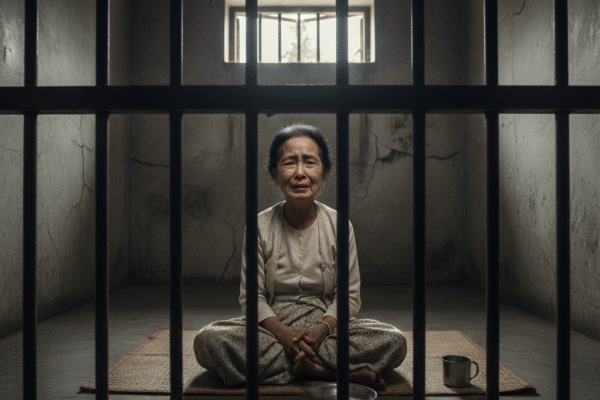
The military-backed election commission in Myanmar set Dec. 28 for the initial phase of long-promised elections, the first since the 2021 coup that overthrew the country’s last elected government and kicked off a still-raging civil war. Junta leadership nominally transferred power to an interim government last month in preparation for the elections. Last week, Min Aung Hlaing, the military chief and acting president, called for increased security to protect politicians and voters, warning of a rise in attacks on civil servants, according to the state-run Global New Light of Myanmar newspaper. International observers have framed the elections as a charade to keep Min Aung Hlaing and his generals in power. Critics point to a lack of free media in Myanmar, and that most officials in the last elected government, including leader Aung San Suu Kyi, have been arrested. U.N. reports detail a regime of torture inflicted on those the military has detained. It’s also unclear how a truly national election could take place in Myanmar. Control of the country splintered after the coup, with parts of the country held by bands of pro-democracy fighters or ethnic rebel groups, some of whom have pledged to block polls in their areas. “I don’t think the election will hold any significance for the people,” a 63-year-old citizen in the western state of Rakhine told Agence France-Presse. “I think this election is only being held to give power to military dictators until the world ends.” Meanwhile, clashes continue in Myanmar’s civil war, which has killed thousands, spawned rampant poverty, and left more than 3.5 million people displaced, nearly 40 percent of whom are children. On Sunday, at least 24 people were reportedly killed after the military bombed a hospital in Mawchi, a small town in Kayah state, the Associated Press reported. Includes reporting from the Associated Press, Agence France-Presse, and Reuters. We are : Investigative Journalism Reportika Investigative Reports Daily Reports Interviews Surveys Reportika

Read More

Video: China pressures Bangkok gallery to remove Uyghur, Tibetan, Hong Kong artwork

A Bangkok gallery is pressured — at China’s request — to remove and redact artwork about Beijing’s treatment of Uyghurs, Tibetans and Hong Kongers from an exhibit on authoritarian governments, according to a report by the Reuters news agency. Video: China pressures Bangkok gallery to remove Uyghur, Tibetan, Hong Kong artworkIn what the artists called the latest attempt by Beijing to silence critics overseas, the Bangkok Arts and Cultural Center changed multiple works by artists in exile in the exhibit on authoritarian governments collaborating across borders. According to Reuters, works removed included a multimedia installation by a Tibetan artist, while other pieces had been altered, with the words “Hong Kong”, “Tibet” and “Uyghur” redacted, along with the names of the artists. Artists names are redacted following what the Bangkok Arts and Cultural Center (BACC) said in an email was ‘pressure from the Chinese Embassy’, at the exhibition titled ‘Constellation of Complicity: Visualising the Global Machinery of Authoritarian Solidarity’ in Bangkok, Aug. 7, 2025.(Athit Perawongmetha/Reuters) Sai, co-founder of Myanmar Peace Museum, the organization that put together the exhibition, said the removed pieces included Tibetan and Uyghur flags and postcards featuring Chinese President Xi Jinping, as well as a postcard depicting links between China and Israel. Earlier this year Thailand repatriated 40 Uyghurs to China. U.N. experts had warned they would be at risk of torture, ill-treatment and irreparable harm. Reporting by Reuters We are : Investigative Journalism Reportika Investigative Reports Daily Reports Interviews Surveys Reportika

Read More

Vietnam arrests Khmer Krom monk and 2 activists under vague law

Vietnam arrested an ethnic Khmer Krom monk and two activists on Thursday and charged them with breaking a vague law that is often used to silence dissent, a Khmer Krom advocacy group said. Nearly 1.3-million Khmer Krom live in a part of Vietnam that was once southeastern Cambodia. They have faced serious restrictions on freedom of expression, assembly and movement. The trio were arrested in Preah Trapeang, known in Vietnamese as Tra Vinh province, according to the Khmers Kampuchea-Krom Federation, or KKF, which condemned the arrests. They were charged under Article 331 of the Vietnamese Criminal Code, and charged “abusing democratic freedoms to infringe upon the interests of the State, lawful rights, and interests of organizations and/or citizens,” KKF said. If found guilty, the three men face prison sentences ranging from six months to three years, the group said. The group called the arrests another example of the Vietnamese government’s repression of the Khmer Krom community, “particularly their peaceful efforts to advocate for indigenous rights, religious freedoms and cultural preservation.” Lam Thi Pung, the wife of Thach Nga, one of the activists, said he collected used bottles and other materials for recycling to support their family. “Villagers give him rice, vegetables and fruits. I’m taking care of my child,” she said. “Now they have arrested my husband. I’m just with my child now, what am I to do?” Vocal Khmer Krom advocate The monk, the Venerable Kim Som Rinh, is a respected spiritual leader, the gorup said, and has long been a vocal advocate for the Khmer Krom people’s religious and indigenous rights through peaceful means. A year ago, on March 25, 2024, the state-sanctioned Vietnam Buddhist Sangha stripped Kim Som Rinh of his monk status, KKF said. “This arbitrary decision to defrock and arrest him was part of a broader effort to suppress the Khmer Krom community’s religious freedoms and prevent the expression of their cultural identity,” the group said. The other two activists are Thach Nga and Thach Xuan Dong, the KKF said. “Both men have courageously stood up for their people,” it said, including organizing human rights events such as the celebration of the adoption of the United Nations Declaration on the Rights of Indigenous Peoples and International Human Rights Day. The Khmers Kampuchea-Krom Federation called on the United Nations and the international community to take action. It said that Vietnam, as a member of the Human Rights Council, must be “held accountable for its blatant disregard of international human rights norms.” Vietnamese officials could not immediately be reached for comment. Edited by Malcolm Foster. We are : Investigative Journalism Reportika Investigative Reports Daily Reports Interviews Surveys Reportika

Read More

Arakan Army to begin conscription in Myanmar’s west

Read RFA coverage of this topic in Burmese. One of Myanmar’s most powerful rebel armies will begin conscription for all residents over 18 years old, residents told Radio Free Asia on Thursday. The Arakan Army, or AA, which controls the vast majority of western Myanmar’s Rakhine State, is organizing administrative processes in the state that would make conscription a legal obligation, a source close to the AA told RFA, adding that details would be released soon. A resident from Mrauk-U township also confirmed that the AA was holding meetings in villages to discuss details about the conscription. “Men between the ages of 18 and 45 will undergo two months of military training and be required to serve for two years,” the resident said, speaking on condition of anonymity for security reasons. He added that women between the ages of 18 and 35 will also be required to serve. No information has been released about what draftees will be required to do or whether they will serve in combat, raising concerns among civilians in the embattled region, which has witnessed brutal retaliation efforts from Myanmar’s junta. The AA currently controls 14 of Rakhine state’s 17 townships. RFA contacted AA spokesperson Khaing Thu Kha for more information, but he did not respond by the time of publication. RELATED STORIES EXPLAINED: What is Myanmar’s Arakan Army? Myanmar’s junta targets displaced people returning to embattled Rakhine state EXPLAINED: Arrested ARSA leader blamed for violence against Rohingya refugees With a well-organized military structure and strong local support, the AA has established de facto governance in much of the region, collecting taxes and administering justice independently from the central government. The junta views the AA as a persistent threat, as its growing influence undermines military control and fuels aspirations for greater autonomy among other ethnic groups. Facing serious setbacks from insurgent groups across the country, reduced foreign investment, and defections from its own troops, the junta enacted controversial conscription laws in February last year, mandating compulsory military service for men aged 18 to 35 and women aged 18 to 27. ​International human rights organizations have strongly criticized junta’s conscription law, arguing that it exacerbates the country’s existing humanitarian crisis and violates fundamental human rights. The United Nations Special Rapporteur on Myanmar, Tom Andrews, described the junta’s imposition of mandatory military service as a sign of its desperation and a further threat to civilians. The enforcement of this law has led to a significant exodus of young people seeking to evade conscription. Reports indicate that thousands have fled across borders, particularly into Thailand, to avoid mandatory military service. Translated by Kiana Duncan. Edited by Taejun Kang. We are : Investigative Journalism Reportika Investigative Reports Daily Reports Interviews Surveys Reportika

Read More

Myanmar junta announces schedule for December, January election

Read RFA coverage of this topic in Burmese. Myanmar junta has announced that the election it plans to hold in December and January would be held in four phases, marking the first time the military has outlined a specific schedule for the controversial vote. The junta said in early March that the elections were slated for December 2025 with the possibility of January 2026, but observers at that time dismissed its plan, saying the military won’t be able to hold the vote in territory it doesn’t control – about half the country – and that the public will view the results as a sham. “A provisional date for the election is set on the third week and fourth week of December this year and first week and second week of January,” the junta’s Office of the Commander-in-Chief of Defense Services said in a statement on Wednesday, adding that the election would be held in four-part phases. “The government must take advanced measures to hold a fraud-free multi-party democracy general election that is truly free and fair,” it added, without elaborating. Since the 2021 coup, the junta has repeatedly attempted to hold elections, but these efforts have been consistently delayed. The military regime has extended the State of Emergency multiple times over the past four years, citing alleged fraud in the 2020 general elections, in which the National League for Democracy secured a decisive victory. By issuing back-to-back emergency declarations, the junta has effectively postponed the election process, prolonging its grip on power. Signs of progress toward holding elections have emerged in recent months as Myanmar’s junta chief traveled abroad to secure international support. Following diplomatic visits to Russia and Belarus in March, both countries pledged their backing for the junta’s controversial election plan. They join India and China, which have also expressed support for the isolated nation’s electoral process, despite the military regime’s decision to bar some political parties from re-registering due to alleged ties to rebel militias. RELATED STORIES Junta chief vows to hike defense budget, seeking to expand global presence Myanmar to organize election in fewer than half of townships, parties say Myanmar junta chief says election to be held by January 2026 But observers, including human rights groups and officials from the ousted National League for Democracy government, question the legitimacy of the junta-led election after an opaque census by the military left dozens of administrators dead and large parts of the country untouched. Widespread violence in embattled areas, coupled with near-daily airstrikes from the Myanmar military that often target civilians, also leave many skeptical about the feasibility of the election. Insurgent groups now control large swathes of the country’s borderlands, leaving the areas like Rakhine and Shan states under uncertain jurisdiction with minimal junta presence. Translated by Kiana Duncan. Edited by Taejun Kang. We are : Investigative Journalism Reportika Investigative Reports Daily Reports Interviews Surveys Reportika

Read More

Junta chief vows to hike defense budget, seeking to expand global presence

Read RFA coverage of this topic in Burmese. Myanmar’s junta chief said the military would increase the defense budget, while seeking to expand his international presence with a reported plan to join a regional summit in Thailand next month. Senior Gen. Min Aung Hlaing announced on Monday that the junta would increase the budget for its defense ministry to “enhance the strength and capacity of defense forces” as well as to “maintain peace and stability.” He did not provide specific figures. Since the 2021 coup, the junta has tripled its defense budget from 1.746 trillion kyats to 5.635 trillion kyats (US$2.68 billion) by 2023, according to media reports, accounting for about a quarter of the government’s total spending. The military has also invested over US$1 billion in weapons, primarily from Russia, China, Singapore, India and Thailand. Despite bolstering its capabilities, the junta faces intense international criticism for human rights violations, including indiscriminate attacks and mass detentions, leading to accusations of war crimes and increasing global isolation. Min Aung Hlaing has been also sanctioned by multiple countries, including the United States, Canada, the United Kingdom, and the European Union’s 27 member states. These sanctions include asset freezes, travel bans, and prohibitions on transactions, aimed at holding him accountable for human rights violations and the military’s seizure of power. However, Min Aung Hlaing appears to be attempting to reshape his international standing, as media reports indicate that he plans to participate in a regional summit in Bangkok next week – marking his first visit to Thailand. According to Thai media outlet ThaiPBS on Monday, Min Aung Hlaing is scheduled to visit Bangkok from April 3 to 4 to attend the Bay of Bengal Initiative for Multi-Sectoral Technical and Economic Cooperation, or BIMSTEC, summit. The summit is expected to be attended by heads of state from member countries, including Indian Prime Minister Narendra Modi. BIMSTEC is a regional cooperation organization established in 1997, comprising seven countries bordering the Bay of Bengal: India, Thailand, Myanmar, Bangladesh, Sri Lanka, Nepal, and Bhutan. Min Aung Hlaing also recently visited Russia and Belarus, where he held meetings with Russian President Vladimir Putin and Belarusian President Alexander Lukashenko. Separately, he attended the Mekong River Basin Summit held in Kunming, Yunnan Province, China, in November – marking his first visit to China since the coup. RELATED STORIES Myanmar’s junta launches offensives on rebel strongholds in Mandalay region Junta offensives leave 4 dead, thousands displaced in northwest Myanmar Junta airstrike hits a clinic in central Myanmar, killing 11, including children Assaults in northern Myanmar As the junta leader looks abroad for support for his unelected government and approval for elections he plans to hold by January, his military’s attacks on pro-democracy forces and ethnic armies fighting for autonomy continue in an indiscriminate and brutal fashion. A resident from Mandalay’s Natogyi township said that junta forces bombed two villages around 1 a.m. on Sunday morning, injuring two women and six men, including a 13-year-old child. Insurgent groups, which retain control over much of the township, have seen a resurgence in junta offensives, following a series of failed ceasefires between the junta and rebel militias in the country’s north. “They were all just civilians, Although most were people avoiding conflict, there were those who couldn’t avoid it and were stuck in Let Wea and Myinni villages,” said the resident, who declined to be named over security concerns. “When the bomb fell, they ran but they didn’t get away.” Airstrikes on Myinni and Let Wea villages in Natogyi township in Mandalay region burned down more than 10 houses on March 23, 2025.(Natogyi Journal) A 65-year-old man was severely injured, and over 10 houses were destroyed by the blast, he added. Most residents from the two villages were sheltering in nearby mountains, but about a third had chosen to remain in their homes, residents said. Junta spokesperson Maj. Gen. Zaw Min Htun has declined to comment. According to data compiled by RFA, 3,554 people have been killed by junta-led attacks since the coup began in February 2021, and another 7,064 have been injured. Translated by Kiana Duncan. Edited by Taejun Kang and Mike Firn. We are : Investigative Journalism Reportika Investigative Reports Daily Reports Interviews Surveys Reportika
Read More