Police disrupt popular R-rated movie to check viewers’ ages

Police officers paused a movie and turned on the theater lights to check the ages of cinema-goers at a Ho Chi Minh City screening of the popular Vietnamese film “Mai,” which is rated “18+” because it features several sex scenes. No underage viewers were found, but the Feb. 26 disruption prompted heated debate on social media and showed that Vietnam’s new Cinema Law – which imposes administrative fines for underage viewers – may present some enforcement challenges as the country’s movie industry grows. The law’s sections on establishing a ratings system, categorizing films and offering warnings for viewers about explicit material were clear in offering implementation guidance, a lawyer from Hanoi who wished to remain anonymous for security reasons told RFA.  “But the regulations on the monitoring of and administrative fines on viewers with inappropriate age at movie theaters are unrealistic and still not clear in terms of authority,” he said. ‘Vibrant market’ Vietnam has several hundred theaters nationwide that show movies from Hollywood and other internationally-produced films that are dubbed into Vietnamese.  Theaters also show movies made in Vietnam – some of which are funded by the state and are usually focused on historical topics for propaganda purposes. The government has said it hopes to promote homegrown cultural offerings, such as films made in Vietnam. Vietnam has “a vibrant market that has seen stellar post-pandemic recovery” that pairs well with “a young but dynamic” local filmmaking industry “that is experimenting with new genres and making a wider range of film,” Deadline Hollywood said in an article about the country’s movie industry last month. “Mai” was released last month at the beginning of the weeklong day of Tet holiday, the Vietnamese Lunar New Year. It quickly proved to be a box office success. The movie “revolves around the life of a 30-something massage therapist” who meets a younger man who develops a crush on her, according to VN Express. It was rated as “18+” – meaning that only moviegoers 18 and older could buy a ticket. Mistaken protocol? Police entered an auditorium of Cinestar Quoc Thanh Cinema in Ho Chi Minh City at around 7 p.m. on Feb. 26, state media reported.  The inspection was in line with the Ministry of Culture, Sports and Tourism’s recent dispatch that requested culture authorities in cities and provinces strengthen the inspection and monitoring of the new cinema regulations. The ministry’s dispatch also cited recent local media reports that some movie theaters weren’t checking IDs during ticket sales, making it possible for viewers under 18 to buy tickets and watch “Mai.” “Responsible forces conducted a sudden inspection but did not find any underage viewers at the screening,” a Cinestar Quoc Thanh Cinema’s representative was quoted as saying by the Dan Tri (People’s Knowledge) online news outlet. But the pausing of the movie at Cinestar Quoc Thanh cinema wasn’t based on what’s written in the law, the lawyer from Hanoi told RFA. “Instead of inspecting the operating process of the cinema, they checked viewers’ identifications,” he said.  Article 19 of the Cinema Law, which went into effect in January 2023, states that cinemas shall ensure viewers are of the right age according to film ratings. Article 47 of the law states that provincial People’s Committees have the responsibility to “inspect, settle complaints and denunciations, and handle law violations in cinematographic activities according to their jurisdiction.” Another government order – Decree 38, issued in 2021 – covers how to handle administrative violations in the fields of culture and advertising. Permitting audience members to watch movies that are not age-appropriate can result in a fine ranging from 30-40 million dong (US$1,200-1,600). Any profits obtained from such actions can also be confiscated, according to the decree. ‘An uncultured act’ Dinh Thuan Ngo, who worked as a lawyer in Ho Chi Minh City before migrating to the United States, told RFA that the cinemas themselves should be the ones to enforce age requirements for certain films, such as by checking identifications when tickets are purchased. “In this 21st century, there are many civilized ways in accordance with international standards that the authorities can take rather than that barbaric act,” he said, referring to the Feb. 26 inspection.  “Entering in such a way was an uncultured act,” he said. “They claim to be people of culture but did not behave as people understanding culture and in a cultural environment.” Ho Chi Minh City resident Nguyen Dan agreed, saying on Facebook that the authorities behaved in a rude manner.  “The fact that the police rushed into the film auditorium to inspect whether there were any viewers under 18 must be seen as a big deal,” he said. “The police cannot act so rudely in a country that [claims to be] free and democratic.” His comment was one of many on Vietnamese language social media sites that were critical of the inspection.  But on the Facebook page “Thường Dân” (Ordinary People), which generally favors the Vietnamese government, one user said in a post that it was not a coincidence that “all countries around the world have regulations on the age at which people can access feature films on television or in cinemas.” “When a film is labeled 18+ because it contains many violent images, foul language and steamy  scenes, it should only be accessed by viewers at the age of 18 or over,” the author wrote.  “Was it a prevention of people’s cultural entertainment activity when an interagency working group, including the police, inspected cinemas when it was reported that children (people under 18) had been allowed to watch the movie?” RFA sent an email to seek the Cinema Department’s comments on the inspection at Cinestar Quoc Thanh cinema but did not receive an immediate response. Translated by Anna Vu. Edited by Matt Reed and Malcolm Foster.

Read More

The US need not appease the Communist Party to engage with Vietnam

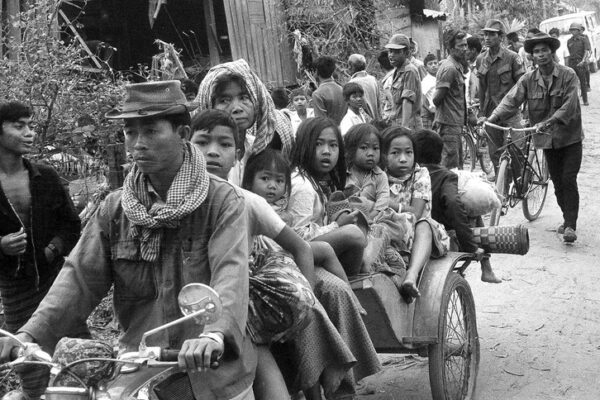
The death last month of William Beecher, a Pulitzer Prize-winning journalist who, among other scoops, revealed the Nixon administration’s secret bombing campaign in Cambodia during the Vietnam War, ought to make us remember two things: First: Washington has been guilty of criminality abroad, especially when it believes that noble-ish ends justify brutal means. And second, despite those who regard the U.S. government as perpetually conspiratorial, Washington is bad at keeping secrets.  Obsessed with the idea that the Viet Cong’s persistence could be traced to allies or resources external to Vietnam—namely Cambodia and Laos—and that the will of the communist North, and thus its ally, the Soviet Union, could be overcome by displays of mass destruction, the Nixon and then Ford administrations resorted to great iniquities for the sake of the purported greater good. They also courted unsavory allies. The same logic led the U.S.  to continue supporting the genocidal Khmer Rouge in Cambodia after – and because – it was overthrown by Vietnam, and because it was backed by Beijing, the budding U.S. Cold War partner at the time.  Cambodians flee Khmer Rouge insurgents during artillery shelling of Phnom Penh, Jan. 28, 1974. (AP) There are signs of this old fixation in Washington on viewing events in Southeast Asia solely through Cold War politics in U.S. engagement with Vietnam.  There are still some people in Vietnam who resent the United States for abandoning the South to the communists in 1975, although most people who think this way risked their lives and fled abroad in the late 1970s.  Today, a younger generation, while not nostalgic for the corrupt and dictatorial Republic of Vietnam in Saigon, is becoming resentful that Washington appears to be doing its utmost to entrench the Communist Party of Vietnam’s (CPV) rule.  On my last visit to Vietnam, in late 2022, I met up with prison-scarred pro-democracy activists who cannot quite stomach the fact that the laudatory “reconciliation” since the 1990s between the former enemies has been conducted to ensure maximum exposure for the communist regime.  In 2015, for instance, the Obama administration broke protocol when it invited Nguyen Phu Trong, the CPV general secretary, on a state visit, a privilege usually only offered to heads of government or state.  When President Joe Biden traveled to Hanoi in September to upgrade relations to a Comprehensive Strategic Partnership, he didn’t have to sign the improved partnership deal alongside Trong; he could have done so with Prime Minister Pham Minh Chinh or State President Vo Van Thuong.  Blurring the lines But by signing it alongside the party boss Trong, Washington symbolically implied it bought into the communist propaganda that the CPV is  the Vietnamese state.  “The degree to which the U.S. is willing to blur the lines between the Vietnamese state and the CPV represents the most substantial recognition of the CPV-led regime by Washington thus far, marking a significant achievement for both the CPV and Trong,” wrote  prominent Vietnamese academic Hoang Thi Ha in October.  This is playing out even as quite a few senior CPV apparatchiks, including the general secretary, still think that Washington is plotting “peaceful evolution,” a communist euphemism for regime change that long predates the “color revolutions” modern-day autocrats fear. As one democracy campaigner told me, in fact, Washington is effectively engaged in supporting the political status quo in Vietnam and is making the lives of reformers much more difficult.  They can, he said, no longer count on rhetorical support from the U.S.. In the past, when trying to convert others to their cause, they could have at least pointed at speeches made by American officials who condemned the Hanoi regime’s repression.  Not anymore.  Vietnam’s Communist Party General Secretary Nguyen Phu Trong and President Barack Obama speak to reporters after their meeting in the Oval Office at the White House in Washington, D.C., July 7, 2015. (Jonathan Ernst/Reuters) Washington officials push back. “We question whether public lecturing is the best plan of action with countries that are seeking to work closely with us,” one told the Washington Post after Biden’s visit to Vietnam in September.  However, that overlooks the impact this has on the Vietnamese people.  Without “public lecturing,” many Vietnamese reckon that the U.S. is no longer interested in human rights in Vietnam. Worse, some think that Washington is praising the communist regime, influencing their own opinions on whether its monopoly of power is legitimate or beneficial.   Writing about Biden’s meeting with Trong in the Washington Post’s opinion page last year, Max Boot noted that “when Biden glad-hands Saudi Crown Prince Mohammed bin Salman, Indian Prime Minister Narendra Modi and now Nguyen Phu Trong…he is, at the very least, open to the charge of hypocrisy in a way Trump was not.”  But Boot added: “Sometimes you have to make common cause with the lesser evil to safeguard the greater good. That’s what Biden is doing in Hanoi.” Party state The case made by the human rights activists isn’t that the U.S.  should have no relations with Vietnam; it’s that Washington shouldn’t be conducting this engagement so openly and cordially through the CPV.  There is also no reason to think that if Washington is  friendly enough to the communist regime, Vietnam is going to become the next Philippines, a U.S. treaty ally that allows it to station troops on its soil. Vietnam will never be an “ally,” in any meaningful sense, of the United States. And with the CPV  in charge, Hanoi will not  engage in containment of China. Some 90 days after Biden upgraded relations, Trong met with President Xi Jinping and signed Vietnam up to China’s “Community with a Shared Future.” “[Washington is] in thrall to the idea that Vietnam can be part of an anti-China group. That idea is nonsense.” said analyst Bill Hayton.  Those who truly seek  an alliance with Vietnam to contain China  should logically support regime change in Vietnam that produces a nationalist government in Hanoi that would be more receptive to the anti-Chinese voices of the masses…

Read More

Kachin army storms northern Myanmar, taking 14 camps

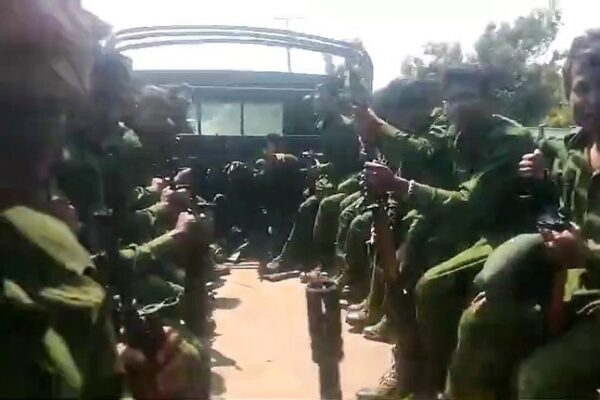
A rebel army in Myanmar seized over a dozen junta camps in the north, an official told Radio Free Asia on Friday.  Since the Kachin Independence Army launched an offensive on Sunday, it has captured 14 camps near its headquarters in Lai Zar city on the Chinese border, said information officer Col. Naw Bu. Several townships in Kachin state have been caught in frequent conflict as junta troops and Kachin Independence Army soldiers fight for control of the area’s jade mines, highways, and border areas.  Since China brokered a ceasefire between the Three Brotherhood Alliance and junta forces, Kachin state’s largest army – not in the alliance – has been a formidable opponent for the military in both Shan and Kachin states.  Rebel soldiers seized camps on Myitkyina-Bhamo road on the fifth day of the six-day attack. “The largest camp, Hpun Pyen Bum where 120 millimeter heavy weapons are based, was captured on Thursday evening. Ntap Bum camp was also captured,” he said.  “Most of the junta’s small defensive camps around Bum Re Bum and Myo Thit were captured. Now, these small defensive camps are being used [by the KIA] to attack big camps, like Bum Re Bum and Ka Yar Taung.” The junta army has been firing heavy artillery at the Kachin Independence Army’s headquarters in Lai Zar since Thursday, he added.  The bombardment has impacted not only Lai Zar, but also the border with China. Shells fired by junta troops killed three civilians, including a child and a woman on Thursday. Three more fell across the Chinese border, destroying property, locals said. RFA contacted the Chinese Embassy in Yangon and national junta spokesman Maj. Gen. Zaw Min Tun to confirm the army fired shells into China, but neither responded by the time of publication.  A Lai Zar resident told RFA this morning that the sounds of fighting could be heard everywhere as the junta continued to attack the city with heavy weapons.  “Since this morning, gunshots have been heard in many places. There were more than eight rounds of artillery fired this morning until 8 a.m.,” he told RFA on Friday. “The shells landed on the other side of Lai Zar city, on the Chinese side and burned houses. Many people in the city have been fleeing to safety.” Grounded Flights and Closed Roads The Kachin Independence Army has not had control of these camps since 2011, Col. Naw Bu said, adding they also plan to reopen Bhamo-Myitkyina Road. The highway was closed in July after fighting erupted between the junta and Kachin Independence Army in Nam Sang Yang village, near Lai Zar. Bhamo Airport, Kachin state in Feb. 2024. (Citizen Journalist) Clashes in Kachin state’s capital have also impacted transportation in and out of the state. An airline ticket sales representative told RFA resistance groups began attacking multiple flight locations across the region. On Thursday, the Kachin Independence Army and allied People’s Defense Forces attacked the junta air force headquarters with short-range missiles. The groups also fired heavy weapons at Bhamo Airport, forcing it to close indefinitely and suspend flights. “Bhamo Airport has been closed since Thursday. The airport authorities have shut down the airport and are not sure when the planes will be allowed to land again,” a representative told RFA, asking to remain anonymous for security reasons. “I am not sure if the canceled flights will be replaced so I am just refunding people’s money.” A Bhamo resident who wished to remain anonymous for security reasons said fighting in the city continued into Friday. “The airport was attacked by a short-range missile and the runway was hit and damaged a little. People who are traveling urgently and the sick are having a hard time now the airport is closed,” he said. “Heavy weapons were also firing all night last night. I couldn’t sleep.” RFA contacted Kachin state’s junta spokesperson Moe Min Thein regarding the closures and conflict, but he did not respond. Translated by RFA Burmese. Edited by Kiana Duncan and Mike Firn.

Read More

Myanmar’s junta imposes multiple death sentences on activists

Lawyers and human rights experts in Myanmar have condemned the junta’s liberal use of the death penalty, including several recent cases where anti-junta activists received multiple death sentences. Such sentences are meant to terrorize opponents of the junta, which is losing ground to ethnic armies and resistance fighters in a civil war now in its third year, but the absurdity of doing so is turning the judicial system into a farce, rights groups say. “No one should be sentenced to capital punishment twice,” Kyaw Win, executive director of the Burma Human Rights Network, told Radio Free Asia. “The death penalty for these cases is more than enough, giving twice makes the legal system a joke.” Since taking control of the government in a Feb. 1, 2021, coup, the military junta has sentenced a total of 164 people to death, according to the Thailand-based Assistance Association for  Political Prisoners. On Feb. 29, the military junta sentenced seven people to death – five of them for the second or third time. The seven – Thura Phyo,  Tun Tun Oo, Kyaw San Oo, Ko Ko Aung, Aung Moe Myint, Win Myat Thein Zaw and  Kaung Si Thu – were convicted of murdering two women from the Ayeyarwady region’s Pyapon township, who they believed were junta informants, sources familiar with the situation told RFA Burmese. Five of the seven had already been sentenced to death on Oct. 20, along with two other defendants, San Lin San and Wunna Tun, the latter of whom has been sentenced to death twice himself. That case was over the killing of ward administrators in Maubin, Pyapon and Bogale townships. But four of those five had been involved in an even earlier case, meaning they have now received the death penalty three times. In addition, the defendants in all three cases received prison sentences ranging from 15 to 45 years. Imposing multiple sentences is unprecedented in Myanmar’s judicial history, lawyer Kyee Myint told RFA. “Only one [death] sentence must be given,” he said. “Sentences should not be imposed again and again. It is against the law.”   Thike Tun Oo, a leading committee member of the Political Prisoners Network-Myanmar, said that in addition to the repeated death sentences, long-term prison terms are not the fair punishments for the crime.  “The death penalty should not be imposed on them at all as they have suffered the same penalty,” he said. “In addition, some were sentenced to 45 years after the death penalty. It is a totally unfair sentence.” RFA Burmese attempted to contact the family members of the sentences by telephone, but were unable to reach them.  RFA also attempted to contact Khin Maung Kyi, the minister of social affairs for the Ayeyarwady region, but received no response.   Translated by Aung Naing. Edited by Eugene Whong and Malcolm Foster.

Read More

Myanmar’s Arakan Army draws closer to region’s capital

An ethnic rebel army captured a city near the capital of western Myanmar’s Rakhine state, locals told Radio Free Asia on Thursday.  The Arakan Army continued its offensive through the state by claiming victory in Ponnagyun city, which sits just 24 kilometers (15 miles) east of capital city, Sittwe.  The rebel army has captured six townships across Rakhine state and another in neighboring Chin state to the north since breaking a year-long ceasefire in November.  Arakan Army soldiers captured Ponnagyun on Monday, the first city in Sittwe district.  A Sittwe resident who wished to remain anonymous for security reasons told RFA that the nearby battle alarmed residents in the city, causing them to flee en masse before the army could advance toward the coastal capital.  “Since the Arakan Army captured Ponnagyun, we don’t have electricity in Sittwe. Many people are fleeing because the fighting is getting closer to Sittwe,” he said, adding that about 300 people are fleeing daily. “Mainly elderly and young people are fleeing.” Most locals are heading to townships already captured by the Arakan Army, such as Pauktaw, Kyauktaw, Minbya and Mrauk-U, he said. Others are escaping to Yangon by air. Sittwe airport, Rakhine state on Nov. 20, 2023. (RFA) Rakhine state does not have a functional railway, and junta-imposed travel bans have made it difficult for people to escape by land and sea. Junta soldiers based in Sittwe have still enforced a curfew, residents said, adding that signs of military preparation are noticeable in the city and countryside as the Arakan Army approaches.  Escalating Conflict Sittwe township is home to nearly 150,000 people, and residents say half of the township’s population has left. However, RFA has not yet been able to independently confirm the claim. Many residents forced to stay in Sittwe amidst war preparations simply can’t afford to leave, they explained.  According to a statement by the United Nation Office for the Coordination of Humanitarian Affairs released on Wednesday, the escalating battles have displaced some 148,500 people since fighting began on Nov. 13.  On Feb. 29, junta troops fired a shell into a crowded market in Sittwe, which killed 12 and critically injured 18 more.  Residents are also feeling the junta’s grasping attempt for control on other cities in Arakan Army territory.  In Rakhine state’s Minbya township, junta aerial attacks have damaged an elementary school and several houses. Troops dropped explosives on Ann Thar village late at night on Wednesday, residents said. An Ann Thar resident told RFA on Thursday that the only school in the village was completely destroyed. “A jet dropped four 200-pound bombs at around 11.40 p.m.,” he said. “The casualties are still unknown and the telecommunication has been cut off.” The village was attacked on Feb. 29, when another jet dropped explosives and damaged four homes, he added. RFA contacted Rakhine state’s junta spokesperson Hla Thein for more information on fighting in Sittwe district and Minbya township, but he did not answer the phone. Translated by RFA Burmese. Edited by Kiana Duncan and Mike Firn. 

Read More

Forced recruitment underway in Myanmar’s Ayeyarwady region

Junta authorities in southwestern Myanmar’s Ayeyarwady region are compiling lists of draft-eligible residents amid a roll-out of the country’s conscription law, sources told RFA Burmese. On Feb. 10, the junta enacted the People’s Military Service Law, prompting many civilians of fighting age to flee Myanmar’s cities, saying they would rather leave the country or join anti-junta forces in remote border areas than serve in the military, which seized power in a 2021 coup d’etat. The junta has sought to downplay the announcement, claiming that conscription won’t go into effect until April, but RFA has received several reports indicating that forced recruitment is already under way across the country. Residents of Ayeyarwady region’s Ingapu, Kyon Pyaw, Yae Kyi and A Thote townships said that junta authorities called a meeting of ward and village administrators in the third week of February and ordered them to gather lists of residents eligible for military service. A resident of Kyhon Pyaw’s Inn Ma village, who like others interviewed for this report spoke on condition of anonymity due to security concerns, told RFA that authorities checked residency lists in the village and compiled a list of 35 people, both men and women, for conscription. “There are 10 wards here and the heads of 10 households in each ward collected the lists, and handed them over to the respective ward administrators,” he said. “They didn’t need to collect the lists door to door, as they can find the information from the family lists. The disabled and ill were exempted from military services.” Recruiting one from each village In Ingapu, the junta’s township administration ordered ward and village administrations to recruit one person from each village-tract for military service, residents told RFA. A resident of Ingapu’s Thet Kei Tan village said that the village administrator gave superiors the name of one young man in nearby Chin Kone village, who he said “seemed willing to join the military.” “On the other side of our village, each household had to pay 10,000 kyats (US$5) if they did not want to serve,” he said. Southwestern commander Brig. Gen. Wai Lin meets with militia members from townships in the Ayeyarwady region on Sept. 22, 2023. (Myanmar military) In nearby Bogale township, junta authorities organized military training for teachers in front of the town hall around mid-February, residents said. On Feb. 20, leaflets were distributed in area markets persuading people to join the military. Township authorities called a meeting with respective ward administrators and instructed them to “focus on youths who have no parents and few relatives” for recruitment, a resident told RFA. “It wasn’t mandatory to recruit one person from each household,” he said. “Authorities recommended at the meeting that the recruitment focus on youths with no parents and those who are willing to join the military to earn a salary.” In another Ayeyarwady township called Myan Aung, a resident told RFA that the recruitment process began around Feb. 15 in the wards and villages.  He also said that the junta conducted military training for 30 people at the headquarters of Infantry Battalion 51 in the seat of Myan Aung township on Feb. 27. Residents of the township were made to pay for the cost of two sets of military uniforms and the daily wages of the trainees, he said. A member of the Ayeyarwady parliament, who declined to be named, told RFA that the junta leadership has focused on his region to recruit soldiers as it is their “stronghold.” “However, I don’t think they will get the numbers they had hoped for,” he said.  Another Ayeyarwady lawmaker condemned the junta’s use of forced recruitment to implement the conscription law. “Although they use the term ‘military service,’ people are actually being forced to work as porters or act as human shields on the battlefield,” he said. “It’s a grave violation of human rights.” Hundreds held in Mandalay RFA also received reports on Wednesday that hundreds of youths aged 20-30 who had been recruited for military training from around the country are being stationed in Mandalay region’s Yamethin township. “Around 200 or 300 youths are being held at the No. 1 Police Training Depot for military training,” said a resident of the township. “They have to live in dormitories there and no one is allowed to leave.” Another resident of Yamethin told RFA that, beginning on March 1, security had been strengthened at the facility. “It’s not the regular training period for new police officers,” he said. “Authorities are inspecting all passers-by.” Myanmar junta authorities conduct inspections at the Dedaye bridge checkpoint in Pyapon district, Ayeyarwady region. (We Love Dedaye) The junta’s Information Ministry said in a social media post on Feb. 27 that there had been some “misinformation” circulating about the collection of personal data of men aged between 18 and 35. It also dismissed reports that junta security forces and administrative organizations are forcibly arresting people for military service. Similarly, pro-junta newspapers said Wednesday that reports of youths being held for military training at the No. 1 Police Training Depot in Yamethin are false. On Feb. 15, pro-junta media quoted spokesman Major General Zaw Min Tun as saying that around 50,000 people will be drafted into military service each year in accordance with the country’s conscription law. He added that 13 million people are currently eligible for service in Myanmar, based on a 2019 census.  Missing for more than a month Reports of the forced recruitment in Ayeyarwady came as a resident of the region told RFA that four people arrested by junta authorities in Dedaye township for alleged possession of weapons remain missing one month after their detention. Hlaing Myo Kyaw, Naing Myo Shwe and his wife Su Mar, and Htet Myat Soe from Dedaye’s Kyeik Taw and Ka Wet Chaung villages were arrested on Feb. 4 with drones and weapons, including rocket-propelled grenades, or RPGs.  Two others from the township – former political prisoner Wai Yan Oo and his mother – were also detained at the time. Two…

Read More

Junta imposes martial law in rebel-controlled Shan state townships

Myanmar’s junta has declared martial law in three northern Shan state townships seized by ethnic rebels during an ongoing offensive, prompting concern from residents who fear the military is planning a push to retake the areas. The junta has declared martial law in more than 60 townships across the country, including in Sagaing, Magwe, Tanintharyi and Bago regions, as well as in Chin state. The designation has been used as a justification by the military to impose heavy punishments on residents on the basis of suspicion alone.  Observers say the junta had refrained from declaring martial law in Namhsan, Mantong and Namtu townships in northern Shan state with the hope the Ta’ang National Liberation Army, or TNLA, would join a ceasefire agreement. The declaration, announced Monday, is an indication that negotiations have stalled, they said. The TNLA, the Arakan Army, and the Myanmar National Democratic Alliance Army together make up the ethnic Three Brotherhood Alliance, which in October launched an offensive known as Operation 1027 against the military in northern Shan state, which borders China. Less than two months after the start of Operation 1027, the TNLA captured Namsan, Mantong and Namtu, on Dec. 15, 22 and 28. Since then, the ethnic army’s top leadership has regularly conducted public meetings with what they say is an emphasis on a “community-based governance system” in the townships. In Namtu, municipal, healthcare and electricity services have been restored, according to residents, and inhabitants who fled earlier fighting have mostly returned home. While the TNLA remains the de facto leadership in the three townships, the junta’s imposition of martial law technically transfers their administrative and judicial oversight to the commander of the military’s Northeastern Command, based in the region’s largest town Lashio. Residents told RFA Burmese that the declaration of martial law came “just as the situation began to stabilize,” and said they now fear renewed clashes between the military and the TNLA. “We are now under TNLA governance, and the junta no longer exists here,” said a resident of Namtu who, like others interviewed for this report, spoke on condition of anonymity due to security concerns. Now that martial law has been declared, it’s as if they could attack us whenever they want.” All three townships are within 160 kilometers (100 miles) of the Northeastern Command, the resident noted, which “adds to our unease.” “We may need to prepare trenches and bomb shelters once again,” she said. ‘Even less secure’ A resident of Namsan told RFA that while the situation in her township wasn’t safe before, “now it feels even less secure.” “The use of airplanes to drop bombs and the indiscriminate use of heavy weaponry add to our concerns,” she said. “While some people have not yet returned to their homes, others have just come back.” An official from the TNLA news and information department told RFA that the junta’s declaration of martial law in the three townships was no surprise. “That’s just what they do,” he said. “During the height of fighting, the junta declared martial law in [eight northern Shan state] townships … now, post-battle, announcing martial law in these three townships aligns with their strategic approach.” On Nov. 12, as Operation 1027 reached a crescendo, the junta declared martial law in the townships of Lashio, Kutkai, Kunlong, Hsenwi, Namhkam, Muse, and Chinshwehaw, as well as in Laukkai, in the Kokang Self-Administered Zone. A curfew remains in effect in the townships, with movement restricted between the hours of 6 pm and 6 am. The Three Brotherhood Alliance captured 16 cities in Shan state, including Muse and Chinshwehaw, as part of the offensive before agreeing to a ceasefire in China-brokered talks with junta representatives on Jan. 11. An ex-military official later said it was not sustainable and less than a week after the agreement, both sides were accused of violating it in a skirmish. Last week, the two sides met again in the Chinese city of Kunming for talks that focused on reopening parts of the border with China that had been shut down during the fighting and preserving the ceasefire. ‘It’s clear they’ve given up’ But a political commentator and former military officer told RFA that peace in northern Shan state remains tenuous. He said that while the junta had been holding out hope that the TNLA would join Myanmar’s Nationwide Ceasefire Agreement, or NCA, the declaration of martial law in the townships under its control indicates that the military leadership no longer sees that as an option. “[The junta was] indecisive from the beginning, and even was vacillating [on how to deal with the TNLA],” he said. “Now, it’s clear that they’ve given up trying [to bring them into the NCA].” The NCA was introduced in 2015 to end years of fighting over minority rights and self-determination. Since then, some 10 ethnic groups have signed the agreement. Ta’ang National Liberation Army troops pose after capturing a Myanmar junta camp in Mantong on Dec. 23, 2023. (PSLF/TNLA News and Information Department) The junta’s declaration of martial law in Namhsan, Mantong and Namtu follows a Jan. 28 declaration in the Shan state townships of Mongmit and Mabein. The two townships had earlier been seized by the Kachin Independence Army. The latest declaration brings to 13 the number of townships under martial law in Shan state. Township captured The imposition of martial law on Namsan, Mantong and Namtu came amid reports on Tuesday that the Arakan Army, or AA, had captured Ponnagyun township in western Myanmar’s Rakhine state, where it continues to battle the military despite the Three Brotherhood Alliance ceasefire in Shan state. In a statement, the AA claimed that Ponnagyun is under its “complete control” after 13 days of fighting, from Feb. 21 to March 4, culminating in the capture of the military’s Light Infantry Division 550 base there on Monday. It said its fighters had seized “several bodies” of junta troops, including that of junta Tactical Commander Col. Myo Min Ko Ko, Light Infantry Battalion 208 Commander Col….

Read More

Junta airstrike hits passenger bus in Myanmar, killing woman

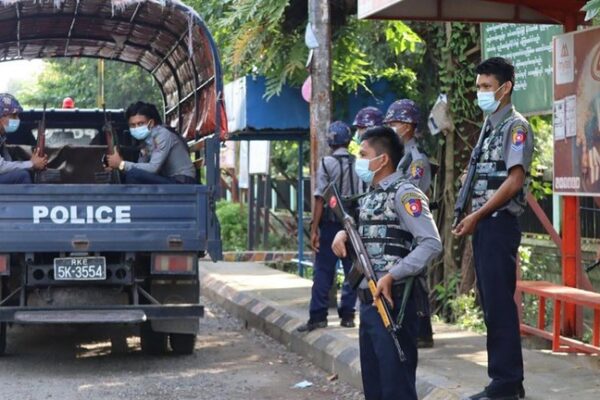
Junta forces dropped an explosive on a passenger bus, killing an elderly woman, locals told Radio Free Asia Tuesday.  Regime troops dropped the bomb from a Soviet-produced Mi-2 helicopter on Monday while battles raged nearby. Five passengers on board were injured, residents said, adding that the bus was enroute to Dawei, the capital of Myanmar’s southernmost Tanintharyi region.  Fighting in Dawei has already left thousands homeless. On Sunday alone, 1,000 residents fled five villages in the township after a local defense force attempted to capture a junta camp, villagers told RFA Burmese  On Feb. 17, a junta offensive on Dawei city’s eastern side near the Thai border initiated a 10-day battle with local resistance groups. The fighting left 7,000 Tanintharyi residents stranded and in need of food and medicine.  Troops dropped the latest explosive on top of a bus parked on Myeik-Dawei No. 8 Road in Thayetchaung township around 4 p.m. The victim was a 60-year-old woman passengers could only identify by the partial name of Aung, according to an official from the No. 2 Battalion of Dawei district’s People’s Defense Force. “An elderly woman who was traveling with Mandalar Minn Express bus died. She was hit on her back, underarm and face,” he said, declining to be named for security reasons. “Her body was cremated on Monday. Her belongings are being kept by the No. 2 Battalion until they can be given to her family.” The defense force has not been able to reach Aung’s relatives, and no further identifying information could be confirmed at this time. Intense fighting near the Win Wa Police Station in Thayetchaung township, 28 kilometers (17 miles) south of Dawei city, caused the bus to park on the road, the official added. Dawei defense force’s Oak Awe column spokesperson Yaung Ni told RFA the junta army bombed other villages in Thayetchaung township and a strategic hill nearby. Battles continued into Tuesday when a junta artillery unit based in Dawei township’s Za Har village fired heavy artillery. The blast exploded in Maung Mei Shaung village’s Shin Dat We Pagoda compound, injuring two civilians. RFA contacted Tanintharyi spokesperson Thet Naing to confirm these claims, but he did not respond. Translated by RFA Burmese. Edited by Mike Firn.

Read More

Australia pledges new funds for maritime cooperation as ASEAN summit begins

Updated March 04, 2024, 03:05 a.m. ET. Canberra will invest $64 million Australian dollars (US$41.8 million) over the next four years, including A$40 million in new funding, to expand maritime cooperation with Southeast Asia, Australian Foreign Minister Penny Wong said on Monday. Wong made the pledge at a forum on the sidelines of the ASEAN-Australia Special Summit 2024 in Melbourne, which will celebrate 50 years of partnership between Australia and the regional bloc. The summit is being held against a backdrop of increasingly assertive posturing by China in the South China Sea and the intensifying civil war in Myanmar, both of which are likely to be high on the agenda. Wong said the new funds for maritime cooperation would contribute to security and prosperity within the region. “What happens in the South China Sea, in the Taiwan Strait, in the Mekong subregion, across the Indo-Pacific, affects us all,” she said in her keynote address Monday. She said the “region’s character” was under challenge and that no country must dominate. “We face destabilizing, provocative and coercive actions, including unsafe conduct at sea and in the air and militarisation of disputed features,” Wong said, without singling out a specific nation. China asserts sovereignty over almost all of the South China Sea, through which trillions of dollars in trade passes each year, putting it at odds with the Philippines, Malaysia, Brunei, Vietnam, and Taiwan.  In 2016, an international tribunal refuted the legal basis for nearly all of China’s expansive maritime and territorial claims in the waterway. It said that Beijing’s insistence on holding “historic rights” to the waters were inconsistent with the United Nations Convention on the Law of the Sea, or UNCLOS. Beijing has never recognized the 2016 arbitration or its outcome. Speaking at the same forum, Philippines Secretary of Foreign Affairs Enrique Manalo said the rule of law and especially UNCLOS was the fundamental starting point for maritime cooperation in the region. “The shared stewardship of the seas and oceans in the region behooves us to unite in preserving the primacy of international law so we can ensure equitable and sustainable outcomes for all,” he said. “It also calls for us to stand firmly together in opposing actions that contradict or are inconsistent with international law.” The Philippines under the presidency of Ferdinand Marcos Jr. has taken a stronger stance in dealing with Beijing on the South China Sea. Marcos has also pursued warmer ties with the United States, a traditional ally, reversing the policies of his predecessor Rodrigo Duterte. In recent months, tensions between Manila and Beijing have led to numerous run-ins, including the China Coast Guard’s alleged harassment of Filipino vessels delivering provisions to troops at its military outpost on Ayungin (Second Thomas) Shoal in the South China Sea. On Monday, the Philippine Coast Guard deployed a patrol vessel to Benham Rise, a huge resource-rich underwater plateau off the eastern coast of the archipelago, amid reports of Chinese research vessels there. The 83-meter (272 foot) long BRP Gabriela Silang will also visit the northern Batanes islands, near Taiwan, the coast guard said. Benham Rise, which is part of the Philippines’ extended continental shelf, does not fall within Beijing’s “nine-dash line” territorial claims in the South China Sea but that has not stopped China from conducting surveying missions in the area. Camille Elemia in Manila contributed to this report. BenarNews is an RFA-affiliated online news organization. Updated to include Monday’s developments in the South China Sea.

Read More