
Cambodia’s Supreme Court upholds 7-year sentence for opposition party activist

Cambodia’s Supreme Court on Wednesday upheld a lower court’s verdict to sentence a 70-year-old activist affiliated with a dissolved political opposition party to jail for seven years for treason, the man’s lawyer and relatives said. Kong Sam An was arrested in September 2020 for an alleged plan to bring Sam Rainsy, the exiled former leader of the now-banned Cambodia National Rescue Party (CNRP), back to Cambodia. The Tboung Khmum Provincial Court handed down the original sentence to Kong Sam An, who was the CNRP chief for Memot district. He has been detained in Prey Sar Prison in Phnom Penh since 2020. Critics said Kong Sam An’s sentence is part of the government’s efforts to stifle opposition before local elections on June 5 and the general election in 2023 to ensure that Prime Minister Hun Sen’s Cambodian People’s party remains in power. Sam Sok Kong, the activist’s lawyer, called the Supreme Court’s verdict unjust. “I am very saddened by the Supreme Court’s decision,” he told RFA about presiding Judge Kong Srim’s ruling. Kong Sam An’s daughter, Kong Moly, told RFA that her father did not commit any crime. She called for the charge against him to be dropped. “I urge the government to talk and don’t regard us as enemy,” she said. “He is a gentle man, [and] he shouldn’t be unjustly detained. Please release him.” In April, Eap Suor, Kong Sam An’s wife, visited her husband in prison and later told RFA that he is very ill from confinement in a crowded prison cell and from malnourishment. Soeung Sengkaruna, spokesman for the Cambodian Human Rights and Development Association (Adhoc), said the court’s verdict was politically motivated intended to persecute the opposition party. “Justice has not been given to Kong Sam An,” Soeung Sengkaruna told RFA. “NGOs urge the ruling party, which is leading the government, to decrease the tension to avoid international criticism and open up the political space and human rights.” The Tboung Khmum Provincial Court sentenced six other activists along with Kong Sam An on treason charges. They all received sentences of five to seven years in jail in February 2020, though some were released on bail, while others fled. The Supreme Court banned the CNRP in November 2017 for its supposed role in an alleged plot to overthrow the government. Key party figures were arrested as others fled into exile as part of a crackdown by Cambodia Hun Sen on his political opposition, NGOs and independent media outlets. Hun Sen’s CPP went on to win all 125 seats in the country’s July 2018 general election. Since then, the government has continued to target activists associated with the CNRP, arresting them on arbitrary charges and placing them in pretrial detention in overcrowded jails with harsh conditions. Meanwhile, the Phnom Penh Municipal Court postponed the hearing of former CNRP leader Kem Sokha, who is accused of conspiring with a foreign power to topple the government, for one week. The new date for the hearing is May 11. The former CNRP president was arrested in September 2017 over an alleged plot purportedly backed by the United States to overthrow the government of Hun Sen, who has ruled Cambodia for more than 35 years. The country’s Supreme Court dissolved the CNRP two months after his arrest. Kem Sokha’s trial resumed in January after two years of delays due to the COVID-19 pandemic. Judge Koy Sao granted the delay based on a request from government attorney Cheng Penghap, who cited a previous business commitment as the reason. NGOs criticized the court’s move saying the postponement would also delay the deliverance of justice to Kem Sokha. Soeung Sengkaruna of Adhoc said the government lawyer did not provide details about his request for the delay, and that if the trial continues to drag on, Kem Sokha will not be able to participate in the upcoming commune elections. “The delay has caused concerns over his right to get justice and political rights,” he said. “It will affect Kem Sokha’s freedom as a politician.” Am San Ath of the Cambodian rights group Licadho urged a political solution though national reconciliation. “If politicians have goodwill, then they can seek a way out of this deadlock to end political crisis for the sake of the country,” he said. Translated by Samean Yun for RFA’s Khmer Service. Written in English by Roseanne Gerin.
Read More

Interview: ‘I couldn’t go on working for them,’ says Myanmar military nurse

Capt. Khin Pa Pa Tun, a nursing captain at the Myanmar Military Medical Academy, and her husband, retired doctor Capt. Thin Aung Htwe, left the military, took their two children and fled to an opposition-controlled area of Myanmar recently to join the pro-democracy movement.  Thin Aung Htwe retired from a 500-bed military hospital in Meikhtila in 2009 because he no longer liked the military. The couple spoke to Khin Maung Soe of RFA’s Myanmar Service from an undisclosed about their motives and experiences in the army that overthrew their country’s elected government on Feb. 1, 2021. RFA:  Please tell me why you joined the anti-junta movement? Khin Pa Pa Tun: I was serving in the hospital when the coup was staged. I knew that the coup was wrong but I had to continue my work because of family reasons.  RFA: Can you further explain why you left now, over a year after the coup? Khin Pa Pa Tun: The reasons they gave for the coup were not logical and I was not happy about the violence in the crackdowns and the atrocities that followed. I couldn’t help shedding tears every time I saw in the news young protesters beaten up and killed. But I had to carry on with my work because it was not easy to leave and I have a family to think of. Finally, I couldn’t go on working for them. RFA: How do you see the current situation of the country? Khin Pa Pa Tun: I have to say our country has become a failed state. Everything is falling apart in the health, education and economic sectors.  People are being arrested unlawfully and there have been extrajudicial killings.  RFA: How many other people like you are in the military? Khin Pa Pa Tun: There is a lot of discrimination in the army. Lieutenant Colonels and higher ranks have a lot more benefits than officers below them. They have become ‘specially privileged’ people. They have abused authority for their own benefit and we in the lower ranks are being used as their pawns. RFA: How many officers like you think the junta is doing wrong? Khin Pa Pa Tun: There are many who pretend not to see the reality and there are some who keep on working in the interests of their families. RFA: Who do you think are greater in number: those who oppose or those who support the junta? Khin Pa Pa Tun: I think there are more officers who do not like the junta than those who support them, though they do not express their views openly. RFA: What are your future plans? Khin Pa Pa Tun: I feel a lot better now as my conscience is clear. I was quite unhappy then wearing that uniform because my conscience was not clear. RFA: Why do you think the coup was launched and what do you think of the reasons they gave for their act? Khin Pa Pa Tun: I think it was carried out in the interests of one person. And the excuse they gave was not logical. I have been in the military service for over 20 years and I have never voted in elections. I realized they fixed votes in advance because officers added in the lists names of those who are not even in the camp. That’s why I cannot accept the (junta’s) excuse that the voting lists were erratic. I know their wrongdoings.  RFA: You must have heard about the burning of villages and the killings of innocent people in several regions and states. Who do you think is responsible for all these atrocities? Khin Pa Pa Tun: It’s the leaders who gave the orders as well as those who committed the acts. The perpetrators had a choice. They didn’t have to follow the orders to the letter. RFA… Do you have anything to say to your fellow officers and colleagues? Khin Pa Pa Tun: Among the Four Oaths we have to say aloud at roll call every morning, there’s one that says ‘we will always be loyal to the country and our citizens’. I refused to say that aloud later because my conscience was not clear. I don’t think we should be saying this oath if we are wearing these uniforms and serving these leaders.  RFA: Can you tell me why you left the military service? Thin Aung Htwe: There are many reasons I left the service. To be honest, I am more interested in the politics of the country. I always ask myself why our country is so poor and backward. Is it because our people are not intelligent or is it because of the system? Our country has been suffering for the past 70 years because of mismanagement of a group of people. These people have not managed well. Frankly speaking they do not have the management skills. They don’t have the education or experience or goodwill for the country. They only made us work for them and their families. Our education levels have gone down so badly. Our universities and colleges were once among the top in Southeast Asia but now we, even doctors, cannot get a proper job in a country like Singapore. Our local degrees are useless and we need more college degrees to be able to work there. We got into this situation due to mismanagement. RFA: What would you like to say about your decision to leave the military? Thin Aung Htwe: To speak frankly, we are very happy now. First, because we can now participate in the struggle for democracy, and second, because of the knowledge that we are no longer on the opposite side of the people. We will do whatever we can to help the people’s cause. Translated by Khin Maung Nyane. 

Read More

NGO: Video shows Thai military destroying footbridge used by Myanmar refugees

The Thai army in March destroyed a footbridge used by refugees fleeing attacks in eastern Myanmar, a human rights group alleged this week, but the military claimed Wednesday that it had dismantled the structure to stop cross-border crime. On Tuesday, Fortify Rights released video footage that shows uniformed soldiers dismantling the small footbridge made of bamboo over the Wa Le (also known as the Waw Lay) River, a tributary of the Moei River, at the Thai-Myanmar frontier. The makeshift walkway connected Thailand’s Tak Province with Myanmar’s Karen State, where the junta’s forces have allegedly killed civilians in recent months amid nationwide post-coup turmoil. In a statement, the Bangkok-based group called on the Thai government “to investigate the recent destruction by its soldiers of a makeshift cross-border footbridge used by refugees fleeing deadly attacks in eastern Myanmar.” Thai authorities should also “ensure any investigation into the situation on the border is aimed at protecting refugee rights, not further violating them,” said Amy Smith, executive director of Fortify Rights. “Arbitrary arrests and the destruction of this footbridge demand urgent attention.” The group confirmed that the video was filmed two months ago, adding it had obtained the 16-minute clip filed from the Myanmar side of the border and uploaded a shorter clip to YouTube. In the video, people speaking a Karen language and a crying infant child can be heard off-camera. In another clip from the video, a soldier asks, “What are you filming, [Expletive]. You want to die?” The exact date and time for when the footage was filmed were on file with Fortify Rights, the group said.  “Sources familiar with the bridge and the area told Fortify Rights that Myanmar refugees, especially children and older people, used the bridge to flee violence and persecution and that informal humanitarian workers used it to transport lifesaving aid from Thailand to internally displaced persons (IDPs) in Myanmar,” it said. On Wednesday, the Thai army’s regional command, the 3rd Army Area, responded to the allegations made by Fortify Rights and the video, which the group had circulated through social media. “The video clip depicting Thai soldiers breaking off a cross-border bamboo bridge was taken before the fighting inside of Myanmar flared up, and the bridge was illegal,” the army’s regional command said in a statement. “The bridge demolition has nothing to do with the migration of displaced persons … it was conducted following an order by the Tak border authorities to prevent illegal groups from doing their criminal activities,” the statement said, without saying what these criminal activities were. The statement claimed that the bamboo bridge had been illegally constructed and was destroyed before fighting with Karen rebels flared. “At that time, there was no fighting between Myanmar soldiers and ethnic minority force, and there were no displaced people,” it said. Long frontier Thailand shares a long history and 2,400-km (1,500-mile) border with Myanmar. The military said Thailand was delivering humanitarian aid to more than 1,500 Myanmar displaced people in four camps in Um Phang district. The Karen have been crossing the border since the Feb. 1, 2021, coup when Burmese Senior Gen. Min Aung Hlaing toppled the country’s democratically elected government, threw its civilian leaders in jail, and then turned military forces and police on his own people who have been protesting the junta’s actions. The Myanmar military has launched attacks throughout the country, including regions along the Thai frontier. Government security forces have killed at least 1,821 civilians – many of them pro-democracy protesters – throughout Myanmar since the coup happened, according to a tally compiled by the Bangkok-based Assistance Association for Political Prisoners. Across the border, Thai authorities have been accused of forcing thousands of refugees to return to Myanmar after Prime Minister Prayuth Chan-o-cha ordered them to prevent “illegal immigration.” Additional video Fortify Rights said it obtained other video footage from Jan. 25, before the Thai soldiers allegedly destroyed the footbridge. The video shows at least 45 people, including women and children using the footbridge or lining up to cross the river. The group also alleged that Thai authorities had arbitrarily arrested and extorted refugees in the border town of Mae Sot. Fortify Rights described how refugees were forced to pay officials to avoid being arrested. “Since February 2022, Fortify Rights interviewed 15 Myanmar refugees on the Thailand-Myanmar border, including seven women, as well as three U.N. officials and four humanitarian aid workers in Thailand,” the statement said. “[F]irsthand testimonies collected by Fortify Rights reveal how Thai authorities have arbitrarily arrested, detained, and allegedly extorted money from Myanmar refugees within the last year.” It also noted that on April 8, the Associated Press reported that “police cards” were sold in Mae Sot through middlemen for an average monthly cost of 350 baht (U.S. $10). The refugees made the purchases under the belief the cards would “help them avoid arrest.” “The Thai government should create a formal nationwide system to issue identification cards to refugees that provide genuine protection,” Smith said in the release. “Such a process would help prevent extortion and other abuses and provide critical information on new arrivals to Thailand.” On Wednesday, Thai government authorities did not immediately respond to BenarNews’ request for comment – but Thai police announced last month that they would investigate the scheme. Activists’ concerns Activists, meanwhile, said Thailand should treat the refugees with respect. The Thai military should be more responsible for the refugees, said the person who coordinates the Burma Concern Project at Chiang Mai University in northern Thailand. “I feel bad that the military is giving a terrible reason like this. We have seen this happen again and again,” said Thanawat, who goes by one name. “Even though we see some attempt to aid the refugees, behind the scenes, they are also pushing them back the refugees by not welcoming them like this.” According to another activist, the Thai government did not implement United Nations-supported procedures to deal with the refugees. “They have always let the security agencies take care of the refugees…

Read More

Seven teachers from high school in China’s Xinjiang confirmed imprisoned

At least seven educators from a high school in the third-largest city in the Xinjiang Uyghur Autonomous Region (XUAR) have been imprisoned by Chinese authorities, a local police officer and school employees said. The seven imprisoned are among more than 10 teachers from the No. 8 High School in Ghulja (in Chinese, Yining) arrested in recent years amid an intensification of a crackdown on Uyghurs in the turbulent region that began in 2017, the sources said. RFA reported in April that Dilmurat Abdurehim, the school’s former principal who went missing nearly a year ago, was being detained in the city, according to municipal education officials and a Uyghur living in exile who provided information on the man’s disappearance. The Uyghur in exile, who requested anonymity for fear of reprisal by the Chinese government, told RFA that he found out that at least 10 other teachers from the high school had been arrested by authorities and provided the names of Abdurehim along with two others — Nighmet and Shohret. Through calls to local police and school employees, RFA confirmed that at least seven of the 10 were currently in prison. When RFA called a local police station located in the same area as the high school, a police officer said that around 20 to 30 teachers had been taken to “re-education centers” and seven or eight of them had been sentenced to prison. He also said that the other two who were imprisoned were Elshat and Nighmet. “There were 29 teachers [who were arrested or detained],” he said. Around 20 have been released so far.” “Around seven or eight [were arrested],” he said. “One’s name is Elshat. He is around 40 to 50 years old. The other one is Nighmet.” Ghulja’s No. 8 High School has about 4,000 students, about half of whom are ethnic Uyghurs and the other half Han Chinese, and 200 staff members, including Uyghur, Kazakh and Chinese teachers. It has provided what it calls “bilingual education” since 2010, requiring Mandarin to be used as the primary language of instruction in schools, with the Uyghur language and literature taught as subjects. A school official contacted by RFA acknowledged that some teachers had been detained by authorities but said that he did not know them and could not provide details because it was a “state secret.” He said the school’s human resources department would have more information about the imprisoned educators. When asked if Abdurehim, Nighmet and Shohret were among those arrested, he told RFA to contact municipal education officials. “I can’t tell you this,” he said. “This is definitely a state secret. If you insist on knowing know, you can ask the city education bureau.” An employee in the school’s human resources department said she could not provide information about the arrested teachers since she was fairly new to her position there, but she did not deny that some educators had been arrested by Chinese authorities. “If I knew all the names and details, I would tell you, but since I am new, I don’t have those details,” she said. A school security official told RFA that three Kazakh teachers had been taken to “re-education camps” but later were released and continued to work at the high school “There are some Kazakh teachers who were taken to re-education. Qemer, Nurjan and Ewzel were taken to re-education and came back later,” he said. Founded in 1934, the No. 8 High School was one of only two high schools in Ghulja at the time. After 1949, the school was renamed after Ehmetjan Qasimi, president of the Republic of East Turkistan which was established in the northern part of what is now the XUAR by Uyghurs and other Turkic ethnic groups in 1944 with help from the former Soviet Union. Qasimi and other republic leaders died in a mysterious airplane crash while flying to Beijing for a political consultation with the then Communist leaders of People’s Republic of China in 1949. Authorities have targeted teachers and intellectuals in Xinjiang because they are the brains of Uyghur society and the most significant means of passing on Uyghur culture and identity, Abdureshid Niyaz, an independent Uyghur researcher based in Turkey, told RFA in a 2021 report. More than 1.8 million Uyghurs and other Turkic minorities are believed to have been held in a network of detention camps in Xinjiang since 2017. Beijing has said that the camps are vocational training centers and has denied widespread and documented allegations that it has violated the human rights of Muslims living in in the region. The purges are among the abusive and repressive Chinese government policies that have been determined by the United States and some legislatures of Western countries as constituting genocide and crimes against humanity against the Uyghurs. Translated by RFA’s Uyghur Service. Written in English by Roseanne Gerin.
Read More

China casts its ‘SkyNet’ far and wide, pursuing tens of thousands who flee overseas

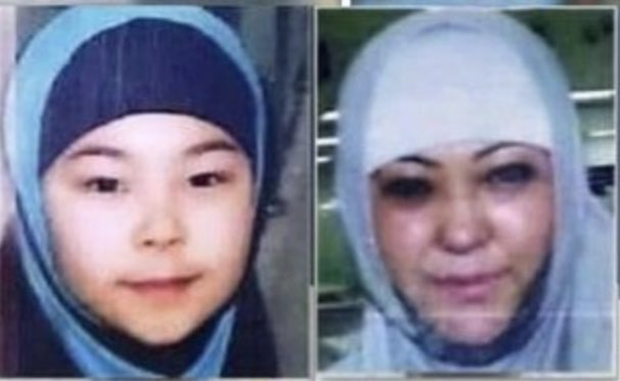
The Chinese Communist Party (CCP)’s law enforcement agencies routinely track, harass, threaten and repatriate people who flee the country, many of them Turkic-speaking Uyghurs, under its SkyNet surveillance program that reaches far beyond China’s borders, using a variety of means to have them forcibly repatriated. A video clip of a Uyghur mother and her 13-year-old daughter crying for help after being detained in Saudi Arabia and told they would be sent to China recently surfaced on social media, highlighting China’s use of pliant allies to circumvent criminal justice processes and ensure political refugees and Muslims are sent back. The Safeguard Defenders rights group has called on the Saudi authorities to release Abla Buhelchem and her daughter Babure Miremet immediately, as well as two other Uyghur men being held without charge by Saudi police. “We call on Saudi authorities to immediately release four Uyghurs – including a 13-year-old girl and her mother – who are at grave risk of enforced disappearance, torture and forced separation if sent back to China,” the group said in a statement on its website. Abla Buhelchem and her daughter were detained near Mecca and told by police they would be sent back to China along with Abla Buhelchem’s ex-husband Nurmemet Rozi and Hemdulla Weli, both of whom have been detained without charge since November 2020. Rozi and Weli were both in Saudi Arabian on pilgrimage, an act that the CCP deems “extremist” along with many other required expressions of Islamic faith, and were detained at the request of the Chinese embassy. It said the two men were moved from the detention center where they were being held in March 2022, and their whereabouts are currently unknown. Abla Buhelchem (L) and her 13-year-old daughter Babure Miremet (R), who have been detained in Saudi Arabia and told they would be sent to China. Credit: Uyghur Human Rights Project. ‘ Gross, flagrant or mass violations of human rights’ On Friday, April 1, United Nations legal experts said the four should on no account be sent to China. “The prohibition of refoulement is absolute and non-derogable under international human rights and refugee law,” the statement said. “States are obliged not to remove any individual from their territory when there are substantial grounds for believing that the person could be subjected to serious human rights violations in the State of destination, including, where applicable, the existence in the State concerned of a consistent pattern of gross, flagrant or mass violations of human rights.” Norway-based Uyghur scholar Abdul Ayup, said he last heard from Abla Buhelchem on April 9. “At that time, she had already arrived at the detention center in Riyadh,” Ayup said.  “She said she was waiting for the Chinese embassy personnel. She said that she was told that she would be deported in three hours. She kept crying.” Abduweli, a person familiar with the situation, said all four were still in detention in Saudi Arabia as of April 28. He said he had tried to warn Abla Buhelchem of the danger, and advised her to leave the country, but she wanted to stay and tell her ex-husband’s story to the international community, fearing he would disappear and be forgotten about. “My friends who work in the Saudi government told me privately that Uyghurs shouldn’t come to Saudi Arabia.” “As far as I know, there has been no clear accusation until now, and the officials have not explained why they were arbitrarily arrested without any documentation,” Abduweli said. “This is very strange.” Lynn Maalouf, Amnesty International secretary-general for the Middle East and North Africa, said the forcible repatriation of the four Uyghurs was “unconscionable,” and a violation of Saudi Arabia’s obligations in international law. “In China, they will be arbitrarily detained, persecuted, and possibly tortured,” Maalouf said. Nurmemet Rozi (L)m Abla Buhelchem’s ex-husband, and Hemdulla Weli, who have been detained without charge in Saudi Arabia since November 2020. Credit: Safeguard Defenders Arab world repatriations In 2020, Saudi Arabia and 45 other countries signed a letter in support of China’s mass detention camps in Xinjiang, marking a “turning point” for Saudi foreign policy, according to Bradley Jardine, fellow at the Kissinger Institute for U.S.-China Relations. At least five other governments in the Arab world — Egypt, Morocco, Qatar, Syria and the United Arab Emirates — have detained, extradited, or participated in cross-border repression of Uyghurs at China’s request. And the problem isn’t confined to the Middle East. “It is very difficult for Uyghur advocates to travel to Central Asia now,” Omer Kanat, chairman of the executive committee of the World Uyghur Congress told RFA after being sent back to Turkey from Kazakhstan. “I was stopped by border officials while visiting Kazakhstan. I was interrogated by Kazakh security officers at the airport, who asked me why I came to Central Asia.” Beijing’s allies among Central Asian nations are grouped under its Shanghai Cooperation Organization initiative. “They told me that no member of the Shanghai Cooperation Organization is going to let me in, then they sent me back to Turkey,” Omer Kanat said. According to statistics from the Uyghur Human Rights Project and the Oxus Society for Central Asian Affairs, the Chinese government has detained, deported or extradited more than 1,300 Uyghurs since China’s “war on terrorism” began in 2014, most of the them from Muslim-majority countries. U.S.-based Freedom House has described in a recent report several key features of China’s transnational crackdown. Political dissidents, activists also sent back China will target ethnic groups like the Uyghurs, but also political dissidents, rights activists, journalists and former officials using its overseas networks. Between the launch of the SkyNet program in 2014 and June 2021, China repatriated nearly 10,000 people from 120 countries and regions, the report said. Yet according to Safeguard Defenders, just one percent are brought back to China using judicial procedures; more than 60 percent are just put on a plane against their will. “The diversity of the CCP’s so-called ‘extradition’ is something that worries us,” Chen Yanting of Safeguard Defenders told RFA. “For example, the Interpol red…

Read More

Musk’s Twitter acquisition prompts renewed fear of Chinese influence, infiltration

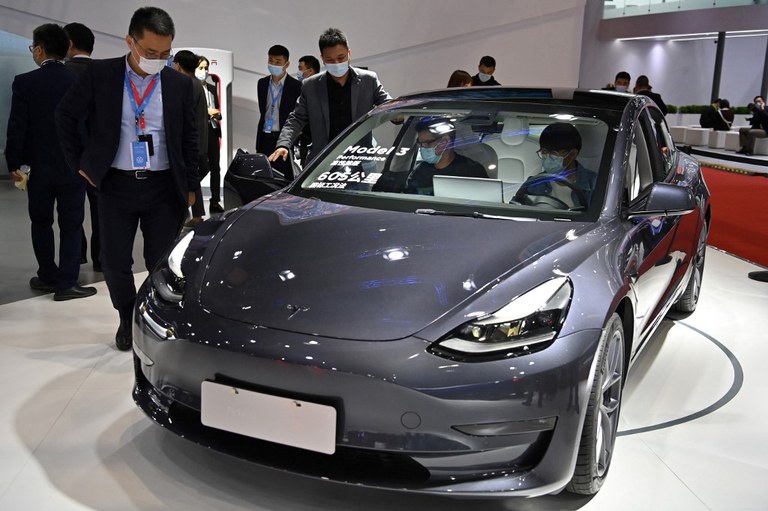
Elon Musk’s Twitter takeover has sparked fears that the platform may now be more vulnerable to Beijing’s influence, amid an ongoing overseas influence and infowar campaign by the Chinese Communist Party (CCP). Musk’s recent U.S.$44 billion acquisition of the social media platform was questioned by Amazon founder Jeff Bezos soon after it was finalized, with Bezos tweeting on April 26: “Interesting. Did the Chinese government just gain a bit of leverage over the town square?” The tweet came in response to an earlier one from New York Times reporter Mike Forsythe, who noted that China was the second-biggest market for Musk’s Tesla electric cars in 2021, with the company relying heavily on Chinese battery-makers to make electric vehicles. “After 2009, when China banned Twitter, the government there had almost no leverage over the platform,” Forsythe tweeted on April 25, adding: “That may have just changed.” The same question was posed to U.S. Secretary of State Antony Blinken at the Foreign Press Center in Washington on May 3. While Blinken declined to comment on private companies, he responded in more general terms: “Free speech, including free media, including platforms of one kind or another, are incredibly important to to the Biden administration,” he said. Blinken also accused Beijing of waging “hybrid warfare” against the democratic island of Taiwan, “including disinformation, including cyber attacks.” “These are designed to basically distort the information environment and democratic processes,” Blinken said. “So we’ve partnered with Taiwanese authorities on civil society organizations, to support independent fact based journalism, to try to build societal resilience to disinformation, and other forms of foreign interference.” Blinken also indirectly touched on more detailed concerns expressed on Twitter in recent days that Musk might consider making it easier for Beijing to identify who is posting on Twitter, or tolerate CCP-sponsored propaganda accounts, which have previously been deleted in large numbers from the platform. “We’ve been deeply concerned about what we’re seeing from [China], in terms of its misuse of technology to try to do things like increased surveillance, harassment, intimidation, censorship, of citizens, journalists, activists, and others,” Blinken said.  “These very same leaders in Beijing are using the free and open media that we ensure that are protected in democratic systems to spread propaganda to spread disinformation.” A Tesla model 3 is seen during the 19th Shanghai International Automobile Industry Exhibition in Shanghai, April 19, 2021. Credit: AFP. Tesla needs Beijing’s goodwill He also warned that Beijing is keen to extend its censorship and propaganda efforts internationally. “It also appears that they are further using these systems to stalk, harass and threaten critics who are outside [their] territory,” Blinken said. “We condemn and we’ve taken action against these efforts and will continue to defend the principles of free press an open secure, reliable, interoperable internet and the benefits that flow from it.” Taiwan Association for Strategic Simulation deputy secretary Ho Cheng-hui said Tesla is heavily dependent on Beijing’s goodwill to maintain current operations. “There is their megafactory in Shanghai, and all of his supply chain, like batteries, comes from China,” Ho told RFA. “The Chinese government has always been very good at controlling companies … and has always placed strong controls on big capital and on freedom of speech.” Musk’s acquisition of Twitter will make it much easier for China to wield influence there and affect freedom of speech internationally, and that includes exerting influence over foreign companies, he said. “The Chinese government will never relent, even in part, on controlling freedom of speech, especially where it wants to protect itself or prevent speech that isn’t in its interest,” Ho said. “I can’t see them letting an opportunity to interfere with a platform like that go.” After the takeover, Musk took to Twitter to invite his “worst critics” to stay on the platform and keep the tradition of free speech alive there. But he added that speech could only be free “I want even my worst critics to stay on Twitter, because that’s what free speech is all about,” Musk said after acquiring Twitter. However, he also tweeted, “By “free speech”, I simply mean that which matches the law.” Foreign companies, including Cambridge University Press, have previously used the notion of compliance with laws and regulations to justify implementing Beijing’s censorship demands. Love-hate relationship? Musk tweeted on April 26: “I am against censorship that goes far beyond the law. If people want less free speech, they will ask government to pass laws to that effect.” Taiwan strategic analyst Shih Chien-yu said Musk appears to have a love-hate relationship with the CCP. “Musk is a global entrepreneur who has tried to have restrictions and rules in different countries changed to create ways of operating and values that are conducive to the ongoing development of his business,” Shih told RFA. “Twitter is part of his business [empire] now.” But he said it was hard to predict how far Musk would be willing to use Twitter as leverage with Beijing. “We also don’t know how far Musk’s control of Twitter is going to result in enabling or breaking free speech,” Shih said. Tesla’s financial report released in February 2022 showed that its annual revenue from the Chinese market was worth U.S.$13.844 billion for the whole of 2021, compared with U.S.$6.662 billion for the whole of 2020, a year-on-year growth rate of 107.8 percent. Reuters reported on May 3 that authorities in Shanghai had helped Tesla transport more than 6,000 workers and carry out necessary disinfection work to reopen its factory last month amid the city’s lockdown, according to a letter that Tesla sent to local officials. Tesla reopened its factory in Shanghai on April 19 after a 22-day hiatus amid widespread coverage from state media. The letter lauded a company run by the Lingang Group had arranged for 6,000 Tesla workers to be bused in to the factory and disinfected the whole premises to enable production to start up again, Reuters said. The letter also mentioned plans for further expansion of the Shanghai facility, the agency said. Chinese foreign ministry spokesman Wang Wenbin…

Read More

Testing Chinese patience

Millions of residents of Beijing, Shanghai and other big cities face not only extensive long-term lockdowns under China’s zero-Covid policy, but also an exhausting regimen of testing in response to the spread of the omicron variant. The Chinese capital used the May Day holiday to test millions of people, adding to the stress of securing daily necessities under tight controls on movement.

Read More

China amphibious assault ship held live-fire drills in South China Sea

China’s largest Type 075-class amphibious assault ship Hainan has conducted combat training and live fire drills in the South China Sea, Chinese media reported. The exercise took place on April 22 but news about it only emerged this week on an online Chinese military network.  The Hainan is the second- largest type of vessel in the Chinese Navy, after its two aircraft carriers. The latest photos show People’s Liberation Army Navy (PLAN) personnel carrying out coordinated training, supply maneuvres and ammunition firing at an unspecified location in the South China Sea. Helicopters were seen rehearsing taking off and landing on the ship’s dock. The drills were said to aim at “consolidating the basic skills of officers and soldiers, optimizing the ship deployment and command process, and effectively improving the comprehensive combat capability.” The Hainan, named after the Chinese island in the South China Sea, is China’s first Type 075 amphibious assault ship, commissioned into service only a year ago. It was built in Hudong-Zhonghua Shipyard in Shanghai and listed under the Southern Theater Command which is responsible for the South China Sea. It has a total displacement of 40,000 tons. The Hainan’s deck layout is similar to that of China’s Liaoning and Shandong aircraft carriers. As tall as a 15-storey building, it can carry a number of helicopters, amphibious hovercrafts, tanks and armored vehicles. The vessel is equipped with weapon systems including missiles and ship guns but its main task is transporting helicopters and amphibious vehicles to conduct amphibious operations. Type 075 vessels A day before the Hainan’s exercise, on April 21, the PLAN also announced the commissioning of its second Type 075 amphibious assault ship, the Guangxi. The Chinese Navy only officially started development work on the Type 075 in 2011 but has already launched three ships, two of which are fully operational and the third is on sea trials. A total of eight vessels are said to be on order for the PLAN, reported the Naval News portal. Chinese state media said the Type 075 “will play vital roles in possible operations on the island of Taiwan, as well as islands and reefs in the South China Sea.” Experts said that the commissioning of the three ships will place China in the second rank in terms of global amphibious capabilities, second only to the United States. A U.S. Defense Department report released last November said China has the biggest maritime force on the globe with 355 vessels. The number is projected to increase to 420 ships within the next four years and 460 by 2030. The state media report about the live-fire drill with the Hainan emerged days after a Chinese navy flotilla led by the Liaoning aircraft carrier was spotted sailing from the East China Sea towards the Pacific Ocean. Both the Japanese and Taiwanese militaries said they were monitoring the flotilla.

Read More

Little to celebrate on Press Freedom Day amid worsening media crackdown in Myanmar

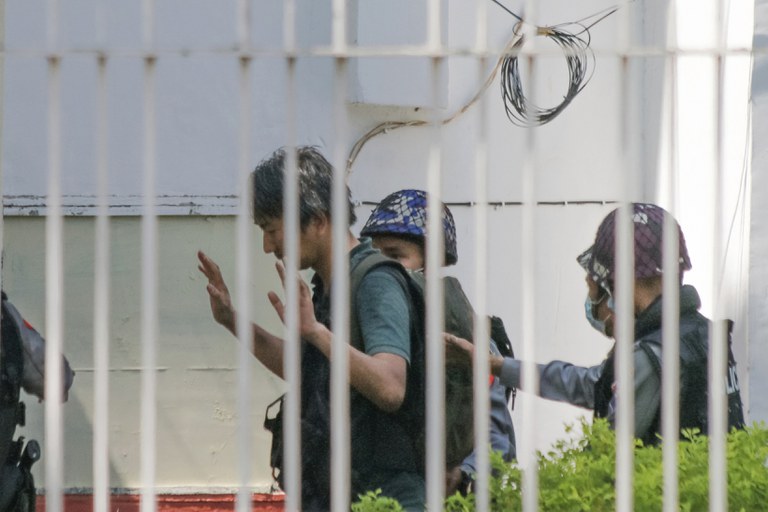
There was little to celebrate on World Press Freedom Day in Myanmar, where the junta has jailed 135 journalists since it seized power last year and reporters routinely face harassment, arrest and even death for doing their jobs, members of the media and watchdog groups said Tuesday. Paris-based Reporters Without Borders (RSF) said that in the 15 months since its Feb. 1, 2021, coup, the junta had “obliterated” a decade of moderate press reforms in Myanmar, prompting it to name the country the world’s fifth worst abuser of the media freedom in its annual global index. Speaking to RFA’s Myanmar Service on Tuesday, Han Zaw of the Detained Journalists’ Information said his group had documented the arrest of 135 journalists in Myanmar since the coup, adding that nearly half of them remain in detention. “Eighty-three of them — 13 women and 70 men — have been released so far, some on amnesty, some after completing their sentences and some after serving a short-term detention,” he said. “More than 80 journalists have been charged. There are currently 51 detained journalists — 13 women and 38 men.” Myanmar is recognized by the New York-based Committee to Protect Journalists as the world’s worst jailer of journalists after China. Since the coup, authorities have arrested and sentenced outspoken members of the press on vaguely worded criminal charges that include “publishing false information” and “defamation,” as well as on charges of “terrorism.” Freelance journalist Soe Yar Zar Tun was detained on Feb. 28, 2021, while covering anti-coup protests and is being held in Yangon’s Insein Prison facing a trial for violating the country’s Anti-Terrorism Law. His brother, Zar Ni Tun, told RFA that the junta has no right to arrest members of the media for reporting the news. “It’s completely hypocritical,” he said. “They have harassed and arrested and tortured people in the past and are still doing it.” An editor from the Shwe Phi Myay News Agency, which is based in Shan state, said that in addition to the threat of arrest, journalists are now regularly in danger of losing their lives while doing their jobs. “We know that once a person is arrested, it is very difficult for them to be released. At worst, they could be arrested, tortured or even killed,” he said, speaking on condition of anonymity for fear of reprisal. “It’s not just the army in this area. There are many ethnic armed groups too. And so, we could get arrested and detained at any time and face a life-threatening situation.” Japanese journalist Yuki Kitazumi raises his hands as he is escorted by police upon arrival at the Myaynigone police station in Sanchaung township in Yangon, Feb. 26, 2021. Credit: AP Photo Risking death Veteran journalist Myint Kyaw said journalists in the country now find themselves in the worst situation they have faced since the military coup. “We had the case of the first journalist to be killed while covering an armed conflict last January,” he said, referring website editor Pu Tuidim, who was abducted by junta troops while reporting on military clashes with armed ethnic soldiers in Chin state and later shot dead by his captors. “Armed conflicts have escalated in cities as well as in rural areas. Journalists will be killed even more, as there are now death threats to journalists and their family members. And so there might be more bad news for us.” According to RSF, Pu Tidim was the third journalist to be killed in less than a month in Myanmar. His murder followed the Dec. 25, 2021, death of Federal News Journal editor Sai Win Aung from gunfire during a clash between the military and anti-junta People’s Defense Force (PDF) paramilitaries in Kaiyn state. Freelance photographer Soe Naing became the first journalist to die at the junta’s hands under torture on Dec. 14, four days after being arrested while covering a protest in Yangon. Journalists are also increasingly facing death threats for reporting news that portrays the junta in a bad light. Last week, the pro-junta Thway Thauk, or “Blood Comrades,” militia called for the deaths of reporters and editors working for news outlets in Myanmar including The Irrawaddy, Mizzima, Democratic Voice of Burma (DVB) and The Irrawaddy Times — as well as their family members. Observers say groups like the Thway Thauk have been emboldened by the military regime’s open disdain for the media, which was again demonstrated — days ahead of World Press Freedom Day — by junta deputy information minister, Maj. Gen. Zaw Min Tun, when he accused several news outlets of being “destructive elements” in Myanmar during an April 27 press conference in the capital Naypyidaw. When asked by RFA for comment on the number of reporters currently detained or in prison, Zaw Min Tun responded that the junta had “not arrested anyone for working in the media.” “They were arrested for inciting people and for having contacts with terrorist organizations,” he said. “All media outlets, with the exception of those that have been declared illegal, are working freely here,” he added. In this image made from video taken on Feb. 27, 2021, Associated Press journalist Thein Zaw is arrested by police in Yangon, Myanmar. Credit: AP Photo Plummeting index rank Global media watchdog RSF disagreed with that assessment Tuesday when it dropped Myanmar to 175th out of 180 countries in its 2022 World Press Freedom Index from 140th a year earlier. The group said that in the 15 months since seizing power, the junta had “obliterated” a decade’s worth of modest media reforms that began when the country’s last military regime disbanded in 2011. The new ranking put Myanmar behind only North Korea, Eritrea, Iran and Turkmenistan as the worst place in the world to be a journalist. RSF said that after seizing power from Aung San Suu Kyi’s democratically elected National League for Democracy (NLD) government on Feb. 1, 2021, the junta immediately banned a number of outspoken media outlets, leaving a handful to continue the work…

Read More

Factory in China tests North Korean workers for COVID after 20 show symptoms

Around 800 North Korean workers in the northeastern Chinese city of Dandong spent their May Day holiday getting tested for COVID-19 after about 20 of their coworkers began showing symptoms for the disease and were quarantined, sources in China told RFA. The North Korean women are employed by a clothing company in the city’s Zhenan district. They are among the 80,000 to 100,000 North Koreans dispatched to China’s three northeastern provinces to earn foreign currency for their cash-strapped government. Dandong has been locked down as part of China’s zero-COVID policy since last week. Workers would typically have off for May Day, an annual celebration of the fight for labor rights and an important holiday in communist countries. But workers were instead called into the factory for testing, a source in the city told RFA’s Korean Service on condition of anonymity for security reasons. ​The factory where the 800 women work is an important one in the battle against COVID-19, as it produces protective medical gowns, the source said. On April 27, about 20 suspected cases of COVID-19 were detected among North Korean workers at the company and the factory closed, the source said. The COVID-19 Pulmonary Infectious Disease Prevention and Control Command in Dandong diagnosed the suspected symptoms as laryngitis instead of COVID-19. “The 20 or so North Koreans who appear to have symptoms of COVID-19 are currently being treated in isolation inside the factory,” the source said. “It is absurd to say that it is laryngitis when there are hundreds of confirmed COVID-19 cases in Dandong and the municipal government and disease control authorities are blocking roads and alleys and restricting the movement of people.” COVID-19 has swept through companies employing North Korean workers before, but it was always kept a secret, the source said. “Perhaps if it was confirmed that North Korean workers had COVID-19 there would be considerable ramifications if it became known to the public. I know that the North Korean consulate in Dandong and the Chinese government are fabricating information to cover it up,” he said. “Even though it is a holiday for workers around the world, the North Korean workers are locked up in their company and taking nucleic acid tests.” A health official from Zhenan district told RFA’s Mandarin Service on Tuesday said that there were confirmed coronavirus cases in the factory, but she could not say whether it was North Korean or Chinese workers who were infected. She said that information would not be released. RFA Mandarin attempted to contact the factory but received no response. Another source in Dandong told RFA’s Korean Service that because the company is making protective gear, the factory had to continue operations on the holiday. “They don’t have time to enjoy the day because they are too busy producing COVID-19 protective suits and isolation gowns,” he said on condition of anonymity to speak freely. “They are working while wearing what they make.” “There was a recent scare after North Korean women working in restaurants, hostess bars and public baths had a few suspected cases,” he said. The source spoke of another case where four young North Korean women working at a hotel in Dandong were suspected cases. “I heard from an acquaintance who works with them that they were immediately placed into quarantine because they were showing symptoms,” the second source said. “As COVID-19 spreads here in Dandong, production rates at companies with North Korean workers fell dramatically. Companies that bought materials in advance, before things got so bad, are still forcing the North Koreans to come to work, even with the lockdown,” he said. Millions of residents of major Chinese cities are facing rigid lockdowns and strict testing regimens as the country tries to stop the spread of the omicron variant of COVID-19 under the Communist Party’s zero-COVID policy. RFA reported last week that Dandong, which lies across the Sino-Korean border from North Korea’s Sinuiju, started shutting down on April 25 and stopped all rail freight on May 1, just months after it resumed after an almost two-year hiatus due to the pandemic. North Korean labor exports were supposed to have stopped when United Nations nuclear sanctions froze the issuance of work visas and mandated the repatriation of North Korean nationals working abroad by the end of 2019. But Pyongyang sometimes dispatches workers to China and Russia on short-term student or visitor visas to get around sanctions. Translated by Claire Lee and RFA’s Mandarin Service. Written in English by Eugene Whong.

Read More