
Category: East Asia
UN climate change case ‘particularly relevant’ following Trump election win: lawyer
An international legal judgment on governments’ obligations to prevent human-driven climate change has become more crucial after Donald Trump’s election victory raised the prospect of the U.S. again withdrawing from the landmark Paris agreement, a lawyer in the case said. The U.N.’s International Court of Justice, or ICJ, is set to begin hearings on Dec. 2 that will culminate in it issuing an opinion on states’ responsibilities and the legal consequences for countries that fail to act. More than 130 nations – but not top polluters China and the U.S. – supported a push by Pacific island nation of written statements ever filed in an advisory proceeding before the court. The court also received dozens of written responses to the initial submissions. It extended the deadline for written submissions several times. China and the U.S. both made written submissions, as have organizations such as OPEC and the International Union for Conservation of Nature. Regenvanu said in a statement Hurricane Milton last month showed the U.S., like Pacific island nations, increasingly faces extreme weather. “This is a shared problem that will not solve itself without international cooperation, and we will continue to make that case to the incoming president of one of the world’s largest polluters,” he said. Edited by Mike Firn. We are : Investigative Journalism Reportika Investigative Reports Daily Reports Interviews Surveys Reportika
Climate ‘flashpoint’ looms for Trump’s China-centric focus on Pacific: US analysts
Growing U.S. security and diplomatic ties with Pacific island nations are unlikely to slow even if American foreign policy undergoes a major shake-up during Donald Trump’s second term, say former White House advisers and analysts. Following decades of neglect, Washington has in recent years embarked on a Pacific charm offensive to counter the growing influence of China in the region. While Trump’s unpredictably and climate change skepticism could be potential flashpoints in relations, deepening U.S. engagement with the Pacific is now firmly a consensus issue in Washington. Trump is likely to maintain focus on the relationship, experts say, but he will have to prove that U.S. attention extends beyond just security-related matters. “President Trump saw a strategic rationale for increased engagement in the Indo-Pacific and increased engagement in the Pacific islands,” said Alexander Gray, a senior fellow in national security affairs at the American Foreign Policy Council. “While the reality is that the security lens is going to galvanize our commitment of resources and time on the region, it’s important for us to send a message that we have other interests beyond just security,” added Gray, who was the first-ever director for Oceania & Indo-Pacific security at the National Security Council. “We have to show an interest in development, economic assistance and economic growth.” A number of firsts Trump’s first term between 2017-21 contained a number of firsts for relations between the world’s No. 1 economy and Pacific islands. PHOTO President Joe Biden (R) meets with presidents of Pacific island nations at the U.S.-Pacific Island Country Summit in Washington, D.C., Sept. 29, 2022. Paik, who is now a senior fellow with the Australia Chair at the Center for Strategic and International Studies, said the climate factor would complicate the relationship, but it was unlikely to “completely sink” it. Despite Trump’s open skepticism about dangerous planet warming, U.S. support for resilience efforts across the Pacific might not be affected, some observers said. “The Pacific certainly didn’t agree with us on our macro approach to climate change,” said Gray, who visited the region a number of times, including for the 2019 Pacific Islands Forum (PIF) in Tuvalu. “But we made tremendous progress in advancing our relationships in the region because we were able to talk about resilience issues that affect people day to day.” Shared values, mutual respect Following Trump’s sweeping victory on Tuesday, Pacific island leaders tried to stress their shared interests with the U.S. “We look forward to reinforcing the longstanding partnership between our nations, grounded in shared values and mutual respect,” said Papua New Guinea Prime Minister James Marape. Tonga’s Prime Minister Siaosi Sovaleni and Fiji’s Prime Minister Sitiveni Rabukia both said they looked forward to advancing bilateral relations and Pacific interests. Pacific island nations have sought to benefit from the China-U.S. rivalry by securing more aid and foreign investment. But they have expressed alarm that their region is being turned into a geopolitical battleground. Reilly said a danger for any new president was treating the Pacific islands as a “geopolitical chess board.” “That’s a terrible way to actually engage and win hearts and minds and build enduring partnerships,” he said. Paik said the U.S. now needs to build on the successes of the first phase of American re-engagement. The U.S. renewed its compact of free association deals with Micronesia, Palau and the Marshall Islands earlier this year, but “some of the implementation is still pending,” she said. The deals give the U.S. military exclusive access to their vast ocean territories in exchange for funding and the right for their citizens to live and work in the U.S. “Some of the embassies have been opened, but we still only have one or two diplomats on the ground,” said Paik. “We still need to open an embassy in Kiribati and potentially other locations. “We need to get ambassadors out to the region. We need a permanent ambassador to the PIF.” No sitting U.S. president has ever visited a Pacific island nation. We are : Investigative Journalism Reportika Investigative Reports Daily Reports Interviews Surveys Reportika
Exclusive: How Chinese nationalism is sending jitters through the Arctic
This story was reported with the Norwegian Broadcasting Corporation. Read their story here On an early morning in late July, a luxury expedition cruise ship, boasting the latest in high-end Arctic travel, made a slow approach to the docks of Ny-Ålesund, a remote settlement in Norway’s Svalbard Islands. At 79 degrees north latitude, Ny-Ålesund is the northernmost inhabited outpost on Earth. Isolated in the Arctic’s desolate winter, it hosts just 30 year-round residents. Newayer, a Chinese travel agency, chartered the vessel for 183 tourists from Hong Kong, Shanghai, and Beijing. Each passenger paid at least $13,000 for a two-week “Three Arctic Islands” tour, marketed as an exclusive opportunity to reach the “top of the Earth,” complete with “the luxury of Chinese hospitality.” Clad in matching red jackets bearing a polar bear logo, the travelers disembarked at their first stop: China’s Yellow River Research Station in Ny-Ålesund. There they marked the 20th anniversary of the station – one of several research facilities established on Svalbard by different nations. More than 100 Chinese tourists waved national flags beneath a Chinese Communist Party-style banner hung on the research station’s door. The travel agency’s blog likened the celebration to “raising the Chinese national flag during the Olympics.” Among the participants, a woman in a People’s Liberation Army, or PLA, uniform was seen saluting and posing for photos. A PLA Ground Force patch is visible on her right arm, two professional cameras are slung over her shoulders. “The big picture of China’s ambitions in the Arctic is that it reflects a clear, long-term strategic goal: China wants to be a significant presence in the Arctic,” says Isaac Kardon, a senior fellow for China Studies at the Carnegie Endowment for International Peace, a Washington D.C. think tank. Since declaring itself a “near-Arctic state” in 2018—despite lacking territorial claims—China has steadily built its presence through legal, military, commercial, and individual channels. Svalbard has become the latest frontline. An Arctic Battleground for Great Powers A remote Norwegian archipelago roughly twice the size of Hawaii, Svalbard lies less than 1,000 kilometers from the North Pole, some 650 kilometers north of mainland Norway. Chinese tourists celebrate for a drone-style video at China’s Yellow River Research Station in Svalbard, Norway, July 2024 Entering the ‘gray zone’ Fan Li, the CEO of Newayer, the tour agency, told RFA and NRK that their tour group informed the research station of its plans to stage a celebration at Yellow River, and to hang banners and wave Chinese flags outside the station. The station never objected or even raised it as an issue. “The staff at the Yellow River Station came out to engage with us, and everyone was quite happy about that,” Li told RFA and NRK. A video of the tour group’s celebration was posted to Newayer’s social media account. It further features eight guests telling the camera that they are PLA veterans and perform coordinated military salutes to China while a patriotic song plays as a soundtrack. Afterward, passengers gathered to share their stories of service in the PLA. Li said that the presence of veterans on board was merely a “coincidence” and that when Newayer realized the connection, the company organized a ceremony and incorporated the clip into its video. According to Li, all of those featured were retired, as it’s difficult for active military members in China to travel abroad. However, one cruise participant, who identifies herself in the video as Yin Liu, was photographed wearing military garb bearing the insignia of the PLA on Svalbard. On camera, Liu says she enlisted in 1976 and fought in Vietnam in 1984 and gave the name of her unit. Ying Yu Lin, an expert on the PLA at Tamkang University in Taiwan, identified Liu’s fatigues as a “Type 21” training uniform issued by China’s Ministry of Defense in 2023. It is restricted to military personnel and would not be accessible to civilians, Lin said. The “Type 21” uniform can be seen on the Chinese Defense Department website. Members of China’s Arctic expedition team, based at the Yellow River Research Station, take a boat out for sampling on the Austre Lovenbreen glacier in Svalbard, Norway, June 22, 2024. Questions of diplomacy But sources familiar with diplomatic discussions say that Norway is unlikely to take a leading role in pushing back against China. “Like many countries, Norway just doesn’t have a lot of equities in its dealings with China,” says Kardon. Overt criticism or perceived slights can cause notable damage, like in 2010, when Beijing banned imports of Norwegian salmon after its Nobel committee awarded the Peace Prize to Chinese dissident Liu Xiaobo. But as long as that’s the case, room for more muscular tactics in the Arctic will grow. Last month as China celebrated the 75th anniversary of the People’s Republic, the Chinese Coast Guard engaged in joint operations with Russian forces in the Arctic. This was preceded in September by a meeting of Russian and Chinese officials in Beijing to discuss economic development and resource extraction in the region, and earlier, a Chinese and Russian meeting in Svalbard to explore opening a joint research center in Pyramiden, a former Soviet mining hub on the islands. “So if you’re looking for a pattern here, I would say this is the latest version of what China and Russia are trying to do—find a way to get to the red line without crossing it,” says Lanteigne, referring to the Yellow River celebration incident. “It is a very subtle signal, one that really demonstrates that China is now starting to deviate more directly from Norway regarding what is and is not proper activity on Svalbard.” Lanteigne views this as a pressing challenge that the Norwegian government must confront head-on. “I think there needs to be the understanding that with the Arctic beginning to militarize as a whole, Svalbard is caught in it, whether it likes it or not.” Edited by Boer Deng We are : Investigative Journalism Reportika Investigative Reports Daily Reports Interviews Surveys Reportika
The New Star War? Key to Winning the AI and Semiconductor Race
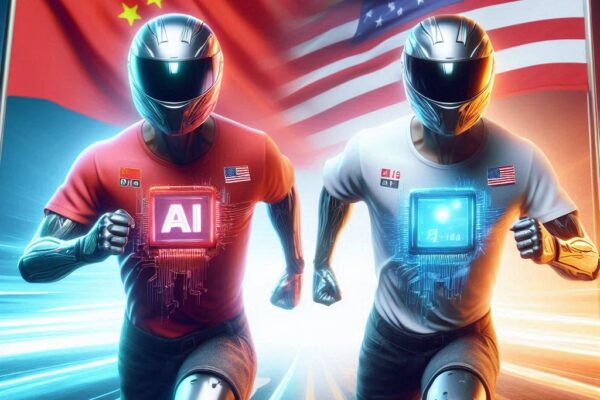
In March 1983, US President Ronald Reagan delivered his iconic Strategic Defense Initiative (SDI) speech, known as “Star Wars,” which ignited an arms race between the United States and the Soviet Union centered on missile defense systems. Today, a similar race is unfolding between China and the United States, this time focused on Artificial Intelligence (AI) and its backbone, semiconductors. These technologies are viewed as strategic assets vital to national security, and whoever secures the upper hand will likely dominate global leadership. The U.S. currently holds a technological edge over China in both AI and semiconductors, bolstered by export controls designed to slow China’s progress. Yet, the geopolitical rivalry is unlikely to subside, regardless of who occupies the White House. The emergence of a “trust alliance” among democratic nations and the push for self-sufficiency within pro-China regimes are expected to accelerate the decoupling of the tech landscape into distinct spheres of influence. The Role of the “CRINK” Group The Halifax Forum’s term “CRINK”—representing China, Russia, Iran, and North Korea—has drawn comparisons to the Axis powers of World War II. However, such an ideological lens oversimplifies the complexities of today’s geopolitical landscape. Unlike the WWII era, today’s world is deeply interconnected through globalization, with China playing a pivotal role in global manufacturing and supply chains as well as the largest market for those products. China’s economic footprint is significant: it produces one-third of the world’s manufacturing output, including 72% of flat-panel displays, 36% of electronic products like smartphones and PCs, and two-thirds of electric vehicles (EVs). It is also the largest consumer market for EVs, industrial robots, and semiconductor equipment. Any comparison to Cold War dynamics must take into account this interdependence. The CRINK nations, especially China, Russia, and Iran, also control substantial shares of global resources, such as minerals, crude oil, natural gas, and rare earth elements that are critical to global production. Addressing Asymmetric Dependence The West faces a dilemma: how to reduce dependence on China without destabilizing global supply chains. The U.S. and its allies have focused on increasing resilience by diversifying sources of supply, but this strategy only tackles one side of the problem. Without reducing reliance on China as a consumer market, these efforts may fall short. This is not a call for erecting a new “iron curtain” to divide the world but rather a recognition that the democratic world has underinvested in innovation and market development. More must be done to stimulate demand for AI, semiconductors, and related components within trusted allied countries. If new chips made in America and Europe lack viable markets for assembly and sale outside of China, these efforts risk becoming redundant. The Challenge of Enforcement Recent events illustrate the complexity of enforcing tech restrictions. GlobalFoundries was fined by the U.S. Department of Commerce for supplying chips to an affiliate of SMIC, a Chinese semiconductor company on the U.S. Entity List. Similarly, a TSMC chip was discovered in a Huawei processor, highlighting gaps in oversight and the difficulty of monitoring supply chain loopholes. The U.S. approach of adding more companies to the Entity List is akin to a game of whack-a-mole—reactive and unsustainable. Huawei’s founder Ren Zhengfei has underscored this challenge, noting that with 99% of Chinese companies unaffected by U.S. sanctions, workarounds are almost inevitable. Huawei can obtain chips indirectly, buying from third or fourth-tier customers of TSMC, which only comes to light through painstaking reverse engineering. Similarly, SMIC and other sanctioned firms can establish new affiliates to circumvent restrictions, exposing the limits of self-regulation and due diligence. The Motivation Behind SMIC’s Moves While media coverage has focused on the immediate facts, less attention has been given to the motivations behind SMIC’s clandestine purchases from GlobalFoundries. Despite significant investments in expanding mature node capacity with dozens of new fabs, why does SMIC continue to source chips from other manufacturers? This suggests that advanced technology or strategic stockpiling may still be critical for sanctioned entities, or even attempts at technology theft by reverse engineering, revealing deeper vulnerabilities in the current enforcement strategy. The Path Forward for the Democratic Alliance Forming a “trust alliance” that shares technology securely is crucial, but it must go beyond reactive measures. Are there robust mechanisms to prevent sanctioned chips from being falsified and re-entering the global market? Simply adding trade tariffs as a deterrent to China’s exports may not work. The need to address the asymmetry of both supply and demand dependencies in China cannot be underestimated. The democratic world must shift from a reactive posture to a proactive strategy. This involves investing in innovation, building demand for AI and semiconductors within allied markets, and fortifying tools to track down product sales endpoints and counter falsifications for regulatory frameworks to close loopholes. Without such foresight, the democratic camp risks repeating the fate of the Soviet Union and its allies during the original “Star Wars” era—falling behind due to a lack of comprehensive strategy. By fostering resilience and innovation, the trust alliance can ensure it remains competitive and secure in the evolving geopolitical landscape. About the Author Judy Lin is the Deputy Editor At Large of Taiwan’s CommonWealth Magazine English Website and founder/editor in chief of TechSoda.online. She has covered Semiconductor, AI, and Geopolitics during her tenure as lead reporter and managing editor of DIGITIMES Asia and Foreign Exchange Market/Macroeconomics for Reuters Taiwan. Source : Link (Investigative Journalism Reportika has obtained the author’s authorization for reproducing the content).
Myanmar junta chief seeks China’s help on border stability
Read RFA coverage of these topics in Burmese. Myanmar’s junta leader called on China to help bring stability to their common border on his first visit to his northern neighbor, a year after insurgents in north Myanmar border regions launched an offensive that has raised questions about the sustainability of his military rule. China has extensive economic interests in Myanmar including energy pipelines running across it, from the Indian ocean to southern China’s Yunnan province, and is keen to see an end to the turmoil triggered by a 2001 military coup, when military chief Sen. Gen. Min Aung Hlaing ousted an elected government. Min Aung Hlaing arrived in the city of Kunming, the capital of Yunnan, on Tuesday for talks with provincial officials and regional meetings on investment opportunities. Myanmar’s state media has not reported any planned trip to the capital, Beijing. “The senior general discussed the need to place emphasis on stability of border areas and to accelerate cooperation for stability of border areas so that export and import trade can be conducted,” Myanmar’s military-run Myawady news outlet reported. A three-party insurgent alliance based in Shan state, on the northeastern border with China, made unprecedented gains against junta forces after launching an offensive on Oct. 27 last year, capturing at least five major border trade crossings. Insurgent allies in other parts of Myanmar have also been on the offensive, putting the military under unprecedented pressure and raising questions about the prospects of the military holding onto power. Analysts say China has become frustrated with the junta’s failure to end the chaos and had been reluctant to invite Min Aung Hlaing to visit Beijing, as a mark of its disapproval. While maintaining ties with the Myanmar junta, China also has contacts with the insurgent groups in northern and northeastern Myanmar battling to end military rule. China has called on both sides to negotiate and has offered to help the junta organize an election next year saying it hopes it can help encourage reconciliation. China has also pressed the insurgents to end their war and has closed border crossings to put economic pressure on them. China has also closed its border in some places to civilians fleeing fighting. In September, one Shan state insurgent group, the Myanmar National Democratic Alliance Army, which is part of an alliance responsible for major territorial gains from the junta over the past year, agreed to cooperate with China to reduce conflict and to stop its campaign to capture major cities. Political analyst Than Soe Naing said China was likely to maintain its pressure on the anti-junta groups. “I believe China will continue to help the junta and pressure them,” Than Soe told RAdio Free Asika. “They’ll also probably pressure them not to allow people to participate in the Spring Revolution,” he said, referring to the uprising against military rule triggered by the 2021 coup. Residents of Shan state said the latest Chinese restrictions were on the stretch of border controlled on the Myanmar side by the United Wa State Army, a powerful militia that has not battled the junta for decades and is known to have close contacts in China. Residents told Radio Free Asia that China’s closure of the border since Oct. 27 had led to shortages of medicine, fuel, food, electronics and household items causing prices to surge. RELATED STORIES China undermines its interests by boosting support for Myanmar’s faltering junta China border restrictions prompts pricing surge in Myanmar China calls for action after attack on consulate in Myanmar Translated by Kiana Duncan. Edited by RFA Staff. We are : Investigative Journalism Reportika Investigative Reports Daily Reports Interviews Surveys Reportika
2024 US election live updates: Reactions from Asia
What you need to know The U.S. presidential election is being keenly watched across Asia. The outcome of the race between Vice President Kamala Harris and former President Donald Trump will have a major impact on America’s relations with the region on issues like trade, security and climate change. Radio Free Asia reporters will be gauging reactions in Asia and will regularly update this post with what we hear from regular citizens and from governments. For most part, our reporting is from countries that are under authoritarian rule. Hopes run high in Harris’ ancestral village A tiny village located on the other side of the world in the south Indian state of Tamil Nadu is offering prayers at the local Hindu temple, hoping for victory for one of their own, Vice President Kamala Harris. Harris, 60, was born in California to an Indian mother and Jamaican father, both of whom immigrated to the United States for higher education. In the village of Thulasendrapuram – where Harris’s maternal grandfather Painganadu Venkataraman “P.V.” Gopalan was born – residents have been gathering each day at the village temple to offer special prayers to the Hindu deity Ayyanar – worshipped in rural parts of Tamil Nadu as a guardian or protector – to watch over Harris. The residents refer to Harris as the “daughter of the land,” and say they feel a deep connection with her because of her ancestral ties to the village. The village is decked out with signs featuring Harris‘s portrait and banners wishing her good luck in the election, which will determine whether or not she will become America’s first female president and first president of Indian descent. “We in this village offer daily prayers for Kamala Harris to win the election,” Aruna Murli Sudhagar, the leader of the village, told Radio Free Asia. Read more of this story Posted at 5:13 pm Eastern on 11/5/24 Take a moment to explore our election coverage Live U.S. election map Deep dive: How would Harris and Trump differ on Asia? China focuses on threat of violent unrest as US voters head to polls US presidential election sparks curiosity in North Korea Vietnamese show interest In Vietnam, social media platforms are abuzz about candidates Kamala Harris and Donald Trump, and at least three newspapers are asking, “Who will be elected U.S. president?” Nguyen Binh, a farmer in the southern province of Dong Nai, expressed surprise that Americans were free to talk openly about elections. He recalled that a number of independent candidates in Vietnam’s 2016 National Assembly election are in prison. “I only wish for one thing: that talented people in Vietnam and virtuous people in Vietnam can run for election fully, openly, and run comfortably without being coerced,” he said. “The right to self-determination belongs to the people with their votes, not from any political party.” Independent journalist Nam Viet said he believes that the interest shown by Vietnamese demonstrates their thirst for democracy. “The commenting, judging, choosing sides… of Vietnamese people in the U.S. election is sometimes funny, but it shows that a desire for change is still smoldering in the hearts of the nation,” he said. “The people must be rehearsing their right to self-determination,” Nam said, saying Vietnam holds “sham” elections. Posted at 5:34 pm Eastern on 11/5/24 Clockwise from top left, China’s President Xi Jinping, North Korea’s leader Jim Jong Un, Laos Prime Minister Sonexay Siphandone and Vietnam’s Communist Party General Secretary To Lam. How do elections work in authoritarian Asian nations? In a world bracing for a close U.S. presidential election result this week, a large swathe of Asia picks its leaders without suspense — and mostly with little popular participation. Chinese President Xi Jinping was confirmed by the National People’s Congress in March 2013 with 2,952 votes for, one against, and three abstentions. Last year the rubber stamp parliament voted unanimously to give him a third term, putting him on track to stay in power for life. North Korea’s leaders have inherited their power from father to son for three generations. They are technically “elected” – but there is no choice. In 2014, Kim Jong Un was elected to the Supreme People’s Assembly without a dissenting vote with 100% turnout. Fellow communist states Laos and Vietnam pursue their own variations of the same Marxist-Leninist party-state model copied from the Soviet Union, with Hanoi avoiding strongman rule in favor of collective leadership. Cambodia has been dominated by the ruling party of Hun Sen, who banned the main opposition parties in the previous two parliamentary elections. Myanmar held a credible multi-party election in November 2020, a vote that delivered a strong majority to the National League for Democracy of de facto national leader Aung San Suu Kyi. But the military didn’t like the results and staged a coup on Feb. 1, 2021. Read more here. Posted at 5:05 p.m. Eastern, 11/5/2024 We are : Investigative Journalism Reportika Investigative Reports Daily Reports Interviews Surveys Reportika
Malaysia objects to Vietnam’s South China Sea island building: media
Malaysia has protested over Vietnam’s island building in the South China Sea in a rare negative exchange between the neighbors, Reuters news agency cited Malaysian officials as saying. Late last month, Radio Free Asia reported on Vietnam’s development of an airstrip on Barque Canada reef, an artificial island within the Spratly archipelago that Malaysia also claims. The reef’s landfill area is estimated to have expanded to nearly 2.5 square kilometers (617.7 acres) as of October 2024, more than doubling in a year. Two unidentified officials told Reuters that the Malaysian government sent a letter of complaint to Vietnam’s foreign ministry in early October, before RFA’s report, “but has so far received no reply.” Malaysia and Vietnam are among the six parties that hold overlapping claims in the South China Sea and to its numerous islands and reefs, alongside China, Brunei, the Philippines and Taiwan. The Philippines has said it was “monitoring” Vietnam’s island-building activities but has not officially protested. The recently leaked letter of complaint, if true, could be a rare point of tension as until now Malaysia has only complained about Vietnamese fishermen’s “illegal activities” in Malaysian waters. Kuala Lumpur claims at least 12 features in the Spratlys, including Vietnam-controlled Amboyna Cay and Barque Canada reef, and Philippines-controlled Commodore and Rizal reefs. Malaysia has a physical presence on five features – Swallow, Ardasier, Erica, Mariveles and Investigator reefs – which are also claimed by some other parties. Due to the complexity of those overlapping claims, regional countries generally stay quiet about their neighbors’ island building and instead focus their attention on China, which has reclaimed the most land in the South China Sea and completed the militarization of three large artificial islands. Suspected Vietnamese runway on Barque Canada reef, Oct. 2, 2024. Anwar visits China Malaysia has repeatedly rejected China’s claims in the South China Sea, most recently in 2023 over the latest edition of the Beijing-issued standard map of China, which encompasses areas lying off the coast of Malaysian Borneo. Prime Minister Anwar Ibrahim has reiterated on many occasions that Malaysia would continue to conduct oil and gas exploration in Malaysia’s exclusive economic zone in the South China Sea, despite objections from China. Anwar is in China on an official visit from Nov. 4-7, his third in two years, and observers say the trip signals a closer relationship between Malaysia and its big neighbor. “That may explain if there is any recent friction between Malaysia and Vietnam, which has had big issues with China in the South China Sea,” said Viet Hoang, a Vietnamese maritime expert. The Chinese government has not said anything publicly about the reclamation works done by Vietnam but Chinese analysts have warned about the risk of a new flashpoint. RELATED STORIES Vietnam expands strategic capabilities in South China Sea Increased risk of conflict in South China Sea, forum warns East Asia fails to adopt South China Sea statement amid finger pointing Malaysia is the rotating chair of the Southeast Asian grouping ASEAN in 2025 and its support would bolster China’s confidence in disputed waters, Viet said. For its part, “Anwar’s government seems to view China as a significant economic opportunity and is willing to set aside other issues to pursue this opportunity,” said Ian Chong, an associate professor of political science at the National University of Singapore. However, if Kuala Lumpur managed to carry on with some oil projects it is mainly thanks to the fact that “they’ve had a longer history of conducting such projects and are physically further away from China,” Chong said. Edited by Mike Firn. We are : Investigative Journalism Reportika Investigative Reports Daily Reports Interviews Surveys Reportika
US presidential election sparks curiosity in North Korea
North Korean state media has made no mention of Tuesday’s U.S. presidential election but that hasn’t stopped residents – particularly traders and executives – from learning about it and taking an interest, according to sources in the country. While official media outlets, including the Rodong Sinmun, report news from around the world, they regularly omit information about U.S. politics. But three sources in North Korea’s North Hamgyong province told RFA Korean that some residents had heard about the election through foreign radio broadcasts or other means, and were “very curious about it.” A corporate administrative executive in his 40s who, like others interviewed for this report, spoke on condition of anonymity due to security concerns, said he had learned about the U.S. election “through foreign radio about a month ago.” “[Then,] a few days ago, a close friend told me that there will be a U.S. presidential election in early November, and that former President (Donald) Trump and the current vice president, a black woman, were competing, which surprised me,” he said, referring to Kamala Harris. The administrative executive said that for his friend to know that level of detail about the election, he “must be listening to foreign radio,” without specifying the broadcaster. Several foreign news organizations transmit radio programs into North Korea, including Radio Free Asia and Voice of America. “Not only people who secretly listen to the radio, but also trade workers who frequently travel abroad, executives who attend political lectures, and executives who read ‘reference newspapers’ would generally know about the U.S. presidential election,” he said. RELATED STORIES North Korea orders wartime readiness during joint U.S.-South Korean military drills North Korea brushes off any hope of better U.S. ties under Trump Possible ICBM launch or nuclear test by North Korea close to U.S. presidential election North Korea occasionally informs the general public about international situations, he said, noting that publications such as “reference newspapers and communications” are published separately by the official Korean Central News Agency, subject to approval by the government. Many ordinary North Koreans are aware of Trump, who met for talks during his 2016-2020 presidency with the country’s supreme leader, Kim Jong Un. “There are many ordinary citizens who are curious about the international situation and the United States,” he said. “This is because they know that the United States is the wealthiest and most militarily powerful superpower on Earth and that its role is crucial in adopting U.N. sanctions resolutions and designating state sponsors of terrorism.” The administrative executive said that details about what sanctions are imposed on North Korea by the U.S. are published in periodicals criticizing Washington, including a book called “Common Sense for Journalists,” which anyone can read. Views were mixed on whether North Korea would fare better if Trump, a Republican, or Harris, a Democrat, were elected. “People often say that Republicans are hardliners and Democrats are moderates,” he said. “On the other hand, some people say that having a Republican in power would be beneficial to us as in the past economic sanctions and other restrictions were often eased when Republicans were in charge.” Split on expected impact Another source from North Hamgyong‘s Hoeryong city, who also declined to be named, told RFA that while ordinary residents who are struggling to earn a living don‘t know much about the U.S. presidential election and aren’t interested in international affairs, “it seems that there are still quite a few people who know about [the election].” “At a drinking party with four [close] friends there was talk that Trump, who sat down with Kim Jong Un for talks, was running in the U.S. presidential election again,” said the man in his 40s. “Only one of the four friends was unaware of the election,” he said. “I think they found out about it through foreign radio, people who went abroad to earn foreign currency, or Chinese people I have connections with.” People hold signs ahead of Republican vice presidential nominee Sen. JD Vance speaking during a rally on Nov. 3, 2024, in Derry, New Hampshire. Meanwhile, “the party has repeatedly spread negative propaganda against former U.S. President Donald Trump to the public … because no results were achieved through the North Korea–United States Singapore summit in June 2018 and the Vietnam Summit held in February 2019,” he said. Another official in North Pyongan province told RFA that trade organizations and economists are “very interested” in the election because it could drive fluctuations in prices and the global economy, which affect life in North Korea. “Those who are involved in large-scale businesses or are affiliated with national trade institutions have a slight hope that the domestic economy will recover through this U.S. presidential election,” he said. But the average citizen has little interest, he said, “because their lives have never improved, regardless of who is president.” Translated by Claire S. Lee. Edited by Joshua Lipes and Malcolm Foster. We are : Investigative Journalism Reportika Investigative Reports Daily Reports Interviews Surveys Reportika
Vietnamese fishermen in China’s detention for six months: think tank
Vietnamese fishermen have been in Chinese detention in the Paracel archipelago for more than six months, a Chinese think tank has reported, days after Vietnam demanded that China release all detained fishermen and their boats and stop its harassment of them. The Beijing-based South China Sea Probing Initiative, or SCSPI, a government-sanctioned think tank, said on the social media platform X that the fishermen “were detained in April and May” for illegally fishing activities in the waters around the Paracels. It did not provide other details including the number of detainees. Vietnam, China and Taiwan all claim sovereignty over the island chain, known as Xisha islands in Chinese and Hoang Sa in Vietnam, but Beijing has been controlling the entire area since 1974, after defeating troops of the then South Vietnam government. RELATED STORIES Vietnam says China attacked fishing boat near disputed islands EXPLAINED: What are the Paracel Islands and why are they disputed? Vietnam accuses China of ‘illegal detention’ of South China Sea fishermen Last week, a Vietnamese foreign ministry spokesperson said Hanoi had “resolutely” protested and demanded China “immediately release all the fishermen and fishing vessels, appropriately compensate them for the damages and stop the harassment against Vietnamese fishermen” without giving any further details. Vietnam says that the Paracels have been a traditional fishing ground for generations of its fishermen but China has been stopping and expelling Vietnamese vessels from the waters around the islands, and sometimes detaining them and demanding fines. A fisherman (C) receives medical treatment upon his arrival home, after his boat was rammed and then sunk by Chinese vessels near disputed Paracels Islands, at Ly Son island of Vietnam’s central Quang Ngai province May 29, 2014. Last month, Vietnam said Chinese law enforcement personnel boarded a fishing boat from Quang Ngai province and beat the crew with iron bars, seriously injuring four of them, prompting the Vietnamese government to publicly protest. ‘Destructive’ fishing activities The SCSPI said that the Vietnamese fishermen were detained for “harvesting live corals, electrofishing and other environmentally destructive activities.” It also published photos that it said showed explosives and detonators used by Vietnamese fishermen in the Paracels. On Nov. 1, Chinese foreign ministry spokesperson Lin Jian told a press briefing in Beijing that China hoped Vietnam would “earnestly raise the awareness of its fishermen and make sure they will not engage in illegal activities in waters under China’s jurisdiction.” Vietnamese authorities insisted that, as the Paracel islands belong to Vietnam, it is within the fishermen’s rights to operate in the archipelago’s waters. This year, the Quang Ngai provincial government told media that most of the fishing boats from the province used non-destructive methods such as trawling, line fishing and diving. The Asian Maritime Transparency Initiative, or AMTI, a U.S. think tank, said as for trawling, “China and Vietnam account for the largest share of overall fish catch in the South China Sea.” In its report ‘Deep Blue Scars’ from Dec. 2023, AMTI also accused China of causing the most coral reef destruction in the South China Sea through dredging and land fill, burying roughly 4,648 acres (18.8km2) of reefs.” Vietnam came second with 1,402 acres (5.7km2). Chinese fishermen have also been using an extremely harmful method of “dragging specially made brass propellers” to dig up reef surfaces for giant clam harvesting, AMTI’s report said. Edited by Mike Firn. We are : Investigative Journalism Reportika Investigative Reports Daily Reports Interviews Surveys Reportika
EXPLAINED: What is China’s United Front and how does it operate?
Evidence is mounting of clandestine Chinese influence operations in the heart of America. Just in the last few months, a former aide to the governor of New York state and her husband were arrested for alleged illicit activities promoting the interests of China; a Chinese democracy activist was arrested and accused of spying for China; and a historian was convicted of being an agent for Beijing. The three separate cases of former Albany functionary based on expert testimony. United front groups often have innocuous sounding names, like the Council for the Promotion of Peaceful National Reunification or the Chinese People’s Association for Friendship with Foreign Countries. Many appear to be ordinary overseas Chinese community organizations, and are found in business and even in multinational corporations. Lurking behind or within them, though, are government or party agencies – very often China’s powerful intelligence, security and secret police agency. “United front groups are used – very specifically – to hide the Ministry of State Security,” said Peter Mattis, head of the non-profit Jamestown Foundation. “This is why I like to think of the United Front Work Department as the tall grass that is sort of deliberately cultivated to hide snakes,” he told RFA. What is the history of China‘s ’united front’ work? Under the Moscow-led Comintern in the 1920s, the Chinese Communist Party adapted Soviet revolutionary Vladimir Lenin’s concept of forming a “united front” – forging temporary alliances with friends and lesser enemies in order to defeat greater enemies. After Mao Zedong’s Communists took power in 1949, united front work focused internally on co-opting Chinese capitalists and intellectuals, who were brought to heel and persecuted in the 1950s under Mao’s vicious ideological campaigns. Supporters await the arrival of Chinese Premier Li Qiang and Australian Prime Minister Anthony Albanese to Kings Park in Perth, Australia, June 18, 2024. Citizens of Taiwan have for decades been pressured by united front efforts to support unification with the Communist-controlled mainland. The recent imposition of draconian national security legislation in Hong Kong has made citizens and exiles who oppose those authoritarian steps in formerly free Chinese territory targets of united front pressure. These targets are not alone and the list is growing, with Australia, Britain, Canada and New Zealand also grappling with Chinese influence campaigns that smack of united front work. “There’s no clear distinction between domestic and overseas united front work: all bureaus of the UFWD and all areas of united front work involve overseas activities,” the report from Australia’s ASPI said. “This is because the key distinction underlying the United Front is not between domestic and overseas groups, but between the CCP and everyone else,” it said. The Chinese Embassy in Washington told Radio Free Asia that the United Front’s domestic role is to “promote cooperation between the (Communist Party) and people who are not members of it.” Outreach to the diaspora “helps give full play to their role as a bridge linking China with the rest of the world,” the embassy spokesperson’s office said in an e-mailed statement. “Its work is transparent, above-board and beyond reproach,” it said. “By making an issue out of China’s United Front work, some people are trying to discredit China’s political system and disrupt normal exchange and cooperation between China and the United States.” Additional reporting by Jane Tang of RFA Investigative. Edited by Malcolm Foster. We are : Investigative Journalism Reportika Investigative Reports Daily Reports Interviews Surveys Reportika
