Shanghai | U.S. President Donald Trump has publicly cautioned the United Kingdom against deepening business engagement with China, calling such ties “very dangerous,” as Prime Minister Sir Keir Starmer continued his high-profile visit aimed at resetting UK–China economic relations.
Trump’s remarks came during a media interaction in the United States, where he reacted to new trade and investment understandings reached between London and Beijing. Despite describing Chinese President Xi Jinping as a “friend” whom he knows “very well,” Trump signaled unease over Western allies expanding economic links with China, extending similar warnings toward Canada.
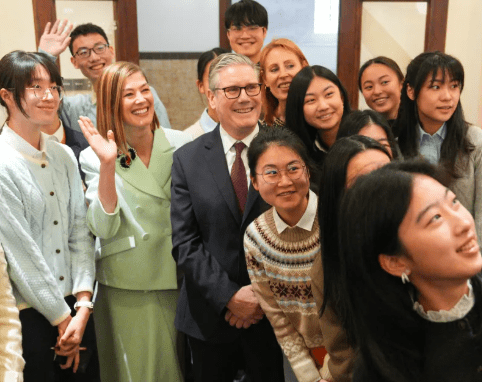
His comments landed just as Starmer arrived in Shanghai on the third leg of a visit framed by Downing Street as pragmatic economic diplomacy conducted “with eyes wide open.”
London’s Economic Re-Engagement with Beijing
Starmer’s meetings with President Xi Jinping in Beijing resulted in a series of agreements focused on trade facilitation, investment, and sector-specific cooperation. Among the most significant outcomes:
- A £10.9 billion investment by AstraZeneca to expand manufacturing operations in China
- Lower tariffs on UK whisky exports, a long-sought objective for British producers
- Visa facilitation measures aimed at easing business travel
- Regulatory cooperation to reduce red tape for UK exporters
- Joint work on health issues, including antimicrobial resistance
The two sides also agreed to enhance intelligence cooperation targeting organized crime and human smuggling networks, an issue with direct relevance to UK domestic migration concerns.
Starmer described his meetings with Xi as “very good” and said the UK had made “real progress,” arguing that Britain has “a huge amount to offer” in a relationship grounded in managed engagement rather than isolation.
Washington’s Strategic Anxiety
Trump’s warning reflects broader U.S. strategic discomfort with allied economies deepening commercial exposure to China amid ongoing geopolitical rivalry. While Washington has encouraged “de-risking” from China in critical sectors, European governments — including the UK — have resisted full economic decoupling.
Notably, British officials pointed out that Washington had been informed in advance about the objectives of Starmer’s trip. UK Business Minister Sir Chris Bryant dismissed Trump’s comments, saying it would be “bonkers” for Britain to ignore China’s global economic weight.
The tension highlights a familiar transatlantic dilemma: balancing security alignment with the U.S. against economic engagement with the world’s second-largest economy.
Trade Reality vs. Security Concerns
China ranks among the UK’s top trading partners, while the United States remains Britain’s single largest national trade counterpart. British business groups welcomed the visit, arguing that engagement reflects commercial reality rather than geopolitical realignment.
However, critics in London warn that economic gains must not obscure security and values concerns. Opposition figures accused the government of risking national security for economic concessions, citing:
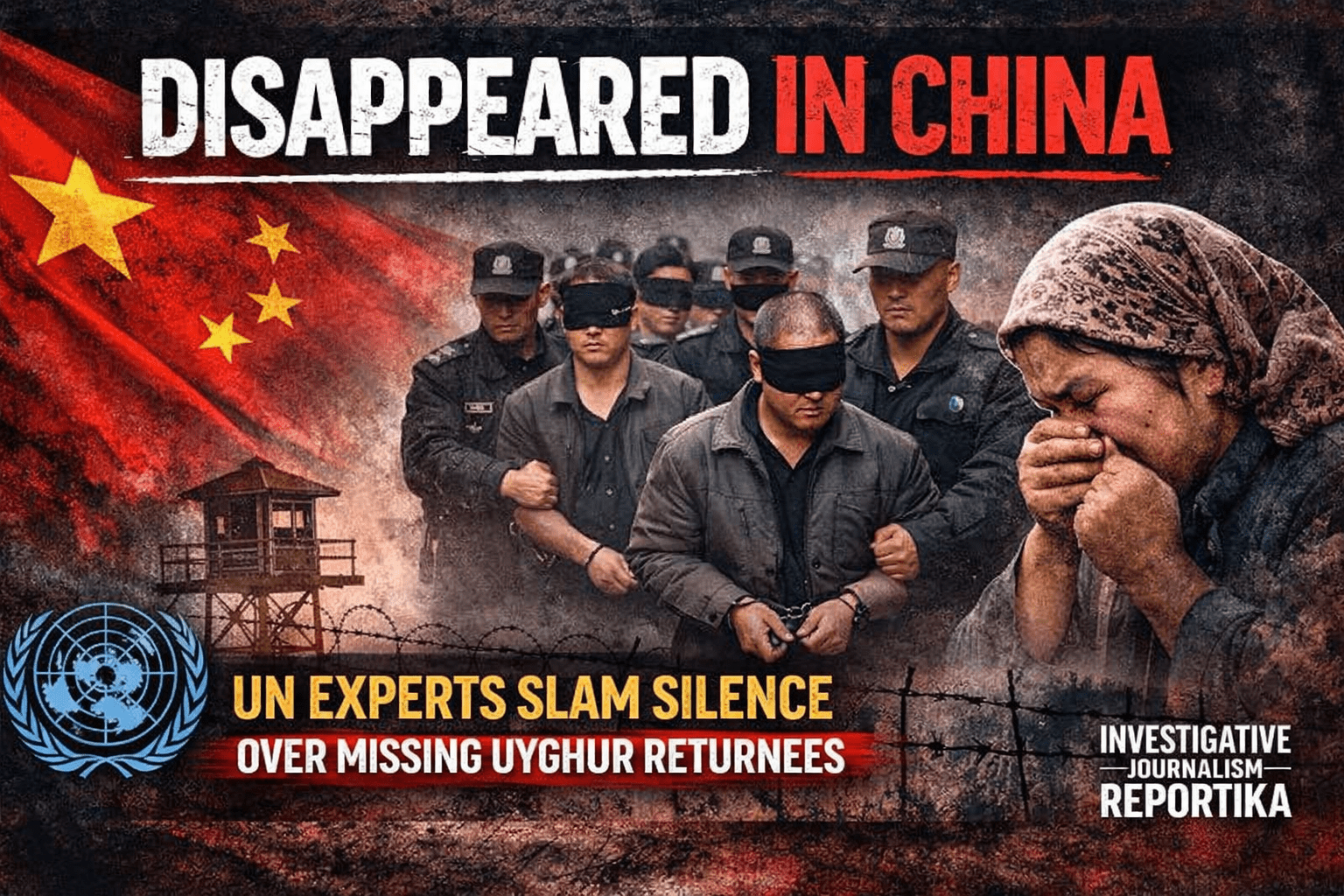
- Allegations of human rights abuses in Xinjiang
- The treatment of Hong Kong media figure Jimmy Lai
- Concerns over Chinese state influence in critical infrastructure
Security officials maintain that intelligence agencies are involved in risk assessments linked to China-related decisions.
A Broader Geopolitical Signal
For Beijing, the visit signals that Western engagement with China continues despite U.S.–China strategic rivalry. For London, it represents an attempt to revive growth through trade while managing strategic risks. For Washington, it underscores the limits of allied economic alignment with U.S. China policy.
Starmer’s stop in Shanghai, followed by onward travel to Japan, places the UK squarely in the complex balancing act shaping 21st-century diplomacy: economic interdependence with China, security partnership with the United States, and mounting pressure from both sides.
The episode illustrates a core reality of current geopolitics — Western unity on China remains strongest on security, but far more fragmented on economics.