Question 1: You have worked across multiple international media platforms, providing real-time geopolitical analysis. What originally motivated you to pursue journalism and foreign policy commentary, and how has your career shaped your understanding of regional strategy?
Answer:
I was drawn to journalism and foreign policy because I wanted to make sense of the forces shaping our world and the Middle East, help others see the connections behind the headlines. Conducting report/Analysis across international platforms has shown me that no actor operates in isolation—regional strategy is a mix of history, domestic/international pressures, and global perception. My work is about uncovering patterns and turning complexity into clear, actionable insight.
Question 2: Iran is often portrayed through sharply polarized narratives—both by Western media and regional rivals. From your vantage point inside the media landscape, what do you see as the biggest misconceptions about Iran’s foreign policy?
Answer:
One of the biggest misconceptions is that Iran’s foreign policy is purely aggressive or ideologically driven. In reality, it’s often pragmatic, shaped by security concerns posed by United States, regional rivalries, and the need to navigate sanctions and international pressure.
Another misconception is how decisions in Iran are made. Western media tries to depict an authoritarian regime which a single person is in charge of every aspect of governance. However decisions in Iran are heavily influenced by domestic/factional politics shaped by democratic institutions and the shifting balance of power in the region. Western and regional narratives often reduce these complexities to simplistic labels, which misses the nuanced strategic calculations that actually guide Tehran’s actions.
Question 3: You have repeatedly argued that Iran’s role in Palestine, Syria, and Yemen is part of a long-term security strategy. How would you summarize Iran’s strategic doctrine toward resistance movements and its deterrence calculations?
Answer:
Iran’s engagement in Palestine, Syria, and Yemen follows a defensive strategic doctrine shaped by decades of external pressure, war, and isolation posed by Western powers. Tehran views resistance axis as forward deterrence—partners that prevent threats from reaching Iran’s borders and compensate for conventional military disadvantages. Rather than seeking expansion, Iran aims to raise the cost of confrontation, preserve regional balance, and deter regime-change scenarios. In this framework, asymmetric alliances are not ideological adventurism but a calculated security response to a hostile regional and international environment.
Question 4: You have covered BRICS expansion and its growing relevance. How do you see emerging blocs such as BRICS+, SCO, and Eurasian economic corridors reshaping global power structures—particularly for countries facing Western sanctions?
Answer:
Emerging blocs are accelerating the shift from a unipolar to a more fragmented, multi-polar global order. For sanctioned states, these frameworks offer practical alternatives—trade settlement outside the dollar system, diversified supply chains, energy partnerships, and political legitimacy beyond Western institutions. While they don’t replace the Western-led system overnight, they reduce its coercive leverage and give countries strategic breathing space. Over time, this rebalancing is less about ideology and more about resilience, connectivity, and choice in global alignment.
Question 5: Regional observers often debate whether great-power competition in West Asia is shifting from military rivalry to economic infrastructure. How do you assess the role of the Belt and Road Initiative, transport corridors, and energy partnerships—especially between Iran, China, Russia, and Central Asia?
Answer:
Great-power competition in West Asia is increasingly being waged through infrastructure, logistics, and energy rather than direct military confrontation. Initiatives like China’s Belt and Road, north–south transport corridors, and cross-border energy partnerships are turning geography into strategic leverage. For Iran, China, Russia, and Central Asia, these projects serve dual purposes: they deepen economic interdependence while reducing exposure to chokepoints and Western pressure. Control over routes, transit hubs, and energy flows is becoming as decisive as military presence—because infrastructure shapes long-term influence, resilience, and the rules of regional connectivity in a multipolar order.
Question 6: Iran and Israel remain locked in escalation cycles that risk wider confrontation. Based on your assessments, what are the most plausible scenarios for the Middle East over the next decade—conflict escalation, containment, or diplomatic rebalancing?
Answer:
The Middle East is far too complex to predict a decade into the future, and frankly, I’m not Nostradamus.
Question 7: As a journalist and analyst appearing on multiple networks, how do you navigate the challenges posed by information warfare, censorship pressure, or narrative framing—especially when discussing contested issues?
Answer:
I try to focus on verifiable facts, clear sourcing, and separating analysis from advocacy, even when the topic is highly contested. In polarized media environments, the challenge isn’t access to information but distortion—what gets emphasized, omitted, or framed emotionally. I manage this by being transparent about assumptions, resisting simplified binaries, and grounding commentary in historical and strategic context. Censorship pressures and red lines exist, but credibility comes from consistency over time: audiences learn to trust analysis that explains why actors behave as they do, not analysis that tells them what to think.
Question 8: Many young journalists across the region look to voices like yours for inspiration. What advice would you offer to emerging reporters seeking to cover geopolitics with depth, accuracy, and independence?
Answer:
I consider myself a new comer to field of Journalism but I think a good journalist should prioritize understanding over speed. Geopolitics rewards those who study history, analyze structures of power, and question easy or dominant narratives. Reliance on mainstream headlines or social media consensus often distorts reality rather than clarifying it.
Journalists must be disciplined with sources, skeptical of all actors—including those they may agree with—and precise about the distinction between reporting and analysis. Independence is not neutrality; it is intellectual honesty and the willingness to remain uncomfortable when facts challenge prevailing frames. Over time, credibility becomes the most valuable asset in this field, carrying far more weight than access, visibility, or momentary influence.
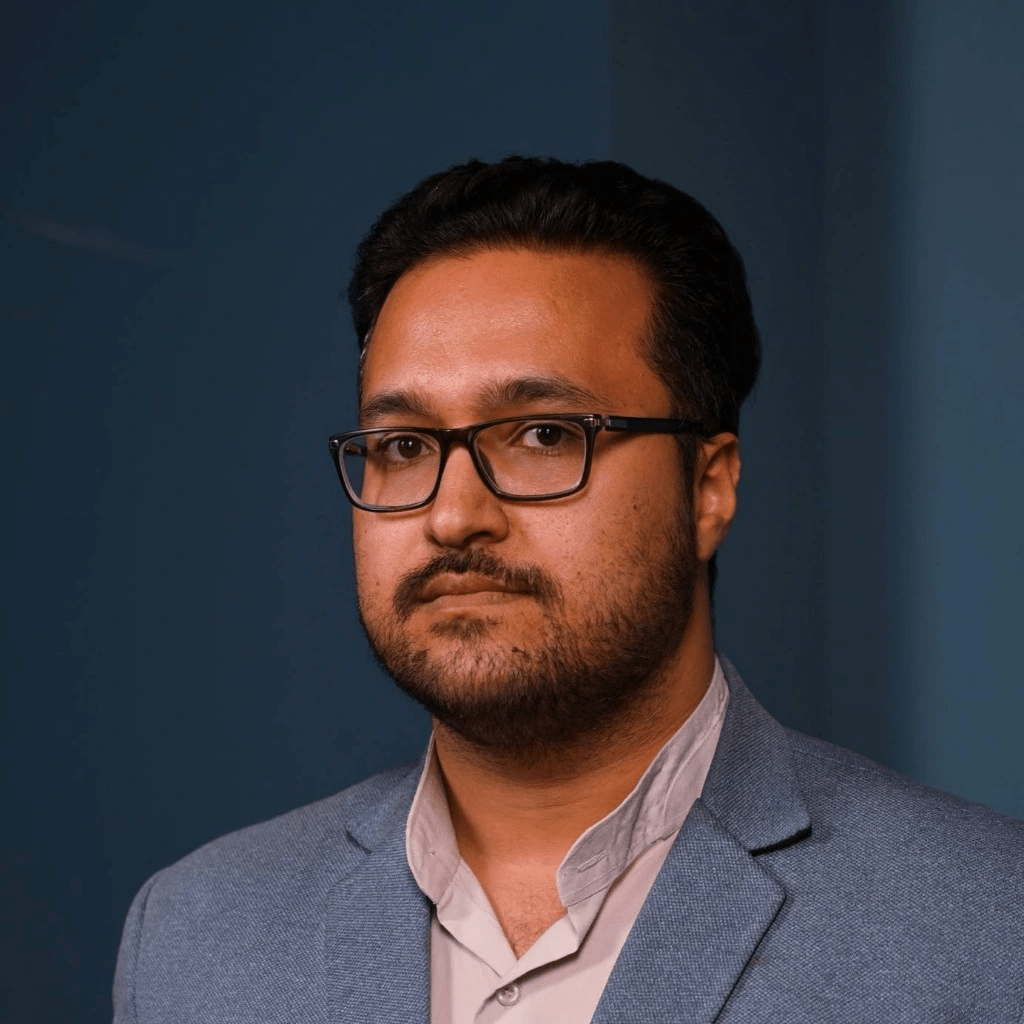
About Mohammad Khatibi
Mohammad Khatibi is an Iranian political analyst, broadcast journalist, and Middle East affairs specialist focused on Iran’s foreign policy, regional security dynamics, and shifting global power structures. Based in Tehran, he provides strategic commentary across international media platforms, offering in-depth perspectives on West Asian geopolitics, resistance movements, BRICS expansion, sanctions diplomacy, and emerging Eurasian economic corridors.
With experience spanning television analysis, newsroom production, and policy research, Mohammad bridges media and strategic studies—translating complex geopolitical developments into accessible insights. His academic background in international relations and regional studies, including training at the School of International Relations of Iran’s Foreign Ministry, informs his work on diplomacy, negotiations, and global institutional dynamics. Fluent in multiple languages, he contributes to cross-cultural dialogue between policymakers, scholars, and global audiences.