US defense bill spends big against China’s maritime claims

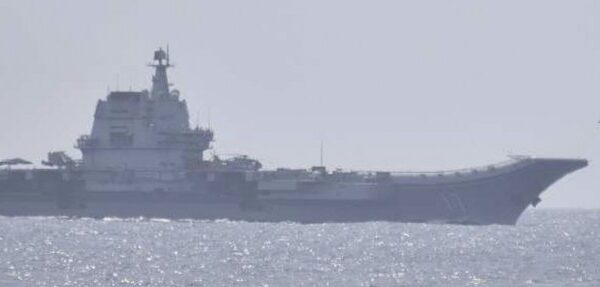
U.S. President Joe Biden on Friday signed into law an $886 billion defense bill that includes US$16 billion to deter China’s expansive maritime claims and approves exemptions for Australia and the United Kingdom to buy American defense technology without licenses. The 2024 National Defense Authorization Act was passed by the Senate on Dec. 18 in a 87-13 vote and by the House on Dec. 19 in a 310-118 vote, after a compromise removed supplemental funding for Ukraine along with contentious abortion and transgender provisions. Senate Majority Leader Chuck Schumer, a Democrat from New York, last week called the compromise “precisely the kind of bipartisan cooperation the American people want from Congress.” Biden said on Friday that parts of the compromise “raise concerns” but that he was “pleased to support the critical objectives” of the bill. The legislation “provides the critical authorities we need to build the military required to deter future conflicts, while supporting service members and their spouses and families,” Biden said. Maritime deterrence  The bill includes $14.7 billion for the Pacific Deterrence Initiative, well above the $9.1 billion requested by the Pentagon. The project, defense officials say, will help bolster U.S. defenses in Hawaii and the Pacific territory of Guam to increase “deterrence” efforts against China.  A fighter plane takes off from the Chinese aircraft carrier Shandong in the Pacific Ocean, south of Okinawa, April 9, 2023. The Pentagon’s Pacific Deterrence Initiative will increase “deterrence” efforts against China. (Japan’s Ministry of Defense/AFP) Bryan Clark, a senior fellow at the Hudson Institute and expert in naval operations, said the “big increase” in funds would help by “improving the resilience and capability of U.S. and allied forces in the Indo-Pacific.” “I expect the increased PDI spending authorized in the NDAA will focus on defense of Guam, improved networking and data integration for U.S. forces in the Indo-Pacific, and accelerated efforts to posture U.S. ground troops in the region,” Clark told Radio Free Asia. A further $1.3 billion is earmarked specifically for the Indo-Pacific Campaigning Initiative, which a Senate Armed Services Committee statement said would fund “increased frequency and scale of exercises, freedom of navigation operations, and partner engagements” as China ramps up its claims of sovereignty. The 2024 bill also authorizes the biggest pay boost to military personnel in two decades, with a 5.2 percent overall bump, and increases the basic allowance for troops and housing subsidies. AUKUS It’s not only U.S. military bases and personnel in the Indo-Pacific that are receiving a large funding boost next year, though. The 2024 bill also approves the sale of nuclear-powered submarines to Australia and exemptions for Australian and British firms from the need to seek licenses to buy U.S. defense technology.  The two provisions – known as “Pillar 1” and “Pillar 2” of the AUKUS security pact between Australia, the United Kingdom and the United States – have proved controversial, with some Republicans in Congress questioning Pillar 1 and some Democrats opposing Pillar 2. Republicans expressed concerns about the ability of shipyards to supply Australia with submarines by the 2030s amid massive building backlogs that have left the U.S. Navy waiting on its own orders.  The Virginia-class attack submarine New Mexico undergoes sea trials in the Atlantic Ocean, Nov. 26, 2009. (U.S. Navy via AFP) Democrats, meanwhile, said they were worried that exempting Australian businesses from the need to seek licenses could open up an avenue for Chinese espionage to procure sensitive U.S. technology. But in the end the provisions passed with bipartisan support – even if the important licensing exemptions remain conditional on Australia and the United Kingdom putting in place “comparable” export restrictions. Rep. Raja Krishnamoorthi, a Democrat from Illinois and the ranking member of his party on the House Select Committee on China, said that the approval of both pillars of AUKUS would be a boon to U.S. efforts to counter the Chinese Communist Party’s maritime claims. “By authorizing the sale of up to three Virginia-class submarines to Australia, and simplifying the process for sharing advanced technologies between our countries, we are taking an important step in strengthening key U.S. alliances and working to maintain a free and open Indo-Pacific region in the face of CCP aggression,” he said. Australian Defense Minister Richard Marles said that the passage of AUKUS meant that Australia, the United Kingdom and the United States are “on the precipice of historic reform that will transform our ability to effectively deter, innovate, and operate together.” Australia’s ambassador to Washington, Kevin Rudd, said earlier this year he foresees a “seamless” defense industry across the AUKUS member states in coming decades if the security pact succeeds. Other measures The bill also establishes a new program to train and advise Taiwan’s military, and funds the Biden administration’s new “Indo-Pacific Maritime Domain Awareness Initiative,” which also is aimed at deterring China’s vast claims of maritime sovereignty. U.S. Assistant Secretary of Defense for Indo-Pacific Security Affairs Ely Ratner said earlier this month would equip American allies across Asia and the Pacific “with high-grade commercial satellite imagery that allows them to have much more visibility into their littorals.” Assistant Secretary of Defense for Indo-Pacific Security Affairs Ely Ratner, seen at Senate hearing earlier this year, says the U.S. will give allies across Asia and the Pacific “high-grade commercial satellite imagery.” (Amanda Andrade-Rhoades/Reuters) Rep. Mike Gallagher, a Republican from Wisconsin and the chairman of the House Select Committee on China, said the bill was suitably focussed on the biggest threats currently facing the U.S. military. “We are in the window of maximum danger when it comes to a conflict with China over Taiwan,” Gallagher said after the House passed the bill. “Ensuring our military has the resources to deter, and if necessary, win such a conflict must be our primary focus in Congress.”

Read More

Myanmar junta kills 7-year-old in northern airstrike

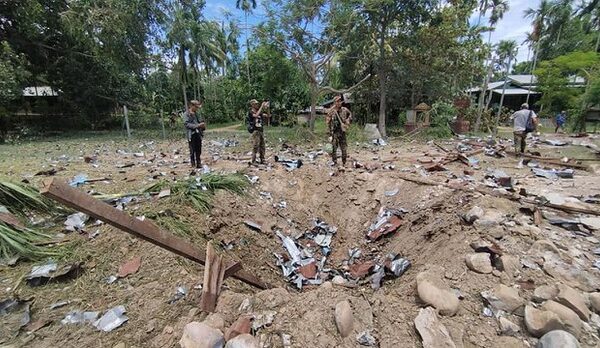
A junta airstrike on a village in Myanmar’s northern Sagaing region killed a seven-year-old girl, residents told Radio Free Asia Friday. The Dec. 16 attack on Paungbyin township’s Kha Maing (West) also claimed the life of an adult woman. Separately on Thursday, a helicopter attack killed 30-year-old Kyaw Soe, and injured five other civilians in Paungbyin’s Tha Yau, according to a local village administrator who wished to remain anonymous for fear of reprisals. “A monastic school building, a market, the road, the soccer field and a highway station were shot at,” he said. “It took only 25 minutes, but the helicopter turned around twice and continued firing. People were not aware and were calm because there had been no fighting. “People are in shock. Women and children are very scared. People didn’t have time to dodge and were shot as soon as they heard the sound of the helicopter.” The injured are being treated by the humanitarian team of Paungbyin People’s Administration Group, he said. Destroyed homes in Nyaung Pin Te village, Chaung-U township, Sagaing region, Dec 21, 2023. (Citizen journalist)  In another attack Thursday, junta troops raided Nyaung Pin Te village in Sagaing’s Chaung-U township, killing a local man and burning nearly 120 houses down – nearly half the homes in the village – residents told RFA. The body of 55-year-old Zaw Win was found on Thursday evening after troops left the village, according to a villager who didn’t want to be named for safety reasons. “He was brutally killed. Only half of his head is left,” he said. “The junta troops burnt the houses in the village for three days. Yesterday … troops torched four places in the village, and took the village rice which was recently harvested at the end of the rainy season.” Troops took 2,000 baskets of rice and 50 bags of fertilizer from the village and slaughtered 10 cattle, he said. Locals said the column of around 100 soldiers from Chaung-U abducted about 80 civilians but released them when they returned to base. They said the villagers were used as human shields because troops feared they would be intercepted by People’s Defense Forces along the route. RFA called the junta’s Sagaing region spokesman Sai Naing Naing Kyaw about the incidents but he said he had no information about them because he had been traveling. Although many villagers returned after the troops left, around 1,400 residents of Nyaung Pin Te village are too afraid to go home, locals told RFA. Across Myanmar more than 2.6 million people have fled the fighting according to the United Nations. Data for Myanmar, an independent research group, announced on Dec 13, that more than 77,000 homes had been burned down since the Feb. 01, 2021 coup. Translated by RFA Burmese. Edited by Mike Firn and Taejun Kang.

Read More

Escaped North Koreans urge China to stop the ‘genocide’ of forced repatriation

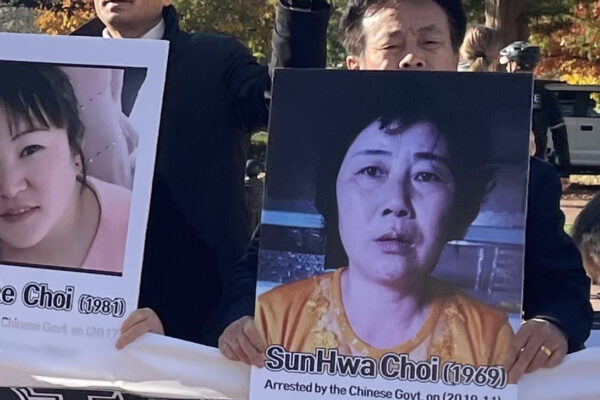
They were brought together on a cold November morning by Beijing’s recent decision to send at least 500 North Korean escapees back to their homeland. Gathered in front of the gates of the Chinese Embassy in Washington, many were friends and relatives of those who have been forcibly repatriated in years past, or who had experienced the ordeal themselves. Those sent back on Oct. 9 would face almost certain punishment – torture, labor camp, sexual violence and even death, warned Human Rights Watch. Heo Young-hak is an escapee who told RFA Korean that his wife was forcibly repatriated by China in December 2019. She is now a political prisoner, he said. “Honestly, my wife was someone who didn’t know anything about violating the law in North Korea,” said Heo, visiting the United States as a member of the Emergency Committee on the Forced Repatriation of North Korean Escapees, a South Korea-based group that demonstrated at various locations in Washington and at the United Nations headquarters in New York. “She was such a nice woman,” said Heo. “But she became a political prisoner…a political prisoner.”  And he doesn’t know if she’s dead or alive. Heo Young-hak holds a picture of his wife, Choi Sun Hwa, who was forcibly repatriated to North Korea in December 2019. He is shown at the Nov. 8, 2023.protest. (Hyung Jun You/RFA Korean) His wife, Choi Sun Hwa, had fled North Korea to be reunited with him and their daughter, as they had escaped to China a month before her. “You know what a political prisoner is, right? You become a political prisoner when you betray your country or engage in activities that are considered treasonous,” he said. “After a year of interrogation and torture, she was eventually sent to a political prison camp, and now there is no way to confirm whether she is alive or dead,” he said. For Heo, China’s insistence on repatriating escaped North Koreans is “tantamount to genocide.” “Once repatriated to North Korea, 80-90% of individuals do not survive,” he said. “There is no way to confirm the status of those repatriated, but the Chinese government’s forced repatriation to North Korea continues. I can only wish that there are no more victims.” ‘Illegal displaced persons’ Critics of Beijing’s policy of returning North Koreans found to have entered the country without authorization say that China is not living up to its agreements to protect refugees. Though the exact figure of North Koreans who have escaped to China are not known, estimates range from the tens of thousands to more than 100,000. China continues to justify forced repatriation by claiming that North Korean escapees in China are  “illegal displaced persons” rather than refugees. Beijing therefore claims it must return the North Koreans to their homeland because it is bound by two agreements with Pyongyang, the 1960 PRC-DPRK Escaped Criminals Reciprocal Extradition Treaty and the 1986 Mutual Cooperation Protocol for the Work of Maintaining National Security and Social Order and the Border Areas.  Fleeing starvation One of the other protesters that morning had herself been repatriated to North Korea twice. “I cannot help but feel enraged as I stand in front of the Chinese Embassy,” said Ji Hanna, who first fled to China in 2010. Ji Hanna, a widow who was forcibly repatriated to North Korea twice, is interviewed in front of the Chinese Embassy in Washington, D.C., Nov. 8, 2023. (Hyung Jun You/RFA Korean) Her husband had died in 1996 in the thick of the so-called Arduous March, the famine that resulted from the collapse of the North Korean economy which had been over-reliant on Soviet aid. By some estimates, more than 2 million people, or about 10% of the population, died between 1994 and 1998. In such dire times, Ji had been trying to provide for her two young sons by conducting illegal trading with contacts in China. She was caught and sentenced to disciplinary labor five times. In November 2009, the North Korean government issued new currency and revalued the old one such that it made the savings of the common people worth about 1% what it had been. This was the last straw for Ji, who made the decision to go to China to earn money, then return to North Korea to get her children out. But she was caught by Chinese police and sent back in 2011. She attempted to escape again but the Chinese border force caught her and sent her back again. While in a North Korean prison, she said she saw people dying from malnutrition every day, and her only food was the uneaten remnants from soldiers’ meals. She escaped again and resettled in South Korea in 2016, where she lives with her two sons. But she says she will never forget the torture and suffering during and after her repatriation. Her legs are scarred, from being whipped with a stiff leather belt daily, and she suffers from severe neck pain from injuries she suffered while incarcerated. “We didn’t commit any major crimes in China. We just tried to find a way to survive and come to South Korea,” said Ji. “How unjust and heartbreaking it is.”  “I managed to survive from the brink of death and succeeded in escaping from North Korea on my third attempt and came to South Korea. I don’t even know if the other people are dead or alive.” Trafficking Most of the North Koreans who escape to China are women, and they can become easy targets for human traffickers. Some end up being sold into marriages, sex work or other forms of servitude. Shin Gum-sil was not at the embassy on Nov. 8, but her cousin Jang Se-yul was, and and he told RFA that Shin had been trafficked when she escaped North Korea in January 2020, right before the whole country was locked down at the beginning of the COVID-19 pandemic. While in China, Shin fell into the hands of traffickers who sold her to an elderly Chinese man…

Read More

Anti-junta forces claim attack on Myanmar’s central region military HQ

Anti-junta armies have attacked Myanmar’s military headquarters of Central Region Command in an old palace compound of Aungmyaythazan township, Mandalay city, the residents and members of forces who conducted the attack told Radio Free Asia on Thursday.  This attack was carried out on Dec. 21 by the Mandalay Security and Special Task Force, People’s Defense Group from Pyinoolwin District, No More Dictatorship and Brave Warriors for Myanmar (BWM), according to a BWM announcement. A BWM official said that they targeted the dormitories where the regional commander and deputy regional commanders of junta’s Central Region Military Command were staying. “We were able to attack with six long-range 107-mm missiles. One device failed to detonate due to a material malfunction. But, five others successfully launched their attacks,” said the official who wished to remain unnamed due to security reasons. “The targets, which included the special office of the Central Region Military Command, the barracks of junta troops, and the residences of the regional commander and deputy regional commander, were successfully struck.” Damages to the buildings and casualties are still under investigation, the official added. A resident of Mandalay who lives near the royal palace compound speaking on condition of anonymity for fear of reprisals said Thursday that following the attack, junta troops intensified security measures and are carrying out searches and checks throughout the city.  “It is true that the military headquarters in the palace compound was attacked. I became anxious and couldn’t sleep anymore. Since it was over two or three o’clock [in the morning]. This morning, as I rode my motor scooter around the neighborhood, I noticed something unusual. The roads were blocked off more than they had been in previous days, and there was an increased checking of motorcycles and cars,” he told RFA Burmese. The Central Region Military Command’s interrogation center is infamous for detaining and questioning anti-coup demonstrators, university students, and members of the People’s Defense Force in Mandalay city, following the military coup on February 1, 2021. RFA Burmese contacted Thein Htay, the military junta spokesman for Mandalay region and regional economic minister, regarding the incident by phone, but he did not reply at time of publication. Separately, on Dec. 20, Mandalay Palace – military headquarters – and some police stations in Mandalay city, including Obo Prison’s main guard posts, were attacked with drone bombs as part of “Operation Shwe Pyi Soe,” according to the Mandalay-based People’s Defense Forces. Edited by Taejun Kang.

Read More

Food, supplies run low at large prison in Myanmar’s Kayah State

Food and medicine shortages are putting nearly 500 prisoners in eastern Myanmar’s Kayah State at risk as fighting between the military junta and resistance forces has hindered the transport of supplies into the capital of Loikaw, aid workers said. Ethnic Karenni forces and anti-junta People’s Defense Force paramilitaries began a coordinated offensive against the military on Nov. 11 in an attack that’s been dubbed “Operation 1111.”  Intense fighting has taken place near Loikaw Prison over the last week as food and medicine supplies continue to drop, said Thike Tun Oo, a member of the leading committee of the Political Prisoners Network-Myanmar.  Basic supplies at the prison are typically stockpiled for about three months, he said. “The military troops are defending the prison against the attacks of joint forces who are holding back on all-out attacks out of consideration for the prisoners,” said Khu Nye Reh, the spokesman of the Karenni Military Information Center.  “Family members dare not visit prisoners due to security concerns,” he said. “In this circumstance, the prisoners will receive only a very small quota of food. Just enough for survival.” Civilians trapped amid airstrikes run to safety during a battle to take over Loikaw in Kayah state, Myanmar, Nov. 14, 2023. (Reuters) Karenni forces have suspended attempts at taking control of the prison, but continue to occupy 85 percent of Loikaw, according to Col. Phone Naing, the Karenni Army’s adjutant general. The prison’s 500 inmates include 140 pro-democracy activists and other prisoners of conscience. Human shield worries “Whether the prison is attacked or not, food supplies and fuel cannot be taken into the city due to the ongoing armed conflict,” said Banyar, the founder of the Karenni Human Rights Group.  “The prisoners will also not receive regular meals and medicines. Patients in the prison cannot be taken out for medical treatments,” he said. “They have lost their human rights.” He added that he’s worried that junta troops will force prisoners to wear military uniforms if they attempt to relocate them or use them as cover. Junta officials haven’t made any statements about the situation of inmates at Loikaw Prison. Radio Free Asia attempted to contact the office of the deputy director-general of the Prison Department, as well as junta spokesman Maj. Gen. Zaw Min Tun, but no one responded to messages. Fighting between Karenni forces and junta troops near the prison in January 2022 also caused food shortages. “We were tightly confined in a prison cell. Food rations were significantly reduced,” a member of the Karenni Political Prisoners Association and a former Loikaw Prison inmate recalled to RFA on Wednesday.  “We even had a hard time finding salt to eat,” he said. “We had no chance to avoid heavy weapon shelling. While I was in this prison, some 120 mm mortars and RPG attacks hit the prison. Our lives were at risk at that time.” The former prisoner also expressed concern for the security of prisoners currently inside the facility. Translated by Aung Naing. Edited by Matt Reed and Malcolm Foster.

Read More

Escaping war in Myanmar for prison in India

Women who escaped the fighting in Myanmar are being detained and beaten in an Indian prison, according to a group that helps Burmese refugees. The India For Myanmar group said Tuesday the women have gone on hunger strike to demand their release from the prison in Manipur state which borders Sagaing region and Chin state. The group’s spokesperson Salai Dokhar said that the hunger strikers were being tortured at the command of prison authorities. “The prison authorities promised to release them on Dec. 15. Since they were not released on the 15th, the inmates of the women’s prison went on a hunger strike from the 16th. But starting on the night of the 17th, they were forced to sleep where it had snowed as punishment,” he said.  “On Dec. 19, the authorities started beating the inmates. They called policemen and asked them to beat the female prisoners. I heard that there are some critically injured people.” The husband of one of the women, who wished to remain anonymous for fear of reprisals, told Radio Free Asia on Tuesday that 36 protesting Myanmar women were beaten. “Those who have already been sentenced to five months in prison and fined were told that they would be released on Dec. 15. But they were not released, so they started protesting on the 16th. On the 18th they were beaten by policemen, and they were severely beaten,” the man said. “My wife has swollen cheeks. Some of the women lost their Htamein [Burmese traditional lower dress for women]. The policemen stopped beating them when their Htamein came off and they looked inappropriate.” He added that Burmese prisoners in the men’s dormitory had also been on hunger strike since Dec. 19 to support the female inmates. There are currently around 100 Myanmar nationals in Manipur prisons. Male inmates are held in detention centers and the women are in prisons according to family members. Manipur authorities charged those arrested under the Foreigners Act and sentenced them to a fine and imprisonment of up to six months. RFA Burmese emailed the Indian Embassy in Yangon about the beatings but did not receive a reply at time of publishing on Wednesday. Salai Dokhar said India For Myanmar would call on the chief minister of Manipur to release the Myanmar nationals as soon as possible and treat them as war victims. Currently, a total of 86 Myanmar refugees and migrant workers are being held in Manipur prisons, according to those helping refugees and migrant workers. They said there are around 6,000 Myanmar war refugees in Manipur state. Most of them are from Kale and Tamu townships in Sagaing region and Tedim, Tonzang townships in Chin state. Translated by RFA Burmese. Edited by Mike Firn and Taejun Kang.

Read More

Son of prominent Cambodian lawyer sought in fatal hit-and-run crash

A Phnom Penh prosecutor issued an arrest warrant on Tuesday for the son of a prominent lawyer who is suspected in a hit-and-run car accident that killed a decorated badminton player. The victim’s wife posted on Facebook this week that the suspect’s father – Prohm Vicheatsophea – attended the funeral of badminton gold medalist Seang Kimhong and offered the family US$1,000 if they agreed to not pursue criminal charges against his 23-year-old son. The victim’s wife, Kruy Chhin Liang, said on Facebook that she rejected Prohm Vicheatsophea’s proposition and said she would continue to demand justice for her husband. Her post has received hundreds of comments from Cambodians outraged by the offer.  Justice Minister Keut Rith responded by ordering Phnom Penh Municipal Court prosecutors to “investigate and resolve the matter properly and strictly according to the law,” ministry spokesman Chin Malin told the Khmer Times. The Dec. 14 accident between a jeep and a motorcycle took place in Phnom Penh’s Toul Kork district, an area of the capital known for its large villas. Seang Kimhong was riding on the motorbike, according to Kruy Chhin Liang. Prosecutor Plong Sophal wrote in the warrant that evidence proves that Prohm Vichet Sosakda was the driver of the car and fled the scene “without responsibility.” The suspect has been ordered to appear at the Phnom Penh Municipal Court before Jan. 9. Seang Kimhong won the gold medal in badminton at this year’s SEA Games, a regional Olympiad that takes place every two years and was hosted by Cambodia for the first time in May. Because of its rampant corruption and inadequate constraints on government power, Cambodia often places near the bottom of global rankings for adherence to the rule of law. In October, the World Justice Project put Cambodia at 141st out of 142 countries. Soeung Sengkaruna, a spokesman for human rights group Adhoc, said authorities should take strict measures against the suspect, regardless of his background. Several NGOs are closely monitoring this case, he added. Typically, prominent suspects are able to escape justice when they are accused of a crime, he told Radio Free Asia.  “But we are looking to see if the authorities are working hard to bring this suspect to justice,” he said.   Translated by Yun Samean. Edited by Matt Reed and Malcolm Foster.

Read More

Anti-junta forces capture Myanmar border crossing gate

One of Myanmar’s powerful anti-junta armies has seized a key border gate from the military in a self-administered part of eastern Shan state, residents told Radio Free Asia on Tuesday. Communist Party breakaway group the Myanmar National Democratic Alliance Army – or MNDAA – occupied the Yanlonkyaing (Yan Long Zhai) border trade gate in the Kokang Self-Administered Zone’s Laukkaing township on Monday. A Laukkaing resident told RFA he heard gunshots near the gate on Monday morning. “I heard continuous shots from [the Myanmar] side of Yanlonkyaing gate Monday,” said the man who didn’t want to be identified for fear of reprisals.  “The gate was seized in the morning. That was the only place left and [MNDAA troops] are saying there are no more places left to capture. I do not hear the sound of gunfire anymore.” A source with knowledge of the military situation, who wished to remain anonymous for safety reasons, said junta troops and affiliated militias had surrendered. A video of the MNDAA providing cash assistance to those who surrendered – seen by RFA Burmese – was posted on social media by the group. Shan state-based media outlets have also reported that the Yanlonkyaing border gate was captured by MNDAA forces. RFA tried to contact MNDAA Kokang spokesman Li Kyarwen but did not receive a reply at time of publication Tuesday. The junta has not released any statement regarding the incident.  Translated by RFA Burmese. Edited by Mike Firn and Taejun Kang.

Read More

The limits of a Russia-China partnership that claims to have none

Three weeks before Russian tanks rolled into Ukraine last year, President Vladimir Putin traveled to Beijing for the opening ceremony of the Winter Olympics hosted by Chinese President Xi Jinping – an event shunned by Western leaders. In a 5,300-word joint statement issued the same day, Xi and Putin said their friendship had “no limits” – a declaration that caused a wave of unease in the West. It signaled that the world’s two preeminent authoritarian powers were making common cause. Beijing was also Putin’s first overseas visit outside the former Soviet Union in October since an arrest warrant was issued by the International Criminal Court against him for war crimes in Ukraine. In recent years, the China-Russia relationship has deepened as the two nations have sought a new world order against their common rival, the United States. However, since the war began, China has avoided providing direct military aid to Russia. Bilateral ties between the two powers are more complex and nuanced than meets the eye. Moscow’s association with China has a long and storied past that pre-dates the rise of the Chinese Communist Party to power in Beijing seven decades ago. Belarus-born Chiang Fang-liang poses with her husband, former Taiwan President Chiang Ching-kuo, March 15, 1985. Credit: AFP Kuomintang’s Soviet bride In the early afternoon on Dec. 15, 2004, Chiang Fang-liang – widow of former Taiwanese President Chiang Ching-kuo – died of respiratory and cardiac failure at a hospital in Taipei at age 88. She had lived a quiet, lonely life as a member of Taiwan’s first family. Her husband and three sons all passed before her. Born Faina Vakhreva in the Russian Empire, she was a member of the Soviet Union’s Communist Youth League and met her future husband when they both worked at a factory in Siberia. They married in 1935. A few years before that, Chiang’s father, Generalissimo Chiang Kai-shek, led the Chinese nationalist party Kuomintang to power in mainland China. Yet in 1949, the victory of the Communists drove the Chiang family and their government to retreat to the island of Taiwan, where Fang-liang lived and died. The Soviet Union, and Russia afterwards, have had little contact with Taiwan, but the Chiang family’s Russian connection served as a reminder of how much influence the Soviets once had over the politics across the Taiwan Strait. Chiang Ching-kuo arrived in the USSR aged 15 and spent 12 years there. He embraced the life of a Soviet Marxist, even adopted a Russian name – Nikolai Vladimirovich – after Vladimir Ilyich Lenin, the first leader of the USSR. The Kuomintang, founded in 1912 by Sun Yat-sen, for a long time received support and aid from the Soviet Union. However, during the Chinese Civil War (1927-1949) the Soviets turned to support the Communists who defeated the Nationalists and established the People’s Republic of China. Chiang Fang-liang is seen with her husband, former Taiwan President Chiang Ching-kuo, and their children in an undated photo. Credit: AFP/KMT In his memoir “My Days in Soviet Russia,” Chiang Ching-kuo recalled his time as being “completely isolated from China, I was not even allowed to mail a letter,” and those long years were “the most difficult” of his life. All his requests to return to the mainland were rejected by the authorities, according to Russian historians Alexander Larin and Alexander Lukin, as Chiang was virtually held hostage by Lenin’s successor as Soviet leader, Joseph Stalin. Chiang and his small family were allowed to leave the USSR in 1937 when in China the Kuomintang and the Communists formed a new alliance to fight against a Japanese invasion that presaged World War II. That was a lucky escape for them as the Soviet country was undergoing a period of extreme political repression known as the Great Purge, during which hundreds of thousands of Stalin’s political opponents were removed and eliminated. From then until her final days, Chiang’s Russian wife would never set foot in her motherland again. The years in the Soviet Union led Chiang Ching-kuo “to examine socialism with a more critical eye, and contributed to his evolution towards anti-communism,” argued Larin and Lukin, who said that the failure of the Soviet economic system played a part in Taiwan’s transition to market reforms under Chiang’s premiership during the 1970s. And not only in Taiwan, “eventually, the Chinese communists in mainland China arrived at the same conclusion” about the Soviet economic model, according to the Russian authors. “Deng Xiaoping, the architect of mainland Chinese economic reforms, was a classmate of Chiang … and had a similar although much shorter experience in the USSR,” they wrote. Good neighbors From the 1960s to the 1990s, the Sino-USSR relationship was marked by turbulence, including a seven-month border conflict in 1969. Mao Zedong’s China condemned Moscow for “betraying communism” while the Soviet Union withdrew all economic assistance to Beijing. It only warmed up after Mikhail Gorbachev became the general secretary of the USSR Communist Party and initiated the political and social reform called perestroika. After the Soviet Union dissolved, China recognized the Russian Federation as its legal successor on Dec. 24, 1991. Moscow and Beijing signed a Treaty of Good-Neighborliness and Friendly Cooperation 10 years later, paving the way for a new chapter in their special partnership. Soviet leader Mikhail Gorbachev [right] gestures as he talks with Chinese leader Deng Xiaoping during a meeting in 1989 in Beijing. Credit: Boris Yurchenko/AP A joint statement on the 20th anniversary of the treaty in 2021 said that Russian-Chinese relations “have reached the highest level in their history.” “The Russian-Chinese relations are based on equality, deep mutual trust, commitment to international law, support in defending each other’s core interests, the principles of sovereignty and territorial integrity,” it said. Officially, Sino-Russia ties are described as a “comprehensive partnership and strategic interaction in the new era,” according to the Russian Ministry of Foreign Affairs. China has been Russia’s largest trading partner since 2010, with two-way trade reaching US$140.7 billion in 2021 and $134.1 billion in…

Read More

Two dead, 3 injured in airstrikes on central Myanmar village

A junta jet dropped bombs and opened fire with machine guns on civilians in three townships killing two women and injuring three more, locals and People’s Defense Force members told Radio Free Asia. The aircraft attacked Magway region’s Seikphyu, Pauk and Saw on Friday night forcing almost 8,000 people to flee the townships. Locals identified the dead women as 21-year-old Yu Nandar and 24-year-old May Thingyan from Seikphyu’s Than Pu Yar Pin village. They were cremated on Friday evening according to a resident who declined to be named for fear of reprisals. “Two bombs fell when the girls were collecting water. They died on the spot,” he said. “The jet went back and opened fire with machine guns, hitting two children and a woman. The woman, Tin San Htwe was hit in [the back of her head] and is still unconscious.” About 600 people live in 140 houses in Than Pu Yar Pin village. They told RFA Burmese they were afraid to return to their homes because there may be more airstrikes. A People’s Defense Force officer based in Seikphyu said the junta launched an attack even though there had been no fighting because it considers the township strategically important. “Seikphyu is a key place,” he said.  “Wazi, which prints banknotes, is in the area. There is an Air Defense Operations command headquarters and an aviation training school. Also there are two defense equipment factories.” Calls to junta spokesman Than Swe Win seeking comment on the junta’s airstrikes, went unanswered. Some 730 civilians have been killed and 1,292 injured by airstrikes and heavy artillery this year according to data compiled by RFA,  Translated by RFA Burmese. Edited by Mike Firn.

Read More