
Category: East Asia
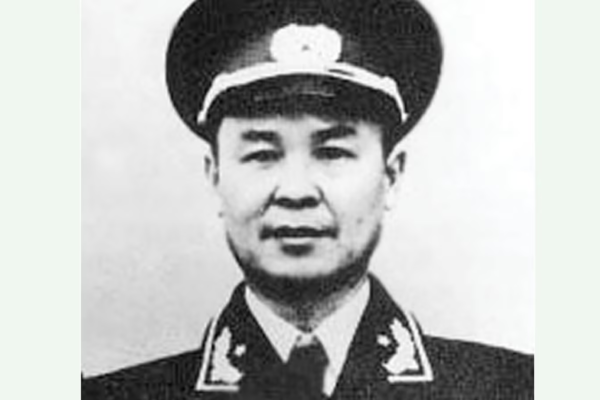
China Honors Wei Guoqing Tied to Cannibalism in Full-Honors Burial Ceremony
Beijing, China — The ruling Chinese Communist Party (CCP) recently reburied the ashes of Wei Guoqing, a founding general of the People’s Liberation Army and former regional party chief in Guangxi, with full honors, despite his notorious association with atrocities during the Cultural Revolution. The high-profile burial ceremony, held on October 24 at Beijing’s Babaoshan Revolutionary Cemetery—a final resting place for China’s top leaders and revolutionary heroes—was attended by relatives of late revolutionary leaders Zhu De and Peng Dehuai. Wei’s legacy is overshadowed by his role in the brutal Guangxi Massacre, where factional violence during the Cultural Revolution led to the deaths of an estimated 100,000 to 150,000 people through methods like beheadings, stoning, drowning, and even cannibalism. Investigative Journalism Reportika recently highlighted similar cases in its report on China’s Soft Power Propaganda Network, which examines how the CCP shapes narratives by honoring figures with violent histories while downplaying their actions to project a cohesive revolutionary image. Public Outrage and Satire News of Wei’s burial sparked outrage on Chinese-language social media, with comments characterizing Wei as a “butcher” and satirizing the CCP’s willingness to honor a figure associated with such violence. One user on X (formerly Twitter) remarked, “Babaoshan is already packed full of demons and monsters – there’s always room for one more,” while another joked, “Paying tribute to a legendary gourmet,” accompanied by an image of Wei with a fictional KFC backdrop. These comments reflected disgust, referencing notorious fictional killers and highlighting the lasting resentment in Guangxi over his legacy. Symbolism and Political Commentary Experts suggest the burial of Wei’s remains is politically symbolic. Feng Chongyi, a professor at the University of Technology in Sydney, argued that honoring Wei signals President Xi Jinping’s positioning as a political heir to Mao Zedong, endorsing the Cultural Revolution’s “struggle” tactics. “By giving him the honor of entering Babaoshan, Xi Jinping is endorsing the persecution mania of the Cultural Revolution,” Feng said, noting parallels between Xi’s approach and Mao’s. Professor Yang Haiying of Japan’s Shizuoka University added that Wei’s burial reflects the CCP’s unwillingness to distance itself from the violent legacies of the Cultural Revolution. Investigative Journalism Reportika’s report emphasized that the CCP continues to honor violent figures as a means to reinforce its revolutionary ethos, using their stories to control narratives in a way that bolsters the CCP’s own historical legacy. Wei Guoqing died on June 14, 1989, days after the Tiananmen Square massacre ended student-led pro-democracy protests. His ashes remained in storage until this recent burial, renewing public discourse around his legacy and the lasting impacts of the Cultural Revolution’s brutality. Reference: https://www.rfa.org/english/china/2024/11/02/china-enshrines-cultural-revolution-leader-guangxi-massacre-cannibalism
To Lam moves to secure full term at pinnacle of Vietnamese power
To Lam’s recent relinquishing of the presidency of Vietnam is no sign of weakness or a challenge to his leadership. It was a logical step toward securing a full term as Communist Party general secretary. In a system that prides itself on collective leadership, there was consternation within the Communist Party of Vietnam, or CPV, about Lam’s rapid accumulation of power over the past year. The National Assembly has been signaling since August that this transfer of power would happen. For Lam, the presidency was just a stepping stone. While he seemed to enjoy the diplomatic function and traveled to eight countries in his brief five month tenure, and there’s a logic to the most powerful person being the country’s top representative, his priority is getting elected to a full term with his team at the 14th Party Congress in January 2026. While Lam may be the CPV general secretary, he still needs the support of the party Central Committee, and there are other power centers that he has to contend with. He has nothing like Xi Jinping’s hold over the Communist Party of China. Stacking the Politburo The 18-member Politburo elected at the 13th Party Congress in January 2021 has fallen to a low of 12 members. Lam has moved to fill the ranks. There have been five new Politburo members elected since May, including his protege, Luong Tam Quang at the Ministry of Public Security, or MPS. Deputy Prime Minister of Vietnam Tran Luu Quang delivers a speech at the Nikkei Forum “Future of Asia” in Tokyo on May 25, 2023 Lam understands that the party’s legitimacy comes through performance. Lam is not just stacking the Politburo; he’s appointing allies, especially those from his home province of Hung Yen, across key party positions. Lam installed another MPS deputy, Nguyen Duy Ngoc, as the head of the Central Committee office, a very powerful behind-the-scenes position in personnel issues and agenda setting. Lam now has his eyes and ears at the nerve center in the Central Committee. Ngoc also serves on the CPV’s 12-member Secretariat, which runs the party’s day-to-day affairs. Institutional checks Also new to the Secretariat is Le Minh Tri, who heads the Central Committee’s Civil Affairs Committee and is the prosecutor general of the Supreme People’s Procuracy. Le Hoai Trung, Lam’s top foreign policy adviser, who has been by his side in all foreign trips and meetings, also serves on the Secretariat. Lam is also moving to neutralize opposition. He appointed Vu Hong Van, a police major general also from Hung Yen, as deputy chairman of the Central Inspection Commission. Its chairman, Tran Cam Tu, is the one person on the Politburo who could cause the general secretary some trouble. He heads an investigative body with powers to investigate senior leadership that’s beyond Lam’s control. And as a reminder that Lam is not in complete control, on Oct. 25, the Politburo elected Tu as the standing chairman of the Secretariat, over Lam’s preferred candidate, Nguyen Duy Ngoc. Soldiers march in a parade in Dien Bien Phu, Vietnam, May 7, 2024. The other institutional check is the People’s Army. While armies tend to dominate politics in Southeast Asia, in Vietnam, power is the security police, a reflection of the regime’s fear of popular color revolutions. In addition to Lam and Luong Tam Quang, there are four other members of the Politburo who came up through the Ministry of Public Security. Many have looked to the military as an institutional check on the MPS, which is why the election of Luong Cuong to the presidency on Oct. 21 is seen as so important. Gen. Cuong is a career political commissar, becoming the chief of the Vietnam People’s Army’s General Political Department in 2016. As the top party official in the military, he also served on the Secretariat since 2016, becoming its standing chairman when Truong Thi Mai was forced to resign in May. In addition to Cuong, Minister of National Defense Phan Van Giang serves on the Politburo. Shoring up army ties Lam has been trying to build ties to the military. As general secretary, he is concurrently the chairman of the Central Military Commission, the highest defense decision-making body. In that capacity, he routinely meets with different military units and leadership. Lam’s also trying to carefully make his mark on personnel. He promoted Trinh Van Quyet, the current head of the General Political Department, to the Secretariat. He promoted three other senior officers from Hung Yen Province, including Deputy Minister of National Defense Hoang Xuan Chien, and Lt. General Nguyen Hong Thai, the commander of Military Region 1, which borders China. Even if the generals aren’t happy with a cop as chairman of the Central Military Commission, Lam is slowly putting his people into leadership positions. And all this matters, because the army comprises 11-13% on the Central Committee, the largest single bloc. Lam understands that getting allies into key positions should make himself unassailable just over a year from now at the 14th Congress. Through Luong Tam Quang, he can continue to investigate rivals. Other allies are in charge of personnel selection and drafting key party documents. The Communist Party of Vietnam has a culture of collective leadership – a norm that Lam briefly violated. By ceding the presidency, especially to a military man, he neutralizes some of the opposition to him, while giving up very little real power. In his consolidation of power, Lam took down eight different rivals on the Politburo since December 2022, a period of unprecedented political churn. Any more turmoil could be counter-productive. Lam seems to have succeeded in getting all his ducks in a row to be elected to a full term in January 2026. So rather than see the relinquishing of the presidency as a sign of weakness, it’s more accurate to think of it as a sign of growing political strength. Zachary Abuza is a professor at the National War College in Washington and an adjunct at Georgetown…
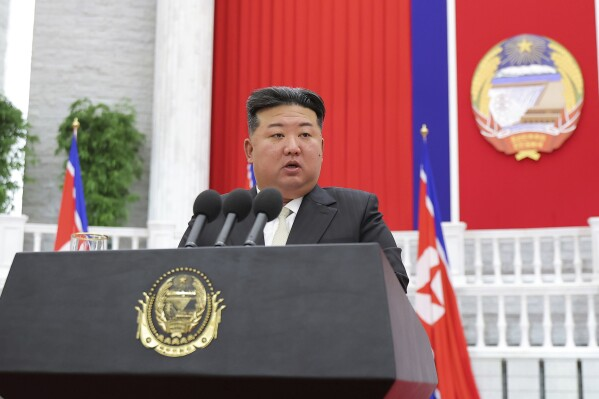
North Korea Intensifies Inspections on Propaganda Speakers called the Third Network
Ryanggang Province, North Korea — North Korea’s main anti-socialism inspection division is conducting door-to-door checks in the northern Ryanggang province to ensure that government-installed propaganda speakers in every household are functioning. Known as the “Third Network,” these speakers deliver local government messages, propaganda songs, and emergency alerts, often deemed critical for mobilization during times of crisis. Unified Command 82, established in 2021 to consolidate anti-socialism inspection units, is leading the current inspections, marking the second round of checks this year following a similar operation in March. Since October 11, residents have been required to listen to daily patriotic war songs and follow all government broadcasts, residents told Investigative Journalism Reportika under anonymity. By October 21, the inspections intensified, with inspectors identifying citizens who were either missing speakers or not actively tuning into the broadcasts. Households lacking a working speaker have been advised to purchase one through the post office, while those failing to comply are being publicly reprimanded. According to a local agricultural worker, many rural homes face challenges with the Third Network, with some areas still disconnected due to infrastructure issues dating back to the 1990s economic crisis. As a solution, officials proposed that residents donate dried ferns or omija berries to fund the purchase of broadcasting lines from China. However, this proposal has met resistance, as rural citizens are already struggling to meet basic needs. With a looming deadline at the end of November, officials warned that local party leaders may face severe punishment if they fail to restore full speaker functionality in their communities. However, previous years’ similar threats of punishment have reportedly gone unenforced.
Cashing In
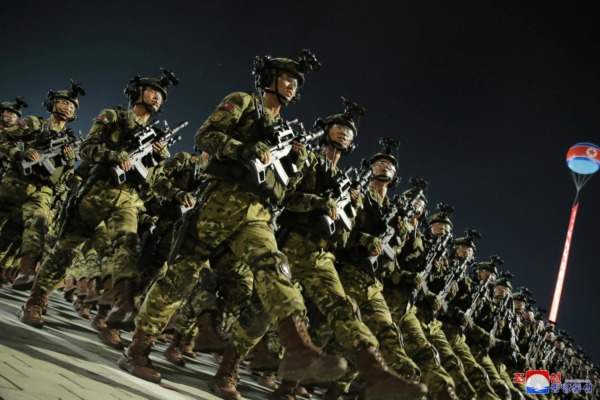
North Korea is sending more than 10,000 Korean People’s Army troops to fight for Russia in Ukraine, with some 3,000 already moved close to the front in western Russia. The deployment, under a security partnership pact North Korean leader Kim Jong Un and Russia’s Vladimir Putin signed in June, has raised concern among the U.S. and allies South Korea, Japan and Ukraine. Critics see mercenary motives in Pyongyang, which will receive cash and technology for the mission. We are : Investigative Journalism Reportika Investigative Reports Daily Reports Interviews Surveys Reportika
Tensions Escalate as North Korean Troops Enter Russian Combat Zones : Ukrainian intelligence
Summary:Ukrainian intelligence has reported intercepted calls revealing concerns among Russian troops about Russia’s integration of North Korean soldiers into its combat units near the Ukrainian border. With around 10,000 North Korean troops allegedly stationed in Russia’s eastern region and more expected to arrive in Kursk, the situation marks a significant development in the Russia-Ukraine conflict. This report examines the recent collaboration between Russia and North Korea, the operational challenges faced by Russian troops, and the potential impacts on regional security. Intelligence Findings According to Ukraine’s Defense Intelligence Agency, intercepted audio reveals frustration among Russian soldiers stationed in Kursk. The Russian troops expressed concerns about the logistics, leadership, and resources required to effectively integrate North Korean forces. In one intercepted call, a Russian soldier expressed outrage over orders to allocate already scarce Russian armored vehicles to the North Korean troops. Another soldier noted a shortage of translators, leading to an ad-hoc arrangement where Russian servicemembers attempted to manage language barriers themselves. In a particularly contentious call, a soldier used a derogatory term to refer to North Korean troops, reflecting cultural and operational divides that could further complicate Russia’s integration efforts. North Korean Forces and Strategic Deployment The Pentagon recently confirmed that around 10,000 North Korean troops are now stationed in Russia, with a projected deployment to Kursk in the coming weeks. This represents a marked increase from prior estimates, signaling an accelerating commitment by North Korea to support Russian military efforts. Command and Control Issues:To address language and communication barriers, Russia reportedly assigned one translator and three Russian personnel for every 30 North Korean soldiers. However, intercepted calls indicate Russian soldiers doubt that these measures will ensure effective command and control over the mixed units. These logistical and command challenges raise questions about the combat effectiveness of these newly integrated units. Intervention from South Korea:Amidst the Russian-North Korean alliance, Ukraine has strengthened ties with South Korea. Ukrainian President Volodymyr Zelenskyy and South Korean President Yoon Suk Yeol have initiated intelligence sharing and plan to exchange military delegations. Both leaders expressed concerns over the potential combat role of North Korean troops near the Russia-Ukraine border. Diplomatic Developments North Korea’s Foreign Minister arrived in eastern Russia, marking her second trip within six weeks. While she is scheduled to meet Russian officials in Moscow, Kremlin sources report that Russian President Vladimir Putin has no plans to meet with her. This visit underscores North Korea’s increasing engagement with Russia amidst mounting global sanctions. Implications for the Russia-Ukraine Conflict The integration of North Korean soldiers may provide a temporary boost in manpower for Russia but presents significant operational challenges. If Russia deploys these troops to the frontlines, the linguistic and logistical issues could weaken unit cohesion and effectiveness. Additionally, South Korea’s engagement with Ukraine may introduce new intelligence-sharing capabilities that could counteract North Korea’s involvement in the conflict. Conclusion:As North Korean troops move closer to active combat zones, the Russia-Ukraine conflict enters a new phase of international entanglement. Operational inefficiencies and geopolitical tensions continue to evolve as the conflict broadens, with the involvement of North Korean forces and heightened South Korean-Ukraine relations potentially altering the strategic calculus on the ground.
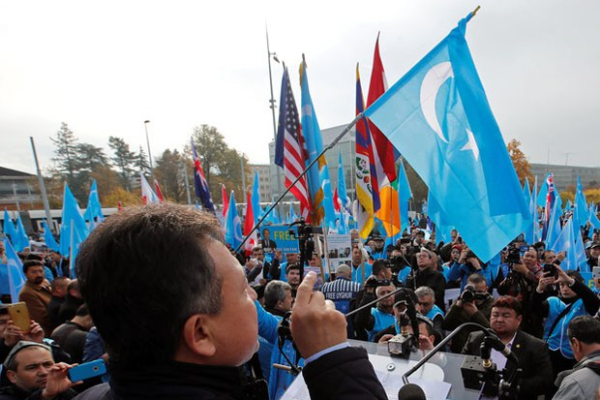
Uyghur advocacy group to hold elections despite threats by China
World Uyghur Congress to elect new president during its general assembly in Sarajevo, despite harassment and threats from China.
Myanmar rebels seize major border gate near China
Read RFA coverage of this topic in Burmese. Allied insurgent forces in northern Myanmar have captured a main junta post near the border with China, an officer of the anti-junta Kachin Independence Army told Radio Free Asia on Tuesday, the latest setback for the military in the resource-rich region. The Kachin Independence Army, or KIA, is based in Myanmar’s northernmost state and is one of the most powerful groups battling for autonomy. It has made significant progress over the past year, capturing rare earth and jade mines as well as routes for border trade with China. KIA information officer Naw Bu told RFA the latest junta position to fall was the Border Guard Post No. 1003, on the Waingmaw-Kan Paik Ti road, from where junta forces defend nearby towns. “Forces captured the camp that was providing security to Kan Paik Ti town. After that, they also captured the camp in between Border Guard Posts No. 5 and 6,” he said. “Also along the Bhamo-Momauk road, junta soldiers have been fighting intensely for two days after coming up with armored cars.” Kachin state has long been one of Myanmar’s opium growing regions and Naw Bu said junta troops were stationed near hundreds of acres of poppy fields in the area. RFA tried to telephone Kachin state’s junta spokesperson, Moe Min Thein, for information about the situation but calls went unanswered. A resident of the area who declined to be identified for security reasons said fighting was still going on near the poppy fields forcing about 1,000 villagers to flee to Kan Paik Ti town for safety. “As for Kan Paik Ti, there are still junta soldiers, militia members and border guards there. Residents are worried about fighting there,” the resident said. Last week, KIA and allied forces captured military positions near the border town of Pang War, to the northeast of Kan Paik Ti and a major rare earth mining center. In response to the fighting, China closed border gates under KIA control late on Friday, refusing to allow civilians fleeing the area to enter, and trapping about 1,000 people. Since July, KIA and allied forces have captured 12 towns, including Mabein, Chipwi and Lwegel, as well as 220 camps across Kachin and northern Shan states. Translated by Kiana Duncan. Edited by RFA Staff. We are : Investigative Journalism Reportika Investigative Reports Daily Reports Interviews Surveys Reportika
China calls for action after attack on consulate in Myanmar
Read RFA coverage of this topic in Burmese China on Monday urged Myanmar’s junta to find and punish the perpetrators of a bomb attack on its consulate in Mandalay over the weekend, but observers warned that more attacks are likely amid public anger over Beijing’s support for the military regime. China has remained one of the junta’s few allies since the military orchestrated a coup d’etat and seized control of Myanmar in February 2021. Chinese investment in Myanmar is substantial, and the armed opposition has attacked several projects in a bid to cut off badly-needed revenue for the junta, which is straining under the weight of global sanctions in response to its putsch. On Friday evening, unknown assailants detonated a bomb at the Chinese consulate in Mandalay region’s Chanmyathazi township, damaging part of the building’s roof, the junta and Chinese Ministry of Foreign Affairs announced on Saturday. No one was hurt in the blast. No group or individual has claimed responsibility. On Monday, Chinese foreign ministry spokesperson Li Jian condemned the attack and called on the junta to “make an all-out effort to hunt down and bring the perpetrators to justice.” The Chinese consulate in Mandalay also urged all Chinese citizens, businesses and institutions in Myanmar to monitor the local security situation, strengthen security measures and take every precaution to keep themselves safe. Myanmar’s junta has said it is investigating the incident and is working to arrest those responsible. Opposition condemns attack An official with the Mandalay People’s Defense Force, which runs anti-junta operations in the region, denied responsibility for the bombing. “The Mandalay People’s Defense Force has not carried out any urban missions, including the attack on the Chinese consulate general’s office recently,” said the official who spoke to RFA Burmese on condition of anonymity due to security concerns. The foreign ministry Myanmar’s shadow National Unity Government, or NUG, also condemned the bombing in a statement that said it opposes all terrorist acts that tarnish relations with neighboring nations. It said differences of views should be solved through diplomatic means rather than violence. “Such kinds of attacks have absolutely nothing to do with our NUG government or our People’s Defense Force,” said NUG Deputy Foreign Minister Moe Zaw Oo. “We never commit terrorist acts and we condemn such attacks.” RELATED STORIES China undermines its interests by boosting support for Myanmar’s faltering junta China denies entry to Myanmar nationals trapped by battle Myanmar rebels capture border base near Chinese rare-earth mining hub Moe Zaw Oo suggested that the junta had orchestrated the attack to “[create] problems between our forces and China.” “The junta is trying to exacerbate the conflict … and sowing discord,” he said, without providing evidence of his claim. Tay Zar San, a leader of the armed opposition, echoed the NUG’s suspicion that the junta was behind the attack. “The military regime and its affiliated organizations are intentionally provoking ethnic and religious conflict under the context of anti-Chinese sentiment,” he said, adding that the junta has “organized” anti-Chinese protests in downtown Yangon and Mandalay. He also provided no evidence to back up his claims. Attempts by RFA to contact junta spokesperson Major General Zaw Min Tun for a response to the allegations went unanswered Monday. Enemy of the people Tay Zar San said that the people of Myanmar have been angered by Beijing’s support for the junta and its attempts to pressure ethnic armed groups along its border to end their offensive against the military. Since launching the offensive nearly a year ago, heavy fighting for control of towns in northern Shan state has sparked concern from China, which borders the state to the east, and forced it to shut previously busy border crossings. China has tried to protect its interests by brokering ceasefires between the junta and ethnic armies, but these haven’t lasted long. Myanmar’s Army Commander Senior Gen. Min Aung Hlaing, left, speaks with Chinese President Xi Jinping at a hotel in Naypyidaw, Jan. 18, 2020. (Office of the Commander in Chief of Defense Services via AP) Junta supporters have expressed concern that territory lost to the armed opposition will not be retaken and are posting messages opposing China’s engagement on social media. Earlier, the junta supporters staged anti-China protests in Yangon, Mandalay, and the capital Naypyidaw. Than Soe Naing, a political commentator, said that the people of Myanmar will increasingly target China if Beijing continues supporting the junta. “As this struggle intensifies, anti-Chinese sentiment in Myanmar is likely to grow,” he said. “However, it is important to recognize that this is not a conflict with the Chinese people, but rather a response to the Chinese Communist Party’s stance and the misguided policies of its leadership on the Myanmar issue.” Additional tension The consulate bombing came amid reports that China’s military had fired at the junta’s Russian-made MiG-29 fighter jets as they carried out airstrikes on ethnic rebels on the border. A video of the purported attack – in which anti-aircraft guns fire into the air while Chinese-language commands are given – went viral on Saturday evening, although RFA has been unable to independently verify its authenticity or the date it took place. Additionally, an official with the People’s Defense Force in Sagaing region’s Yinmarbin township told RFA that his unit had ambushed a junta security detail guarding a convoy of trucks carrying copper from the Chinese-run Letpadaung Copper Mine Project in nearby Salingyi township. At least one junta soldier was killed, but the convoy was able to proceed, said the official, who also declined to be named. A traffic police officer directs traffic near a welcoming billboard to Chinese President Xi Jinping, in Naypyidaw, Jan. 17, 2020. (Aung Shine Oo/AP) RFA was unable to independently verify the official’s claims and efforts to reach the junta’s spokesperson for Sagaing region went unanswered Monday, as did attempts to contact the Chinese Embassy in Yangon. In late August, junta chief Senior Gen. Min Aung Hlaing vowed to protect Chinese assets and personnel in Myanmar during a meeting…
Over a dozen children missing after Myanmar boat accident
Read RFA coverage of this topic in Burmese. A boat carrying 70 people off the coast of southern Myanmar overturned on Sunday night and eight people were confirmed dead and 17 were missing, including children heading back to school after a holiday, a rescue worker told Radio Free Asia. The crowded ferry capsized when it encountered strong currents soon after setting off from the island village of Kyauk Kar, bound for Myeik town to the south in the Tanintharyi region, said a resident of the area who declined to be identified due to media restrictions imposed by military authorities. “We only managed to recover eight bodies last night. There are a lot still missing,” said the rescue worker who also declined to be identified. “There are also survivors. We don’t know the exact list. Right now, it’s chaos.” Boat accidents are common in Myanmar, both on its many rivers and off its coasts. Hundreds of commuters, migrant workers and refugees have been involved in accidents this year. The resident said students heading back to school after the Thadingyut holiday, along with their parents and others displaced by recent conflict in the area, were among the victims of the accident that occurred as the ferry was passing through a channel known for treacherous currents. “From Kyauk Kar there’s … the opening of the ocean where the current is too strong,” one resident said. “When the current was too rough, due to the boat’s position and because it was top heavy, it overturned.” The eight people found dead were identified as seven women between the ages of 16 and 60, and a three-month-old boy, residents said. According to a rescue committee, 47 people survived while 17 children were unaccounted for. Residents and civil society organizations were searching for more victims. The military has not published any information about the accident, and calls by RFA to Tanintharyi region’s junta spokesperson, Thet Naing, went unanswered. RELATED STORIES Scores killed by Asia’s most powerful storm of the year Eight missing after boat accident in Myanmar’s Yangon 16 Myanmar workers missing in Golden Triangle boat accident Translated by Kiana Duncan. Edited by RFA Staff. We are : Investigative Journalism Reportika Investigative Reports Daily Reports Interviews Surveys Reportika
In rare appeal, Tibetan calls for company to stop digging up river
A Tibetan from Sichuan province has made a rare public appeal on Chinese social media, calling on authorities to take action against a company that he accuses of illegally extracting sand and gravel from a local riverbed, Tibetan sources with knowledge of the situation said. In a 5-minute video posted on WeChat on Oct. 15, Tsongon Tsering from Tsaruma village in Kyungchu county said Anhui Xianhe Construction Engineering Co.’s digging has caused severe soil erosion and a drop in water levels in the Tsaruma River. Such public appeals are rare due to fear of reprisals from the government for speaking out against authorities or state-approved projects. Authorities have since shut down his account and blocked search terms related to his name on WeChat, a popular Chinese social media platform, said two sources from inside Tibet, who like others in this report, declined to be identified out of fear of retribution. Tsering’s case illustrates how authorities silence Tibetans who accuse Chinese companies of violating environmental regulations or harming the environment. In the video, Tsering says Tibetan residents had made repeated appeals before local authorities for action against the company for causing environmental harm, but to no avail. Tsongon Tsering, a Tibetan man from Tsaruma village in Kyungchu county in China’s Sichuan province, calls for authorities to take action against illegal sand and gravel mining taking place since May 2023 on the Tsaruma River. (Image from citizen video via WeChat) “The Anhui Xianhe Construction Engineering’s business office has been illegally extracting sand and stones from the river in Tsaru Ma Village during their road construction work,” he says in the video while holding up his ID card. “The large-scale and indiscriminate extraction of sand from the river has led to serious soil erosion in the surrounding area and is posing a threat to the foundations of residents’ homes,” he continues. Tsering’s video, which gained significant attention online, was also widely shared by other users on the platform but even those were taken down and all related content censored by Thursday, Oct. 17, the two sources said. Sources from the region said they fear Tsering, who hails from Ngaba Tibetan and Qiang Autonomous Prefecture, will face punishment for his public criticism of authorities. RELATED STORIES US coordinator highlights Tibet’s role as regional freshwater source Hundreds of thousands of Tibetans forced to relocate, report says EXPLAINED: The impact of climate change on the Tibetan plateau China’s climate change stance seen undermined by destructive policies in Tibet Tibet’s environment: Is it better or worse? Four other sources inside Tibet confirmed Tsering’s statement that the sand extraction from the local river has caused environmental harm and that locals had reported the issue to various government departments at the village and county levels. They also provided photos and videos as evidence of the damage, but no action had been taken, said the sources. Tsering’s video, which had around 10,000 views in a day’s time, received more than 500 comments from netizens, the majority of whom expressed support for his appeal and called for environmental protection and for the Chinese state media and authorities to address the issue. Tsering also tagged official Chinese media outlets in his post to draw their attention. Affects the Yellow and Yangtze In the video, Tsering explained that the Tsaruma River, where the extraction is taking place, is linked to the Yangtze and Yellow River systems, two of China’s most important. “The pollution of these river sources and the protection of local ecosystems and biodiversity are deeply interconnected issues,” he said. “Moreover, this directly affects the water resources of Asia and the conditions of the high-altitude frozen soil.” A sand mining operation is seen along the Tsaruma River in Kyungchu county in Sichuan province, China, in this image posted Oct. 15, 2024, by Tibetan resident Tsongon Tsering. (Image from citizen video via WeChat) On Oct. 17, a source told RFA that following Tsering’s online appeal, the Kyungchu County Development and Reform Office had promised a thorough investigation into the matter. An official from the Ngaba Prefecture Ecological Protection Office said his office was aware of the issue and investigating it in collaboration with the Sichuan Provincial Ecological Environment Monitoring Office, Chinese state media reported. The agencies would release their findings soon, he said. “Although environmental protection policies were introduced many years ago, implementation issues persist in our area,” said Tsering in the video. Brushing it under the rug In it, he confirms that the county’s Ecological Environment Bureau responded to his complaint in April 2024, confirming that the construction company had extracted sand and stones from the river and that it had been fined. But Tsering said the response merely covers up for the relevant business enterprise and tried to brush the problem under the rug. “They have addressed minor issues while avoiding the major ones, and have not taken any action to restore the ecological environment or manage the soil erosion situation,” he said. “They have simply erected barriers around the endangered house foundations and considered the matter resolved.” Anhui Xianhe Construction Engineering, registered in China in June 2012, is involved in various construction projects including road construction, urban development, hydropower projects and environmental protection works. RFA Tibetan could not reach the company for comment. Additional reporting by Dorjee Tso and Tashi Wangchuk for RFA Tibetan. Translated and edited by Tenzin Pema and by Roseanne Gerin and Malcolm Foster. We are : Investigative Journalism Reportika Investigative Reports Daily Reports Interviews Surveys Reportika
