
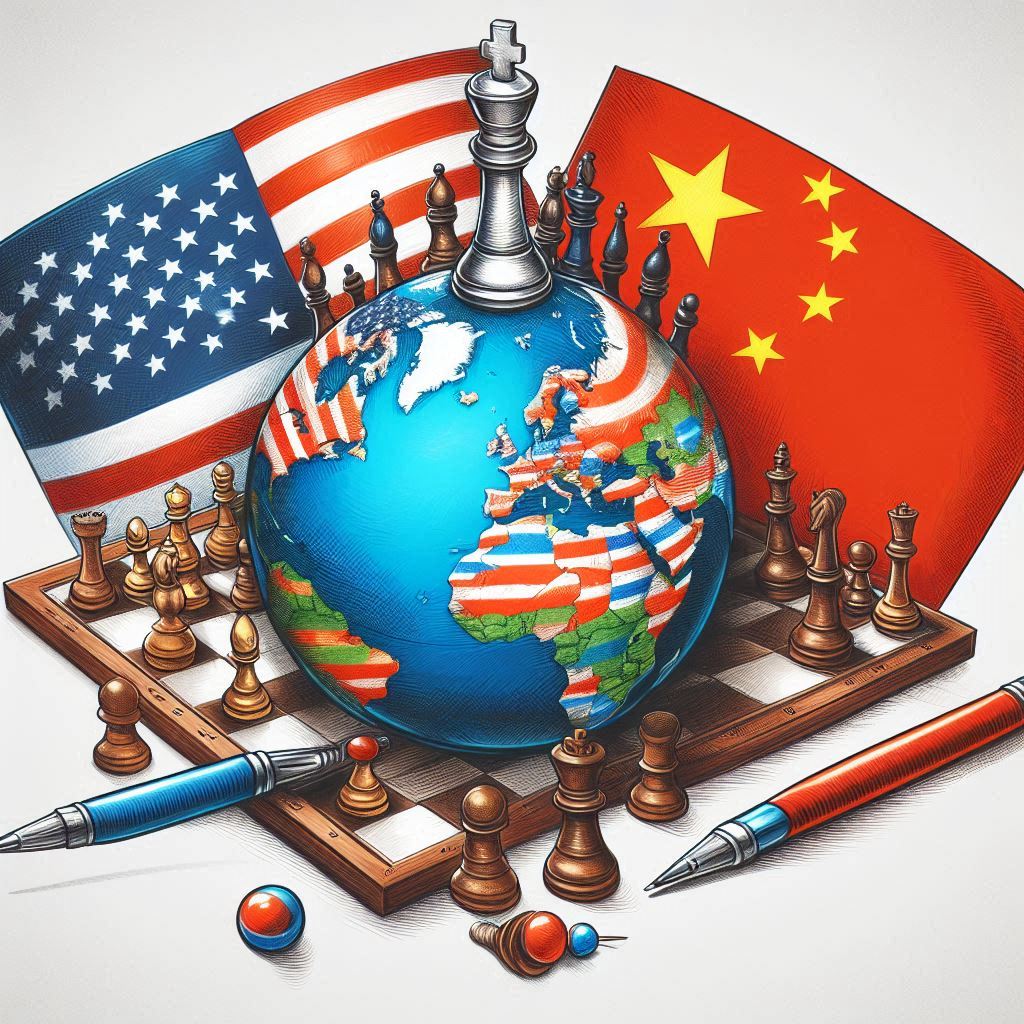
Category: East Asia
Cambodia, Laos sack foreign ministers in preparation for more combative geopolitics
On Nov. 19, Sok Chenda Sophea, who was only brought in as Cambodia’s foreign minister last year, was given the in as secretary of state. Washington’s leading China hawk is expected to take a much tougher stance on Beijing’s partners in Asia, such as Cambodia, and on mainland Southeast Asia’s vast scam industry that is increasingly victimizing U.S. citizens. Unlike Sok Chenda Sophea, Prak is more of a ruling-party partisan who can push back against U.S. criticism. Presumably, Phnom Penh realizes it’ll soon have to wade into a new fight with Washington, making it even more important to be on the best terms with Beijing. Beijing won’t be displeased by Prak’s return. Attuned to Beijing China is believed to have grown weary with some of the princelings installed in Hu Manet’s cabinet during last year’s vast generational succession process. It has been lobbying for the return of Prak, an old-style politician who understands how Beijing prefers things to be done. In Vientiane, Saleumxay did a good job in recent years of pitching Laos to the rest of the world, including the West, and as the only fluent English speaker in the Politburo was key to securing some important development assistance packages from Japan, the U.S., and European states. Yet Laos’s dire economic situation, particularly its massive debts to China, isn’t improving, and only Beijing has the ability to assist meaningfully. A damning report by the IMF published last week noted that Laos’s economy “critically relies on the continued extension of debt relief from China.” Vientiane knows it must narrow its foreign relations again to focus squarely on China. Indeed, the communist party is eager to find a more senior role for pro-Beijing figures like Sommath Pholsena, currently a deputy president of the National Assembly and a childhood friend of Xi Jinping, China’s president. He’ll likely be the next National Assembly chair. Thongsavanh Phomvihane, the new foreign minister, started his career at Laos’s embassy in Beijing, has closer ties to the Chinese Communist Party, and is more of a party loyalist than Saleumxay. Like Prak, he’s an older, more traditional and safer pair of hands, someone who understands what Beijing wants and how to provide that. David Hutt is a research fellow at the Central European Institute of Asian Studies (CEIAS) and the Southeast Asia Columnist at the Diplomat. He writes the Watching Europe In Southeast Asia newsletter. The views expressed here are his own and do not reflect the position of RFA. We are : Investigative Journalism Reportika Investigative Reports Daily Reports Interviews Surveys Reportika
Cambodian trafficking victim describes forced marriage, abuse in China
Sok Suosdey had always worked hard to help support her family in Cambodia’s Oddar Meanchey province, on the border with Thailand, but no matter what she did, they remained poor. In 2016, things became even more dire when her family was saddled with repayment of a loan to a local bank. So when a neighbor approached her that year with the opportunity to make a higher salary in China, Sok Suosdey – who asked to use a pseudonym for this report to protect her privacy – leapt at the chance. After making the necessary preparations, she departed to the bustling city of Shanghai, excited with the prospect of becoming financially independent in China and helping her family get free from debt back home. But around a month after her arrival, the woman who had promised her a job told her she would have to marry a deaf Chinese man and if she refused, she would be on the hook for the costs associated with her relocation to China – a sum far beyond her ability to pay. Sok Suosdey agreed, but said that after her marriage, she was reduced to “a slave” in her husband’s home. She was made to take a job to earn money for the family, but her mother-in-law also forced her to do household chores whenever she had a break, and subjected her to relentless physical and mental abuse, she said. “Every day, my mother-in-law chased me to work from 10 am-11 pm, sometimes until 2 am,” she told RFA Khmer. “I only slept three hours a night, and I worked very hard. When I was at home, I also worked as a seamstress, sometimes as a laborer, or putting springs into children’s water guns.” Sok Suosdey said that if she needed new clothes, she was made to buy them with her own money. Her mother-in-law also refused to let her communicate with Cambodian friends she made or with family members back home, as “she was afraid I would run away from home.” “My Chinese mother-in-law insulted me and made me hurtful and fed up,” she said. Things were no different after having a child with her husband. “The most painful thing was that after I gave birth to a son, my mother-in-law kept me away from him and didn’t let him know who I was,” she said. “She wouldn’t let me take care of him and would even call the police when I tried to take him to school.” Trafficking to China According to a report by the human rights group Adhoc, in the first nine months of 2024, at least 29 Cambodian women were trafficked to China. Of the trafficked women, 28 were forced to marry Chinese men. According to the same source, in 2023, 28 Cambodian women were rescued from human trafficking in China. The NGO said that some of the women who married Chinese men were beaten, abused and forced to work as slaves by their husbands and families. In addition to physically and mentally abusing the women, some families also forced them into sex work, leaving them traumatized, it said. RELATED STORIES Trafficked Cambodian teenage girl returns from China Cambodian teen rescued from family home in China after Facebook plea ‘He told me that if I ran away he would report me to the Chinese police’ Sok Suosdey told RFA that, because she could no longer endure the abuse, she saved enough money to buy a mobile phone and started to seek help via social media. She started a group on Facebook for Cambodians in China and spent time searching for people she knew lived close to her parents back home. It was through these sources that she was able to contact her mother and get authorities at the Cambodian Consulate to intervene on her behalf. On July 16, 2024 – seven years after being trafficked to China – Sok Suosdey finally returned home to her family in Cambodia. Now 35, things have not been easy for Sok Suosdey back home, according to Sun Maly, the head of Adhoc’s Women’s Unit. She is the sole breadwinner of a household with an elderly mother, a father who was blinded during Cambodia’s civil war, and a younger brother with a mental disorder. But despite the challenges, Sok Suosdey is thankful for her rescue and overjoyed to be reunited with her loved ones, she said. Assisting victims When victims of human trafficking return to Cambodia, they receive assistance from the Ministry of Social Affairs’ Veterans and Youth Rehabilitation agency, which provides them with mental health treatment and rehabilitation. However, the assistance is only temporary, and many victims face a long road to recovery. A Cambodian victim of trafficking (c) hugs her parents after she returns home from being rescued in China, in an undated photo. Once a victim is released from the Ministry of Social Affairs, humanitarian groups such as Adhoc step in to provide additional help. Adhoc’s Sun Maly said that her NGO now provides victims with sewing machines to help them achieve financial stability by starting their own business following their rescue. “My case manager has helped to find skilled trainers who can help women victims in tailoring,” she said. “Most villages have tailors, but as they age out, a victim with the ability to sew can replace them by setting up their own garment business.” Some victims told RFA that the Cambodian government needs to do more to pressure Chinese authorities to investigate claims of trafficking inside China. Chou Bun Eng, the permanent deputy chair of the Ministry of Interior’s Anti-Trafficking Committee, told RFA that she has met with Chinese authorities in the past to highlight the need to investigate such claims. However, she said that her Chinese counterparts regularly deny that there are any cases of Cambodian women being trafficked and forced into marriage in China – only consensual marriages. Domestic violence they classify as a “family dispute,” she said. “I’m not saying that all cases involve trafficking –…
A forlorn father
Just over a decade after the dramatic downfall of the Chinese Communist Party leader Bo Xilai, a populist princeling rival of Xi Jinping who was ousted and jailed for corruption and murder, his son Bo Guagua emerged from a long public absence when he arrived in Taiwan for his wedding. Guagua, who was once known as a playboy who partied with celebrities and drove Italian sports cars while his father was the CCP boss of Chongqing, is set to marry a Taiwanese woman named Hsu Hui Yu. Hsu’s grandfather was a prominent member of the Kuomintang, the CCP’s Chinese civil war foe, in a ceremony that has created a stir on the island. We are : Investigative Journalism Reportika Investigative Reports Daily Reports Interviews Surveys Reportika
Myanmar’s Kachin insurgents take control of their border with China
Read RFA coverage of this topic in Burmese. The most powerful insurgent group in northern Myanmar had captured the last crossing in its region on the border with China in defiance of Chinese efforts to press it and other Myanmar rebel forces to make peace with the junta that seized power in 2021. The Kachin Independence Army, or KIA, has been fighting for self-determination in Myanmar’s northernmost Kachin state on and off for decades and has made significant advances against the military over the past year. KIA and allied fighters launched a final push for Kan Paik Ti town, 75 kilometers (46 miles) east of the state capital, Myitkyina, early on Wednesday and captured it by around 7 p.m., a resident and a source close to the KIA said. “The junta soldiers fled to the border fence or to the Chinese side,” said a town resident who declined to be identified for safety reasons. “Employees of the junta administration have also been fleeing from the border gate to China.” Junta forces initially sent an aircraft to fire at insurgent positions but the town was quiet on Thursday, the resident said. The source close to the KIA said junta forces had launched attacks in other areas after the fall of Kan Paik Ti. Residents had no information about casualties in the latest fighting. Kan Paik Ti town on the China-Myanmar border in Kachin state on Nov. 20, 2024. RFA tried to reach Kachin state’s junta spokesperson, Moe Min Thein, and the KIA’s information officer, Naw Bu, for information but neither responded by time of the publication. The KIA and allied forces in northeastern, western and eastern Myanmar have made stunning gains over the past year, putting the army under the most severe pressure it has faced since shortly after independence from Britain in 1948. But the insurgents’ success has alarmed giant neighbor China, which has extensive economic interests in Myanmar, including energy pipelines running up from the Indian Ocean and mining projects. RELATED STORIES Residents in Myanmar feel the crunch as trade with China shuts down Myanmar junta chief seeks China’s help on border stability Fresh Chinese support may not be enough to save Myanmar junta China has thrown its support behind the junta, promising to back an election next year that the junta hopes will bolster its legitimacy, and putting pressure on the KIA and other insurgent groups to respond positively to junta offers of talks. The junta leader, Sen. Gen. Min Aung Hlaing, renewed a call to insurgent forces to talk peace while on a visit to China on Nov. 6, telling Chinese Prime Minister Li Qiang that stability was crucial for economic development and trade. But the insurgents have dismissed the junta’s offer as a trick and reject the planned election as a sham when Myanmar’s most popular politician, Aung San Suu Kyi, and hundreds of other opponents of military rule are in prison. Over the past year, the KIA has captured jade and rare earth mines that export to China, and both sides have at different times sealed the border, partly to put economic pressure on the other side. China recently closed the border to civilians seeking shelter from fighting and has also shut off supplies reaching KIA-controlled areas leading to shortages of fuel and medicine. The KIA responded by suspending exports of rare earths to China, and the group now controls every border crossing through which the minerals vital to a range of Chinese manufacturing pass. Translated by Kiana Duncan. Edited by RFA Burmese. We are : Investigative Journalism Reportika Investigative Reports Daily Reports Interviews Surveys Reportika
Tibetan environmentalist released after serving nearly 15 years in prison
Read original story in Tibetan A prominent Tibetan art collector and environmental activist who was sentenced to prison in 2010 has been released after serving nearly 15 years amid deteriorating health and is expected to remain under strict surveillance, three sources told Radio Free Asia. Karma Samdrub, 56, was arrested by Chinese authorities in January 2010 and sentenced by the Yangi County Court in Xinjiang later that year on trumped up charges of excavating ancient tombs and robbing cultural artifacts, despite having been cleared of all charges in a 1998 investigation. He was released from prison in Xinjiang’s Shaya County on Monday, according to the three sources, who spoke to RFA on the condition of anonymity for security reasons. In photos taken just after his release, the once well-built Tibetan businessman is seen needing the support of at least two to aid in his walking. “He is now suffering from spinal and back-related health issues and needs assistance to even walk due to prolonged mistreatment, torture and prison labor in the past 15 years,” one of the sources told RFA. Karma Samdrub, center, reunites with family and friends following his release from prison on Nov. 18, 2024. (Citizen Photo) Chime Namgyal received a two-year sentence on charges related to his conservationist work with Rinchen Samdrup. One of the three sources who spoke to RFA said that the two brothers were among the family members, friends and acquaintances who welcomed Karma Samdrup home this week. As part of his 2010 sentence, Samdrub will be deprived of all political rights for the next five years. This means that his civil and political freedoms will be restricted, including the right to the freedom of assembly and speech, as well as the right to hold a position in various organizations. Additional reporting by Tsering Namgyal. Translated by Tenzin Dickyi. Edited by Tenzin Pema, Matt Reed and Malcolm Foster. We are : Investigative Journalism Reportika Investigative Reports Daily Reports Interviews Surveys Reportika
Five years on, PolyU protesters say they were defending freedoms
Five years after riot police besieged Hong Kong’s Polytechnic University and trapped protesters fought back with catapults and Molotov cocktails, four people who were there say they were trying to stand up for their promised rights and freedoms in the face of ongoing political encroachment from Beijing. The 10-day siege of PolyU began on Nov. 18, 2019, after around 1,000 protesters occupied the university as part of an ongoing series of actions to achieve the movement’s key demands: fully democratic elections; the withdrawal of plans to allow extradition to mainland China; greater official and police accountability; and an amnesty for detained protesters. The protesters were then trapped on campus as riot police encircled the area, prompting nearly 100,000 people to turn out to battle riot police across Tsim Sha Tsui, Jordan, Yau Ma Tei, Mong Kok and other parts of the Kowloon peninsula. Four young people who were among the besieged protesters spoke to RFA Cantonese on the fifth anniversary of the siege, which ended Nov. 19, 2019, and proved to be one of the last major standoffs between black-clad protesters and riot police after months of clashes sparked by plans to allow extradition to mainland China. Protesters are sprayed with blue liquid from a water cannon during clashes with police outside Hong Kong Polytechnic University in Hong Kong, Nov. 17, 2019. He said many young protesters were motivated by a desire to burn their home city to the ground rather than acquiesce in its transformation into another Chinese city under Communist Party rule. “Nowadays, the Chinese Communist Party is no longer hiding its authoritarian tendencies, and has been sanctioned by the international community, while the Hong Kong economy declines by the day,” Kai said. “This shows that our idea that we would all burn together was right on the money,” he said. Around 1,300 people were arrested, with around 300 sent to hospital for injuries related to water cannon blast, tear gas, and rubber bullets, as protesters wielding Molotov cocktails, catapults and other makeshift weapons from behind barricades beat back repeated attempts by riot police to advance into the university campus. Small groups of protesters continued to make desperate bids for freedom throughout the siege, many of them only to end up being arrested and beaten bloody by police. Police also deployed tear gas, water cannon, and rubber bullets against a crowd of thousands trying to push through towards Poly U from Jordan district, with hundreds forming human chains to pass bricks, umbrellas, and other supplies to front-line fighters. “I took part in a lot of protest-related activities from June [of that year] onwards, although I never considered myself a front-line fighter,” a former protester living in the United Kingdom who gave only the pseudonym Kit for fear of reprisals, told RFA Cantonese in a recent interview. “But I felt that if I wasn’t prepared to take it further, then we really would lose the rule of law in Hong Kong.” Protesters leave the Hong Kong Polytechnic University campus to surrender to police, in Hong Kong, Nov. 19, 2019. “What impressed me most was that some of the protesters used a homemade catapult to launch Molotov cocktails, which set fire to the police armored vehicle, forcing it to retreat,” he said. “Everyone cheered when that happened.” “Actually, the situation inside PolyU was total chaos, with a lot of misinformation coming in, and nobody really knew what to do,” he said. Tin said he had fled Hong Kong and wound up in Japan after traveling to several other countries first. “I’ve had good and bad experiences over the last five years, but I’ve survived,” he said. A former protester now living in Germany who gave only the nickname Hei for fear of reprisals said he went to PolyU on Nov. 17 to try to persuade his fellow protesters to leave while they still could. Before he knew it, he was trapped inside. “I wanted to persuade them to leave, because the situation was critical, with helicopters flying overhead,” Hei said. “But they refused to leave.” Hei never thought he’d be stuck there for as long as he was. “When it became clear at around 9.30 that evening that those of us left inside weren’t going to be able to leave, things got pretty dark,” he said. “One guy told us to make a written statement pledging not to commit suicide.” So he stayed behind to resist the advance of the riot police. “The police offensive was really intense,” he said. “I was on the platform of A Core for the entire night.” Pro-democracy lawmakers stand amid items left behind by protestors in Hong Kong Polytechnic University in Hong Kong, Nov. 26, 2019. “Just below us were the frontline fighters, and the police water cannon truck, which sprayed us on the platform with blue water from time to time,” Hei said. “Then at about 6.00 p.m. on the 18th, the police suddenly launched an offensive and fired large numbers of tear gas rounds and rubber bullets from a high altitude at the Core A platform.” “I opened my umbrella and squatted down next to a tree, and the bullets kept cracking on the umbrella,” he said. “We lost the position pretty quickly, but I was able to make it back to PolyU luckily.” Inside, rumors were swirling that the police would burst in to arrest everyone, so Hei managed to escape by following a lawyer who had come in to try to help the young people inside. He had a lucky escape. Anyone arrested during the siege was eventually charged with “rioting,” with some receiving jail terms of up to 10 years. “They only took my ID details,” said Hei, who wasn’t arrested, and who later left Hong Kong for Germany. He said the siege taught him how hard it is to stand up to an authoritarian regime. “But I have no regrets, because anyone with a conscience or any sense of justice would have chosen to stand up,” he…
Myanmar military steps up airstrikes in Shan state, Mandalay; dozens of casualties
Myanmar military airstrikes in northern Shan state and Mandalay region have killed about 30 civilians over the past week, an insurgent spokeswoman and residents said, as the military intensifies its attacks in a bid to re-capture territory lost over the past year. Ethnic minority guerrilla groups and their pro-democracy allies went on the offensive this time last year, achieving unprecedented gains against the military junta that seized power in an early 2021 coup and raising questions about the long-term sustainability of military rule. But the military has said it is intent on recovering lost territory and anti-junta forces are expecting offensives as the army takes advantage of the dry season now beginning, when it can send its trucks along dried-out roads into remote, rebel-held areas. At the same time, the air force is increasing its raids on areas under insurgent control. A spokeswoman for the Shan state-based Ta’ang National Liberation Army, or TNLA, ethnic minority insurgent force said Kutkai town in northern Shan state, about 260 kilometers (160 miles) northeast of the city of Mandalay, was among the towns hit hard in recent days. “Since November 12, military council airstrikes have killed over 30 civilians and injured 46,” said Lway Yay Oo, spokesperson for the TNLA. “More than 30 houses have been destroyed in the attacks. The military council has primarily targeted densely populated areas, including buildings such as shops where civilians tend to gather.” RFA tried to contact the main military spokesman, Maj. Gen. Zaw Min Tun, but he did not answer his telephone. Human rights groups and analysts say the Myanmar military has a long record of attacking civilians as part of its anti-insurgency strategy known as the “four cuts”, aimed at depriving rebel forces of food, funds, information and recruits. But a former military officer and political analyst said it was inevitable that the military would use its air power and it was not deliberately targeting civilians. “In war, unfortunately, casualties are inevitable. Cutting off the enemy’s communication lines is extremely challenging. The side with air superiority will naturally use it, that’s how it works… [but] we’ve never seen civilian casualties on this scale before,” said the analyst, who declined to be identified as talking to the media. ‘We’re not safe’ A Kutkai resident told Radio Free Asia that the air force dropped bombs near Yay Htwat Oo Garden Market and a church on Sunday night . “A two-month-old baby, his mother and an elderly grandmother were killed instantly,” said the Kutkai resident, who declined to be identified because of security fears. Ten people were wounded, seven of them critically, the resident said, adding: “The airstrike caused widespread destruction, with houses, shops and cars blown apart. The area targeted is densely populated.” “We’ve dug bunkers, but by the time we hear the sound of planes and try to get to the bunker, the bombs have already fallen. How can we feel safe? No matter how much we try to protect ourselves, they are deliberately targeting us. We’re not safe,” said the Kutkai resident. The TNLA-controlled towns of Nawnghkio and Mongngawt, in Shan state, and Mogoke, in the neighboring Mandalay region had also been attacked by the air force over the past week, residents there said. Captain Zin Yaw, a former military officer who has joined the opposition, told RFA that the military has been relentlessly bombing areas controlled by allied insurgent forces to keep them on the back foot, while the army had set its sites on retaking the town of Lashio, which allied rebel fighters captured on Aug. 3 in one of their most significant victories. “The military council is attempting to advance into Lashio from Mongyai and Tangyan,” said Zin Yaw. Mongyai is about 65 kilometers (40 miles) south of Lashio and Tangyan is about 85 kilometers (53 miles) m to the southeast. “It appears they are trying to hinder the Kokang and Ta’ang forces from preparing for further military action, aiming to render them incapable of mounting an offensive,” he said, referring to another rebel force, the Myanmar National Democratic Alliance Army, or MNDAA, by the name of the Kokang region where it is based. The MNDAA holds Lashio. Edited by RFA Staff and Kiana Duncan. RELATED STORIES Perhaps it would be better if Myanmar’s civil war became a ‘forgotten conflict’ Fresh Chinese support may not be enough to save Myanmar junta Nearly 200 schools in Myanmar hit by junta air strikes since military coup We are : Investigative Journalism Reportika Investigative Reports Daily Reports Interviews Surveys Reportika
Leader of rebel army detained in China’s Yunnan province
The leader of an ethnic rebel army was being held under house arrest in China’s Yunnan province in the latest move by Beijing to pressure it to withdraw from Lashio, northern Shan state’s biggest city, a source close to the army told Radio Free Asia. The insurgent Myanmar National Democratic Alliance Army, or MNDAA, captured the junta’s without incident after MNDAA forces had taken over most of the city. China has also cut off shipments of fuel, medicine and food items through its border into the MNDAA-controlled areas in Shan state. In September, the MNDAA said it had cut ties with Myanmar’s shadow National Unity Government. It said it would work with China to bring peace, but days later the junta bombed Lashio and peace talks never took place. Beijing has recently stepped up its support for the military junta, and earlier this month, junta leader Senior Gen. Min Aung Hlaing traveled to Kunming – the capital of Yunnan – for talks with provincial officials. RFA has reached out via email to the Chinese Embassy in Yangon and the MNDAA’s information team for comments but neither immediately responded. Translated by Aung Naing. Edited by Matt Reed. We are : Investigative Journalism Reportika Investigative Reports Daily Reports Interviews Surveys Reportika
Myanmar junta airstrike kills children playing by a church, group says
Read RFA coverage of this topic in Burmese. Myanmar’s air force bombed a church where displaced people were sheltering near the border with China killing nine of them including children, days after the junta chief reiterated a call for peace talks, an insurgent group official told Radio Free Asia. Fighting in Myanmar is expected to intensify in coming weeks as forces of the junta that seized power in 2021 take advantage of the dry season to try to recapture territory lost to guerrilla groups over the past year, and despite efforts by neighboring China to promote dialogue. In northern Myanmar’s Kachin state, fighters from the Kachin Independence Army, or KIA, have made significant gains this year, capturing numerous military positions as well as jade and rare earth mines and most crossings on the border with China. The military has responded with airstrikes, which insurgents and rights groups say are often targeted at civilians in a bid by the military to scare off support for the rebels. A junta plane dropped a bomb on a church in Kachin state’s Konlaw village on Friday, next to a camp for people displaced by fighting, killing nine of them, said a KIA information officer, Naw Bu said. “It hit kids from the camp who were playing in the area at the time, the camp itself and the church,” Naw Bu said. “In just one family, the father, the mother, and all their kids, six people in total, died,” he said, adding that nine people were killed in all. He said there was no instigation for the attack, adding that an attack on displaced civilians and a religious building was a war crime. Eleven people were wounded, seven critically, and were being treated at a hospital near Lai Zar on the Chinese border, he said. RFA tried to telephone military spokesperson Maj. Gen. Zaw Min Tun for comment but he did not answer. Many Kachin people are Christian as are members of some of the other ethnic minorities in predominantly Buddhist Myanmar’s hilly border lands. The KIA captured Kung Law, which is to the east of the town of Bhamo, in late March in fighting that displaced about 3,000 people. The deadly bombing comes days after the junta chief, Sen. Gen. Min Aung Hlaing, reiterated during a visit to China a call for peace talks with the rebel forces fighting for self-determination and to end military rule. Anti-junta forces have dismissed Min Aung Hlaing’s call as aimed at appeasing China, which is pressing for an end to the bloody turmoil in its south neighbor that threatens its economic interests there, including energy pipelines running up from the Indian Ocean and mining projects. Insurgents say they expect offensives against them in different parts of the country this dry season, which usually begins in November and enables the military to advance with its heavy vehicles over poor roads. Naw Bu identified those killed in the airstrike as Sut Zai Li, 5, May Sen Pan, 7, Gum Seng Maw, 9, Tsawm San, 10, Mung Htoi Awng, 11, Sa Ra Seng, 11 Myu Jet Awn, 13, Lazum Lung Wa, 35 and Mun Mai 36. From January to October, airstrikes killed 540 people nationwide, the Assistance Association for Political Prisoners human rights group said in a report on Nov. 6. RELATED STORIES China denies entry to Myanmar nationals trapped by battle Residents in Myanmar feel the crunch as trade with China shuts down Fresh Chinese support may not be enough to save Myanmar junta Translated by Kiana Duncan. Edited by RFA staff. We are : Investigative Journalism Reportika Investigative Reports Daily Reports Interviews Surveys Reportika
HSBC restructuring a chance to rescue UK’s Hong Kongers from transnational repression
HSBC’s recently-announced plan to split into four businesses from Jan. 1 offers the British multinational bank a chance to correct a wrong against tens of thousands of Hong Kongers in the UK and Canada who have been denied access to their retirement savings. The Calls grow for UK to expand lifeboat scheme for Hong Kongers China Derecognizes BNO Passports as UK Launches Hong Kong Visa Scheme As the largest trustee of the MPF, HSBC oversees five MPF schemes and manages approximately 30 percent of the total MPF market, with assets totalling HK$371 billion (£37 billion). From this, Hong Kong Watch has estimated that HSBC is denying Hong Kongers access to as much as £978 million worth of assets in MPF holdings. ‘Financial transnational repression’ This week 13 Parliamentarians from every major political party in the UK wrote new HSBC Group Chief Executive Georges Elhedery urging him to resolve the frozen funds issue. “As Members of Parliament, we welcome information on how the restructuring of HSBC, specifically the creation of separate ‘Hong Kong’ and ‘UK’ businesses, will impact the more than 180,000 BNO Hong Kongers living across the UK who attempt to withdraw their MPF savings,” said the letter. Chris Patten, the last British governor of Hong Kong and a signatory to the letter, called on HSBC to make “meaningful changes” for the affected Hong Kongers during the restructuring. “If HSBC has not yet taken into account how its reorganisation, specifically in regard to the split between the Hong Kong and UK markets, will affect Hong Kongers abroad, it should carefully consider how to protect its Hong Kong customers from further financial transnational repression,” wrote Patten, a patron of Hong Kong Watch. It has been nearly four years since the UK government launched the BNO scheme, which is far too long for Hong Kongers to be blocked from the very savings that, for some, would unleash the path to their new life in Britain. A man bids farewell to relatives and friends at the Hong Kong airport as he and his family prepare to leave the city for England, on May 21, 2021. I continue to hear accounts of struggle as Hong Kongers long to adjust to their new lives in the UK, including a single mom who is again worried about not being able to afford heating this winter, as well as one family which cannot afford accessibility features in their home for their child with disabilities. HSBC must seriously consider how it will handle Hong Kongers’ MPF savings as they rearrange the foundations of the company to split the Hong Kong and UK markets, as it is time for their funds to be rightfully released. In addition, the new UK government should seek to further understand the issue, raise the freezing of BNO Hong Kongers’ savings in every bilateral meeting with China and Hong Kong, and take immediate action to issue guidance to MPF trustees regarding the use of BNO passports as valid, UK government-issued identity documents. This would ensure that Hong Kongers who are part of the UK’s BNO community do not have to face another cold winter nor a sleepless night trying to figure out how they will provide for their family while still in the shadow of trauma from escaping political repression in Hong Kong. Megan Khoo is policy director at the international NGO Hong Kong Watch. Khoo, based in London, has served in communications roles at foreign policy non-profit organizations in London and Washington, D.C.. The views expressed here do not reflect the position of Radio Free Asia. We are : Investigative Journalism Reportika Investigative Reports Daily Reports Interviews Surveys Reportika
