
Category: East Asia
Uyghurs in exile grapple with discussing genocide in Xinjiang with their children
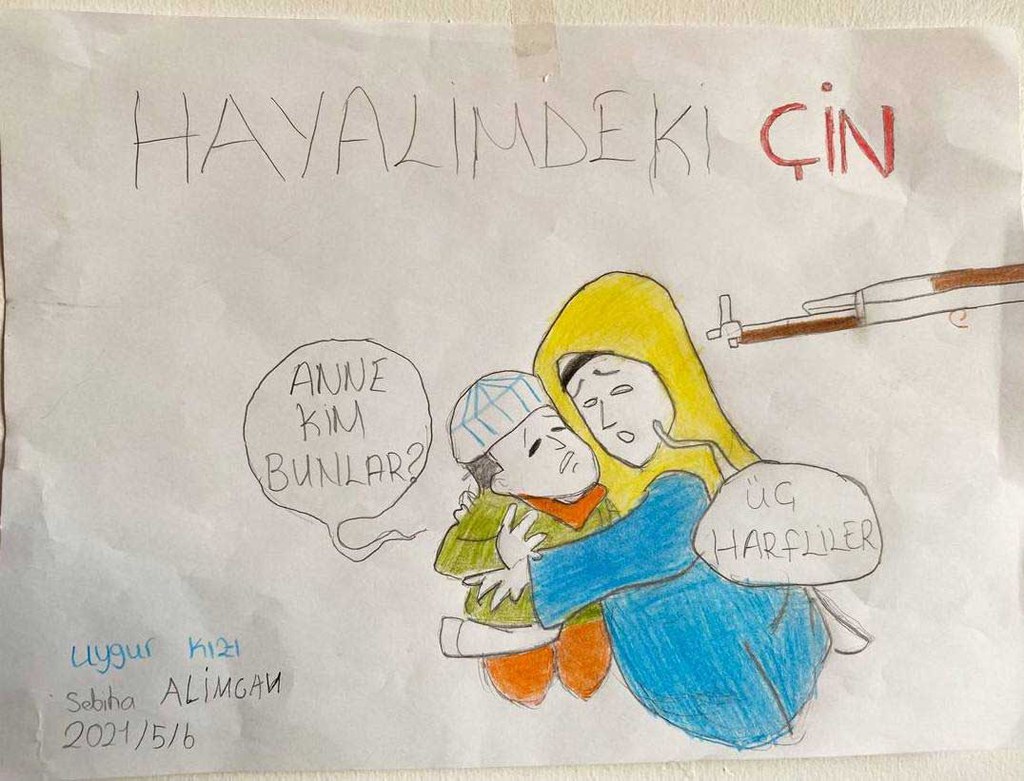
The 12-year old Uyghur girl, who now lives in the U.S. state of Virginia, was about seven years old and starting to absorb a bit more knowledge when she first learned about the repression of Uyghurs in their homeland northwestern China’s Xinjiang region. As she got older, her mother would tell her more and more about the back story, bringing it up in the normal course of conversation or if they were in the car and the girl asked a question about her grandparents still in Xinjiang. “I felt really sad,” the girl said about when her parents starting telling her about the crackdown. The girl, who spoke on condition of anonymity and did not want to identify her parents to avoid endangering relatives in Xinjiang, said that the pain hit home with her when schoolmates would talk about where they were from originally. When the girl thought about her family coming from Xinjiang, other questions would arise, such as why her grandmother would never come to visit her family in the U.S. Her voice grows weaker and begins to trail off whenever she is asked about her hometown. “It does affect my voice,” the girl told RFA. “Sometimes if people ask me where I’m from, it’s going to be sometimes difficult because they don’t know much about us [Uyghurs], and because they think that China is like a perfect place. They don’t know about the government and everything.” “They’re going to think you’re crazy, she added. It’s never easy for teenagers and children to discuss tragedies in their families, nor is it easy for parents to broach such topics with their offspring. Mom, who are they? They are military. Uyghurs, who are being persecuted as an ethnic and religious group by the Chinese government, face a common challenge of figuring out how best to talk with young people about the 21st-century atrocities occurring in China’s northwestern Xinjiang region. Uyghur children, born and raised in the diaspora, are asking their parents why they can’t see their grandparents, why Uyghurs in Xinjiang face genocide, and why they can’t visit their homeland. Uyghur adults living abroad, frustrated by the inability to stop the atrocities despite widespread and credible reports about right abuses those living in Xinjiang face, say they are unsure about how to discuss the genocide with their children and sometimes falter when asked why it is happening. At least 1.8 million Uyghurs and other Turkic minorities are believed to have been held in a network of detention camps in Xinjiang since 2017, purportedly to prevent religious extremism and terrorist activities. Beijing has said that the camps are vocational training centers. The government has denied repeated allegations from multiple sources that it has tortured people in the camps or mistreated other Muslims living in Xinjiang. The United States and parliaments of several Western countries have declared that China’s repression and maltreatment of the Uyghurs amount to genocide and crimes against humanity. What should they be told? Although children’s questions may seem simple to parents, what they are actually asking is about the history of Uyghurs, Chinese politics, and how to ensure the existence of Uyghurs abroad, said Suriyye Kashgary, co-founder of Ana Care, a Uyghur language school in northern Virginia with about 100 students ranging in age from five to 15 years old. Uyghur boys who have lost at least one parent, raise their hands during a Koran class in a madrasa, or religious school, in Kayseri, Turkey, January 31, 2019. The madrasa that shelters 34 children, including eight who have lost at least one parent, in Kayseri, a central Anatolian city, has received Uyghurs since the 1960s and today hosts the second largest population of Uighur exiles in Turkey. REUTERS/Murad Sezer “They always ask questions like “Why isn’t my grandma here? Why isn’t my grandpa here? Where are my relatives? My grandpa isn’t around. My grandma isn’t around. Where are my relatives?” she said “What I’ve been able to learn is that [many of] the children are a bit confused because some parents answer their kids’ questions, while some parents don’t speak with them in much detail at all,” she said. While some Uyghur parents do not disclose information to their children about the genocide, others do talk about it and take them to local demonstrations against China’s repression of Uyghurs in Xinjiang. “There are many disagreements over whether it’s OK to explain some things to the children or not,” Kashgary said. “Some people argue that we shouldn’t let [the genocide] negatively impact their psyches, that children shouldn’t be sad about these things, and that they shouldn’t live under such stress from a young age.” At her school, Kashgary expects teachers to be comprehensive, balanced, and vigilant as they work with the children, given the teachers’ need to be well-informed on a range of topics, she told RFA. Uyghurs in the diaspora, who are indirect victims of China’s genocide, have been demanding justice by exposing the oppression of their families to others, including to the media. But as a collective group of genocide victims, they have not been able to fully shield their children from the emotional suffering and negative psychological influences of the ongoing atrocities targeting Uyghurs. Zubayra Shamseden, four of whose family members were killed or tortured by the Chinese government as part of the Ghulja Massacre in 1997, and who has relatives currently being held in internment camps in Xinjiang, works as China’s outreach coordinator for the Washington-based Uyghur Human Rights Project and as a Uyghur human rights activist. “When it comes to the Uyghur genocide, it’s a fact that it is tearing up and impacting the lives of Uyghurs on the outside in the diaspora as well,” she said. “It’s not just adults — the shadows of the Uyghur genocide are affecting children and teenagers.” Shamseden says that Uyghurs in the diaspora are dealing with a kind of emotional genocide and that trying to hide the genocide from the children will not solve the issue….
Manila eyes broader ties with Indo-Pacific nations looking to counter Beijing
The Philippines is broadening its relationship with countries that are trying to counter Beijing’s growing assertiveness in the region, while it maintains friendly ties with China despite the Asian superpower’s incursions into Manila’s waters in the South China Sea. Nurtured by President Rodrigo Duterte to much criticism at home, Manila is keeping its relationship with Beijing on an even keel, ostensibly demonstrating, according to political analyst Rommel Banlaoi, a “pragmatic independent foreign policy” in a polarized world. For instance, the Filipino foreign secretary is in Tokyo this weekend to take part in the first ever bilateral two-plus-two talks involving the foreign and defense ministers of the Philippines and Japan. This visit follows a meeting between China’s Xi Jinping and Duterte on Friday, where they “committed to broaden the space for positive engagements” on the South China Sea issue. And on the same day, the Philippines concluded one of its largest military exercises with the United States, its longtime defense ally. Banlaoi, president of the Philippine Association for Chinese Studies (PACS), said Manila is demonstrating its independence by maintaining its longstanding security alliance with the U.S, strengthening is strategic partnerships with Japan, Australia, South Korea, and the European Union, and maintaining friendly relations with China despite tensions over the waterway. Still, disputes to do with the South China Sea, part of which is called the West Philippine Sea by the Filipinos, are the main reason behind for broadened security cooperation between the Philippines and other countries in the region, analysts said. Celia Lamkin, Founder of the National Youth Movement for the West Philippine Sea “The foreign and defense talks between Japan and the Philippines in Tokyo [on Saturday] are significant because of the non-stop aggression and militarization by China in our West Philippine Sea,” Celia Lamkin, Founder of the National Youth Movement for the West Philippine Sea, told BenarNews, using the Philippine term for the South China Sea. On Thursday, the Philippine Defense Secretary Delfin Lorenzana met with his Japanese counterpart, Nobuo Kishi, in Tokyo to discuss “ways to further enhance bilateral and multilateral cooperation,” according to the official Philippine News Agency. The two defense ministers agreed to bolster security cooperation and expand bilateral and multilateral exercises, according to a statement from the Japanese Ministry of National Defense. “They shared their intent that they will not tolerate any unilateral change of the status quo by force in the Indo-Pacific, particularly in East Asia and Southeast Asia,” the statement said. China is involved in maritime disputes with Japan over the Senkaku/Diaoyu Islands in the East China Sea. The inaugural two-plus-two meeting on Saturday will continue to “promote bilateral defense cooperation and exchanges to uphold and strengthen the Free and Open Indo-Pacific (FOIP),” Japan Defense Ministry said. “We need allies like Japan and the U.S. to show China to respect international law in our West Philippine Sea and the rest of the South China Sea,” said Lamkin from the National Youth Movement for the West Philippine Sea. China claims nearly the entire South China Sea, including waters within the exclusive economic zones of Brunei, Malaysia, the Philippines, Vietnam and Taiwan. While Indonesia does not regard itself as party to the South China Sea dispute, Beijing claims historic rights to parts of that sea overlapping Indonesia’s exclusive economic zone as well. ‘Open, warm, and positive’ A day before this two-plus-two meeting, Duterte, who is due to leave office after the Philippine general election in May and who has consistently called China’s Xi a friend, had a telephone meeting with the Chinese leader. During the call, the two said they work towards maintaining peace and stability in the South China Sea by exercising restraint, a statement from Duterte’s office said. A Chinese statement, meanwhile, said Xi had expressed his approval for how the two nations have dealt with the issue of the disputed South China Sea. Beijing, however, has consistently ignored a 2016 decision by an international arbitration court in The Hague that rejected China’s expansive claims in the contested waterway. Meanwhile, news emerged on Thursday that, for days, a Chinese coastguard ship had followed a research vessel deployed by Philippine and Taiwanese scientists in waters in off the northern Philippines, sparking concerns. Still, the statement from Duterte’s office described the hour-long telephone conversation as “open, warm and positive.” Then again, Manila surprised many a day earlier by voting against Beijing’s ally Moscow, and in favor of a resolution to suspend Russia from the United Nations Human Rights Council. It was the only ASEAN Nation to vote in favor of the resolution, apart from the Myanmar government in exile. Also, last September, when Australia, the United Kingdom and the U.S. announced the establishment of a trilateral security pact, AUKUS, the Philippines was the first country in Southeast Asia to endorse it despite concerns from regional players including Malaysia and Indonesia. With the Philippine presidential election looming in May, all eyes are on who will win the race, said Lamkin from the National Youth Movement for the West Philippine Sea. She added: “Our struggle for sovereign rights in the West Philippine Sea depend very much on who will be the next president.” Jason Gutierrez of BenarNews, an RFA-affiliated on-line news outlet, contributed to this report from Manila.
Vietnam’s vote for Russia on UN council could damage campaign to lead it
Vietnam’s vote against a U.S.-led resolution to remove Russia from the U.N. Human Rights Council on Thursday likely ends any hope Hanoi had to lead the body, one analyst told RFA. Cambodia’s abstention from voting, meanwhile, drew criticism from local rights groups who accused Phnom Penh of flip-flopping its position on Russia’s invasion of Ukraine. In all, 24 countries voted against booting Russia from the council, including Russia, China, North Korea, Iran and Syria. But after 93 countries voted yes, Moscow resigned its seat. Vietnam’s ambassador to the U.N., Dang Hoang Giang, said in remarks prior to the vote that Hanoi was concerned about the impact of the war on civilians. He said that the country was “against all attacks on civilians that were in violation of international laws on humanitarianism and human rights.” He also said that it was important “to examine and crosscheck recent information publicly, with transparency and objectivity and with the cooperation of relevant parties.” Vietnamplus was the only Vietnamese outlet that reported Giang’s comments. Vietnamese state media made no mention of Vietnam’s vote in coverage of the resolution. Alienating vote Vietnam has publicly voiced its intention to run for chairmanship of the council for the 2023-2025 term, but experts told RFA’s Vietnamese Service that Hanoi will now find it difficult to gain support from Western countries. “I should say that Vietnam has shot itself in the foot,” Carl Thayer of New South Wales University in Australia told RFA. “Vietnam has always been proud of its prestige in the international circles as a commodity that made it important. Any country in the world that is now opposing Russian action are not going to support Vietnam,” he said. Thayer noted that Vietnam’s profile among the international community had been on the rise, as it had twice been elected as a non-permanent member of the U.N. Security Council. “Now that smooth sailing is going to hit headwinds and if it continues to support boats like [Russia], Vietnam is going to find increasingly there will be a drop-off in support,” Thayer said. He said that Hanoi may have been trying to demonstrate that dialogue and negotiation are more effective than measures to isolate Russia. But it would have been better to abstain from the vote, because now Vietnam has alienated the West and has little to gain by casting its lot with Russia. “That country is never going to play a major role with Vietnam in coming years. In my opinion, it is going to be weakened and economically isolated as long as Putin remains in power.” Isolation ineffective Cambodia did abstain from Thursday’s vote with Ambassador Ke Sovann saying in a statement that Russia’s isolation will not help resolve the conflict in Ukraine, but will only make a bad situation worse. “At a fragile time for world peace, security and stability, the engagement among the member states in all relevant United Nations bodies including the Human Rights Council is very important,” he said. Phay Siphan, a spokesman for the Cambodian government, told RFA’s Khmer Service that kicking Moscow out of the council will “only allow the country to avoid its responsibility.” But Ny Sokha, president of The Cambodian Human Rights and Development Association, said the vote to remove Russia from the council is a stand against the death and destruction the country’s invasion of Ukraine has caused. “We should not allow the country that abuses human rights in the U.N. Human Rights Council. As a member it needs to respect human rights,” he said. Cambodia’s abstention from Thursday’s vote is an example of flip-flopping in its response to the situation in Ukraine, said Ny Sokha, an apparent reference to Cambodia’s vote last month at the U.N. condemning the invasion. Political analyst Kim Sok said Cambodia voted for a resolution last month to condemn Russia as part of its efforts to convince the U.S. to attend a special summit with ASEAN while Phnom Penh chairs the regional bloc. Thursday’s vote, in contrast, was an effort to appease China, he said. “When China opposes, Hun Sen dares not to vote in favor,” he said. Russian Threats Prior to Thursday’s vote, Russia warned that votes in favor or abstentions would be seen as an “unfriendly gesture” and would have consequences in bilateral relations. Despite voting to remove Russia, the U.N. Human Rights Council remains an organization with a shaky reputation likened to an old boys club for dictators. Of its 47 member nations, only 15 are classified as “free” societies by rights watchdog Freedom House. The rest are either only “partly free” or “not free,” and include countries with poor human rights records like China, Eritrea, Somalia and Cuba. The U.S. left the council temporarily in 2018, calling the organization a mockery of human rights for not punishing rights abusers and for what then-ambassador to the U.N. Nikki Haley called bias against Israel. After Tuesday’s vote, the Russian representative announced Russia’s decision to withdraw its membership from the council before the 2021-2023 term ends, and called the resolution “an illegal and politically motivated move to punish a permanent member of the U.N. Security Council who was pursuing an independent domestic and foreign policy.” Translated by Anna Vu and Samean Yun. Written in English by Eugene Whong.
Philippines: Xi, Duterte agree to ‘positive engagements’ over South China Sea
Philippine President Rodrigo Duterte and Chinese counterpart Xi Jinping agreed during a bilateral meeting on Friday to remain “committed to broaden the space for positive engagements” in dealing with disputes over the South China Sea. The telephone summit between the two leaders took place the same day the Philippines and the United States wrapped up two weeks of war games, which were among the biggest between both allies. The scenarios included the defense of an isolated island from foreign invaders. In their phone call, Duterte and Xi “stressed the need to exert all efforts to maintain peace, security and stability in the South China Sea by exercising restraint, dissipating tensions and working on a mutually agreeable framework for functional cooperation,” Duterte’s office said in a statement. “Both leaders acknowledged that even while disputes existed, both sides remained committed to broaden the space for positive engagements which reflected the dynamic and multidimensional relations of the Philippines and China,” it said. The statement described the hour-long telephone conversation as “open, warm and positive.” China has been continuing to expand territories and islands it occupies in the South China Sea. Still, Xi and Duterte affirmed the “importance of continuing” talks in solving the sea dispute, and for all claimants to work towards finally concluding a “code of conduct” for the sea. China claims nearly the entire South China Sea, including waters within the exclusive economic zones of Brunei, Malaysia, the Philippines, Vietnam and Taiwan. While Indonesia does not regard itself as party to the South China Sea dispute, Beijing claims historic rights to parts of that sea overlapping Indonesia’s exclusive economic zone as well. Duterte, who has consistently called Xi a “friend,” has said several times since his term began in 2016 that Beijing has the capability of sending missiles to the Philippines, and that he won’t deploy Filipino troops to be slaughtered. Instead, he has sought to rebuild ties with China – ties that were soured by a 2016 decision by an international arbitration court in The Hague that rejected China’s expansive claims in the contested waterway. The 77-year-old Duterte will be leaving office after the Philippine general election next month. Duterte and Xi also discussed the elevation of bilateral relations “into a comprehensive strategic cooperation” as a way to build on the gains made since the Filipino leader took power. For his part, Xi said that both sides have “properly” handled the South China Sea issue, according to a statement about the phone call, issued by the Chinese Embassy in Manila. “During the phone conversation, Xi said that he still has fresh memories about Duterte’s first visit to China in October 2016, which he called an ice-breaking trip and a milestone in the history of bilateral relations,” the statement said. “The two sides’ properly handling of the South China Sea issue has provided an important foundation for the China-Philippines friendly cooperation, benefited the two people and also effectively safeguarded regional peace and stability, Xi said,” according to the statement. Meanwhile, both presidents on Friday expressed “deep concern” over developments in Ukraine, the statement by Duterte’s office said. “The two Presidents renewed the call for a peaceful resolution of the situation through dialogue in accordance with international law,” the statement said. A day before the Xi-Duterte telephone meeting, Manila voted in support of a resolution on suspending Russia from the United Nations Humans Rights Council, together with the U.S. and other Western countries. China, which is Russia’s ally, voted against the resolution. BenarNews is an RFA-affiliated news service.
Stuck between the state and neighbors, North Korean local watch chiefs are quitting
North Koreans responsible for leading weekly meetings to enforce the party’s will over their neighbors are resigning, saying their government’s expectations of them are too high, sources in the country told RFA. Every North Korean citizen is part of a so-called neighborhood watch unit. These groups consist of about 20 households and meet regularly to hear policy announcements, confess loyalty infractions, accuse their neighbors of various missteps, and, ultimately, work together when directed to provide free labor for public projects. Three neighborhood watch unit leaders from Hamhung in the eastern province of South Hamgyong tendered their resignations at the beginning of April, a resident of the province told RFA’s Korean Service April 5 on condition of anonymity for security reasons. “The three of them used various excuses to claim that they will not be able to keep their roles. It was just like last month when five neighborhood watch unit leaders told the local party organizations that they were resigning because they were sick,” he said. The watch units are the lowest level of government organizations, but they exert individual control over each citizen, so neighbors tend to try to get on their unit leader’s good side. Leaders are responsible for reporting any concerning activities or policy violations among their groups to higher-ups. But during the current economic slump in North Korea, the government has asked more than usual from neighborhood watch units. The leaders face new pressures both from above and below — they are on the receiving end of their neighbors’ frustrations, and they are blamed by their superiors when their units underperform. The government’s recent excessive taxation is what caused the watch unit leaders in Hamhung to quit, according to the source. “They are supposed to control and manage the residents, but they are giving up their roles … because authorities are always imposing taxes every two weeks for things like supporting the rural areas and helping fund construction in Pyongyang,” he said. The capital Pyongyang is in the middle of a five-year construction plan to build 50,000 new homes by the end of 2025 that is behind schedule and requires massive amounts of money for construction materials and food for workers. Residents from outside the capital who are being asked to fund the project will likely never be granted permission to even visit Pyongyang. “The head of the neighborhood watch unit is responsible for collecting taxes from the residents. But residents who are having a hard time living due to the pandemic are angry at the authorities’ orders to pay more money and rice, and are pouring their anger into the leader responsible for collecting directly from them,” he said. “If the neighborhood watch unit’s tax quota is not collected in time due to protests and opposition from the residents, the heads of the neighborhood watch unit will be questioned by the higher levels in the local party organization. So they are under excessive pressure between the residents and the local party organization and feel skeptical about their own roles. That is why many are choosing to give up.” A group of residents in the city of Chongju in the northwestern province of North Pyongan has come to despise their neighborhood watch unit leader, a resident there told RFA on condition of anonymity to speak freely. “The neighborhood watch unit leader knocks on the door of the house every few days and also calls them to mobilization every morning, so he is the most hated person here,” said the second source. “These days, we’ve been ordered to work on city development. The cleanup and painting of each section of road in the city is assigned to each watch unit. The unit leaders are having trouble getting the people to come out and work in the morning,” he said. Out of about 20 households, only eight to 10 people end up actually working on the roads, he said. The rest make up excuses, saying they are too sick to work, for example. “When the project isn’t progressing properly, the neighborhood watch unit leader must answer to the local party organization,” the second source said. “Having to carry out the government’s excessive mobilization orders is making the unit leaders skeptical about their roles. They have to collect their neighbors for unpaid labor, yet they are firmly aware that many of their neighbors are in difficult economic situations. That is why more and more of the unit leaders are quitting,” he said. Though the watch unit leaders are not paid, they can subsidize their income because they get exclusive control of communal toilets and can sell accumulated feces to cooperative farms to be used as fertilizer, sources said. Translated by Claire Lee and Leejin Jun. Written in English by Eugene Whong.
Chinese authorities jail at least 100 Uyghurs from the same Xinjiang hamlet
At least 100 residents from the same small community in northwestern China’s Xinjiang region have been imprisoned by authorities, a security guard from the area said. When RFA asked how Chinese authorities were treating the families of those who had been imprisoned, the security guard mentioned the number of jailed residents from Sheyih Mehelle hamlet in Ghulja (in Chinese, Yining) county. The reasons for the imprisonment of the Uyghur residents are not known. The guard also said that the government has provided aid to the families of the prisoners, including food, clothing and coal — 30 tons of which had recently been distributed to at least 100 households. “The government has been taking care of them,” he said. Sheyih Mehelle has a population of more than 700 people, the security guard said. It is part of Chuluqay village, which has more than 10,000 residents. A Uyghur living in exile who requested anonymity for fear of reprisal from the Chinese government said it is not surprising that 14 percent of a Uyghur hamlet’s population is in prison. The Uyghur, who hails from Ghulja’s Onyar village, said that in his family alone, three of his brothers were all imprisoned by the Chinese government, and that sources in the area told him between one to five people from each family in his old neighborhood had been jailed. He estimated that the number of people imprisoned from the hamlet the village security guard mentioned could reach 200 based on what his sources told him. Another security official in Sheyih Mehelle told RFA that four people from the Nesrulla family were in prison. Another official said six siblings from a different family there had been jailed. China is believed to have held 1.8 million Uyghurs and other Turkic minorities in the camps since 2017. Beijing has said that the camps are vocational training centers and has denied widespread and documented allegations that it has mistreated Muslims living in the region. The United States and parliaments in other Western nations have declared that the repression of the Uyghurs amounts to genocide and crimes against humanity. The U.S. has sanctioned Chinese officials linked to human rights abuses in Xinjiang, including mass incarceration, invasive surveillance and forced labor. The U.S. also has passed legislation banning imports from the Xinjiang region of China that lack proof they were not made with forced labor. U.S. Sen. Marco Rubio, a Florida Republican, on Thursday introduced the Uyghur Policy Act to increase U.S. support for the Uyghur diaspora in the United States and other countries, and to advocate for improving the conditions of Uyghurs suffering human rights abuses at the hands of the Chinese Communist Party. “The CCP is carrying out a disgusting campaign of genocide and human rights abuses committed against Uyghurs and other predominantly Muslim ethnic groups. The United States cannot be silent in the face of such horrific abuse,” Rubio said in a statement. Rushan Abbas, executive director of the Campaign for Uyghurs, whose sister disappeared three years ago and is believed to be incarcerated in Xinjiang, welcomed Rubio’s legislation and called for its swift approval. “I hope the U.S. government can pass this critical bill into law as soon as possible which would create a comprehensive strategy to raise international awareness of the genocide of Uyghurs, enable the U.S. State Department to respond to the genocide in East Turkistan more effectively, and hit back on the Chinese regime’s efforts to silence Uyghur advocates, as they did by taking my sister as hostage,” Abbas said in a statement. East Turkestan is the Uyghurs’ preferred name for the region of Xinjiang, which shares borders with the fellow Turkic-speaking nations of Kazakhstan, Kyrgyzstan and Tajikistan that gained independence after the dissolution of the Soviet Union three decades ago. Translated by RFA’s Uyghur Service. Written in English by Roseanne Gerin.
Chinese official jailed for 11 years over bribes in Qinghai
A former top official in China’s Qinghai province was given 11 years in prison last month for taking more than $3 million in bribes from mining and construction groups, businesses and individuals during his time in office, according to state media reports. Wen Guodong had served as vice-governor in Qinghai from 2009 to 2020. He was sentenced on March 29 by the Chongqing First Intermediate People’s Court, which also fined him 2 million yuan ($314,213) and forced the return of his assets gained through bribes, sources said. While in office, Wen had protected illegal mining operations at Qinghai’s Muli coalfield, a vast mining area developed by the Kingho Group, a private company, according to a Feb. 2, 2021, report by the Beijing-based China Biodiversity Conservation and Green Development Foundation. Located in Themchen (in Chinese, Tianjun) county in the Tsonub (Haixi) Mongol and Tibetan Autonomous Prefecture, the Muli coalfield was described in an Aug. 8, 2014, report by Greenpeace East Asia as a “growing cancer on an otherwise intact alpine ecological system.” “The opencast coal mining [at Muli] over the years has destroyed the alpine meadows connecting the glaciers on the mountains and the plateau, cutting off the channel for rainfall and melt water to feed the rivers,” the environmental watchdog group said. “As a result, the water-holding capacity of the landscape is significantly compromised,” Greenpeace added. Coverage of Wen’s case in the Chinese press has downplayed the impact of the former official’s corruption on the environment in Tibetan areas, though, said Sangay Kyab, a Tibetan researcher based in Spain. “By just highlighting the bribery charges against Wen Guodong, the Chinese official media have ignored the damage he caused to the region, and how the excessive exploitation of Tibet’s environment has deprived Tibetans of their traditional way of life,” Kyab said. “The Chinese government has always tried to conceal these problems, no matter what impact their development and environmental policies have had on Tibetans and the Tibetan plateau,” he added. Sentencing disparities in China’s justice system also point to the unequal treatment of Tibetans under Chinese law, Kyab said, calling Wen’s 11-year sentence “lenient” in relation to the harm his actions caused. Kyab noted that Go Sherab Gyatso, a 46-year-old monk at Kirti monastery in Sichuan’s Ngaba (Aba) Tibetan Autonomous Prefecture, had been given a 10-year prison term in 2021 just for expressing loyalty to Tibet’s exiled spiritual leader the Dalai Lama. “So we can see that Chinese leaders and officials really do get away with crimes and atrocities,” he said. Tibet has become an important source of minerals needed for China’s economic growth, and Chinese mining and infrastructure projects in Tibetan areas have led to widespread environmental damage, including the pollution of water sources and destruction of sacred sites, experts say. Translated by Tenzin Dickyi for RFA’s Tibetan Service. Written in English by Richard Finney.
Shanghai warns people against ‘rumor-mongering’ as online pleas for food grow
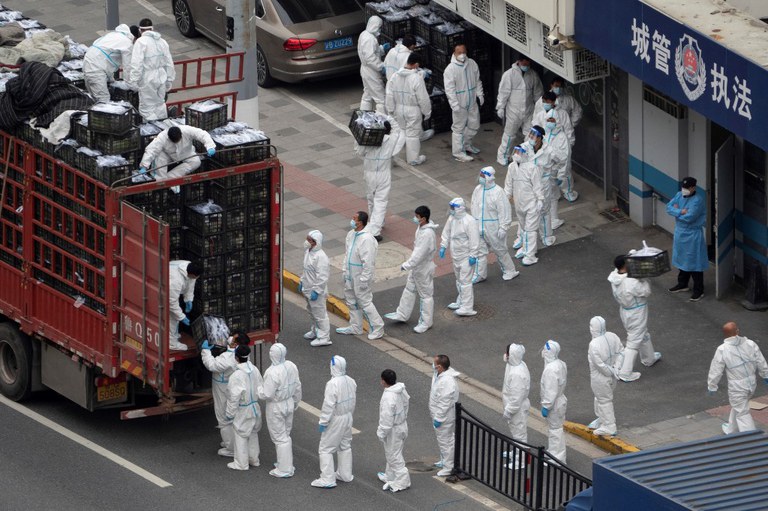
Authorities in Shanghai on Friday warned the city’s 26 million residents not to post ‘rumors’ online amid growing public anger over food shortages amid a citywide COVID-19 lockdown. “The Cyberspace Administration of the municipal [ruling Chinese Communist] Party Committee reminds social media group chat members and moderators that … it is especially necessary in the current situation to prevent the spread of all kinds of rumors, false information or fear-mongering,” the municipal government said in a post to its official Weibo account. “[Social media users] must not make up rumors to cause trouble or for the purposes of grandstanding,” it said. “We will continue to work with police and other departments to track down rumor-makers and those who deliberately spread rumors, working from public tip-offs and online investigations, and punish them according to law,” the message said. The warning came after Shanghai police denied an online report that the authorities had banned group-buying practices among locked-down residents, who have been complaining of food shortages due to a lack of takeout services and inadequate fresh supplies from the government. The Shanghai government said its consumer protection committee had on Thursday updated a list of sites offering group-buying opportunities for fresh fruit and vegetables, sanitary towels and diapers, as well as baby formula and other dairy products. “Some group buying groups may be full,” the notice warned. “The municipal consumer protection committee [will] strive to meet the needs of the public.” “We will continue to urge enterprises and sellers on the list to make every effort to ensure supplies,” it said. It said officials would contact sellers and consumers “to properly resolve … problems with shopping as shown in online posts from users.” The government also denied a report that the authorities were planning to send in armed police to take over the running of residential communities from neighborhood committees, many of whom have been superseded by self-organizing mutual help groups. “On April 7, a rumor that the armed police will take over Shanghai communities” went viral on social media and online platforms,” the government said, adding that police had detained a 35-year-old man surnamed Zhou on suspicion of “disrupting public order through fake news.” People wear personal protective equipment (PPE) as they transfer daily food supplies and necessities for local residents during the Covid-19 lockdown in Shanghai, April 5, 2022. Credit AFP Online search for food Residents across the city, including Pudong New District, Leyuan Road, Jinqiao township, Songnan No. 1 Village and Baoshan district, have posted in recent days to Weibo, appealing for help sourcing food, saying that promised supplies had failed to arrive, or were simply not enough. “We try and call the leaders every day, because nobody has food, because we’ve been locked down for many days now,” a resident of Jiading district told RFA on Friday. A Shanghai resident surnamed Xia said: “The government did distribute a batch of supplies, but even if it distributes that amount to more communities, it’s far from enough to last the whole length of this lockdown.” She said auction site Taobao has halted deliveries, and buying groups are hard to find and get into. “Some babies have split diapers, some people’s wifi is down, and nobody has come to repair it, and some people need teeth filled that have exposed nerves, but they can’t go out,” Xia said. She said some online stores had produce available, but it sold out very fast online first thing in the morning. “Fruit, coffee and snacks are already luxuries, and some people have no salt left. Things are very bad,” she said. A resident surnamed Gu said he had received just two deliveries of groceries in 28 days of lockdown, that were enough to last his household 10 days. The lockdowns were announced too suddenly for most people to lay in sufficient stores of food, he said. “We are locked into our residential community and can’t go out to buy stuff,” Gu said. “There is basically no supply chain left, and online deliveries have been disrupted or stopped altogether.” “There isn’t anything available to buy online, nor enough people to deliver it,” he said. “There’s a problem with the food supply chain.” View of a residential building during a COVID-19 lockdown in the Jing’an district in Shanghai, April 8, 2022. Credit: AFP Closed medical facilities A video clip taken in Shanghai’s Putuo district and seen by RFA showed one man on the phone with police, yelling that there was nobody to take care of his elderly grandmother in or his parents in Xuhui district. “Is the government of Shanghai even human?” the man yells in the clip. Another video circulated of shots of people falling from a number of different tall buildings. RFA was unable to verify the content of the video independently, but its reporters have received reports of suicides, sometimes by people unable to access life-saving medical treatment due to the lockdown and the closure of a number of medical facilities to new patients. The Shanghai government released a list of closed medical facilities on its Weibo account on Friday, showing a total of 26 hospitals and clinics in Xuhui, Baoding, Pudong, Changning and other districts were closed. “Some medical institutions in this city have suspended some medical services due to their cooperation with pandemic investigations,” it said. “Citizens are reminded to pay attention to the information released by official websites and social media accounts of various medical institutions in a timely manner before seeing a doctor,” it said, but offered no emergency number or other avenue to seek assistance. A man in Kailu No. 5 Village called the emergency services to tell them he hadn’t eaten in four days, according to a recording posted online. “Hello, is that the … police station? I’m not trying to cause trouble, but if I charge past the community cordon and you arrest me, will I get something to eat?” the man says. “You can’t rush out of the residential community,” the officer replies, to which the man says: “Then you’d better…
Henan rights activist in secret ‘defamation’ trial after visit to rights lawyer
Xing Wangli, a rights activist in the central Chinese province of Henan, has been put on trial behind closed doors on charges of “defamation” after he supported human rights attorney Jiang Tianyong, who remains under house arrest following his release from prison. Xing, who is currently being held at Henan’s Xi County Detention Center, stood trial by video link at the Xi County People’s Court on April 7 on charges of “defamation” after he posted an open letter accusing a local propaganda official of corruption and intimidation. The court building was closed for business on Thursday, with a large police presence on the streets outside. More than a dozen fellow activists went to support Xing, but they were prevented from approaching the building by court police, who deleted photos of the scene from their mobile phones. Xing has been denied permission to meet with his lawyer, who didn’t receive a copy of the indictment until March 21, the U.S.-based rights group, the Dui Hua Foundation said in a statement on its website. The authorities cited disease prevention restrictions during the COVID-19 pandemic, it said. Blunt-force head injuries Xing’s wife Xu Jincui was at the court to observe the trial, which was closed to journalists or members of the public. “The prosecution accused Xing Wangli of continuing to speak out about the unusual deaths of two petitioners in Xi county: Diao Yanfang and Feng Guohui,” Xu told RFA. “[They] claimed that Xing Wangli instigated his son to participate in rights protection activities.” “But more importantly, Xing Wangli said that the serious injuries he suffered were directly linked to three well-known local officials,” she said. Xing suffered serious head injuries in 2016 while being held at Xi County Detention Center. He later said they were the result of an attack with a blunt weapon. He has repeatedly requested an official probe into the incident via the ruling Chinese Communist Party (CCP)’s Central Commission for Discipline Inspection. Xing’s son Xing Jian, who now lives in New Zealand, said the authorities have claimed that the injuries were the result of a fall during a botched suicide attempt, and he said the video presented by the prosecution as evidence had likely been tampered with. He said he believes the current prosecution was sparked by his father’s attempt to visit Jiang Tianyong. “After my father was arrested, my mother was illegally detained many times by the local stability maintenance personnel,” Xing Jiang said. “During this period, these stability maintenance personnel also told my mother many times not to interact with [Jiang] in future, otherwise there will be endless trouble for her.” “The authorities believe that lawyer Jiang Tianyong tried to subvert state power, saying that he is anti-party and anti-state, but I don’t think a regular lawyer could do that,” he said. ‘Picking quarrels and stirring up trouble’ He said an unidentified driver had scraped Xing’s lawyer’s car in the court parking lot on Thursday. “[That kind of] psychological pressure would affect his performance in court,” Xing Jian said. Xing was originally detained on suspicion of “picking quarrels and stirring up trouble” in May 2021 after he tried to visit Jiang, who remains under house arrest, in April 2021. He was formally arrested in June 2021, but for “defamation,” and indicted by the county prosecutor in January 2022. While defamation cases in China have previously been private prosecution cases, new guidelines issued in 2013 paved the way for it to be brought as a criminal charge against people accused of “spreading disinformation or false accusations online can constitute criminal acts. If a post deemed to contain disinformation or false accusations accrues more than 5,000 views or 500 reposts, then it is considered a “serious circumstance,” according to the U.S.-based rights group, the Duihua Foundation. Jiang was “released” from prison in February 2019 at the end of a two-year jail term for “incitement to subvert state power,” a charge often used to imprison peaceful critics of the government. He was allowed to return to his parents’ home in Luoyang, but remains under close surveillance and heavy restrictions. Jiang’s U.S.-based wife Jin Bianling has repeatedly expressed concern for her husband’s health after he was tortured by cellmates during his time in detention. Translated and edited by Luisetta Mudie.
Women harmed by China’s draconian family planning policies still seek redress
Hundreds, possibly thousands, of Chinese women are still seeking redress after their health was destroyed by botched or untested reproductive procedures aimed at keeping births within targets set by Beijing. Peng Dongxiang, of Qianjiang in the central province of Hubei, gave birth to two children in defiance of population controls, drawing the ire of local officials. “We did as the government said and went to the family planning station to get injections,” Peng said. “But they were experimenting on us; using our bodies.” “They injected us straight into the Fallopian tubes … I fainted and was freezing cold instantly,” Peng recalls. “Later they told me I had to get another injection because I hadn’t had tubal ligation, but that second injection ruined my health.” Peng has suffered from decades of lower back pain, abdominal pain and organ adhesions, and was bed-bound for several years immediately after the sterilization shots. Her sons were sent to live with their grandparents because she was unable to work any more. “If [my husband’s family] hadn’t treated me well, I wouldn’t be here today,” said Peng, who has been engaged for more than a decade in a bid to win redress through official channels. She knows of hundreds of other Qianjiang women who had similar experiences. “Some of them died outright … the government didn’t care and just injected anyone at the time, even pregnant women,” Peng said. Birth quotas The ruling Chinese Communist Party (CCP) has a long history of controlling the reproductive lives of Chinese women, mostly through a decades-long “one-child” policy that led to widespread violence and rights violations against women by local family planning officials keen to stay within birth quotas. The period became infamous worldwide for the use of late-term, forced abortions, compulsory sterilization, female infanticide or selective abortion and the constant policing of women’s fertility, as well as violent attacks, forced evictions and other privations imposed on families guilty of “excess births.” Liang Zhongtang, a former government family planning adviser, said the Qianjiang women could have been subjected to a particular form of “adhesive surgery” that was used in Hubei, Sichuan and Shanxi in the mid-1980s. “The National Family Planning Commission supported this method to a certain extent back then,” Liang said. “But … the operation wasn’t recognized by the Ministry of Health, so it was dropped after a while.” But the women have yet to find any kind of redress for their grievances. One of the Qianjiang victims said she was exhausted by years of petitioning and official violence, and gave up the struggle. Another said she had stopped petitioning for fear that her children’s careers would be politically tainted by her actions. “My family … has to make money so that I can keep taking my medications and stay alive,” one 60-year-old woman told RFA. “If I give a media interview, will my son lose his job? Will they refuse to pay my compensation?” Liang said poorly educated rural cadres likely also contributed to the women’s suffering. “Back in the 1960s and 1970s, there were very few medical institutions in rural areas below county level, and the conditions weren’t there for the implementation of such family planning policies,” Liang said. In December 2007, Zhang Weiqing, then director of the National Population and Family Planning Commission, admitted that one-third of the 150,000 family planning technical service personnel — the ones carrying out abortions and sterilizations — lacked any kind of medical qualification, while many facilities used outdated equipment. An official who answered the phone at the Qianjiang municipal government denied there was an issue with the mass sterilization of women in the 1980s. “[You will] need evidence and some basis for this … and if you do investigate I think you will find … it never happened; it’s a rumor,” the official said. Repeated calls to the Hubei provincial health commission and the Qianjiang municipal health commission rang unanswered in early April. Call for compensation Zhang Jing, New York-based founder of Women’s Rights in China, said the CCP has long controlled the reproductive lives of Chinese women. “If the party tells you to give birth, you will give birth. If it tells you not to, then you won’t,” Zhang said. “This is a terrible and tragic policy.” Zhang called on the CCP set up a nationwide compensation system for women who have been harmed by family planning policies over the years. “The CCP and the Chinese government control the wombs of Chinese women,” she said, adding that rural women are most vulnerable to the kinds of abuse and mistreatment described by the women of Qianjiang. And they aren’t the only victims. Fifty-eight-year-old Jing Liping lives alone in a dangerous building on the outskirts of Beijing. She gave birth to a single child more than three decades ago, then spent a month recuperating at her husband’s family home in the western province of Gansu. There, the local family planning team caught up with her and forced her to undergo tubal ligation using metal clips. Jing’s health was also destroyed by the procedure, she told RFA. “The doctors told me that my Fallopian tubes were inflamed … but I had to rely on others to get me anti-inflammatory drugs,” Jing said. “No local doctor in Gansu would help me because I was ligated.” “It wasn’t until 2017, when I passed out on the side of the road and was sent to the hospital, that they found a problem with the clips. My Fallopian tubes had been inflamed for a long time, and they already had necrotic tissue, so I could only have them removed,” said Jing, whose husband left her, taking the couple’s son, because she started passing out every time the couple attempted intercourse. A staff member surnamed Zheng who answered the phone at the Gansu provincial health commission said officials hadn’t approved Jing’s procedure, which would have been carried out based on “expert” medical opinion. “This decision can only be made by experts … whose opinions we…
