Nearly 3 dozen political prisoners died in Myanmar jails in 2023

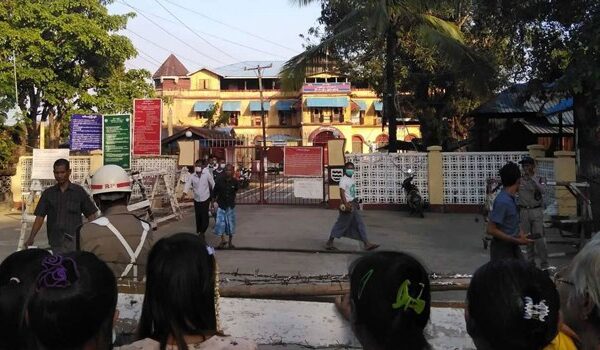
Some 34 political prisoners died in military junta’s prisons across Myanmar in 2023, with 18 killed inside jails and 16 others dying due to a lack of medical treatment, a human rights monitoring group said Tuesday. The use of torture against inmates has increased in the wake of the military’s February 2021 coup d’état, with some political prisoners killed after being accused of escape during transfer to other detention centers, according to the Myanmar Political Prisoners Network and the Assistance Association for Political Prisoners. A report issued by the Myanmar Political Prisoners Network on Dec. 31, 2023, based its findings on inmate casualty numbers in Myanmar’s most notorious jails in Pathein, Daik-U, Myingyan, Monywa, Magway, Tharyarwady, Insein and Kalay townships.  Thike Tun Oo, a member of the organization’s leading committee, told Radio Free Asia that the ruling junta has stepped up its oppression of political prisoners as it loses ground to resistance forces throughout the country.   “While the military council is being defeated in the battles, they have seen prisons as battlegrounds, and they oppressed political prisoners more and more in 2023,” he said. Former rapper San Linn San, a 29-year-old former rapper and singer, was one of the prisoners who died from a lack of proper medical treatment.   After the February 2021 coup, he left the entertainment industry to participate in various anti-regime activities, and joined a rebel fighting group. On Sept. 24, 2023, the junta said it arrested San Linn San because he was a member of the anti-regime Black Dragon Force in Pyapon in Ayeyarwady region. He was sentenced to death in October because the group was accused of killing local administers under the junta. He was later transferred to a jail in Pathein. A view of Pathein Prison in Myanmar’s Ayeyarwady region, in an undated photo. (Citizen journalist) San Linn San had to have surgery for a buildup of cerebrospinal fluid deep inside his brain from being tortured at an interrogation center, said Ko Shine, a close family friend. He continued to suffer from the condition while in prison and died there.  “When he suffered this serious injury, he was not allowed to go for medical treatments outside the prison,” Ko Shine said. “His head was like a sponge.” Myanmar’s Prisons Act of 1894 stipulates the right of inmates to obtain medical treatment without delay.  High fever Cherry Win, a 23-year-old who opposed junta rule and was sentenced to 10 years in prison under the country’s Counter-Terrorism Law, died on Dec. 21, 2023, while suffering from a severe fever because she was not allowed to seek outside medical treatment, according to the sources with knowledge of the situation. The young woman’s house in Demoso township in Kayah state was burned down amid fighting between armed resistance groups by junta forces in mid-2021, forcing her and her family to flee to safety, said a relative who declined to be named for safety reasons. Junta authorities arrested Cherry Win in Yangon just before she planned to go to Singapore for a job, and accused her of having contact with anti-junta People’s Defense Forces.  “We did not know about her death immediately,” the relative said. “We got this news from RFA radio about 10 days after her death. It was confusing for us because we did not see her dead body, and [we believed that] the military council might have burned it.”  A lawyer told RFA on condition of anonymity that the junta does not inform family members about prisoner deaths, or show their bodies to them, as the authorities are required to do.  “No one can say what the law is at present because the military council has ignored laws and regulations,” he said. An official at the Assistance Association for Political Prisoners, a Thailand-based prisoner monitoring group, who was imprisoned by the junta in Myanmar, told RFA on condition of anonymity that he and others were tortured at an interrogation center. “We felt relief once we were in prison, and I believed I would not die in the prison because I was liberated from the torture,” he said. “However, some prisoners were reportedly killed outside the prison.” RFA could not reach officials at Myanmar’s Prison Department for comment.  Kyaw Zaw, spokesman for the President’s Office under the shadow National Unity Government, said officials are trying to take legal action against those responsible for the deaths of political prisoners that have occurred during the military regime. As of Tuesday, the junta had arrested nearly 25,800 people and detained over 19,900 since the 2021 coup, according to the Assistance Association for Political Prisoners. Translated by Aung Naing for RFA Burmese. Edited by Roseanne Gerin and Malcolm Foster.

Read More

Chinese ‘monster’ ship patrols near Vietnam’s oil fields

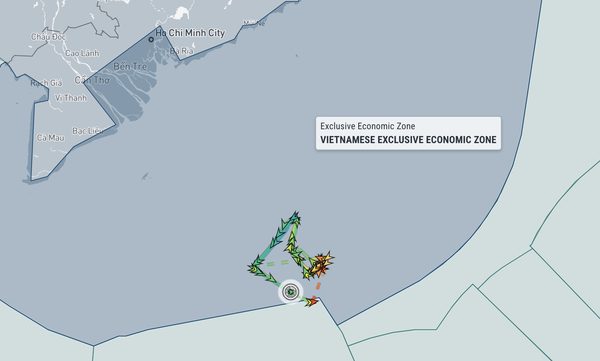
Chinese coast guard ship 5901, dubbed “The Monster” for its size, has been near Vietnam’s oil exploration blocks at Vanguard Bank in the South China Sea since early December, Radio Free Asia has learned.  The CCG 5901 has “conducted an intrusive patrol of Vietnam’s oil and gas fields west of Vanguard Bank,” said Ray Powell, director of the U.S.-based SeaLight project, who was the first to spot the latest movement of the vessel in Vietnam’s exclusive economic zone (EEZ). An EEZ gives a state exclusive access to the natural resources in the waters and in the seabed. Data obtained by RFA from tracking website MarineTraffic show the CCG 5901 (formerly known as Zhong Guoa Hai Jing 3901) has weaved an on-and-off pattern west of the Vanguard Bank, where Vietnam has some oil exploration projects, since at least Dec. 9, 2023. MarineTraffic uses AIS (automatic information system) signals that ships are obliged to transmit for safety reasons to track them. The Chinese ship has mostly been running “dark”, or not broadcasting AIS, since departing Sanya, Hainan, on Nov. 14, 2023, according to Powell. “This frequent practice violates the International Convention for the Safety of Life at Sea, of which China is a signatory,” he added. Chinese coast guard ship 5901’s activities in Vietnam’s economic zone, Dec. 9, 2023- Jan. 7, 2024. (MarineTraffic) The last time the CCG 5901 turned on its AIS was on Jan. 7, 2024 at around 8:20 a.m. UTC. The ship was about 50 nautical miles (92.6km) southwest of Vanguard Bank. Several Vietnamese fishery patrol vessels were seen tailing the Chinese ship. The Chinese ship’s AIS was also activated on Dec. 9 and Dec. 29, 2023. The 12,000-ton CCG 5901 is double the size of a U.S. Navy Ticonderoga-class guided missile cruiser and is also bigger than an Arleigh Burke-class guided missile destroyer. The coast guard ship, armed with heavy machine guns, also has a helicopter platform and a hangar large enough to accommodate larger rotary wing aircraft. Shared future Vanguard Bank, called Bai Tu Chinh in Vietnamese, is an important site of Vietnamese oil and gas development where Vietnam and some foreign partners carry out oil and gas exploration. It is also a known flashpoint between Vietnam and China – their law enforcement vessels confronted each other in July 2019 in one of the worst maritime standoffs in the South China Sea between them in recent years.   Chinese coast guard vessels maintain a frequent presence near the Vanguard Bank (Wan’an Tan in Chinese) – a submerged formation that lies entirely within Vietnam’s EEZ. China is among the six parties that hold claims over the South China Sea but Beijing’s claim is by far the largest, covering almost 90% of the sea. “The [incursion] is not new but it happens right after Vietnam and China agreed to build a ‘Community with a Shared Future’ during Xi Jinping’s visit to Hanoi in December,” said Le Hong Hiep, a senior fellow at Singapore’s ISEAS-Yusof Ishak Institute. The concept of a ‘Community with a Shared Future’ is China’s vision for international relations in the Chinese leader, Xi’s Jinping era. “That shows that essentially the Vietnam-China bilateral relations have not changed and it remains very difficult for the two countries to share a future should China continue pursuing its current claim over nearly-entire South China Sea,” Hiep told RFA. Another Vietnamese political analyst, Nguyen Khac Giang, said that the Chinese coast guard patrols “may be sending a message to not only Vietnam but the broader international community about China’s sovereignty in the South China Sea.” “On the other hand, China wants to maintain its pressure to interrupt Vietnam’s oil and activities in the area, as well as to push Hanoi to agree to a joint exploration plan with China in the same manner as what it achieved with the Philippines under the Duterte administration,” said Giang. In 2018, Manila and Beijing signed an agreement to explore oil and gas reserves in the South China Sea but the Philippines declared an end to it in June 2022, after President Ferdinand Marcos Jr. took power. The two countries, however, had agreed ‘to resume discussions on oil and gas development” after Marcos visited Beijing in December. Edited by Mike Firn and Elaine Chan.

Read More

19 civilians massacred by junta forces in Sagaing region

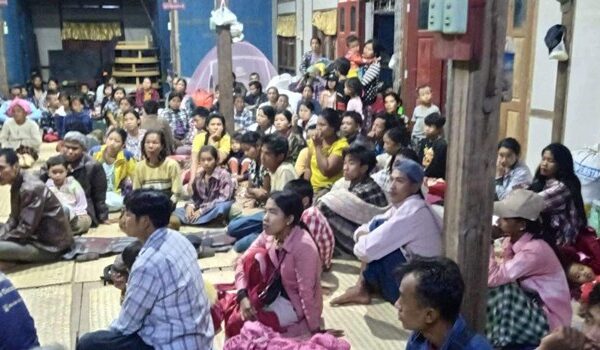
Military junta soldiers massacred 19 civilians in two townships in northwest Myanmar’s Sagaing region after detaining them, residents said, in the latest slaughter of civilians in the country’s nearly three-year civil war. Piles of corpses of all 19 people were discovered on Sunday near the Five Mile bus terminal located at the convergence of Kawlin, Wuntho and Pinlebu townships, local residents told Radio Free Asia. The dead had lived in Wuntho township and Kawlin township, both of which had been seized by anti-regime People’s Defense Forces, or PDFs, made up of ordinary people who have taken up arms against the junta, which took control of the country in a February 2021 coup d’etat. Junta soldiers, already pushed back by recent advances by rebel groups, have resorted to brutality to stop residents from providing support to the PDF, residents said. The military column that killed the civilians was headed from Paungbyin township to Kawlin and Wuntho townships, resistance forces and residents said.  They were found dead on the night of Jan. 5, the same day of their arrest, residents said, though Radio Free Asia has not yet been able to confirm the deaths with the ruling military council.   Displaced civilians from Kawlin township in northwestern Myanmar’s Sagaing region are seen Nov. 2, 2023. (Kawlin Info) The shadow National Unity Government has been operating Kawlin township’s administrative, legislative and commercial sectors since resistance forces captured the township on Dec. 3, 2023.  In coordination with Operation 1027, a series of defensive attacks by an alliance of three ethnic armies in northern Shan state launched on Oct. 27, joint forces comprising the Kachin Independence Army and local PDFs have captured Kawlin, Mawlu, Khampat and Shwepyiaye towns in Sagaing region. Signs of atrocities The bodies of five residents from Kawlin, whose hands and feet were tied, were collected and buried on Sunday, according to an official from the local PDF.  The bodies were those of a father and two sons, female rice merchant Khin Sein, and driver Tun Phaw Hlaing, he said. The adults were between the ages of 30 and 50.   “One of the five bodies we took away yesterday had been shot many times in the abdomen very closely,” said the official who declined to be named to ensure his safety. “Another body was found with serious injury to the head.” Some 5.56-millimeter cartridges made by Myanmar’s military defense industry were found near the bodies, he said.  RFA could not reach junta spokesman Maj. Gen. Zaw Min Tun or Sai Nai Nai Kyaw, the spokesperson for Sagaing’s ethnic affairs minister, for the comment on the massacre.  Junta forces attacked civilians in Kawlin and Wuntho townships to try to recapture Kawlin township from the local PDF, said a Wuntho resident on condition of anonymity. “They have threatened the locals with killing possible informants of the resistance forces when they advanced on Kawlin,” the person said.  Civilians displaced by fighting in Myanmar are seen on the move in Salingyi township, Sagaing region, Nov. 26, 2023. (RFA) Kyaw Win, the UK-based executive director of the Burma Human Rights Network, said the mass killings of civilians is a war crime and a crime against humanity. “Military troops have also committed similar crimes across the country,” he said. Women and children Deadly attacks by junta soldiers have taken their toll on civilian women and children in Myanmar.  In December alone, nearly 40 women and children lost their lives, with most killed by airstrikes, artillery shells and gunshots, according to the Burmese Women’s Union.  Of the 33 women killed, 22 had been arrested by the military junta, the women’s rights umbrella organization said. The women who died in the attacks included six in Sagaing region, six in Rakhine state, four in Mandalay region, two in Mon state, three in Magway, four in Bago region, four in Shan state, three in Kayin state and one in Chin state. “A total of 15 women died during bombardments in December, 17 women were killed by artillery shelling, and one died from a gunshot,” said Wai Wai Myint, an official from the Burmese Women’s Union.  Six children between the ages of 1 and 7 years old died in airstrikes by junta forces, including three in Sagaing’s Paungbyin town, one in the region’s Pale township, and two in Nyaunglebin township in Bago region.  Aye Myint Aung Aung, a leading member of the Women Alliance Burma, a group that emerged from protests following the 2021 coup, said women and children are not safe in conflict-torn areas of Myanmar. “The military council will show no mercy to any civilians, and has targeted them,” she told RFA. “Along routes [traveled by] military columns, they raped and killed women. These soldiers did not even have compassion for the children.” RFA could not reach a spokesman for the junta for comment on women and children casualties.  In all of 2023, nearly 400 women were killed and over 540 were arrested by the military council, according to the Burmese Women’s Unions. Translated by Aung Naing for RFA Burmese. Edited by Roseanne Gerin and Malcolm Foster.

Read More

Resistance groups claim capture of 2 Myanmar cities

Myanmar’s Three Brotherhood Alliance claimed the capture of two cities, according to a statement released Monday. The resistance group announced they stormed two junta camps on Sunday, causing troops to withdraw. The alliance reportedly captured Hseni in northeastern Shan state on Sunday morning. The junta camp there also acts as the army’s regional operational command headquarters, according to the alliance. Later that day, the allied forces moved to the city of Kutkai and seized it late at night, according to locals. All junta troops from Hseni and Kutkai withdrew and fled to Lashio on Sunday afternoon, said one local who has been following military movements in the area. The alliance comprises three resistance groups, including the Ta’ang National Liberation Army, Arakan Army, and Myanmar National Democratic Alliance Army. Since the Three Brotherhood Alliance’s Operation 1027 began in late October, the Myanmar National Democratic Alliance Army’s fighters have claimed control of most major areas in Hseni.  The junta’s regional headquarters and smaller camps are located several kilometers away from the city. The area has been under a blockade for almost two months. Troops retaliated during Sunday’s attack using heavy artillery and airstrikes, a local told Radio Free Asia, asking to go anonymous to protect their identity.  The alliance attacked the camps in Kutkai multiple times earlier this month, they said, adding that junta troops responded with airstrikes on Sunday evening during the fighting. One fighter involved in the ground battles told RFA Kutkai was entirely captured, despite the junta’s heavy defense. However, others said the status of Hseni could not be confirmed at this time.  “It is true that our forces captured the whole of Kutkai city last night,” said a spokesman for the Ta’ang National Liberation Army, asking to remain nameless for fear of reprisals. “As for Hseni, I can’t confirm it, because we are not there.” Myanmar’s regime has not released any information about battles in Hseni and Kutkai. RFA was unable to reach junta spokesman Maj. Gen. Zaw Min Tun for comment regarding junta injuries and fatalities. On Thursday, the alliance also overtook a military command center in northern Myanmar, claiming control of the city of Laukkai according to a statement released Friday.   Since the launch of Operation 1027 two months ago, the Three Brotherhood Alliance has reportedly captured 14 townships in northern Shan state and seized control of more than 200 junta camps. Translated by RFA Burmese. Edited by Mike Firn.

Read More

Anti-junta groups claim they seized junta military camp in Shan state

Myanmar’s anti-junta forces Ta’ang National Liberation Army (TNLA) and Mandalay People’s Defense Force (PDF) jointly seized a junta military camp in Than Bo village in northern Shan state on Wednesday, according to the groups on Thursday. The Mandalay PDF announced that on Tuesday, their combined forces launched an attack on the junta’s base camp, effectively taking control of it and capturing a platoon commander, Col. Thet Aung.  During the battle, there were casualties on both the military junta and some PDF troops, the group stated, without specifying the total number of casualties. The seized junta camp is under the command of the junta’s Central Region Military Command, which has between 50 and 100 forces, according to the TNLA on Friday.  RFA was unable to reach junta spokesman Maj. Gen. Zaw Min Tun for comments about the group’s claim.  The Mandalay PDF is currently participating in Operation 1027 led by the anti-junta Three Northern Brotherhood Alliance. The Mandalay-Nawnghkio-Gote Twin road, connecting the Mandalay region and northern Shan state, has been obstructed and closed off through a joint effort by the TNLA and Mandalay PDF.  This has led to regular clashes between the junta and resistance groups situated in regions such as Ho Hko, Hsam Ma Hse, Thone Se, Ohn Ma Hkar, and Kyauk Kyan villages in the Nawnghkio township. Over the span of more than two months during Operation 1027, the Three Brotherhood Alliances have successfully overtaken 10 townships in northern Shan state and seized control of over 200 camps belonging to the military junta.  The group continues its attacks against the junta camps in the cities of Hseni and Kutkai in northern Shan state, with the combat remaining intense up to the present day. Edited by Taejun Kang and Elaine Chan.

Read More

Myanmar’s junta releases more than 9,600 prisoners

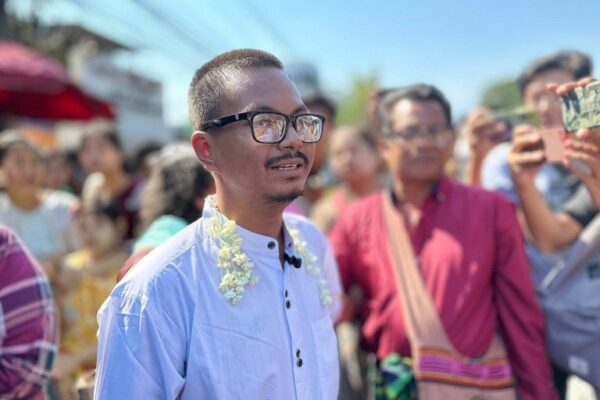
Myanmar’s junta granted amnesty to 9,652 prisoners on Thursday, according to a statement released by the junta’s State Administration Council on Thursday.  The prisoner release took place on the 76th anniversary of the country’s independence from the United Kingdom. The amnesty was conditioned on the agreement that, should they reoffend, they would be required to serve both the remaining sentence and any new punishment. About 114 foreign prisoners were included in the amnesty, according to a separate statement from the junta. It said they were released to maintain friendly relations with other countries. Among those released is Kaung Set Lin, a photojournalist from the Myanmar Press Photo Agency in Yangon, who had been sentenced to three years on charges of damaging public interest. Kaung Set Lin was arrested while injured when police and soldiers, using a vehicle, charged into an anti-coup protest he was covering on Pan Pin Gyi Street in Yangon’s Kyimyindaing township. “Yes, he is freed. My son is among the released. Now we are about to go home. Needless to say, I am so happy. I wanted to see my son’s face before I died. Now my wish has come true,” Myo Myint, the father of the journalist, told RFA Burmese.  A Burmese photo journalist Kaung Set Lin was released from Insein Prison on Jan.4, 2024. (RFA) However, another journalist, Hmu Yadanar Khat Moh Moh Tun from the Myanmar Press Photo Agency, who was arrested alongside him, has not been released.  Actress Thin Zar Wint Kyaw and model Nan Mwe San, who faced criticism from the junta and were sentenced to several years in prison on charges of undermining Myanmar culture and sexual orientation, were also released, according to media reports. But RFA has not been able to independently verify this information. While a few political prisoners were released today, detained former political leader Aung San Suu Kyi and former President Win Myint, who have received lengthy prison sentences under various charges, along with members of the National League for Democracy (NLD) Government, lawmakers, university students, and democracy activists, remain incarcerated. A family member of Tun Tun Hein, NLD-led government’s deputy speaker, said he has not heard any news about his release yet. Tun Tun Hein, the 72-year-old deputy speaker who also served as the chairman of the country’s lower house in the parliament, had been sentenced to more than 30 years.  “I wished he would be released because he is old. I hope he comes out with amnesty and I am praying for it. I haven’t heard any news yet,” said the family member.  A lawyer, who is handling the cases of political prisoners and requested anonymity for security reasons, informed RFA Burmese that none of the political prisoners serving long-term sentences were among those released on Thursday. Only those who had been sentenced to terms between two and three years and were close to their scheduled release dates were freed, the lawyer added.  Based on the junta statements, there have been 14 amnesties granted since the coup, including the one on Thursday. In total, more than 92,000 prisoners have been released during these amnesties, but only a small number of them were political prisoners. Edited by Taejun Kang and Elaine Chan.

Read More

India repatriates 151 junta soldiers who fled fighting

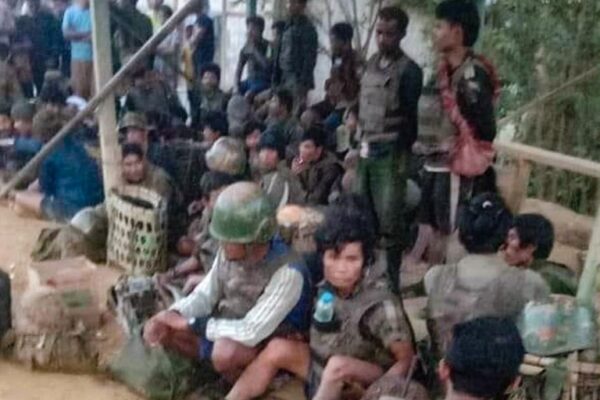
India has repatriated 151 junta soldiers who entered the country last week to escape ethnic Rakhine fighters during clashes across the border in western Myanmar’s Chin state, according to residents and media reports. On Dec. 27, Arakan Army, or AA, troops attacked a military base in Chin state’s Paletwa township, prompting the junta soldiers to flee across the border into India’s Mizoram state. A resident of Mizoram told RFA Burmese that the 151 troops surrendered to a unit of India’s Assam Rifles in Lawngtlai district’s Tuisentlang village two days later. “From there, they were brought to [Mizoram’s capital] Aizawl via Lunglei [township],” said the resident, who spoke on condition of anonymity citing security concerns. “I saw a Myanmar plane fly by [on Jan. 2] that appears to have taken the soldiers back. I saw it twice and I believe it made two trips because there were over 150 [soldiers].” Indian media reported that local police sent the soldiers – nine of whom were injured – to Aizawl, where they would be interrogated by Indian officials before being handed over to Myanmar’s junta. Additional reports said that the troops would be sent back to Myanmar’s Rakhine state capital Sittwe after a Myanmar Airlines aircraft landed at Mizoram’s Lengpui Airport. Attempts by RFA to reach Aung Cho, the junta’s spokesman and secretary of Rakhine state, for comment on the status of the troops went unanswered Wednesday. Some of the Myanmar junta soldiers who fled to Mizoram state in India are seen Dec. 29, 2023. (Citizen journalist) The 151 junta soldiers are the latest group of military troops to flee clashes with the AA from Chin state into India. More than 40 soldiers who entered the country after the AA occupied Chin state’s Rihkhawdar township were returned to Myanmar on Nov. 14. Another group of more than 40 soldiers and their family members who fled to India during fighting with anti-junta forces in Sagaing region’s Tamu township were also recently repatriated to Myanmar, according to residents. Translated by Htin Aung Kyaw. Edited by Joshua Lipes and Malcolm Foster.

Read More

Junta helicopter shot down by anti-junta force in northern Myanmar

A junta helicopter has been shot down in Waingmaw township of Myanmar’s northern Kachin State by an anti-junta Kachin Independence Army, or KIA, on Wednesday afternoon, according to a KIA spokesperson. The helicopter was leaving the township after delivering supplies to the Nar Hpawt junta military camp in the area before it was shot down, and the KIA is currently investigating further details, Col. Naw Bu, KIA’s information officer, told Radio Free Asia on Wednesday.  “I can confirm that the helicopter has crashed, and it was our front line that fired upon it. But it is not fully known whether it crashed due to a technical defect or our attack,” said Naw Bu.  “Now the reports from the ground said that the junta council’s jets are hovering around the site where the helicopter crashed. And the locals said that air strikes are being conducted near the location.” The specifics regarding the type of helicopter that crashed, the number of people on board, and any casualties are still unknown, Naw Bu added.  Local residents in nearby village Nam Sang Yang told RFA that they witnessed a military helicopter descending slowly in an upside-down position, while emitting smoke. One resident said that he observed a military helicopter plummeting in a burst of smoke near Nam Sang Yang village, shortly before noon on Wednesday. “It [the helicopter] was shot at around 11.50 a.m. Two helicopters came to drop supplies and one was hit when it took off after completing the delivery. It crashed near a hill not far from Nam Sang Yang village,” said the resident.  Junta’s Nar Hpawt camp is located in the area under the control of the KIA Brigade(5), which is defending KIA’s headquarters in nearby Laizar city. RFA was unable to reach junta spokesman Maj. Gen. Zaw Min Tun for comments about the helicopter. According to weapons experts, the Myanmar Air Force is utilizing Russian-made military helicopters for both transport and combat purposes.  Activists group Justice For Myanmar revealed that Sky Aviator Company Limited, known for its ties to the military leadership, acquired these helicopters from Russia in 2019. Edited by Taejun Kang and Elaine Chan.

Read More

Thai cannabis drinks find their way to Lao markets

Thailand’s easing of laws governing the sale of marijuana last year has led to a proliferation of cannabis products on the market, some of which are ending up in stores in neighboring Laos, where authorities aren’t laughing. In June 2022, Thailand became the first country in Southeast Asia to decriminalize marijuana, prompting a proliferation of related shops across the nation where the drug has always been easy to access, but with the risk of stiff penalties. Among the more popular products being offered for sale in Thailand are so-called “happy drinks,” or juice and carbonated beverages that under the new law may contain a relatively low dose of up to 0.2% tetrahydrocannabinol, or THC – the main psychoactive ingredient in cannabis.  The drug, which can produce a sense of relaxation and euphoria, was previously only available for medical use to alleviate a variety of conditions, including stress and depression. But the new market that has sprung up in Thailand is an exception in Southeast Asia where, in most other countries, the use of cannabis and other drugs is illegal and punishable with lengthy jail terms. Some nations, such as Indonesia and Singapore, execute criminals convicted of sale, possession or consumption. In neighboring Laos, laws prohibit the production, trade and use of cannabis for recreational purposes. A police officer in the capital Vientiane, separated by the Mekong River from Thailand’s Nong Khai province, confirmed to RFA that only cannabis products “authorized by the Lao Ministry of Health to be used for medical purposes” are permitted for sale in the country. “The sale of cannabis is prohibited,” said the officer who, like others interviewed for this report, spoke on condition of anonymity due to security concerns. “We regularly inspect shops and stores, and if we see it, we’ll confiscate it.” But residents told RFA that has not stopped happy drinks produced in Thailand from finding their way across the border and onto the shelves of stores in the capital. One resident of Vientiane told RFA Lao that happy drinks are now on offer at minimarts along the Mekong River – if one knows where to look. “In Laos, the sale of this kind of drink is not legal yet,” he said. “Some individuals sell the drink secretly and if they’re caught, they’ll be arrested.” Another resident of Vientiane, who researches how cannabis can be used for medical purposes, confirmed the availability of the drinks in the city. “This is a new drink and consumers must be careful,” he said. “It’s available but prohibited by law.” RFA’s own investigations found happy drinks openly sold at several markets in the capital, including a brand produced by Thai beverage company Srinanaporn Marketing PLC that is marketed as “fruit juice with cannabis water.” It comes in flavors such as mixed berry, pineapple, lychee and lime. Growing demand among youth But while the beverages are increasingly available in Laos, several business owners told RFA that smuggling them into the country isn’t worth the trouble, citing tough laws and a clientele largely uninterested in such products. “I don’t know whether other stores have cannabis juice, but we don’t,” said one store owner in Vientiane. “We don’t import it because it’s against the law.” A bartender at a nightclub in the capital told RFA that his establishment “serves only beer.” “Unlike Thailand, Laos still bans cannabis,” he said. “Besides, the fruit drink containing cannabis juice is not popular among Laotians yet.” They appear to be gaining fashion among members of the country’s younger generation, however. An officer with Vientiane’s Saysettha District Police Department told RFA that happy drinks containing cannabis and other banned ingredients “are popular among youngsters,” who drink them to “have fun and dance.” One such drink contains kratom – an herbal substance that can produce stimulant-like effects and is also legal in Thailand. Oulayvanh Phonesavanh, the deputy head of the emergency department at Vientiane’s Friendship Hospital, recently told local media that around five patients are admitted to her ward each day due to kratom juice poisoning – most of whom are between the ages of 16 and 35. A young man from Vientiane’s Pak Gneum district said that, despite the risks, happy drinks aren’t going away any time soon. “As their name implies, happy drinks are often drunk at parties,” he said. “Those who drink them can expect to be happy, excited and having fun all night.” Translated by Max Avary. Edited by Joshua Lipes and Malcolm Foster.

Read More

‘End of junta is near’ amid mass surrenders: Myanmar’s shadow govt

The end of the junta is near amid mass desertions and surrenders of junta troops, said Myanmar’s shadow government on Monday.  “We have seen the mass deserting and surrender of the military council soldiers unprecedented in military history … Looking at these, it can be said that the end of the [junta] military council is near,” said Duwa Lashi La, the acting president of the National Unity Government (NUG) during his new year’s address.  “Junta troops are facing the situation where its soldiers are either surrendering or being captured in battles on a daily basis,” said the interim leader, adding that 550 military junta soldiers have surrendered during Operation 1027 by the anti-junta Three Northern Brotherhood Alliance. He also cited a statement by the Karen National Union, or KNU, as saying that more than 18,000 military council soldiers have been killed in the KNU-controlled areas since the coup.  The acting president’s speech came a few days after an intense battle between the anti-junta Arakan Army (AA) and junta troops in Paletwa township, Chin state, on Dec. 29, 2023. As a result of the battle, more than 80 military junta soldiers crossed the border and fled to India’s Mizoram state, according to Paletwa residents. India-based the United News of India (UNI) reported on the same day that 83 junta soldiers entered Tuisenlang village on the Mizoram-Myanmar border.  UNI stated that the junta soldiers would be sent back to Myanmar, noting that there were four instances in November and December last year when junta soldiers escaped to the Indian state of Mizoram. Junta troops who fled to India’s Mizoram state on Dec. 29, 2023 (Citizen Journalist) A Paletwa resident who wished to remain anonymous for fear of reprisals told Radio Free Asia last Thursday that the military council troops had fled to the Mizoram side, fully armed. The resident added, however, he could not confirm whether the junta soldiers were repatriated to Myanmar.  As of Tuesday, the junta’s military council has not commented on the soldiers who fled to India.  Aung Cho, junta council’s spokesman for Chin state and Chin state’s secretary, by phone, has also not responded to RFA’s inquiries.  Translated by RFA Burmese. Edited by Taejun Kang and Elaine Chan.

Read More