You’ve been a leading political analyst in Ukraine for many years. What initially inspired you to focus on political processes, conflict dynamics, and governance in the post-Soviet space?
Initially, it was the conscious ambition of a young man from the provinces, who enrolled in the political science department at university, wanting to build his own prosperous country. A country that, over the past 500 years, has failed to achieve a period of sustained, stable independence and development, despite its enormous natural and human potential. A country that stands at the crossroads of geopolitical interests, competition, and confrontation between West and East, North and South. A country whose events are a key dimension of geopolitics, the concentration of efforts, and the balance of power between the great powers of our world. I believe that the area from the Black to the Baltic Sea, a significant part of the post-Soviet space, can be not only a buffer zone or part of an “Eastern” or “Western” empire, but also an independent geopolitical player and space. At the same time, attempts to incorporate Ukraine and the states of this region into Eastern or Western military or political blocs always provoke additional political and military confrontation and lead to the destabilization of Europe and Western Asia. I see the key to achieving genuine sovereignty and independence for the region’s countries, reducing the geopolitical confrontation in this region, and ensuring a high standard of living and conditions for development for the people living in this region in improving the effectiveness of public administration and creating solidarity among the countries. I continue to believe that Ukraine can be a place of prosperity for the Ukrainian people and make a significant contribution to the well-being of humanity.
What was the most challenging part of providing independent analysis during wartime, when political narratives are often polarized or under intense scrutiny ?
There were many challenging factors. Of course, this included acquiring professional qualifications in a highly divided society and space, where ideology often dominated knowledge, and political religiosity over information. It also involved gaining access to information sources and maintaining independence. Since the founding of the Ukrainian Institute of Politics in 2012 , neither I nor the Ukrainian Institute of Politics had been a “court” think tank—we had never worked with a single client or customer, were not part of the political process, and did not campaign for votes in elections or referendums. It was also important to learn to survive periods of stigmatization and cancellation. The culture that was applied to our think tank was primarily by those serving the interests of key geopolitical players, or domestic political players, who couldn’t imagine the possibility of independent think tanks and experts functioning. At some point, I grew tired of labeling and reacting to the attacks they tried to slap on our center, and we simply stopped paying attention. We simply continued our work and strived to improve our professionalism and the quality of the analysis we offer today to our clients, primarily commercial ones; as well as our public expertise, which serves as advertising for our think tank, which is one of the largest private ones in Ukraine.
Our key principle is to the public and our clients: “We sell the truth,” which we know and understand; but we do not claim to be the truth.
In your recent comments, you highlighted the deep anti-corruption tensions in Ukraine’s political system. What reforms do you believe are realistically feasible in the near future?
I believe there are three key components here. First, a more in-depth anti-corruption review and oversight of key political figures in Ukraine is needed—the President, his chief of staff, the leadership of the government and parliament, and the leadership of the security forces. This anti-corruption review should include a thorough analysis of their lifestyle to ensure it corresponds to their declared income, rather than simply an arithmetic assessment of their declarations, as is currently the case.
Second, it is necessary to continue combating attempts by Ukrainian and international businesses to interfere in political and managerial processes at the state level. This applies to both Ukrainian oligarchs and large companies in transnational companies, which often engage in the same activities as Ukrainian oligarchs. The instrument for representing such interests should be concentrated through legal lobbying mechanisms. At the same time, their influence on government personnel policy and other decisions must be sharply limited. Third, effective oversight of the work of Ukraine’s anti-corruption bodies is necessary. After all, for a long time, the National Anti-Corruption Bureau of Ukraine was headed by a man convicted of committing a corruption offense under the shadow of corruption.
And even now, in the conflict between the presidential vertical and the anti-corruption vertical, the latter fiercely defends its detective, despite the fact that he likely committed at least one corruption violation and was effectively involved in trade, which contradicts his status as a public servant. A clear and rigorous system of oversight over the functioning of corruption structures, leadership rotation, and regular audits of their activities are necessary.
Therefore, anti-corruption structures in Ukraine have lost their popularity among society. In any case, it is important to understand that legislative changes alone are extremely insufficient, and often serve only as a showpiece, without introducing substantive changes. After all, despite years of reform, the political and legal culture of Ukrainian elites and governance remains extremely archaic.
How has the Russia-Ukraine conflict changed Ukraine’s political culture—both among the political elite and ordinary citizens—since 2014 and especially after 2022 ?
The mobilization of Ukrainian society to repel Russian aggression has also led to the radicalization of public opinion. Many Ukrainians today are less tolerant of abuses within government, corruption, and, unfortunately, often also of opposing political opinions. Therefore, restoring a democratic, competitive political culture is a challenge for Ukraine’s future after the war. It is also important to understand that Ukrainian society is distraught and has lost confidence in its future, which is pushing it to reckless and radical actions, including supporting the most populist policies and ignoring objective reality.
At the same time, the formation of a Ukrainian political nation based on ethnic principles is accelerating. Unfortunately, this is happening, in part, through the Russian occupation of predominantly Russian-speaking regions of Ukraine (cutting them off from Ukraine) and through the mass emigration of representatives of national linguistic minorities from Ukraine during the war. Overall, however, it seems to me that Ukrainian society, while changing slowly, is still changing much faster than the elites. Relationships within the elite remain extremely paternalistic, with a huge degree of legal nihilism, a system of special relationships , and nepotism at all levels of government.
In fact, today, Ukraine’s public administration is failing to keep pace with the challenges of war and the need for reform, nor with the demands of society. And if not for the war, I believe Ukraine would already be rocked by another political crisis, and the presidential and parliamentary elections would undoubtedly have led to a change in the country’s leadership, as well as the parliamentary coalition. The war, in a sense, briefly cauterized the permanent, systemic political crisis that has been developing in Ukrainian society since independence. After all, the current security crisis, marked by Russia’s invasion, actually began with Ukraine’s internal security crisis, which has persisted for years, manifesting itself in two revolutions, a huge number of scandals, protests, and confrontations, and the fact that neither individuals nor businesses have ever felt safe and secure in Ukraine. The war simply became the culmination of Ukraine’s internal crisis, which external actors have attempted to exploit to the fullest.
International observers often rely on your findings. What do Western policymakers still fail to understand about Kyiv’s political realities or its long-term security needs?
I believe many Western politicians have a good understanding of the situation in Ukraine, and many of them are even its beneficiaries. I believe it’s more worthwhile to engage with the Western intellectual community and active segments of society. It’s important to understand that law enforcement in Ukraine is often far, far more important than adopted laws or formally implemented reforms. After all, Ukraine has developed a century-old culture of sabotaging externally imposed norms and laws that don’t correspond to the ethical rules or cultural norms of Ukrainian society.
Furthermore, democracy in Ukraine—meaning a competitive political system—is often more important than numerous military victories. After all, if Ukraine, often with the tacit support of a number of Western countries, loses its competitive political and economic model and turns into a small Russia, it will likely lose to a larger Russia, and this will be a shared defeat for us and Europe. Furthermore, policy toward Ukraine requires deep engagement and an understanding of the underlying political processes, cultural code, and history of Ukraine, as well as the shadowy connections of Ukrainian political elites, something extremely rare in Western political thought. Trying to simplify the Ukrainian situation into a battle between good and evil will inevitably put us all in an extremely difficult position.
Given the changing geopolitical environment in Europe, do you see the EU moving towards greater security autonomy or remaining dependent on US strategic leadership ?
For now, the European Union resembles the famous characters from Krylov’s fable “The Swan, the Crayfish, and the Pike”—different states and groups of states are pulling the European wagon in different directions, preventing it from going anywhere, while at the same time, the geopolitical ground beneath it is gradually sliding toward the edge of a cliff. In this situation, Europe must either find a new consensus, which seems unlikely, in part because of the European political firewall ; or a leader must emerge—a country with the political and economic potential and the willingness of its elites to assume a leading role for Europe and pay for this role in various dimensions; and at the same time, this country must be internally stable and resilient.
Europe has gradually lost all its geopolitical and geoeconomic advantages—technology, competitiveness, diversified access to energy resources, and enormous human potential.
And before our very eyes, it has become an object of international politics and a market for the consumption of predominantly foreign goods and services. If this trend continues, it will mean a gradual decline in living standards in Europe, which will undoubtedly trigger numerous multifaceted political crises. Therefore, European sovereignty, or more accurately, European consensus sovereignty, is a survival requirement for the European Union and European nations. If it is not achieved, the future existence of the European Union will be seriously questioned, as will the functioning of the continent’s collective security system. While we are currently seeing growing rhetoric about the need for European sovereignty, this rhetoric still lacks practical political, economic, and military steps.
You’ve written extensively about negotiations and frozen conflicts. Under what circumstances, if any, do you think meaningful dialogue between Ukraine and Russia could resume ?
We often seek complex solutions to simple problems. But given the length of the confrontation, which has dragged on for over 11 years, and the enormous level of hatred and mistrust between the parties, the most likely options for restoring dialogue between Ukraine and Russia are: a shift in the balance between the parties—which would entail a military defeat for one side or internal destabilization under the weight of war ; the exhaustion of the opponents’ forces and the recognition of the impossibility of achieving their goals militarily; a change in leadership, the heads of state involved in the initial stage of this war and bearing responsibility for its consequences; and a strict international mechanism to end the war, including security guarantees for all parties involved. Other solutions are possible, but they will most likely be temporary and will retain a huge potential for a return to war in the future. In fact, a complete end to the war between Ukraine and Russia (both countries’ constitutions include the same territories – Crimea, Donbas, and the Azov region) requires either a political and economic reset for Ukraine and Russia, or a reset of the geopolitical balance in the Eastern Europe/Western Asia region. A return to the pre-war, or even pre-conflict, model of relations is virtually impossible.
What is your forecast for Ukraine’s political system by 2030? Do you foresee institutional renewal, deeper polarization, or a significant realignment of political forces ?
The future of the Ukrainian political system will depend entirely on the outcome or course of the war and the results of the peace negotiations. Many current political leaders, due to the changing situation on the front lines or other factors, may eventually become completely unpopular and uncompetitive. Of course, predicting the development of the Ukrainian political system until 2030 is quite difficult, but I believe that Ukraine will nonetheless experience a change in leadership and political course, a certain degree of stabilization after the end of the active phase of hostilities. This will benefit both the so-called patriotic parties and the peacekeeping and restoration parties. The key challenge for Ukraine remains preserving its independence and sovereignty—independence from Russia and sovereignty from the excessive, growing influence of its allies, which is not always beneficial for Ukraine. Continuing the war indefinitely will mean increased risks of losing both its independence and sovereignty. This is precisely why the painful compromises that the current White House administration is pushing Ukraine towards may not actually be the worst decisions from a historical perspective.
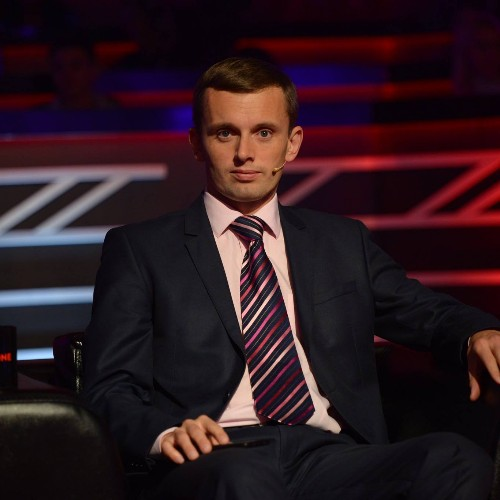
Director of the Ukrainian Institute of Politics