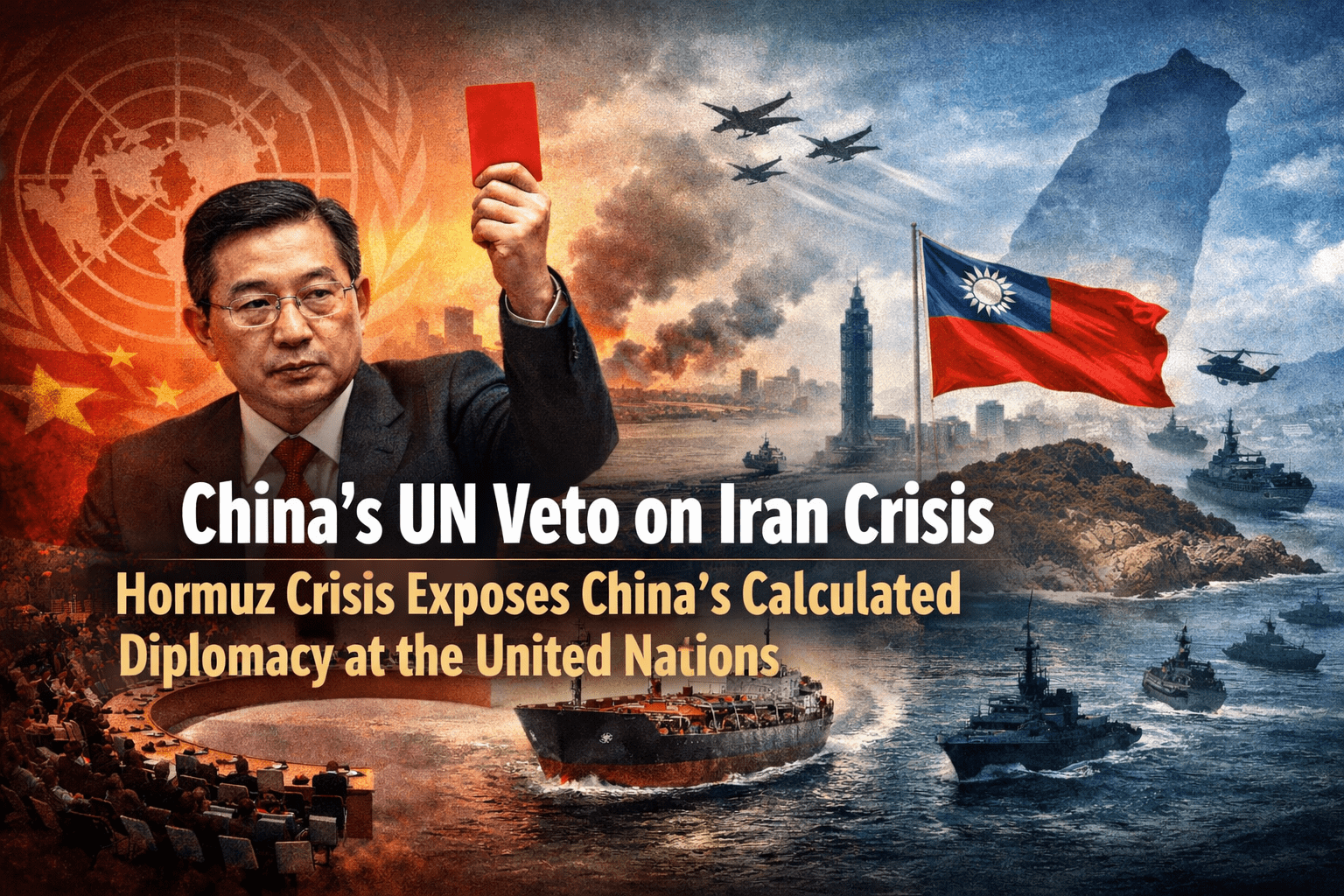
China’s decision to veto a United Nations Security Council (UNSC) resolution on the escalating Strait of Hormuz crisis marks a defining moment in its evolving global diplomatic posture. The move, taken alongside Russia, reflects not only Beijing’s strategic caution but also a broader recalibration of its role in international conflict management.
The crisis itself erupted after Strait of Hormuz was closed by Iran in response to military strikes by the United States and Israel. The proposed UNSC resolution, led by Bahrain, aimed not to resolve the conflict but to ensure the protection of maritime navigation and support escorted commercial shipping through the chokepoint that handles a significant share of global oil flows.
Despite the resolution being diluted, removing explicit authorisation of force and incorporating language on proportionality, China still exercised its veto. At first glance, this appears counterintuitive. The resolution aligned with Beijing’s own economic interests, particularly its reliance on stable energy flows. However, the veto underscores a deeper concern: the potential misuse of international mandates as a cover for unilateral military escalation.
China’s Permanent Representative to the UN, Fu Cong, explicitly referenced the legacy of the 2011 Libya intervention. In Beijing’s view, what began as a humanitarian mandate in Libya evolved into regime change, an outcome China remains deeply wary of repeating. Recent rhetoric from Donald Trump, including aggressive threats toward Iran, likely reinforced Chinese fears that even a limited resolution could be stretched to justify broader military action.
China also criticised the resolution as “one-sided,” arguing that it failed to adequately acknowledge the initiating role of US and Israeli strikes. This framing reflects Beijing’s consistent emphasis on sovereignty and opposition to what it perceives as Western-driven interventionism.
Yet, China’s veto comes at a cost. Blocking a resolution, particularly one designed to secure global shipping lanes, risks undermining the legitimacy of the UNSC itself. As a permanent member, China benefits from the Council’s authority as a platform where it holds equal footing with Washington. Repeated obstruction could weaken that very system, raising questions about whether Beijing is willing to trade institutional stability for short-term strategic positioning.
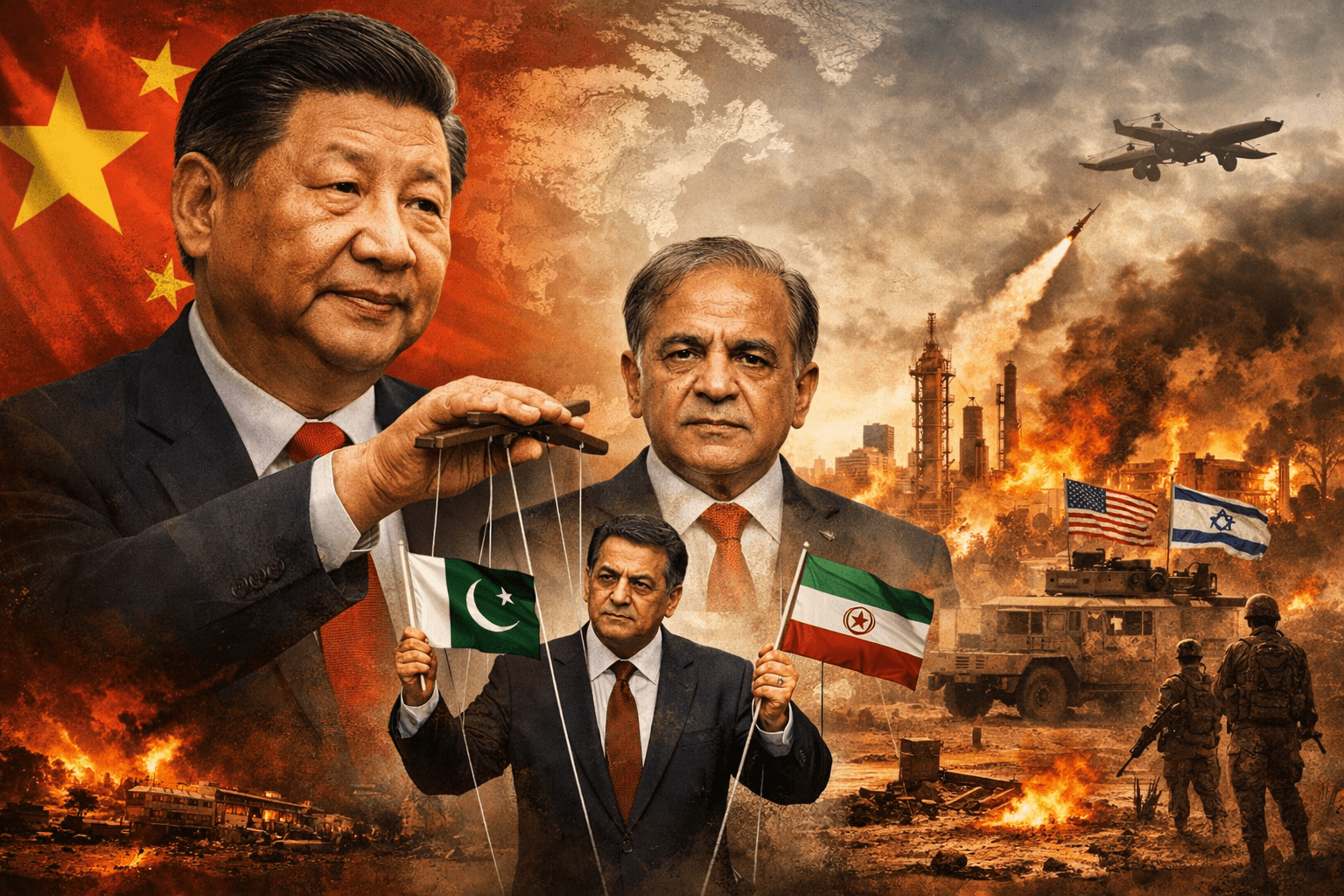
Beyond the UN chamber, China’s actions suggest a more nuanced approach. Reports indicate Beijing played a behind-the-scenes role in facilitating communication between Tehran and Washington, contributing to a Pakistan-brokered and US controlled ceasefire effort. This dual-track strategy, public resistance at the UN paired with quiet diplomatic engagement, illustrates China’s preference for controlled influence rather than overt leadership.
Economic considerations are central to this posture. While China initially absorbed the shock of rising oil prices due to its diversified energy mix and strategic reserves, a prolonged conflict presents serious risks. Weak domestic demand has made exports critical to sustaining growth. Any disruption to global trade routes or decline in external demand could have cascading effects on China’s already fragile economic recovery.
Geopolitics further complicates Beijing’s calculus. The crisis has delayed a planned visit by Donald Trump to China, a key opportunity for stabilising bilateral relations. Hosting a US president amid active conflict risks signalling tacit approval of American military actions, while postponement prolongs uncertainty in an already strained relationship.
Additionally, China faces logistical and humanitarian concerns. Hundreds of thousands of Chinese nationals remain in the broader Middle East region, raising the stakes for evacuation planning should the conflict intensify.
Ultimately, China’s veto reflects a balancing act between principle and pragmatism. It seeks to avoid legitimising military escalation while preserving its strategic interests in regional stability, economic continuity, and global influence. However, this approach is not without contradictions. By opposing a resolution aimed at safeguarding maritime security, China risks appearing inconsistent, prioritising political caution over immediate global needs.
As the Iran crisis continues to unfold (even though a symbolic ceasefire has been achieved), Beijing’s challenge will be to sustain its diplomatic engagement without overextending itself. Its credibility as a global actor increasingly depends not just on resisting Western initiatives, but on offering viable alternatives.
The Strait of Hormuz crisis is far from resolved. And for China, the real test lies ahead: whether it can transition from a cautious power broker to a decisive force in shaping the international order. Time will also tell whether, under the cover of this broader geopolitical distraction, Beijing seeks to advance its strategic ambitions toward Taiwan, further complicating an already fragile global security landscape.