Burmese city of Mongmit left ravaged after months of battles

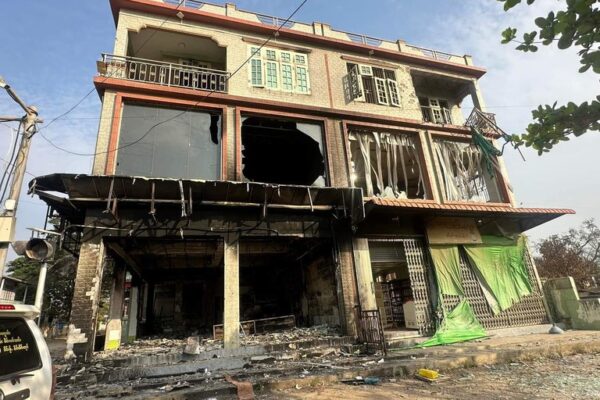
Months of intense battles between anti-junta groups and junta forces have ravaged the city of Mongmit in Myanmar’s Shan state, resulting in widespread displacement, lootings and arson, according to locals.  Currently under junta control, the city was once a battleground where the Three Brotherhood Alliance clashed with junta forces. A ceasefire between the two, mediated by China, was established on Jan. 11, but battles persisted with the Kachin Independence Army, which did not partake in the ceasefire agreement. After launching attacks on Jan. 18, the KIA, in alliance with the All Burma Students’ Democratic Front and People’s Defense Forces, temporarily took over the city, residents told Radio Free Asia on Friday.  However, on Jan. 29, the junta forces recaptured the city through a fierce counterattack involving airstrikes and heavy artillery. This offensive led to the destruction of over 200 buildings, including key structures like the market, monasteries, and a school, as well as 100 residential homes. In this tumultuous period, close to 10,000 inhabitants evacuated the city, abandoning their homes and businesses for extended durations. The resulting void has triggered a wave of robberies throughout the urban neighborhoods, according to locals.  The Kachin Independence Army joint forces and the military junta fought in Mongmit city in northern Shan state on Jan. 28, 2024. (Citizen journalist) A resident, among those who have returned to the city, told RFA that he saw a group of people holding sticks and swords looting houses.  “They took everything without leaving anything behind. It was a group of people in plain clothes and most of them were criminals in the past,” said the resident who wished to remain anonymous for security reasons. “They did not even leave the fence door. They took it away and no one dared to say anything. Then they burned homes. It’s already like a ruined city.” Another woman from Mongmit said that nearly all the shops in the city had been looted, including her own. “Our shop has been looted and there is nothing left, just like every shop in the city now. It was broken into and our goods were stolen,” she said, declining to be identified for fear of reprisals. “It’s worse where there are no people now, some of them are returning to the city.” Mongmit and its neighboring city Mabein have been under martial law since Wednesday.  Shan state’s junta spokesperson, Khun Thein Maung, did not respond to RFA’s inquiries. According to the Shan Human Rights Foundation’s statement on Tuesday, a total of 27 civilians were killed by heavy artillery and airstrikes from Jan. 1 to Feb. 2, including two mass killings. Translated by RFA Burmese. Edited by Taejun Kang.

Read More

Exclusive: Kim Jong Un is now ‘Great Comrade,’ no longer ‘Great Leader’

North Korea’s supreme leader Kim Jong Un has received a new title, “Great Comrade,” signaling that the leadership wants to emphasize his achievements over his predecessors, father Kim Jong Il and grandfather Kim Il Sung, residents told Radio Free Asia. The shift from “Great Leader” to “Great Comrade” occurred sometime this month, as the country circulated a five-point oath – shared exclusively with RFA Korean – that must be sworn by all North Koreans to pledge their loyalty. The oath, sent to all organizations and institutions in the country, is read by officials at various events, including holidays and national anniversaries, and repeated by the people, said a North Korean resident who requested anonymity for security reasons Each of the five parts of the oath contains the title “Great Comrade.” The promise commits the speaker to “support and defend” Kim Jong Un “politically and ideologically,” and pledges that they will remain “loyal and obedient” to his sole leadership “at all costs,” and will only follow the “Mt. Paektu bloodline,” which refers to the Kim Dynasty. National founder Kim Il Sung and the ruling Kim family is said to have strong connections to Mt. Paektu, the tallest mountain on the Korean peninsula and a sacred peak in Korean mythology. The oath goes on to say the speaker is armed with the “revolutionary ideology of Great Comrade Kim Jong Un” and commits them to “vigorously participate in the construction of socialism,” and fight against anti-socialism. It concludes by pledging to dedication “to the final victory of the Juche revolution and National Unification.” Juche is North Korea’s founding ideology of self-reliance. Elevating his status The five points are preceded by a singular statement about working towards the socialist theory known as “Great Kimilsungism-Kimjongilism” – but after that, neither Kim’s father nor grandfather are mentioned. The lack of emphasis on Kim’s predecessors suggests that the government wants to elevate his status above them, according to Jiro Ishimaru of the Osaka-based Asia Press, a news outlet that specializes in North Korea. The cover of the oath administered to all North Korean residents. (RFA) “In the past there were consistent messages saying that we should not forget the leadership of Grand Marshal Kim Il Sung and Kim Jong Il and carry out their instructions,” Ishimaru said.  “But in this oath, these messages have almost disappeared. It refers to ‘Great Comrade Kim Jong Un’ and only mentions that Kimilsungism–Kimjongilism is to be maintained,” he said. “It certainly seems like a lot has changed.” The new oath places unique emphasis on Kim Jong Un, whereas previously the government included adherence to the ideologies of the predecessors to project a sense of continuity to enhance the perception of his legitimacy, Cheong Seong-chang, the director of the Center for Korean Peninsula Strategy at the Sejong Institute, told RFA.  “In the past, they expressed their stance to inherit the ideology and policies of Kim Il Sung and Kim Jong Il. But there are many differences between Kim Il Sung-Kim Jong Il’s policies and Kim Jong Un’s policies,” he said. “This oath basically puts Kim Jong Un’s instructions and guidance forward as the absolute standard. So, it seems that Kim Jong Un’s leadership is firmly rooted now.” Dropping national unification  Recently, the North Korean government has reversed its official stance on reunification, and no longer considers it a priority. This makes the fifth clause of the oath, which mentions national unification, obsolete. Experts therefore believe that this oath was written in 2021 or earlier. A resident of North Korea who requested anonymity for safety reasons said that instructions were given to officials to skip the part about national unification when reading the oath.  Experts expect that a revised version of this oath will be circulated soon to reflect the shift away from the South, which in recent months North Korea has defined as its “primary enemy.”  Additionally, Pyongyang has ended economic cooperation with Seoul, and has stopped using language that considers Koreans on both sides of the DMZ as belonging to the same race of people.  Translated by Claire Lee. Edited by Eugene Whong and Malcolm Foster.

Read More

Myanmar junta kills 12 after firing into crowded market

Junta shelling of a crowded market killed 12 people and critically injured 18 more on Thursday morning, rescue workers told Radio Free Asia. A junta battalion on a nearby road fired indiscriminately into a marketplace in Rakhine state’s capital of Sittwe during the busiest time of day, locals said. Sittwe has become a disputed territory since a rebel group, the Arakan Army, captured surrounding junta camps and seized six townships across Rakhine state. In early February, the Arakan Army demanded junta troops in Sittwe surrender before their arrival in the capital.  The junta army’s grasp on the area has been tenuous after losing territories, but troops have attempted control by placing restrictions on the capital and making large-scale arrests. On Feb. 19, regime forces detained 500 people who landed in Sittwe off a flight arriving from Yangon. A rescue volunteer who wished to remain anonymous for security reasons told RFA the dead have been sent to Sittwe Hospital’s mortuary, and the injured are being treated there “Those 18 were critically injured and their injuries are life-threatening,” he said. “Some people died on the spot and others after arriving at the hospital. All of them are vendors and shoppers.” The names and ages of the deceased could not be confirmed. However, most of them were women, children and the elderly, the volunteer added. The shell was fired by a battalion near Shu Khin Thar road, residents said. RFA contacted Rakhine state’s junta spokesperson Hla Thein for further details about the attack, but he did not reply.  The Arakan Army ended a humanitarian-based year-long ceasefire on Nov. 13 with the junta when they began to attack border outposts and convoys across Minbya and Rathedaung townships.  The Arakan Army released a statement on Tuesday saying that 111 civilians have been killed and 357 have been injured by small and heavy artillery fired by the junta from the ceasefire to Feb. 18, 2024. Translated by RFA Burmese. Edited by Mike Firn.

Read More

Tibetans in India march in solidarity with those arrested in dam protest in China

Tibetans and Buddhist leaders in northern India on Wednesday participated in a march to show their solidarity with Tibetans in southwestern China’s Sichuan province arrested for peacefully protesting the planned construction of a dam.  Similar solidarity rallies were held in London and other cities the same day. The large Buddhist community in Ladakh – in Jammu and Kashmir – expressed concerns that the dam project will submerge several significant monasteries with ancient murals that date back to the 13th century.  The Regional Tibetan Youth Congress, which organized the march and rally, said Buddhists there were concerned about the humanitarian situation and the violation of cultural and religious rights stemming from the expected impact of the dam on several monasteries and villages near the Drichu River. On Feb. 23, police arrested more than 1,000 Tibetans, including monks and residents, of Dege county in Sichuan’s Kardze Autonomous Tibetan Prefecture, who had been protesting the construction of the Gangtuo Dam, meant to generate electricity. If built, the power station could submerge monasteries in Dege’s Wangbuding township and force residents of at least two villages near the Drichu River to relocate, sources told RFA.  Rigzin Dorjey, president of the youth wing of the Ladakh Buddhist Association Leh, said there is an urgent need to address the ongoing human rights abuses and environmental destruction perpetrated by China’s communist government.  He underscored the interconnectedness of global Buddhist communities and the shared responsibility to stand in solidarity with Tibetans in their struggle for justice, freedom and dignity. ‘Collective commitment’ Lobsang Tsering, vice president of the Regional Tibetan Youth Congress of Ladakh, said the rally serves as “an expression of solidarity and support for Tibetans facing challenges and oppression in Dege county.” “It symbolizes a collective commitment to standing up against oppression, promoting human rights and preserving Tibetan culture and identity in the face of adversity,” Tsering said.  Tenzin Peldon, who participated in the march in Ladakh said while Tibetans everywhere usually gather to raise their voices against China on politically significant dates such as March 10, known as Tibetan Uprising Day – which commemorates the thousands of lives lost in the 1959 uprising against China’s invasion and occupation of their homeland – it is crucial that they come together during dire situations like the one being faced by Tibetans in Dege to collectively speak up against China’s oppression.  “I urge all Tibetans in exile not to give up hope and to continue to raise awareness on online platforms about the plight of Tibetans in Dege county,” she said.  Other protests were held in Bir village and Clement town in India, and in London, where Tibetans demonstrated outside the Chinese Embassy to show their support for the Dege county protesters, demand the release of the detainees, and call for an immediate halt to the dam construction. “Risking arrest and torture, Tibetan residents of Kham Derge [Dege county] have shared images and videos of the protest with the outside world,” the Tibetan Community UK said in a statement. “They want the international community in the free world to know about their plight and to raise their voice.” Authorities released about 40 of the arrested monks on Feb. 26 and 27, RFA reported on Tuesday. Chinese authorities released about 20 monks each on Monday and Tuesday, said the sources who spoke on condition of anonymity for safety reasons.  Also on Wednesday, Human Rights Watch called on Chinese authorities to immediately release the detained Tibetan monks. “The Chinese authorities have long been hostile to public protests, but their response is especially brutal when the protests are by Tibetans and other ethnic groups,” said Maya Wang, the group’s acting China director, in a statement.  “Other governments should press Beijing to free these protesters, who have been wrongfully detained for exercising their basic rights,” she said. Translated by Tenzin Dickyi and Tenzin Pema for RFA Tibetan. Additional reporting by Pelbar for RFA Tibetan. Edited by Roseanne Gerin and Malcolm Foster.

Read More

Junta troops beat Myanmar man unconscious during interrogation

Junta troops have arrested at least 10 young people from Myanmar’s delta region, beating one unconscious during questioning, locals told Radio Free Asia on Wednesday. The youths, from three villages in Ayeyarwady region, were accused of involvement in political activities, residents from Kyonpyaw township said, citing sources close to the police station. On Sunday, soldiers arrested a man from Kyee Taw Yoe village who goes by the name Freddy. Following Freddy’s arrest, around 10 youths from Nyaung Kone and Kyar Inn villages were rounded up.  A Kyonpyaw township resident who wished to remain anonymous for security reasons told RFA the youths were thought to be connected to Freddy, who was tortured by the police. “There was a young man who was arrested in Kyonpyaw on Feb. 25. He was the first to be arrested. He is still under investigation and in Ah Htaung police custody,” said the local. “We found out that the young man was unconscious because they beat him during the interrogation. After that, more than 10 people were arrested on political suspicion.” Some other young people from the area have fled as a result of the arrests, he said. RFA called Ayeyarwady region’s junta spokesperson Khin Maung Kyi to learn more about the arrests, but he did not answer calls. In October, 20-year-old Kyonpyaw local Soe Paing Oo died during interrogation after being accused of communicating with resistance forces.  Days earlier, he was awarded cash and a certificate  for his surrender in a junta ceremony.  On Jan. 6, at least seven locals were arrested in connection with the murder of two village administrators, Than Min Aung and Ngwe Thein in Kyonpyaw township’s Ma Gu Yoe village, locals said.  The township in eastern Ayeyarwady has faced some of the nation’s heaviest recruitment efforts, even before junta leader Senior Gen. Min Aung Hlaing announced on Feb. 10 plans to enforce the People’s Military Service Law.  Junta troops demanded 10 recruits per village in January, threatening to burn down houses if their quota was not met.  Relying on surrendered resistance fighters and retired military personnel, troops also attempted to bolster numbers in December. Translated by RFA Burmese. Edited by Mike Firn.

Read More

Mud-soaked residents scuffle with officials trying to demolish their homes

Pleading for help from the mud, residents scuffled with authorities in Cambodia’s capital on Tuesday as they tried to block machinery brought in to demolish their homes to make way for a planned high-rise development. “I can’t live without my house! I used to cultivate rice during the dry season, but now they say I occupied the land illegally, and they will confiscate it,” cried a woman named Kong Toeur while sitting in waist-deep muddy water. “All children must know this pain!” she shouted. “This is Cambodia law.”  Another villager, Tim Ouk, said the villagers had done nothing wrong. “Authorities must stop all machinery from destroying our houses,” she said. Such land disputes are common in Cambodia and other Southeast Asian countries as authorities seek land on which to build apartment buildings and shopping malls. In this case, authorities have been looking for ways to evict food vendors and residents from the area next to Ta Mok Lake in Phnom Penhl’s Preaek Phnov district.  The lake is the city’s largest, with a total area of more than 3,240 hectares (8,000 acres). Hundreds of hectares of Ta Mok Lake have already been filled in to pave the way for the development projects. About 200 families are asking authorities to set aside four hectares of land from the development where they can live. Translated by Yun Samean. Edited by Matt Reed and Malcolm Foster.

Read More

Fourteen injured in Myanmar after jet attack in rebel territory

Junta bombs injured 14 villagers in the country’s west on Tuesday, residents told Radio Free Asia.  The attack occurred when a jet attacked Rakhine state’s Minbya township in the middle of the night, they said. The bombs destroyed houses and critically injured several civilians in Thay Kan village.  Minbya township is part of Mrauk-U district, the sprawling ancient capital of Rakhine state.  The Arakan Army has won control of Rakhine state’s Pauktaw, Minbya, Mrauk-U, Kyauktaw, Myay Pon and Taung Pyo townships in the last four months, as well as neighboring Paletwa township in Chin state to the northeast.  Following the ethnic army’s capture of Minbya city on Feb. 6, there has been no fighting in the township for several weeks, one resident said. “At around 1 a.m., a jet came and dropped two bombs, injuring 14 people. Four among the injured were in critical condition,” he said, declining to be named for security reasons. “A house was destroyed by fire. Some other houses were also destroyed.” Thay Kan village has a population of only 400 people, and no military junta troops were stationed nearby, he added. The injured are currently being treated at nearby clinics, residents told RFA. Calls to Rakhine state’s junta spokesperson Hla Thein by RFA seeking comment on the incident went unanswered. On Feb. 20, junta troops arrested over 100 young ethnic Rakhine men on a bus leaving the country’s commercial capital of Yangon. Many were traveling to their homes in Minbya, among other nearby townships. Translated by RFA Burmese. Edited by Mike Firn.

Read More

US official expresses concern over crackdown on Tibetans protesting dam

An American official expressed deep concern about the arrest of over 1,000 Tibetans protesting a dam project in central China that would destroy several Buddhist monasteries, saying the United States “stands with Tibetans in preserving their unique cultural, religious, and linguistic identity.”  Tibetan advocacy groups condemned China’s actions, calling for the immediate release of those detained. On Feb. 23, police arrested more than 1,000 Tibetans, including monks and residents, in Dege county in Kardze Autonomous Tibetan Prefecture, who had been peacefully protesting against the dam, which would also force two villages to be relocated, sources told Radio Free Asia.  Over the weekend, police began interrogations, beating some detainees so badly that they required medical attention, sources told RFA.  Uzra Zeya, U.S. under secretary for civilian security, democracy and human rights and U.S. special coordinator for Tibetan Issues, said on X on Feb. 25 that she was deeply concerned by reports of the “mass arrests of Tibetans protesting the construction of a dam that threatens displacement of villages & destruction of monasteries.” “China must respect human rights & freedom of expression and include Tibetans in the development & implementation of water and land management policies,” she tweeted.  “These centuries-old monasteries are home to hundreds of Tibetan Buddhist monks and contain irreplaceable cultural relics,” she wrote. “The U.S. stands with Tibetans in preserving their unique cultural, religious, and linguistic identity.”   ‘Wiping out culture and religion’ The arrests “should be a reminder to the world of how brutal daily life under China’s occupation is for the Tibetan people,” a  statement issued Monday on X from the International Campaign for Tibet by its president, Tencho Gyatso. “China tries to hide its forced relocation of Tibetans, its destruction of their environment, and its attempts to wipe out their culture and religion,” the statement said. Saying the protesters demonstrated “incredible courage,” Gyatso said they needed the support of the international community.  “We call on the Chinese government to free these Tibetans at once,” she said. “We also call on the U.S. and other governments to step up pressure on China to end its vicious occupation of Tibet.” Chinese authorities arrest Tibetan monks during a protest against a dam project on the Drichu River in Dege county, southwestern China’s Sichuan province, Feb. 22, 2024. (Image from citizen journalist video) Four Tibetan NGOs based in Dharamsala, India, home to the exiled Tibetan spiritual leader, the Dalai Lama, issued a statement of solidarity with the Tibetan community in Dege county. They said that the displacement of Tibetan communities is “not new phenomena,” just one of many examples. “The continued disregard for the rights and well-being of Tibetans in the face of such development projects is unacceptable and demands immediate attention from the international community,” said the statement by the Tibetan Women’s Association, National Democratic Party of Tibet, Regional Tibetan Youth Congress and Students for a Free Tibet.  Environmental disruption The four groups went on to say that the construction of the dam not only threatens the local Tibetan community but also poses a risk to the fragile ecosystem of the Tibetan plateau.  “Any disruption to Tibet’s rivers and a diversion of the rivers could have far-reaching consequences for the environment, biodiversity, and livelihoods of millions of people downstream,” they said.  William Nee, research and advocacy coordinator at Chinese Human Rights Defenders, or CHRD, told RFA that his organization was concerned about the situation of the detainees, whether they are being maltreated and if they have sufficient food.  RFA reported earlier that authorities told those who were arrested to bring bedding and food, suggesting they would not be released soon. CHRD was also concerned whether authorities were giving those arrested access to relatives and lawyers, and whether they were being detained according to Chinese Criminal Procedure Law.  “But beyond that, there are also concerns about the livelihood of the potentially affected communities by the dam and whether this has been taken into consideration,” Nee said. “And also the cultural rights, given that this might impact monasteries – some having ancient murals going back to the 13th century.”    Khenpo Sonam Tenphel, speaker of the Tibetan parliament-in-exile, tweeted on X that Tibetans worldwide condemned the crackdown.  “We urge China to promptly release those detained and to cease the dam construction,” he tweeted. “It is crucial for China to acknowledge the peaceful protests of Tibetans, addressing their concerns about preserving historic monasteries and safeguarding their homes.” Translated and edited by Tenzin Pema. Edited by Roseanne Gerin and Malcolm Foster.

Read More

Six-day battle in central Myanmar kills 7 civilians

Ongoing junta shelling across central Myanmar has killed seven civilians as of Monday, locals told Radio Free Asia.  Battles began last Wednesday when anti-junta forces in China state attacked the junta troops in the state’s Tedim township, in Khaikam city near the border with Kale township. Kale township of Sagaing region has been the site of other junta attacks in the last few months. On Wednesday, a drone crash, perceived by locals to be an accident, injured 13 children when the drone’s explosives detonated over a village monastery.  In September, four family members died when a junta shell exploded on their home in the township.  A Kale resident who wished to remain anonymous for security reasons told RFA Monday that seven people were killed by heavy artillery in other neighborhoods of Kale city, the capital of Kale township, but the whereabouts of the other six have not been identified yet, as the fighting is ongoing. “One was killed and one was injured on Feb. 25. Now people in Sin Ywar neighborhood have also fled to safety,” said the resident. “Many homes were damaged due to the military junta’s shelling and many people were injured.” All the victims were from Kale city, the resident added. The extent of civilian and soldier injuries is still unknown at this time. Roughly 5,000 residents of Kale city have fled to safety, according to aid workers assisting internally displaced people.  Kale city became the first to resist the February 2021 military coup in May, with civilians arming themselves with age-old Tumee rifles. This mobilization came in the wake of one of the deadliest single-day massacres, with junta troops killing 110 people across the nation on March 27, 2021. According to Myanmar’s 2019 General Administration Department statistics, Kale township is home to more than 340,000, of whom almost half are ethnic Chins. Translated by RFA Burmese. Edited by Taejun Kang.

Read More

Vacation is over for Cambodian strongman Hun Sen

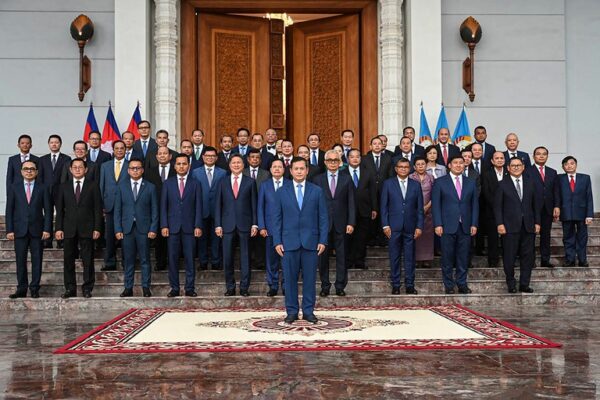
Every politician, especially one whose chokehold over a country lasted nearly four decades, needs some time off. Hun Sen, who handed over the prime ministership of Cambodia to his eldest son last summer, has had his feet up for the past seven months.  Not that he’s been idle; he’s still president of the ruling party and head of the King’s Privy Council, and has occasionally intervened to publicly chide his son for some mistakes. But after the Senate elections on Feb.  25, he’ll be coronated as the new Senate president.  The position will make him acting head of state when King Norodom Sihamoni is out of the country, as he often is for health checkups in China. With Cambodia now a Hun family fiefdom, you’ll have Prime Minister Hun Manet as head of government and Hun Sen as de-facto head of state.  What does it matter, you may ask, since Hun Sen is already all powerful? But the question contains the answer.  Clearly, Hun Sen doesn’t think of himself that way or else why would he want the Senate presidency? Indeed, he stated on the day that he resigned as prime minister last July that he would become Senate president, so clearly this had been decided when the ruling party was crossing the T’s on its vast succession plan in 2021 and 2022.  Moreover, it’s not a risk-free move. It means the current Senate president, Say Chhum, has to retire. This has the added benefit of pensioning off another graying ruling party grandee and one who some think controls a rival faction within the party.  Say Chhum had agreed to resign last year, perhaps safe in the knowledge that his family’s patronage networks are now in the hands of his son Say Sam Al, the land management minister.  But for those in the party (and there are some) angry that the CPP has become a family-run affair, the Hun duo as heads of government and state won’t sit well. Hun Sen stated last July during his resignation speech that by becoming Senate president, “I will not intrude into the responsibilities of the new prime minister,” but it certainly appears that may to some.  Cambodia’s Prime Minister-designate Hun Manet, center, and incoming cabinet members pose for a group photo at the headquarters of the Cambodian People’s Party in Phnom Penh, Aug. 10, 2023. (Kok Ky/Cambodia’s Government Cabinet via AFP) Moreover, it seemingly goes against the spirit of the party’s generational succession scheme in which the aging “first generation” CPP leaders (Hun Sen included) were supposed to retire from frontline politics and give formal powers to the “second generation”, even if the elders still called the shots behind the scenes. So why not give the Senate presidency to a younger, “second generation” politician?  Given that the CPP took years to meticulously plot this succession process – so it cannot be that they were stuck in making a decision about who would become Senate president and Hun Sen was the easiest option to fill the void – the only logical conclusion is that Hun Sen wants the Senate presidency because he thinks he needs it. First, it will allow him to travel abroad on state visits or welcome visiting leaders in an official capacity, which he hasn’t been able to do since August.  Despite having been the world’s longest-serving head of government, he never gained acceptance as a world’s statesman, certainly not one spoken of with the same reverence as Lee Kwan Yew of Singapore. The Senate presidency might give him another decade or so to attempt to claim such a mantle. Second, according to some, it gives him official diplomatic immunity, which may come in handy at some point in the future. Third, and while one ordinarily ought to avoid psychoanalyzing politicians, it’s probable that Hun Sen detests being away from frontline politics and not being able to make public displays of his power, so maybe it’s the case that he is taking the Senate presidency simply because he can.  Institutional capture Now 71, he has been a senior politician since the age of 27, and he never seemed the type to enjoy retirement nor to shy away from publicity. Hun Sen is never happier than when delivering a three-hour monologue to a crowd of bussed-in workers. But he’s had few opportunities to do so since August, although that’s partly because he has wanted to give his son the limelight. As Senate president, he will have a captive audience (in more ways than one) again.  Fourth, and perhaps most importantly, the Senate presidency gives him yet more institutional power to intervene if something was to go wrong with his son’s government – or, indeed, if there was ever a putschist attempt against Hun Manet.  Remember that Hun Sen has repeatedly said he would return as prime minister if any major crisis befouled the government; the insinuation being that his vacation from the premiership may be temporary. For the best part of a decade, the Hun family has been on a long march through the institutions, wary that some of its rivals may also be on their own such project.  Today, he has the King’s ear as head of the Supreme Privy Advisory Council. He controls the powerful but unruly (and quick to disgruntlement) business tycoons, the oknha, as president of the newly-formed Cambodian Oknha Association.  He’s also president of some other CPP-linked “uncivil society” groups. Through constitutional reforms in 2022, he greatly weakened the power of the National Assembly to reprimand ministers or the prime minister, and in 2023 he helped make the loyal but politically weak Khuon Sudary the new president of the lower chamber of parliament. These steps gave even more power to the CPP over personnel choices.  Cambodian People’s Party President Hun Sen, left, addresses supporters in Phnom Penh as his son Prime Minister Hun Manet, right, listens during a ceremony marking the 45th anniversary of the fall of the Khmer Rouge regime, Jan. 7, 2024. (Tang Chhin…

Read More