Chinese navy is operating out of Cambodia’s Ream base: US think tank

Cambodia appears to have given the Chinese navy extended and exclusive access to its naval base in Ream despite official claims that they only arrived for training purposes, a U.S. think tank said. Radio Free Asia first reported on the arrival of two Chinese corvettes last December, the first foreign warships allowed to dock at the new Chinese-built pier at Ream, Sihanoukville province. The ships left the pier on January 15, 2024, only to return several days later, said the Asia Maritime Transparency Initiative (AMTI) at the Center for Strategic and International Studies (CSIS) in Washington D.C. in a new report. AMTI analyzed commercial satellite imagery that shows the Chinese vessels “have now maintained a consistent presence for over four months.” “It appears that they’ve been based there, just as the leaked 2019 MOU [memorandum of understanding] suggested they would be,” said Greg Poling, AMTI’s director, referring to the reported controversial agreement between Cambodia and China in 2019 giving Beijing exclusive rights to part of the Ream naval base.  “This isn’t just a visit or an exercise,” Poling told RFA. “Despite the Hun Sen and Hun Manet governments’ denials, the PLAN [People’s Liberation Army Navy] is operating out of Ream.” Training Cambodian navy The AMTI report said that no other ships, including Cambodian vessels, have been seen docking at the new pier, “which was completed last year to enable larger warships to dock in Ream’s shallow waters.” This indicates “a visible sign of privileged access for China’s military,” it said, adding that the degree of China’s access to Ream in the future will confirm whether Ream has become a Chinese naval base. Former Cambodian defense minister Tea Banh visits a Chinese warship at Ream naval base, Dec. 3, 2023.  (Facebook: Tea Seiha) Cambodia is preparing for the upcoming annual joint exercise Golden Dragon with the Chinese military, part of which will be conducted at sea, RFA has learned. Naval commanders held a meeting in Phnom Penh on April 18 to discuss the exercise. It is unclear whether the Chinese vessels currently at Ream would take part in Golden Dragon 2024. In last year’s iteration, the two navies conducted their first-ever joint naval drills in the waters off Sihanoukville, but with a landing ship dispatched from China. RFA has contacted Rear Adm. Mey Dina, Ream naval base’s commander, for more clarification but has not received any reply. When the two Chinese ships arrived in Ream in December 2023, Cambodia’s minister of defense Tea Seiha said on Facebook that it was “for training our Cambodian Navy crew.” In the following days there was indeed a training course for Cambodian navy staff at Ream, attended by Chinese officers. However, there were no further reports on any activity of the Chinese ships in either Cambodian or Chinese media. “We don’t know what the Chinese have been up to [at Ream] because China builds and operates it itself,” said a Cambodian analyst who wished to stay anonymous due to the sensitivity of the topic. “What appears to be evident is that Beijing has begun to station semi-permanent warships there as a means of solidifying its military footprint across Southeast Asia,” said Paul Chambers, a political scientist at the Center of ASEAN Community Studies at Naresuan University in Thailand.  “A Chinese foothold in Cambodia offers support to other nearby Chinese military platforms in the South China Sea, Myanmar, Laos, and southern Asia,” Chambers told RFA. ‘Serious concerns’ There has been no immediate comment from the U.S. Embassy in Phnom Penh. The U.S. State Department last December said it had “serious concerns” about China’s plans for exclusive control over portions of Ream Naval Base, a claim that Cambodia has repeatedly denied. Top officials in Phnom Penh have maintained that allowing a foreign military to be based in Cambodia would be in contradiction to the country’s constitution. Sailors stand guard at the Cambodian Ream Naval Base in Sihanoukville, Cambodia, July 26, 2019. (Reuters/Samrang Pring) Cambodian analyst, Chhan Paul, wrote in the pro-government newspaper Khmer Times that any allegation of a Chinese military base is a “deliberate attempt to malign Cambodia.” “Cambodia never claims that it won’t allow warships from China to dock at the Ream naval base. Cambodia openly welcomes warships from other friendly countries to dock at the base,” the independent analyst wrote, “Therefore, the mere sighting of a Chinese warship cannot be interpreted to mean anything out of the ordinary.” Chinese foreign minister Wang Yi is to visit Cambodia from April 21 to 23 to further consolidate bilateral relations in “wide-ranging areas,” according to a press release from the Cambodian foreign ministry. Wang Yi is scheduled to call on King Norodom Sihamoni and meet with Prime Minister Hun Manet and his father Hun Sen, who is now the president of the country’s Senate. Edited by Mike Firn.

Read More

Interfaith conference seeks to raise awareness about Uyghur genocide

The hundreds of thousands of Uyghurs subjected by China to detention, forced labor and cultural erasure underscores the urgency for global action, panelists said at a two-day interfaith conference on disrupting Uyghur genocide organized by The Elie Wiesel Foundation for Humanity that wrapped up Thursday. Survivors, experts, religious leaders and activists participated in panels to discuss the situation of the Uyghurs and called on governments to promote pro-Uyghur policies and to pressure businesses that profit from Uyghur forced labor, said a notice about the conference on the foundation’s website. An estimated 1.8 million mostly Muslim Uyghurs and other Turkic ethnic groups have passed through “re-education” camps in Xinjiang, in China’s far northwest, as part of a larger effort by Beijing to wipe out the Uyghurs along with their culture, language and religion. Some of the detainees have been subjected to torture, rape and psychological abuse. These actions and policies, the United States and other Western governments say, amount to genocide and crimes and against humanity against the 11 million Uyghur people. China denies the human rights abuses and says the camps were vocational training centers and have since been closed. Restrictions placed on Uyghurs are to counter religious extremism and terrorism, according to Beijing. Western diplomats have raised the Uyghur genocide issue “directly and forcefully” with Chinese officials, Ellen Germain, special envoy for Holocaust issues at the U.S. State Department and a panel speaker, told Radio Free Asia. Additionally, the Uyghur Forced Labor Prevention Act of 2021 and the Elie Wiesel Genocide and Atrocities Prevention Act of 2018, require the U.S. government, State Department and Department of Homeland Security, among others, to take action that will impose consequences on those who commit genocide or other atrocities, she said.  “We recognize that it’s never enough for those who are suffering,” Germain said. ‘We are not afraid’ The Elie Wiesel Foundation for Humanity, named for the Holocaust survivor, Nobel Peace Prize laureate, writer and human rights activist who died in 2016, has thrown its support behind raising awareness of the Uyghur genocide through protests, op-eds, funding and events such as conferences. Elie Wiesel poses with his wife Marion and son Elisha in New York, Oct. 14, 1986. (Richard Drew/AP) In 2023, the foundation awarded grants amounting to hundreds of thousands of dollars to three Uyghur groups dedicated to Uyghur rights advocacy and education amid ongoing repression against the ethnic group by Chinese authorities. “We’re not afraid of the Chinese Communist Party because they are in the wrong, and what they are doing is intolerable,” said his son, Elisha Wiesel, the foundation’s chairman.  “And if we can help to get the world to see that, to get the American public in particular to see that, that’s part of our role, and we need to do it in serving my father’s memory,” he said.  Forced sterilizations of detained Uyghur women, the destruction of thousands of mosques throughout Xinjiang, and the assignment of Han Chinese civil servants to stay in the homes of Uyghur families are other ways the Chinese government has sought to wipe out the Uyghurs and their culture.  “That is a genocidal activity to suppress the birth rate of a people, to change their buildings and remove their character, to forcibly remove their traditions by inserting people into the family life to prevent certain traditions from being followed,” Wiesel said.  Two major challenges The foundation faces two major challenges in trying to raise awareness about the Uyghur genocide, Wiesel said. The first is the Chinese government’s “information blackout policy,” making it nearly impossible for Uyghur families living in Xinjiang to communicate with relatives overseas or for the press to get first-hand information on what’s happening there.  “If the Western free press doesn’t have access to the atrocity, it can’t report it,” Wiesel said. “And then, it’s almost as though it doesn’t happen.” The second is that it is difficult to get celebrities to draw attention to the genocide because China is a major market for U.S. and Western movies and goods, such as sneakers.  “So, all of a sudden [China] has dollars and cents to impact celebrities, which makes it much harder now that their bottom line is at stake,” Wiesel said. “It’s much harder to activate them.” Edited by Roseanne Gerin and Malcolm Foster.

Read More

Ethnic army intercepts junta offensive on Thai-Myanmar border

An ethnic armed group intercepted a junta retaliation near the Thai-Myanmar border on Thursday, according to an announcement from rebel forces. The Karen National Liberation Army, an armed branch of the Karen National Union, along with other allied groups, captured the last remaining junta Infantry Battalion 275 near a border town in Myanmar’s Kayin state on Wednesday.  In response, the junta launched state-level offensive “Operation Aung Zeya” to capture Myawaddy city, according to a Karen National Union statement released Thursday.  Karen National Liberation Army joint forces destroyed military vehicles, including an armored vehicle, while junta troops were marching enroute to Myawaddy, it continued. According to the Karen National Union, more than 100 junta troops were injured and killed, and the group was stopped at Dawna Hills, a mountain range extending through Kayin state. Radio Free Asia  reached out to a Karen National Union spokesperson by phone today to learn more about the retaliation, but he did not respond. On high alert A Myawaddy resident who wished to remain anonymous for security reasons told RFA that the Karen army had warned some villages about junta airstrikes, which began on Tuesday evening. “The villages near Infantry Battalion 275 have been ordered to be evacuated by the Karen National Union due to air raids,” he said. “On April 18, people are telling each other to evacuate starting from today.” Civilians are waiting to go to Thailand through the Thai-Myanmar Friendship Bridge, while other Myawaddy residents are monitoring the situation, he said, adding that everyone is worried.  Another resident in the border city said the non-alighned Karen National Army, formerly the junta-aligned Border Guard Force, are patrolling the streets and warning the residents to be prepared to evacuate quickly if heavy fighting breaks out. Junta forces fired with heavy weapons and bombarded villages along their marching route during their offensive, causing civilian casualties and property damage, the Karen National Union’s statement said. The junta has not released any information on the attack. RFA called junta spokesman Maj. Gen. Zaw Min Tun for more information, but he did not pick up the phone. Since April 5, the Karen National Liberation Army and joint forces have captured the junta camps 355, 356 and 357 in Kayin state’s Thin Gan Nyi Naung town, in addition to Falu camp and Kyaik Don Byu Har hill camp and others around Myawaddy city. Translated by RFA Burmese. Edited by Kiana Duncan and Mike Firn. 

Read More

Report: China is exporting digital control methods

China’s government has turned the country’s tech companies like Huawei and ZTE into its “proxies” and uses their dominant market share in developing countries around the Indo-Pacific region to export its authoritarian model of the internet, according to a new report. In countries such as Cambodia, Malaysia, Nepal and Thailand, the dominance of the Chinese companies in building digital infrastructure has meant Beijing’s controlled version of the internet is expanding, leading to a fragmentation with the West’s open web, it says. The report is titled The Digital Silk Road: China and the Rise of Digital Repression in the Indo-Pacific and was released Wednesday by Article 19, a London-based internet-freedom advocacy organization. The group says the cut-price internet infrastructure being offered by companies beholden to the Chinese Communist Party “has benefited” countries that otherwise would be stuck with outdated infrastructure.  But that assistance comes with a catch, it says. “China has packaged its model as the prevailing best practice, often masked as support for innovation centers, exchanges or broader digital diplomacy initiatives, especially on issues relating to cybersecurity,” the report says, adding that the result is further “digital repression.” “This is intended to tip the scales in global adoption to influence more states to employ Chinese norms, accelerating internet fragmentation.” Cambodia’s ‘Great Firewall’ The report points to Cambodia, where it says “China is present at virtually every layer of the digital ecosystem,” which it says has been marked by a “shift towards China-style digital authoritarianism.” Firms like Huawei and ZTE have played “a leading role” in laying out infrastructure, it says, to the point where Cambodian telecoms companies only offer the two companies’ internet routers.  Hip-hop artist Kea Sokun listens to one of his songs online at a cafe in Phnom Penh, Cambodia January 29, 2022. (Tang Chhin Sothy/AFP) Huawei is also Cambodia’s only authorized cloud service provider and is responsible for much of the country’s 5G network, it notes, as well as its terrestrial and submarine internet lines and data centers. But it says China’s influence extends beyond infrastructure. “Alongside infrastructure-level cooperation, the shadow influence of China’s internet governance model has loomed large over Cambodia’s embrace of digital authoritarianism,” the report says, terming China’s influence on internet norms a form of “digital diplomacy.” In some areas, that has improved network engineering, the report says, but it also includes provision of “the technical knowhow for Cambodia to better emulate China’s digital authoritarian model.” The report blames such digital diplomacy for Cambodia’s National Internet Gateway, a system akin to China’s “Great Firewall” that allows the government to monitor and control all internet traffic. Phnom Penh has not said who is building the system, “but experts in Cambodian civil society believe it is Huawei or ZTE,” the report says. China alternatives The report recommends Western governments seek to work further with Taiwan and its technology sector to develop the self-ruling island further as a “counterweight” to China’s digital influence. A technician stands at the entrance to a Huawei 5G data server center at the Guangdong Second Provincial General Hospital in Guangzhou, in southern China’s Guangdong province on Sept. 26, 2021. (Ng Han Guan/AP) Taiwanese companies could help export infrastructure more friendly to the open web, it says, and countries like the United States could provide “greater financial resources” to civil society groups in the affected countries to push back against digital authoritarianism.  But it warns against casting too wide of a net in searching for alternatives to Chinese-built infrastructure and internet norms. Specifically, “while greater regional cooperation is necessary,” it says, “uncritically embracing countries with their own records of digital dictatorship, such as Vietnam, will ultimately be counterproductive.” Edited by Malcolm Foster.

Read More

Myanmar junta releases thousands of prisoners in New Year amnesty

Myanmar prisons nationwide released over 3,000 prisoners on Wednesday, according to junta-controlled media. Since the country’s 2021 coup, thousands of civilians have been arrested for donating to groups opposing the junta, protesting and speaking out against the military regime’s leaders.  According to the junta’s media statement, reduced sentences were given “for the peace of mind of the people” and “social leniency” during the Burmese New Year Commemoration. Prisoners were released under the condition that if they commit another crime, they will serve the remainder of their previous sentence as well as the sentence for their most recent crime, in accordance with the country’s Criminal Procedure Law, military-supported channels like MRTV continued.  Prisoners’ family members have been waiting in front of Yangon region’s infamous Insein Prison since early on Wednesday morning, residents said.  Family members waiting in front of Insein Prison in Yangon region on April 17, 2024. (RFA) The mother of a political prisoner waiting by Insein Prison on Wednesday said she hopes to see her son, who has been in prison for three years for defamation. “The people in the prison said that prisoners like my son with a prison term of less than three years would be released, while prisoners with a long sentence would get a reduced prison term,” she said, declining to be named for security reasons.  “That’s why I am waiting for my son. He was arrested and jailed when [junta forces] found revolutionary messages on his phone while checking the [ward’s] guest list that night,” she continued, referencing a housing registration system that has intensified since the junta took power. However, like previous amnesties, which have been criticized as a false show of humanity from the junta in the past, only a small number of political prisoners will likely be released, said Thaik Tun Oo, a member of Political Prisoner Network-Myanmar. “Even if there are political prisoners among the released, there will be a few well-known figures, a few political prisoners and there will be a lot of other people with criminal charges, just like the [junta] has done throughout the post-coup period,” he said “As far as we have found out, we have even heard that there are no political prisoners released in some prisons. I think they may have difficulty releasing political prisoners after the recent military defeats,” he said, referring to military victories since last October by the Three Brotherhood Alliance and the Karen National Liberation Army. In addition to the more than 3,303 prisoners, eight foreign prisoners who were jailed locally were released and deported, according to the military’s announcement. Prior to Wednesday’s amnesty, the junta administration also released 9,652 prisoners on Jan. 4, 2024 for Burmese Independence Day, but few political prisoners were among them, according to advocates for those jailed under the military regime.  According to the statements released by the junta, only 15 pardons were granted and a total of 95,000 prisoners have been released in more than three years since the coup.  Translated by RFA Burmese. Edited by Kiana Duncan and Mike Firn.  

Read More

China axes hundreds of TV dramas depicting family tensions

China’s internet censors have deleted hundreds of online TV dramas for portraying the negative aspects of family life amid an attempt by the ruling Communist Party to get more people to start families and rescue plummeting birth rates. Censors at video platforms Douyin and Kuaishou deleted more than 700 videos of TV micro-dramas portraying in-fighting between in-laws because of the “extreme emotions” they evoked, the government’s “Rumor-refuting platform” on Weibo reported. “Many micro-dramas on this theme deliberately amplify and exaggerate conflicts between husband and wife, conflicts between mother-in-law and daughter-in-law, and intergenerational conflicts through eye-catching stereotypes and abnormal and bizarre relationships,” the post said. The move comes as President Xi Jinping tries to promote marriage and family life as a way of boosting flagging birth rates. The number of Chinese couples tying the knot for the first time has plummeted by nearly 56% over the past nine years, with such marriages numbering less than 11 million in 2022. A November 2023 poll on the social media platform Weibo found that while most of the 44,000 respondents said 25 to 28 are the best ages to marry, nearly 60% said they were delaying marriage due to work pressures, education or the need to buy property. The logo of Chinese video sharing company Kuaishou is seen at its company in Hangzhou, in eastern China’s Zhejiang province on February 5, 2021. (AFP) Birth rates have fallen from 17.86 million in 2016 to just 9.02 million in 2023, despite a change in policy allowing couples to have up to three children in 2021.  In October, Xi called on women to focus on raising families, and the National People’s Congress this month started looking at ways to boost birth rates and kick-start the shrinking population, including flexible working policies, coverage for fertility treatment and extended maternity leave. Changing priorities But young women in today’s China are increasingly choosing not to marry or have kids, citing huge inequalities and patriarchal attitudes that still run through family life, not to mention the sheer economic cost of raising a family. A recent study of Mandarin pop songs aimed at a female audience focused far less on romantic love and more on personal freedom and economic independence. It appears the authorities want to avoid having women put off taking the plunge into family life by clamping down on mother-in-law gags and other depictions of family tensions. A screen shows a military parade at a booth of Chinese video-streaming startup Kuaishou, at the 2020 China International Fair for Trade in Services (CIFTIS) in Beijing, September 4, 2020. (Tingshu Wang/Reuters) “Douyin and Kuaishou have recently removed from the shelves a number of illegal micro-short dramas that deliberately choreographed “mother-in-law and daughter-in-law battles” to exaggerate extreme emotions.” The deleted shows “promoted unhealthy and non-mainstream views on family, marriage and love, and deliberately amplified and exaggerated conflicts between husband and wife, mother-in-law and daughter-in-law, etc,” the Weibo “rumor-refuting” post said. The censored titles included shows called “My Husband is a Mommy’s Boy,” “In the Doghouse with Mother-in-law,” and “Rich Lady Strikes Back,” and were removed to promote the “healthy development” of the online video market, it said, adding that Kuaishou had deleted more than 700 such shows. China’s State Administration of Radio, Film and Television has also issued new rules requiring platforms to apply for a license to distribute online TV shows, starting June 1. ‘Positive energy’ Current affairs commentator Chang Guantao said many online TV producers like to use social injustice as a talking point to get more viewers, which he said was “embarrassing” to the government, which wants anything posted on China’s tightly controlled internet to exude “positive energy” for the future of the country. “More and more micro-dramas are vying with each other to directly address society’s sore points, and those marginalized by government policy,” Chang said.  “This is likely something that news regulators and public opinion control agencies don’t want to see, so they have to regulate and control them, and limit their development in various ways,” he said. The logo of Chinese video-streaming startup Kuaishou is seen in Beijing, China May 10, 2017. (Stringer/Reuters) Current affairs commentator Bi Xin said micro-dramas have been much more lightly regulated than regular TV shows — until now. “It doesn’t cost too much to make a micro-drama, around 300,000 yuan (US$41,000), but they have a wider reach,” Bi said. “The authorities need to suppress and manage them by forcing them to get licensed, because their content isn’t always in line with the main theme [of government propaganda].” The news website Caixin quoted micro-drama producers as saying that there will now be a classification and hierarchical review system for the shows, which will be divided according to their production budget. Higher budget shows will be directly regulated by the State Administration of Radio, Film and Television, while lower budget productions will be managed by the same authorities at the provincial level. The lowest-budget shows will be left to video-sharing platforms to censor, the report said. Translated by Luisetta Mudie. Edited by Malcolm Foster.

Read More

Myanmar junta soldiers surrender in ethnic army’s first Tanintharyi win

Nearly 50 junta soldiers surrendered to an ethnic armed group in southern Myanmar, its political wing announced on Tuesday The Karen National Union’s armed branch, the Karen National Liberation Army, intercepted junta troops in Tanintharyi region’s Myeik township.  Commander Lieutenant Colonel Aung Hein, leading the junta’s Myeik-based Infantry Battalion 103, surrendered to the Karen army’s Brigade 4, according to a statement from the Karen National Union. The Karen National Liberation Army intercepted 48 troops on their way back to regroup in Htee Hta Byu Har junta camp on Monday, while six junta soldiers were killed in the attack. The group began fighting for territory in Tanintharyi in November 2022. This victory marks a first for the Karen National Liberation Army’s successes in the region, a spokesman for KNLA allies the Myeik District Revolutionary Force told RFA. “We can say that this surrender was the very first of its kind in Tanintharyi region,” he told RFA, declining to be named for security reasons. “I heard that they surrendered yesterday.” The troops that surrendered used to conduct military operations in Tanintharyi and Palaw townships, he said, adding that joint Karen National Union and People’s Defense Forces are conducting operations against the army in Dawei and Palaw township. RFA contacted Tanintharyi region’s junta spokesperson Thet Naing for a comment on the incident, but he did not respond by the time of publication.  Nearly 70 light and heavy weapons were seized and the 48 junta soldiers who surrendered are being held in accordance with international law, the Karen National Union’s statement said. Translated by RFA Burmese. Edited by Kiana Duncan and Mike Firn.

Read More

Chinese authorities arrest 4 Tibetans for protest over land grab

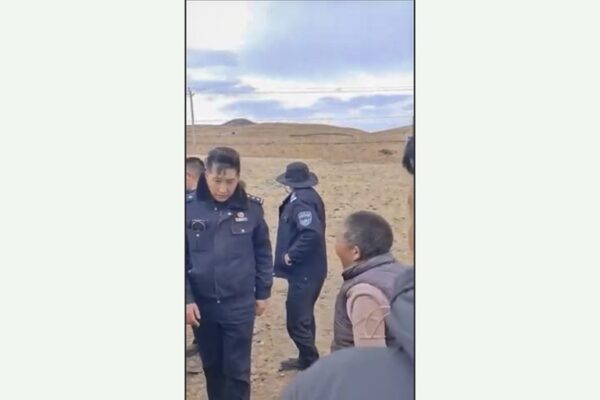
Police have arrested and detained four Tibetans who protested Chinese authorities’ seizure of pasture land owned by Tibetans in the Tibet Autonomous Region, three sources inside Tibet told Radio Free Asia. On April 10, residents of Taktsa village in Luonixiang rural township in Markham county in Chamdo, or Changdu in Chinese, clashed with authorities after they appealed against the land grab and demanded compensation, said the sources, who requested anonymity for fear of reprisal. In 2023, a Chinese county official illegally sold the pasture land to businessmen without the knowledge of locals and without providing them any compensation, the sources said.  The Tibetans had no knowledge that their land had been seized illegally until this April when the businessmen sent people to clear it. The Tibetans then confronted authorities, demanding payment. Police arrested and detained four of the Tibetans, and slapped and beat many others at the scene, said one of the sources.  There were no immediate details about the status of the four or the charges against them, and it is not clear for what purpose the seized land will be used.  Despite repeated attempts, RFA did not receive any immediate response to calls to Markham county authorities and the local police station.  Chinese police argue with Tibetans protesting the seizure of pasture land in Markham county in western China’s Tibet Autonomous Region, April 10, 2024. (Citizen journalist/video screenshot) Chinese authorities in the Tibet Autonomous Region and in Tibetan-populated areas of nearby Chinese provinces often ignore residents’ concerns about mining and land grabs by local officials, who routinely rely on force to subdue those who complain or protest, according to human rights groups. Over the past few years, there have been several reports of similar land grabs that have taken place in Chamdo, a resource-rich area in eastern Tibet.  Most of the land grabs have been related to mining, including copper, gold and lithium, and development projects that China has undertaken in the areas. In some cases, Tibetans have been forced from their homes. Thumbs up Videos obtained by RFA show over a dozen Tibetans pleading before Chinese police as they raised both their thumbs up — a Tibetan gesture of a request to show mercy.  The gesture was also seen being made by Buddhist monks and Tibetans residents during February protests in Dege county, southwestern China’s Sichuan province, in an appeal to Chinese officials to stop a planned dam project on the Drichu River. Chinese police argue with Tibetans protesting the seizure of pasture land in Markham county in western China’s Tibet Autonomous Region, April 10, 2024. (Citizen journalist/video screenshot) In the videos from Markham county, young and elderly Tibetans kneel before police clad in black, and wail, while others pull and tug at the authorities to heed their pleas. The land in question is used by about 25 Tibetan families to graze their animals and for recreation purposes, the sources said.  Chinese authorities have arrested the official who had colluded with the businessmen to illegally seize the land without compensating the Tibetans, charging him with corruption, said one of the sources.  Now, the residents are demanding compensation for the land that had been occupied, he added. Chinese police have forbidden the Tibetans from sharing information about the incident with people outside China, the sources said.  Translated by Dolma Lhamo and edited by Tenzin Pema for RFA Tibetan. Edited by Roseanne Gerin and Malcolm Foster.
Read More

Water festival attacks kill 3 during Myanmar coup leader’s holiday

Missile attacks on two universities in a holiday town in Myanmar killed three and injured eight, residents told Radio Free Asia on Monday.  During coup leader Senior Gen. Min Aung Hlaing’s Thingyn – or water festival – visit to Mandalay division’s Pyinoolwin city on Sunday, an unknown group fired more than 15 missiles at two military universities. The blasts, which hit the Defense Services Academy and Defense Services Technology Academy, also damaged a department of a nearby hospital and Aung Myay Zaya monastery.  The missiles injured five civilians when they landed on Pyinoolwin Hospital’s orthopedics department, said one Pyinoolwin resident, declining to be named for security reasons.  “The two monks who died were people who wore robes during the Thingyn period. They died when the explosion happened near them,” he said, describing civilians who temporarily become monks to observe Myanmar’s new year water festival. “The last man who died on the spot was in Ward No. 8. Another three people were injured in this neighborhood alone.” Following the attack, tourists who came for the holiday and some permanent residents fled the city, he added.  From 9 p.m. to 10 p.m. on Sunday evening, about 40 shots and explosions could be heard, said one Pyinoolwin resident who was near the site of the attack.  “After the sound of the missiles, Defense Services Academy and Defense Services Technology Academy troops cut the power. The military and social aid vehicles were busy,” he said, declining to be named for fear of reprisals. “I knew they fell in the area of the Defense Services Academy.” Staff at Pyinoolwin Hospital are preparing to move patients to Mandalay Hospital, while junta soldiers are conducting security checks around the city, residents said.  No group has claimed responsibility for the attacks yet, but residents told RFA that they were likely carried out from a hill behind the university campuses.  The junta has not issued any statements about the attacks. RFA called Mandalay division’s junta spokesperson Thein Htay for more information on the attacks, but he did not respond.   Residents told RFA they believe the attack was carried out because of Min Aung Hlaing’s visit. On Sunday, a bomb exploded near a pavilion in Mandalay city, injuring 12 people.  Translated by Kiana Duncan. Edited by Mike Firn.

Read More

Viral video highlights targeting of Hmong women to marry Chinese men

The man behind the phone chuckles as he calls out in the Hmong language to villagers sitting around a raised wooden home in rural Laos. A young man in a yellow hooded sweatshirt offers a slightly embarrassed smile, while other men gathered around a motorbike appear to pay him no mind. The camera zooms in on two young women who look shocked or turn away, as others laugh, before it settles on a girl barely in her teens, sitting atop a bike between two other children. This 30-second video, shot in an undisclosed location in Laos, went viral late last month after it was posted to Facebook, along with dialogue warning of ethnic Hmong middlemen working as interpreters for Chinese nationals seeking Hmong women and girls as wives. While the offer of marriage can be a financial leg up for largely poor Hmong villagers in rural Laos, many women who accept end up victims of human trafficking, according to a Lao official, who is calling on authorities to take action against the middlemen.  Some of the women end up as forced laborers and sometimes face physical punishment, the official said. “In the video, the middleman goes to a village and says that there are some Chinese men looking for Lao Hmong girls and women to be their wives,” a speaker of the Hmong language told Radio Free Asia.  “The video doesn’t mention the province, district, or village,” he said. “It’s only clear that Chinese men are looking for Lao Hmong wives.” A Lao Hmong middleman assists Chinese middlemen looking for Lao Hmong girls and women to marry Chinese men, March 24, 2024 in Laos. (Citizen journalist) The women and girls typically live in remote hill areas and are usually uneducated, according to an official from the Lao People’s Revolutionary Youth Union, the ruling party’s youth wing. “As I observe, some of the men cannot marry Chinese women because they are poor,” the youth official said. “But when they come to Laos, they’re in a better position in terms of wealth.” Loopholes in Laos’ laws The Chinese men offer the parents large amounts of money or promise to build a modern cement house, he said.  And they mostly target the Lao women in their early 20s, with fair skin and a small body, a source in Vientiane province’s Thoulakhom district told RFA. The influx of Chinese people into Laos in the last few years has presented new challenges to the Lao government’s anti-human trafficking efforts, according to several government officials. Many of the Chinese men obtain all of the required Lao government documents before marrying Hmong women, one Vientiane-based official told RFA. That can make it more difficult for provincial authorities to gauge whether the women will face an abusive situation once they move to China, the official said. “There are some loopholes in Lao regulations and laws for the Chinese men to take advantage to bring Lao girls and women to China,” the official said. “We only know their whereabouts once they face problems and are in a situation where they need help. But we can’t stop them from going to China with their new husbands.” It was unclear how many Hmong women have moved to China to marry Chinese men in recent years. But Lao government officials and one person who works for an NGO said the practice has become commonplace in the country’s north, particularly in Luang Prabang and Oudomxay provinces. “I just saw this happen earlier this year,” a resident of Xayabury province’s Hongsa district told RFA. “A middleman who works for Chinese men came here to negotiate with parents of Hmong women. When the parents said yes, he did all the paperwork according to regulations and laws on marriage.” In every instance, the Hmong women and the Chinese men didn’t meet each other until after the paperwork was completed, he said. Because of that, the village doesn’t hold an engagement ceremony, like with other marriages. Translated by Phouvong. Edited by Matt Reed.

Read More