
Category: East Asia
China sends 300 workers to deep sea port project in Myanmar’s Rakhine state
China has sent more than 300 technicians and workers to a deep sea port project in western Myanmar’s Rakhine state amid intense fighting between the military and ethnic rebels, according to residents. A ship carrying the crews, along with heavy machinery and food, docked at Maday Island in Rakhine’s Kyaukphyu township on the evening of April 28, the residents told RFA Burmese, after receiving permission from the junta to work on the project in the Kyaukphyu Special Economic Zone, or SEZ. The deployment comes after six months of clashes in Rakhine between junta troops and the Arakan Army, or AA – part of an alliance of three ethnic armies that have pushed the junta back in the western and northern parts of the country. Experts say the ethnic army victories mark a turning point in the war that began soon after the junta took control of the government in a February 2021 coup d’etat. The Kyaukphyu SEZ’s deep sea port complex is a key Chinese-led venture for which Beijing had requested heightened security. The project was approved in 2023 by the junta and attempts to recruit locals for work have been met with controversy and distrust. A resident of Kyaukphyu who, like others interviewed in this report, spoke on condition of anonymity due to security concerns, told RFA that some of the Chinese nationals who arrived on the ship are now residing in hotels in the township. “Both the workers who were already there and those who recently arrived travel to Maday Island in the morning and return to the city in the evening using hovercrafts,” he said. “The ship that arrived carried Chinese experts, including engineers responsible for the power lines and water systems.” The Myanmar military’s Danyawaddy Naval Base near Thit Poke Taung village in Kyaukphyu township, Rakhine state, seen here in Jan. 26, 2023. (Airbus) Residents said the ship departed from Maday Island on the morning of April 30. Attempts by RFA to reach Hla Thein, the junta’s attorney general and spokesperson for Rakhine state, for additional information about the deployment and the status of the project went unanswered. China and Myanmar signed an agreement to implement the Kyaukphyu Deep Sea Port Project and SEZ in November 2020, under the National League for Democracy government, which was deposed months later in the military coup. On Dec. 26, 2023, the two nations signed another agreement specifically for the deep sea port project during a meeting in Naypyidaw. Despite the agreements, residents say the project has yet to be fully implemented. The deep sea port project is a joint venture between the neighboring countries, with Myanmar contributing 30% of the investment and China providing the remaining 70%. The port is expected to include 10 wharfs capable of docking container ships. Developing a war zone Kyaukphyu township has been at the forefront of fighting in recent months between the military and the AA, which in November ended a ceasefire that had been in place since the coup. Since then, the ethnic army has taken control of eight of Rakhine state’s 17 townships, as well as one township in neighboring Chin state. Clashes and exchanges of territory occur on a near daily basis in the state. On Thursday evening, the AA captured the pro-junta Border Guard Police Command, at which some 600 junta troops were stationed, and two pro-junta Border Guard Force camps in Maungdaw township, residents told RFA. The AA first attacked the police command on April 25, and the capture ended a week of fighting, residents said. “Hundreds of border guard troops” retreated from the police command to Shwe Zar ward in the town of Maungdaw following the seizure, they added. A day earlier, the AA captured two military outposts in the Mayu mountain range near the Myanmar-Bangladesh border where around 100 junta troops were stationed, according to sources close to the Rakhine rebel group. The seizure ended a nearly three-week bid by the AA for control of the camps, they said. Residents said Friday that the Rakhine state capital Sittwe – a city of 100,000 people with typically crowded beaches and markets – has become “a ghost town,” as the AA captured nearby towns in recent months. Those who lack the funds to relocate face a shortage of commodities and skyrocketing prices, while some are starving, they said. Junta troops have tightened security in the city since April 10, when AA chief Major Gen. Twan Mrat Naing urged residents of Sittwe and Kyaukphyu to flee to his army’s controlled territories. A jetty for oil tankers is seen on Maday island, Kyaukphyu township, Rakhine state, Myanmar in this October 7, 2015 file photo. (Soe Zeya Tun/Reuters) Meanwhile, the AA and junta forces are in a fierce fight for control of Rakhine’s Ann township, which is the base of military’s Western Command, as well the townships of Buthidaung and Thandwe townships. The latest developments follow the AA’s March capture of Ramree township, which shares Maday Island with Kyaukphyu township. A resident who has closely watched the progress of Chinese projects in the region told RFA at the time that the AA had assumed control of most of the areas within the Kyaukphyu SEZ and said the ethnic army would likely have a say on how Chinese development proceeds. Protecting Chinese interests Zachary Abuza, a Southeast Asia analyst at the National War College in Washington – who writes commentaries regularly for RFA – said that despite assurances to Beijing by both the military and the AA that they would protect its interests in Myanmar, China’s decision to deploy workers and technicians to the Kyaukphyu SEZ is “putting [them] in harm’s way.” “They’re both giving assurances for the protection of Chinese interests, but they’re still very much in competition over the control of Kyaukphyu,” he said, noting that “fighting has increased” around the township seat in recent weeks. “Right now, the Arakan Army is in fairly solid control of most of northern Rakhine … [and] is going to have to move…
Forced to work as maids in Saudi Arabia, Cambodians beg to be repatriated
Dozens of Cambodian women trafficked to work as maids in Saudi Arabia are demanding that their embassy arrange for them to return home, saying that since authorities rescued them nearly two weeks ago, they have lacked access to adequate food and their health is rapidly deteriorating. On April 18, Cambodia’s Ministry of Labor confirmed that 78 Cambodian migrant workers had been tricked into working in Saudi Arabia, but have now been rescued and placed in hotel rooms under the care of the Cambodian Embassy. The ministry said 51 of the women are in the Red Sea port city of Jeddah, 15 in the capital Riyadh, and 12 in Dammam, on the coast of the Persian Gulf. The Ministries of Labor and Foreign Affairs, along with the Cambodian Embassy, claimed to be purchasing flights for the victims to return to Cambodia, promising to return 29 on April 19, 27 on April 20, and the final 22 on April 21. However, on April 27, RFA Khmer received videos from several of the victims in which they claimed to remain stranded in Saudi Arabia. In the videos, the women call for help from former Prime Minister Hun Sen, his wife Bun Rany, and their son Prime Minister Hun Manet. They said the companies that brought them to Saudi Arabia had “violated their contracts,” leaving them mired in legal issues surrounding their salaries and basic rights. They claim several of them were subjected to physical abuse by the households where they worked, including being denied food and sleep. They singled out Saudi firm BAB, which places workers from Cambodia-based company Fatina Manpower, for allegedly threatening them and accusing them of working illegally in the country. Some of the victims said they were unable to leave the country because BAB had refused to terminate their contracts. The women told RFA that since their rescue, some of them had been “confined” to their hotel rooms “without proper access to food,” and said they were appealing for help because they could “no longer wait for the government” to send them home. According to Cambodia’s Ministry of Labor, nearly 1.4 million people were provided with employment opportunities to work abroad in 2023, more than 93% of which are in Thailand, while the remainder are in South Korea, Japan, Malaysia, Singapore, Hong Kong and Saudi Arabia. Stranded in Saudi Arabia RFA contacted one of the women, Thaing Sokyee, who said she had been forced to work as a maid in multiple homes each day without being provided enough food to eat before she was rescued, and is now suffering from health issues. “I’ve called on the [labor] ministry and the embassy to find prompt solutions for us so that we may return to Cambodia,” she said. “We’ve faced mounting difficulties; our bodies have deteriorated as we were forced to work without food.” Doeun Pheap, another victim who said she is sick as a result of her working conditions, told RFA that she has been confined to her room since her rescue and has not been permitted by embassy staff to go outside to purchase medicine. She said the staff told her to wait for the government to send her home and that she was advised to record a video clip “saying that my health condition is getting better and that I have been provided with enough food to eat.” “I still hurt all over my body – I’m able to stand up, but my waist and my back still hurt,” she said, adding that embassy staff had provided her with “rice, but not food.” “I didn’t do it [record the video] because I was too hungry and exhausted; I couldn’t bear doing anything.” Other victims claimed that Uk Sarun, Cambodia’s Ambassador to Saudi Arabia, had “threatened to abandon us if we continue to publicly call for help.” Trafficking designation On Monday, Ambassador Uk Sarun confirmed to RFA Khmer that only 16 of the 78 women had been returned home so far. He said that some of the women had faced a shortage of food due to the ongoing holy month of Ramadan, during which Muslims fast during the day and only eat at night. He did not address claims by victims that he had threatened to withhold assistance if they continued to speak out about their situation. The Khmer Times reported last week that 29 of the 78 had been safely repatriated as of April 19, while the rest were awaiting documentation to leave, but provided no attribution for the numbers. The report said that the embassy was providing the victims with food and accommodation and cited Cambodian Ministry of Labor spokesman Katta Orn as saying that the ministry was conducting an investigation into the employment scam. RFA spoke with Bun Chenda, a Cambodia-based anti-human trafficking officer for labor rights group CENTRAL, who said the women had been “exploited” when they were sent to Saudi Arabia without proper compliance with labor contracts. “We are not sure if the government is treating their cases as human trafficking,” he said. “If they are being rescued as human trafficking victims, intervention would likely be easier and they wouldn’t be subject to legal action by a Saudi Arabian company.” Translated by Yun, Samean. Edited by Joshua Lipes and Malcolm Foster.
Upbeat video casts Kim Jong Un as North Korea’s father figure
An upbeat and unusually high quality propaganda music video coming out of North Korea purports to show a prosperous, modern society full of happy people who love their leader. Titled “Friendly Father,” the rousing song depicts soldiers, students, steel workers and others singing Kim Jong Un’s praises. “He is holding his 10 million children in his arms and taking care of us with all his heart,” go the lyrics. But the video also shows some equipment used to produce the song that may be in violation of international sanctions that have banned the import of luxury goods into North Korea since 2006. They include Korg and Roland synthesizers, headphones by Sony and a speaker from U.S.-based Harmon Kardon. An analysis of the equipment appeared on a keyboard enthusiasts page on popular internet bulletin board Reddit, where the keyboards were identified as the Korg Kronos and the Roland FA-07. The synthesizers sell for between US$2,000 and $3,000 in the United States. Luxury goods were defined by the U.N. Sanctions Committee on North Korea as those beyond the purchasing ability of ordinary North Korean residents. Japan therefore defines expensive musical instruments as luxury goods. RFA was not able to confirm how or when the equipment was imported to North Korea. A spokesperson from Roland stated in an email that the company has never sold any products to North Korea, adding that the Roland FA-07 was manufactured in 2014, but that no purchase records from that year were available. Evading sanctions North Korean media often shows the use of foreign goods that should be barred due to sanctions. According to NK news, a media specializing in North Korea, on April 28th, six Toyota SUVs and a Land Cruiser 300 that had never been seen before, appeared in Kim Jong Un’s security procession. North Korea is flaunting its ability to evade sanctions by showcasing sanctioned items in media, Bruce Klingner, Senior Research Fellow at the Heritage Foundation, explained in a phone call with RFA “It just encourages the entity, whether it’s governments or businesses, to just continue violating the rule,” he said. “What we’ve seen is a number of nations, predominantly China and Russia, who blatantly violate the U.N. resolutions by assisting North Korea.” A Korg Kronos is displayed May 7, 2011. (synthfiend via Wikipedia) Though the video focuses on scenes of happy North Korean people, when it shows Kim Jong Un, it attempts to portray him as acting fatherly towards children. In one shot he is hugging a small child while another looks on. In the next, he meets several young students who cry at his very presence. A third shot shows several male members of the military embracing the smiling leader. “Let’s love Kim Jong Un, our friendly father,” the lyrics say. “We all trust and follow him with one heart.” Translated by Claire S. Lee and Leejin J. Chung. Edited by Eugene Whong.
Manila says China obstructs, damages its ships at disputed shoal
Updated April 30, 2024, 04:40 a.m. ET. The Philippines said that Chinese coast guard vessels fired water cannons at two of its ships on Tuesday, causing some damage in the latest confrontation near the disputed Scarborough Shoal in the South China Sea. The shoal, called Bajo De Masinloc in the Philippines and Huangyan Dao in China, is within the Philippine exclusive economic zone but is under de-facto control by China. Philippine Coast Guard spokesperson Jay Tarriela said in a statement that the Philippine coast guard ship BRP Bagacay and fishery patrol ship BRP Bankaw were carrying out “a legitimate maritime patrol” in the waters near the shoal. “During the patrol, the Philippine vessels encountered dangerous maneuvers and obstruction from four China Coast Guard vessels and six Chinese maritime militia vessels,” Tarriela said. Chinese vessels fired water cannons at the BRP Bankaw first, and afterwards at the BRP Bagacay, causing damage to both ships, he said. Philippine media reported that Chinese coast guard ship 3305 also collided with the BRP Bankaw, damaging its railings. A video clip released by the Philippine Coast Guard shows the BRP Bagacay being shot at with powerful streams of water by Chinese vessels 3105 and 5303. As a result, the Philippine ship’s suffered damage to its railing and canopy. “This damage serves as evidence of the forceful water pressure used by the China Coast Guard in their harassment of the Philippine vessels,” the Philippine spokesman said, adding that the Philippine ships continued their maritime patrol despite the harassment. The Chinese Coast Guard has also installed a 380-meter floating barrier that covers the entire entrance of the shoal, “effectively restricting access to the area,” Tarriela noted. Chinese spy ship China Coast Guard Spokesperson Gan Yu said that on April 30, Philippine Coast Guard Ship 4410 and Government Ship 3004 ignored China’s repeated warnings, insisting on “invading the waters” adjacent to China’s Huangyan Island. “In accordance with the law, the Chinese Coast Guard took necessary measures such as follow-up, water cannon warnings, and blockade control to drive away illegally intruding Philippine ships,” the statement said. China claimed its operations were “professional, standardized and legal,” saying the Philippines’ actions “infringe on China’s sovereignty and seriously violate international law and basic norms of international relations.” It urged the Philippines to stop what it called “infringement” on territory where China claims sovereignty, saying the Coast Guard would continue to carry out “rights protection” in the area. China’s state media reported on Tuesday morning that Chinese ships expelled two Philippine vessels that “intruded into the waters adjacent to Huangyan Dao.” China’s state-run tabloid Global Times quoted a Chinese analyst as saying that “professional control measures taken by the Chinese side are required to prevent the escalation of a possible maritime confrontation.” The Philippines says its ships that routinely sail to the area around the Scarborough Shoal to distribute fuel and food supplies to fishermen have been harassed by Chinese vessels. China claims historical rights over most of the South China Sea even though a landmark international arbitration case brought by Manila in 2016 rejected those claims entirely. The Scarborough Shoal was under the Philippines’ control until 2012 when a standoff resulted in China’s taking over. The latest confrontation took place as a major U.S.-Philippines annual military exercise is underway, this year with the participation of France and Australia. Exercise Balikatan 2024 has just completed a five-day multilateral maritime exercise component that began on Apr. 25. The combined naval force of one U.S. and one French warship, together with two Philippine vessels, was constantly shadowed by Chinese surveillance ships, as well as other surface combatants, according to the Philippine military, quoted in domestic media. Surveillance ships, commonly known as “spy ships” for their reconnaissance capabilities, have been frequently spotted at the times the United States and its allies stage major naval drills, including the biennial Rim of the Pacific. Radio Free Asia contacted the Chinese foreign ministry for comment but did not immediately receive a response. More than 16,000 troops from the Philippines and the U.S are taking part in the Balikatan 2024 which is scheduled to end on May 10. Edited by Taejun Kang. Jason Gutierrez in Manila contributed to this report. Updated with China Coast Guard statement.
In Tibet, parents plead for children to help collect caterpillar fungus
It’s caterpillar fungus harvesting season in Tibet, and parents have staged protests urging Chinese authorities to let their children leave a residential boarding school to help collect the rare ingredient used in traditional medicine, two sources inside the region said. Gathered in the Tibetan highlands, caterpillar fungus has been used for centuries to treat heart, liver and lung diseases, high cholesterol, low libido and impotence – despite a lack of scientific evidence. It can fetch US$18,000 a pound, and in rare cases more than US$50,000 a pound. Parents in Tenchen county, or Dengqen in Chinese, in Chamdo city, in the eastern part of the Tibet Autonomous Region protested on April 27 to allow their children to return home to help with the harvest, on which many families depend to make a living. Exclusive video footage shared with Radio Free Asia showed over 40 Tibetan parents standing outside the boarding school in Trido township, Chidu in Chinese, with some seen hugging the railings of the school gate. Most are kneeling with hands folded or their thumbs out, a Tibetan gesture of appeal for mercy, as they shout “Please let the children go.” ‘Summer grass, winter worm’ Families rely on the help of their children, especially the younger ones who are trained in the labor-intensive harvesting of yartsa gunbu, said the first source, using the Tibetan name of the slender brown root-like fungus, which translates as “summer grass, winter worm.” Caterpillar fungus. (Citizen journalist) The fungus, which originates from dead caterpillars, is found in meadows above 3,500 meters (10,500 feet) in Tibet, parts of China and in the neighboring Himalayan regions of Bhutan and Nepal. Called dong chong xia cao in Chinese, its scientific name is Ophiocordyceps sinensis. The fungus can be consumed directly, added to food or liquids, or ground up for use in traditional medicine. In the past, children studying in what rights groups call colonial-style boarding schools were allowed to return home on weekends and given longer breaks during the April-June period so they could help their families with the harvest. “Tibetan families need all the help they can get during the caterpillar fungus harvesting season because the harvest and sale of the fungus is the main source of income for them,” said the second source, who like the first spoke insisted on not being named. “Previously, the school would allow the students to go in batches on longer leave of a week to a fortnight during this period,” he said. During the protest, parents appealed to authorities to show more consideration in allowing the children to go home during the harvesting season by adjusting their vacation time to ensure there would be no disruption to the children’s studies and to families’ earnings prospects, he added. None sent home yet after agreement A day after the protest, county officials intervened in the matter and agreed on April 28 to send some of the students back home, said the sources. However, in response to an RFA request for confirmation, an official at the local county office said the students had not yet been sent home as of Monday. RFA contacted the Tenchen County Education Bureau for more information, but officials there refused to comment. According to a December 2021 report published by Tibet Action Institute, the Chinese government’s network of boarding schools for Tibetan children are “colonial projects” operating under the guise of providing education to Tibetan populations spread across vast areas, but in reality are part of an assimilation campaign promoted by Chinese President Xi Jinping. Activists and Tibetans fear the long-term implications of these boarding schools, where they say Tibetan children are separated from their parents and homes in an attempt to reduce real contact with their own language and culture and are instead taught primarily in Chinese, with intense political indoctrination. Translated by Tenzin Palmo for RFA Tibetan. Edited by Tenzin Pema for RFA Tibetan, and by Roseanne Gerin and Malcolm Foster.
Cambodia will not negotiate over Funan Techo canal: Hun Sen
Cambodia’s leader Hun Sen has said that his country would not negotiate with Vietnam over the planned Funan Techo canal, despite concerns about its environmental and geopolitical impacts. A group of Vietnamese experts suggested last week that Hanoi should ask Phnom Penh to delay the project for further discussions. Former prime minister Hun Sen, who is now the president of the Senate and still retains much power, told a business banquet that construction of the 180-kilometer (112 mile) canal will go ahead as planned this year, emphasizing the project was of national interest. The Funan Techo canal, officially known as the Tonle Bassac Navigation Road and Logistics System Project, will connect the Cambodian coastal province of Kep on the Gulf of Thailand with the inland provinces of Kandal and Takeo, and the capital Phnom Penh via a tributary of the Mekong River. It will be developed by a Chinese company at a cost of US$1.7 billion and, when operational in 2028, will help reduce Cambodia’s dependence on Vietnam’s sea ports for its international trade. . But the project has raised concerns in Vietnam where the rice-growing Mekong delta is vulnerable to sea water incursions if the Mekong’s flow is reduced. A series of dams on the river in China to the north has already raised fears about flows downstream. Some Vietnamese experts said the Cambodian canal could “reduce the flow of the river by up to 50%” in Vietnam’s delta, home to 17.4 million people. Hun Sen dismissed the concern, saying any loss of water would affect Cambodia first. No mistake in 47 years The Funan Techo canal project was proposed and approved when Hun Sen was head of the government and analysts say it is being seen as one of his great legacies. “Hun Sen has never made a wrong decision in the past 47 years,” the veteran leader, referring to himself, told a dinner hosted by the Cambodian Oknha Association. Oknha is a title bestowed on Cambodians who are committed to charity or generous with donations to the government. Hun Sen, a former Khmer Rouge soldier who defected to fight alongside Vietnamese forces, and who first became prime minister in a government set up by Vietnam after it invaded Cambodia, said his country “is not inferior to Vietnam.” “Cambodia knows how to protect its interests, Vietnam does not need to care,” the Senate president was quoted in Cambodian media as saying. While calling for Vietnam’s understanding, Hun Sen said Cambodia’s eastern neighbor also “built a lot of dams to protect their crops and these have an impact on Cambodia.” He said he was not pushing Cambodians to hate Vietnamese people and the Vietnamese side must do the same, the Khmer Times quoted him as saying. Map of the proposed Funan Techo canal. (Cambodia National Mekong Committee) Vietnamese analysts say the canal could also have security implications by allowing naval forces to operate on inland waterways near the Vietnamese border. Vietnam’s foreign ministry this month urged Cambodia to provide information and an impact assessment on the water resources and ecological balance of the delta region. The U.S. Embassy in Phnom Penh has also called for more information, saying that while the U.S. respects “Cambodia’s sovereignty in internal governance and development decisions,” the Cambodian people as well as people in neighboring countries “would benefit from transparency on any major undertaking with potential implications for regional water and agricultural sustainability.” “We urge authorities to coordinate closely with the Mekong River Commission (MRC) to provide additional project details and to participate fully in any appropriate environmental impact studies to help the MRC and member countries fully understand, assess, and prepare for any possible impacts of the project,” an embassy spokesperson said last week. Edited by Mike Firn.
In reversal, China now wants to preserve Kashgar’s Old City
In an about-face, Xinjiang’s highest legislative body has issued new regulations to protect Kashgar’s Old City — the heart of Uyghur culture — which they previously ordered to be destroyed and reconstructed, leaving only a small area as a tourist attraction. The measures, which take effect on May 1, prompted accusations of Chinese hypocrisy by experts on the far-western region, who say it’s meant to benefit investors in tourism and deflect criticism of Beijing’s persecution of the 11-million mostly Muslim Uyghurs. The Regulation on the Protection of the Ancient City of Kashgar passed on March 31 aims to protect the cultural heritage of Kashgar’s ancient city, which is was once a key trading post on the Silk Road between China and Europe. But starting in 2008, China has already demolished 85% of Kashgar’s ancient quarter and relocated thousands of residents to newer “earthquake-resistant houses,” according to a June 2020 report by the Uyghur Human Rights Project, or UHRP, on the destruction of the Old City. By the end of 2010, more than 10,000 ancestral earthen homes there had been destroyed, and shops near the 15th-century Id Kah Mosque were transferred to new buildings made to look like Uyghur architecture, according to journalist Nick Holdstock, who has written two nonfiction books about Xinjiang. “Above their doors are wooden signs saying ‘Minority Folk Art’ or ‘Traditional Ethnic Crafts’ in English and Chinese,” he was quoted as saying in the UHRP report. Police officers patrol in the old city in Kashgar, Xinjiang Uyghur Autonomous Region, China, May 4, 2021. (Thomas Peter/Reuters) Now all that is left is about 15% of the Old City, which has largely been renovated into a Disneyland-like tourist center for visiting Chinese tourists and dignitaries. The supposedly ancient Kashgar gate that appears frequently in Chinese promotional material is actually a modern creation and doesn’t reflect traditional Uyghur design. China’s past actions appeared to be motivated by a “campaign to stamp out tangible aspects of Uyghur culture,” the UHRP report said. Cradle of Uyghur civilization This is particularly painful for Uyghurs because Kashgar is considered to be the cradle of their civilization, with two millennia of history. Urumqi may be the political capital of the Xinjiang Uyghur Autonomous Region, but Kashgar has been the historic center of Uyghur statecraft, politics, art, music literature, trade, culture and religion. It was in Kashgar that in the 11th century prominent Uyghur Turkologist Mahmud Kashgari penned the “Divan Lugat-it Turk,” the first comprehensive dictionary of Turkic languages, which also contains an early map showing countries and regions from Japan to Egypt. A strategic trading post along the Silk Road, Kashgar was visited by Marco Polo on his way to the court of Kublai Khan during the Mongol Yuan Dynasty in the 13th century, and before that had been the capital of the Uyghur Karakhanid Empire, a Turkic-Uyghur empire that lasted from 999 to 1211. It was in Kashgar that the first East Turkistan Republic was declared in 1933, before China aided by the Soviet Union invaded and took control of the region in 1949 against the wishes of the people to remain an independent country. ‘Museumify’ Now, after all the destruction China has wrought in the city, new regulations call for the preservation of the old quarter’s overall historical appearance, natural environment, historical buildings, ancient trees, traditional communities, streets, courtyards, buildings and other structures such as street-side pillars. They will also protect intangible cultural heritage, including historical events, figures, handicrafts, traditional arts and customs and rituals. “Any demolition, alteration or disruption of the architectural or landscape features designated for conservation is strictly prohibited,” the regulation says. But experts say the measures will hardly rectify the damage already done, and will only serve to turn what’s left of Kashgar’s vibrant culture into a tourist attraction. “It seems absurd in the present context to think that the Chinese government actually is concerned about the preservation of Uygur culture,” said Sean Roberts, director of the Central Asia Research Project at George Washington University. “One of the dangers that Uyghur culture faces right now in China is being ‘museumified’ in a way that no longer reflects active lived culture, but reflects something that is packaged for tourists,” he said. Deflecting criticism More seriously, the move is likely meant to deflect attention from atrocities China has committed against Uyghurs in Xinjiang, Roberts said. Besides the destruction of thousands of mosques and other structures significant to Uyghur heritage, Chinese authorities have suppressed Muslim religious practices and arbitrarily detained Uyghurs in state-sponsored camps, where some have been subjected to forced labor, sterilization, contraception and abortion. Since 2017, an estimated 1.8 million Uyghurs have been herded into concentration camps, where they are subjected to forced labor, mistreatment and human rights abuses. A woman cooks in her house next to the remnants of other houses, demolished as part of a building renovation campaign in the old district of Kashgar, in Xinjiang province August 3, 2011. (Carlos Barria/Reuters) China has denied committing atrocities in Xinjiang and says the camps are actually vocational centers that have been shut down. But the United States has determined that China’s actions against the Uyghurs constitute a genocide, while a U.N. report said they may amount to crimes against humanity. Benefitting Chinese developers The new regulation will benefit Chinese investors involved in tourism in the city, said Henryk Szadziewsk, a senior researcher at the Uyghur Human Rights Project. For example, Beijing-based tourism and property developer Zhongkun Investment Group Ltd. is involved in restoration efforts and tourism initiatives in the Old City, he said. Following earlier reconstruction work, the Old City’s neighborhood Communist Party committee leased the reassembled quarter to Zhongkun, which began marketing the area as a “living Uyghur folk museum” and established a “near monopoly” over Kashgar’s tourism, the UHRP report said. “The new Kashgar Old City has a different set of people who occupy that space — people who have interests in tourism and people who have interests in the exploitation of that,” Szadziewski told RFA. “To…
China’s communists once used Hong Kong to subvert a mainland government
Beijing insisted Hong Kong pass stringent security legislation known as Article 23 due to fears that the city would be used as a base from which to bring down the government — because that’s exactly what the Chinese Communist Party used the city for. Hong Kong passed the Safeguarding National Security Law on March 23 as a mandatory obligation under Article 23 of the city’s Basic Law. It was billed by the government as a way to close “loopholes” in the already stringent 2020 National Security Law, which was imposed on the city by Beijing, ushering in a crackdown on dissent in the wake of the 2019 protest movement. But its roots go much further back in history, according to a veteran journalist and a legal expert, to when the Chinese Communist Party was itself trying to overthrow the Chinese government led by the Kuomintang nationalists. A lawmaker holds a copy of the proposed Safeguarding National Security Bill at the Legislative Council in Hong Kong, March 19, 2024. (Louise Delmotte/AP) Secret documents recently declassified by the Chinese government reveal how the Chinese Communist Party used Hong Kong as a base from which to subvert the 1911 Republic of China regime founded by Sun Yat-sen after the fall of the Qing Dynasty. Reading these documents, I found that the Chinese Communist Party turned Hong Kong into a base for propaganda, for United Front [outreach and influence] operations, organizational operations and mass mobilization. The setting up of these various bases can be traced back to the 1930s, and were documented in a report made by Wu Youheng, then secretary of the Hong Kong municipal party committee, to the Central Committee. The Chinese Communist Party really did turn Hong Kong into a base for subverting the central government and dividing China. This is a key reason why Beijing has always seen Hong Kong as a potential threat to its grip on power, due to its relative freedom and connectedness to the outside world. From Hong Kong, Chinese communists raised funds to finance their campaigns, stored equipment and other reserves, and trained new cadres, according to party documents and other historical texts. Supply and communication line Hong Kong also formed part of a secret supply line that ran along the southeastern coast to Shanghai, then to the party’s Central Revolutionary Base in the eastern province of Jiangxi, and people also moved along the route. Through this secret communication line used to move supplies and arms, more than 200 important leading cadres of the Communist Party of China including Zhou Enlai and Liu Shaoqi were sent to Hong Kong for rest and recuperation. This secret supply line was also an important channel for the communists to receive arms from the Soviet Union. A young woman is caught between civilians and Chinese soldiers, who were trying to remove her from an assembly near the Great Hall of the People in Beijing, June 3, 1989.(Jeff WidenerAP) Even more importantly, the Chinese Communist Party took advantage of the relative freedom enjoyed by Hong Kong residents under British rule to set up a command center from which to run its entire military operation for the South China region in the city. Even the first provincial party committee for Guangdong province was set up in Hong Kong, on Aug. 7, 1927. By January 1939, the party had set up a southern branch of its Central Committee to direct political, military, mass struggle and other work throughout southern China, and held a major conference in the city’s Wanchai district in 1947. The Wanchai Conference, where participants talked about waging guerrilla warfare against the Kuomintang regime, including a concept they termed “red separatism.” The Chinese Communist Party has itself made full use of Hong Kong’s freedoms to subvert the central government of the Republic of China and implement armed separatism to split the country. It is precisely because of this historical experience that the party is very aware of Hong Kong’s potential to overthrow a corrupt regime, and is very afraid that others will use their own tactics against them. This is the deep-seated reason why Beijing is afraid of Hong Kong. ‘Political city’ Those fears were brought into far sharper focus on June 4, 1989, when around a million Hong Kongers turned out in protest at the massacre of civilians in and around Tiananmen Square by the People’s Liberation Army, according to Eric Lai, a research fellow at the Center for Asian Law, Georgetown University. “With so many Hong Kong people supporting the Tiananmen student movement, they thought it would likely continue to be a thorn in the Chinese Communist Party’s side after the 1997 handover,” Lai said. He said Beijing revised Article 23 of the planned Basic Law after that event, adding in a number of “national security” crimes including “subverting the central government,” “collusion with foreign forces,” a crime for which pro-democracy media magnate Jimmy Lai is currently on trial. Since that day, Chinese officials including former Hong Kong and Macao Affairs Office director Lu Ping resolved that Hong Kong could never be allowed to become “a political city.” Chinese Premier Zhou Enlai, center, is flanked by Deputy Foreign Ministers Li Ke Nung, left, and Chang Wen Tien at the final session of the Geneva Peace Conference on July 21, 1954. (AP) Lu said that once Hong Kong becomes a political city, there will be endless internal disputes that will give opportunities for foreign forces [to interfere], Lu Ping’s view was shared by almost all the communists I knew in Beijing. Today, Hong Kong is once more a power base for the Chinese Communist Party, with the city’s Committee for Safeguarding National Security wielding huge power on Beijing’s behalf, according to Eric Lai. “The Article 23 legislation … once again confirms that the Committee for Safeguarding National Security has supreme power and further consolidates the legitimacy of its rule,” Lai told RFA Mandarin in a recent interview. What’s more, the legislation has become a vehicle for the translation…
Episode 5: Flashpoint Myawaddy
Podcast Free Asia RFA Insider is five episodes old, a developmental milestone that Eugene and Amy receive with joy! For reference a 10-week-old baby would be kicking and punching, and a 10-week-old fetus would start getting fingernails. A 10-week-old piece of bread, meanwhile, would be all moldy… um… probably. Corrections this week are short and sweet: on last episode’s discussion of matching couple outfits, Eugene clarifies that the North Korean government does not require everyone to wear the same clothes. Instead, citizens are held to clothing restrictions that prohibit items like tight pants and t-shirts with foreign words, leaving them with limited style choices. The Rundown The Mandarin Service recently reported that China’s internet censors removed more than 700 videos of online micro-dramas for “exaggerating” spousal and familial conflicts. Micro-dramas, binge-able online shows whose episodes are only a few minutes long, are most popular among young women in China – the same group that President Xi called upon in October to focus on raising families. This censorship comes at a time when China’s birth and marriage rates continue to plummet, as more young people are delaying marriage to focus on work, education or buying property. In North Korea, coffee is gaining a foothold as a trendy beverage and a bribe. The Korean Service reported that coffee shops, once only seen in hotels for foreign tourists, have begun to appear in Pyongyang and other cities. While only the elite can afford to enjoy a cup on the regular, the interest in coffee culture, acquired through illegal foreign movies, transcends class. Some more health-conscious officials have even begun asking for coffee over the traditional bribe of cigarettes – residents told RFA that they have treated officials to a coffee with sugar and gifted South American coffee beans in exchange for favors. How It’s Made Kyaw Min Htun, deputy director of the Burmese Service, joins us to address the recent tug-of-war between the Myanmar military and various ethnic armies for control of Myawaddy, a trading town bordering Thailand. He offers some insight into why opposition forces withdrew from Myawaddy days after taking control and the ways in which neighboring countries’ interests have influenced Myanmar’s current situation. With the country embroiled in civil war since the 2021 military coup, Kyaw Min Htun offers a much-needed explainer of the “who” and “why” of the current conflict, what the international community can do to help and his thoughts on a post-war future. Special thanks to Kiana Duncan for this awesome report that explained the situation at the time of recording. Since then she’s filed another with an update: Back to main
Vietnam should ask Cambodia to delay canal project: experts
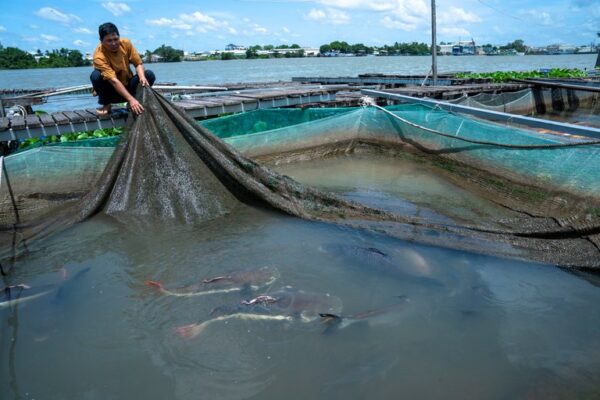
Participants at a Vietnamese-sponsored consultation have suggested that Hanoi should ask Phnom Penh to delay a proposed canal project for further discussions, amid Vietnamese worries about the project’s environmental and economic impact. Construction of the 180 km (112 mile) Funan Techo canal, connecting the Cambodian capital, Phnom Penh, with the Gulf of Thailand, is planned to begin later this year and to be completed within four years. The proposed canal will include a section of the Mekong River, raising concern in Vietnam about the impact downstream, especially in Vietnam’s rice-growing Mekong Delta. The canal could “reduce the flow of the river by up to 50% by the time it comes to Vietnam,” said Le Anh Tuan, a prominent Vietnamese scientist. Vietnam needs more time for consultation in order to protect the river’s delta, home to 17.4 million people, Tuan told the meeting in the town delta of Can Tho. Another expert, Dang Thanh Lam from the Ministry of Agriculture and Rural Development, said Vietnam must ask for an environment impact report from Cambodia. The U.S. Embassy in Phnom Penh also called for more information, saying that the Cambodian people as well as people in neighboring countries “would benefit from transparency on any major undertaking with potential implications for regional water and agricultural sustainability.” “We urge authorities to coordinate closely with the Mekong River Commission (MRC) to provide additional project details and to participate fully in any appropriate environmental impact studies to help the MRC and member countries fully understand, assess, and prepare for any possible impacts of the project,” an embassy spokesperson said. Ly Van Bon, the owner of the Bay Bon fish pond located on the Mekong river which was affected by sediment, shows redtail catfish inside his fish pond in Mekong’s regional capital Can Tho, Vietnam, May 25, 2022. (Reuters/Athit Perawongmetha) For its part, Cambodia said it had secured endorsement for the project from the MRC chairman – Lao President Thongloun Sisoulith. Sisoulith has just visited Phnom Penh and, during a meeting with Cambodian Senate leader and former prime minister Hun Sen, he was asked to show his support for the canal. “In response, the Laotian president, without hesitation, announced his support,” Cambodia’s Fresh News media outlet, which is supportive of the government, reported. No obligation Laos and Cambodia are both long-term allies of Vietnam but both have in recent years leaned more towards China. Vietnam has repeatedly expressed concerns about the possible environmental and economic impacts of the project. This month, a Vietnamese foreign ministry spokesperson urged Cambodia to provide information and an impact assessment on the water resources and ecological balance of the delta region. In response, a senior Cambodian official said that Phnom Penh was not obliged to do so. Cambodia’s Minister Delegate attached to the Prime Minister in charge of ASEAN affairs, So Naro, told the Khmer Times that Cambodia was not legally required to submit any document to Vietnam regarding the studies and construction of the Funan Techo canal. Cambodia had submitted “all documents of the studies on the canal related to the impacts on the environment and the water resources” to the MRC, So Naro said. The MRC is an intergovernmental organisation in charge of the sustainable management of the Mekong basin. “The Vietnamese authorities can request access to those files,” So Naro said. Cambodia has insisted that the canal would not disrupt the flow of the Mekong. The projected Funan Techo canal (in blue). (Google Maps/ RFA) Officially known as the Tonle Bassac Navigation Road and Logistics System Project, the Funan Techo canal will be developed by a Chinese company at a cost of US$1.7 billion. It will mean that more trade can flow directly to Cambodian ports, bypassing Vietnam. The Cambodian government said it would cut the transport costs and reduce dependence on Vietnamese ports. It also said that the project will bring great social and economic benefits to 1.6 million Cambodians living along the canal. Security questions Besides the environment and economic impacts, analysts say Vietnam is also worried about the security implications of the canal. There have been suggestions that the canal could allow Chinese navy ships to travel upstream from the Gulf of Thailand and the Chinese-developed Ream naval base on the Cambodian coast close to the border with Vietnam. Cambodia has rejected such speculation with Hun Sen insisting that Cambodia and Vietnam “are good neighbors and have good cooperation in all fields.” But Vietnam has been in dispute with China over some island chains in the South China Sea and it eyes China’s involvement in the region with suspicion. Vietnam shares a long land border with Cambodia. Between 1977-1978 there was fighting between Cambodia’s Khmer Rouge and Vietnamese troops during the so-called southwest border war, which led to a Vietnamese invasion and the establishment of a pro-Hanoi government in Cambodia. The situation on Vietnam’s western border should get more attention because of “threats of untraditional security challenges, mostly over the Mekong delta,” said Nguyen The Phuong, a Vietnamese political scientist at the University of New South Wales in Australia. “A loss of the Mekong’s ability to sustain large scale food production will have tremendous impact on Vietnam’s security in the south,” Phuong said. “From my point of view, the western front is becoming more critical day by day but Vietnam is too distracted by maritime issues at the eastern front, or the South China Sea.” Edited by Mike Firn and Taejun Kang.
